
Proceedings of the Standing Senate Committee on
Banking, Trade and Commerce
Issue 40 - Evidence
OTTAWA, Tuesday, April 30, 2002
The Standing Senate Committee on Banking, Trade and Commerce met this day at 3:30 p.m. to examine and report upon the present state of the domestic and international financial system.
Senator E. Leo Kolber (Chairman) in the Chair.
[English]
The Chairman: Today we have the honour of hearing from Mr. Dodge, the Governor of the Bank of Canada. With him are Mr. Knight, senior deputy governor, and Ms Kennedy, deputy governor.
Welcome, Mr. Dodge, and please proceed.
Mr. David A. Dodge, Governor, Bank of Canada: Honourable senators, it is a pleasure to be with you today.
When Mr. Knight and I appeared before your committee at the end of last November, a heavy cloud of uncertainty was hanging over the outlook for the world economy and for Canada. Much of that uncertainty stemmed from the terrorist acts in the United States, events that came at a time when the global economy had already slowed more than expected.
To counter that uncertainty and bolster consumer and business confidence, the Bank of Canada moved aggressively to provide monetary stimulus. Between September 2001 and January 2002, we lowered interest rates by 200 basis points, bringing the total reduction since January 2001 to 375 points.
[Translation]
As it turned out, consumer confidence was not as badly shaken in the aftermath of those tragic events as had been widely feared. Indeed, confidence bounced back as perceived geopolitical and economic uncertainties diminished. The world economy has begun to strengthen. Here in Canada, a robust recovery appears to be underway. Growth in the fourth quarter of last year and the first quarter of 2002 was appreciably stronger than expected, so that the level of economic activity is now higher than we thought it would be six months ago. This momentum is reflected in the extraordinary number of new jobs created since the beginning of 2002. In terms of the two scenarios we had painted last November, clearly, we are into the more optimistic one, in which a recovery in consumer confidence leads to an early resumption of economic growth.
[English]
What do we see when we look ahead? In the first half of 2002, the bank projects that the Canadian economy will grow by between 3.5 and 4.5 per cent at annual rates. We expect that it will continue to expand in the second half of this year and during 2003 at a rate somewhat above that of its production capacity, which we estimate to be around 3 per cent a year.
Honourable senators may recall that at our last visit I spoke about the concept of potential output. We set monetary policy so as to keep inflation low and stable, thus contributing to sustained economic growth at its full potential.
Six months ago, we assumed that our economy would be growing at a pace well below the rate of potential in the fourth quarter of last year and the first quarter of this year. We thought that the gap between the actual level of economic activity and the level of potential would be widening throughout this period, but we are not infallible, thank God; instead, growth has turned out to be much stronger than expected. This means that our economy is operating at a much higher level than we thought; hence, the output gap is smaller than we had predicted and is currently narrowing. Indeed, we expect that it will close in the second half of 2003.
[Translation]
The output path that we are now projecting is consistent with core CPI inflation being at 2 per cent by about the end of next year. Total CPI inflation will probably continue to fluctuate in coming months as oil and natural gas prices move around. But, like core inflation, we expect it to be at 2 per cent target midpoint by about the end of 2003.
Although we no longer face the same degree of uncertainty as we did last fall, there are still important risks and uncertainties in the outlook — some of which are working on the upside and others on the downside.
Given the amount of monetary and fiscal stimulus in the economy, output growth could be even stronger than projected. But it is also possible that some of the recent strength in spending on consumer durables was borrowed from the future, so that the growth of household expenditures will be weaker than expected. At the same time, there is still considerable uncertainty about the timing and strength of the pickup in business investment in North America, mainly because of the continued weakness in profits. Moreover, recent tensions in the Middle East could have implications for crude oil prices and the global economy.
[English]
While Canada faces many of the same risks as the United States, there are a couple of differences in the situation between the two countries that are worth noting.
First, as we pointed out in the Monetary Policy Report, we expect that in Canada final demand will make up a larger share of growth in the first quarter while inventory rebuilding will constitute a smaller share than in the United States.
Second, while weaker-than-expected confidence among large businesses remains a risk for both countries, the sectors that face the biggest challenges, such as computer equipment and telecommunications, make up a considerably larger share of the U.S. economy than they do of ours.
What do recent developments in Canada mean from a policy perspective? As I mentioned, our economy is now operating at a significantly higher level than we had expected. Thus, the amount of spare capacity is smaller and is expected to be absorbed sooner than we assumed last November.
In these circumstances, our job at the bank will be to gauge the strength of the economy as it approaches its capacity to produce and to reduce the amount of monetary stimulus in place in a timely and measured manner. We want to ensure that inflation stays close to the target so that over the medium term our economy can continue to grow at full capacity.
What do we mean by ``timely and measured''? Honourable senators, ``timely'' relates to the fact that there is always a lag between our policy actions and their effect on the economy. We must be timely and forward looking because our actions take a year to 18 months to have their full effect on output, and 18 months to two years to have their full effect on inflation.
``Measured'' relates to the judgments that we will have to make as Canada approaches full capacity. If the economic data going forward tell us that Canada is taking up excess capacity more quickly than expected, we would have to reduce monetary stimulus more quickly. However, if the data suggest that a return to full capacity is going more slowly than we had thought, we would then clearly need to move more slowly.
Senators, allow me to close by using a familiar core analogy. Over the past year, we have put our foot on the monetary gas to help us get up the hill of economic difficulties. As we return to more normal driving conditions, the prudent thing now is to ease off on the gas — and I say, ease off, not slam on the brakes — to ensure that we continue our journey along the highway at a safe cruising speed. It is in line with this that we moved on April 16 to raise the target for the overnight interest rate by 25 points.
Mr. Chairman, Mr. Knight, Ms Kennedy and I would be pleased to answer any questions that you may have.
Senator Kelleher: Welcome back, Governor and Deputy Governor. It is nice to see you here every so often.
I wish to return to my favourite topic, namely, the Canadian dollar. Do you agree with the view of former Governor Thiessen that the weaker dollar ``blunted'' the effects of foreign competition on domestic firms; and, if so, is such a situation beneficial in the short run and/or the long run?
Mr. Dodge: First, the price of our currency is a price like any other price. It is determined by supply and demand in the marketplace. That comes from two sides. On one side, there is the relative demand and supply for the goods and services we produce and the goods and services that we want to import — the so-called current account — and capital flows on the other. Those capital flows, at least over the short-to-medium term, are determined by the balance between savings and investment in the economy.
The purpose of a floating exchange rate is to equilibrate those flows by having one price change and, hence, influence decisions. It is helpful to have a rate that floats. In times of strong demand for Canadian products, what normally happens is the rate floats upward and, thus, tends to have the effect of choking off some of that demand while making it easier for imports to compete. In times when the reverse is the case then, obviously, it floats down and the reverse takes place.
It is exactly the same thing on capital flows. In the short term, it is capital flows that dominate. Absent some form of currency control, which we have not had, thank goodness, for many years, that movement also helps equilibrate on that side.
From 1994 onward, we in this country have moved extraordinarily rapidly as governments, both federal and provincial, to reduce our net dissavings. Indeed, we moved from a position where we were drawing about the equivalent of 6 per cent of GDP from the savings pool to the point where we are now contributing to the savings pool. That is an enormously rapid adjustment, at the same time as the United States was going in exactly the opposite direction.
It is not surprising from the capital flow side that what you would see over that period of time, appropriately, is downward pressure on the dollar, which helps the adjustment to take place. It can take place more smoothly and with less cost in terms of real output and economic disruption than would have been the case under a fixed regime.
Senator Kelleher: Do you agree with former governor Thiessen when he said the weaker Canadian dollar blunted the effects of foreign competition on domestic firms?
Mr. Dodge: The effect of a depreciating currency vis-à-vis another is, in fact, to discourage imports and encourage exports, obviously. That is the purpose of a floating currency. Similarly, when there are very strong inflationary pressures, then the currency floats up, which tends to keep inflation under control and blunts the necessity for all prices in the domestic economy to rise.
Senator Kelleher: Still dealing with the dollar, then, why has the Canadian dollar lost ground since the 1990s despite what I think everyone would agree has been an improvement in the country's economic fundamentals?
Mr. Dodge: If you go back to what I said earlier, in 1990, 1991 and 1992, as a country, we were relying heavily on foreign savings to finance government deficits because there was not enough domestic private savings to do so. When you have to rely on dragging foreign savings in, two things happen. First, you tend to push up domestic interest rates, and second, those U.S. dollars and British pounds and Belgian francs had to be converted into Canadian dollars because governments needed Canadian dollars to pay for what they were buying. There was very strong demand for Canadian dollars at that time.
As we changed from being a huge dissaver to being a net saver, the flow reversed. There are many Canadian dollars chasing foreign currencies as we are supplying savings to others. That tends to drive down the price of the Canadian dollar. That was largely the story through the period of the 1990s when we went from roughly 89 cents down to the mid- to upper-60s.
Senator Furey: My first question concerns comments you made at a lecture you gave at your alma mater a while ago. I read from some of your comments that you recognize a link or nexus between a downward movement in interest rates and a downward movement in the exchange rate. Is that a fair analysis of your comments?
Mr. Dodge: It is certainly true that when Canadian interest rates significantly exceed U.S. rates there is a tendency for the Canadian dollar to appreciate, and vice versa, absolutely.
Senator Furey: If that is the case, why do we not see a corresponding increase in the consumer price index? Do you think that would follow something like that?
Mr. Dodge: You have asked an extraordinarily good question. I will ask Mr. Knight to comment on this because he studied this in many countries around the world.
It was quite a surprise to us all during the 1990s that there was not more of what we call a ``pass-through effect'' of the depreciation of the Canadian dollar vis-à-vis the U.S. dollar. It is important to remember that we have not changed much against the basket of currencies elsewhere in the world. There is that factor. Yes, we have been surprised that there has not been more pass-through, but we are not the only country that has been surprised that way.
Mr. Malcolm Knight, Senior Deputy Governor, Bank of Canada: It is certainly the case that in the 1970s and the 1980s in Canada, when there was a depreciation of the exchange rate, we tended to get quite a strong pass-through of import prices onto the general consumer price level. That tended to cause inflation to accelerate, and it led to a situation where we often had a vicious circle of inflation leading to exchange rate depreciation and onward from there.
In the period since we adopted inflation targeting, where the bank pursues a specific inflation objective, we have found that there seems to be less of a direct pass-through of changes in import prices resulting from changes in the exchange rate on to the domestic price level.
Most of the other countries that have succeeded in adopting an inflation target and operating it effectively for a number of years see the same phenomenon. Quite honestly, we do not know why exactly that comes about. Part of it is that if we have a credible inflation target, when the exchange rate of the Canadian dollar depreciates, companies that import intensively know that unless they find other cost-cutting measures their profits will be reduced. They will not be able to pass on the depreciation in terms of higher prices because we are keeping inflation under control. That is, perhaps, one of the factors that lead to a constant search for efficiency as the exchange rate moves around.
Senator Furey: Is the bank concerned about declining savings rates and, along with that, an increase in consumer debt? Is the bank concerned about that, and what, if anything, can the bank do about it?
Mr. Dodge: I will start this and then ask Ms Kennedy, who has been looking at this question, to give you a fuller answer.
The answer is that high levels of debt, whether on the part of governments or households or corporations, can make that sector more fragile and more exposed to rapid swings in the economy or rapid changes in interest rates. Having said that, most of the recent increase in consumer debt in Canada has been taken on to finance a larger stock of housing, so the debt-to-asset ratio has not changed very much.
Ms Sheryl Kennedy, Deputy Governor, Bank of Canada: Governor Dodge has hit on the highlights. Yes, the increase in the ratio of household debts to disposable income has increased in recent years. That seems partly driven by the growth in household spending, especially on homes, as well as consumer durables. If you look at the total financial position, to the extent that it is for the purchase of housing you also see on the other side of the balance sheet the increase in the value of housing. That is why, when we look at the debt-to-asset ratio, it has been quite stable for the decade.
When we look at ability to service that debt, which I think is critically important for overall financial well-being, we see it has dropped very significantly over the decade. We were at a high of, say, 12 per cent as the debt-service ratio in the 1990-91 period; we are now down around 8 per cent in terms of that debt-service ratio. People seem to be in a better position. This is looking across the whole sector. That is not to say that there are not individuals that may be in a different position.
Mr. Dodge: Maybe I could just ask Mr. Knight to talk a bit about the corporate balance sheets, as that is the other one out there that we do watch.
Mr. Knight: Obviously, you have heard much about sectors that are significantly affected by financing challenges, in telecommunications, automobiles and parts, forestry and transport.
When we look at the global situation on enterprise in Canada, we see two trends. One is that there has been a significant decline in profitability during 2001, because it was a period of weakness. That means that the ratio of corporate debt service to total before-tax profits has been rising. We have also seen during this period a slowing of the indebtedness of enterprises in Canada as a group. We think that indicates that, although the external financing situation did become more difficult during last year, particularly up to November, since that time there has been a tendency for corporate spreads to decline as the base interest rates have also been declining, which should create a better financing situation for corporations going forward.
Senator Meighen: We welcome your attendance here today. We appreciate your willingness to engage in this sort of dialogue, as you have, indeed, with Canadians around the country. Senator Furey was perhaps too embarrassed to mention your alma mater, Queen's, but I will do it for you. I know Governor Dodge is particularly proud of Queen's.
I will start with a subject we discussed before, which I assume will come up every year, that is, the Bank of Canada's strongly held view of the necessity of an inflation target range. Can you tell us once again the advantages you see from having a 1 per cent to 3 per cent target range and address why the United States — I do not want to always mention the United States, but since it is our largest trading partner it is hard not to — does not have a inflation target range. In recent times in the United States, productivity has been relatively higher. Per capita economic growth has been higher, I believe, but unemployment has been lower. Is it attached to the fact that the United States does not have in any way a target range? Can that attachment be made in any way, the absence of such a range?
Finally, given the closeness of our relationship in an economic sense, to what extent might the raising of the rate by the bank by one quarter of 1 per cent before the United States does it jeopardize our relative position? I understand the fed will not be raising its rates until the summer, if it does.
Mr. Dodge: There are many questions here. Let me take them in four bites.
What we, and every country, in essence, learned during that awful period of the 1970s and early 1980s is that we really must have an anchor for monetary policy. There really are only two credible anchors that can survive over a long period of time. One we had tried since Bretton Woods was fixed exchange rates. That was supposed to provide the anchor. We all know the history of that. The United States finally abandoned it in 1973 and most other countries have followed by abandonment.
We are unique in that regard, as you know. We were floating during most of the 1950s, until 1962, and then we refloated in 1970. In the lecture at Queen's, I went through the great problem of the economics profession, that it had not developed ways to deal appropriately in a floating-rate world. It took quite a while as more and more countries floated. We had a lot of turbulence in figuring out how to deal with this. We tried monetary targeting. That did not prove to be very effective.
Finally, at the end of the 1980s, we said that monetary policy should be aimed at keeping prices more or less stable. That is part of the central bank act everywhere in the world, including the United States. Maybe we should target that directly.
We were one of the first. I think New Zealand was the first country to move to straight inflation targeting. Since that time, most countries in the world have followed our lead. Most have been relatively successful.
Why not the United States? There are two sorts of answers to this. One is a straight political answer. This is the one that is normally given by Bill McDonough, the chairman of the New York fed, that what is seared in Americans' memories is the 1930s, a period of deflation and a period of high unemployment. Therefore, with the twin goals in their act of stable prices and high employment, more emphasis gets put on those.
The other side of it is simply that the United States is the world's reserve currency. In that context, they are in essence the one against which all the rest of us float. It may not actually, in an economic theoretical sense, make as much sense for the United States.
In practical terms, the only real difference, but I think a very important one, is that we at the bank and in the government can be held to account because we have a formal target out there, and everyone knows when we are departing significantly from that target. There is very strong accountability.
The American Federal Reserve has more a view of what it calls constructive ambiguity about what its real target is. You have to divine that target from their actions. That is very convenient when Mr. Greenspan is in front of his Senate, because he cannot be held to account in quite the same way as you can hold the three of us to account. However, in practice, inflation targeting is a means to an end. That end is trying to keep the economy growing as close to its full potential as possible. It is a shorthand, if you will, for explaining what we are doing in a way that people can understand and anticipate, as well as explaining it to the Canadian people in language that means something to them.
I do not think M1 targeting really meant very much to the ordinary citizen, or that the president of the Bundesbank was ever very successful in explaining that he really did not target inflation but something called M3. It does not work very well. There are real advantages in the clarity, transparency and accountability that come from it. To make it work, obviously you must have a floating exchange rate. It will not work otherwise. If world conditions are strong, you will inflate; if world conditions are weak, you will deflate. You must have the floating exchange rate.
Is that the reason for the big difference between Canadian and U.S. productivity and employment performance over the last five years? I do not think the exchange rate has anything to do with it.
First of all, Canadian employment performance has been quite good; it is the productivity side that has been the worry. In some sense, when we have an excess supply of labour, it is not surprising that it will get used up. As well, an excess supply of labour does put downward pressure on the need to make the labour-saving investments that will increase productivity. It makes good sense both from a business standpoint and a social standpoint.
There are a couple of other factors. We must be honest with ourselves: As a nation, we were approaching chapter 11 status in the early 1990s. We made tremendous efforts from the early 1990s right through to 1998 to get ourselves out of chapter 11 and back functioning. That created a lot of strain. What does a company do when it is in chapter 11 status? It cuts back on capital investment and delays making those investments for the future. It is not surprising that, by 1997 and 1998, we did not have the same level of capital investment made and that our productivity lagged a bit. Over the first five years of this decade, we would expect that to begin to unwind itself, and we have seen some indications of that.
Your final question, senator, was why change our rates before the U.S.? Every central bank, because the European Central Bank, ECB, deals with more than one country, must set monetary policy appropriate to the conditions in the territory over which it is responsible. It is extraordinarily important that each central bank does that and responds to the conditions in its country.
It is true that in the last six months we find ourselves somewhat closer to potential than the Americans, and of the growth we have had in the last six months, proportionally more of it has come from final demand rather than simply liquidating inventories. In a sense, we are getting up to that potential level faster than the United States.
Finally, we have some sectors that are going to be slow in getting there. Telecoms is one, while information technology, machinery and equipment capital, and capital equipment production are others. Also, we have some adjustments to come in a couple of other industries, such as automobiles. While it is true there will be pockets of slack as we go forward, overall we are getting closer to potential at a faster rate than are the Americans.
Senator Meighen: In regard to your last comment, I suppose that is also another argument in favour of not becoming another district of the Federal Reserve system in the U.S., and having the freedom to set your own monetary policy.
Mr. Dodge: It is both the freedom to be able to set your own monetary policy and being able to adjust to changes in relative prices, as the structure of the Canadian economy does not look like the structure of the American economy.
Senator Setlakwe: Many economists have predicted that the current account deficit in the United States over the past several years would contribute to a firming of the Canadian dollar. It does not seem to have happened because of that.
They also said it would effect the euro. While our dollar with regard to the euro is relatively steady, it is much lower compared to the American dollar than it was 10 years ago. You said it was not a reflection on our wealth, that if we stayed home we would feel a lot wealthier than if we travelled abroad.
I was wondering when you thought that current account situation in the States might help the Canadian dollar? The last part of my question had to do mainly with what Senator Meighen said with regard to the independence of our position towards the fed, and not following immediately on its heels. Are you satisfied, in the short time you have had, with the independent position Canada has taken with regard to setting its exchange policy?
Mr. Dodge: I was pointing out that as the U.S. dollar has appreciated it has sent price signals to us all. Yes, Florida holidays have become much more expensive when paid for in Canadian dollars, but holidays in France have remained at about the same level. For Americans, it is now considerably cheaper to holiday in Canada or France than to holiday at home. There are price signals being sent here. Over time, we as consumers do respond to those price signals.
Let me turn your main question over to Mr. Knight, as it is an extraordinarily good question.
Mr. Knight: In looking at the U.S. current account deficit, you have to go back to the point Governor Dodge made at the beginning; that is, that the way current accounts move over time depends not on what happens in the goods market but on what happens to the incentive to invest and move investment funds in our global economy. If you go back to the mid-1990s, we have had a situation where the U.S. economy was growing very rapidly relative to other economies. It was showing high productivity gains not only relative to us but also relative to other economies.
That led to the expectations of high profitability. The expectations of high profitability induced investors all over the world to want to buy assets in the United States. This was the time when what we now call the ``dot-com bubble'' was the ``dot-com miracle.'' As a result of that, two things happened. One is that the desire to invest in the United States pushed up the U.S. dollar relative to all other currencies. The second thing was that that pushing up of the U.S. dollar made the prices of U.S. goods more expensive in the rest of the world. Therefore, the U.S. current account tended to go into deficit. That deficit has persisted for a long time and it is very much larger than U.S. deficits have historically been, except for a brief period in the mid-1980s.
As a result of those large deficits occurring year after year — last year it was on the order of over 4 per cent of total U.S. output — the U.S., which was initially an international creditor at the beginning of the 1990s, has gradually become an international debtor. Some estimates indicate that its international indebtedness has grown to about 20 per cent of U.S. GDP.
At some point, it is likely that this process will have to start to reverse itself. When it does, part of the mechanism will be a depreciation of the U.S. dollar against other currencies. That could come rather gradually. However, these mechanisms take a long time to operate. We had a previous period when the U.S. dollar rose very strongly against all other currencies. That was a period from 1978 to 1985. At that time, it was induced by a large fiscal deficit in the United States that pushed up interest rates.
After that disequilibrium was cured, there was a long period when the U.S. dollar declined. The situation now in some ways is quite similar in that the U.S. dollar is very high and the U.S. has a current account deficit. What is quite different is that, up until now, the main imbalance, which is the reflection of the current account imbalance, has been a imbalance in private-sector saving and investment. A large proportion of U.S. investment has been financed from savings from abroad. How long that can go on depends on how strong productivity growth in the U.S. is relative to other countries going forward and what it means for U.S. profitability.
The answer is that it is difficult to say what the timing will be, but it is likely that over the long run the richest country in the world will not be taking savings from everybody else.
Mr. Dodge: The last question was whether I thought independence in terms of being able to set monetary policy has served us well. The answer to that is yes. I will now just talk about the last 14 months. If you look over the period of the 1990s, it has served us extraordinarily well. There is no country that was in as difficult a financial situation as Canada was in the early 1990s that has been able to get out of it as quickly with as little economic and social disruption as we did. It really is quite remarkable. Being able to set independent policy through that period of time enabled us to have our rates come down well below those of the United States. They were running 250 basis points above the United States in the early 1990s. That helped to facilitate this difficult adjustment process. If I had to pick the decade from 1992 to 2002, I would say that it has served us remarkably well.
Senator Bolduc: It is part of the function of your profession to be a kind of surveyor of the price behaviour in the economy. As you know, from 1994 to 2000, we had what Mr. Greenspan called an actual exuberance in the market. How is it that you really did not take account of that inflation and let the interest rate go down? While we have an excess capacity, we have a lot of indebtedness by individuals and companies, yet you begin to raise interest rates.
Mr. Dodge: That is an extraordinarily interesting question. In other words: Why do you target inflation and not take into account asset prices? There is a great deal of debate on this topic around the world in inflation-targeting countries. I believe the answer is relatively clear, certainly with respect to financial asset prices, because no central bank knows what is the appropriate price for any asset. The appropriate price is what it is selling for in the market today.
The long and short of it is that we really do not have a good idea of the appropriate asset price. There were many people who thought that the Nasdaq at 4000 was not overpriced. There are many people today who think that at 1700 it is overpriced. That is a function of a market, not of a central bank, to try to put a price on that set of assets.
The question is a little more difficult when it comes to housing, because housing over a period of time does enter directly into our price index. Over time, when house prices go up, you do see it as part of the price index. Therefore, it is certainly true that one must keep a closer eye, if you will, on that particular asset price in an inflation-targeting regime.
The Federal Reserve has a responsibility that no other central bank does, in the sense that New York asset prices are pretty much the numéraire against which asset prices in much of the rest of the world are measured. If there is a central bank that should keep at least some eye on this, it really is the Federal Reserve. That is not to say that they should target asset prices, but there is certainly more rationale for the Federal Reserve to watch New York prices than there is for us to watch prices on the TSE, or for the Bank of England to watch prices on the Footsie.
Senator Bolduc: My second question concerns your Monetary Policy Report. At the bottom of page 6, you state: ``The core measure of CPI inflation that the bank has been using since May 2001 excludes the eight most volatile components of the CPI and adjusts the remaining components to remove the effect of changes in indirect taxes. The eight most volatile components are fruit, vegetables, gasoline, fuel oil, natural gas, intercity transportation, tobacco and mortgage-interest costs.''
Would it be correct to say that this is the inflation rate that applies to people who do not eat, drink, smoke, drive, heat their home or, for that matter, even own a home?
Ms Kennedy: Generally, with respect to the use of the core measure of CPI inflation, our target is the total CPI inflation. However, we have found that there is certain volatility in prices, in both directions, of particular components — fruit and vegetables, for example.
The best indicator of future inflation, which is what we are targeting when we take an action today — it has its effect over time on output and, eventually, inflation — the core measure is the better indicator to us of what the future trend is, the underlying trend of inflation. That is why we take out these components. We are still targeting CPI.
Senator Bolduc: I must say that I have difficulty with some of them.
Ms Kennedy: What is interesting about this longer list — and some of you will recall, going back a few years ago, we said excluding food and energy — when we excluded food and energy, we were excluding a bigger percentage of the basket than with this longer list. It is the small subcomponents that are the most volatile. It is down to, if I recall, around 20 per cent. It is 17.
Senator Bolduc: Basically, you are convinced that it is a sound way of doing it?
Ms Kennedy: We continue to look at a whole range of measures. We are always trying to assess whether we are getting the best handle on the outlook for inflation. Even with our core measure, as you will note in the commentary, when it moves it might be for temporary or more fundamental reasons. It is not like we are on automatic pilot about certain measures.
Senator Bolduc: I can understand that fruits and vegetables are volatile components because of the seasons and climate in Canada. However, for fuel oil or gasoline, it is a bit different because of the international situation. It is not as easy for you to get it out. Tobacco is mostly a matter of government policy, as we know. Mr. Dodge knows that.
Ms Kennedy: Mr. Knight wishes to add some things, but we are looking at the elements that are volatile in both directions. International markets affect gasoline and fuel oil prices, but what you find is that they rise and fall. We are trying to look through that. Certainly the consumer must deal with the increased prices, but there are always also the decreases, in terms of the volatility, through time.
Mr. Knight: To emphasize, as Ms Kennedy said, the target that we have and the objective that we are trying to get over the medium term is not one that excludes the prices of these commodities. We are using the core index as an operational target to help us make a judgment about what inflation will be on current policies going forward a year and a half to two years. In that context, what is happening to oil prices on world markets today is of little relevance to us in trying to make our monetary policy decisions because those prices may be very different in a year or two. The commitment to the Canadian people really is in terms of, over time, maintaining the rate of inflation as measured by the total CPI, low and stable.
Mr. Dodge: I wish to make a further comment with respect to Senator Bolduc's question.
Senator, you will remember that in the 1970s we were really struggling with inflation in this country. Because we did not have inflation expectations very well anchored, when oil prices moved up in the early 1970s, wages and salaries moved up, costs moved up and all prices moved up in sympathy with that. In fact, it was a quick pass-through of these volatile elements into the overall price level. That made our life miserable for a number of years.
What we finally achieved by the time we turned the clock on this new decade is that we have Canadians' expectations pretty well anchored, such that whether or not they like the Governor of the Bank of Canada, the bank will, over a period of time, ensure that inflation sticks around 2 per cent.
When we had a great rush up in oil prices, as you can see on page 6, we did not have sympathetic movement in wages or in other prices, so when oil prices finally came down, the price level remained pretty steady.
This is extraordinarily important because if you do not have an anchor you have not only economic problems but big social problems. Whether they be social problems on Argentina's scale of hyperinflation or whether they be the problems we had in the early 1970s where well-established wage structures were ripped apart by inflation, it does not matter. It is socially as well as economically damaging.
Our view is, as we have said before, that the best contribution we can make at the bank, borrowing as it may be, is to try to keep inflation anchored at around 2 per cent.
Senator Kroft: I should like to turn to a slightly different area. I do so particularly as a senator from Manitoba, a province that is doing quite well economically, but the reality is, like many other provinces, we have inevitable long- term limitations due to population and economic power in both the public and private sector. I am asking this question in the light of the long-term outlook where so much of the well-being of Canadians will be dependent on two massive areas, health care and education — areas of provincial responsibility.
With that preamble, I should like to ask you to comment, in the light of the rather positive current outlook and looking forward for the economy, on how well you see, in both the medium and long term, the benefits of this economy being shared by Canadians across all regions?
Mr. Dodge: That is an extraordinarily difficult question to answer.
The Canadian economy tends to get pulled by two quite distinct forces. One is the price of non-energy commodities, much of which you produce in your province.
First, while the trend of those commodity prices in real terms has been down over time, there is a high cyclical volatility to it. Second, we have become incredibly efficient at producing these things and it is still highly profitable, although not every year, as you are well aware, to do so.
The other part is manufacturing, which you have in the city of Winnipeg, and, in particular, the light-manufacturing component. Here, of course, we are up against a different situation, whereby there is tough competition from around the world. However, it is interesting that, despite the tough competition, Canadian manufacturing across the board has done fairly well over the course of the 1990s. Whether we can keep it going is a different story.
You mentioned something extraordinarily important — human capital and education. Clearly, we have not done as well in this country in the high-knowledge-intensive industries. It is there that, collectively — business, citizens and governments — we will have to find a way to push ourselves harder and faster in this new century, because the real rents that accrue do so because of what we have between our ears rather than because of the rocks, trees and soil that have comprised our natural historical advantage. We will face a real challenge.
Senator Kroft: The concentration of wealth and industrial power in Ontario is extraordinary — perhaps more of an imbalance than most major western countries experience.
What are your thoughts about the long-term direction? Is Canada moving in the direction of becoming more economically balanced in regional terms? Is the Ontario concentration becoming greater? Do you see stability in this area? It has enormous implications for the movement of people toward opportunity and then moving the capital toward that opportunity.
Mr. Dodge: That is a difficult question to answer, nor will I not try to do so, other than to make two simple points. First, we have seen industry growing in places where it was not growing before. Look at the cities of Calgary and Vancouver, neither of which had any industry to speak of back 30 or 40 years, other than sawmills in Vancouver. We now see important, high-end manufacturing in the city of Calgary. We also see it in the changes in structure in Winnipeg and in Halifax. I do not think it is just Toronto and Montreal, by any stretch of the imagination.
It is less clear, though, whether Canada will become more specialized and, hence, concentrate increasingly in smaller niches of industry where we excel on the world market. Thus, our economic structure would be increasingly different from that of the United States. It is also less clear whether the structures of the two economies will converge. That is very much an open question.
Senator Oliver: You have given your views on the value of the Canadian dollar and on interest rates. Your views on a fixed inflation target of 2 per cent are well known to this committee. I was supposed to ask you about consumer debt and spending, and so on. However, both you and Ms Kennedy have answered that for Senators Furey and Kelleher. Therefore, I am forced to depart on three questions I had not planned to ask.
First, I would like to ask you questions about housing and interest rate policy; about monetary union; and about Terence Corcoran's article today on interest rate and tax policy.
I am interested in housing, and I would like to know the implications for rising interest rates on the housing market. Other than low mortgage rates, what are some of the other reasons we would have and do have strong housing demand in Canada, particularly in Atlantic Canada, today?
I should like to know what your reasoning is. If we have strong housing demand, could that lead to increased inflation? If so, will that force you to increase interest rates? If so, is that not counterproductive? I should like to know your reasoning on that.
Second, in respect of monetary union, we really should know what the costs and benefits of it will be. In your view, what are the cost benefits of such a union? Does the recent weakness in the Canadian dollar strengthen or weaken the case for monetary union?
Third, could you comment on the article in today's National Post by Terence Corcoran, ``Interest rates v. tax policy,'' which offered criticism of some of the bank's policies? If a direct quote from that article would help, I can do that.
Mr. Dodge: I will ask Mr. Knight to comment on the housing market.
Mr. Knight: Senator, the housing market has been interesting in retrospect over last year and this year. In recent years, we have seen a growth of household spending in Canada on housing and a gradual increase in housing prices after being stable for a long time. It is interesting in that, last year — although it was a period of significant economic weakness the North American economies — the demand for housing construction remained robust. It was one of the important elements that underpinned the economy and made the period of weakening much less marked than it has been on past occasions.
That was true in both Canada and the United States. It was largely due to the fact that both the Federal Reserve and the Bank of Canada moved to sharply reduce interest rates. As a result of that, households were able to take on additional debt to purchase housing while at the same time, as Ms Kennedy indicated, the overall ratio of household debt service to disposable income actually declined last year.
Where are the housing prices headed? We have a situation where short-term interest rates are at historically low levels. Mortgage rates have moved up a bit as housing demand has continued strong. As the Canadian economy continues to strengthen as we expect over the course of this year, policy interest rates — the very short-term interest rates — are likely to rise. However, we have a commitment to maintain low and stable inflation. In that environment, interest rates at longer maturities, medium and long term, which are relevant to mortgage interest payments and to which mortgage interest is connected, have been lower over the period of inflation targeting, and they have been much more stable. That means that even if it is necessary to raise policy interest rates as the economy continues to strengthen in order to achieve our target of maintaining low and stable inflation, the impact on household debt service will be moderated by the fact that longer rates will probably move by less.
As well, as the economy strengthens, employment should strengthen and disposable income should strengthen. Both of those factors, namely, that longer-term interest rates are less sensitive to the movements in the very short-term interest rates that we control and the fact that if it is necessary to raise rates it will be in conditions where the Canadian economy is strengthening, tend to moderate the impact of movements and policy interest rates on household debt service. Therefore, we do not see a problem for the housing market in Canada going forward in this situation.
At the same time, partly because housing and construction were so strong in the period of weakening, some purchases of housing have moved forward that otherwise might have come later in the cycle. It is probably the case that housing growth will contribute a little less to the recovery period relative to other components of demand than it has in past upswings.
Mr. Dodge: On the issue of monetary union, there are two things that bear repeating. First, a floating rate is very helpful to us because the structure of our economy is different from that of the United States. Therefore, relative prices move around. Having one more price in the economy means that we can have adjustments in either direction in a much less disruptive way.
However, if you push this a little further and cast it in terms of North American integration — the pros and cons of which one can debate — the logic would be to first achieve full integration of our goods and services market, which we do not have. We largely have integration in the capital market. There are frictions that are relatively small. Ms Kennedy does not like to hear me say that because she must work to eliminate those remaining frictions.
We have very little integration in the labour market. If we were to move to monetary union and did not have that ability to adjust, all the adjustment would come on the volume side of labour. We would have big swings from very high unemployment to rather tight labour markets as these cycles move through. Those swings cannot be moderated by folks moving north-south or south-north, depending on which way the cycle is going.
If one argues that North American integration is a good thing, the monetary union is not the place to start. You must start by achieving a single market for capital goods and services and labour; the final coup de grâce would be to cap that with monetary union. To go the other way around is an extraordinarily expensive venture in terms of the cost of the economic adjustment.
Senator Oliver: That was my actual question — cost. Have you done a study to give us an indication of the cost and the benefits? That is what Canadians would want to know. If so, what would be some of the costs?
Mr. Dodge: The answer is that is not a study but a series of ongoing pieces of work. We work away at bits and pieces of it because it is very difficult to do it in whole cloth, so to speak. We keep publishing our work in the quarterly Bank of Canada Review. The work we have done so far indicates that the benefits of a floating rate, certainly under current economic structures, clearly dominate the costs of a floating rate, and there are costs. There are transactions costs, hedging costs and so on. The economic costs of a fixed rate would be very high; to put it differently, the net economic benefits of a floating rate are very high.
Senator Fitzpatrick: I am from the interior of British Columbia. Please forgive me if my questions seem to be somewhat regional.
We understand that the Canadian economy has become more robust. Our recovery seems to be ahead of that in the United States. The bank has responded with its increase in rates by 25 bases points, which is understandable in the circumstances. I take it that in the future there could be further action in that regard. We have also recently seen a slight improvement in the Canadian dollar.
My question deals with the economic problems in British Columbia, which has not seen such a robust economy and is reeling from the softwood lumber dispute. In my view, both increased interest rates and an improved dollar exacerbate the problem in British Columbia.
Can you tell me what the bank can do to deal with the pan-Canadian situation without jeopardizing the situation in British Columbia, or at least tempering its action so that it does not have a negative impact on the opportunity of British Columbia to catch up with the rest of the country?
Mr. Dodge: It is certainly true that the parts of this country that are dependent on rocks and trees are having a rather difficult time. In the interior of B.C., as beautiful as it is, there is still a very high dependence on the wood industries. We are seeing pulp prices that barely make it possible to keep a plant open let alone cover any of the overhead costs.
With regard to what we do, I can offer you relatively little solace. Monetary policy is a broad framework instrument. It is not really designed to deal with the problem that you raise. Part of the British Columbia problem is that it has some of the most efficient mills in the world. We have had a depreciation of the Canadian dollar relative to the U.S. dollar, and so, frankly, those southern mills are absolutely uncompetitive and should go out of business.
That is easy to say to the Canadian Senate; it is a rather harder sell to your colleagues south of the border.
Therefore, we have a classic indication of not fully integrated goods and services markets. The best we can do in that sense is to look away and try to remove those barriers that are put out. I regret to say we can do little from our side that will directly impact the rather serious condition in British Columbia.
Senator Fitzpatrick: I understand, I think, what you just described and the difficulty of dealing with regional differences. However, in British Columbia, we now have a population of 4 million, so it is becoming more significant in terms of the overall Canadian economy. A population growth like that in one region will complicate the bank's role in dealing with this pan-Canadian approach because more people and more of the economy will be impacted. If it is out of sync with the rest of the country; it causes more difficulties.
Mr. Dodge: I will let Ms Kennedy deal with that. I do not think the premise of your statement is correct. Certainly, even within the province the structure of the economy in the interior is different from that in the lower mainland. It may well be that the lower mainland does quite well at a period when the interior is suffering and vice versa. One can go right across this country and find that there are differences within a province. I am not sure I would accept that premise. Ms Kennedy has worked in this area as well.
Ms Kennedy: My comment is similar to yours, Mr. Dodge, on two fronts. As we said, monetary policy is a broad framework policy that must apply to the whole country. We look at the average situation. Sometimes people think we look at where the hot spot is, for example, inflation, and deal with that. In fact, we take the aggregate situation. To the extent that a particular region of the country does become more significant in the total, then that does play in to the average proportionately.
Mr. Dodge has mentioned that within a province you have different regions. Most significant are the sectoral differences in terms of how they are affected. Again, when we look at our approach to monetary policy, we find that providing low, stable and predictable inflation is conducive to helping industry make the investments and restructure.
Although there are these sectoral difficulties, some of which will require particular remedies well outside the purview of monetary policy, keeping inflation low and stable is a fundamentally helpful situation relative to the circumstances of facing these difficulties and not having inflation under control.
It also means less variability in interest rates, although they will move up and down to provide the stimulus, or not, as is required to sustain economic growth over that medium term. The nature of the impact is more constrained than during those periods when we were dealing with booms and busts. As we saw an economy slowing, we were still raising interest rates during the initial part of the slowdown in the cycle to wring out the inflation problems that had built up in the economy. Now we are able to give more support in a more timely fashion, to the extent those expectations are anchored.
Lastly, with respect to the recent circumstances, small and medium-sized business have held up quite well through this slowdown. Large corporations and particular sectors have been more affected. That does not help the particular communities that are very dependent on a large corporation or a particular sector of the economy. However, that household demand and the small and medium-sized business strength has provided relatively a little more support to all regions during this period. That is positive to the impact throughout the economy.
Senator Angus: You will recall that when you were here before Christmas suggested to you that the dollar was not floating, that it was sinking and Canadians were very concerned. You indicated, appropriately, that you had to be very cautious in your comments in terms of confidence in our currency. I was happy a few weeks later when I saw all those headlines, ``Minister of Finance and Governor of Bank go to New York to shore up dollar,'' and so forth. You recall that trip, I suppose. What was that all about, Governor Dodge?
Mr. Dodge: We normally go to New York a couple of times a year. I had been scheduled to be in New York about September 20, but for obvious reasons was not. Since we were all going down for the World Economic Forum — I won't pay the airfare to go to Davos — going to New York seemed a little simpler. The minister and I were there on the same day, and we decided to meet the New York financial community together rather than separately, as we normally do. It was important because it was when I think Canadians were becoming, to use your words, a little discouraged. That is why it got as much press as it did.
Senator Angus: Even though I respect the independence of your office, and I know you honour it and value it to the letter, I was pleased to see some communication between the Department of Finance, through the minister, if I may call that the political side, and your side in a joint appreciation that some signals needed to be sent out at that time.
The fundamentals remain good. You say we are not in a recession, and the economy is recovering, maybe faster than the U.S. All of this is great. I do not want to put any damper on it.
In reading the materials that are made available to us for this meeting, I note that corporate bonds, for example, in Canada cost more than they do in other jurisdictions. I note that the recovery is happening perhaps in the consumer confidence area, whereas there is not much evidence of a recovery in investment and in the business sector. That worries me somewhat. Of course, that is what our friends south of the border are saying. Let us not react too fast. There is still tremendous concern in the business sector. It has not recovered from the bubble bursting. As you said, that is in the big tech businesses, the telecoms and so on. It also appears across the board.
I should like to have your comments on that. I am concerned that if we react only on the basis of the consumer items, rather than the whole business, we might get ahead of ourselves.
Mr. Dodge: I will deal first with the issue you raised about business investment, and then Ms Kennedy will talk about the corporate bond market.
We have flagged, among the risks, the issue of recovery of business investment. It clearly remains very much a risk. When we were here last fall, we said that. When we were here last spring, we said, ``Well, we hope we would start to get some business investment by the end of 2001, but maybe it was going to slide into 2002,'' and then we had September 11 and everything got pushed back.
It is clearly true that business investment, which was certainly the driver of the United States boom from the early 1990s right through until 2000, has been the weak component. There are real risks out there that it will certainly not be as strong as it was coming out of the 1991 recession. It is almost absolutely sure that there are a few sectors where it will not be very strong at all.
On the other hand, we are beginning to see the early signs of some pick-up in machinery and equipment investment. In Canada, we can see it in our import numbers because approximately 85 per cent of the equipment we use is imported. Around the world, we can see it in the chip manufacturing industries — not woodchips, senator, but the other kind of chips. It is starting to pick up. We are starting to see some orders in the capital goods industry. Medium- sized business has tended to keep going and will probably be first out of the gate.
However, at some point, big business in the sectors that are not terribly overbuilt will have to come along. It is true that business executives, especially those close to Wall Street — the closer you are to Wall Street, the more depressed you are — have talked themselves into a bit of a funk. That clearly is worrisome. They are the ones that make the decisions, and animal spirits are important, as Keynes said.
I cannot give you any blanket assurance that business investment will be as strong as we have in our projections. This is certainly a risk on the downside. Until we see some better recovery in corporate profits, this remains at risk.
I do not think the first part of your question was quite right, so I will turn to Ms Kennedy.
Ms Kennedy: There are two ways to look at it. You were comparing Canada and the U.S. on the basic cost of capital question. Our sense is that in the bond market the financing conditions have been relatively good for Canadian corporations. You can look at particular sectors and particular companies, where you are seeing clear financial difficulties, and the spreads are widening out. However, when you look generally across the whole sector, the spreads on the interest rates on corporate bonds relative to government bonds peaked at about November. They increased through the course of last year, especially in the fall as the extent of the economic uncertainty loomed. They have tended to come down. Over the long term, there is a spread between Canadian and U.S. rates. It is very deep liquid market there. That remains. In fact, for Canadian firms financing within the Canadian dollar corporate markets, there has been very healthy demand and good activity in the bond market.
The business credit side, as we indicated, has slowed somewhat at the short-term end. On the one hand, it could be that the corporations are not demanding it because they are going out to the bond market and extending out term. It also of course would be consistent with bank lending conditions being a little tighter at this point in the cycle. We cannot ever clearly decode to what extent a condition is tightening versus less demand.
Senator Angus: I appreciate those comments. I do not have occasion to follow it on a daily basis, as you people do. A piece in this month's Economist, April 27, made a specific point on Canada being the highest of the nine economies they track in this area. I am comfortable with your response.
Coming back to the Mr. Dodge's response to my question on the recovery in the business and investment side, we have to be a little careful and hedge our bets in terms of the interest rates. I remember the days when there was a set spread between the U.S. and the Canadian rates, particularly the longer-term rates. I can remember Americans coming up here with their money and getting term deposits, and the Royal Bank was offering these U.S. dollar term deposits at a higher rate. As I started to learn more about these things in this committee and from visits from the Governor of the Bank of Canada, I noted that the spread was shrinking. Indeed, in recent years, at some point we were below. Now we are above again.
I was interested in your reaction to the move the other day. The dollar did take a little jump. I always thought the Canadian dollar remained stronger and higher when that spread between our two rates was constant and our rates were higher on a regular basis. I suggest perhaps that your move the other day was more geared to strengthening our dollar than to signalling a recovery generally.
Mr. Dodge: That would not be a correct suggestion. We are following a policy that we hope will bring us nicely and methodically up to potential and keep us there. We do not want to run the risk of a huge overshoot because that then brings in train a whole cycle of instability, nor obviously do we want to reduce the amount of liquidity or the expansionary policy that is in place so fast that we stop the cork. We are easing back on the gas pedal a bit.
You see in the bond market that the spreads Canada-U.S. at the two-year part of the curve have indeed widened out while the spreads out at the 10- to 30-year part of the curve have remained pretty well anchored at around 30 points over the U.S., which by historical standards is quite lower than some of those earlier periods you were mentioning where we would typically run 100 to 150 points over the U.S.
Senator Mahovlich: Three or four years ago, when I arrived on the scene, there were rumours that we were going to adopt the U.S. dollar. Do you hear rumours that people want an American dollar?
Senator Tkachuk: You did not happen to start them, Governor?
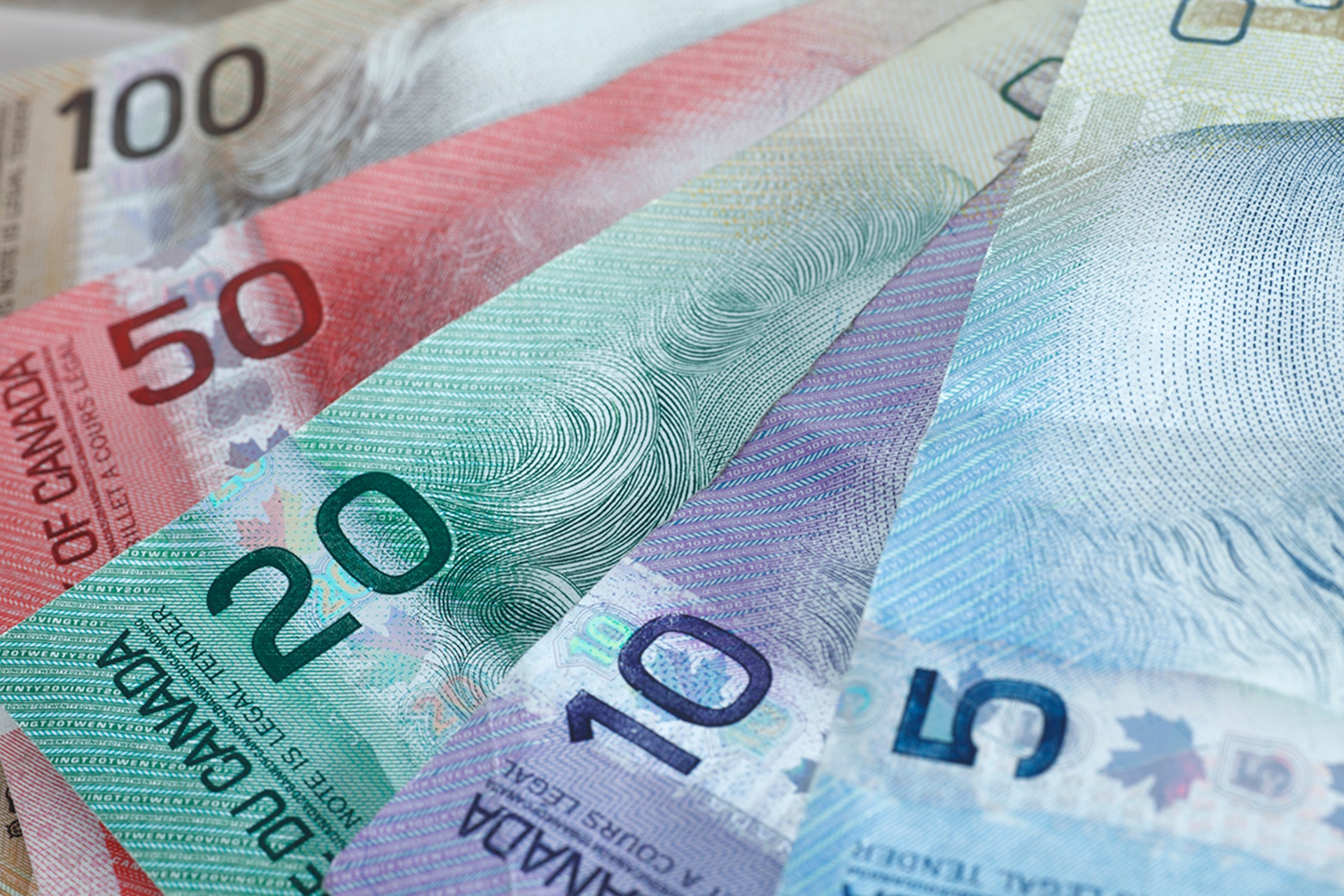
Mr. Dodge: I do not normally trade in rumours at all. It is important that you are asking a question about the Canadian dollar because when we got our new $5 bill out, while it is a Montreal Canadiens' sweater that it is on the kid in the picture, nevertheless it really does celebrate what this country is all about.
Senator Mahovlich: Do they have the right number on the sweater?
Mr. Dodge: It does if you come from Montreal.
The Chairman: Twenty-seven.
Senator Mahovlich: You mentioned Argentina and the trouble that country has had. Was their David Dodge to blame in that he could not harness the inflation in that country, or was the problem strictly political?
Mr. Dodge: Argentina has had social and political problems along with economic ones since the 1940s. It is hard to believe that that is a country that was richer than Canada at the turn of the century, and especially hard today when you see the chaos that has ensued. I do not think I can go into all the roots of it.
Argentina had absolute runaway hyperinflation in the 1980s. They were then pegged to the U.S. dollar, which proved to be helpful at first but then increasingly difficult as their two major trading partners, Brazil and Europe, depreciated against the U.S. dollar, leaving Argentina standing out there.
Fundamentally, Argentina has not had the social and political will to deal with problems in the way this country has had to deal with our problems. In fact, in percentage of GDP terms, our fiscal problems were worse when we started to tackle them at the beginning of the 1990s than theirs are today.
Senator Tkachuk: Since 1998, the daily retainer of the directors at the Bank of Canada has gone from $200 to $300 to $565 to $665 today. Their annual retainers, which were $1,500 to $3,000 in 1998, are now $7,300 to $8,600. Are they paid at the top of the scale or at the bottom of the scale? Has their workload increased or are they just getting ahead of the inflationary curve?
Mr. Dodge: First, I want to express my appreciation to the members of our board. They are extraordinarily diligent. They are very helpful to us at the bank. They do bring the regional perspectives to the table. They do an excellent job.
Senator Tkachuk: I am sure they do.
Mr. Dodge: Are they overpaid or underpaid?
Senator Tkachuk: I did not ask that.
Mr. Dodge: You know what directors are paid at corporations. I do not think that the directors at the Bank of Canada are overly remunerated. That really is an appropriate question for the government because those rates of remuneration are set by Order in Council.
Senator Tkachuk: You are the one who talks about the 2 per cent. The remuneration of most boards of public companies is public and the salaries of their officials are public. Our salaries are public. I just want to point it out in committee, in public, that their retainers have doubled in the last four years, while at the same time the Bank of Canada is talking about a 2 per cent inflation rate. That is why I brought the point up.
Mr. Dodge: They have actually doubled in the last 20 years.
Senator Tkachuk: From 1998 to now, they have doubled. That is what I was pointing out.
In answering other questions, you talked about interest rates and about the last decade. Because we were trying to attract foreign capital, because of our need for capital, our interest rates were higher and therefore money was flowing in. Of course, we do not have need of that money now so interest rates have in fact been a little lower than the U.S. rate. Is the reason money flows into a country not just interest rates but also investment capital? Does not the federal government or something besides interest rates have anything to do with why capital would flow into a country?
Mr. Dodge: Of course, it does.
Senator Tkachuk: I am not sure if this is what you are saying, so I am asking you: Because our interest rates are down, there is no other reason for the rest of the world to come knocking at our door to invest in our country and make profits and pay taxes and do all the rest of it, and therefore the value of our dollar is being driven down; it is totally dependent on interest rates. Is that what you are saying?
Mr. Dodge: No. I hope I did not leave that impression. As I said, one must look at the balance between savings and investment. In fact, we had been, as a nation, big net dissavers through the 1980s and the early part of the 1990s. As we moved from no longer being dissavers, we became net savers. That in and of itself basically required an outflow.
There is a mix here, of course. If we look at direct investment, we have Canadian firms increasing their investment abroad, which is a very good thing, and we have foreign companies increasing their investment in Canada in terms of direct investment.
In terms of portfolio investment, we have seen over the latter part of the 1990s a significant outward flow of portfolio investment, net.
Senator Tkachuk: What I am trying to get at is whether government policy should be paying attention to the fact that we have a 63-cent dollar or 64-cent dollar as compared to our major trading partner. We do not compare ourselves to countries we do not trade with. Most of our trade is with the United States. For a John Deere Cylinder/Walker combine, a Saskatchewan farmer will pay $210,000 cash or $265,000 list price if he finances it. In the U.S., the same farmer will pay $143,000 cash. That is a significant difference. I think it has to do with the fact that the combine is manufactured in the United States and shipped to Canada, and our dollar is weak. When you add the dollar differential, that is what the price is.
Mr. Dodge: The whole objective of macroeconomic policy, whether it be monetary or fiscal, is to provide the framework for growth in this country. As I said earlier, we had got ourselves into a rather difficult position at the end of the 1980s and beginning of the 1990s. We really did struggle through the course of the 1990s to dig ourselves out. It is a tribute to Canadians that we were able to do so.
However, it did mean that some of the investments we would have liked to have made, either private or public, were not made over that period. Now we are in a period of catch-up.
The price of the dollar is like any other price. It is another price. I recognize there is a certain emotion attached to that particular price, which most of us, outside of Saskatchewan, do not attach to something like canola. However, it is a price, and it is doing its job in allowing this economy to make the appropriate adjustments and allowing us to achieve the highest possible growth rate.
Senator Tkachuk: That may be true, but it does raise regional concerns in the West. While the low Canadian dollar may be good for the manufacturer in Oakville, Windsor or Toronto, we in the West, being traders of commodities that are exposed to world prices, with no control over the dollar, are paying that much more for a combine or half-tonne truck. For example, in Canada, a farmer will pay $30,440 for a half-ton truck, which he needs for work and not as a vehicle to run around town in, yet in the United States a farmer will pay $18,795. We in Western Canada have a concern about the low Canadian dollar because we live off imports. We send out commodities and we receive imports. We do not have a large manufacturing base. It is of real concern to us, and it is time that you and the Government of Canada started to take this issue seriously because we are being hurt by it.
Mr. Dodge: With respect, senator, I think you missed the other side of the coin; that is, that most Canadian primary products are priced in the Chicago market and are priced in U.S. dollars.
Generally speaking — and being a bit of a farmer myself, I know what goes on — there is a small advantage, although not a huge one because you must pay for some of your inputs in U.S. dollars. However, at the margin there is certainly an advantage to having a currency that floats during a period of adjustment such as we have had.
The Chairman: Thank you for being with us this afternoon, Governor Dodge.
The committee adjourned.