
THE STANDING SENATE COMMITTEE ON FISHERIES AND OCEANS
EVIDENCE
OTTAWA, Tuesday, February 7, 2023
The Standing Senate Committee on Fisheries and Oceans met with videoconference this day at 6:39 p.m. [ET] to study the federal government’s current and evolving policy framework for managing Canada’s fisheries and oceans including maritime safety.
Senator Fabian Manning (Chair) in the chair.
[English]
The Chair: Honourable senators, good evening, my name is Fabian Manning. I am a senator from Newfoundland and Labrador, and I have the pleasure of chairing this evening’s meeting. Today, we are conducting a meeting of the Standing Senate Committee on Fisheries and Oceans.
Should any technical challenges arise, particularly in relation to interpretation, please signal this to the chair or to the clerk, and we will work to resolve your issue.
I would like to take a few minutes and ask the members of the committee who have joined us here this evening to introduce themselves.
Senator Busson: My name is Beverley Busson, and I’m a senator from British Columbia.
Senator M. Deacon: Good evening, Marty Deacon, senator from Ontario.
Senator Francis: Brian Francis from P.E.I.
Senator Quinn: Jim Quinn, New Brunswick.
The Chair: Thank you, senators.
On February 10, 2022, the Standing Senate Committee on Fisheries and Oceans was authorized to examine and report on issues relating to the federal government’s current and evolving policy framework for managing Canada’s fisheries and oceans. Today, under this mandate, the committee will be hearing from representatives from the Canadian Independent Fish Harvesters’ Federation. Melanie Sonnenberg, president, is joining us via video conference; and Carl Allen, the treasurer, is with us here in the meeting room. On behalf of the members of the committee, I thank you for being here today and taking the time to join us. I understand that both of our witnesses have some opening remarks.
I will allow them to go forward now. Following their presentations, members of the committee will have some questions for you.
Ms. Sonnenberg, would you like to begin, please?
Melanie Sonnenberg, President, Canadian Independent Fish Harvesters’ Federation: Good evening to everyone. On behalf of our members from across the country, we want to thank you for the opportunity to address the honourable members today.
The Canadian Independent Fish Harvesters’ Federation, or “The Federation,” is comprised of 34 member organizations representing more than 14,000 independent owner-operator enterprises that harvest most of Canada’s lobster, crab, wild salmon, shrimp and groundfish. With 43,000 crew workers across Canada, independent owner-operator fleets make us the single largest private employer in most Canadian coastal communities. Combined, our harvesters spend more than 20 million hours on the water per year. Together, we produce over 5 billion meals and over $3 billion in landed value, generating over $7 billion through the value chain.
Canada’s fisheries bring great value to our coastal communities, and this extends far beyond solely their economic value. Fisheries connect us to our ocean and define the economic, social and cultural fabric of our Canadian coastal communities. To add to this, local fisheries feed millions of Canadians, protecting our collective food security. COVID-19 served as a reminder of the importance of protecting our domestic food supply.
As the stewards of Canada’s coastal communities, our members have profound concerns about the erosion of owner-operator. Thanks to your support in June 2019, the federal government enacted legislation to protect and promote local, independent ownership and operation of the fishery. Both the legislation and the new regulations that followed promised to protect the 14,000 independent owner-operators represented in Canada’s inshore fishery.
Unfortunately, the legislation is not being effectively enforced, which is threatening the survival of the very coastal communities and operators it sought to protect. We are calling on decision makers to act on legislation and regulations that exist.
Today, we will share two examples of where erosion of local, independent ownership and operation of the fishery is playing out in our coastal communities. We will also recommend solutions to each one.
First, there is a stark lark of enforcement of the regulations for fishing enterprises. Even with regulations passed in 2021, which give owner-operator and fleet separation policies the full power of the law, enforcement of these regulations has been almost non-existent. When licences are taken from harvester hands and put into corporate investor or foreign ownership, their associated economic benefits no longer flow into our coastal communities, which was a key underpinning of the legislation.
Enforcement is imperative for the survival of these enterprises and, by extension, the coastal communities in our country.
As a solution to this, we recommend allocating sufficient resources to investigate and prosecute violators of the Atlantic fisheries owner-operator regulations. Licences being abused should be immediately revoked or cancelled. We look at Alaska, where those caught abusing licences face jail time, as an example of a successful enforcement approach. In the Pacific, we strongly recommend establishing an independent commission to develop regulations similar to Atlantic Canada as outlined in recommendation 15 of the 2019 FOPO shared benefits report.
I will turn this over to my colleague, Carl.
Carl Allen, Treasurer, Canadian Independent Fish Harvesters’ Federation: Melanie and I like to run as a tag team, but I’m going to take just a second to repeat her opening line and thank the chair and members of the committee for having us here tonight. It is definitely appreciated.
The second way you can observe the erosion of owner-operator in our coastal communities is the increasing foreign ownership and corporate concentration of the fishery. In the absence of regulation enforcement, corporate and foreign interests are eating away at the resources of Canada’s coastal communities.
Our public resources are at risk of being swallowed up by these corporations, who are driven by one thing: securing our wild fisheries production for their own profit. We have several examples of this should you be interested in hearing more. The loss of independent local ownership and operation of the fishery has the following consequences: It takes monies out of the local communities, increases the price for Canadian consumers in an already difficult economic climate, puts at risk our collective food security, allows foreign entities to make or influence decisions about our Canadian resources and allows resources to be exported without any local connection or value added.
Take for example Royal Greenland. Royal Greenland is a fishing company wholly owned by the Government of Greenland, that is, Denmark. They have been acquiring subsidiaries from the coast of Greenland, Europe, Chile, Nova Scotia, Quebec and Newfoundland and Labrador to control the supply chain in the North Atlantic.
Royal Greenland acquired all shares in the Nova Scotia firm A&L Seafoods in 2016, and it purchased sole ownership of Quin-Sea Fisheries, one of the largest processing companies in Newfoundland. This sale included five processing plants that, I would add, have some controlling agreements with harvesters.
In a period of three years in Newfoundland alone, Royal Greenland went from having no presence in Newfoundland and Labrador to being the lead operator in nine processing plants. They are now the largest processor in the province. Not only is Royal Greenland swallowing up local processors and producers, but their shareholders are also reaping the benefits from our fisheries, leaving only a fraction of the food supply and economic value for Canadians.
In response to this, we are calling on the government to declare Canada’s fisheries resources a strategic food asset as has recently been done with critical minerals. We recommend strengthening the Investment Canada Act criteria for corporate and foreign investment in the fisheries sector. In the interim, we recommend the federal government freeze license transfers to any entity other than independent harvesters. We support a competitive market environment and respect international trade obligations, but we must take decisive action to prevent long-lasting, irreversible damage to a resource that connects us to our oceans and defines the economic, social, and cultural fabric of our country’s coastal communities.
In closing, we thank the committee for its attention to owner-operator. Both the legislation and the regulations that followed are essential to maintaining a highly productive and economically dynamic fishing industry in Canada. Unfortunately, when not effectively enforced, the survival of the very communities it sought to protect is threatened.
We look forward to answering any questions you may have. Thank you.
The Chair: Thank you to both of our witnesses, and certainly there is some food for thought in your opening remarks.
Senator Francis: This is for either or both witnesses.
Fisheries and Oceans Canada only issues commercial fishing licences to Canadians or to Canadian Indigenous groups or communities. However, controlling agreements can involve foreign-owned companies, placing the benefits of the Canadian fishing activities in the hands of non-Canadians.
Please explain how controlling agreements are harmful to Canada’s inshore fishery, small business owners and coastal communities.
Ms. Sonnenberg: I can start, perhaps, Senator Francis. Carl, as a harvester, can give you a real from-the-water perspective.
You could liken owner-operator to a small business owner, which is what they are, in essence — a small- to medium-sized business. When we are competing with — or being overtaken by, which I think is a better term — corporate interests, whether they be foreign or Canadian, and they take over those businesses, that takes the money that would flow into our community in a different way, and it moves it out of the community.
You see a lot of really negative impacts. British Columbia is a very stark example of how devastating it is to lose those dollars in the community — what the result is. We see more and more of that on the East Coast for all of us, for Indigenous and non-Indigenous alike. It is having a huge impact on us.
At this point, Carl, I will turn it over to you for your perspective.
Mr. Allen: I would say that if you want to get right down into the weeds from a harvester’s perspective, we have what we call company skippers running an enterprise, and attention to safety may be a little more lax.
I own my licence. The only thing I have to answer to is the bank and the payment that I have on my boat, and my wife. Whereas if I’m a company skipper, even though the licence is in my name and it is a financing agreement or whatever they are calling them now, when you look to the terms of the agreement, there may be no way to ever find yourself out from underneath of that. If I don’t hit certain targets, they can come in tomorrow and take it away from me and give it to you. Whereas I will go to the wharf in the morning, and if it is blowing a little too hard, I’m not going. I have a limit on what that threshold is for me and where I’m going to push in the weather. Sometimes the company skippers, there is that whip cracking behind them, and they don’t have as much flexibility in it.
Another thing that we see is that, because quite often some of these skippers know that their time may be limited in this enterprise, their long-term conservation goals are not the same as mine. I’m in my early forties. I don’t feel like I’m in the younger demographic, but I’m in the younger demographic of the fishery right now. It is in my vested interest to see that this fishery lasts for the duration.
I have three daughters. One of the three has a bit of an interest in fishing, so it’s in my vested interest to see these resources are sustainable for the long term. Sometimes you will see these company skippers come in, and they are not that concerned because, maybe in a year from now, they will be out the door.
Also, there are “gentlemen’s agreements” amongst fishermen. Every area has differences. When you look to Melanie’s area down in Grand Manan, guys will have lanes, and they work together, because we’re all in this together, whether we like it or not. It is a very unique industry in that we’re all in direct competition with one another on a daily basis, but no one is left behind. You are always working together. If someone has something that is broken, if I have that in my shed, I go and get it. Whereas, again, these corporate skippers sometimes are not so concerned with trying to work with everybody else that is in the industry because they are in a whole different set of parameters than the rest of us.
Senator Busson: I have a question for either witness, but Mr. Allen touched on it.
Your commercial fishery licences are non-transferable. In other words, the licence holder must be present when the fishing is taking place, except in specific circumstances and only if prior approval is made by Fisheries and Oceans. Could you comment on this non-transferability and how it affects your business and similar independent harvesters in the sustainability of the industry?
Mr. Allen: Non-transferable how? On a day-to-day basis? It is funny because each region has a different set of parameters around what we would call a “substitute operator,” if that is what you’re thinking.
Senator Busson: That’s where I’m going with this. If I’m wrong, please tell me, but does a substitute operator have to be pre-approved by Fisheries?
Mr. Allen: Yes. It has to be pre-approved depending upon, say, a long-term medical, where I would need a doctor’s note. There is a provision for an emergency substitute operator, where you can get it done through a Conservation and Protection, or C&P, officer even on a weekend. If I were in a car accident on Friday night and I needed someone to take the boat on Saturday, heaven forbid, I can reach out to a local C&P detachment, and they might issue a short, five-day one to allow me that get-go in the short term to make the provision for a longer term one.
Where Melanie is at, they fish lobster eight months of the year. If you are a grey-zone fisherman, you are 361 days. My lobster fishery is 63 days. So it is a different ball game on how those few days may affect my annual revenue.
I do have transferability in that when I decide that I have had enough of this racket and I want to retire, I can choose and designate who I transfer it to. That is where we see, in some of these controlling agreements and that, you know, on paper it looks like I’m the one who is controlling it, but in reality, it is the company who has the next skipper lined up behind me, who comes in and says, “Okay, Carl. You have been good, but you know what? You are not performing. Out the door you go.”
I have had years where I have been close to being the highliner — you can ring the bell and it feels good — and then two years later, I got in a rut, and I’m down in the bottom half of the pack.
Being independent, I have the opportunity to change that the next year. Maybe if you have a couple of bad years as a corporate skipper, they will say like they do with an NHL coach, “It was fun, but you’re losing right now and out the door you go.” You are the problem. That is the huge difference in the two scenarios.
I don’t know, Melanie, if you have anything to add to that.
Ms. Sonnenberg: The only thing that I would add, Carl, is there is also a provision, particularly in our area — as Carl indicated, we fish longer periods of time — for people to have vacation, substitute operators onboard. Sometimes for those who attend a lot of meetings, like Carl, there is also a provision for some professional days. So there is that flexibility.
Presently, I know that DFO at NHQ are coming out to talk a little about substitute operators and closing loopholes, senator, that seem to exist in some areas. For example, the medical has been used and abused. We don’t want to see that changed in a way that would hurt people who genuinely need it. But for those who are using it to just get off the boat and have somebody else operate it, that’s not the right reason.
There is some examination of that policy and some of the policies that go around substitute operator.
Senator Busson: For clarification then, from your perspective, the non-transferability is not necessarily a problem, as long as it is used in the essence in which it was granted and that it is not abused?
Ms. Sonnenberg: When it is transferred. Since the legislation and the new regulations have come in, there are a lot more hoops from a transfer point of view.
If Carl is leaving the industry and he directs a transfer to the next recipient and there is a sale between two people, there is a far more rigorous system. But because of the money involved with corporate concentration, they can pay a lot of lawyers and accountants to help make this happen. That is, in fact, what is happening.
The oversight has to be really rigorous. It is taking a lot longer to do the transfers, but, where necessary, there has to be some way to “follow the money,” which is the expression we use in the federation. There has to be a chain where the money is being followed so that when someone is paying out a licence, it is very clear to the department where the money is coming from, and if there is a payment plan of some kind, as Carl referenced earlier, it has to be clear that it is something that is manageable and not at rates that would be considered loansharking and over the course of a reasonable period of time. No bank would ever sign you up for, like 99 years or whatever. There are some very interesting financial arrangements out there, we’re told.
Senator Quinn: Thank you for being here this evening, folks. I really appreciate you being here. This is a fascinating topic. We have discussed this in the past.
I don’t think that the average Canadian understands the importance of the fisheries to coastal communities — the jobs and the economic benefit, and the ability for people to not only have a livelihood but to raise their families in the coastal communities.
With the changing environment that you are challenged with in terms of rules and regulations, do you feel that the department has the adequate resources directed to do that monitoring compliance function? I am just wondering if you have any thoughts on that.
Mr. Allen: With regard to the regulation itself, I don’t know if they truly do. I think there is a lack of will to do the tough work too. This is a tough issue to go into individual agreements. With the regulation the way it’s set up, it’s not so much ticketing offences, but you’re taking them to court. It takes a lot of work and the will to go to court. I think they need to go there, though. It’s one thing when it’s Quin-Sea that’s owned by Newfoundland interests that have 50 control agreements with 50 harvesters in various communities in Newfoundland — and we have some issues with that — but when Royal Greenland comes in and buys Quin-Sea, they’re controlling that resource top to bottom through the whole chain. They will make decisions that are best for their bottom line, and they will make decisions — especially when Royal Greenland is owned by the Danish government — that will serve their country before our country. We saw this in 2020 with shrimp in Newfoundland. They were getting enough shrimp elsewhere off Greenland, so they left some of ours in the water because it did not serve their interest.
In March and April of 2020, everyone thought that the whole seafood sector was going to collapse. By the end of 2020, however, it boomeranged and went the other way. In reality, a lot of products were left in the water in various fisheries that shouldn’t have been.
What happens when they make decisions and they’re closing communities down? These communities all survive on the fishery. As you said, it’s a cultural thing. When people think about Atlantic Canada — and, in the Blue Economy Strategy, we talked about a fisheries tourism component — no one goes to Halifax to see the container port there. They go to Peggy’s Cove to eat a lobster roll and to Newfoundland for fish and chips, and so on. We need to do everything we can. There needs to be the will and the resources to protect that so we have the entire fisheries economy.
Melanie referred to the West Coast. When you look at the stark differences between the West Coast and the East Coast, the West Coast has an investor model. If you want to buy a salmon licence in B.C. right now, you can, Senator Quinn. There’s nothing to stop you from doing that. Then you’ll hire me out, and I’ll fish for 10 cents on the dollar, but that has destroyed the entire fisheries economy because the fisheries economy is not just the fish that come to the wharf itself; it’s the fish that come to the wharf, the trucking and the processing.
Go try to get a boat built in Atlantic Canada right now. In some boat shops, there’s a two or three years wait. I live in Cap-Pelé, New Brunswick. There is a place that saws the components for wood lobster traps and employs 15 people. Most of those components are shipped to Tignish, P.E.I., where another enterprise hires 15 to 20 people that build lobster traps. It is this spinoff economy that is allowed to flow out. On the West Coast, fisherman are fishing for 10 cents on the dollar. They can barely survive let alone reinvest. The joke in the fishing industry is that we’re good at spending money but not so great at saving it sometimes. We’re just good at rolling it.
To go back to your question, there needs to be a will within the department as well as the resources to be able to do the hard work. It’s like a road check on the highway. If they just did something that is visible and catch an individual or two to send a clear message that they’re serious about it, it wouldn’t take long before the word would get out. The department told us their model is to try to bring everyone into compliance, but their approach is like saying, “Go find another loophole. This one is not working for you. Come back to us.” They give them 12 months to come back into compliance. That word gets out just as quickly. Nobody is on the highway. I can roll through at a buck fifty all day long and no one is going to stop me because there is never an RCMP. That is what is happening now.
Melanie, do you have anything to add to that?
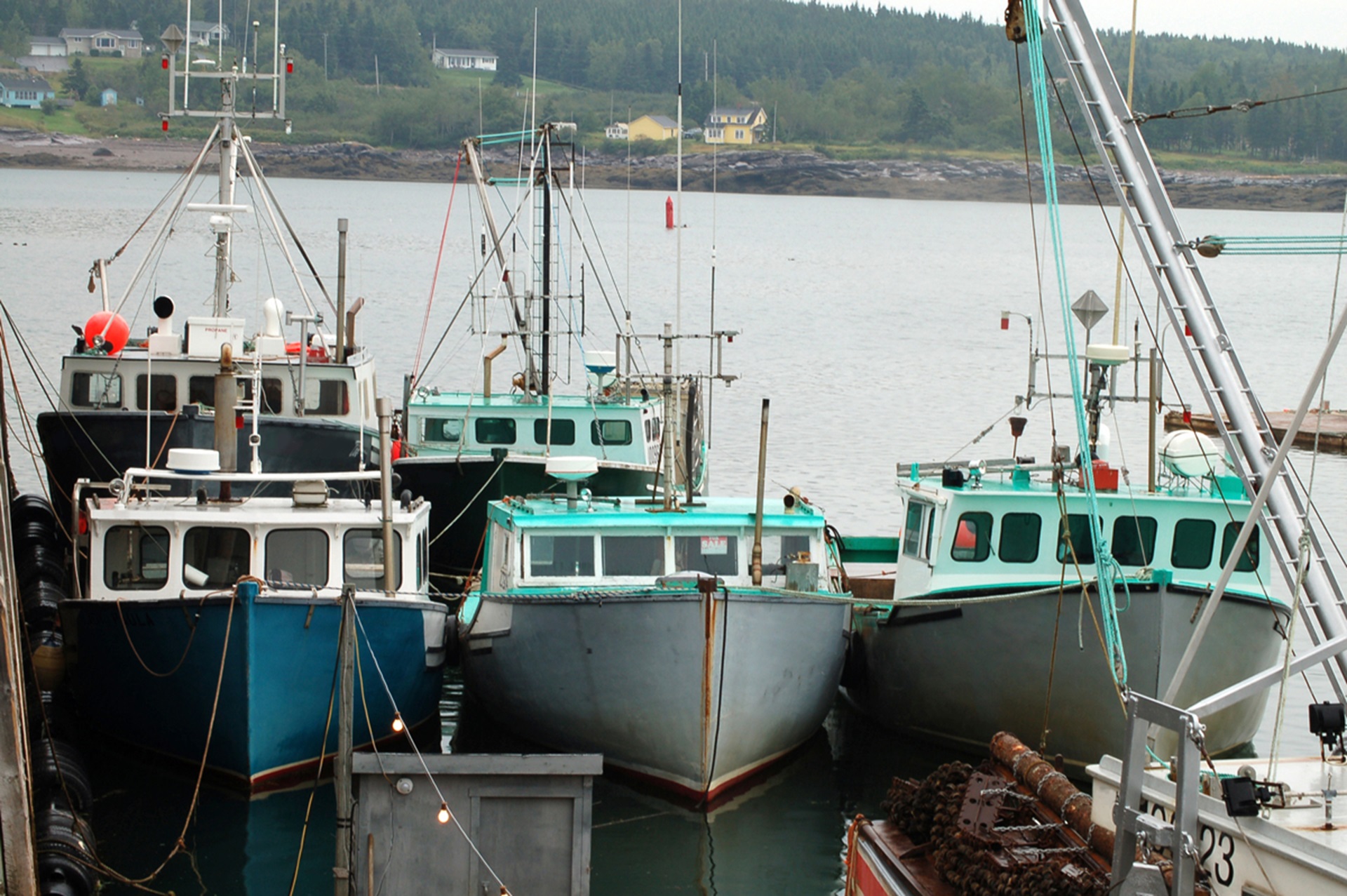
Ms. Sonnenberg: I think you’ve covered it all, Carl. I think, Senator Quinn, that from where I sit, sometimes a reallocation of resources may be more appropriate than getting more. There is a need for having a bigger team to do these investigations and to continue to monitor. They’re doing targeted investigations at the present time in the maritime region. We heard a report last week, when we were at meetings in Ottawa, that about 17 files have been opened. Is that enough? Also, do they have the skill set? Because this is all new. They will tell you that themselves. I do worry about the skills required because it is a forensic audit. It’s not just about going on the water and seeing things that are amiss, which are easy to see if you choose to go to a wharf in Southwest Nova or here, in southern New Brunswick. Sometimes those controlling agreements are easy to identify just by the vessels and by the colours of the vessels.
What has to happen is the digging into the agreements. To your question, I think that they do need to have some more resources, and they need to have some very specialized resources to get the job done.
Senator Quinn: Thank you for your commentary. You’re underscoring a real problem happening in government today in terms of those looking to enforce things of that nature. Every sector seems to have fewer people and the skill sets and competencies are declining yearly. This is a complicated file. If we don’t have people who have the ability to go into the field to do the very things that you’ve talked about, that’s an issue.
Has your association had discussions with your colleagues and with people out on the water? You folks are on the water and you know everybody in that independent sector. Do they ever talk about the lack of resources? When was the last time you saw a fisheries person involved in this particular segment of the business out in the field?
Mr. Allen: I’ve never encountered that myself. I know a few individuals who recently purchased an enterprise last year. Some of the comments are, “I signed my name more times than I have ever signed my name.” Again, we see that a company that has 30 people under controlling agreements can spend a lot of money on a lawyer to write one. Once they have one, then it’s just copy, cut and paste. Whereas for the individual, it seems like quite a hassle. In reality, it is the bank lending the money and everything is on the up and up. It should be a smooth process, but it seems to be quite cumbersome. But transfers are being done, and people are entering the fishery.
Over the past few years, the Maritime Fishermen’s Union as well as the federation have pushed for access to capital. Once upon a time, provincial fisheries loan boards were big players in the fisheries. That’s when the banks wouldn’t touch you because your licence wasn’t collateral. Even if they took your boat, it might not pay for the whole enterprise. For a while, the provincial fisheries loan boards pulled back. In New Brunswick, we worked hard with the province. They brought in programs for new entrants, and they’re partnering with financial institutions. That’s helping, but we don’t see that on the paperwork side of it.
Melanie’s area would be a good area for them to go to. As she said, at their wharf they can say, “All those boats that are that colour are owned by that company.”
It’s more prevalent. I’m fortunate enough, us in the gulf, because our fisheries for years had an economic value that was way less than it was in southwest Nova, because that’s where it began in places like southwest Nova, where fisheries became big. We’re kind of on the tail end of it, but we’re starting to see it: Where there’s money to be had, the interest will follow.
Senator Quinn: Thank you.
Senator M. Deacon: It is a privilege to be here tonight at this committee meeting. For our witnesses, I am replacing one of my colleagues, but I have tried to catch up a little bit on the study and the important work this group is doing.
I also want to acknowledge that, on top of your day jobs and the work that you’re trying to do, to be in those roles as president and treasurer of a group that has to be experiencing a lot of change, a lot of reform, a lot of tough stuff — On behalf of this committee, thank you for taking that additional role on top of your professional lives.
I’m thinking about this and listening to what I’ve heard today. And my question, which may to the chair feel a little bit off to the right or left, is to help me to understand a little bit further the work that you’re doing. As we do look at commercialization and we look at the issues and the challenges, I’m wondering from both of you, your own work and the work you represent for this independent organization, what is keeping you most awake at night? What is it that you see as your own personal denominator, or work that you do — your own particular area that you each bring unique perspectives — or a response that reflects those conversations and phone calls that you’re having with some of your membership?
Ms. Sonnenberg: I’ll take a stab at this, Senator Deacon. I have been president for five-plus years of the federation. Like any volunteer position, I’m paid by my organization, the Grand Manan Fishermen’s Association, to be part of this group and to represent us there.
I think what keeps me up at night isn’t what specifically it is, but what it isn’t. There are so many things that are facing this industry. It’s like a deluge. It’s just so much that you can’t even some days process it.
We were in the city last week to have our annual general meeting. We had it in Ottawa, so we could be on the ground there where we find it easier to speak to some of the decision makers. By the time we got done the week, we had talked about all the things you’re hearing us speak about tonight as it relates to the study of issues that you’re doing on management of Canada’s fisheries and oceans. The owner-operator has been around since the late 1970s. It started out as a policy, but I think of all the things, it is probably the erosion of the owner-operator — that little guy or gal who is being squeezed out or bought out at a point in their career. It’s not a career. That’s not the right word. It is the lifestyle that they’ve chosen. The fishery is not a job. It’s a choice.
When you’re out on the water, things are being gobbled up, the ocean is getting smaller through Marine Protected Areas, or MPAs, climate change is affecting you, there are rules coming down every day, there are Transport Canada issues to be dealt with — the list is so long and so complex.
I’ve been in the fishery as a — I call it being a “fisher-crat.” I’ve never had the good fortune, which is probably just as well for the mariners out there, to operate a vessel and call myself a fisherman. It is a respected profession. I’ve worked in the industry for 42 years now. I have to say it is a passion of mine, but it is worrisome. In all the years I’ve been here and all the things I’ve seen, I just don’t know. It just never ends, but I don’t see a lot of hope on the horizon, and I think a lot of people feel that now. It is difficult to get young people in this. The cost and pressure are enormous. I won’t rant on, but it is difficult. The way the fishery is managed is not at a level where engagement properly takes place, in my opinion, with the people who matter and the people who are out on the water. They’re a separation away from these decision makers, and they have no way to get some of the input of the things being seen. As we look at the rapid changes from climate change or there may be something very specific going on, but oftentimes, the harvesters aren’t being heard, and I find that really troubling. So I’ll stop there, but it is a long list.
Mr. Allen: What keeps me up at night depends on the night. It’s a long list of stuff. To give you some perspective, you talk about resources. Last week when we were here, we met with an official at 200 Kent St. on the MPAs and marine spatial planning, and she tells us she has 90 people working under her in Ottawa. Collectively, between 34 organizations, we don’t have 90 hired staff, and we’re not just dealing with MPAs and spatial planning, we’re dealing with everything. There is a downloading all the time. It is a double-edged sword, like Melanie said, as a harvester, as somebody on the water sometimes, I don’t feel like the department is really listening to us. I think one of our failings in Bill C-68 is we didn’t get a line in there that talked about harvester knowledge. In our opening statement we talked about collectively having 20 million hours at-sea hours with our crew. That’s probably a low estimate, but I’ll stand behind that number and show you the math. That’s not for nothing. That shouldn’t be discounted.
I’m one of the worst. I don’t write much down. Everything stays up here: where I was last year and where the fish were and what the fish were doing. Most fishermen don’t put things in a set, scientific way that can be given to a scientist and peer reviewed and accepted. It’s called anecdotal evidence, but in reality, we’re the first ones to see it, especially the inshore fishermen. Inshore fishermen in Newfoundland all through the 1980s were saying, “There is something wrong here. We’re going to hit a wall,” because they knew what was happening. The fish weren’t on the shores. They heard the story of the discarding offshore and that was all ’No.’
If you want to get into the weeds, you look at area 16 spring herring. The sea was closed last year because the stock is in a critical state. As an individual that fished herring, as a teenager who fished herring, and who fished herring the last few years, I totally disagree with that. We’ve seen a rebound of that stock in the last few years. The department closes the fishery. All of the science on that stock is fisheries-dependent with very little of a plan to replace those data. Now there is a hole. They want to keep the fishery closed for five years without even talking about a rebuilding plan. Fisheries are tough to manage, especially in this changing environment. I don’t know if it’s easier to shut them down. If they’re not lucrative, if they’re not a certain capacity, it’s easier just to close it, so we won’t have to deal with it.
If you look at Atlantic mackerel, one of the assessment tools they use to assess that stock is a spawn troll. They do a troll between Prince Edward Island and the Magdalen Islands. They troll for spawn. They can tell by the number of spawn they get, this is where the mackerel should be this year. The problem is they’re set in this little window of time when they do it. From one year to the next, it could be an early or a late spawning event.
This year there is the least amount of ice I’ve ever seen in the Gulf of St. Lawrence as long as I’ve paid attention to it. As a fisherman that tells me that it’s going to be an early spring. I don’t follow mackerel. I have a woman who works for the PEI Fishermen’s Association, Melanie Giffin, and she’s bang on in this. The department wants to leave the spawn troll until the first week of June, as always, and she says you should be bumping it ahead three weeks.
The list goes on and on. Changes are made that make no sense, and you’ve got to deal with that. To give you a bit more of my background, I’m treasurer of the federation, but I’m part of the Maritime Fishermen’s Union in New Brunswick. That’s my member organization that belongs to the federation. I’m vice-president in New Brunswick. I was president of the Maritime Fishermen’s Union from 2014 to 2019. I represent 1,000 fishermen in New Brunswick and 300 in Nova Scotia.
Once upon a time, I got really tired of going to fishermen. They had nothing but bad news, one way or another, whether it was just bad news because something was being closed or bad news because of issues not being resolved because something else was being downloaded onto us because we were not being listened to. It wears you down. I tip my hat to Melanie. Forty-two years — wow. I’ve been at it for 10.
I tell people that fishing is not something I do; it’s who I am. I’m fourth generation. You have to be a little off your rocker to be in this industry. You have to really be off of it to love it —
Senator M. Deacon: Can I just hold you on the off the rocker piece? Just keep that in mind.
I apologize for stopping you, but you touched on something really important.
Thank you both for your candid responses. I appreciate it.
You are about to touch on something, and I want to make sure I have a chance to ask you this: The energy moving forward and the what I would call “succession” — the people behind you — how do you both see owners and operators? Are they — I want to say “invigorated,” but that’s maybe too strong a term. However, do we have other folks after 42 years and after you are 42 — I think those are the two numbers I heard — who are behind you wanting to carry on this important work?
Mr. Allen: Melanie, you go ahead while I percolate on that for a second.
Ms. Sonnenberg: Senator Deacon, I really think it will be a lot harder to get people to the table. It’s very discouraging for them.
Regarding this association I’m with here on Grand Manan, I’m fortunate to have a good number of young harvesters. When I say “young,” I’m talking a little bit younger than Carl but not much. They come in and they’re excited, but it’s difficult to keep them engaged, first of all, because they have so much to contend with and their debt load is high. That means they have to keep their nose to the grindstone. Every day they wonder how they are going to make the next payment. That’s tough, because there are very few young people coming in who are debt-free or who have a manageable debt load when they start, so they really have to work hard at it.
The things that are going on and the way that we engage or don’t is really discouraging to them. That’s one of the issues that we face.
Of course, we all know that we have a labour shortage, and with that, maybe we don’t have a labour shortage per se in the industry as it relates to what you’re asking, but we have volunteer burnout. We’ve heard that over and over again. Before the pandemic, we heard it, and now, after the pandemic — people didn’t come back the same way.
I really don’t know what will happen. I’m a great believer that if you step aside, somebody will come in and pick up the reins. That’s the best you can hope for. It might not be the same as what you were used to, but they will bring something new to the table, hopefully, and bring a breath of fresh air to the job.
All we can do — and what we continue to do — is try to groom people and engage them and show them the importance. If you’re not involved in this industry and are sitting at these tables, as someone who is invested as an owner-operator, you will get left behind eventually. It’s a way to stay on top of what is happening, but again, it is time-consuming because of the number of issues being thrown at harvesters every day.
Mr. Allen: That’s a good way to encapsulate it.
As far as new entrants into the industry, if we put the resources there and access to capital and that sort of thing, that will happen. I find it more troublesome with the organizations, in all honesty, to find the next generation of volunteers to come to places like this. That stems from quite a few different reasons. We do see people who will come in, but things work at a very slow pace up here. We’re working in an industry where you have to make decisions like that and move from here to there like that. If you wait two weeks to make a move, you’ve missed it altogether. We’re in a go, go, go industry. When they realize that things take a long time to make happen — this is a marathon, not a sprint — that will turn some people off.
Also, it was funny. I had this conversation with one of my board members who has been involved with the Maritime Fisherman’s Union since the early 1980s. I said, “Today’s people are just not interested in being involved.” He said, “Well, you know, men today and family structures have it different. When I started up at this, if I got home at night at 5:00 from the water and said to my wife, ’I have to go to a meeting at 7:00,’ she took care of everything, and there were no questions asked.” Now he takes his daughters to baseball games a few times a week, and he plays that part so it’s a time-management issue as well.
For us at the Maritime Fisherman’s Union, I’ve always been a strong advocate of trying to give our members the tools, like leadership training and stuff like that, so that if they choose to take on these roles, at least they will feel comfortable. It’s not everybody who can come here and sit at this table. We’re competing with a big show tonight. It’s a handful. You get at one of these tables, and every one of those seats are full and asking you questions. It’s not everyone who can sit here, do this and be comfortable in their skin doing it. It’s taken me a while to get to this point.
Those are some of the challenges we face as an industry as a whole.
The Chair: This has been an interesting conversation.
Thirty-one years ago, we had the cod moratorium introduced in eastern Newfoundland and Labrador. I lived and still live in the community of St. Bride’s. We had a population of between 700 and 800 at the time. I’m thinking we’re lucky if we have 250 right now. A lot of that is because of the moratorium. A lot of people moved elsewhere. Young people seemed to move away from the industry.
The industry has changed. I had a neighbour three or four doors down from where I lived who had fished for 50 years and sold his fishing licence in 1992 or 1993 — in that time you bought back licences — for $35,000. That licence today is worth maybe $2 million; I don’t know exactly, but it is worth a hell of a lot more than it was in 1993.
Back then, to get into the fishery, you had a boat and a few nets and $40 to pay the registration fee or whatever the case may be. You were on the water and in the fishery. I realize a lot of that was grandfathered down over time.
I talked to a lot of people who would, in some way, shape or form, like to get into the fishery. But the debt they would incur to get in there is unmanageable in a lot of cases. It is an industry with ebbs and flows, ups and downs. You’re on the boat. I never fished myself, but I know what a good year in the fishery did for our community and what a bad year did.
How do we address the incredible price that an individual would have to pay today to get into that fishery? You talked about the fisheries loans board years ago, and we had it in Newfoundland and Labrador also. Then, you went to buy a fishing enterprise at that time, you went to the fisheries loan board for a loan of $30,000. That was a big sum at that time. They disbanded, and the banks and companies stepped in. I run into a lot of people who tell me that they would have been out of the fishery but the company backed them up financially. Some go to the bank, but the bank was not necessarily the friendliest lending institution when you have a volatile industry like the fisheries.
I graduated high school in 1980, and half of my class are still in the fisheries today. Most of them went right out of school and into the fisheries. Some of them are doing very well for themselves. Graduating today, it’s not even talked about. The Grade 12s are not talking about going into the fishery. They’re talking about getting out of the community altogether in a lot of cases. In the K-12 school in my community there are 31 students. It has changed. When I went there, there were several hundred.
I struggle with that. I’m sure that your organization struggles with it too. How do we address that when the first person up to bat to offer funding to you is a company that, in some cases now, is owned by a country different than Canada? I really do not know what the answer is. I am throwing it out there for discussion. It is a big discussion. It is the financial amount but also where to get those finances.
Ms. Sonnenberg: Senator Manning, this has been something that has plagued the federation since its interception, because they go hand-in-hand. Owner-operator means that you have to come up with the money. When you are corporate, you have deep pockets.
We have had this discussion. In our early days we probably talked about it a lot more simply because as we got started, we understood the linkage: If we do not have young entrants, we will not have owner-operators.
The issue is — as this has gone unchecked, which is what our presentation focused on — the need for there to be examples and for there to be hard line enforcement, where we see some of the correction start to make its way into the system, where we have gotten controlling agreements.
We saw even a little shift in some areas when the regulation came in, and people really thought that there was going to be a finite enforcement action. We saw people get out. We actually saw prices come back. It was not dramatic, but we did see prices slide back a little bit on packages, licence packages.
As long as we’re competing with the corporations, which is why we talk so much about it — and I know that there are certain segments of the population who do not want to hear this — but the fact of the matter is, as you say, when somebody goes to retire, they do not want to give away their enterprise. I know some people who have stood on principle and have released their package at a price that was more affordable than monies that were offered to them simply because of their commitment to community. Those people are not the majority. I will put it that way. Those people are rare.
Simply by going back to the enforcement piece that Carl and I have spoken about tonight, it starts to make a correction, and from that correction, our hope would be that we could build on it and we could find opportunities to help young people get in.
In 2017-2018 we spent a fair bit of time discussing some of the ways that might happen through social financing and community efforts to get people in where it wasn’t happening.
Until we can, with surety, have the regulations enforced as they were intended, and not to bring everybody into compliance by finding more loopholes, but by bringing people into true compliance where we have true owner-operators invested in their operations and, by extension, their communities, I think it is going to be a very difficult discussion, based upon past discussions we’ve had at the federation. It has to start with that. From there, we can build something. But that is the foundation for the story.
Mr. Allen: I would add to that. You are exactly right. There have always been fish buyers, fish processors. When the banks wouldn’t touch you, in most cases there are two types of lenders. There are the good ones and there are the bad ones. My father fished for a good one, Chase’s Lobster. Earl Chase, Pugwash, Nova Scotia, turned it over to his son. A small operation. In 1992, he lent my father the entire amount of money to build a boat while my father waited for the provincial loan board to come through, right? It was funny when the cheque came through for the new boat, Dad had already spent a herring season and a half of a lobster season fishing in the new boat, right? Earl was very good that it was 0% interest, and a banker told Dad, “Don’t ever lose that banker. He is a good one to have.”
Some of these other companies, when you say that they are the first ones to go to, I’m not going to them as getting a long-term loan. They are looking at me as just a pawn, and they will outbid. This is part of the problem, because they are lending the money. This was quite a debate for us, even through the regulation. It was our own members who said, “Well, you can’t take away the ability for a fish buyer, a plant or whatever to lend us money. That is a relationship that has existed between both sides of the sector for decades.”
In these cases, these are investors who are looking at the long term. So maybe that $2 million enterprise is actually only worth $1.5 million, right, but they will give the young fellow $2 million to get it, to make sure that the independent guy who found the million-and-a-half dollars doesn’t ever get it, right, because it is all about control of the resource. It is a modern feudal system. We’re coming full circle to how it all started when the merchants controlled it all. You worked all year like a dog. They would give you the supplies and everything that you needed all year long — probably charged you twice what it was worth — and when you tallied up at the end of the year, if you were lucky, you had a few bucks enough to buy a few Christmas presents for the kids and enough supplies to get you through the winter. In reality, it’s like you said, you know the difference in a good year.
For us, I fished in LFA 25, Lobster Fishing Area 25, in the Northumberland Strait, and 2016 is where we really saw a big bump, in 2016-2017. We’d been doing good the last few years. I don’t know if it was 2016 or 2017, one of those years, but some guy I had never met walked up to me at the wharf and shook my hand. He was like, “You had a good year this year, right?” And I was like, “Yeah, it’s been a good year.” He says, “Oh, it’s good. When you guys do good, everybody around you does good.” That is because you are buying the new boats, new trucks and fixing up your house. We do not save much of it, unfortunately. Maybe if we did, we would not need as much of it at the end, right?
We breathe life into the community. We need to figure out ways to be able to, like I said, stop some of this activity where they are overinflating the price of the licence, because, for them, it is a long-term investment. They’ll have control of that licence forever, in their head. They only need to make just a little bit every year, in the long term, to pay for it, so they will outbid that young fellow coming in, sometimes by 50%. If we can stop some of that and then, in the meantime, put some programs in place, favourable lending programs, for new entrants — When we get them the sweet spot of what those enterprises are really worth, what is justifiable as far as a business plan goes, and we can get them the access, I believe that they are there. I have seen it in my community. I have seen a couple of young fellows buy in because we have a good program now. There is potential. We just have to do some of the hard work in the meantime to get there.
The Chair: I want to thank both of you for your answers. It is one of the things that will not be solved overnight, but hopefully we’ll find the mechanism to do it.
I live in a fishing community, and if somebody says to me, “I can sell my license to Joe Blow for $2.3 million, but I can only get 1.6 over on this end,” well, where are you going to sell it to? They are human beings, after fishing their lifetime, who now have an opportunity to get out and enjoy the rest of their lives. You touched on some people who may be community-minded, but when it comes to $700,000 or $800,000 in one hand versus the other, community goes out the window pretty quick in a lot of cases.
Ms. Sonnenberg: We are talking about people’s retirement, and they have worked a whole lifetime. You can hardly fault them for it, which is the sad predicament we find ourselves in. As long as we have those big dollars out there, this is going to keep going on in perpetuity.
The Chair: I remember meeting with a group of you in my office back a few years ago. There were eight or ten of you who came to visit, and it was a great meeting. We were pretty upbeat regarding the legislation that was being discussed at the time, and your push at those meetings was to get the legislation through, to get it passed and get it enshrined in law.
Over the next couple of months, we saw that happen. I know that you have expressed here tonight and I have heard it from many people that they are very pleased with that piece of legislation.
The purpose that we are here for this evening — again, correct me if I’m wrong — is because the legislation is there on paper, but there does not seem to be anything really happening on it.
In your discussions with the Department of Fisheries and Oceans and whoever you have talked to, what is their answer when you pose that concern, when you raise that question with them. You have had legislation since 2021 and you talk about having teeth and being able to do something. My understanding was that the legislation was the teeth you guys were looking for. So you have got your new set of teeth. How come we ain’t chewing?
Ms. Sonnenberg: When we bring it up, we’re told that they need time to scale up. I think those are the words they use. I have to say that I cannot really accept it. In 2007, we had PIIFCAF, which is the Policy for Preserving the Independence of the Inshore Fleet in Canada’s Atlantic Fisheries. Licence holders were given seven years to come into the policy and be — you cannot say “compliant” in the policy, but you can say “to come in line with” the policy. It is not a law, and therefore “compliance” is not the right word.
We had all that time, and then we moved into the next phase when at the last minute we kindly got support from you folks at the Senate, and it was a big day for us. I think we were more than ecstatic that we had come this far. Then, even through the pandemic, we managed to see the regulations and the team at DFO work really hard to get them across the line.
But all that while, they could have been scaling up. They knew they were coming. There was no reason in the gazette process to see that there were any big show stoppers.
As Carl said, he works in a world where decisions are made in seconds about different things that happen on the water. When you watch this move at this pace, it is frustrating, because every single day this goes on and every single day there is not some action taken by the department to bring this to a close, we are losing ground. When we talk about a strategic food asset, and you talk about a country that owns so much now and continues to invest in and own processing plants, and behind those plants are controlling agreements, where will this leave us?
It is very difficult to sit back when we ask the question and the department then explains to us that they need to scale up. It is just simply unacceptable. I will get myself in a lot of trouble tonight with the department folks, Senator Manning, but that is exactly how it is.
The Chair: You have been there before.
Mr. Allen: We are all friends, Melanie, so let’s not worry too much about that.
One of the things we’ve seen with the nature of the new regulations and the nature of investigations is that, rightfully so, we cannot be tipped details of an ongoing investigation as it is happening, right? We are just waiting for the first example. If they could just make an example of somebody. If at some point they could just come in and get one locked down, where they could say that this is a clear violation of the regulation and we need to do something about this, at least that might send the message out.
Now there’s this whole discussion around substitute operators. Right now the department is getting ready to go out and do a round of consultations around substitute operators because there is so much varying policy within the regions, and they want to try to see if they could bring it in line, what will fit in one region to the next. They’re trying to put in a provision for parental leave now because that did not exist in the past.
The problem we have is that they are saying that in order to strengthen owner-operator, they’re doing a consultation around substitute operator. Our membership is just going to say, “Strengthen owner-operator! You have done nothing yet. Go start with the primary task at hand first, and then we’ll address the substitute operator.” They are a little backwards here. If they could show us they are doing something, then it will make sense that they’re talking about this other thing. How this will be perceived within the industry is that it’s a whole bunch more runaround and stuff to be downloaded onto us.
This industry has evolved so much in so many different ways. When my father started in the sixties, it was a very simple fishery. You got up in the morning, went fishing and hoped you caught something and got paid for it. Now there’s a whole level of paperwork and stuff involved in just being a skipper. I have a friend who just got in. His father got out, and his father is not that old. His father just said he was tired of all that side of the business and all the hassle that’s being created. I just want to fish, right?
So I think that if the department could at least make some examples. They come in, give us a few numbers and tell us they are doing this. Obviously, again, in their defence, they can’t come in and say, “We’re investigating Jim, and this is what it looks like.” That is not how investigations work. We can agree with that. It’s just that we are waiting for that first example to at least show us something. Here we are coming on two years later after the regs themselves.
It’s funny, you were talking about — I was in that meeting with you, Senator Manning, and one of the things I will never forget is that you told the story about how your father owned a store in the community you were in. There was a plant that might have been closed for a little while, and it opened back up. There were two ladies walking up to the plant, and you told them, “looks good,” and their response was, “feels good.” I will never forget that as long as I live. We were so euphoric at the time, and I think some of us probably realized that, really, the work was just beginning.
Bill C-68 is like Churchill, where he says that it is not the beginning of the end, it is just the end of the beginning. There is still so much more work to get this done and get it done right. We have to get there. Otherwise we will wake up one day, and the majority of our fisheries will be controlled by very few, and we’ll be back to the merchant system of the 1700s. The worst of it will be that the few independents who are left will be no better off, because if there are no independent plants to sell to and no competition — if it’s all a couple of plants — whether or not I own my licence is irrelevant. They will come in and say, “This is what we’re offering. Take it or leave it.”
Senator Quinn: Thank you. This is such an interesting discussion. You said something very important for me, and that is — I am going to jump into the boat of getting in trouble with the department, I guess — when they used the language that they have got to scale up. One of the problems we have across government is that new policies and new programs come in, but there is a lack of taking into account what it takes to implement that stuff. The reality is that the Department of Fisheries and Oceans would not be any different from any other department. It is not just this file. They probably have a dozen other files where they have got to scale up, so nothing really gets done. It is like that across government. At least, it was when I was there. Somebody may call me up tomorrow and tell me I’m wrong and so out of date, but that is the reality.
I think the work that you folks do is of fundamental importance, and I hope this committee’s work will be able to help push the agenda forward. You are representing something that is so important, and yet you are skating up this big, steep hill called the bureaucracy. So I really just want to echo what Senator Deacon said, which is that the work you folks do is so important, and it should never, ever be underestimated. But it is a big push.
At some point — I am not sure if we still do it in our legislative initiatives — there should be a costing put to that. What is required for this operation? How do you operationalize it? That is when people will get serious, because scaling up, in the case of fisheries, probably means another floor at 200 Kent because it is not going to be out in the field.
I just wanted to share that thought with you.
Ms. Sonnenberg: That is exactly it. It will not be out in the field where it matters in local communities. It will be in an office, and that is not where things are happening.
When this study says “issues relating to the management,” I think of my colleague Bonnie Morse who I work with here on Grand Manan Island. She often says that before you introduce something new, maybe you should look to what you introduced back here and see how it worked and whether it was appropriate before you move to something new and scale up for the latest initiative or the latest shiny thing that comes along. There are just so many different parts of this that do not seem very effective in terms of how the management — Carl said it: Ninety-one people run a branch about marine protected areas, and we are running a whole fishery from the industry side with, I am going to venture to say, probably only two thirds of those 91 people in our offices across this country, managing, on any given day, 12 to 24 items that come across. And they are not small things.
We have to wonder what’s being done with our resources inside, all of these things that require scaling up so that we can get better results, which I’m still waiting for, and not so patiently either. I’m not very patient, and I’m well known for it. I have gotten in a lot of trouble. I have and the federation has tried to be reasonable, but it is very frustrating.
I don’t know if it’s appropriate to applaud your comments, but I agree. It is definitely an issue for us.
The Chair: Thank you to our witnesses. It is a very interesting discussion indeed. I am sure that we didn’t think that we would straighten it all out here this evening, but it gives us an opportunity to hear from people who are directly impacted by any decisions and any piece of legislation that we have before us.
We will be hearing from others on this. Hopefully, through that process, it will get some people interested in trying to move it forward and then trying to do something that many of you have hoped for, certainly long before 2021, but the legislation came in in 2021.
I remember back in 2007, Loyola Hearn was the minister at the time when PIIFCAF came in, and everyone seemed to think that that was the way things were going to be solved. Here we are in 2023, and we’re still working at it.
We thank you for your time this evening.
(The committee adjourned.)