


‘A secret between the Queen and me’: The surprising details in the Senate’s newest portrait of Queen Elizabeth II
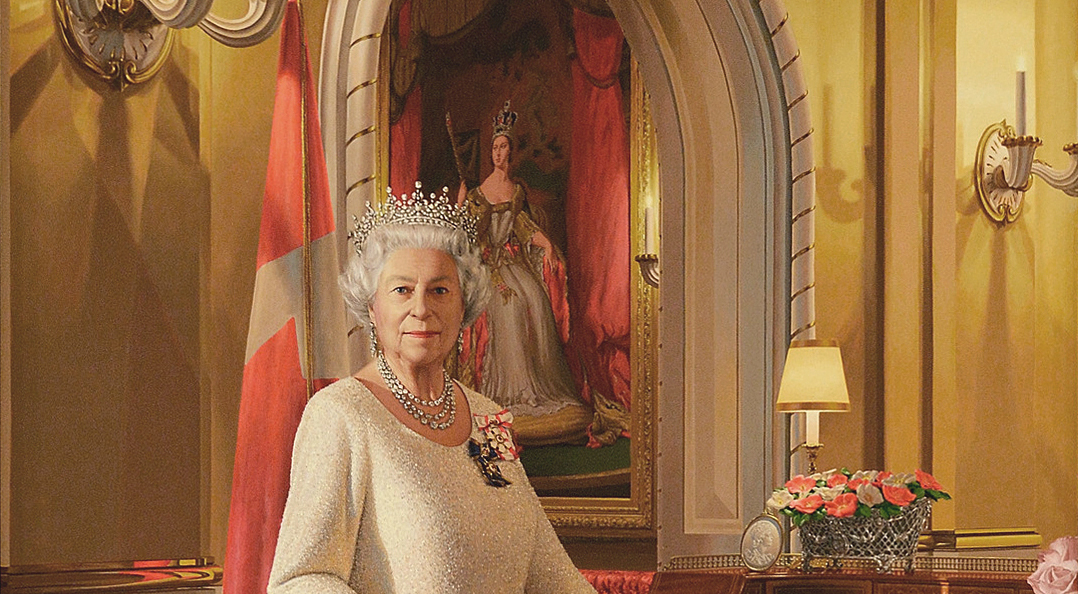
Two revered monarchs face one another in the main entrance of the Senate of Canada Building — but now they see eye to eye.
Queen Victoria and Queen Elizabeth II occupied the British and Canadian thrones for longer than any other monarch — reigning for 63 and 70 years respectively — and their portraits have greeted visitors since the Senate of Canada Building opened to the public in 2019.
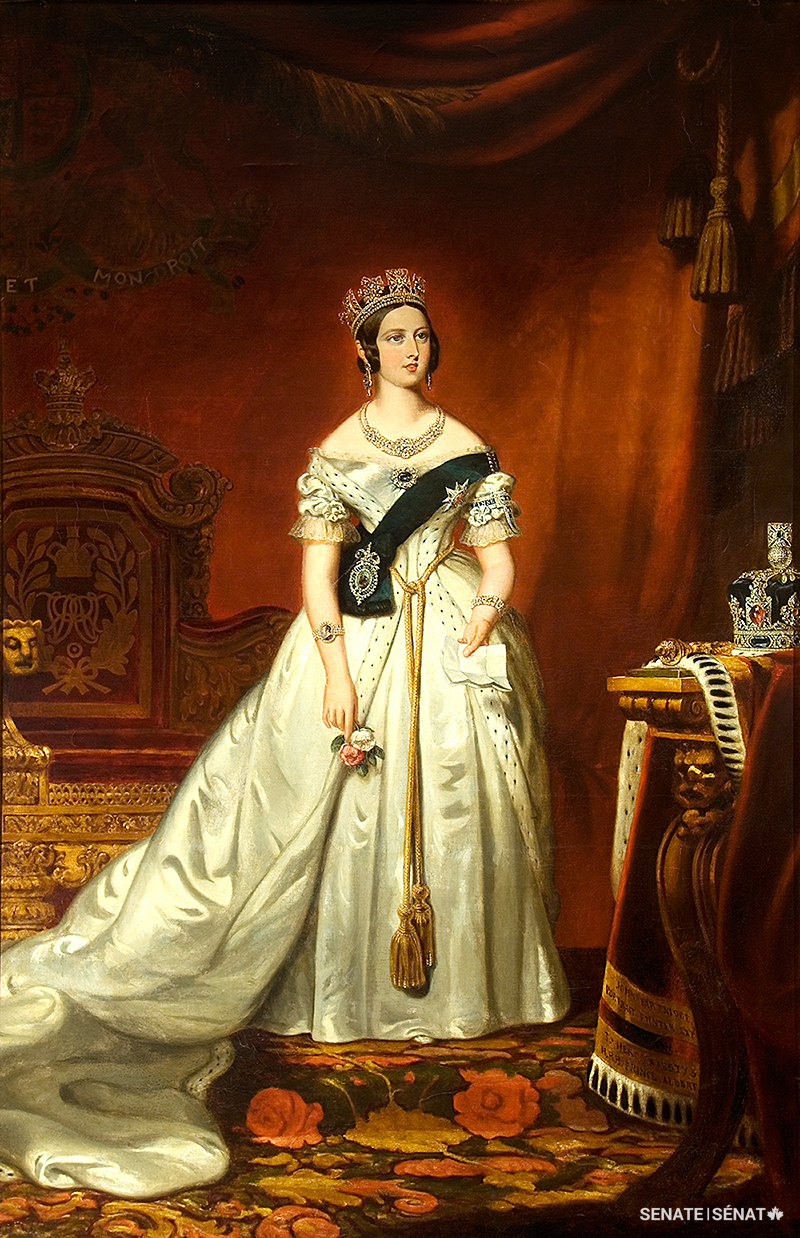
Queen Victoria’s massive 1842 portrait is one of Parliament’s most storied treasures, having survived four fires, including the 1916 blaze that destroyed Canada’s original Parliament Building.
A smaller 1957 portrait of a young Queen Elizabeth by Montréal artist Lilias Torrance Newton had hung opposite Queen Victoria’s until it was moved to Rideau Hall, the official residence of Canada’s governor general.
In early 2025, a monumental new portrait of Queen Elizabeth — this time immortalized at the time of her 2012 Diamond Jubilee — moved from Rideau Hall to take its place across from that of her great-great-grandmother.
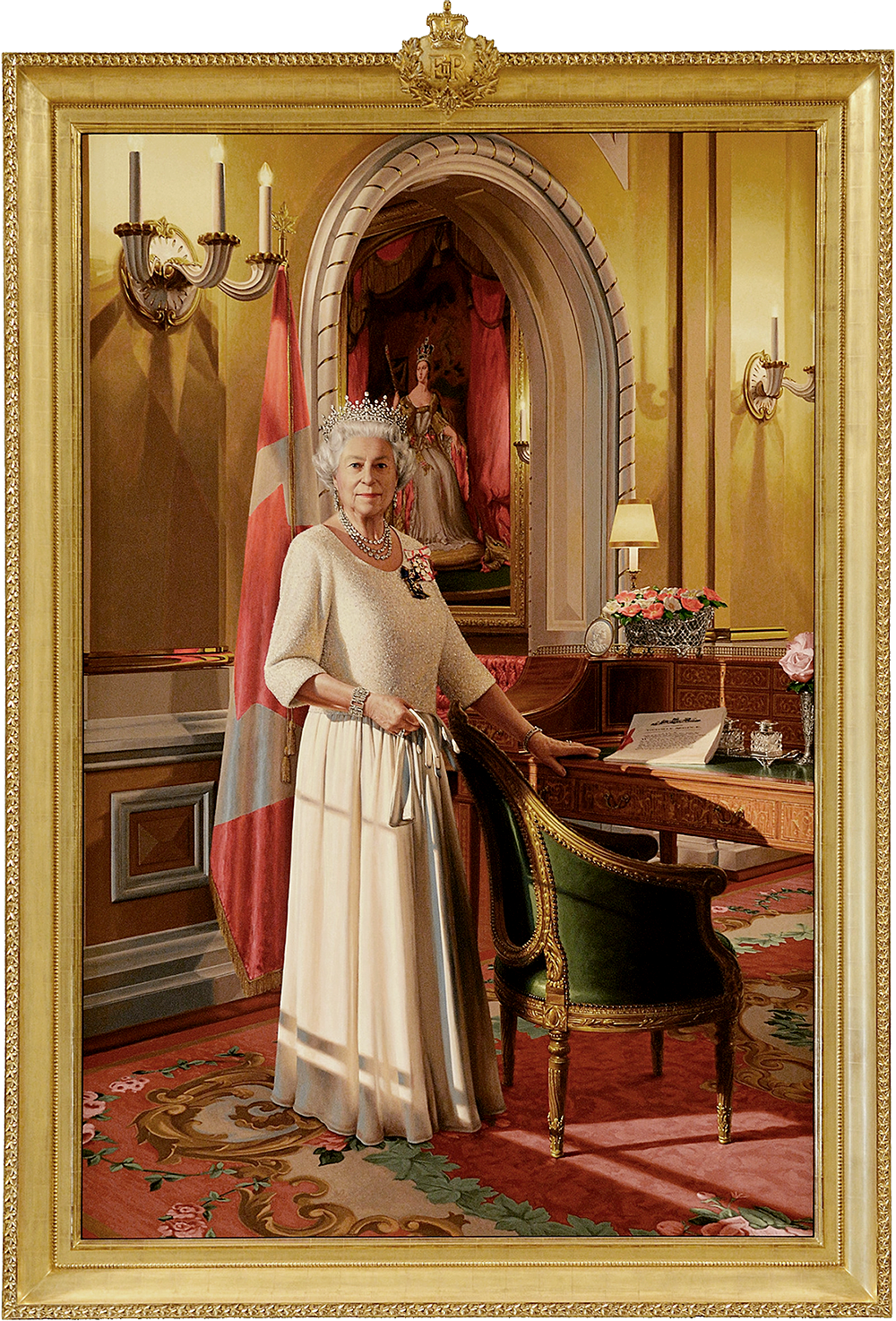
The life-size portrait by Toronto artist Phil Richards shows the Queen at Rideau Hall, surrounded by symbols of her long reign and deep ties to Canada.
Prominently featured is a painted reproduction of the British North America Act, 1867, signed in Queen Victoria’s reign and patriated to Canada with Queen Elizabeth’s signature in 1982.
Six interior lights illuminate the scene, representing each decade of Queen Elizabeth’s reign at the time. A partially obscured seventh one hints at the decade to come.
A portrait of Queen Victoria — a copy painted by John Hanson Walker of an 1838 original by Great Britain’s official court painter, Sir George Hayter — appears through a doorway in the background.
Mr. Richards, a graduate of Toronto’s OCAD University, is one of Canada’s most sought-after portraitists.
He has painted lieutenant governors, university presidents, CEOs and premiers, including Bob Rae of Ontario and Brad Wall of Saskatchewan.
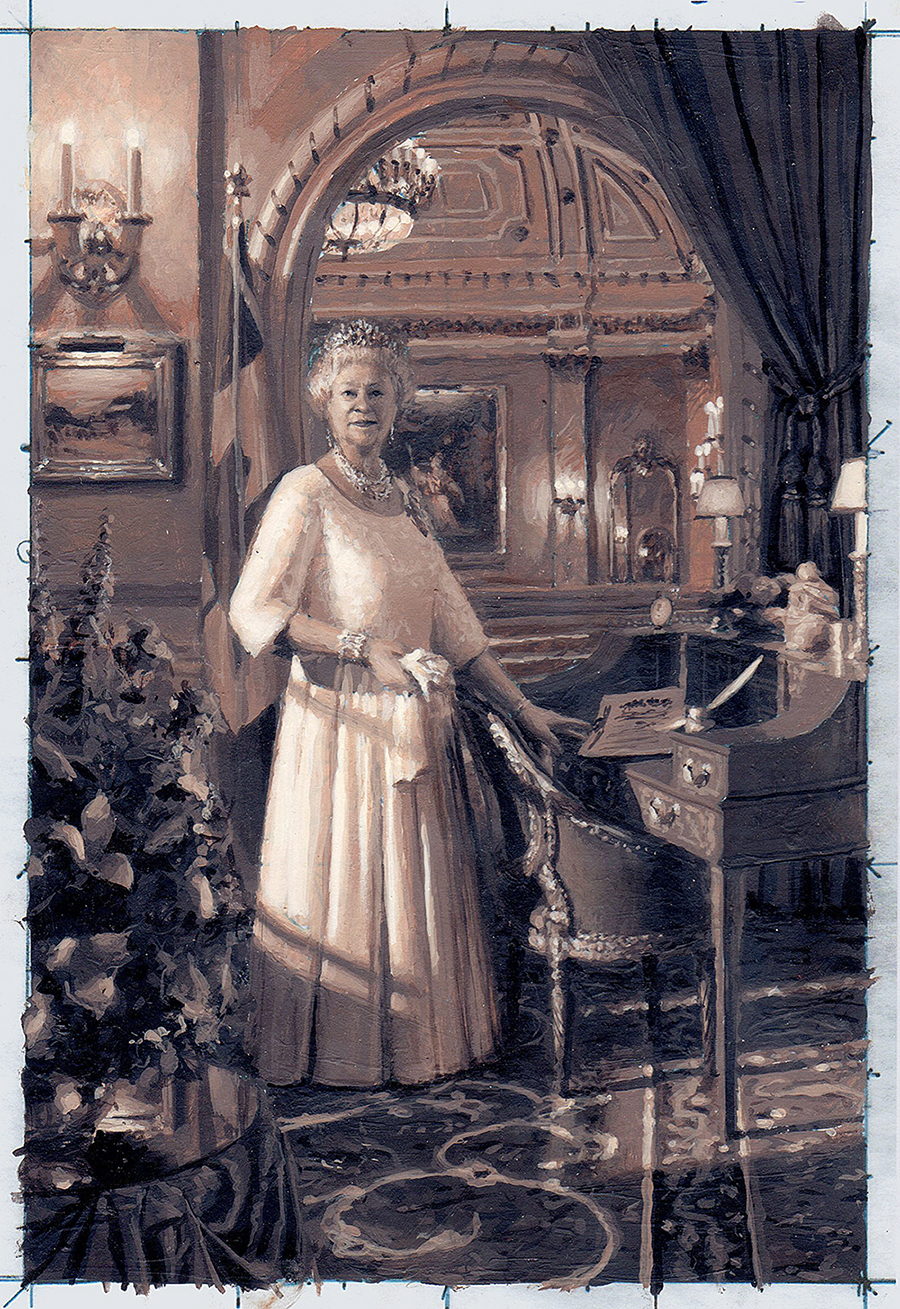
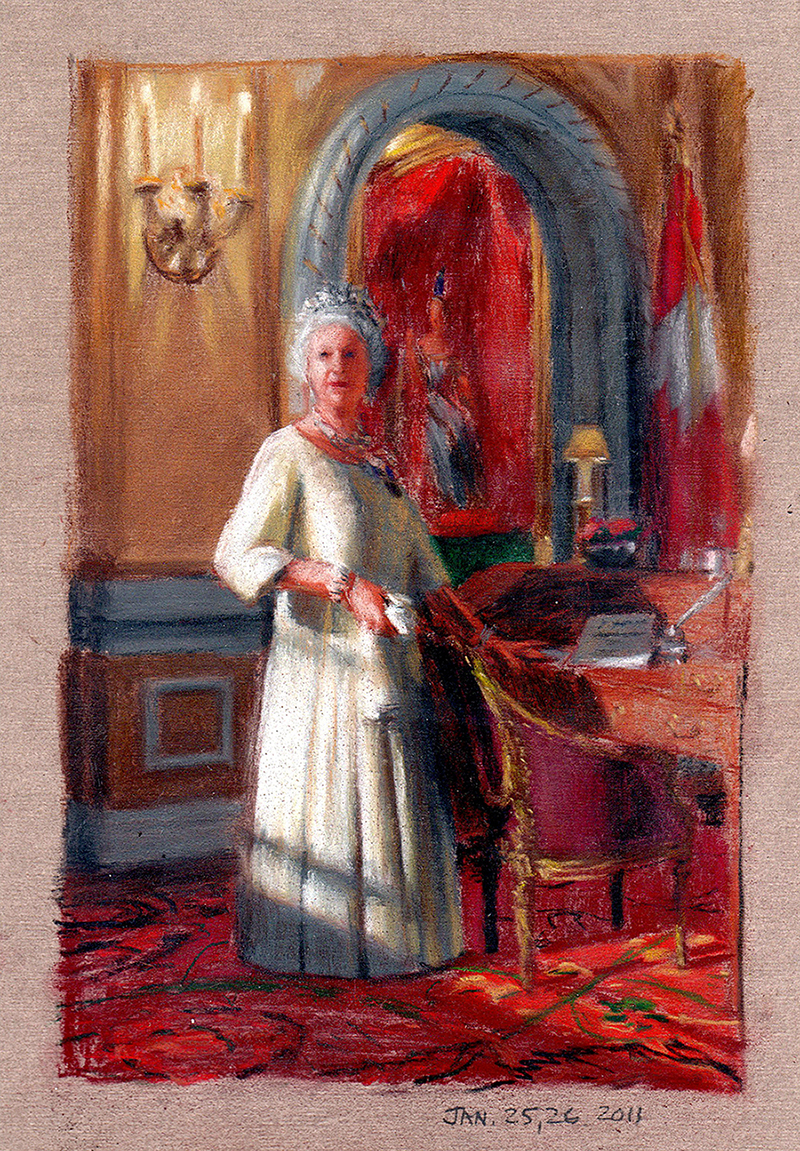
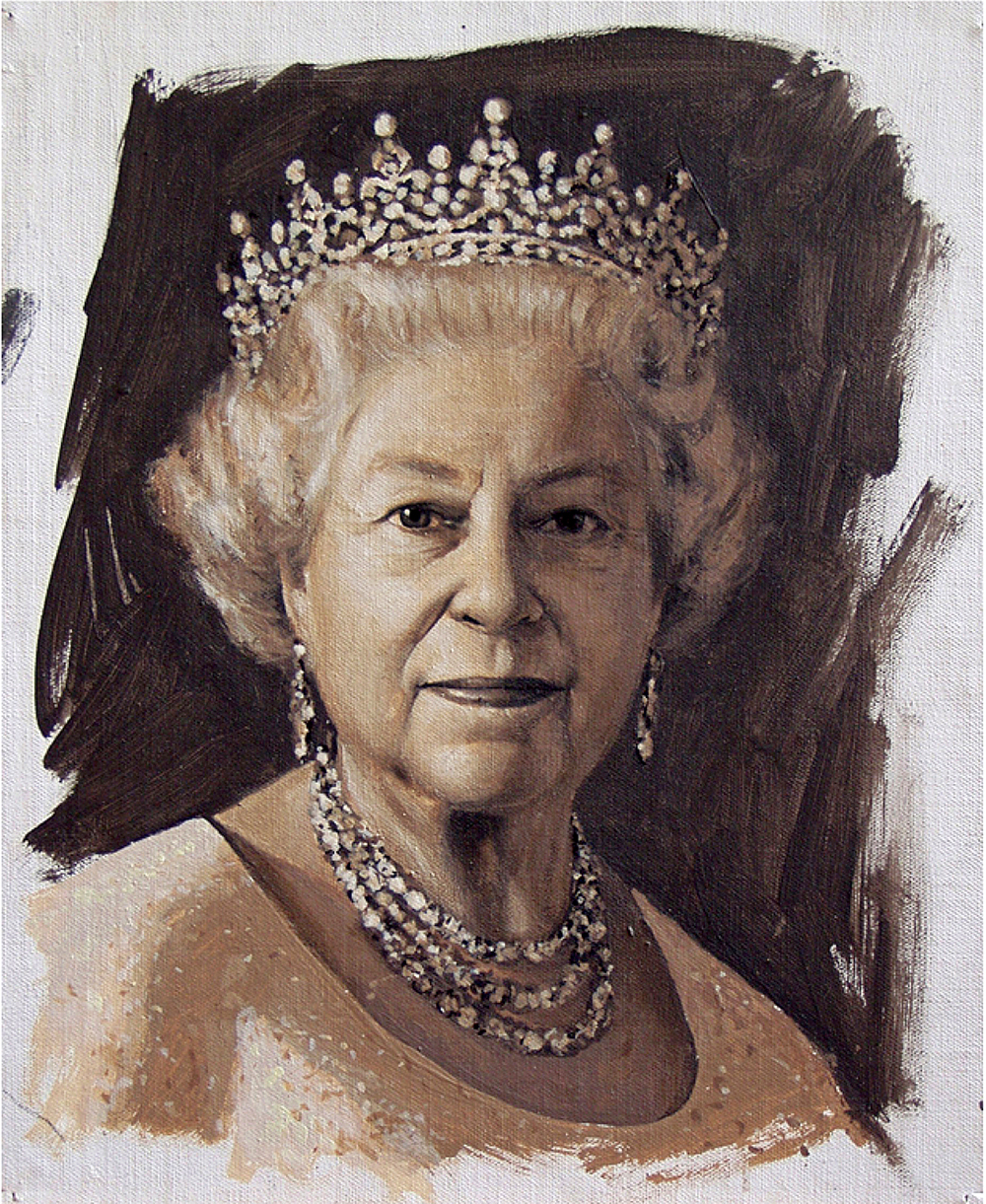
The Canadian government commissioned the Diamond Jubilee portrait in 2010.
The Queen herself selected Mr. Richards for the project after reviewing the work of five artists recommended to her by her Canadian secretary at the time, Senate Usher of the Black Rod Kevin MacLeod.
Completing the portrait was a painstaking two-year process.
One of the hallmarks of Mr. Richards’ work is his uncompromising attention to composition and perspective, a fixation he shares with the 15th-century Italian Renaissance masters he admires.
“Early on, I became enthralled with the Tuscan painter Piero della Francesca,” Mr. Richards said.
“He had a genius for combining flat graphic surface shapes with the illusion of deep space. He was a master of linear perspective.”
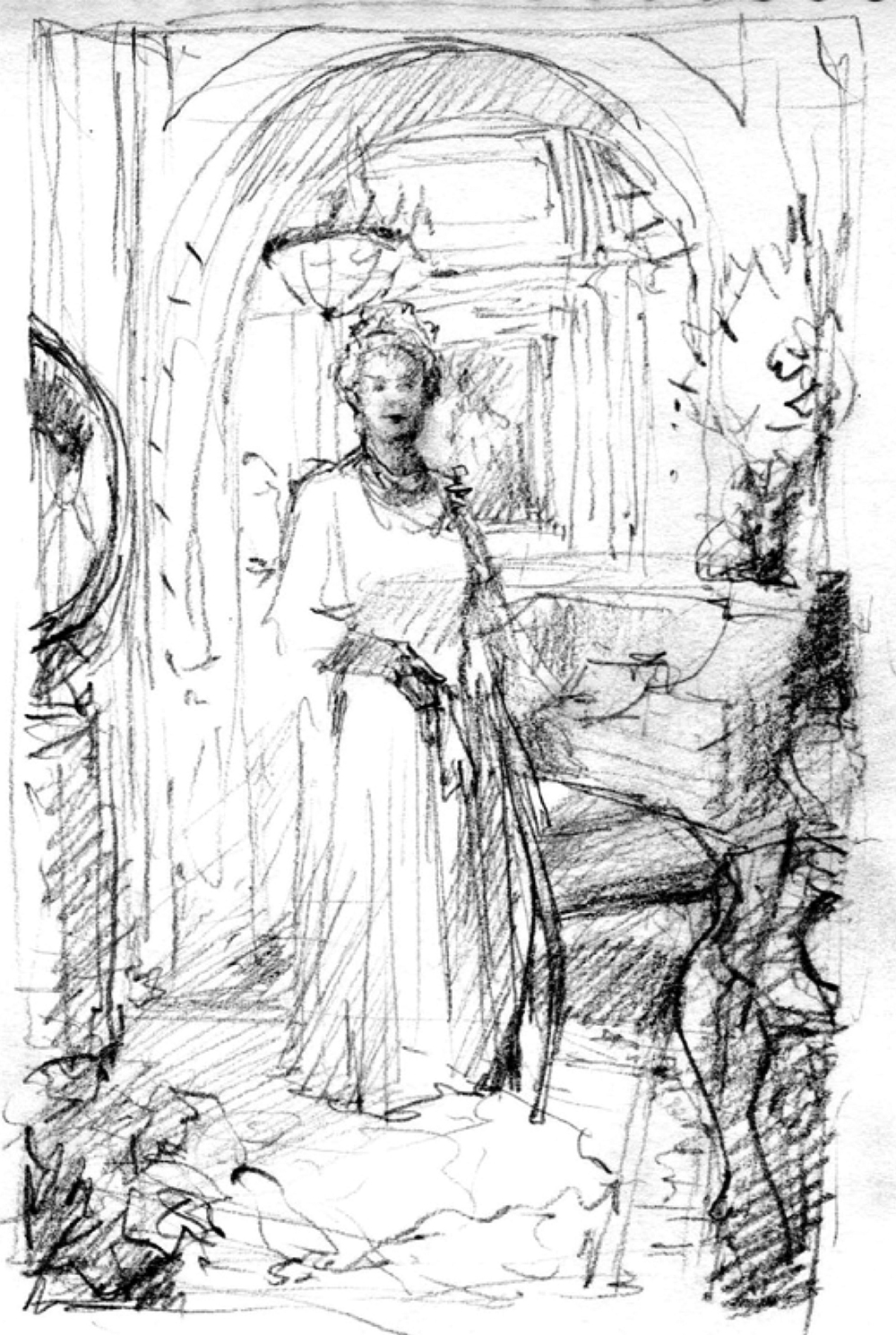
In that spirit, Mr. Richards subdivided the canvas with construction lines before laying down a single brushstroke, defining the geometry of the space as if it were an architectural blueprint.
“I want my pictures to lock together like a jigsaw puzzle,” Mr. Richards explained.
“The result is that you can’t add anything or take anything away without upsetting the delicate balance that’s been created.”
He worked up dozens of monochrome sketches and colour studies — even building a scale model of the Rideau Hall setting and sculpting a bust of the Queen — as he explored different combinations of light and shadow.
But what Mr. Richards ultimately strives to capture is more elusive.
“As a portraitist, I want to convey something about the office of the sitter but, even more, something about the personality and interior life of the sitter.”
“What first struck me about the Queen was a calmness and reserve combined with a sharp sense of humour.” Mr. Richards noted.
“Above all, I sensed a deep commitment to her calling — of filling the role of monarch that she was born into.”
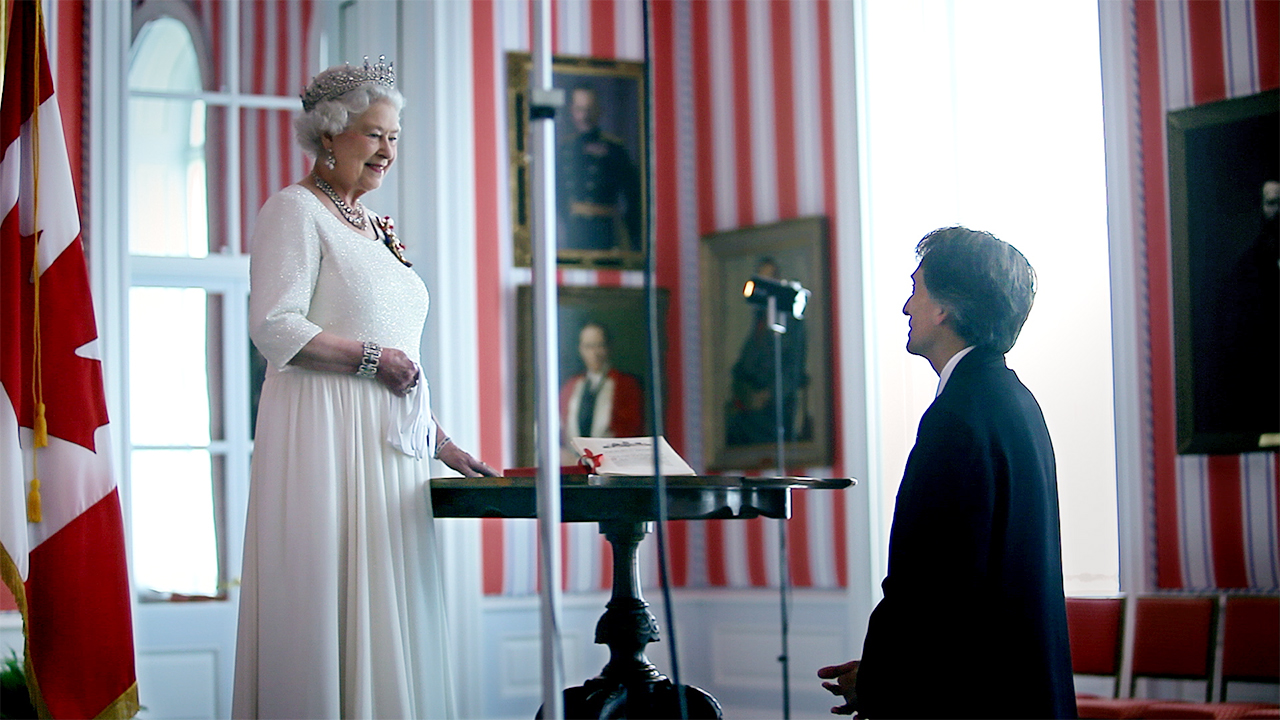
While developing the portrait, Mr. Richards was granted two royal audiences with the Queen. The first was at Rideau Hall on Canada Day, 2010, where the Queen was photographed for the portrait.
The second was a private audience at Buckingham Palace in February 2011, where Mr. Richards updated the Queen on the project’s progress, presented dozens of preparatory sketches and consulted her about elements to include.
These audiences gave Mr. Richards valuable insights into the Queen’s personality and revealed a shared love of classical portraiture.
“She appreciated the methodical approach I followed and the attention to detail,” Mr. Richards said.
“She said, ‘If I’d been a painter, this is exactly the way I would like to have worked.’”
There was a third and final audience at the portrait’s Buckingham Palace unveiling in June 2012, where Mr. Richards revealed a final surprise: a pair of Welsh Corgis, the Queen’s favourite dog breed, carved into the chairback.
“I wanted to include something in the painting that was a secret between the Queen and me,” Mr. Richards said. “She appreciated that particular touch.”
The Diamond Jubilee portrait is on long-term loan from the National Capital Commission’s Official Residences Crown Collection and will remain in the Senate of Canada Building for the duration of the rehabilitation of Centre Block.
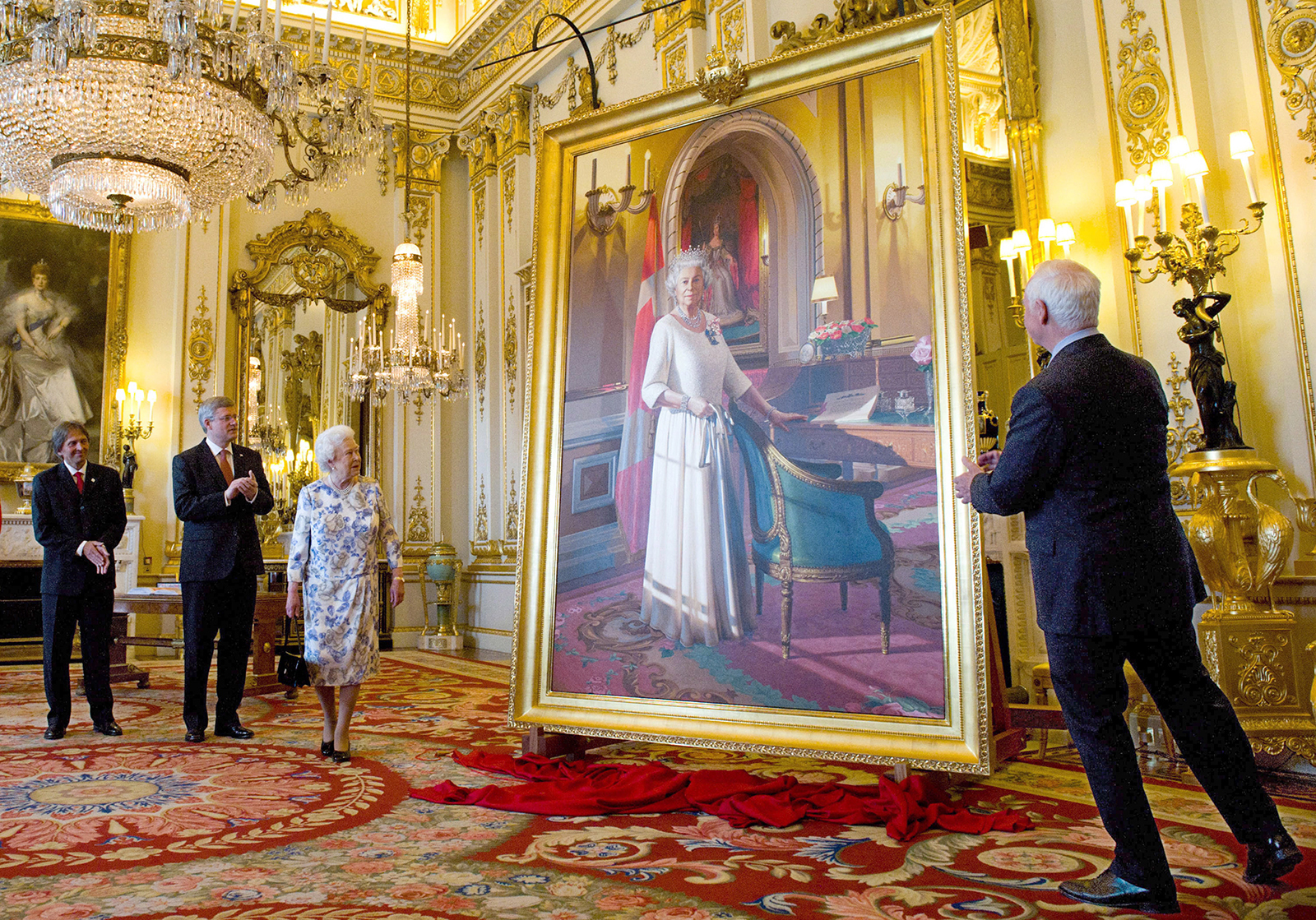 The portrait was unveiled on June 6, 2012, in the White Drawing Room at Buckingham Palace. In attendance were, from left, Mr. Richards, Prime Minister Stephen Harper, the Queen and Governor General David Johnston. (Photo credit: The Canadian Press)
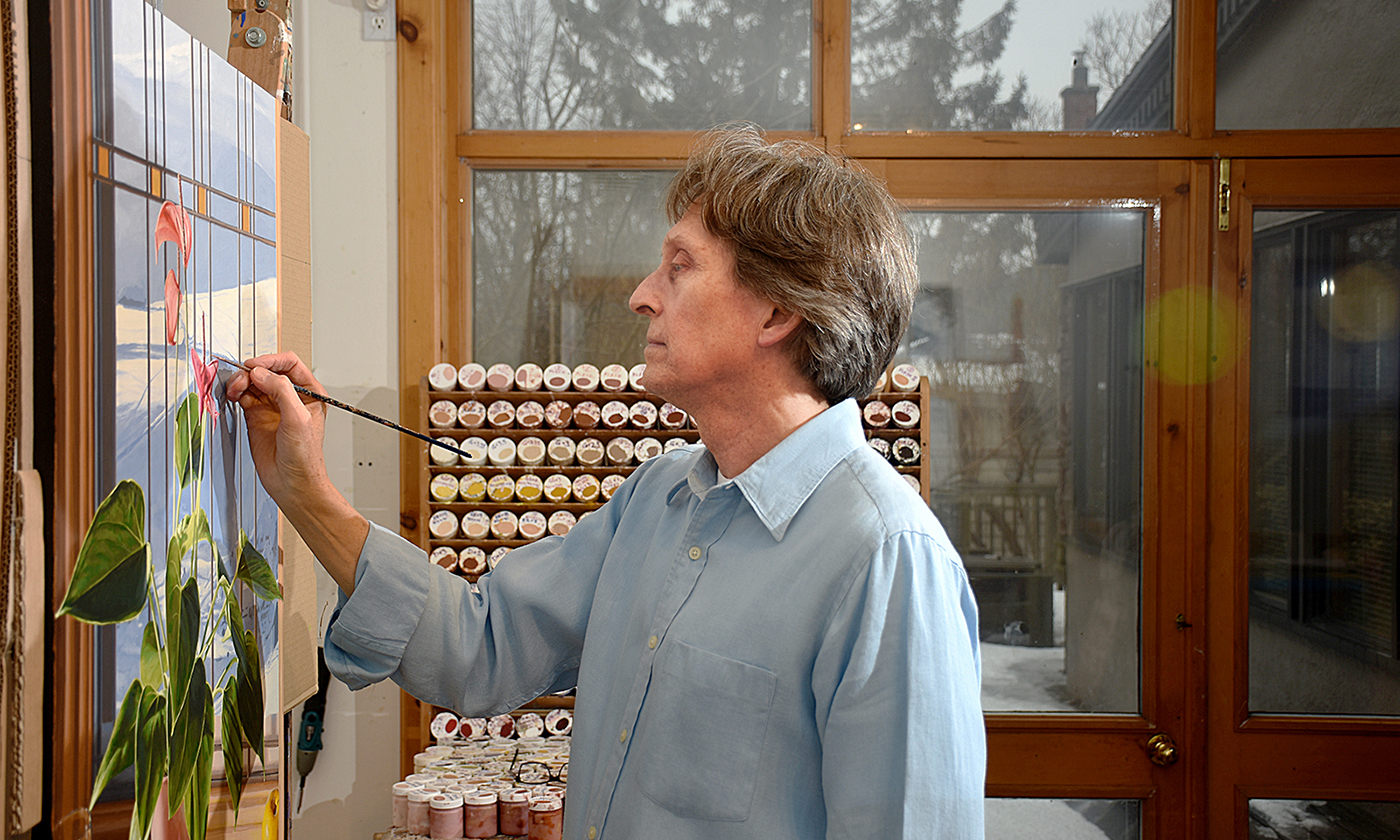 Phil Richards works on a painting in his Scarborough, Ontario studio. (Photo credit: Phil Richards)
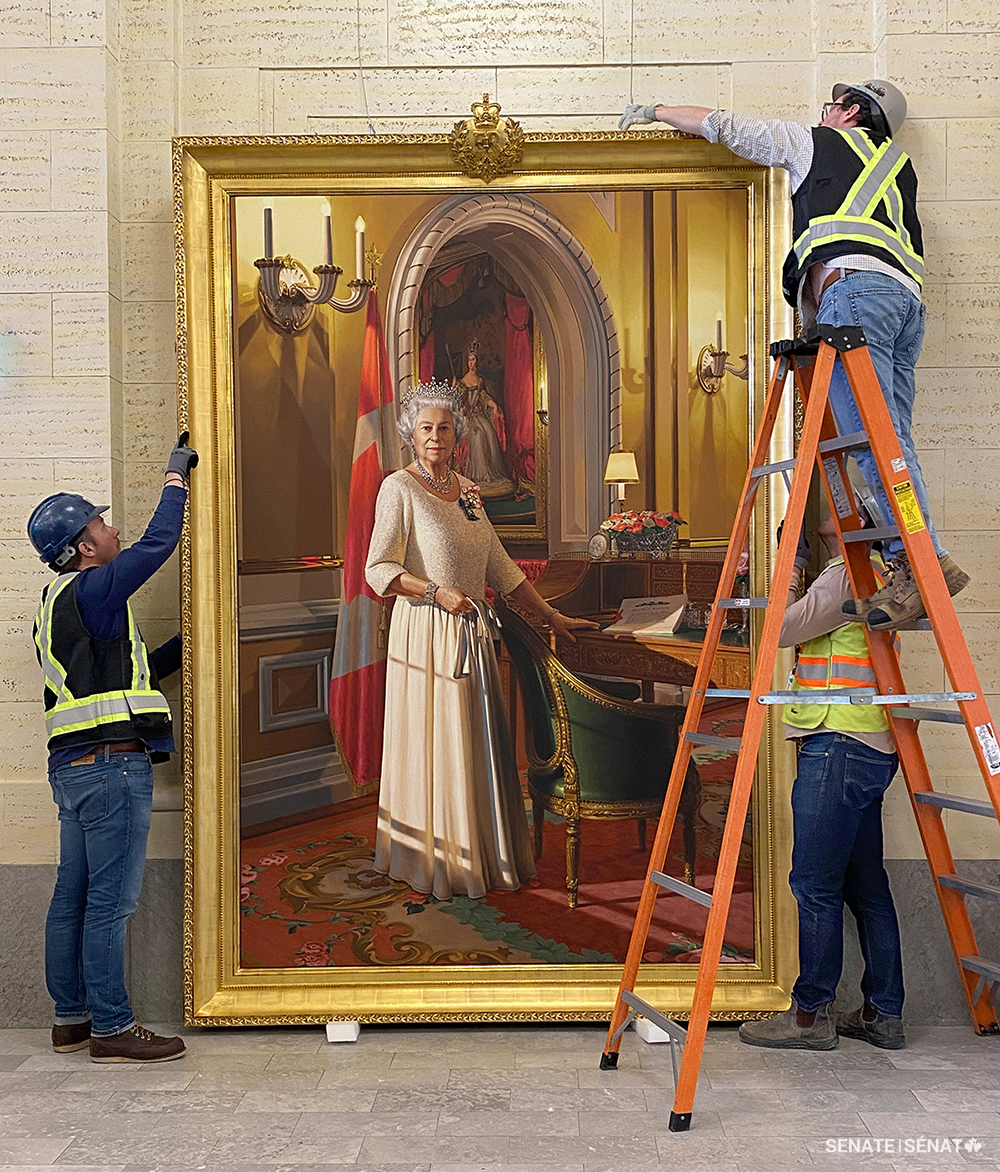 Art conservators from Ottawa’s Legris Conservation prepare to mount the Diamond Jubilee portrait in the Senate of Canada Building’s main entrance in January 2025.
Queen Elizabeth II’s Diamond Jubilee Portrait: A closer look
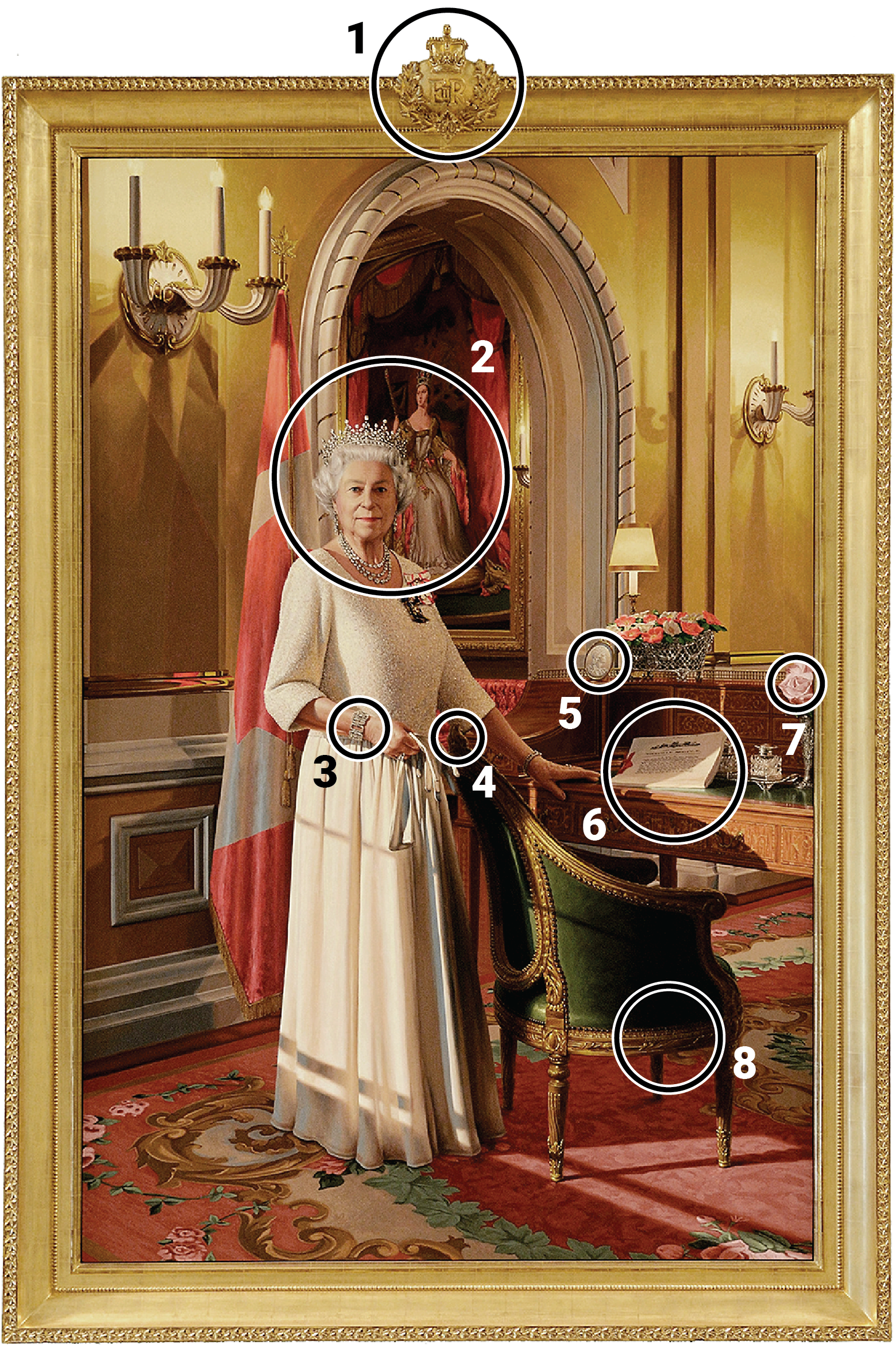
1. The gilt basswood frame, constructed by Toronto-based framers Elizabeth and Peter Porebski, is topped with the Queen’s Diamond Jubilee Emblem, designed by the Canadian Heraldic Authority and carved by sculptor Jamie Richards, the artist’s son.
2. The tiara is the one the Queen wore when, in 1951, she first visited Canada as Princess Elizabeth. In the background hangs a copy of an 1838 coronation portrait of Queen Victoria painted by John Hanson Walker based on an original by Sir George Hayter.
3. The Queen wears the Prince Philip wedding bracelet, which her husband designed in 1947. The bracelet incorporates diamonds from a tiara owned by Prince Philip’s mother, Princess Alice of Battenberg.
4. As a surprise for the Queen, the artist included a pair of Welsh Corgis, the Queen’s favourite dog breed, carved into the backrest of the 19th-century bergère-style armchair.
5. This portrait medallion is an invention of the artist, based on a coin minted in the Bahamas for the Queen’s 1953 coronation. The artist juxtaposed the 25-year-old Queen Elizabeth, at the beginning of her reign, with an older version of herself at the time of her Diamond Jubilee.
6. On the desk rests a copy of the British North America Act, to which Queen Victoria gave Royal Assent in 1867. Renamed the Constitution Act, 1867, Queen Elizabeth signed the proclamation that transferred it from Britain’s Parliament to Canada’s in 1982.
7. A small cluster of Queen Elizabeth Roses appears at the edge of the painting. The Queen Elizabeth Rose was introduced in 1954 in honour of Elizabeth’s proclamation as Queen two years earlier.
8. Artist Phil Richards incorporated his signature and the work’s completion date, 2012, into the armchair’s decorative siderail.