War and Peace: How Centre Block’s Senate Chamber bears witness to Canada’s wartime sacrifices
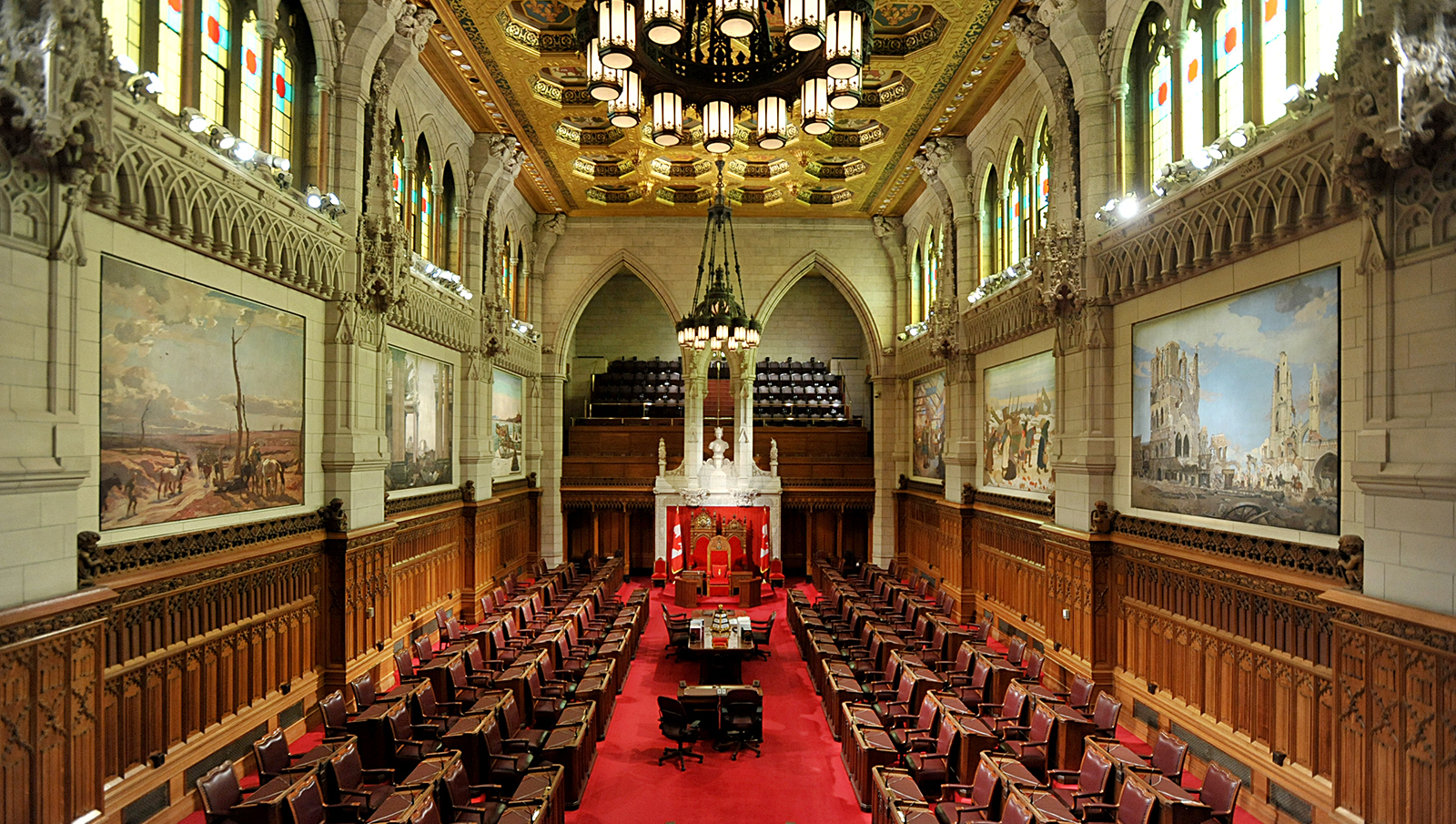
In February 2019, the Senate moved to the Senate of Canada Building, a former train station built in 1912. The Senate will occupy this temporary location while Parliament’s Centre Block — the Senate’s permanent home — is rehabilitated.
Although Centre Block is shuttered for rehabilitation work, Canadians can still experience its art and architecture through the Senate’s immersive virtual tour.
Construction on Centre Block began during the darkest days of the First World War, months after the original Parliament Building burned to the ground in 1916.
Two decades later, another world war threatened to erupt just as Dominion Sculptor Cléophas Soucy and seven assistants executed a flurry of carvings — more than 100 in three years — to complete the Senate Chamber.
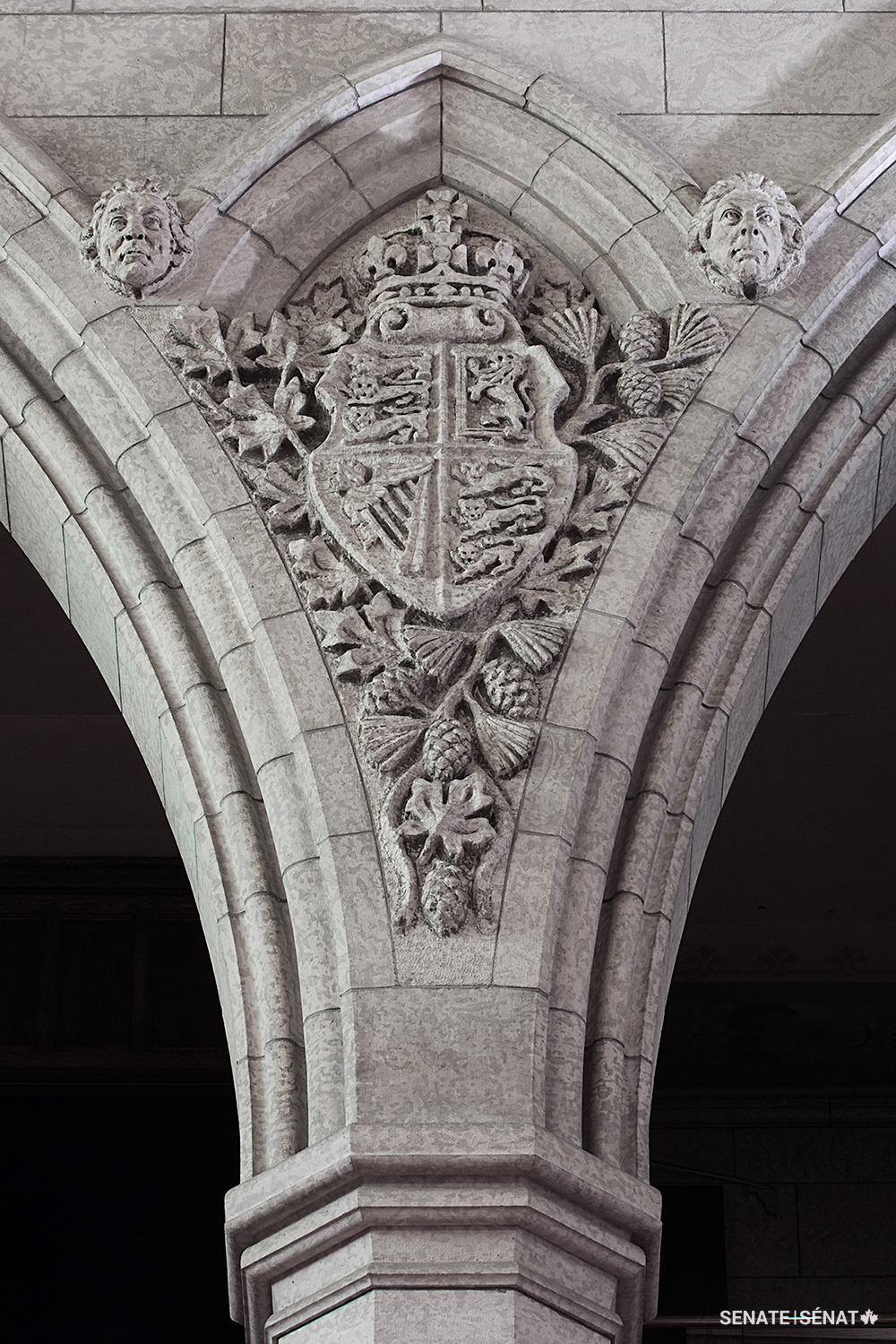
Small wonder the theme of war and peace shows up in so many of the Chamber’s sculptures and decorative details, reflecting a country recovering from one war while bracing for another.
“The Great War made a profound mark on the country,” House of Commons Chief Curator Johanna Mizgala said. “Everyone knew somebody who had served, whether it was somebody you went to school with, a family member or somebody from your community. It was omnipresent.”
“You can’t help but see that reflected in this place.”
These works tell a solemn story, not just about the Great War, but about how conflict and its aftermath have shaped Canada throughout its history.
The War Paintings
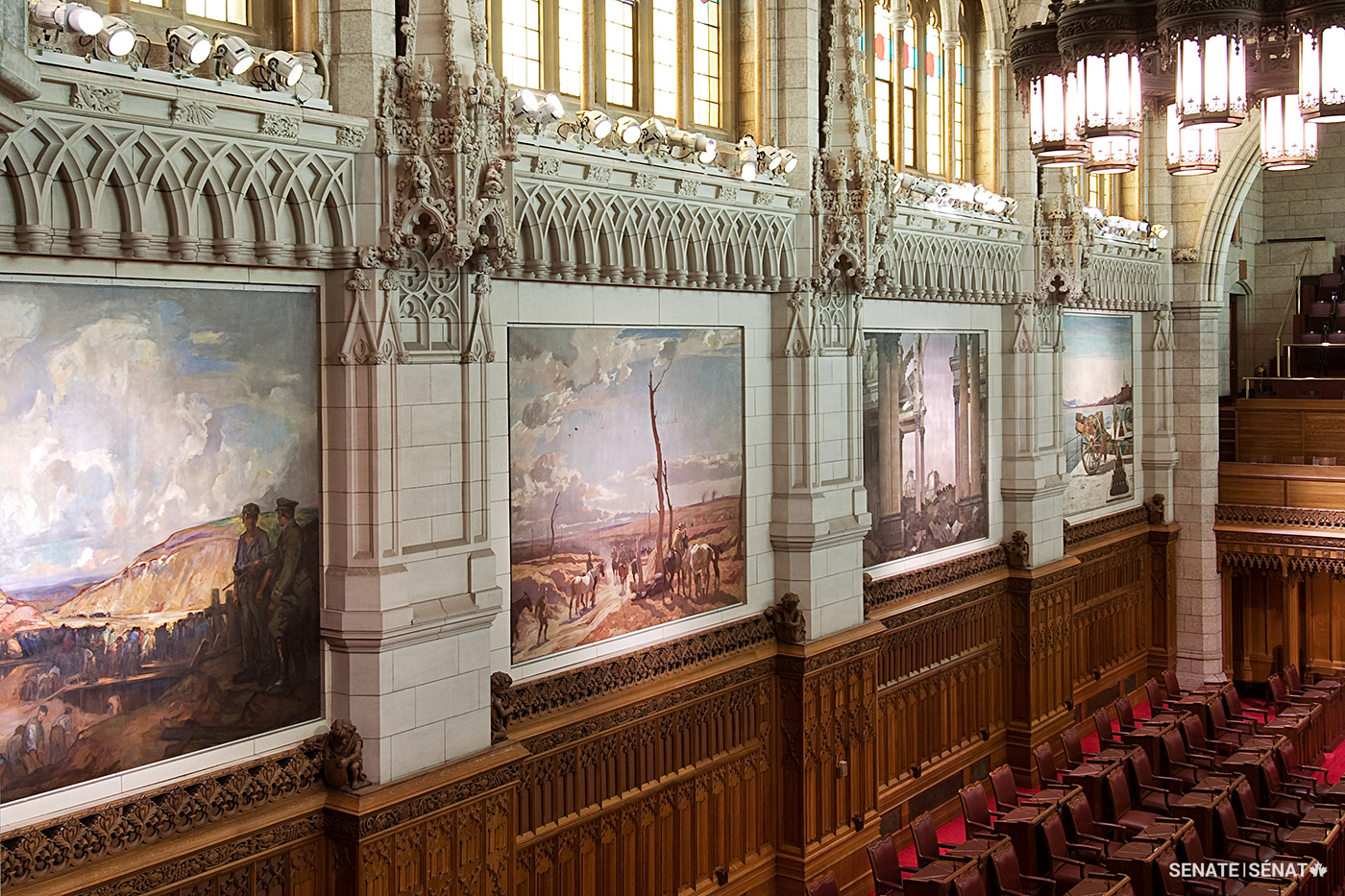
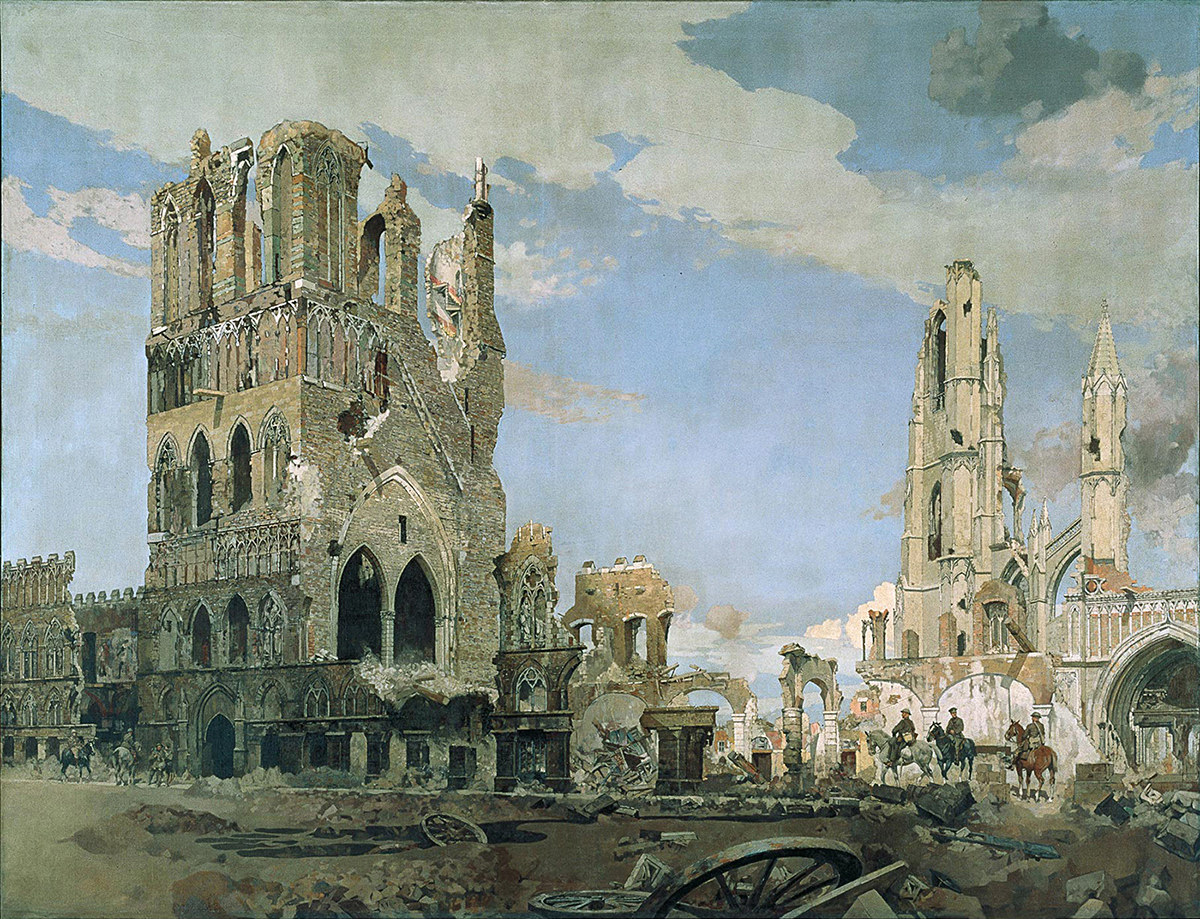
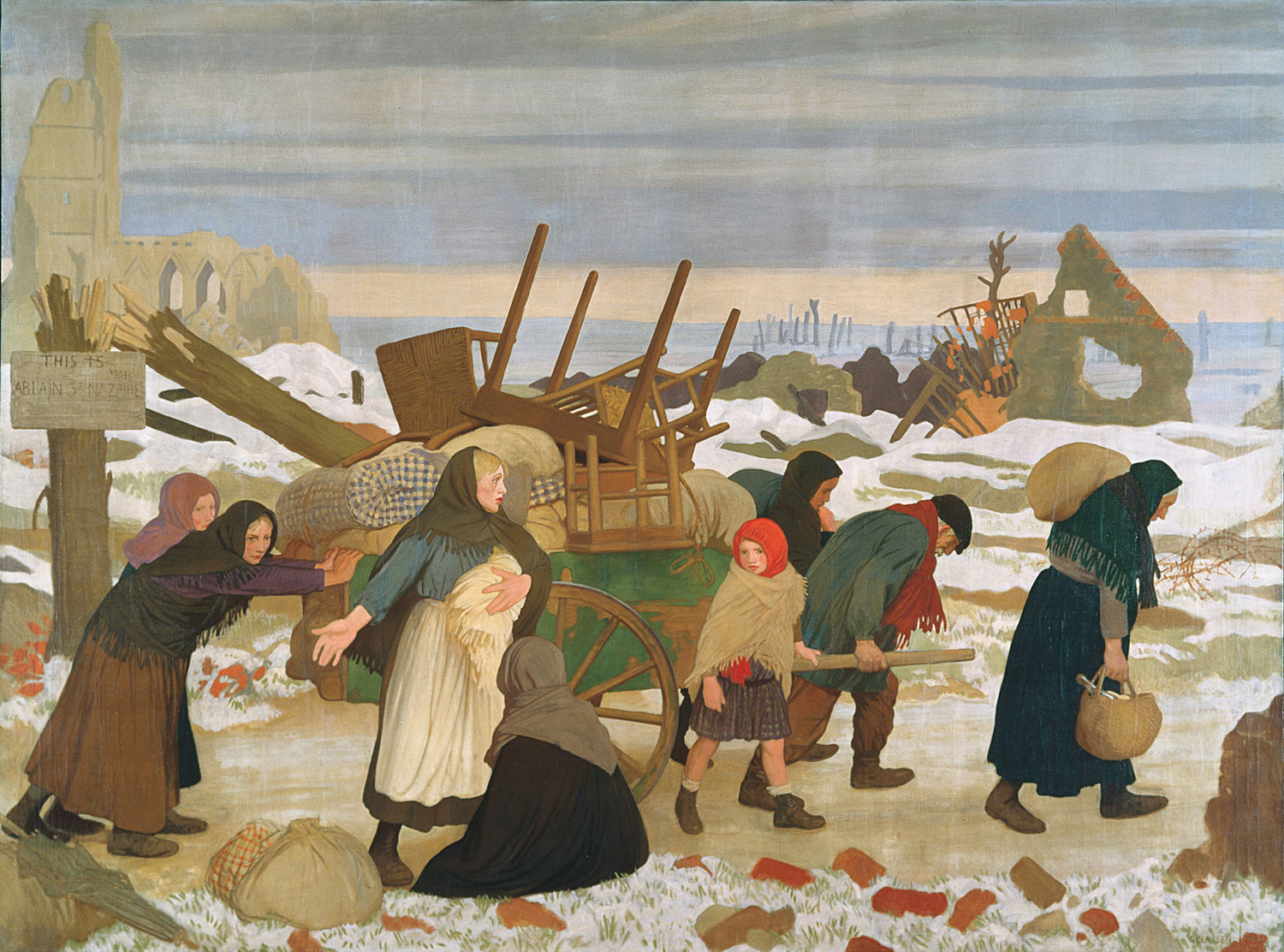
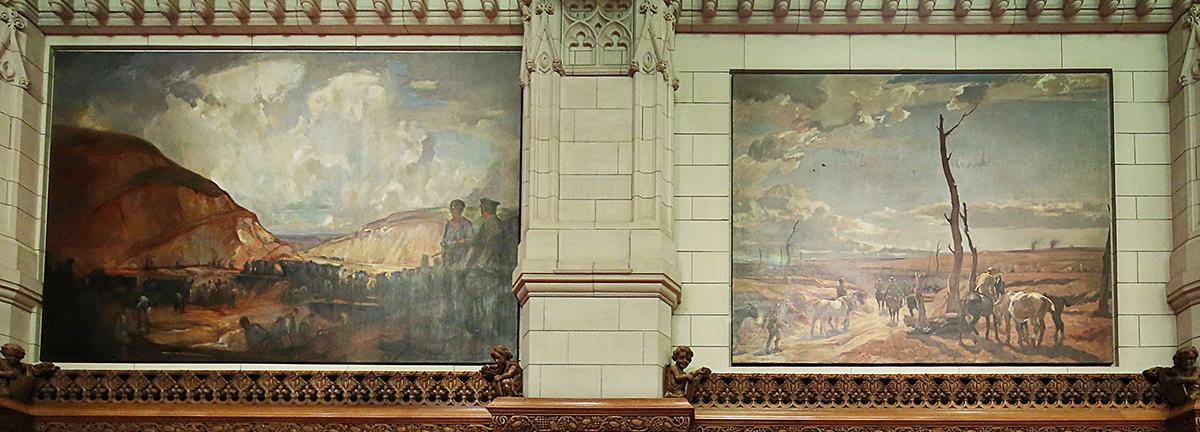
Eight monumental paintings depicting Canada’s sacrifices in the First World War have long dominated the Chamber.
More than three metres wide and two metres high apiece, they are among 1,000 works commissioned by the government as part of the Canadian War Memorials Fund, Canada’s first official war-art program.
In 1921, they found a long-term home in the Red Chamber, on loan first from the National Gallery of Canada then, when ownership transferred in 1971, from the Canadian War Museum.
They hung here until early 2019, when they were removed for restoration and long-term storage at the Canadian War Museum while the rehabilitation of Centre Block continues. They will return once the project is completed.
Perhaps surprisingly, there are no depictions of battle here.
“The paintings focus on things that are more personal,” Ms. Mizgala points out. “It’s not about the glory of battle. It’s about the sacrifices, the personal costs, the suffering and the aftermath.”
“They’re there to remind senators that some of the decisions they make come at a terrible cost, even when it’s the right decision to make.”
Major-General James Wolfe and the Marquis de Montcalm
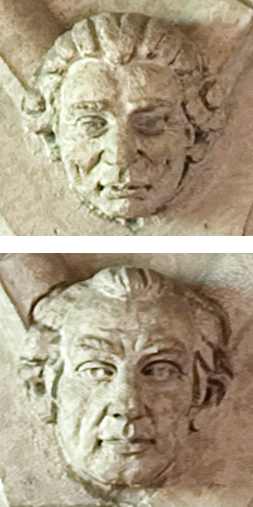
Likenesses of British Major-General James Wolfe and French Lieutenant-General Louis-Joseph, Marquis de Montcalm — adversaries in one of the most consequential battles in Canadian history — gaze down from high above the spectators’ gallery.
In September 1759, Wolfe led British forces against the 3,400-strong French garrison at Québec. Under cover of night, he led a flotilla of 4,400 men along the St. Lawrence River then scaled the cliffs west of the city.
At dawn, the British formed ranks on the Plains of Abraham just beyond the city walls, taking the French commander by surprise.
Montcalm rushed into battle before his garrison could be reinforced and, in less than an hour, his troops were broken.
The city surrendered within days. Both commanders died in the hail of musket fire, Wolfe bleeding out on the battlefield and Montcalm succumbing a day later.
Montréal fell to the British within a year, signalling the end of French rule in Canada. Nonetheless, the French population remained, preserving its language, culture and institutions.
“You have to see these two in the context of when they were carved in the 1930s,” Ms. Mizgala said. “There was still the prevailing narrative then of two founding nations coming together as part of the founding story of Canada.”
“We tend to tell different, more inclusive, kinds of stories nowadays.”
Major-General Sir Isaac Brock
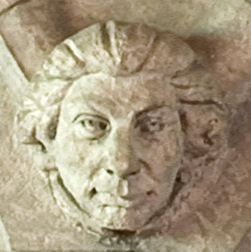
The likeness of Major-General Sir Isaac Brock — dubbed the Hero of Upper Canada for his role in defending British North America during the War of 1812 — appears nearby.
As commander of British forces in Upper Canada, Brock prepared for an attack from the United States that many were skeptical would happen. He strengthened defences, organized the militia, and brokered alliances with Indigenous leaders, including the powerful Shawnee chief, Tecumseh.
When war broke out in 1812, Brock moved quickly. He led a vastly outnumbered force of regulars, militia and Indigenous warriors, and used surprise and deceit to terrorize American General William Hull into surrendering Fort Detroit.
Two months later, at Queenston Heights, Brock was struck by musket fire while leading a counterattack against the invading Americans. Though his death was a severe blow, British reinforcements ultimately forced the Americans back.
Brock’s portrait is surprisingly low-key, considering the country owes its survival to him. It’s a deliberate choice, Ms. Mizgala explained.
“Centre Block’s builders recognized that there’s always a danger when you put too much emphasis on heroics. It can become more about legend and lore, as opposed to maintaining a sense of the profound devastation that war brings.”