


Canada a sound ally in troubled times: Senator Dean
Tags
The election of Donald Trump to a second run as president of the United States is perceived in some quarters as potentially complicating — or even undermining — NATO’s efforts to stand up to increasing military and economic belligerence on the part of Russia and China. It’s timely to revisit those threats and the extent to which Canada must reconsider both its place and its strategic advantages in a context of potentially shifting geopolitical alliances.
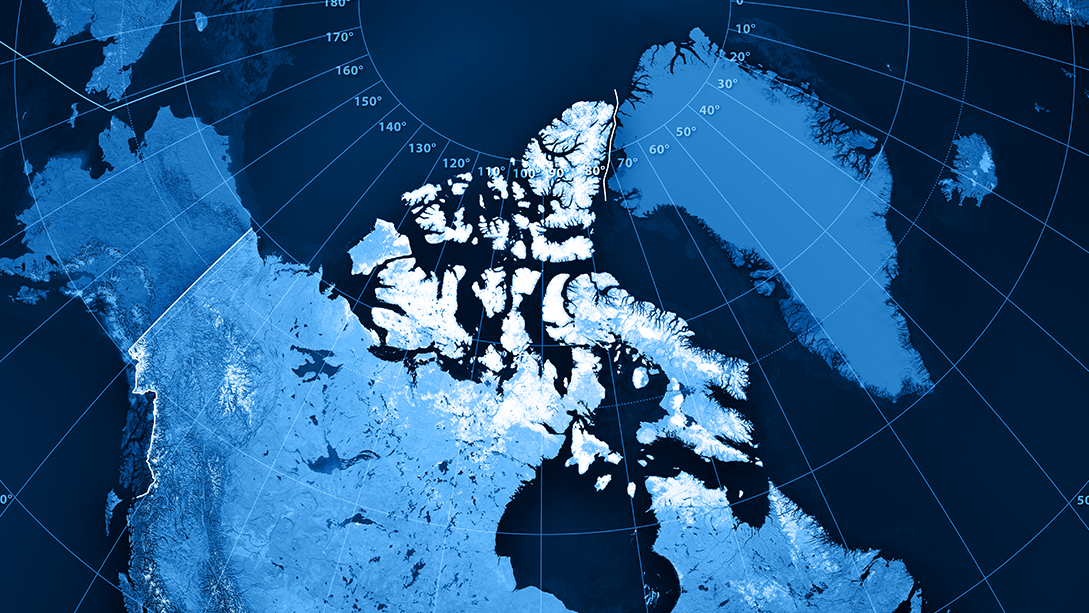
Canada’s North is militarily exposed, economically underdeveloped and threatened by climate change. Military threats have increased as a result of the buildup of Russian forces and infrastructure in Russia’s Arctic. This includes new runways and deep-water bases housing nuclear-powered submarines, which are submersible for long periods under Arctic ice and have ballistic missile capacity.
Russia — and presumably China — has developed new generations of hypersonic and hyperkinetic missiles that move faster than their predecessors and assume erratic trajectories, making them harder to target. There is consensus among military strategists and defence experts that Russia’s missiles are likely designed to move through the Arctic to key U.S. targets, making early detection by new generations of Canadian ground- and space-based sensors critical for continental security. This will require Canada’s upgraded “over-the-horizon” ground-based sensors to be relocated further north to improve response time, with analytics being supplemented with artificial intelligence capacity — a field in which Canada is increasingly regarded as a leader.
There is also joint interest on the part of Russia and China in rare earth minerals and natural gas in the Arctic, materials that are of equal interest to Canada’s allies, including — and perhaps predominantly — the U.S.
As members of the Senate Committee on National Security, Defence and Veterans Affairs heard in 2023, the Arctic is at an inflection point where the region has taken on essential strategic importance.
Canada’s historical economic and defence partnerships with the U.S. remain strong, co-dependent and unequal, but the alliance has held together. Committee members observed this firsthand at NORAD’s headquarters in Colorado Springs, Colorado, in seeing a seamless shift from U.S. to Canadian operational command in this globally unique joint command structure. Trump’s photo ops with Russian President Vladimir Putin are unlikely to change this, but Canada can’t take anything for granted right now.
It is good news that our NATO allies see Canada’s upgraded Arctic defence and security investments as part of its required 2% of GDP commitment to defence spending, but that’s unlikely to impress the incoming U.S. president. As pointed out in a recent Globe and Mail opinion column by Edward Greenspon, Janice Gross Stein and Drew Fagan, the president-elect might be interested in maintaining Canada’s dependable supply of uranium and potash, as well as joint ventures in the exploration and development of its critical minerals. This and a fast-tracked 2% contribution to NATO might add up to a productive partnership and reduce the threat of harmful tariffs and other belligerent measures.
Alongside Russia’s war with Ukraine and its alliances with China in the Arctic, these two countries are among the most active in the realm of cybercrime, cyberinterference and disinformation. At a more granular level, the war in Ukraine has seen the ubiquitous deployment of cyberinterference, not only tracking cell phone movement, but also relaying propaganda and scam calls from loved ones about throwing in the towel and coming home.
Russian operatives are also implicated in broad-based disinformation campaigns — predominantly through social media — designed to undermine public confidence in democratic institutions. In this realm, Canada is regarded by its major allies as a leader in tracking and understanding these insidious activities, as well as in biting back through countermeasures. The federal government’s Communications Security Establishment is regarded by its counterparts in the U.S., the United Kingdom and Australia as being at the forefront for its proficiency in cybersecurity and in combatting cyberinterference and cybercrime.
Canada might be under threat, but it has smart business leaders, valuable resources, advanced technological and security capacity, and experience and impact in the fields of defence and security. We are also blessed with a system of democratic governance. We will have to work hard to keep it that way.
In the interim, Canada remains a sound and reliable ally.
Senator Tony Dean chaired the Senate Committee on National Security, Defence and Veterans Affairs from December 2021 to November 2024. He represents Ontario in the Senate.
This article was published in the Hill Times on November 20, 2024.
The election of Donald Trump to a second run as president of the United States is perceived in some quarters as potentially complicating — or even undermining — NATO’s efforts to stand up to increasing military and economic belligerence on the part of Russia and China. It’s timely to revisit those threats and the extent to which Canada must reconsider both its place and its strategic advantages in a context of potentially shifting geopolitical alliances.
Canada’s North is militarily exposed, economically underdeveloped and threatened by climate change. Military threats have increased as a result of the buildup of Russian forces and infrastructure in Russia’s Arctic. This includes new runways and deep-water bases housing nuclear-powered submarines, which are submersible for long periods under Arctic ice and have ballistic missile capacity.
Russia — and presumably China — has developed new generations of hypersonic and hyperkinetic missiles that move faster than their predecessors and assume erratic trajectories, making them harder to target. There is consensus among military strategists and defence experts that Russia’s missiles are likely designed to move through the Arctic to key U.S. targets, making early detection by new generations of Canadian ground- and space-based sensors critical for continental security. This will require Canada’s upgraded “over-the-horizon” ground-based sensors to be relocated further north to improve response time, with analytics being supplemented with artificial intelligence capacity — a field in which Canada is increasingly regarded as a leader.
There is also joint interest on the part of Russia and China in rare earth minerals and natural gas in the Arctic, materials that are of equal interest to Canada’s allies, including — and perhaps predominantly — the U.S.
As members of the Senate Committee on National Security, Defence and Veterans Affairs heard in 2023, the Arctic is at an inflection point where the region has taken on essential strategic importance.
Canada’s historical economic and defence partnerships with the U.S. remain strong, co-dependent and unequal, but the alliance has held together. Committee members observed this firsthand at NORAD’s headquarters in Colorado Springs, Colorado, in seeing a seamless shift from U.S. to Canadian operational command in this globally unique joint command structure. Trump’s photo ops with Russian President Vladimir Putin are unlikely to change this, but Canada can’t take anything for granted right now.
It is good news that our NATO allies see Canada’s upgraded Arctic defence and security investments as part of its required 2% of GDP commitment to defence spending, but that’s unlikely to impress the incoming U.S. president. As pointed out in a recent Globe and Mail opinion column by Edward Greenspon, Janice Gross Stein and Drew Fagan, the president-elect might be interested in maintaining Canada’s dependable supply of uranium and potash, as well as joint ventures in the exploration and development of its critical minerals. This and a fast-tracked 2% contribution to NATO might add up to a productive partnership and reduce the threat of harmful tariffs and other belligerent measures.
Alongside Russia’s war with Ukraine and its alliances with China in the Arctic, these two countries are among the most active in the realm of cybercrime, cyberinterference and disinformation. At a more granular level, the war in Ukraine has seen the ubiquitous deployment of cyberinterference, not only tracking cell phone movement, but also relaying propaganda and scam calls from loved ones about throwing in the towel and coming home.
Russian operatives are also implicated in broad-based disinformation campaigns — predominantly through social media — designed to undermine public confidence in democratic institutions. In this realm, Canada is regarded by its major allies as a leader in tracking and understanding these insidious activities, as well as in biting back through countermeasures. The federal government’s Communications Security Establishment is regarded by its counterparts in the U.S., the United Kingdom and Australia as being at the forefront for its proficiency in cybersecurity and in combatting cyberinterference and cybercrime.
Canada might be under threat, but it has smart business leaders, valuable resources, advanced technological and security capacity, and experience and impact in the fields of defence and security. We are also blessed with a system of democratic governance. We will have to work hard to keep it that way.
In the interim, Canada remains a sound and reliable ally.
Senator Tony Dean chaired the Senate Committee on National Security, Defence and Veterans Affairs from December 2021 to November 2024. He represents Ontario in the Senate.
This article was published in the Hill Times on November 20, 2024.