


Farmers need more government support to feed Canadians: Senator Black
Tags
The agriculture industry contributes significantly to Canada’s overall success and well-being, yet it doesn’t receive the support from government that it needs to survive. This sector needs to be taken seriously for its innovative and sustainable practices, commitment and significant contributions to this country’s economy.
In 2023, the agriculture and agri-food sector contributed $150 billion to our economy, accounting for approximately 7% of Canada’s gross domestic product (GDP) and employing 2.3 million Canadians. In fact, one in nine jobs in Canada are within the agriculture industry, generating substantial revenue for our country.
Beyond its contributions to the economy and the labour market, the agriculture sector fulfils the basic needs of Canadians: providing us with nutrient rich and delicious foods, day in and day out.
Yet, as Canadians, we are far removed from where our foods originate. Behind every grocery store trip or meal you prepare, there is a farmer who has grown and harvested the raw foods and ingredients, and a processor who has packaged and delivered the products.
However, the agriculture industry is facing increased barriers every year. Farming has always come with its risks, but climate change has led to more unpredictable weather patterns and an increased risk of natural disasters. The threat of tariffs from our trading partner to the south has also added extra layers of risk and concern for the industry. Farmers are facing challenges now more than ever.
While the federal government offers business risk-management programs that provide financial support in response to this instability, I continue to hear from farmers that these programs are fraught with issues. This suite of programs is integral to counteracting the risks that come with farming, but they aren’t truly helpful unless they meet the real needs of farmers. The Government of Canada needs to listen to farmers’ voices and address the shortcomings of these programs so that farmers do not question if the risks are worth the reward.
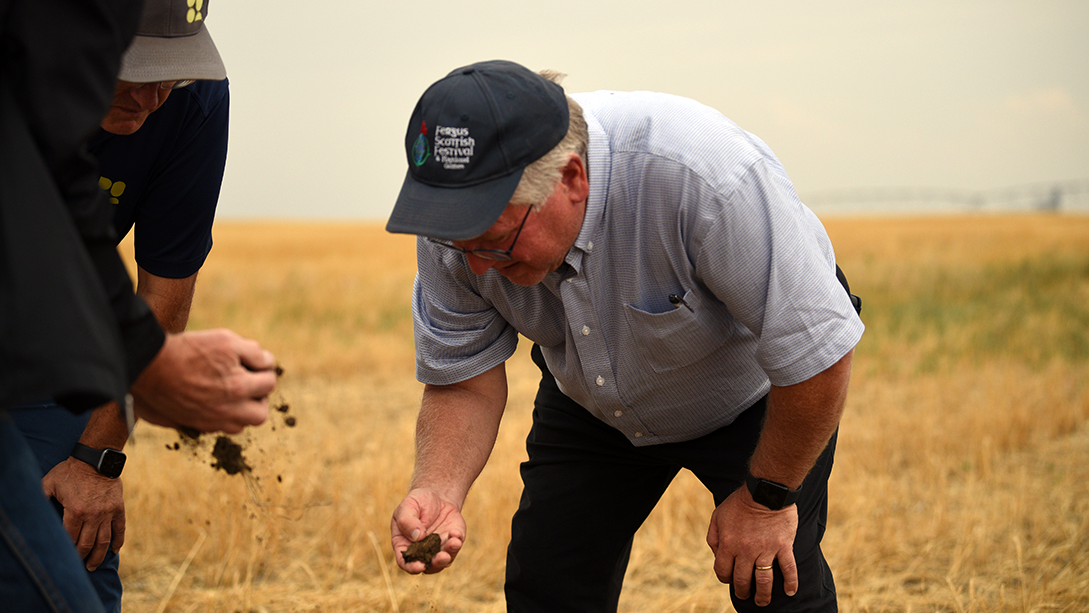
Complicating things further, the soil we use to grow the food and the feed for livestock that inevitably feeds our nation is degrading — all across the country. In addition, prime agricultural lands are quickly disappearing as housing and infrastructure development rise to sustain our ever-growing population.
As outlined in the report on soil health by the Senate Committee on Agriculture and Forestry (AGFO), the Food and Agriculture Organization of the United Nations “estimates that 33% of the earth’s soils are already degraded and over 90% could become degraded by 2050.” Moreover, farmland is being sold and developed, making these soils inaccessible and unusable for growing food. If we do not take immediate action to protect and conserve our soils, as the AGFO report implores, we will not have the land we need to feed our country — and the world — in the decades to come.
Although land use and rural planning are not within federal jurisdiction, ensuring we can feed our country is a national issue. This is why we need a pan-Canadian approach to safeguard the agricultural land and the healthy, arable and usable soils we need to feed the next generations of Canadians and beyond.
This effort also requires a whole-of-government approach. If we care about long-term food security, the recommendations to the Canadian government in the AGFO soil report must be taken seriously and implemented expeditiously; we cannot afford to dismiss them with platitudes, which is what the committee received in the government’s response to the report.
Farmers are responding to the growing obstacles they face with innovation and creative problem-solving but their hard work, initiative and resilience are not being acknowledged through government policies.
Government needs to do better. It must support all aspects of our agricultural industry and provide farmers with the policies, resources and programming they need to continue feeding Canadians.
Senator Rob Black represents Ontario. During the 44th Parliament, he chaired the Senate Committee on Agriculture and Forestry.
A version of this article was published in the Hill Times on March 17, 2025.
The agriculture industry contributes significantly to Canada’s overall success and well-being, yet it doesn’t receive the support from government that it needs to survive. This sector needs to be taken seriously for its innovative and sustainable practices, commitment and significant contributions to this country’s economy.
In 2023, the agriculture and agri-food sector contributed $150 billion to our economy, accounting for approximately 7% of Canada’s gross domestic product (GDP) and employing 2.3 million Canadians. In fact, one in nine jobs in Canada are within the agriculture industry, generating substantial revenue for our country.
Beyond its contributions to the economy and the labour market, the agriculture sector fulfils the basic needs of Canadians: providing us with nutrient rich and delicious foods, day in and day out.
Yet, as Canadians, we are far removed from where our foods originate. Behind every grocery store trip or meal you prepare, there is a farmer who has grown and harvested the raw foods and ingredients, and a processor who has packaged and delivered the products.
However, the agriculture industry is facing increased barriers every year. Farming has always come with its risks, but climate change has led to more unpredictable weather patterns and an increased risk of natural disasters. The threat of tariffs from our trading partner to the south has also added extra layers of risk and concern for the industry. Farmers are facing challenges now more than ever.
While the federal government offers business risk-management programs that provide financial support in response to this instability, I continue to hear from farmers that these programs are fraught with issues. This suite of programs is integral to counteracting the risks that come with farming, but they aren’t truly helpful unless they meet the real needs of farmers. The Government of Canada needs to listen to farmers’ voices and address the shortcomings of these programs so that farmers do not question if the risks are worth the reward.
Complicating things further, the soil we use to grow the food and the feed for livestock that inevitably feeds our nation is degrading — all across the country. In addition, prime agricultural lands are quickly disappearing as housing and infrastructure development rise to sustain our ever-growing population.
As outlined in the report on soil health by the Senate Committee on Agriculture and Forestry (AGFO), the Food and Agriculture Organization of the United Nations “estimates that 33% of the earth’s soils are already degraded and over 90% could become degraded by 2050.” Moreover, farmland is being sold and developed, making these soils inaccessible and unusable for growing food. If we do not take immediate action to protect and conserve our soils, as the AGFO report implores, we will not have the land we need to feed our country — and the world — in the decades to come.
Although land use and rural planning are not within federal jurisdiction, ensuring we can feed our country is a national issue. This is why we need a pan-Canadian approach to safeguard the agricultural land and the healthy, arable and usable soils we need to feed the next generations of Canadians and beyond.
This effort also requires a whole-of-government approach. If we care about long-term food security, the recommendations to the Canadian government in the AGFO soil report must be taken seriously and implemented expeditiously; we cannot afford to dismiss them with platitudes, which is what the committee received in the government’s response to the report.
Farmers are responding to the growing obstacles they face with innovation and creative problem-solving but their hard work, initiative and resilience are not being acknowledged through government policies.
Government needs to do better. It must support all aspects of our agricultural industry and provide farmers with the policies, resources and programming they need to continue feeding Canadians.
Senator Rob Black represents Ontario. During the 44th Parliament, he chaired the Senate Committee on Agriculture and Forestry.
A version of this article was published in the Hill Times on March 17, 2025.