


A Landmark Career: Senator Plett reflects on life in Opposition

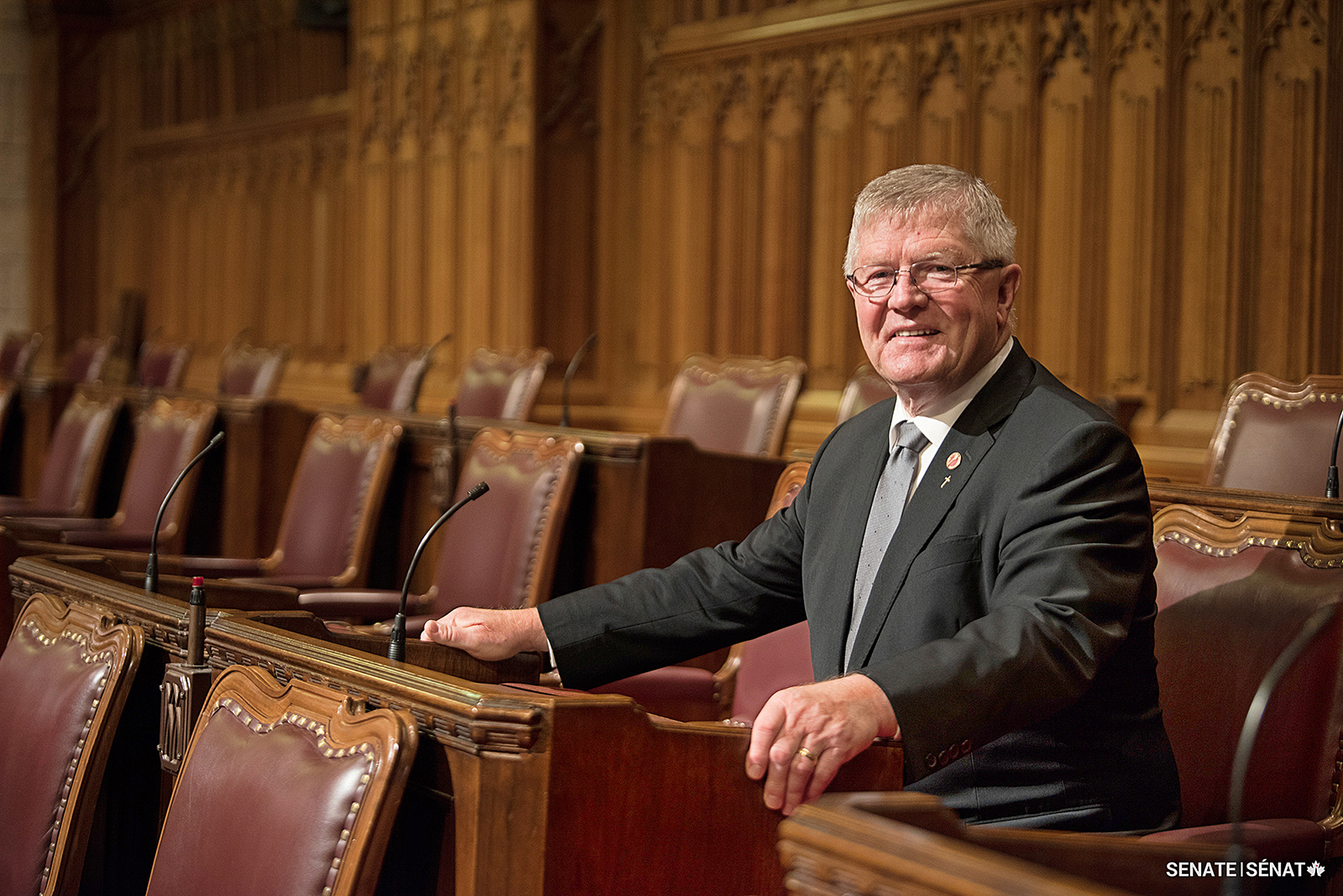
A tough player in the hockey rink — and in Senate Question Period — Senator Don Plett is not shy about dropping the gloves in sports or in politics.
The senator from Landmark, Manitoba, served almost 16 years in the Red Chamber and has been Leader of the Opposition in the Senate since 2019. Whether criticizing government bills in committee or asking challenging questions on the Red Chamber floor, Senator Plett fought for the Conservative Party he helped shape as its first president.
Ahead of his retirement on May 14, 2025, Senator Plett talked to SenCAplus about his role as opposition leader, his decades-long passion for politics and how he makes friends from foes.
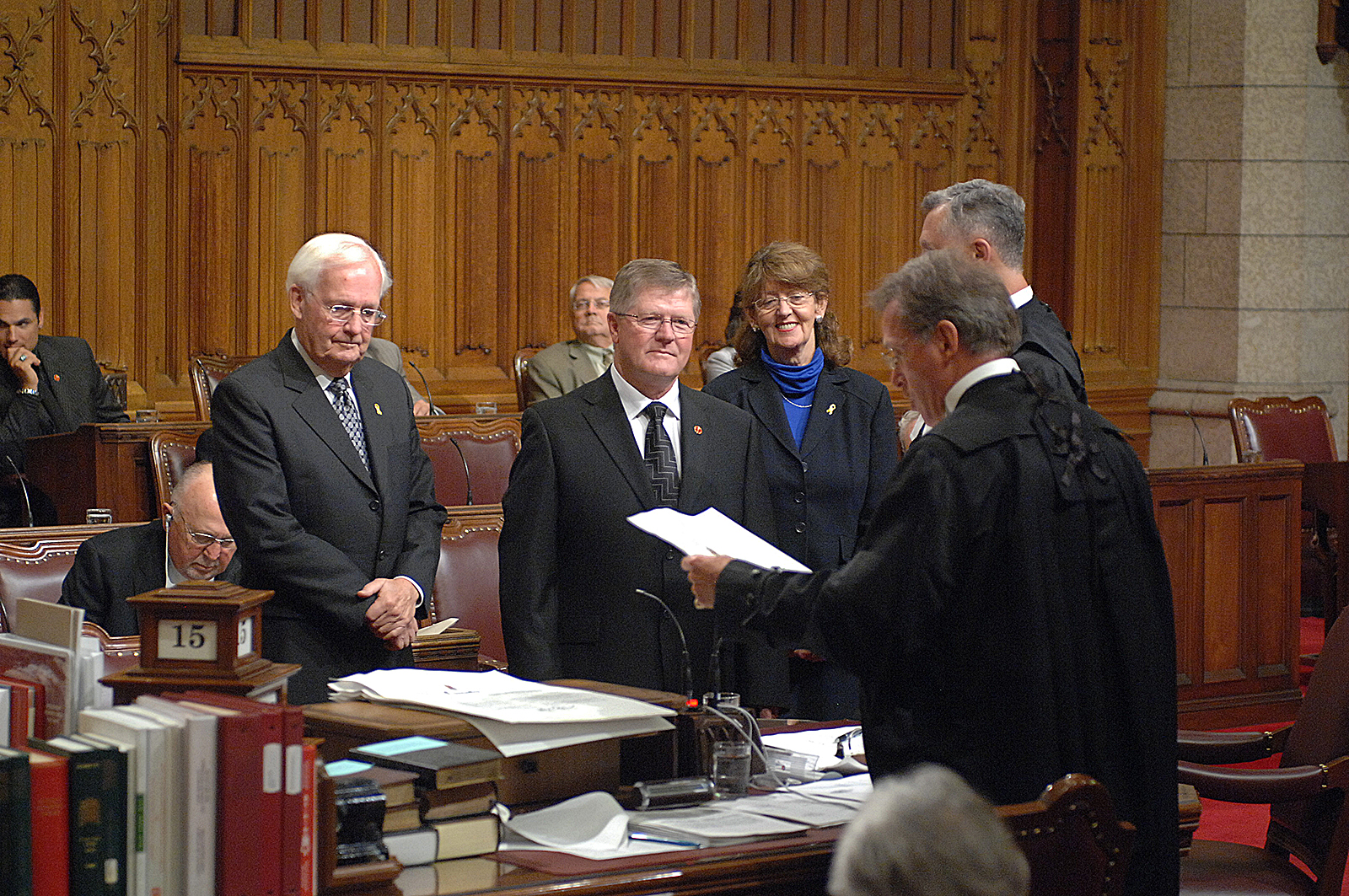
You first got involved in politics as a teenager, volunteering on the Honourable Jake Epp’s campaign. What drew you to politics in the first place?
My father always seemed to be in a leadership position, whether as a high-ranking member of our church or mayor of my hometown of Landmark, Manitoba. He was also in charge of a few polling stations during the federal elections, and he asked me to start scrutineering when I was almost 17 years old. I caught the political bug, and I later ran for some of the same positions that he had held. I was elected mayor of our community, and I served on different boards.
You’re a self-declared sports enthusiast who has coached, skipped a curling team and served as president of the Landmark Minor Hockey Association. What leadership skills did you learn from sports?
Sports taught me how to take risks. Whether you’re playing on the ice or in the field, you make decisions on the fly and then go for it. That is also the way I approach politics. It cost me on occasion because in politics, like in sports and business, risk taking brings reward and failure.
I play hockey with my elbows up and I also do politics with my elbows up. But when the game is over, the game is over. Then I go for a beer with the opposition. I have made many friends out of adversaries on the ice, in the field and in politics.
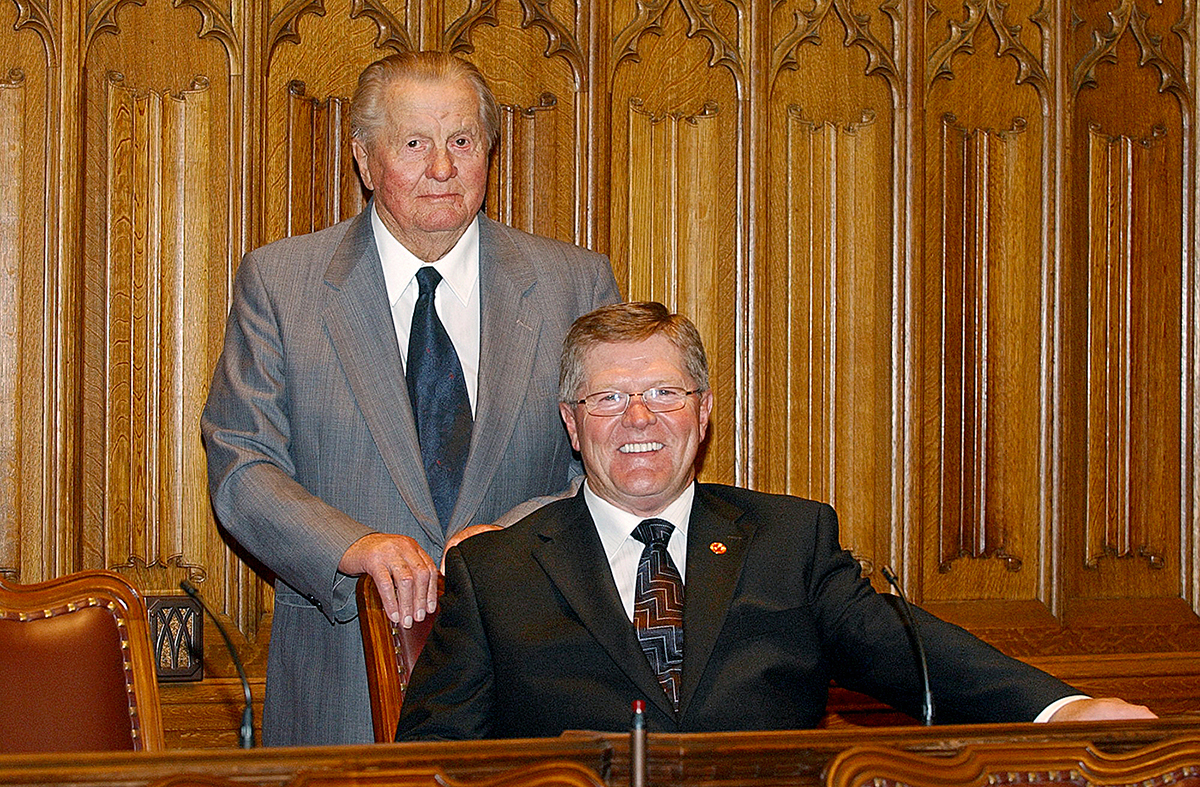
You served as interim president of the Conservative Party of Canada when the party first formed in 2003, and then you were elected as president in 2005. What was it like to be at the helm of the party during this transformative time?
It was extremely exciting. I was previously president of the Canadian Alliance party, which is where I met Stephen Harper, who was the party’s leader. I had spent a lot of time travelling to ridings across the country to help sell the idea of merging the Alliance party with the federal Progressive Conservatives. It was also a stressful time. Some of my best political friends stopped talking to me and it took years to rebuild those friendships.
When it came time to elect the new Conservative Party’s National Council, Stephen Harper was one of my strongest allies. He put his weight behind my election for presidency and then he made me a senator.
When I look back at it now, I had a significant part in forming what is now a very strong Conservative Party. And considering the size of our Senate group, I believe ours is one of the most effective Opposition caucuses in the history of the Red Chamber. My hometown of Landmark used to have a motto: Our town is small, but our spirit is big. I think the same goes for our caucus. We have fought a good fight.
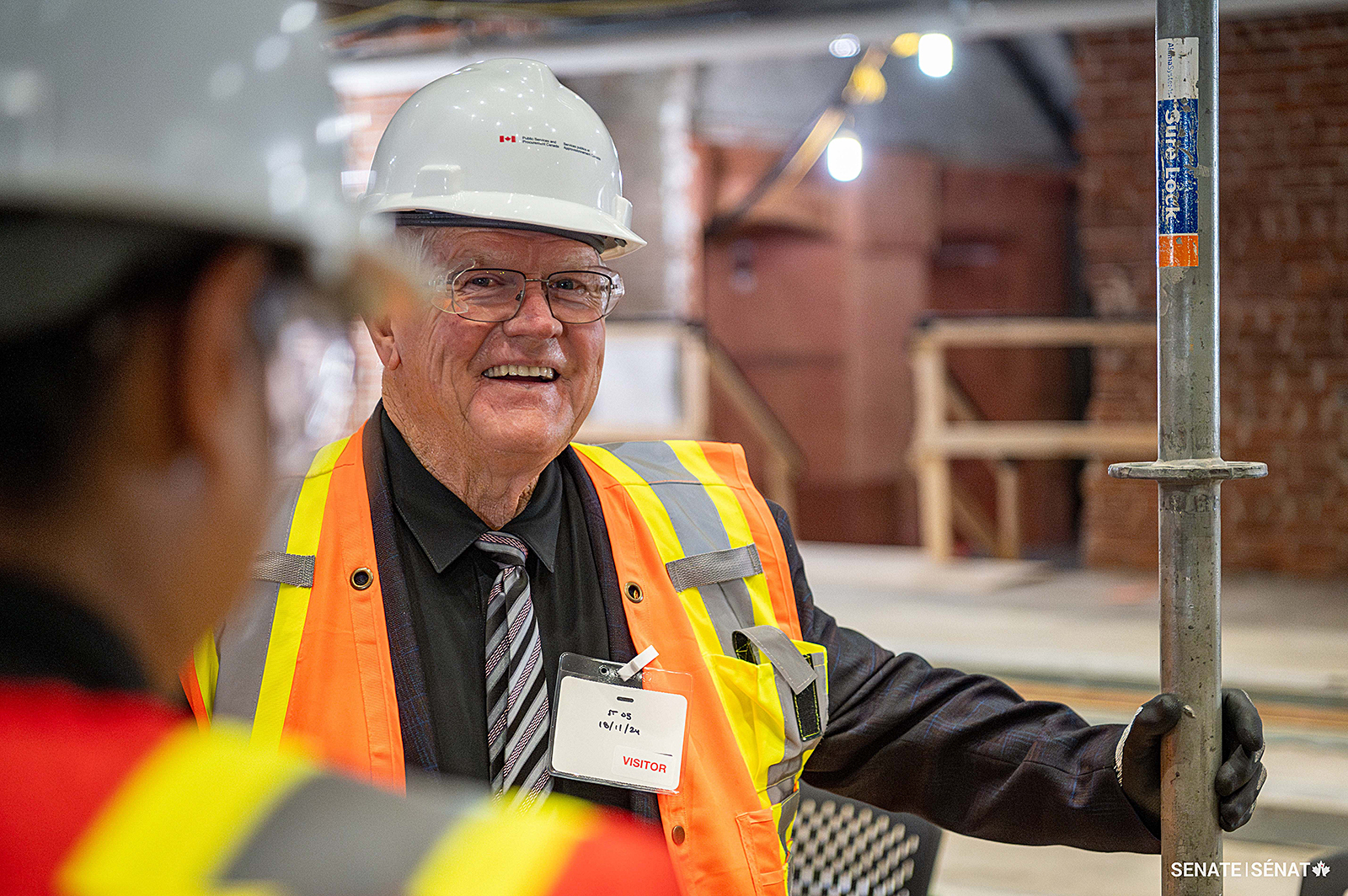
You first joined the Senate Conservative leadership team in 2015 as Opposition Whip, and your fellow Conservative senators elected you Leader of the Opposition in 2019. Why did you decide to pursue this role?
I had leadership aspirations in whatever I was doing. If I was playing hockey, I wanted to be the captain of our team. If I was serving on a board, I wanted to be the chair of that board. I was always trying to elevate myself to higher positions where I believed I could have more influence.
One of my biggest strengths — whether it be in sports, business or politics — was negotiating. Even as Opposition Whip, I was often involved in negotiating with the other Senate groups. I enjoyed being at the front and in charge. For that reason, I sought the Conservative leadership position, and I was blessed to have a good caucus and support staff behind me. I wish I was 10 years younger. I might have enough ambition to try to reach another pinnacle. But now, I’ll start living my dreams through my kids and grandkids.
As Leader of the Opposition, you get to ask the opening question during each Senate Question Period. How do you prepare?
I believe I’ve had the best staff on Parliament Hill. My Question Period team consisted of Karine Leroux, who was my very capable communications director; Jean-Martin Masse, my chief of staff, who vetted questions from the political aspect; and Karen Adams, who researched issues and wrote a list of questions. A lot of work goes into Question Period.
I could never have done this job without my team. They tried to keep me out of trouble while also living on the edge. Without my team to pull on the reins, then I would have spent a lot more time apologizing in the Senate Chamber!
What makes a good question?
A good question will embarrass the other side and create some momentum on your side. If your base loves it and your opponent hates it, then that makes a good question.
What Senate committee or legislative work stands out to you?
When the Conservatives were in power, I started a bill called the Prompt Payment Act to ensure that construction contractors and subcontractors who work for government institutions are paid in a timely manner. It’s a tremendously important piece of legislation that is now law, and it has become law in most provinces. The ironic thing is I got it passed only after we were in Opposition with the strong help of a good friend, Liberal MP Judy Sgro. God love her.
I am also proud of my role in stopping a lot of bad legislation and my work as a critic for many bills. As the Senate Conservative caucus shrank over the years, I had trouble finding a critic for every controversial bill, so I would end up taking it on. I am thinking of the transgender bill, the conversion therapy bill and recently Bill C-355, which would have banned the transportation of horses to Japan for slaughter.
I was generally not making friends as the critic for these bills. But as former prime minister Jean Chrétien once said, “in Opposition, your role is to oppose.” I think I’ve done my job. If I can go home at night and say that what I did that day was for the betterment of the country, then I’ve done the right thing.
You have often spoken about your Christian faith and Mennonite culture. How has your faith shaped you as a person and what role has it played in your political life?
Mennonites are known for having a strong work ethic and my forefathers instilled that same value in me. They left Ukraine for Canada in the 1870s because they were starting to lose their freedoms. Many of them believed that they should just be grateful to the Canadian government for welcoming them, giving them land, and granting them the freedom to practise their religion and educate their children. They never wanted to rock the boat.
But my dad and I were the opposite. We wanted to show that we were thankful for this country by getting involved and pushing for change. Many of my ancestors believed it was wrong to be part of government.
I see my Christian faith as separate from my Mennonite culture. I grew up in a Christian home that valued centre-right policies and sanctity of life. I try to promote proper values, but also accept people who have values that are different from mine.

You have often mentioned how proud you are of your children and your grandchildren. Has it been difficult for you to balance family life with your parliamentary duties?
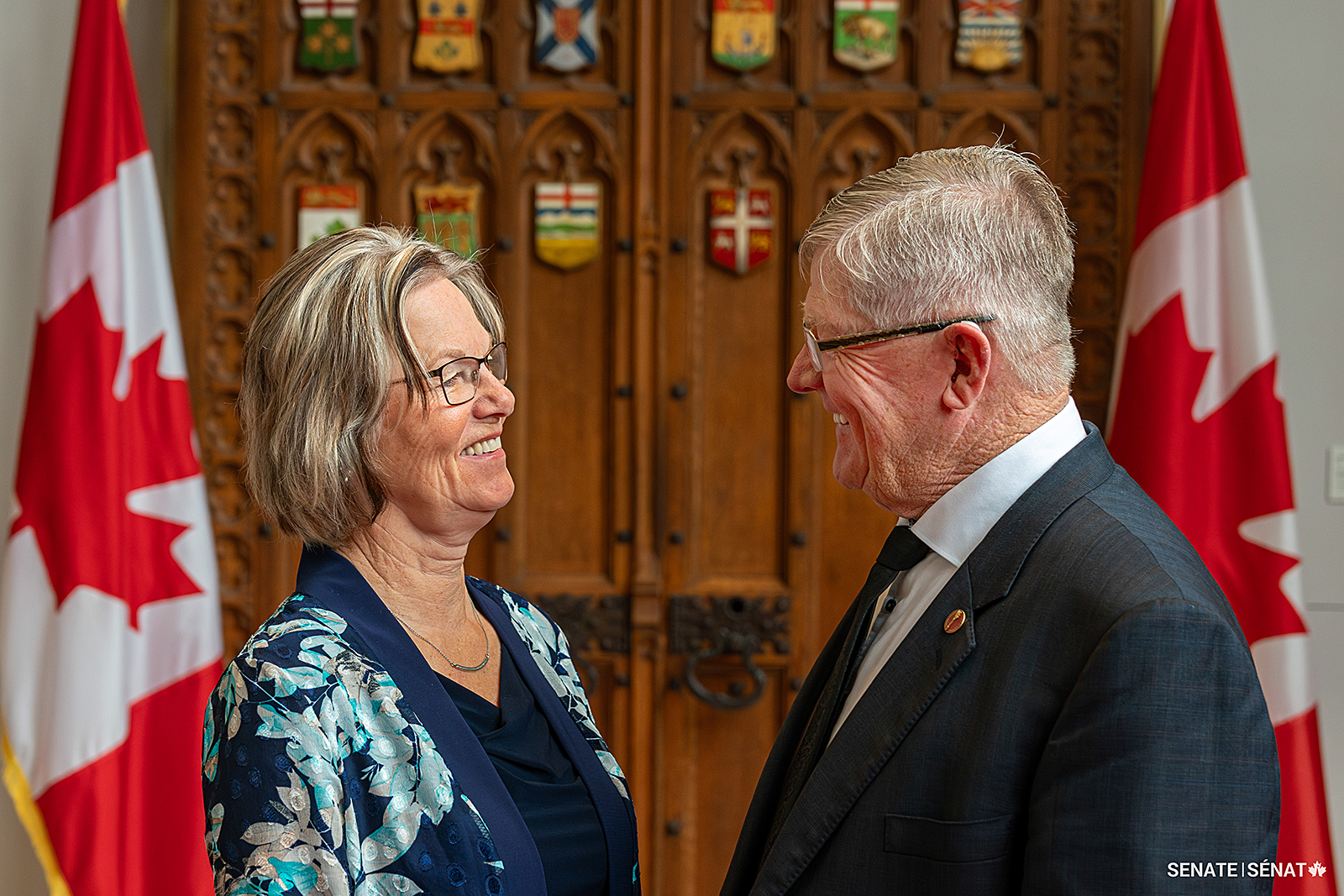
Yes and no. About half our family lives outside Manitoba. We have four sons, 12 grandchildren and we are expecting our first great-grandchild soon. My two youngest sons, who are twins, have taken over our family’s heating and plumbing business in Landmark. I still go to their office for coffee. My second-oldest son is a firefighter in Carstairs, Alberta, and my oldest son works for a large international construction company in the U.S. They have all been extremely supportive of my work at the Senate, especially my long-suffering wife.
What are your retirement plans?
In my first year of retirement, my wife and I are planning on following our grandkids around and watching what they do. My granddaughter Myla Plett is an elite curler whose team recently won the nationals on P.E.I., so we’re going to travel to see her games starting this fall. We also have a grandson who plays baseball for a university team south of the border.
What has it meant to you to serve in the Senate for 16 years?
When I walk into the Senate Chamber, I think of the tremendous responsibility that we 105 senators have to our country and to the world. You don’t think about that often enough because it’s an everyday job. You go in there to fight, and you’re not really thinking about the magnitude of what you’re doing. Every time I stop to think about that awesome responsibility, I thank God and the people who have helped me.
Related articles
Tags
Committee news
A Landmark Career: Senator Plett reflects on life in Opposition
A tough player in the hockey rink — and in Senate Question Period — Senator Don Plett is not shy about dropping the gloves in sports or in politics.
The senator from Landmark, Manitoba, served almost 16 years in the Red Chamber and has been Leader of the Opposition in the Senate since 2019. Whether criticizing government bills in committee or asking challenging questions on the Red Chamber floor, Senator Plett fought for the Conservative Party he helped shape as its first president.
Ahead of his retirement on May 14, 2025, Senator Plett talked to SenCAplus about his role as opposition leader, his decades-long passion for politics and how he makes friends from foes.
You first got involved in politics as a teenager, volunteering on the Honourable Jake Epp’s campaign. What drew you to politics in the first place?
My father always seemed to be in a leadership position, whether as a high-ranking member of our church or mayor of my hometown of Landmark, Manitoba. He was also in charge of a few polling stations during the federal elections, and he asked me to start scrutineering when I was almost 17 years old. I caught the political bug, and I later ran for some of the same positions that he had held. I was elected mayor of our community, and I served on different boards.
You’re a self-declared sports enthusiast who has coached, skipped a curling team and served as president of the Landmark Minor Hockey Association. What leadership skills did you learn from sports?
Sports taught me how to take risks. Whether you’re playing on the ice or in the field, you make decisions on the fly and then go for it. That is also the way I approach politics. It cost me on occasion because in politics, like in sports and business, risk taking brings reward and failure.
I play hockey with my elbows up and I also do politics with my elbows up. But when the game is over, the game is over. Then I go for a beer with the opposition. I have made many friends out of adversaries on the ice, in the field and in politics.
You served as interim president of the Conservative Party of Canada when the party first formed in 2003, and then you were elected as president in 2005. What was it like to be at the helm of the party during this transformative time?
It was extremely exciting. I was previously president of the Canadian Alliance party, which is where I met Stephen Harper, who was the party’s leader. I had spent a lot of time travelling to ridings across the country to help sell the idea of merging the Alliance party with the federal Progressive Conservatives. It was also a stressful time. Some of my best political friends stopped talking to me and it took years to rebuild those friendships.
When it came time to elect the new Conservative Party’s National Council, Stephen Harper was one of my strongest allies. He put his weight behind my election for presidency and then he made me a senator.
When I look back at it now, I had a significant part in forming what is now a very strong Conservative Party. And considering the size of our Senate group, I believe ours is one of the most effective Opposition caucuses in the history of the Red Chamber. My hometown of Landmark used to have a motto: Our town is small, but our spirit is big. I think the same goes for our caucus. We have fought a good fight.
You first joined the Senate Conservative leadership team in 2015 as Opposition Whip, and your fellow Conservative senators elected you Leader of the Opposition in 2019. Why did you decide to pursue this role?
I had leadership aspirations in whatever I was doing. If I was playing hockey, I wanted to be the captain of our team. If I was serving on a board, I wanted to be the chair of that board. I was always trying to elevate myself to higher positions where I believed I could have more influence.
One of my biggest strengths — whether it be in sports, business or politics — was negotiating. Even as Opposition Whip, I was often involved in negotiating with the other Senate groups. I enjoyed being at the front and in charge. For that reason, I sought the Conservative leadership position, and I was blessed to have a good caucus and support staff behind me. I wish I was 10 years younger. I might have enough ambition to try to reach another pinnacle. But now, I’ll start living my dreams through my kids and grandkids.
As Leader of the Opposition, you get to ask the opening question during each Senate Question Period. How do you prepare?
I believe I’ve had the best staff on Parliament Hill. My Question Period team consisted of Karine Leroux, who was my very capable communications director; Jean-Martin Masse, my chief of staff, who vetted questions from the political aspect; and Karen Adams, who researched issues and wrote a list of questions. A lot of work goes into Question Period.
I could never have done this job without my team. They tried to keep me out of trouble while also living on the edge. Without my team to pull on the reins, then I would have spent a lot more time apologizing in the Senate Chamber!
What makes a good question?
A good question will embarrass the other side and create some momentum on your side. If your base loves it and your opponent hates it, then that makes a good question.
What Senate committee or legislative work stands out to you?
When the Conservatives were in power, I started a bill called the Prompt Payment Act to ensure that construction contractors and subcontractors who work for government institutions are paid in a timely manner. It’s a tremendously important piece of legislation that is now law, and it has become law in most provinces. The ironic thing is I got it passed only after we were in Opposition with the strong help of a good friend, Liberal MP Judy Sgro. God love her.
I am also proud of my role in stopping a lot of bad legislation and my work as a critic for many bills. As the Senate Conservative caucus shrank over the years, I had trouble finding a critic for every controversial bill, so I would end up taking it on. I am thinking of the transgender bill, the conversion therapy bill and recently Bill C-355, which would have banned the transportation of horses to Japan for slaughter.
I was generally not making friends as the critic for these bills. But as former prime minister Jean Chrétien once said, “in Opposition, your role is to oppose.” I think I’ve done my job. If I can go home at night and say that what I did that day was for the betterment of the country, then I’ve done the right thing.
You have often spoken about your Christian faith and Mennonite culture. How has your faith shaped you as a person and what role has it played in your political life?
Mennonites are known for having a strong work ethic and my forefathers instilled that same value in me. They left Ukraine for Canada in the 1870s because they were starting to lose their freedoms. Many of them believed that they should just be grateful to the Canadian government for welcoming them, giving them land, and granting them the freedom to practise their religion and educate their children. They never wanted to rock the boat.
But my dad and I were the opposite. We wanted to show that we were thankful for this country by getting involved and pushing for change. Many of my ancestors believed it was wrong to be part of government.
I see my Christian faith as separate from my Mennonite culture. I grew up in a Christian home that valued centre-right policies and sanctity of life. I try to promote proper values, but also accept people who have values that are different from mine.
You have often mentioned how proud you are of your children and your grandchildren. Has it been difficult for you to balance family life with your parliamentary duties?
Yes and no. About half our family lives outside Manitoba. We have four sons, 12 grandchildren and we are expecting our first great-grandchild soon. My two youngest sons, who are twins, have taken over our family’s heating and plumbing business in Landmark. I still go to their office for coffee. My second-oldest son is a firefighter in Carstairs, Alberta, and my oldest son works for a large international construction company in the U.S. They have all been extremely supportive of my work at the Senate, especially my long-suffering wife.
What are your retirement plans?
In my first year of retirement, my wife and I are planning on following our grandkids around and watching what they do. My granddaughter Myla Plett is an elite curler whose team recently won the nationals on P.E.I., so we’re going to travel to see her games starting this fall. We also have a grandson who plays baseball for a university team south of the border.
What has it meant to you to serve in the Senate for 16 years?
When I walk into the Senate Chamber, I think of the tremendous responsibility that we 105 senators have to our country and to the world. You don’t think about that often enough because it’s an everyday job. You go in there to fight, and you’re not really thinking about the magnitude of what you’re doing. Every time I stop to think about that awesome responsibility, I thank God and the people who have helped me.