Speech from the Throne
Motion for Address in Reply—Debate Continued
September 27, 2018
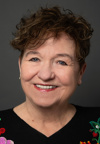
The Honorable Senator Yvonne Boyer:
Honourable senators, I rise today for my first speech in the chamber.
I am both honoured and humbled to rise in this chamber to call attention to an issue that is very important to me and to encourage us as senators to focus on a particular area dealing with the health of Indigenous peoples and, in particular, Indigenous women.
I would first like to acknowledge the unceded Algonquin territory on which we are guests and thank the Algonquin people for their hospitality here.
I received my call to the Senate on March 8, which is International Women’s Day. A few days later, when I knew my appointment was going to be announced in the news, I eagerly opened my online news feed. The first thing I saw was that Leah Jade Lavallee Matthews, a young Indigenous woman who had been reported missing in Bonnyville, Alberta, had been found. I held my breath, as I had been watching and waiting for her to be found. But she was not safe. It was her body that had been found.
Leah was 18 years old — a vibrant, beautiful young Indigenous woman, who became another statistic on the day I was appointed to the Senate. She was a beloved daughter, granddaughter, sister, auntie and cousin. My heart sank, my stomach turned, and my throat was like cotton. My eyes filled with tears. When will it stop? When will the lives of Indigenous women matter? And that is how my journey in the Senate began.
Honourable senators, my speech today is not going to be particularly joyful. You have heard many of these issues here in the Senate, and I have humbly watched with careful and respectful ears while you’ve spoken about issues that are close to your heart while your words resonate with the principles of fairness, respect, equality, health and justice in making Canada a fairer and more inclusive country. I consider it a great privilege to join each of you in this Senate as we continue this important work together.
I am a lawyer, and I was previously a nurse. I am Metis. I am a mother and a grandmother. My lifelong and professional work is grounded and focused upon the intersection between health and the law, in particular the myriad issues with Indigenous health.
Before I discuss this topic in more detail, I want to explain where I come from and why I work in the area that I do. I was born into a Metis family in southern Saskatchewan. My grandparents came from the Red River in Manitoba. My grandmother is Mary Rosalie LaRocque. My grandfather is Louis Amable Boyer. Introducing our families and where we come from is important, as it highlights our kinship relations and our interconnections in this place, and it informs my perspective as a senator.
My grandmother was born in 1881, and my father was the youngest of 13 children. He had sisters 20 years older than he, and he was very loved. I lived with his sister, my Aunt Lucy. When I was a little girl, my bedtime stories were stories of the tuberculosis sanatorium where she spent 10 years of her life. It was at Fort San in the Qu’Appelle Valley in Saskatchewan. She had tuberculosis, and those were the days before antibiotics, and the only treatment was bed rest and cold air. She lay on her back for 10 years, five of which she spent in a complete body cast. She brought to life for me what life was like for a tiny Chippewa Metis girl in the tuberculosis sanatorium.
She tried to keep upbeat, and even through her struggles, she gave me three important life lessons. The first is that health care for brown children is different than for white children. The second is that there are some very mean people who hurt others because of their race, especially when there is no family watching close by. My aunt saw her family once in those 10 years. The last lesson she taught me was that there are predators in the hospital system.
My aunt was institutionalized from 1925 to 1935. She was never able to bear children, although I do not know whether she was sterilized, as her records were destroyed.
I had many aunts and uncles. My aunties and grandmother were healers and health care providers. They cared for each other and others. It was expected that I go into nursing, and when I graduated from high school, that is exactly what I did. What I saw as a nurse were the same realities my aunt had described to me as existing in the 1920s and the 1930s: There were racism, discrimination, intentional meanness and sexual abusers.
I worked in small, 50-bed hospitals, and as the years went by I got angrier and angrier with what I was seeing: the institutionalized racism and the candid comments made to me because the racists thought I was like them, as they spoke of my sisters, my aunties and my brothers, and how those Indian women should be sterilized to prevent them from breeding. Those words haunt me to this day.
I began complaining, and I decided I would either have to become complacent or do something about it. So I started taking university night classes. I was a single mom with three kids, and I went back to school to become a lawyer. I wanted to make a change to the injustice within the health field. I really believed that if I had a good set of tools, I might go about fixing some of these things. I had my fourth baby during my first year of law school. I managed that gruelling schedule because I was completely driven and on fire to make a change to the atrocities that I saw. There was no stopping.
That is what I did: I got started, and I couldn’t stop. I completed a master’s in law and then a doctorate in law, all while I was practising law. My research focused on the relationship between Indigenous health and the law. From the beginning, I have been vocal about the racism and substandard care for Indigenous people in the health care system.
I’m going to skip ahead a few years and talk to you specifically about a particularly sinister practice. It may be surprising for many to learn that Indigenous women have been coerced into sterilization during routine care in our health system, recorded in my books as recently as 2015.
That same year, a reporter from the StarPhoenix in Saskatoon called me. Betty Ann Adam advised me that two Indigenous women had contacted her, saying they had recently been sterilized against their will in a Saskatoon hospital. I was asked for my opinion on the matter and I freely gave it. I asked, “What about consent? What about Aboriginal rights? What about the United Nations Declaration on the Rights of Indigenous Peoples and free, prior and informed consent? What about negligence, assault? What about battery?”
The stories of these two women, namely, Brenda Pelletier and Tracy Bannab, were published. These brave women stood up for themselves at a great cost and told the world what happened to them. Soon another woman came forward and then another woman came, and another and another.
I was asked to do a few media interviews, and I reiterated my statements on how fair and equitable treatment is not given to Indigenous women. The Brenda Pelletier and Tracy Bannab stories demonstrate an attitude in the health care system that informs all government policies towards Indigenous people. Their stories have the underpinning of the guardian and ward theory in which the health system assumes they know what is best for Indigenous people because it doesn’t believe Indigenous people are capable of making those decisions on their own. These concepts were implemented through colonialization, imported into Canadian laws in the 1800s and continue to underpin many Canadian health policies toward Indigenous people today.
In Brenda’s case, she was on the operating table and clearly said she did not want the procedure done. The doctor stood over her and asked the nurse if Brenda had signed the consent form, which she had, and he went ahead and sterilized her even after Brenda revoked consent on the table.
One could easily argue that in these circumstances, the doctor breached the United Nations standards for free, prior and informed consent. Indeed, her consent was not free. She was under duress. It was not informed consent, as she believed that the procedure would be reversible. It was not prior because the nurse said the operating room was ready even before Brenda signed the form.
She clearly revoked her consent while on the operating room table. The whole procedure should have stopped there. It did not. In addition to the legal liability issues, this situation smacks of racism in health care, guardian and ward theory, and the medical profession thinking they know what is best for Indigenous women.
Then, surprisingly, in October 2016, I received a message from the Saskatoon Health Region. They asked if I would conduct an external review on their health region based on the complaints they had received about the coerced sterilization issue. I asked if they were sure they knew who they were speaking to because I had been very vocal with my opinions. They said the elders had asked me for, so I agreed to do it.
That was the beginning of the uncovering of one of the most heinous practices in health care.
Dr. Judith Bartlett, a Metis physician and researcher, agreed to assist with the review process. Our report was released in July 2017 and describes the women’s experiences of being coerced into tubal ligation after childbirth, with some being coerced into signing consent forms either while in active labour or on the operating room table. Tubal ligation is the surgical sterilization of a woman by severing through, burning or cutting and tying the fallopian tubes. Many of those who underwent the procedure believed it was reversible, but it is considered a permanent procedure.
Our study used a community-led research process, which is in keeping with the proper cultural protocol of the Indigenous peoples whose land we were on. Dr. Bartlett and I acted as facilitators of this process. The review was limited to the Saskatoon Health Region and its catchment area, with an approximate population of urban and rural peoples totalling 350,000.
Our review was also limited to those women sterilized immediately postpartum. We advertised in Cree and in English. Sixteen women called our toll-free line and we interviewed six severely traumatized women. Seven others made appointments but for various reasons could not attend. We interviewed eight people from the Saskatoon Health Region, including two physicians and an additional two social workers.
The relatively small number of Indigenous women interviewed was, I believe, the tip of an iceberg of many more that could not or would not come forward with their own stories of horror.
Nearly half of the women who contacted us were unable to move beyond the call to be interviewed. Some tried on more than one occasion to attend an interview. It is important to note that for reasons and factors related to the colonial residue negatively impacting Indigenous women, this inability to be interviewed was expected. It can only be imagined the courage it took to make the appointments, and there were probably even more angst and guilty feelings when a woman could not follow through.
All the women interviewed shared that they had received psychological pressure to be sterilized. They were harassed by nurses, doctors and social workers. Scare and intimidation tactics were used by the staff, one woman being told that because she had one child with cerebral palsy, the others would suffer the same fate and therefore must be sterilized.
Another physician told one of the women who had given birth to six children, when she was brought to the operating table against her will, that “You’re tied, cut and burnt; nothing will get through that.”
These women were powerless, and this powerlessness was enforced by the health care providers who said it “was best” that they were sterilized.
We also heard from health care providers, and their stories were as equally as grim if they were Indigenous. For example, one participant was told by a colleague that “I [blank] hate you people more than any other race on this entire Earth.”
And then there is the story of Morningstar Mercredi, a well-known and respected First Nations storyteller who, at six months pregnant, went to a hospital in the Saskatoon Health Region because she was spotting blood. She woke up sterilized with the baby and a portion of her reproductive system removed. She did not consent to an abortion in her second trimester and she did not consent to the surgery. She was damaged beyond repair, and at age 20 she realized she would never have another child.
In October 2017, a class-action lawsuit against the Saskatoon Health Region was launched by two of the affected women, each claiming $7 million in damages. Nearly 60 women have since joined the lawsuit.
This class-action certification has been filed in the Saskatchewan Court of Queen’s Bench in Saskatoon and a hearing was held on June 8. They are awaiting a decision on the preliminary defendant applications.
The external review report is a clear example of the atrocities and inhumane treatment of Indigenous people in our health system. When news of the report ricocheted across the country, numerous Indigenous people from outside of Saskatchewan came forward describing, in detail, the horrors they have experienced in the health care system. They have been asking for help. Since the report, I have received and continue to receive emails, calls and pleas from women all across the country who have endured complete horrors at the hands of our health care system.
An Anishinaabe woman from Ontario wrote to me and painfully attested to a coerced abortion and tubal ligation at 18 years old, very much against her will, stating that the Children’s Aid Society insisted they would take the baby “one way or another.” She said:
I had nowhere to turn for help. CAS became the voice of my unborn child. That voice told me in no uncertain terms to have an abortion because either way they were going to take the baby from me. I was forced and coerced by CAS and my attending Doctor supported their recommendation to both ABORT and STERILIZE me. I did not understand all of what was happening as my being was clouded in a time and space of total bewilderment. There was a sense that what was happening was not right. Yet, how can I fight these people who have already deemed my life unworthy and what’s more they have deemed my unborn baby unworthy. So much so, that they backed me into a corner and also deemed my right to bear life, as unworthy. They cut me down and what’s more they cut any chance of me ever having the God given right to further bear life. This system became my judge, jury and executioner. What’s worse, they became that to my unborn child as well.
What can be done to stem the tide of coerced sterilization and other poor treatment that seems to — even now — happen to Indigenous people across the country?
Indigenous peoples carry direct and intergenerational trauma from the residential school system. The policies that governed the schools were rooted in racism, colonial superiority and wardship beliefs. Unfortunately, today, a substantial power imbalance continues to exist between non-Indigenous health care providers and Indigenous peoples, which underpins their negative experiences in the health care system. Yet this problem is not well understood or even perceived by many health professionals.
I believe that by entering this place, I have been allowed the opportunity to champion these issues. I believe it is our responsibility to speak for those who have no voice. They are not heard and the voices of their future children are silenced. In this new role as a senator, I look forward to working with each of you to help address this problem. I urge all honourable senators to work together and ask what can be done to help remedy this shameful situation. Meegwetch. Thank you.