


Meet Senator Mary Jane McCallum
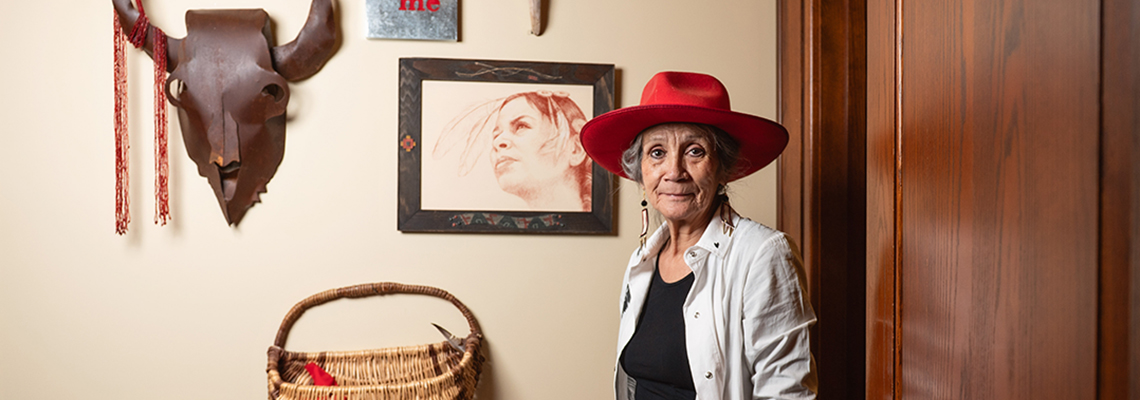
The first Indigenous woman to become a dentist in Canada, Senator Mary Jane McCallum spent 45 years providing dental care to First Nations communities across Manitoba and Saskatchewan before joining the Senate in 2017.
Learn about the senator’s remarkable career, her social justice advocacy work and how she’s bringing Indigenous voices to the Red Chamber.
You are from the Barren Lands First Nation in Brochet, Manitoba, near the Saskatchewan border. How would you describe your community?
The community is grounded in our land. We build life skills through land-based education, from the trapline to the fishing camp, and through our connection to the people who live there. We carry community with us, and it gives us purpose.
Growing up in Brochet, I knew that my language and my culture were integral to my community. I learned my work ethic and values from my mom and dad. They gave me direction in life without sitting me at a desk. Then I moved into residential school at age five, so I was abruptly taken away and put into an institution that was completely foreign me.
I became dispossessed of my identity, my language and my culture. My residential school was Catholic, so I was told that I was a sinner and a savage, even as a young child. You know the quote, “to kill the Indian in the child”? Well, I started killing the Indian in me. That’s how assimilation works. I stayed at residential school for 11 years before I left to attend high school.
What made you want to go into dentistry?
After high school, I studied stenography, but it wasn’t enough for me, so I went into dental assisting. I had the opportunity to work on northern reserves, and I found I was very good at the job. The dentists I worked with all encouraged me to continue down that path, so I completed a dental nursing program, before obtaining a dental therapy diploma and then a Doctor of Dental Medicine.
I worked in almost 30 clinics across Manitoba, including in my own community. My work in Brochet was instrumental to shaping who I am today. It’s where I learned to decolonize dentistry, rather than take a “drill, fill and bill” approach. I also became the chair for the school committee, and I got involved with housing initiatives. I began to learn about the social determinants of health and how critical they were to dental care. Some dentists might ask, “Why don’t you brush your teeth?” But if someone doesn’t have food to eat, why would they brush their teeth?
I ran a children’s dental program. Instead of focusing solely on their teeth, I would look at whether they had a good sleep the night before, whether they had eaten, whether they had received a hug that morning and if they were dressed appropriately for the weather. They taught me a lot.
You joined the Red Chamber in 2017. Why did you want to become a senator?
I initially wanted to become the governor general, but my husband told me I wouldn’t be able to accomplish what I wanted in that role. He suggested that I apply to the Senate. This was in 2016, when Justin Trudeau, who was prime minister at the time, had launched the nomination process.
I didn’t know much about the Senate. I had volunteered with the Assembly of Manitoba Chiefs, which gave me a better understanding of how politics and legislation shape our lives. It also taught me the importance of working with community groups. In fact, every bill that I have brought to the Senate has come from communities.
In 2022, the Senate adopted your bill designating January 4 as National Ribbon Skirt Day. What does a ribbon skirt symbolize and why is it important to honour its significance with a special day?
The idea for this bill originated from the story of Isabella Kulak, a 10-year-old girl in Saskatchewan, who was shamed because she wore a ribbon skirt to school. The ribbon skirt is not just about fashion; it has a spiritual component. It’s about honouring and respecting your culture and yourself.
I spend every January 4 with Isabella and her parents. People from across the country send us pictures of their ribbon skirts. For me, National Ribbon Skirt Day is about unity, pride, connection, relationship building and moving towards justice.
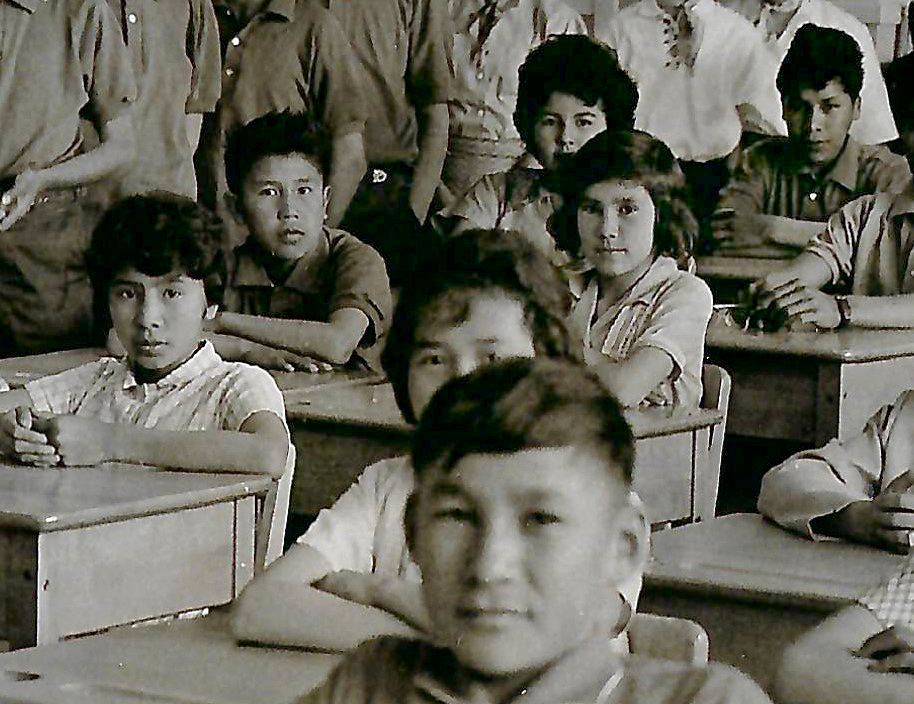 Senator Mary Jane McCallum, second from right, as a student at Guy Hill Residential School in The Pas, Manitoba. (Photo credit: Office of Senator Mary Jane McCallum)
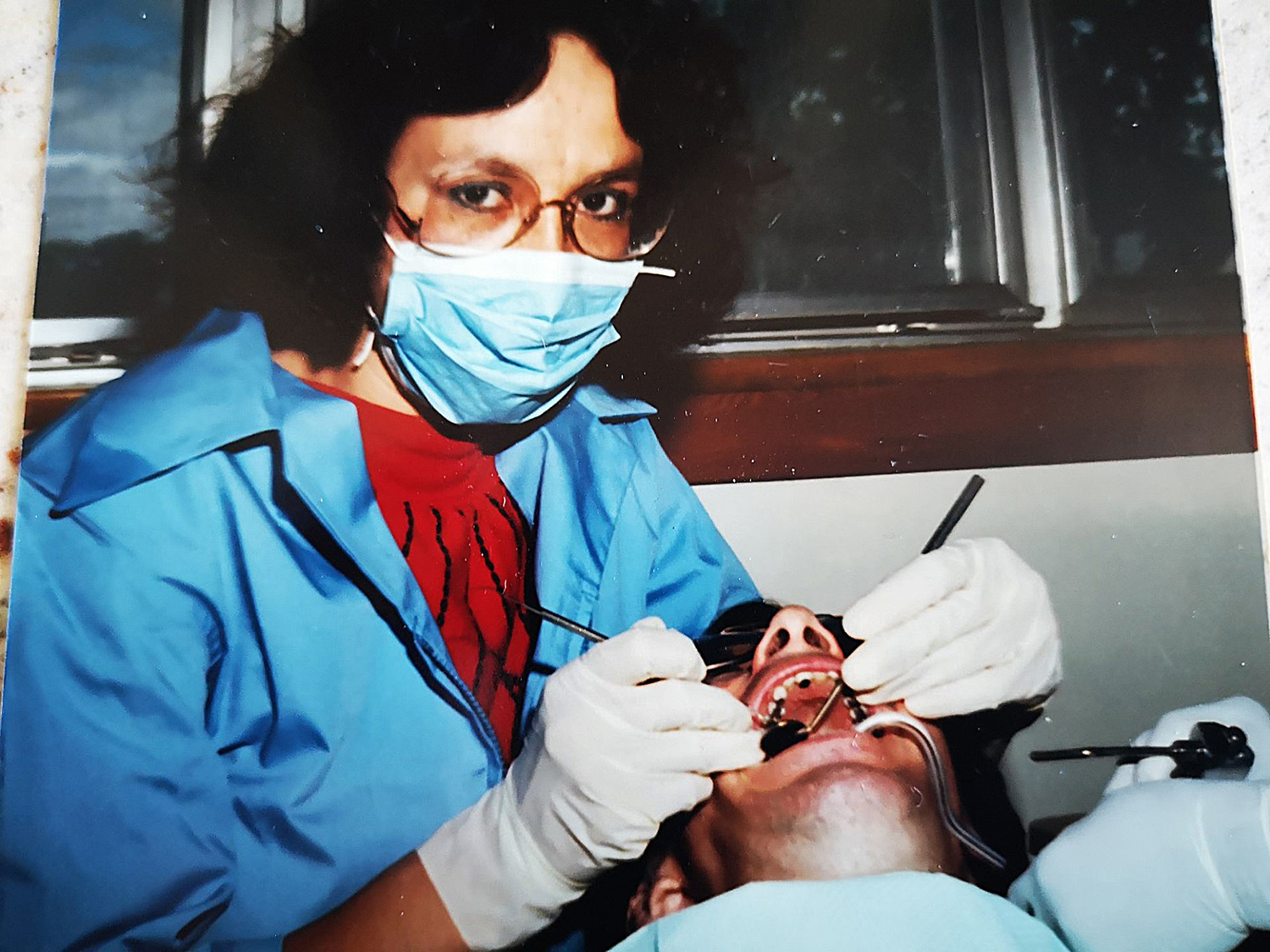 Senator McCallum tends to a patient in this photo from 1978, when she was a dental nurse. This is around the time when she started to view her profession as a public service, and not strictly as a business. (Photo credit: Office of Senator Mary Jane McCallum)
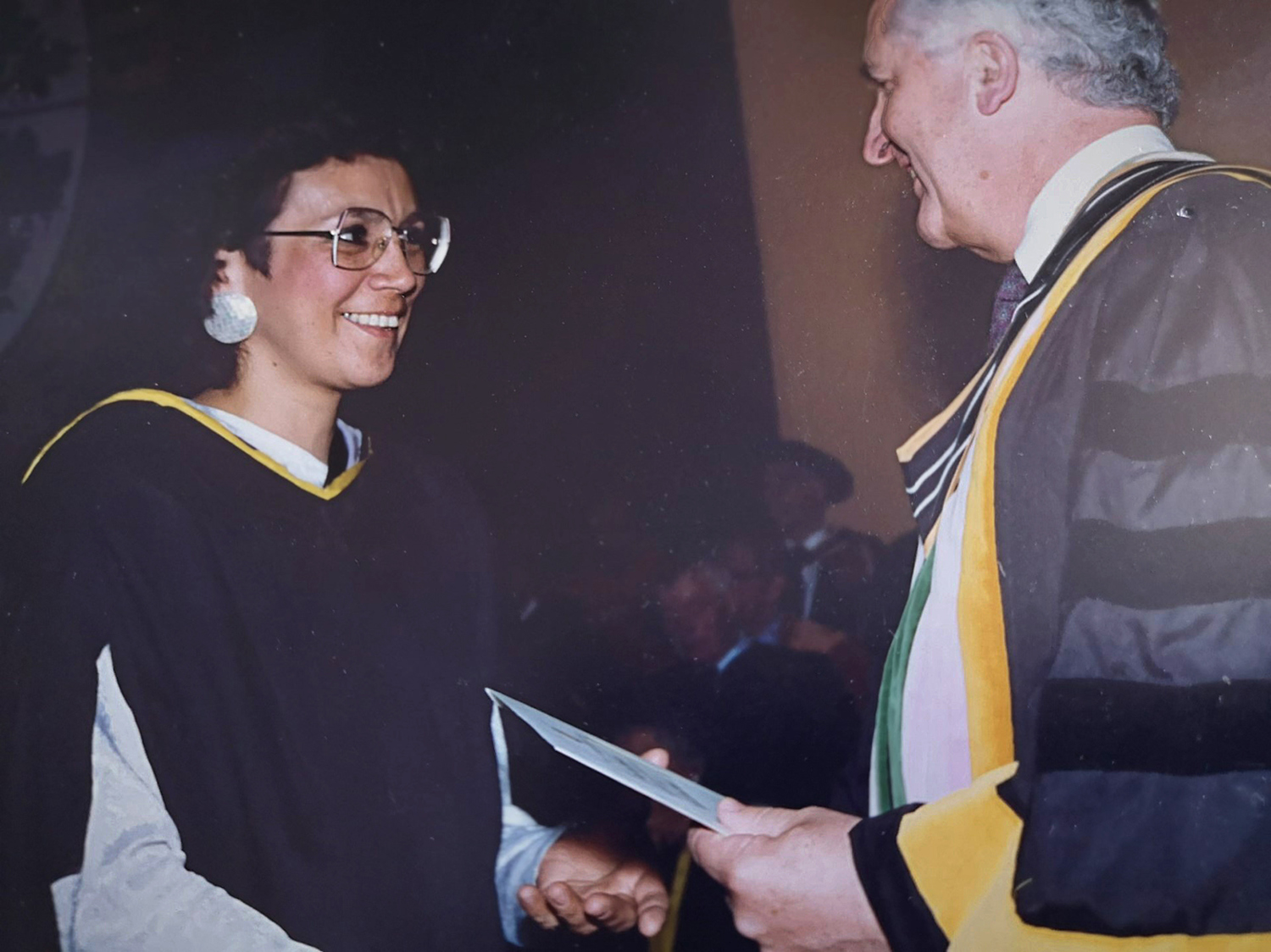 Senator McCallum graduates with a Doctor of Dental Medicine from the University of Manitoba in 1990. (Photo credit: Office of Senator Mary Jane McCallum)
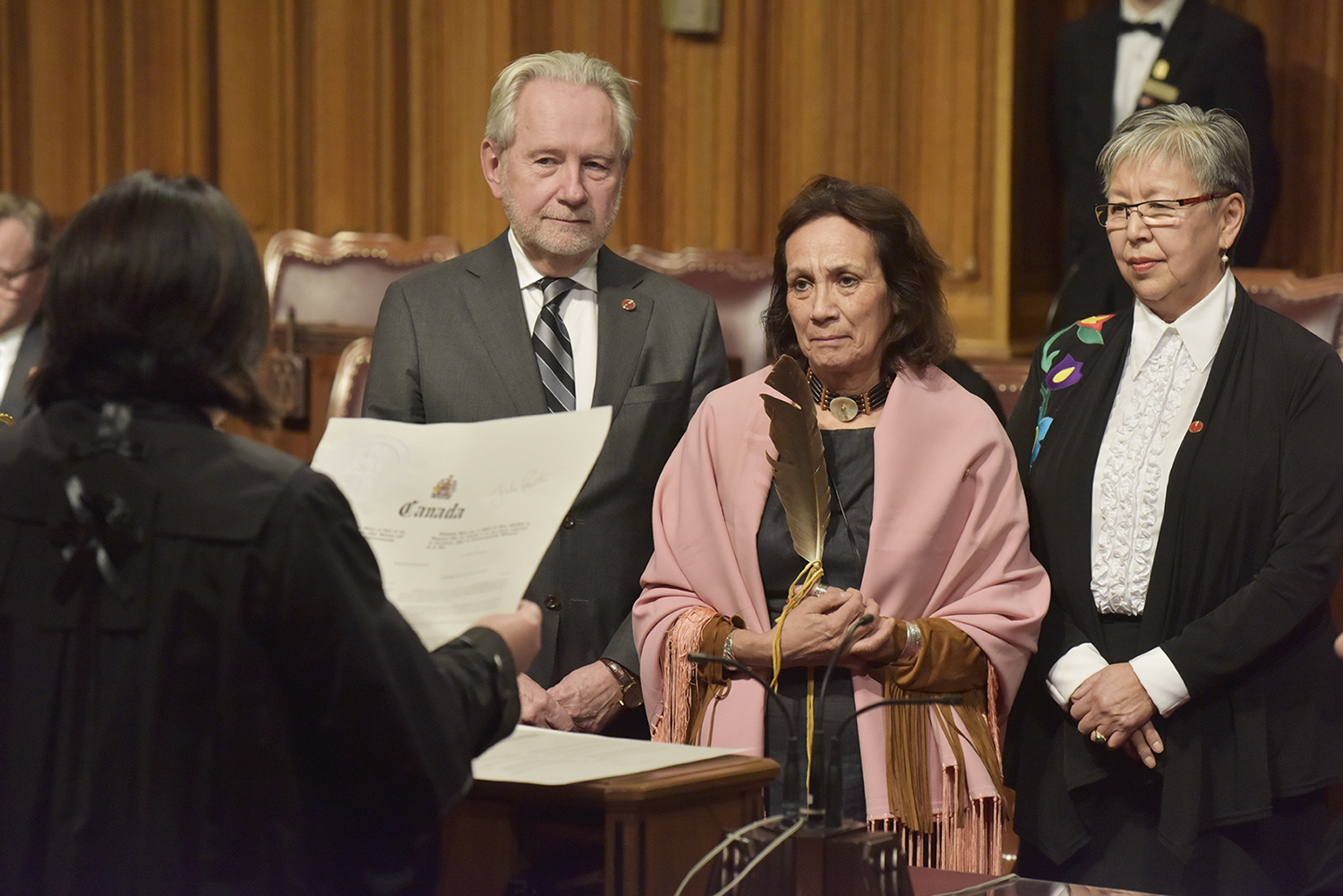 Senator McCallum attends her swearing-in ceremony with Senator Peter Harder and former senator Lillian Eva Dyck.
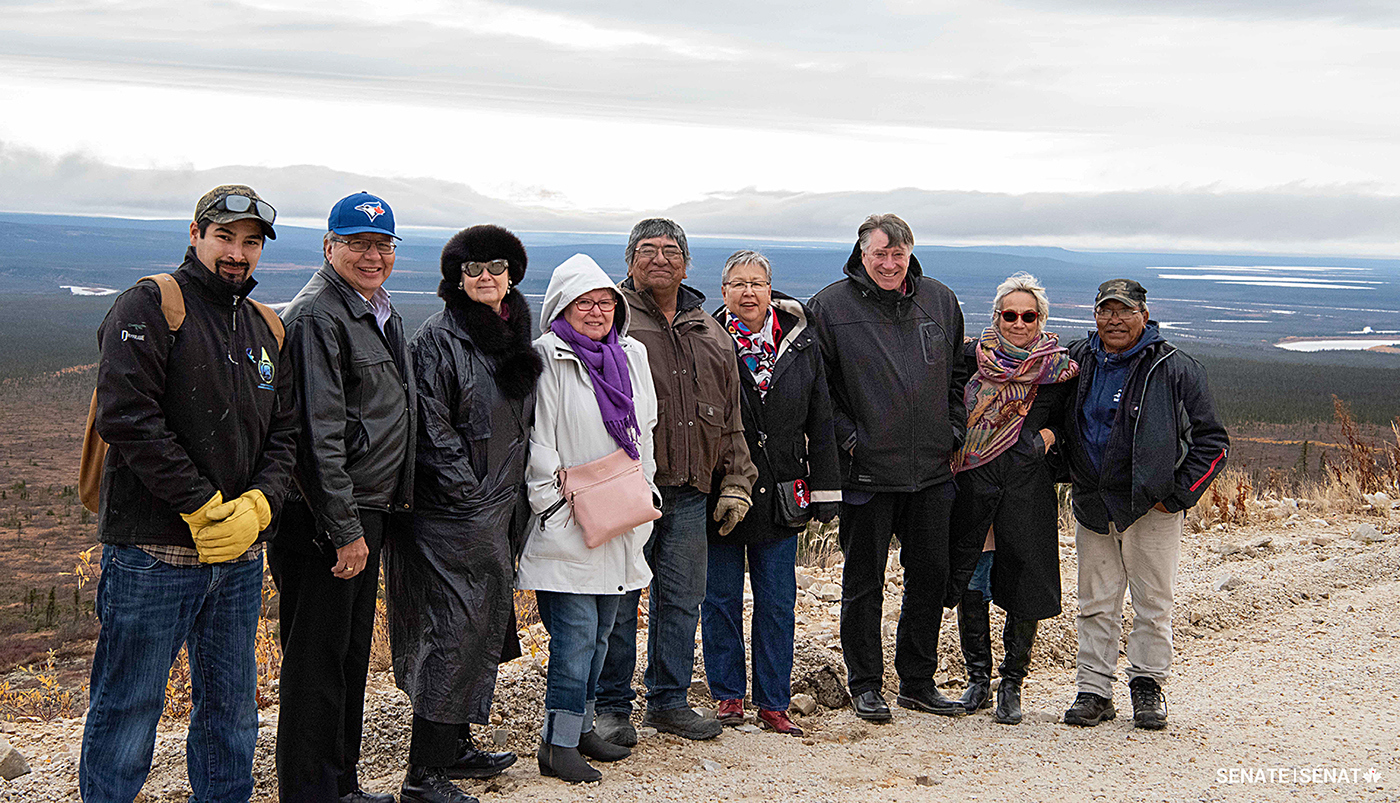 Senator McCallum, second from right, joined the Senate Committee on Indigenous Peoples for a fact-finding mission to northern and western Indigenous communities in 2018. They are pictured here alongside community members from Old Crow, Yukon.
You’re now working to establish a special day commemorating Thanadelthur, a young Denesuline woman who played a key role in the northwest fur trade. Tell us more about Thanadelthur and why more people should learn about her legacy.
Thanadelthur was kidnapped by the Cree when she was only 16 years old. Despite huge odds, she knew how to bring the warring Cree and Dene tribes together. She created a peace treaty because she knew they needed peace for the fur trade to flourish.
I’m Cree, and my community is Dene and Cree. On the 100-year anniversary of Treaty 10, which is comprised of 10 Cree and Dene communities, I did an apology to the Dene for how the Cree had treated them. One of the chiefs said to me, “Never in my lifetime did I ever think I would hear the words, ‘I’m sorry.’”
What we’re now creating is a modern-day peace treaty, not through legislation, but through our communities. That’s the basis of Thanadelthur.
You have spoken about your experience attending Indian Residential School to raise awareness about this part of Canada’s history. How has your Senate platform allowed you to keep advocating for Survivors?
As a member of the Senate Committee on Indigenous Peoples, I visited the North and the West for a report on how Canada can rebuild its relationship with Indigenous peoples. This was so important to me. For me, the first step in consultation is to go into a community and understand how they’re living. The Senate has given me the time and resources to do this, which is such a privilege. As senators, the work we do in communities is sometimes more important than what we do in the Senate Chamber.
In 2021, you were the first woman and Indigenous person to be named chancellor of Brandon University. What has this honour meant to you?
When they offered it to me, my intuition told me it was where I was meant to be. I felt the same way when I first stepped into the Senate. As chancellor, I support the university’s initiatives, strategies and priorities. I work closely with the president, the provost and the deans. I teach them about how the education system harmed First Nations, and I guide them on decolonization. I also meet with the Indigenous group, the international students and the community. We work together on moving forward.
Has anything surprised you about the Senate?
I was initially surprised about the lack of involvement of First Nations, Métis and Inuit at most committees. When I first joined the energy committee, most of the witnesses we invited to meetings were from the oil and gas industry; there were few First Nations voices. But when we studied Bill C-69, the impact assessment bill, an Elder who was sitting in the audience said he was amazed at the number of times he heard the word “Indigenous” in the hearing. Today, we hear about Indigenous issues every day at the Senate.
Occasionally, I do get discouraged because I want more change. Sometimes I think, what am I doing here? I’m bringing back the same bills from six years ago. But then I remember all the positive changes. I also think of my ancestors and all the work they did preparing the path that I’m now walking, and I’m grateful.
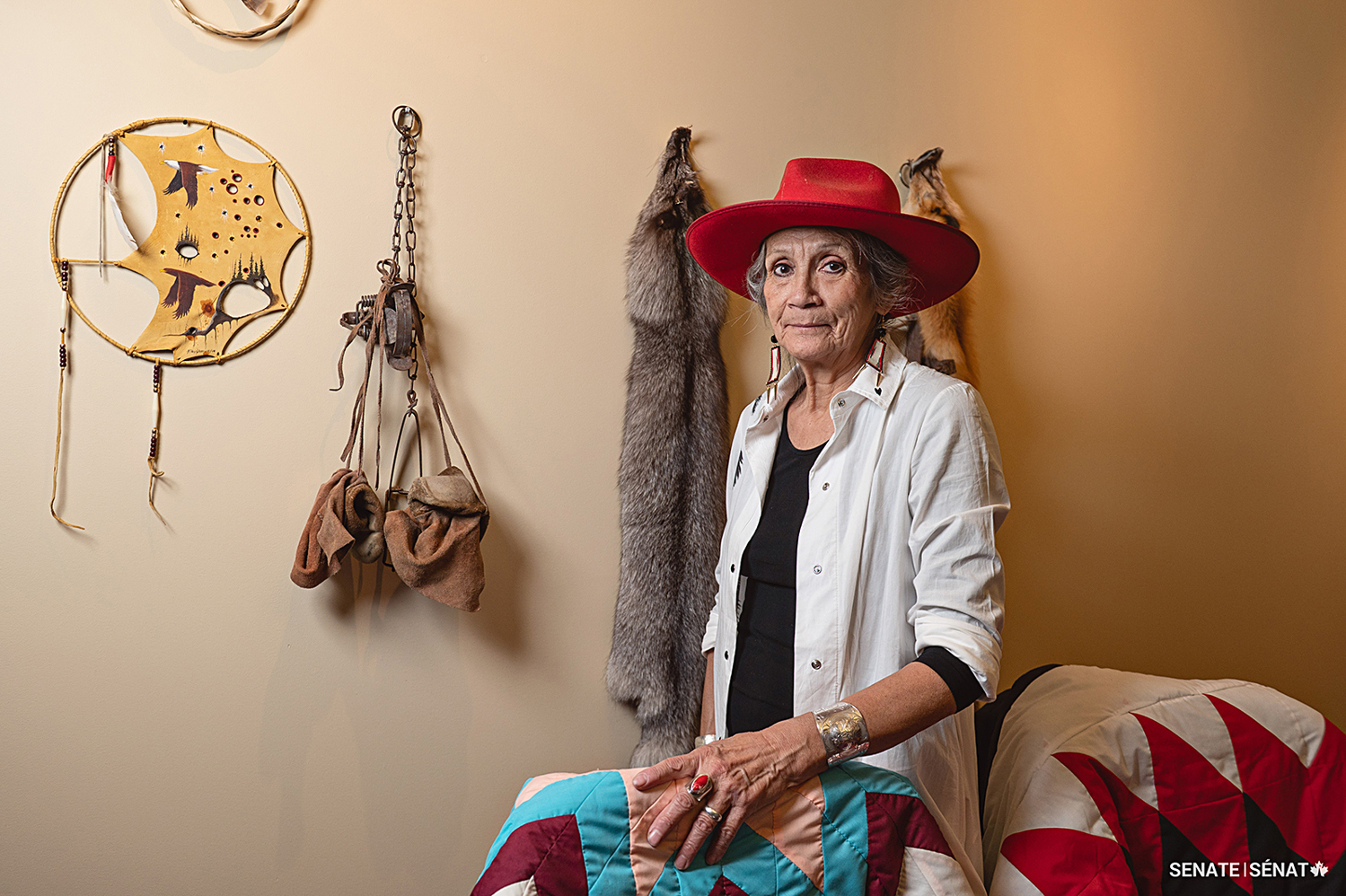 Senator McCallum’s office is decorated with old trapping gear and furs from home, as well as artwork from Indigenous artists based in Manitoba.
Related articles
Tags
Committee news
Meet Senator Mary Jane McCallum
The first Indigenous woman to become a dentist in Canada, Senator Mary Jane McCallum spent 45 years providing dental care to First Nations communities across Manitoba and Saskatchewan before joining the Senate in 2017.
Learn about the senator’s remarkable career, her social justice advocacy work and how she’s bringing Indigenous voices to the Red Chamber.
You are from the Barren Lands First Nation in Brochet, Manitoba, near the Saskatchewan border. How would you describe your community?
The community is grounded in our land. We build life skills through land-based education, from the trapline to the fishing camp, and through our connection to the people who live there. We carry community with us, and it gives us purpose.
Growing up in Brochet, I knew that my language and my culture were integral to my community. I learned my work ethic and values from my mom and dad. They gave me direction in life without sitting me at a desk. Then I moved into residential school at age five, so I was abruptly taken away and put into an institution that was completely foreign me.
I became dispossessed of my identity, my language and my culture. My residential school was Catholic, so I was told that I was a sinner and a savage, even as a young child. You know the quote, “to kill the Indian in the child”? Well, I started killing the Indian in me. That’s how assimilation works. I stayed at residential school for 11 years before I left to attend high school.
What made you want to go into dentistry?
After high school, I studied stenography, but it wasn’t enough for me, so I went into dental assisting. I had the opportunity to work on northern reserves, and I found I was very good at the job. The dentists I worked with all encouraged me to continue down that path, so I completed a dental nursing program, before obtaining a dental therapy diploma and then a Doctor of Dental Medicine.
I worked in almost 30 clinics across Manitoba, including in my own community. My work in Brochet was instrumental to shaping who I am today. It’s where I learned to decolonize dentistry, rather than take a “drill, fill and bill” approach. I also became the chair for the school committee, and I got involved with housing initiatives. I began to learn about the social determinants of health and how critical they were to dental care. Some dentists might ask, “Why don’t you brush your teeth?” But if someone doesn’t have food to eat, why would they brush their teeth?
I ran a children’s dental program. Instead of focusing solely on their teeth, I would look at whether they had a good sleep the night before, whether they had eaten, whether they had received a hug that morning and if they were dressed appropriately for the weather. They taught me a lot.
You joined the Red Chamber in 2017. Why did you want to become a senator?
I initially wanted to become the governor general, but my husband told me I wouldn’t be able to accomplish what I wanted in that role. He suggested that I apply to the Senate. This was in 2016, when Justin Trudeau, who was prime minister at the time, had launched the nomination process.
I didn’t know much about the Senate. I had volunteered with the Assembly of Manitoba Chiefs, which gave me a better understanding of how politics and legislation shape our lives. It also taught me the importance of working with community groups. In fact, every bill that I have brought to the Senate has come from communities.
In 2022, the Senate adopted your bill designating January 4 as National Ribbon Skirt Day. What does a ribbon skirt symbolize and why is it important to honour its significance with a special day?
The idea for this bill originated from the story of Isabella Kulak, a 10-year-old girl in Saskatchewan, who was shamed because she wore a ribbon skirt to school. The ribbon skirt is not just about fashion; it has a spiritual component. It’s about honouring and respecting your culture and yourself.
I spend every January 4 with Isabella and her parents. People from across the country send us pictures of their ribbon skirts. For me, National Ribbon Skirt Day is about unity, pride, connection, relationship building and moving towards justice.
Senator Mary Jane McCallum, second from right, as a student at Guy Hill Residential School in The Pas, Manitoba. (Photo credit: Office of Senator Mary Jane McCallum)
Senator McCallum tends to a patient in this photo from 1978, when she was a dental nurse. This is around the time when she started to view her profession as a public service, and not strictly as a business. (Photo credit: Office of Senator Mary Jane McCallum)
Senator McCallum graduates with a Doctor of Dental Medicine from the University of Manitoba in 1990. (Photo credit: Office of Senator Mary Jane McCallum)
Senator McCallum attends her swearing-in ceremony with Senator Peter Harder and former senator Lillian Eva Dyck.
Senator McCallum, second from right, joined the Senate Committee on Indigenous Peoples for a fact-finding mission to northern and western Indigenous communities in 2018. They are pictured here alongside community members from Old Crow, Yukon.
You’re now working to establish a special day commemorating Thanadelthur, a young Denesuline woman who played a key role in the northwest fur trade. Tell us more about Thanadelthur and why more people should learn about her legacy.
Thanadelthur was kidnapped by the Cree when she was only 16 years old. Despite huge odds, she knew how to bring the warring Cree and Dene tribes together. She created a peace treaty because she knew they needed peace for the fur trade to flourish.
I’m Cree, and my community is Dene and Cree. On the 100-year anniversary of Treaty 10, which is comprised of 10 Cree and Dene communities, I did an apology to the Dene for how the Cree had treated them. One of the chiefs said to me, “Never in my lifetime did I ever think I would hear the words, ‘I’m sorry.’”
What we’re now creating is a modern-day peace treaty, not through legislation, but through our communities. That’s the basis of Thanadelthur.
You have spoken about your experience attending Indian Residential School to raise awareness about this part of Canada’s history. How has your Senate platform allowed you to keep advocating for Survivors?
As a member of the Senate Committee on Indigenous Peoples, I visited the North and the West for a report on how Canada can rebuild its relationship with Indigenous peoples. This was so important to me. For me, the first step in consultation is to go into a community and understand how they’re living. The Senate has given me the time and resources to do this, which is such a privilege. As senators, the work we do in communities is sometimes more important than what we do in the Senate Chamber.
In 2021, you were the first woman and Indigenous person to be named chancellor of Brandon University. What has this honour meant to you?
When they offered it to me, my intuition told me it was where I was meant to be. I felt the same way when I first stepped into the Senate. As chancellor, I support the university’s initiatives, strategies and priorities. I work closely with the president, the provost and the deans. I teach them about how the education system harmed First Nations, and I guide them on decolonization. I also meet with the Indigenous group, the international students and the community. We work together on moving forward.
Has anything surprised you about the Senate?
I was initially surprised about the lack of involvement of First Nations, Métis and Inuit at most committees. When I first joined the energy committee, most of the witnesses we invited to meetings were from the oil and gas industry; there were few First Nations voices. But when we studied Bill C-69, the impact assessment bill, an Elder who was sitting in the audience said he was amazed at the number of times he heard the word “Indigenous” in the hearing. Today, we hear about Indigenous issues every day at the Senate.
Occasionally, I do get discouraged because I want more change. Sometimes I think, what am I doing here? I’m bringing back the same bills from six years ago. But then I remember all the positive changes. I also think of my ancestors and all the work they did preparing the path that I’m now walking, and I’m grateful.
Senator McCallum’s office is decorated with old trapping gear and furs from home, as well as artwork from Indigenous artists based in Manitoba.