


Meet Senator Scott Tannas
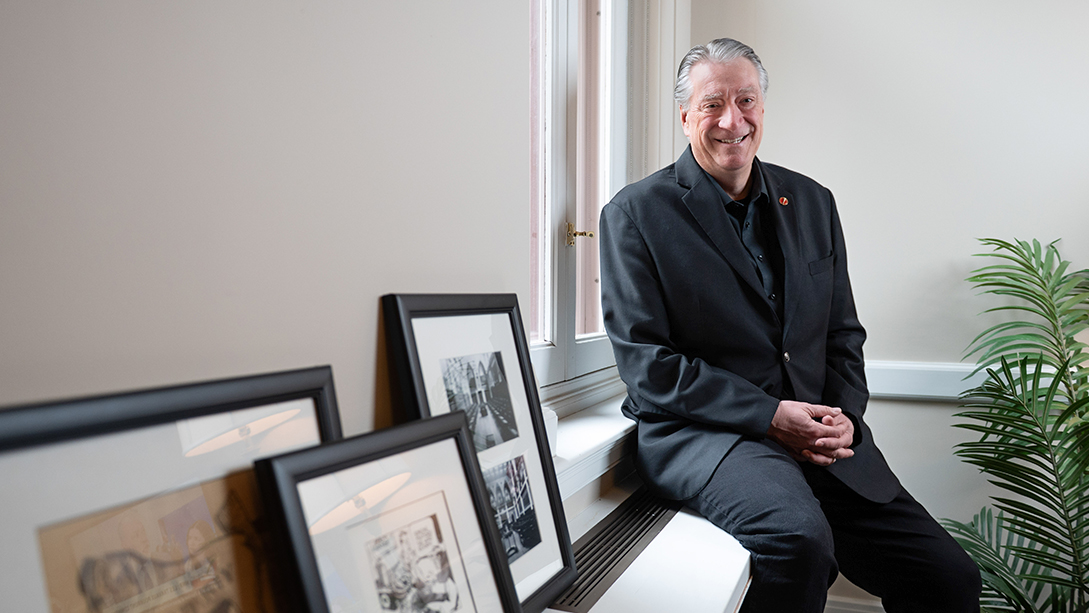
Inspired by his father’s mid-career switch to provincial politics, Senator Scott Tannas decided to run for a seat in Canada’s Upper House when he turned 50 years old.
The entrepreneur put his name on the ballot for a Senate vacancy in Alberta — the only Canadian province to hold non-binding senatorial elections — in 2012. He focused his campaign on rural Alberta, stopping in more than 50 small towns across the province, and was appointed to the Red Chamber the next year.
Learn more about Senator Tannas’s work in the Senate below.
Before your Red Chamber appointment, you were the CEO of Western Financial Group. Tell us more about why you decided to switch gears and run for the Senate.
My father, Don Tannas, was always politically active. When I was a little kid, he volunteered to put election signs on people’s lawns, and I was his helper. He was a school principal for most of his working life, but mid-career he decided to run for office, and he was elected as the MLA for our district. He ended up serving 14 years in the provincial government.
I wasn’t as interested in provincial politics as I was in federal politics, and I was intrigued by the Senate. I thought that maybe I could help make the institution more useful, so I always had it in the back of my mind.
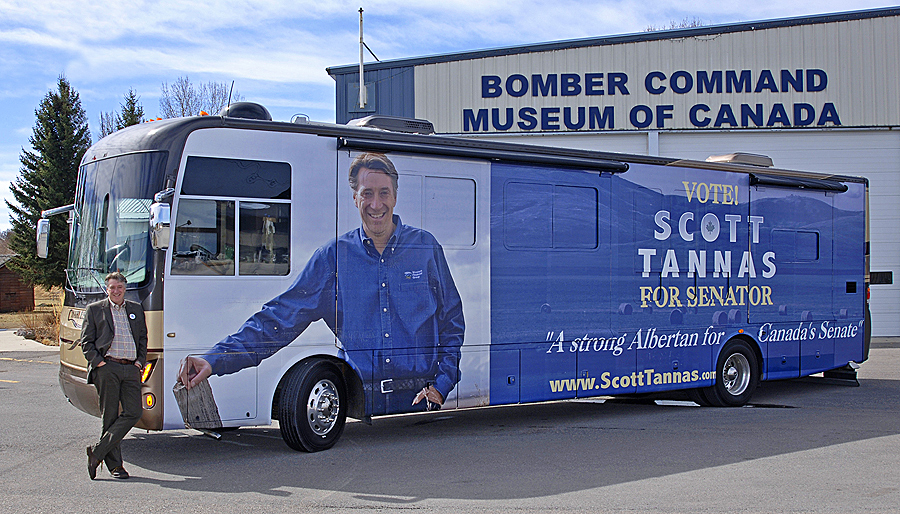 Senator Scott Tannas stands beside his campaign bus during a stop in Nanton, Alberta in 2012. The senator tackled his Senate election campaign one small Albertan town at a time, visiting more than 50 rural communities. (Photo credit: Office of Senator Scott Tannas)
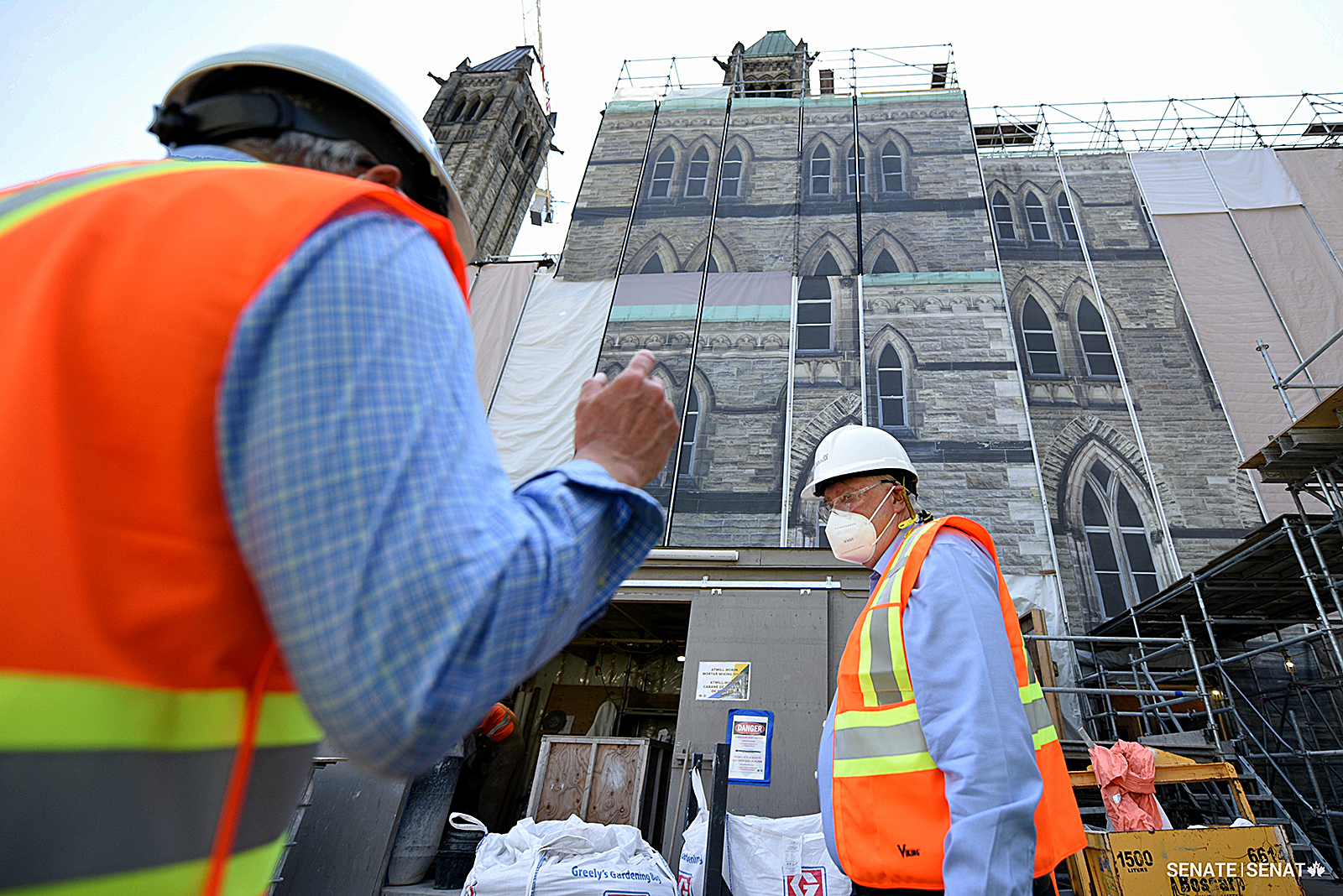 As chair of the Senate’s Subcommittee on Long Term Vision and Plan, Senator Tannas observes the installation of decorative tarps printed to look exactly like the exterior of Centre Block in May 2022.
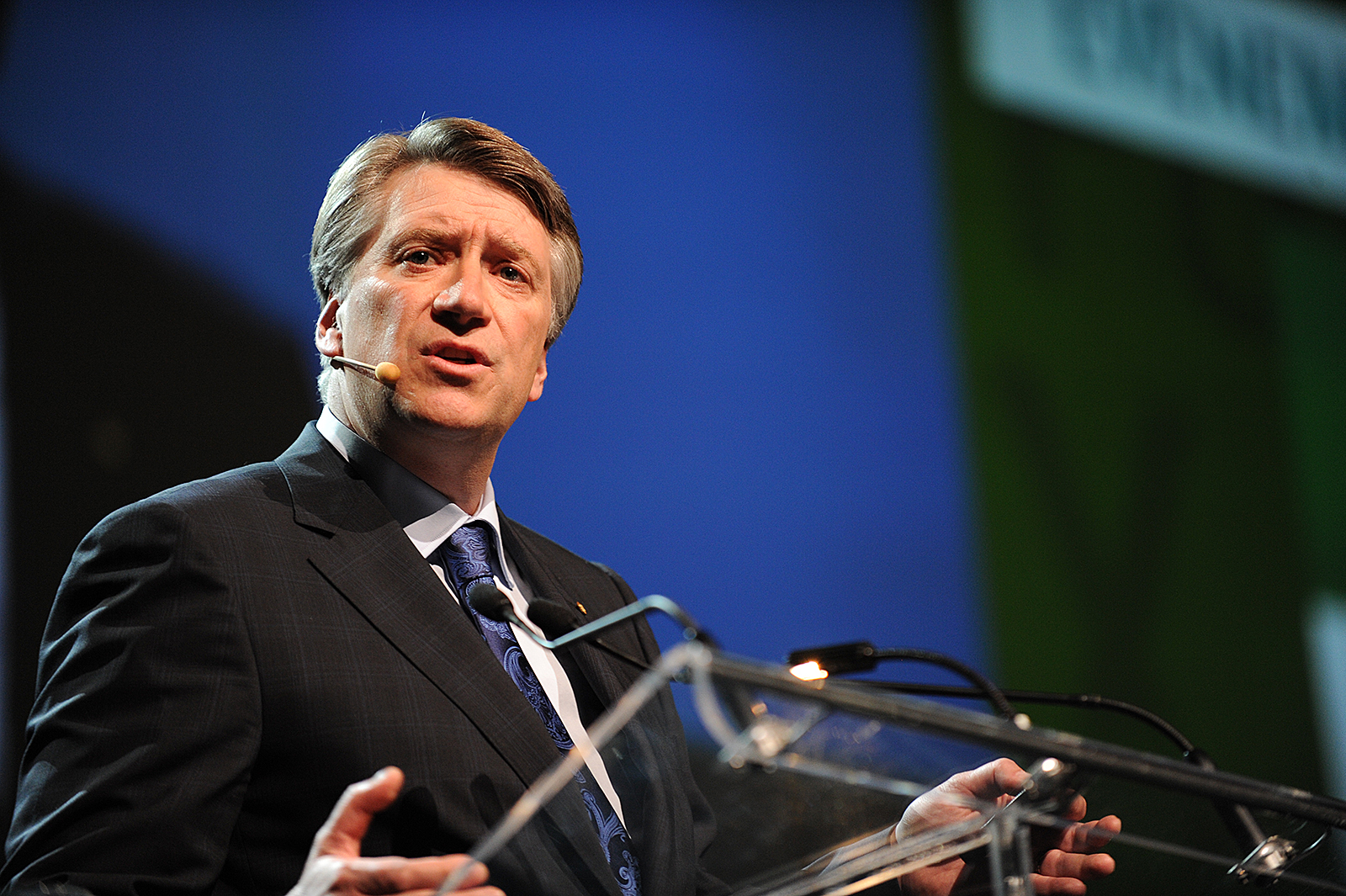 Senator Tannas addresses an insurance industry conference as Western Financial Group’s CEO. (Photo credit: Office of Senator Scott Tannas)
After joining the Senate in 2013, you remained an entrepreneur — even launching the Western Investment Company of Canada — because you said it “makes me a better senator.” How so?
The Senate has many doctors who still have their medical licences, lawyers who still practise law and university professors who continue to lecture. This isn’t new; this is a tradition that goes all the way back to the first Senate. I think my entrepreneurial work has made me a better senator because I’m far more in touch with what is going on in the community, the industry and my area of expertise than I would be if I stopped that line of work. As a senator, you can easily lock yourself up and get disconnected from the real world.
You have long been critical of the pressure senators face to fast-track certain government bills, including omnibus budget bills. What needs to change to allow senators more time to study important legislation?
The Senate has seen increasingly large omnibus bills since I joined the Red Chamber in 2013. Many of these bills are budget implementation acts, which are supposed to detail legislative items tied to government spending in a budget. But what we have been noticing are items unrelated to budgets — and sometimes controversial — that get tucked into these omnibus bills to avoid proper scrutiny.
The Senate Committee on National Finance started studying this issue before Parliament prorogued in January 2025. We’ve heard a lot of evidence suggesting that senators can push back. We can either refuse to adopt these budget bills until we have finished studying every item. Or we can continue down this path of low-quality reviews with our hands tied behind our backs, which will further embolden future governments to abuse the system that much more.
Before prorogation, you also introduced a bill to grant First Nations the authority to control gaming operations and lottery schemes on reserves. Why is this issue important?
I have sat on the Indigenous Peoples committee since I came to the Senate, and I believe that the next stage of reconciliation is economic reconciliation. I think granting First Nations the right to conduct gambling on their sovereign territories is a simple step towards economic reconciliation that is entirely in keeping with Indigenous cultures and traditions. I plan to reintroduce this bill.
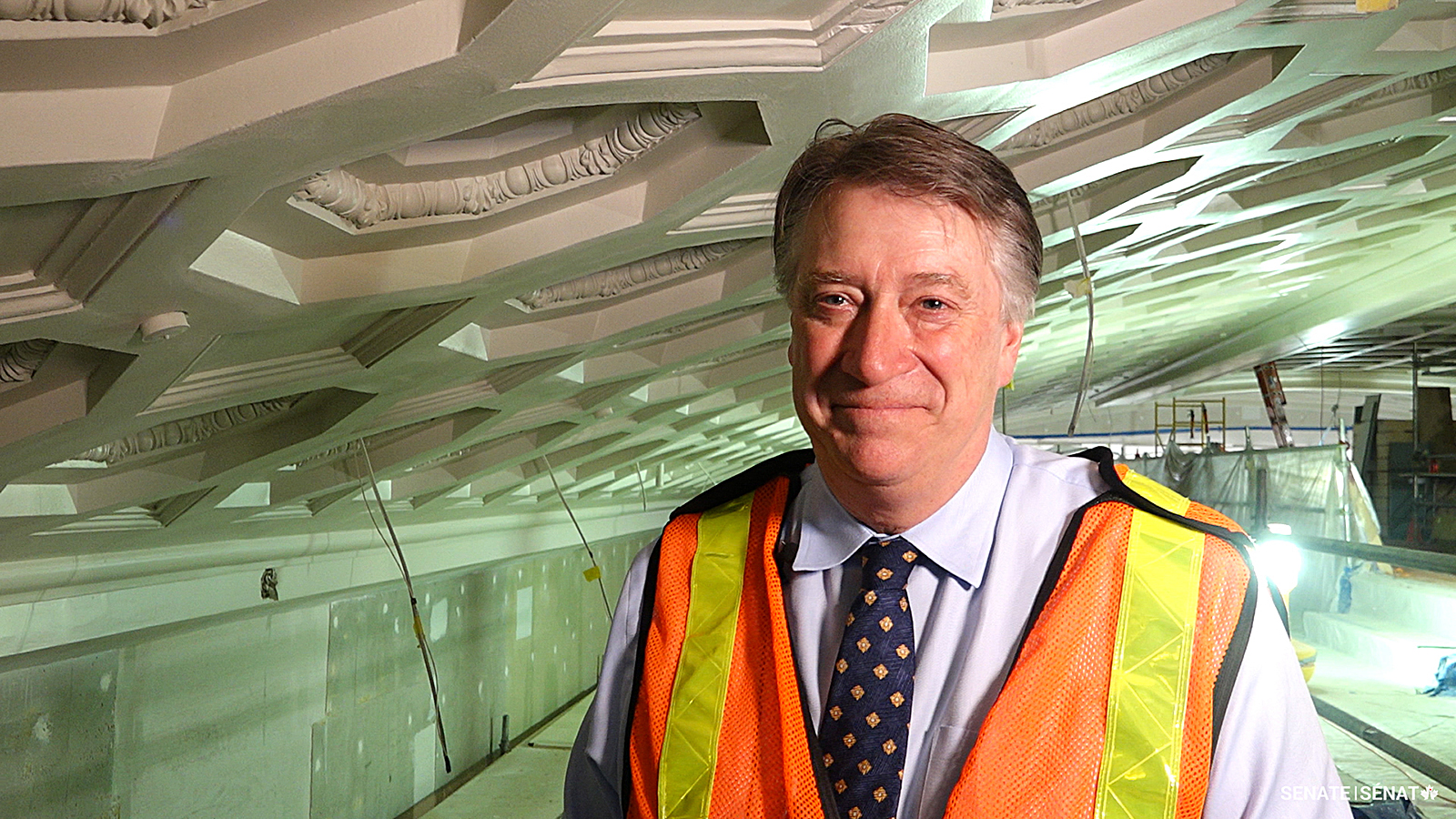 Standing on a 10-metre-high platform in Ottawa’s former train station, Senator Tannas oversaw the rehabilitation work required to transform the building into the Senate’s temporary home.
Of all the Senate committees you could serve on, you’ve been heavily involved with the Subcommittee on Long Term Vision and Plan — which is overseeing the rehabilitation of Centre Block — including serving as chair. Why have you been so invested in this file?
The Senate moved from its permanent home in Centre Block to its temporary home in the Senate of Canada Building in 2019, which required a lot of co-ordination in a short timeframe. I think my colleagues appreciated that I had experience managing a fast-growing business because I had the ability to draw people together and make quick decisions. I enjoyed that process. After we moved, we started looking at the much larger job of rehabilitating Centre Block, building the Parliament Welcome Centre and digging the tunnel system. I knew I could provide some consistency and corporate memory throughout the project, so I’ve stayed involved with the file. It’s a fascinating multibillion-dollar project, and it’s starting to accelerate now.
What do you hope Canadians get out of the Centre Block experience when it reopens to the public?
I hope that the Centre Block historic building remains the same, but brighter. I’ve heard that’s exactly what it felt like walking into the Library of Parliament after it was restored — it was bright and beautiful, but it still contained all the history.
I also hope the new addition of the underground Parliament Welcome Centre doesn’t take away from the grandeur of Centre Block but provides all the modern conveniences that we need — space, appropriate levels of security and the infrastructure to better support a growing House of Commons.
You have been involved with several other Senate committees throughout your time in the Red Chamber. What other committee work stands out to you?
When I was on the Senate Committee on Banking, Commerce and the Economy, we hosted a one-day committee hearing on a tax fairness issue for the Hutterites, a religious order comprised of about 50,000 members in Canada. They had been subject to an arbitrary Canada Revenue Agency (CRA) ruling that meant they were unfairly taxed relative to other farming families. The committee invited the CRA to explain themselves, which they couldn’t do, and ultimately that ruling was reversed.
It was only a simple one-day hearing, yet it was one of my most satisfying moments as a senator. We did the right thing, and we were able to convince the government of the day to make the appropriate change.
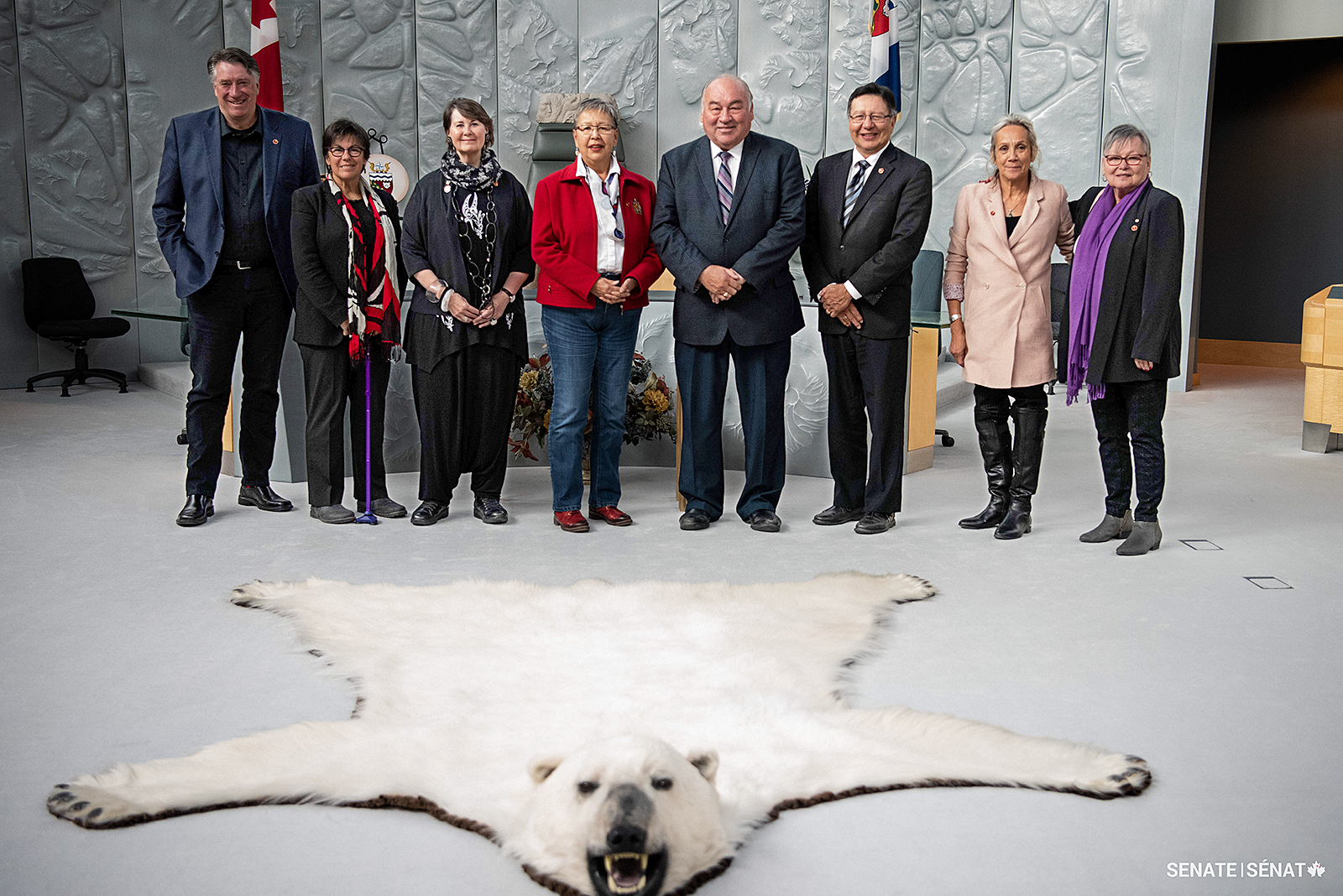 Senator Tannas, left, with members of the Senate Committee on Indigenous Peoples during a fact-finding mission through the Western Arctic to study a new relationship between Canada and Indigenous peoples in 2018. Also pictured, from left, are senators Kim Pate and Marilou McPhedran, former senator Lillian Eva Dyck, former Northwest Territories premier Bob McLeod, former senator Dan Christmas, Senator Mary Jane McCallum and former senator Sandra Lovelace Nicholas.
You were born in High River, Alberta — south of Calgary — and you still live there with your wife, Taryn. How would you describe your hometown, and what has kept you living there?
It’s a small town of more than 14,000 people, which has grown from a population of about 3,000 when I was a boy. It’s a tight-knit, relatively prosperous community full of beautiful trees. I was lucky enough to build a large business from what began as a very small insurance agency. It’s still headquartered in High River. I feel very honoured to have been part of this community for basically my whole life.
We have had our own share of characters who lived here. Author W.O. Mitchell was a resident of High River for about 50 years. He wrote all his books and radio plays two houses down from where I live. Former prime minister Joe Clark grew up across the street.
Is it true that you were once a DJ in High River?
I always had two or three jobs on the go, and I took up DJing school dances and weddings as a side gig throughout high school and college. I mainly played rock that was popular in the 1970s and early 1980s. It was a fun way to earn money because I loved music, and I had a great stereo system.
Related articles
Tags
Committee news
Meet Senator Scott Tannas
Inspired by his father’s mid-career switch to provincial politics, Senator Scott Tannas decided to run for a seat in Canada’s Upper House when he turned 50 years old.
The entrepreneur put his name on the ballot for a Senate vacancy in Alberta — the only Canadian province to hold non-binding senatorial elections — in 2012. He focused his campaign on rural Alberta, stopping in more than 50 small towns across the province, and was appointed to the Red Chamber the next year.
Learn more about Senator Tannas’s work in the Senate below.
Before your Red Chamber appointment, you were the CEO of Western Financial Group. Tell us more about why you decided to switch gears and run for the Senate.
My father, Don Tannas, was always politically active. When I was a little kid, he volunteered to put election signs on people’s lawns, and I was his helper. He was a school principal for most of his working life, but mid-career he decided to run for office, and he was elected as the MLA for our district. He ended up serving 14 years in the provincial government.
I wasn’t as interested in provincial politics as I was in federal politics, and I was intrigued by the Senate. I thought that maybe I could help make the institution more useful, so I always had it in the back of my mind.
Senator Scott Tannas stands beside his campaign bus during a stop in Nanton, Alberta in 2012. The senator tackled his Senate election campaign one small Albertan town at a time, visiting more than 50 rural communities. (Photo credit: Office of Senator Scott Tannas)
As chair of the Senate’s Subcommittee on Long Term Vision and Plan, Senator Tannas observes the installation of decorative tarps printed to look exactly like the exterior of Centre Block in May 2022.
Senator Tannas addresses an insurance industry conference as Western Financial Group’s CEO. (Photo credit: Office of Senator Scott Tannas)
After joining the Senate in 2013, you remained an entrepreneur — even launching the Western Investment Company of Canada — because you said it “makes me a better senator.” How so?
The Senate has many doctors who still have their medical licences, lawyers who still practise law and university professors who continue to lecture. This isn’t new; this is a tradition that goes all the way back to the first Senate. I think my entrepreneurial work has made me a better senator because I’m far more in touch with what is going on in the community, the industry and my area of expertise than I would be if I stopped that line of work. As a senator, you can easily lock yourself up and get disconnected from the real world.
You have long been critical of the pressure senators face to fast-track certain government bills, including omnibus budget bills. What needs to change to allow senators more time to study important legislation?
The Senate has seen increasingly large omnibus bills since I joined the Red Chamber in 2013. Many of these bills are budget implementation acts, which are supposed to detail legislative items tied to government spending in a budget. But what we have been noticing are items unrelated to budgets — and sometimes controversial — that get tucked into these omnibus bills to avoid proper scrutiny.
The Senate Committee on National Finance started studying this issue before Parliament prorogued in January 2025. We’ve heard a lot of evidence suggesting that senators can push back. We can either refuse to adopt these budget bills until we have finished studying every item. Or we can continue down this path of low-quality reviews with our hands tied behind our backs, which will further embolden future governments to abuse the system that much more.
Before prorogation, you also introduced a bill to grant First Nations the authority to control gaming operations and lottery schemes on reserves. Why is this issue important?
I have sat on the Indigenous Peoples committee since I came to the Senate, and I believe that the next stage of reconciliation is economic reconciliation. I think granting First Nations the right to conduct gambling on their sovereign territories is a simple step towards economic reconciliation that is entirely in keeping with Indigenous cultures and traditions. I plan to reintroduce this bill.
Standing on a 10-metre-high platform in Ottawa’s former train station, Senator Tannas oversaw the rehabilitation work required to transform the building into the Senate’s temporary home.
Of all the Senate committees you could serve on, you’ve been heavily involved with the Subcommittee on Long Term Vision and Plan — which is overseeing the rehabilitation of Centre Block — including serving as chair. Why have you been so invested in this file?
The Senate moved from its permanent home in Centre Block to its temporary home in the Senate of Canada Building in 2019, which required a lot of co-ordination in a short timeframe. I think my colleagues appreciated that I had experience managing a fast-growing business because I had the ability to draw people together and make quick decisions. I enjoyed that process. After we moved, we started looking at the much larger job of rehabilitating Centre Block, building the Parliament Welcome Centre and digging the tunnel system. I knew I could provide some consistency and corporate memory throughout the project, so I’ve stayed involved with the file. It’s a fascinating multibillion-dollar project, and it’s starting to accelerate now.
What do you hope Canadians get out of the Centre Block experience when it reopens to the public?
I hope that the Centre Block historic building remains the same, but brighter. I’ve heard that’s exactly what it felt like walking into the Library of Parliament after it was restored — it was bright and beautiful, but it still contained all the history.
I also hope the new addition of the underground Parliament Welcome Centre doesn’t take away from the grandeur of Centre Block but provides all the modern conveniences that we need — space, appropriate levels of security and the infrastructure to better support a growing House of Commons.
You have been involved with several other Senate committees throughout your time in the Red Chamber. What other committee work stands out to you?
When I was on the Senate Committee on Banking, Commerce and the Economy, we hosted a one-day committee hearing on a tax fairness issue for the Hutterites, a religious order comprised of about 50,000 members in Canada. They had been subject to an arbitrary Canada Revenue Agency (CRA) ruling that meant they were unfairly taxed relative to other farming families. The committee invited the CRA to explain themselves, which they couldn’t do, and ultimately that ruling was reversed.
It was only a simple one-day hearing, yet it was one of my most satisfying moments as a senator. We did the right thing, and we were able to convince the government of the day to make the appropriate change.
Senator Tannas, left, with members of the Senate Committee on Indigenous Peoples during a fact-finding mission through the Western Arctic to study a new relationship between Canada and Indigenous peoples in 2018. Also pictured, from left, are senators Kim Pate and Marilou McPhedran, former senator Lillian Eva Dyck, former Northwest Territories premier Bob McLeod, former senator Dan Christmas, Senator Mary Jane McCallum and former senator Sandra Lovelace Nicholas.
You were born in High River, Alberta — south of Calgary — and you still live there with your wife, Taryn. How would you describe your hometown, and what has kept you living there?
It’s a small town of more than 14,000 people, which has grown from a population of about 3,000 when I was a boy. It’s a tight-knit, relatively prosperous community full of beautiful trees. I was lucky enough to build a large business from what began as a very small insurance agency. It’s still headquartered in High River. I feel very honoured to have been part of this community for basically my whole life.
We have had our own share of characters who lived here. Author W.O. Mitchell was a resident of High River for about 50 years. He wrote all his books and radio plays two houses down from where I live. Former prime minister Joe Clark grew up across the street.
Is it true that you were once a DJ in High River?
I always had two or three jobs on the go, and I took up DJing school dances and weddings as a side gig throughout high school and college. I mainly played rock that was popular in the 1970s and early 1980s. It was a fun way to earn money because I loved music, and I had a great stereo system.