


Senator Wetston’s retirement caps public service trifecta

Few people can claim to have served all three branches of parliamentary democracy — executive, judicial and legislative — like Senator Howard Wetston. The Ontario senator served as a senior public servant, both federally and provincially, a federal court judge and then completed his parliamentary trifecta when he was appointed to the Upper Chamber in 2016.
His parents were Jewish immigrants who fled Poland during the Second World War. His family then fled to Uzbekistan and was relocated to a displaced persons’ camp in Germany — where Senator Wetston was born — and eventually settled in Sydney, Nova Scotia in 1949. His parents lived there for nearly 60 years, while Senator Wetston embarked on an impressive public sector career. He also led the Competition Bureau, the Ontario Energy Board and the Ontario Securities Commission.
Before retiring from the Upper Chamber, Senator Wetston reflected on a life of public service.
You were two years old when your family resettled in Cape Breton, Nova Scotia. You were among thousands of Jewish immigrants who came to Canada during that time to start anew. How did your family history and upbringing shape your politics?
I would say my family history and upbringing really shaped my values rather than my politics. We lived in a part of Sydney called Whitney Pier. We were raised in a multicultural and multi-ethnic community. We were the only Jewish family in that neighbourhood. My family was religious. We attended a small local synagogue in Whitney Pier.
There was a large Black population in this community, as well as many Ukrainians, Hungarians and Italians. They were friends and we accommodated our differences — culturally, socially and economically. There were no playdates, there was no internet or Google to make ourselves appear smarter than we were. Sports and education were our unifying forces. There were many challenges, but our community was resilient and hard-working. I studied extensively, played sports and participated in Jewish traditions that made me feel part of Jewish history, despite its complexity.
My upbringing provided me with a strong sense of social and economic justice, which carried through my entire career as a public servant, a judge and a senator.
Before your Senate appointment, you worked as a public servant for 30 years, including as a Federal Court of Canada judge. How did this work prepare you for the Senate?
I sat as an independent senator. The question of what that implies has always been an issue of debate within the Senate. But there is no question that the Senate is steadily moving towards an institution that is more reflective of Canada’s diverse population.
My professional career has always had legal requirements that were inherently independent in nature — as a Crown Attorney or in leading independent administrative tribunals, or bodies, like the Ontario Securities Commission, the Ontario Energy Board and the Competition Bureau. Needless to say, independence and objectivity are unquestionable requirements for federal court judges.
You also served as chair and CEO of the Ontario Securities Commission until you retired in November 2015. But instead of settling into retirement life, you decided to apply for the Senate. Why?
At that time, I wasn’t ready to retire. Public service was still important to me. I wanted to contribute and remain relevant, so I applied to become a senator. I understood that there was something missing. I was fortunate to be appointed, as I also wanted to experience the legislative side of our parliamentary democracy.
How did your experience with the Ontario Securities Commission inform your Senate work?
My goal at the OSC was to modernize the Commission with the goal of becoming a 21st century regulator. Modernization was important to me. The work of the OSC is multi-disciplinary, requiring a deep understanding of corporate law, finance, accounting, economics, and technology.
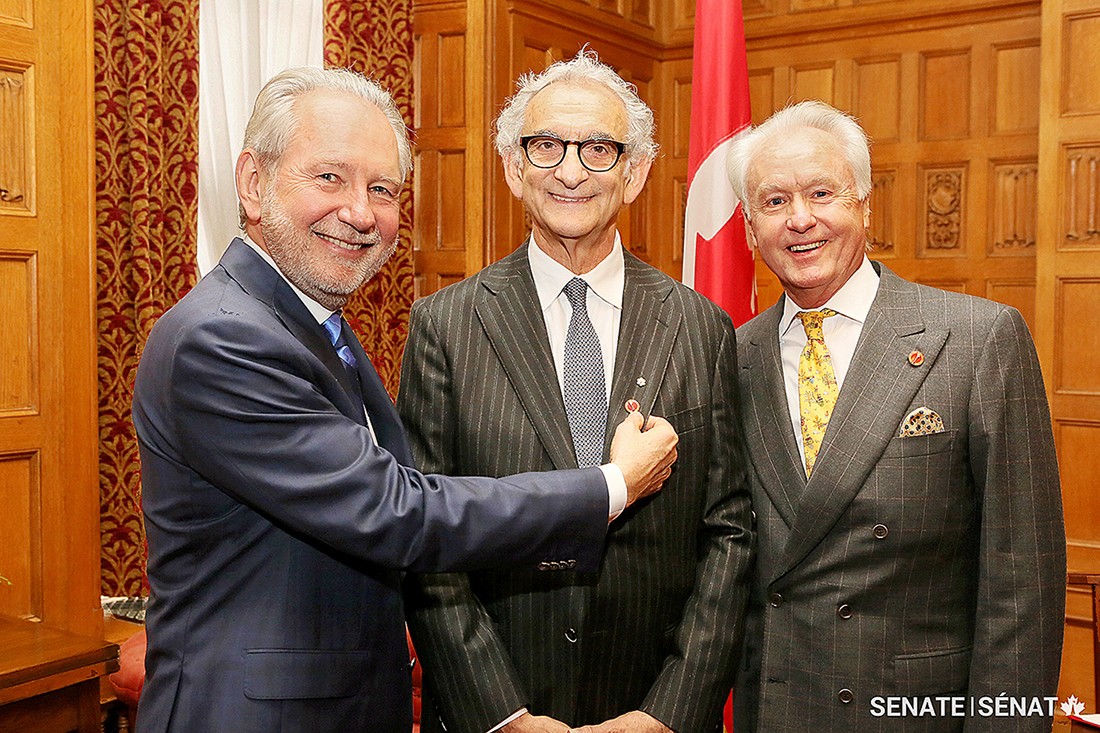 Senator V. Peter Harder (left) shows off Senator Howard Wetston’s new pin during his swearing-in ceremony December 2016. Also pictured is the Honourable Doug Black, a former senator.
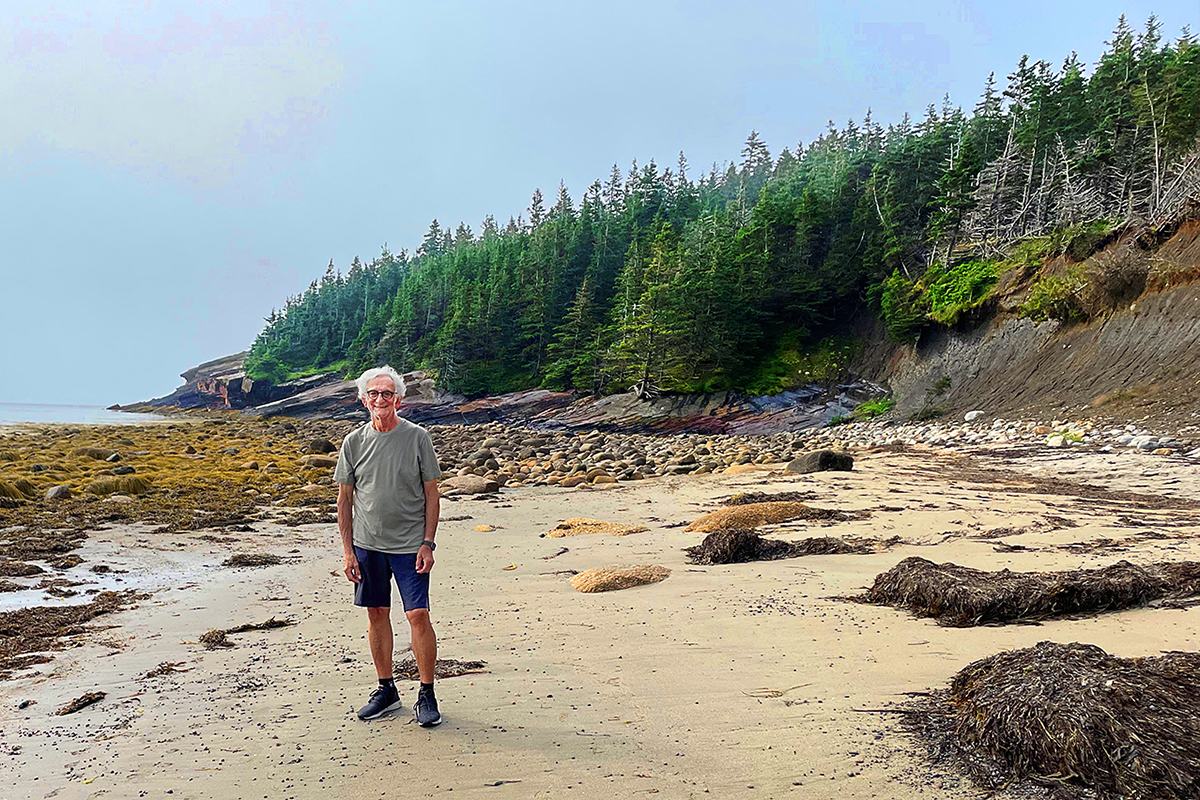
Senator Wetston is pictured in August 2021 on Hirtle’s Beach, near Lunenburg, Nova Scotia — the province where he grew up. (Photo credit: Office of Senator Howard Wetston)
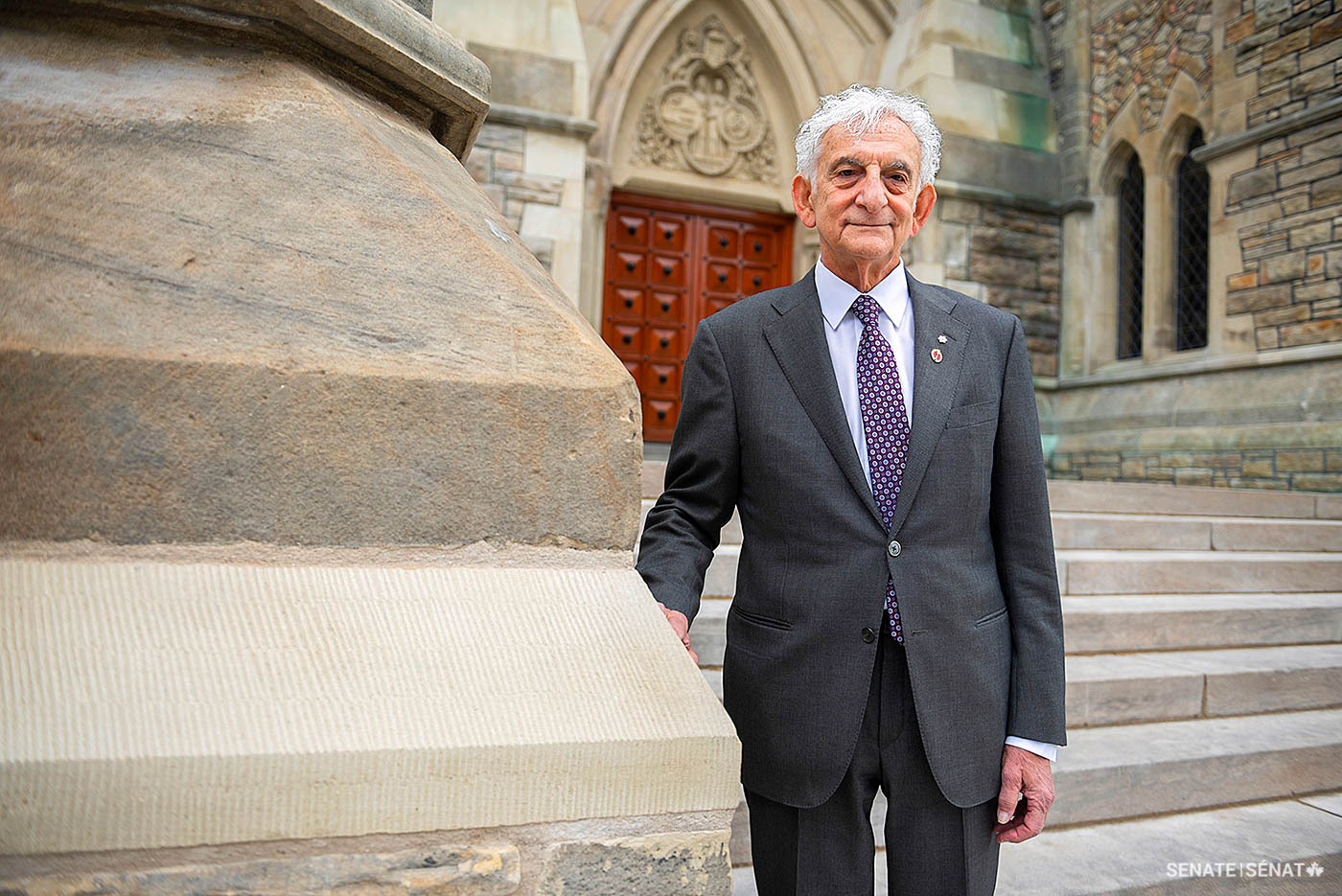
Senator Wetston stands outside East Block during the last week of his Senate career.
Working in these areas has furthered my understanding of complex policy issues working cooperatively with the federal and provincial governments and stakeholders, which is very much the work of the Senate as well.
In just five years as a senator, you have served on a lot of committees, including Ethics and Conflict of Interest for Senators, Energy, the Environment and Natural Resources, and Banking, Trade and Commerce. What legislative or committee work are you most proud of and why?
I am proud of my work with Senator Colin Deacon and the banking committee — under the leadership of former senator Doug Black — in producing a report on open banking, which was well received by the fintec community. Indeed, the government is now proceeding in developing an open banking framework. It will transform how financial institutions operate. It puts consumers first.
I am also proud of my work on Bill C-25, which modernized certain elements of the Canada Business Corporations Act. I am especially proud of the corporate governance reforms with respect to directors’ duties and board director diversity.
I was very engaged with Senator Yuen Pau Woo in leading our work on Bill C-69, the important environmental impact legislation. That was a massive undertaking. We worked very closely with other senators in passing this complex legislation which included numerous amendments.
Finally, I am most proud to have initiated my own Senate consultation to examine the Competition Act in the digital era. Feedback from stakeholders who participated in the consultation indicated that it made a difference and influenced the government to proceed with limited, but important, amendments to the Competition Act.
What are your retirement plans?
Nothing out of the ordinary. I want to be less tethered to work schedules. The important thing to me is spending more time travelling with my wife Debbie.
I’m also going to spend more time studying music. Debbie says to me, “How many guitars do you need?” and I always say, “Just one more.”
I’m going to get back on the tennis court and start playing golf again. There’s always more to do. I’ve been asked to do a bit of legal, board and advisory work. It’s been hard to say no, but I’m getting better at it.
What advice do you have for future Ontario senators?
Your learning curve will be steep. Spend time with your Senate colleagues from the other groups, the opposition and the government representatives.
You will see that the Senate is hard at work. You will observe the thoroughness, commitment and thoughtfulness of the Senate legislative and committee work. I have just come to understand this, and I must now move on. My hope is that future senators come to appreciate this earlier in their Senate career.
The Honourable Howard Wetston retired from the Senate of Canada in June 2022. Visit the Library of Parliament's Parlinfo website to learn more about his work in Parliament.
Related articles
Tags
Committee news
Senator Wetston’s retirement caps public service trifecta
Few people can claim to have served all three branches of parliamentary democracy — executive, judicial and legislative — like Senator Howard Wetston. The Ontario senator served as a senior public servant, both federally and provincially, a federal court judge and then completed his parliamentary trifecta when he was appointed to the Upper Chamber in 2016.
His parents were Jewish immigrants who fled Poland during the Second World War. His family then fled to Uzbekistan and was relocated to a displaced persons’ camp in Germany — where Senator Wetston was born — and eventually settled in Sydney, Nova Scotia in 1949. His parents lived there for nearly 60 years, while Senator Wetston embarked on an impressive public sector career. He also led the Competition Bureau, the Ontario Energy Board and the Ontario Securities Commission.
Before retiring from the Upper Chamber, Senator Wetston reflected on a life of public service.
You were two years old when your family resettled in Cape Breton, Nova Scotia. You were among thousands of Jewish immigrants who came to Canada during that time to start anew. How did your family history and upbringing shape your politics?
I would say my family history and upbringing really shaped my values rather than my politics. We lived in a part of Sydney called Whitney Pier. We were raised in a multicultural and multi-ethnic community. We were the only Jewish family in that neighbourhood. My family was religious. We attended a small local synagogue in Whitney Pier.
There was a large Black population in this community, as well as many Ukrainians, Hungarians and Italians. They were friends and we accommodated our differences — culturally, socially and economically. There were no playdates, there was no internet or Google to make ourselves appear smarter than we were. Sports and education were our unifying forces. There were many challenges, but our community was resilient and hard-working. I studied extensively, played sports and participated in Jewish traditions that made me feel part of Jewish history, despite its complexity.
My upbringing provided me with a strong sense of social and economic justice, which carried through my entire career as a public servant, a judge and a senator.
Before your Senate appointment, you worked as a public servant for 30 years, including as a Federal Court of Canada judge. How did this work prepare you for the Senate?
I sat as an independent senator. The question of what that implies has always been an issue of debate within the Senate. But there is no question that the Senate is steadily moving towards an institution that is more reflective of Canada’s diverse population.
My professional career has always had legal requirements that were inherently independent in nature — as a Crown Attorney or in leading independent administrative tribunals, or bodies, like the Ontario Securities Commission, the Ontario Energy Board and the Competition Bureau. Needless to say, independence and objectivity are unquestionable requirements for federal court judges.
You also served as chair and CEO of the Ontario Securities Commission until you retired in November 2015. But instead of settling into retirement life, you decided to apply for the Senate. Why?
At that time, I wasn’t ready to retire. Public service was still important to me. I wanted to contribute and remain relevant, so I applied to become a senator. I understood that there was something missing. I was fortunate to be appointed, as I also wanted to experience the legislative side of our parliamentary democracy.
How did your experience with the Ontario Securities Commission inform your Senate work?
My goal at the OSC was to modernize the Commission with the goal of becoming a 21st century regulator. Modernization was important to me. The work of the OSC is multi-disciplinary, requiring a deep understanding of corporate law, finance, accounting, economics, and technology.
Senator V. Peter Harder (left) shows off Senator Howard Wetston’s new pin during his swearing-in ceremony December 2016. Also pictured is the Honourable Doug Black, a former senator.
Senator Wetston is pictured in August 2021 on Hirtle’s Beach, near Lunenburg, Nova Scotia — the province where he grew up. (Photo credit: Office of Senator Howard Wetston)
Senator Wetston stands outside East Block during the last week of his Senate career.
Working in these areas has furthered my understanding of complex policy issues working cooperatively with the federal and provincial governments and stakeholders, which is very much the work of the Senate as well.
In just five years as a senator, you have served on a lot of committees, including Ethics and Conflict of Interest for Senators, Energy, the Environment and Natural Resources, and Banking, Trade and Commerce. What legislative or committee work are you most proud of and why?
I am proud of my work with Senator Colin Deacon and the banking committee — under the leadership of former senator Doug Black — in producing a report on open banking, which was well received by the fintec community. Indeed, the government is now proceeding in developing an open banking framework. It will transform how financial institutions operate. It puts consumers first.
I am also proud of my work on Bill C-25, which modernized certain elements of the Canada Business Corporations Act. I am especially proud of the corporate governance reforms with respect to directors’ duties and board director diversity.
I was very engaged with Senator Yuen Pau Woo in leading our work on Bill C-69, the important environmental impact legislation. That was a massive undertaking. We worked very closely with other senators in passing this complex legislation which included numerous amendments.
Finally, I am most proud to have initiated my own Senate consultation to examine the Competition Act in the digital era. Feedback from stakeholders who participated in the consultation indicated that it made a difference and influenced the government to proceed with limited, but important, amendments to the Competition Act.
What are your retirement plans?
Nothing out of the ordinary. I want to be less tethered to work schedules. The important thing to me is spending more time travelling with my wife Debbie.
I’m also going to spend more time studying music. Debbie says to me, “How many guitars do you need?” and I always say, “Just one more.”
I’m going to get back on the tennis court and start playing golf again. There’s always more to do. I’ve been asked to do a bit of legal, board and advisory work. It’s been hard to say no, but I’m getting better at it.
What advice do you have for future Ontario senators?
Your learning curve will be steep. Spend time with your Senate colleagues from the other groups, the opposition and the government representatives.
You will see that the Senate is hard at work. You will observe the thoroughness, commitment and thoughtfulness of the Senate legislative and committee work. I have just come to understand this, and I must now move on. My hope is that future senators come to appreciate this earlier in their Senate career.
The Honourable Howard Wetston retired from the Senate of Canada in June 2022. Visit the Library of Parliament's Parlinfo website to learn more about his work in Parliament.