Speaker of the Senate
Role of the Speaker
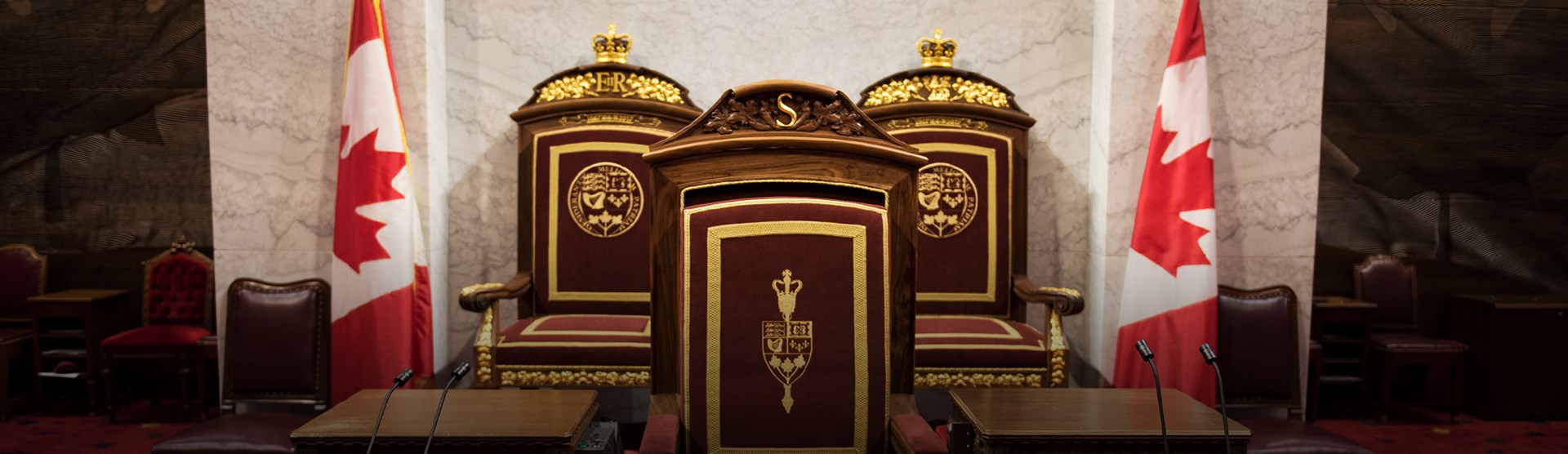
The Speaker of the Senate is one of Parliament’s most important officials. The Speaker presides over the Red Chamber, enforces the rules and ensures proceedings run smoothly.
In addition to serving as the public face of the Senate, the Speaker is part administrator and part diplomat, all the while retaining the ability to participate in debates like every other senator.
The position of Speaker was formalized in the British North America Act (later renamed the Constitution Act, 1867) — that created the Dominion of Canada. It gives the Governor General the power to appoint the Speaker, but — as is the case with many parliamentary appointments — the Governor General acts on the advice of the Prime Minister.
Since Canada’s legislature was modelled after the British Parliament, so were the roles of its presiding officers.
In the Senate, the Speaker took on the more limited role of the United Kingdom’s Lord Chancellor, who presided over the House of Lords — the British Parliament’s upper house — until members of the Lords elected their first Lord Speaker in 2006.
Initially, the Speaker shepherded the Senate through the daily order of business and ensured that all senators had their chance to be heard, but in 1906 senators amended their own rules, giving the Speaker the power to maintain order and decorum in the Chamber.
Those changes gave the Speaker the ability to halt proceedings, to enforce the Rules of the Senate and to rule on points of order (in which a senator argues that a rule or customary procedure was not followed).
In 1991, the Speaker was granted the authority to suspend debate to restore order. Though the Speaker still possesses these powers, it has seldom been necessary to use them in debate.
The Speaker’s term in office is not fixed, but it tends to be relatively short. With 45 Speakers of the Senate since Confederation, the average length of service is three years. A solemn figure and a guardian of the institution, the Speaker represents tradition in the Senate. The Speaker is the only senator who still wears the traditional court garb of black robes, a tab collar and a tricorn hat.
Senators still nod or bow to the Speaker’s chair when they enter or leave the room as a sign of respect. In addition, a sitting of the Senate may only begin when the Speaker enters the Chamber in the Speaker’s Parade and reads the opening prayers.
The Speaker is the presiding officer of the Senate — essentially the chair of its “sittings,” or meetings of all senators in the Red Chamber.
During the sitting, the Speaker directs the flow of legislative business by guiding senators through the daily agenda while maintaining order and decorum. The Speaker is also responsible for recognizing senators who wish to speak, reminding senators of their time limits during speeches and calling out the next item for consideration. As a procedural authority in the Chamber, the Speaker must be neutral and fair in ensuring that rules and practices are respected during proceedings.
The Speaker often rules on points of order — questions raised by senators as to whether the Senate’s correct procedure has been followed or a rule has been violated.
If the point of order is complex, the Speaker may take several days to deliberate before rendering a decision. The senators involved can appeal a ruling, and it can ultimately be put to a vote to be ratified or rejected. Given the Speaker’s duty to remain impartial, such appeals are, in fact, rare.
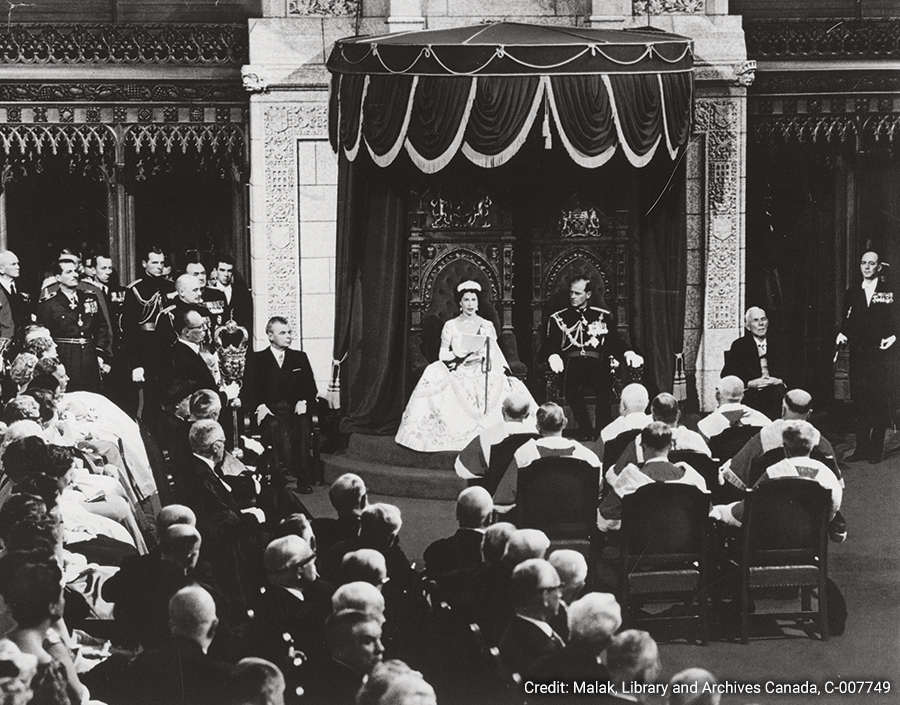
The Speaker also presides over important parliamentary ceremonies that take place in the Senate Chamber. Some of these events include the Speech from the Throne, which opens every session of Parliament, and Royal Assent, during which the Monarch or his designate — usually the Governor General — formally consents to the enactment of bills passed by both the Senate and the House of Commons.
A role that extends beyond the walls of Parliament
The Speaker of the Senate ranks fourth in Canada’s Table of Precedence, after the Governor General, the Prime Minister and the Chief Justice of the Supreme Court. This position reflects the importance of the role within the Canadian state and the place she holds in representing Parliament, in Canada and abroad.
Beyond presiding over the proceedings of the Senate, the Speaker plays an active role in international relations through parliamentary diplomacy. She welcomes foreign leaders and delegations to Parliament, meets heads of state, ambassadors and diplomats, and maintains relationships with parliamentary representatives from countries around the world.
In collaboration with Global Affairs Canada, she also leads parliamentary delegations abroad. These delegations are composed of senators from different recognized groups and caucuses in the Senate, allowing for diverse representation of the institution.
These missions help build relationships of trust with Canada’s international partners, allow for the exchange of experiences and best practices, and lead to a better understanding of the challenges facing other parliaments. By maintaining regular dialogue with international partners, Parliament also contributes to strengthening Canada’s relationships and supporting its presence and influence on the international stage.
Building bridges between parliaments and countries
Parliamentary diplomacy complements the diplomacy carried out by governments. It creates direct and lasting relationships between parliaments that can continue despite political changes.
These exchanges foster dialogue, the sharing of expertise and mutual understanding. They also help promote Canada’s democratic values and increase awareness of how its institutions function.
The Speaker therefore acts as an ambassador for the Parliament of Canada, at home and abroad. She helps explain the role of the Senate and its contribution to Canada’s legislative process, while representing Canada in its engagement with parliamentary counterparts around the world.
These activities are jointly funded by the Senate and the House of Commons and are subject to budget approval processes.
Detailed financial reports on expenses related to parliamentary delegations led by the speakers are also made publicly available: https://www.parl.ca/diplomacy/en/speakers/financial-disclosure.