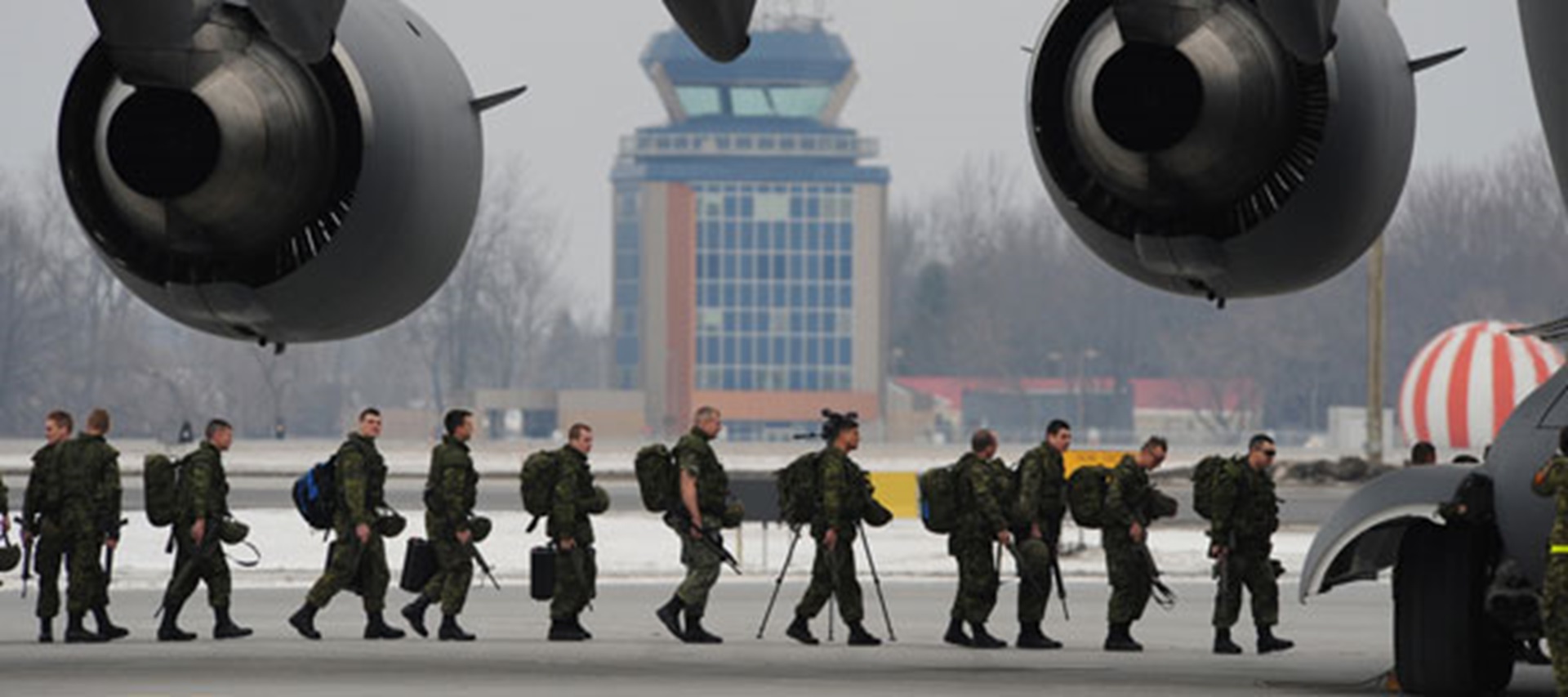

THE STANDING SENATE COMMITTEE ON NATIONAL SECURITY AND DEFENCE
EVIDENCE
OTTAWA, Monday, May 31, 2021
The Standing Senate Committee on National Security and Defence met by videoconference this day at 2 p.m. [ET] to study matters relating to national defence and security generally, including veterans affairs, as stated in rule 12-7(15).
Senator Gwen Boniface (Chair) in the chair.
[English]
The Chair: Good afternoon, everyone. Honourable senators, I’m Gwen Boniface, senator from Ontario, and I have the pleasure of chairing this meeting.
Today we are conducting a public meeting of the Standing Senate Committee on National Security and Defence via video conference. Thank you in advance, senators, for your patience as we adapt to this way of holding our meetings.
Before we begin, I’d like to remind senators to keep their microphones muted at all times, unless recognized by name by the chair, and avoid switching from one language to the other in the same intervention.
Should any technical challenges arise, particularly in relation to interpretation, please signal this to the chair or the clerk and we will work to resolve the issue.
Please note that we may need to suspend during these times as we need to ensure that all members are able to participate fully.
Finally, I would like to remind all participants that Zoom screens should not be copied, recorded or photographed. You may use and share official proceedings posted on the SenVu website for that purpose.
I would now like to introduce the members of the committee who are participating in this meeting: Senator Boisvenu, deputy chair of the committee; Senator Dagenais, deputy chair of the committee; Senator Dalphond, fourth member of the steering committee; Senator Busson; Senator Cotter; Senator Jaffer; Senator Martin; Senator McPhedran; Senator Moodie; Senator Oh; and Senator Richards.
Senators, to ease the flow of this virtual meeting, I have prepared a list of questioners, starting with members of the steering committee, followed by the rest of the committee members on rotation. If senators do not have a question, they are asked to signal this to the clerk via the Zoom chat. For both panels today, the witnesses have been given up to 10 minutes for opening remarks, and senators will be given four minutes each for questions.
Honourable senators, for our first panel today, we’re pleased to have appearing before us, from Veterans Affairs Canada, Charlotte Bastien Assistant Deputy Minister, Strategic Oversight and Communications; Mr. Rick Christopher, Assistant Deputy Minister, Strategic Policy and Commemoration; and Ms. Amy Meunier, Director General, Centralized Operations.
On behalf of the committee, I would like to thank the three of you for appearing on short notice, and I turn the floor over to you, Ms. Bastien.
Charlotte Bastien, Assistant Deputy Minister, Strategic Oversight and Communications, Veterans Affairs Canada: Madam Chair, members of the committee, it is my pleasure to be here today on behalf of the Minister of Veterans Affairs, the Honourable Lawrence MacAulay, to speak about the work our department is doing to support Canada’s veterans and their families.
First, I would like to acknowledge our just-retired deputy minister, General Natynczyk, for the outstanding leadership he provided over the past six and a half years.
We all wish him well in retirement, and we look forward to working with our incoming deputy minister, Paul Ledwell, as we continue to serve Canada’s veterans with the care, compassion and respect they deserve.
[Translation]
At Veterans Affairs Canada, our mission is to provide exemplary, client-centred services and benefits that respond to the needs of veterans, our other clients, and their families, in recognition of their services to Canada; and to keep the memory of their achievements and sacrifices alive for all Canadians. To fulfill this mission, Veterans Affairs Canada provides a suite of benefits and supports to aging World War II veterans, Korean War veterans and modern day Canadian Armed Forces veterans. These include disability pensions and awards; other financial and treatment benefits; physical, psychological and vocational rehabilitation services; case management; career transition services; and support for families.
VAC also organizes and supports commemorative events and initiatives across Canada and overseas to recognize the role veterans have played in shaping our nation.
It also provides services to the Royal Canadian Mounted Police’s currently serving and former members and their survivors, including the administration of pensions; health care benefits and case management services; and access to operational stress injury clinics.
[English]
As you can see, the well-being of our veterans, their families and their survivors is our top priority, both in mandate and in function.
While the pandemic has placed an enormous strain on all Canadians, on those we serve and on VAC employees and their families, we adapted quickly to ensure that veterans continued to receive their benefits during this incredibly challenging time.
Since the pandemic started, more than $4.4 billion has been paid out to veterans and other clients through disability and financial benefits programs. Since 2016, the government has invested more than $10 billion in new money for veterans and their families.
Our employees have been reaching out to thousands of vulnerable veterans to ensure they know they can turn to the department for support.
From their home offices, our people have been answering calls, responding to secure messages, making decisions on disability claims and issuing payments. Despite working from a distance, they’ve continued to provide rehabilitation, transition services, case management and guided support.
[Translation]
We have also moved various treatments and services to a virtual approach. For example, occupational therapists are providing virtual assessments to ensure that veterans are receiving the equipment they need to maintain safety in their homes. We have extended telehealth coverage to include mental health, physiotherapy, occupational therapy and other treatments.
And we have used the Veterans Emergency Fund to its full extent while also supporting organizations through the Veterans Organizations Emergency Support Fund.
We have adapted to ensure veterans’ needs are met, and we have kept working on our top departmental priority, which is to reduce the time it takes for veterans to receive decisions on their disability claims.
[English]
The $192 million that VAC received through the Economic and Fiscal Snapshot 2020 has allowed us to recruit over 500 term employees.
The new hires are primarily focused on the most common applications that we receive, which include hearing loss, tinnitus, post-traumatic stress disorder and musculoskeletal conditions. By having these new employees focus on these applications, the aim is to minimize the time spent on training and maximize the time spent making decisions, ensuring that veterans are receiving responsive and efficient service.
As capacity allows, the plan is to train these employees on additional types of conditions so workloads can be managed effectively.
With more adjudicators, and with work to use new approaches and leverage innovation, we have reduced the number of applications beyond our service standard to just over 15,000 as of March 31.
This is down from 22,000 almost a year ago. The goal is that by March 2022, the combined effort of our staff will mean fewer veterans waiting beyond our 16-week service standard.
[Translation]
Madam Chair, even with the pandemic, the minister has continued to actively engage with VAC stakeholders through ministerial advisory groups. And he has spoken with many veterans about how they and their families are experiencing the pandemic and what support we, as a department, can provide.
These conversations have really been quite significant in helping us adjust our services and programming as needed.
VAC also continues to talk regularly with veterans and other stakeholders about how to improve service delivery.
The department’s new Let’s Talk Veterans website is allowing a greater number of people to have their say on issues that matter to veterans and their families.
On the site, they can currently take part in a consultation about how to improve the disability benefits application process.
[English]
As we continue with this important work of reducing wait times, we also remain focused on the regular, everyday challenges veterans face, mental health being one of them. It’s becoming clearer all the time how important it is to invest in the mental health of our brave members and veterans of the Canadian Armed Forces.
At Veterans Affairs our focus is to ensure that eligible veterans and members of the RCMP and their families can get the mental health support and services they need when they need them. Veterans Affairs has an assistance service that is available 24 hours a day, 365 days a year, with mental health professionals that veterans can talk to directly. We have 11 operational stress injury clinics across the country and 9 additional satellite service sites closer to where veterans live, and several free online and mobile applications that are full of useful information. There is also the important work being done by one of our partners, the Centre of Excellence on Post-Traumatic Stress Disorder (PTSD) and Related Mental Health Conditions.
Just last month, Budget 2021 included a proposal to provide $140 million over five years, and $6 million in ongoing funding, for a program that would cover the mental health care costs of veterans with PTSD, depressive or anxiety disorders, while their disability benefit application is being processed.
I want to impress how important it is for those who may be struggling to reach out. Especially now, as we’re hearing more and more about sexual misconduct in our military. Veterans Affairs has been working regularly with veterans and advocates on the issue of support for victims of military sexual trauma. There are services and support available through the department, which I would encourage anyone who has faced these issues to use, because nobody should have to confront something like that alone.
In response to the class-action lawsuit filed by those who experienced sexual misconduct, Veterans Affairs updated several policies to clarify our approach for adjudicating disability benefits applications involving claims of sexual assault or sexual harassment. We’ve also created a dedicated unit of employees to receive and process new claims or reviews submitted by those who are part of the class action and are seeking the highest level of compensation under the final settlement agreement.
We continue working with the Office of Women and LGBTQ2 Veterans and working with stakeholders to ensure we are responsive and can assist. On the commemoration front, we are undergoing consultation on five proposals for the National Monument to Canada’s Mission in Afghanistan and we welcome input from veterans, their families and also from Canadians at large. Thank you.
The Chair: Thank you very much.
[Translation]
Senator Dagenais: Thank you for your presentation, Ms. Bastien. My first question is about COVID-19.
Could you give us an overview of how the pandemic has impacted veterans? Have they been more affected by the illness than the rest of the population? Have you noted any effects caused by the restrictions that have been imposed on outings and visits?
Finally, have they been deprived of certain services because of COVID-19?
Ms. Bastien: I can start answering and will ask my colleague Amy to continue.
Owing to health care services provided by certain organizations, we have had to adapt to a virtual approach.
Our operations have not been interrupted. We have maintained the same level of services and have been able to provide benefits and services to veterans and their families. Of course, the shift to a new way of operating has slightly slowed down the service and access to health care professionals, which is also an issue for all Canadians in terms of the pandemic’s impact on our country.
[English]
Ms. Meunier, you might want to raise the matter of outreach that we’ve done and also how we had the Veterans Emergency Fund to help out.
Amy Meunier, Director General, Centralized Operations, Veterans Affairs Canada: Yes, thank you. As Ms. Bastien indicated, many adjustments were made over the last year to put in place measures to support veterans and their families, particularly vulnerable populations. Generally speaking, this would include finding and implementing new tools to work in a virtual environment, as Ms. Bastien mentioned, but it’s also about increasing the flexibility of our current procedures and processes to ensure we are providing as much flexibility to veterans in terms of providing or returning necessary information to the department in order to render decisions.
As an example, typically we would like or ask veterans to return information to us in 60 days. During the pandemic, however, we recognize it might not be as easy or as accessible to connect with a health professional, therefore we are able to extend that period of time without any implication for the applicant.
One important activity that the department undertook is to have our case managers and veterans service agents, key players in our front line, reach out to nearly 20,000 case-managed veterans and vulnerable veterans as part of a proactive outreach strategy. The goal was to touch base, check in, ensure they had the supports they needed to identify any changes in their current situations.
We also have the Veterans Emergency Fund, where, as Ms. Bastien mentioned earlier, we’ve created additional flexibility so that our front-line decision makers can get money and supports to veterans and their family members’ hands as soon as possible. During this pandemic period, recognizing there are increased pressures and sensitivities, we felt we’ve put in place a positive outreach strategy, created flexibility in terms of our programming and modality of services, and we continue to engage with vulnerable populations as we work through this pandemic. I think we’ll see quite a few of these new processes become part of our ongoing business model.
[Translation]
Senator Dagenais: I can’t help but ask you a question about sexual misconduct.
Can you give us an overview of the impact sexual misconduct has had on veterans?
Have there been any reported cases among veterans?
[English]
The Chair: Senator Dagenais, I apologize, but your four minutes is up. We’ll put that on for the second round.
[Translation]
Senator Boisvenu: I welcome our witnesses and thank them for their testimony.
My question is for Ms. Bastien.
Ms. Bastien, in 2018, Guy Parent, the then ombudsman, discovered an error that impacted veterans and retired RCMP members. That error affected 270,000 veterans and RCMP staff members. The issue is that, in 2010, the government changed the rules to ensure that indexations for calculating provincial tax would be taken into account, as that was not the case at the time.
The problem was corrected in 2010. However, veterans were not informed. As a result, since 2015, veterans have initiated many proceedings before courts of justice. So the federal government must hire lawyers to defend itself, which is a problematic situation.
The Federal Court actually certified a class action suit last December.
My question is threefold. Can you give us information on the status of this file? Have you started to return the money veterans have asked for? People will recall the famous video where a veteran called out Mr. Trudeau in western Canada. Finally, have you concluded any agreements to end the class action suit?
Ms. Bastien: Yes, a class action suit is ongoing. I cannot comment, but after we identified the problem that was brought to our attention by the former ombudsman, Mr. Parent, we have taken measures [Technical difficulties] the authority to refund veterans who have been affected by that error.
Senator Boisvenu: How many of the 270,000 cases have been resolved since 2015?
Ms. Bastien: I don’t have the figure in front of me. I don’t know if Ms. Meunier has that information. If not, we could provide it for you.
[English]
Ms. Meunier: Thank you. I’m pleased to say that close to $80 million has been paid out thus far. Of the 270,000, the first priority was to pay out for the living veterans. So we have paid out all living veterans to date, and we continue to work with estates and survivors. In total, there have been 108,233 files that have been processed and paid out.
It’s important to note that of the 270,000, many would include estates for which we have no contact information. We’ve done a number of communications and social media posts to encourage folks to reach out to the department to see how and if their veteran family member may be eligible, and we would work with them and the estate to pay out any residual funds. It is important to note that all living veterans have been paid out.
[Translation]
Senator Boisvenu: Thank you. Madam Chair, will the veterans ombudsman speak to us, or is he part of the second panel?
[English]
The Chair: Senator Boisvenu, it will be the second panel.
[Translation]
Senator Dalphond: I thank Ms. Bastien and the other departmental officials for joining us today.
You talked about new programs for veterans. What I am specifically interested in is post-secondary training and courses to enable people to change jobs.
Do you have statistics on the number of veterans who are participating in those programs? Do you also have statistics on the number of veterans who complete programs or drop out?
[English]
Ms. Meunier: Senator, I don’t have that information at the ready right now, but we can certainly come back and provide you a complete update in terms of participants and completed courses.
Senator Dalphond: I understand it’s a new program; it’s kind of new. I have time for another question then? It’s about the Sainte-Anne-de-Bellevue centre which has been transferred to the province. It used to be run by the department. I read in The Gazette maybe a year and a half ago that some people were saying that the quality of service was not as good as it used to be when the department was running it, instead of the provincial health authorities. Do you have any complaints about that or is any kind of monitoring done to see the level of services that are provided?
[Translation]
Ms. Bastien: I can start, and Ms. Meunier or Mr. Christopher could also comment as needed. Residents of Ste. Anne’s Hospital brought a class action suit. We have concluded an agreement with the group. We are following up on that agreement, and veterans will be compensated.
We continue to work with provincial authorities to ensure care is being provided to veterans at Ste. Anne’s Hospital.
However, following the transfer, the province has experienced challenges in terms of staff recruitment and retention. We continue to work with them. The situation has improved a lot and, even during the most difficult period of the pandemic, the situation was relatively stable at Ste. Anne’s Hospital when it comes to long-term care.
Senator Dalphond: Am I to understand that no complaints have been filed during the pandemic about the quality of care?
Ms. Bastien: Not at the department, in any case.
Senator Dalphond: Have you surveyed users to find out what they think about the services?
Ms. Bastien: We have an employee who was, until just recently, on site at Ste. Anne’s Hospital to [Technical difficulties] work with those in charge of the institution’s management. She would bring any complaints filed to our attention if necessary.
Senator Dalphond: Thank you.
[English]
Senator Cotter: Thank you, Ms. Bastien and Ms. Meunier, for your presentations. Two questions. The first is what has been the trajectory of budgets for Veterans Affairs over the last number of years? Are we seeing increases or decreases? Is the budget adequate to serve the needs of veterans? That’s my first question.
The second is about the philosophy the department brings to resolution of disagreements between veterans who make claims and the department itself. One hears stories over the years of a noticeably adversarial character to those exchanges and the degree to which veterans are not entirely trusted by the department when they advance claims. Can you speak to that? Thank you.
Ms. Bastien: In the last five or six years, an additional $10 billion in programs and services have been put in place for veterans and their families. There’s the announcement in Budget 2021 regarding mental health support for veterans while they’re waiting for their disability application to be processed.
Regarding veterans who are not satisfied with the level of service or with the decision that they receive, there are a number of avenues veterans can use. We have an appeals process internal to the department. We also have the Bureau of Pensions Advocates that can represent an individual once the veteran has used the channel within the department to appeal the disability decision in front of the Veterans Review and Appeal Board. And the department will pay for legal counsel for the veteran to present the case. There’s also the ombudsperson there.
Not too long ago, we did release a client satisfaction survey — we can share the report with the Senate — where, overall, client veterans and their families, are satisfied with the level of programming and also the level of service provided by the department. The response rate is over 80% satisfaction.
Senator Cotter: Thank you.
Senator Oh: Thank you to the witnesses. My question is about survivors of sexual misconduct. What services does VAC provide to veterans who are survivors of sexual misconduct in the Canadian Armed Forces? Thank you.
Ms. Meunier: Thank you, senator. We recognize the significant impact that sexual trauma in the military can have on the lives of members and veterans. We’re committed to enhancing and putting in place additional supports to meet their needs.
Currently, we have a dedicated unit that prioritizes and focuses on applications coming from survivors of military sexual trauma. I’m pleased to say that from the intake to decision, we are turning those decisions around in 30 days, which is a very fast way to then move on to other types of benefits and services and treatment.
We’ve also had a number of stakeholder information-sharing sessions so we can hear directly from those who have experienced military sexual trauma. They’ve provided some very detailed and specific insights into challenges they’ve had in the past with our processes, and that’s going to go a long way into how we revise and adapt our tools, processes and policies.
We’ve also implemented trauma-informed training for our decision makers and we did this in partnership with the Canadian Armed Forces Sexual Misconduct Response Centre. Our goal was to make sure that our decision makers and our front-line staff are acutely aware and can be empathetic to how survivors may present and how to work with them through the process.
As announced in Budget 2021, we are working with the Department of National Defence to create an online and in-person peer support services pilot for survivors of military sexual trauma. There’s also, of course, a vast array of treatment benefits, whether that is accessing support from the network of operational stress injury clinics. We also have a network of 12,000 mental health professionals. That’s not to suggest that all injuries from MST are mental health related but predominantly that is the case.
We will continue to adapt our programs and adjust them as we learn more about the impact that MST has had on survivors. The intersectionality of marginalized groups and how we can take this information and data and build more unique and individualized processes for these individuals. I think there’s a fair bit of support in place.
Senator Oh: Do you have any idea to date how many of them have approached you or how many survivors’ family you have contacted?
Ms. Meunier: Over the last year, the dedicated unit started to track this information much more closely. In the last year, we’ve received approximately 500 new and first applications from individuals who have experienced MST, meaning it’s the first time they’ve come forward to the department for help. The approval or favourable rate is about 98%. I think that’s a very positive story to say that there are hundreds more individuals now being compensated and recognized for that injury and have access to a full suite of wellness programs and treatment.
Senator Oh: Any idea how much funding has been given out?
Ms. Meunier: I wouldn’t have any idea. Each individual receives different corresponding amounts of compensation depending on the severity of their disability, so I wouldn’t have that in the individual or ballpark, but I could probably look at that and come back to the committee.
Senator Oh: Thank you. Good work.
Ms. Meunier: Thank you.
Senator Richards: Senator Cotter asked my question, but I have another one following up on Senator Oh for Ms. Meunier.
If a woman has a sexual assault complaint, does that go through the chain of command? That doesn’t go to the RCMP. Is that right, ma’am?
Ms. Meunier: I can’t really speak to the detailed processes that happen within the Canadian Armed Forces. It’s my understanding that the oversight exists currently within the Canadian Armed Forces, but that would be a question for the Canadian Armed Forces or National Defence. I’m sorry, I’m not able to speak to that in detail in terms of whom they would report the incident to.
Senator Richards: What about the other witness? Ma’am, would you know?
Ms. Bastien: It is within the Canadian Armed Forces and DND how their processes work. What we can explain is once an individual — currently serving or having been released from the forces as a veteran — who is a victim of sexual misconduct and has brought a claim forward to be compensated for the impact of the events or the sexual misconduct through our disability program is offered rehabilitation and treatment support to help the individual deal with the impacts of being a victim and survivor of military sexual misconduct.
Senator Richards: I was wondering how many servicemen and women might retire in a given year and what percentage of those would seek psychological or medical help from Veterans Affairs. Either witness, if you can give me a quick answer, or maybe give it to me in writing, if you don’t have it at your fingertips.
Ms. Meunier: From a disability benefit perspective, about 30% of our current clients are in receipt of some type of mental health benefit or treatment. However, there are other ways within the department, other programs where you might be able to seek additional treatment. For example, participating in a rehabilitation program would offer access to different types of treatment. That would be above and beyond the 30% I mentioned earlier. We can come back in writing, though, sir.
Senator Richards: Please do. Thank you very much.
Ms. Bastien: We can also provide the number of members released from the regular and reserve that we offer transition services to when they leave the uniform. It’s around 3,000 but I’ll get you the exact number of Regular Forces that transition or release from the Canadian Armed Forces per year.
Senator Richards: Thank you very much.
Senator Jaffer: Thank you to the witnesses for being here this afternoon. You said the government is going to be giving additional sums of money to deal with PTSD. I assume there was a request from the department for additional funds. Can you tell me what these additional funds are going to be used for, please, because I’m imagining there are already funds being used for PTSD.
Ms. Meunier: Senator Jaffer, I think I made a comment earlier about the government providing in Budget 2021 additional funds to support in-person and online peer support for survivors of military sexual trauma.
To answer your question, that is specific to peer support for MST survivors. You are right, we do have many supports in place to help veterans and their families as they deal or go through the healing process of post-traumatic stress disorder and other similar mental health conditions. I just wanted to be clear, they’re slightly different elements.
Senator Jaffer: Thank you very much for your answer. What I’m not clear on, I’ve always assumed that before these additional funds were provided, you have set out that you did provide that. I wanted to know if there were some additional services you were providing, especially during the pandemic, because I would imagine there are more challenges for people who suffer from PTSD.
What additional services are you providing during the pandemic?
Ms. Meunier: As I mentioned earlier as part of the initial outreach, we are connecting with our most vulnerable populations or veteran cohorts, which would include those suffering with severe mental health issues. Our network of OSI clinics as well as our 12,000 health professionals across the country and our own staff are moving more into different modalities of providing service. In situations of a pandemic or lockdown, for example, and unable to leave the house, you can still access supports, not in person but through virtual or telephone types of supports. That’s across our operational stress injury or OSI clinics. Operational Stress Injury Social Support, or OSISS, the peer support programs, is also doing virtual mental health first aid for veterans. They’ve created a smaller, short online virtual version of the training they did.
All of our programs focused on supporting individuals with PTSD or similar mental health conditions have moved into a much more modern and virtual place. I think that has helped many veterans during this pandemic period when they haven’t had easy or direct access to treating health professionals in their community.
I would also flag that we have the VAC Assistance Service, which provides 20 counselling sessions with a professional in an individual’s community. That is available to veterans or their family members, and it’s 24/7.
Senator Jaffer: Thank you very much.
Senator McPhedran: Thank you to the officials who have joined us today. I’d like to hone in on one aspect — I think the term you used was vulnerable populations. I am very happy to be speaking with you today because I had tremendous difficulty getting through the Wi-Fi connection, et cetera, and actually being in this meeting. I have many resources backing me up.
My question is geared to homelessness among military veterans. In particular, women military veterans. My contextual question is whether you can tell us more about the gender-based analysis that you bring to your programming. Then if you could address what outreach you are doing, for example, for military veterans who are women struggling with homelessness who don’t have a chance of getting online. What are the alternatives that you have in place?
Rick Christopher, Assistant Deputy Minister, Strategic Policy and Commemoration, Veterans Affairs Canada: I’ll start with the gender-based analysis. This is something that the Government of Canada has mandated on new programs since, I believe, 2017. With any new programs or program changes we make, we have to make sure we consider the different needs of women veterans and be sure that we understand what the impacts of these particular programs would be on that group.
We’re learning as we go and certainly have discovered a lot of things. We want to make sure we understand their needs and that we meet them. On that note, in 2019, we created the Office of Women and LGBTQ2 Veterans. There are a number of purposes for this group, the first is — back to understanding — learning what the unique experiences of women who have served in the Canadian Armed Forces are and what their unique experiences are in dealing with the department and accessing these kinds of benefits. In terms of outreach, we do a number of things. Ms. Meunier mentioned the outreach to vulnerable veterans that we did at the beginning of the pandemic, and that continues today.
The other thing that is interesting about women in terms of homelessness is that they’re often at risk of homelessness. They’re really the invisible group. They might be couch surfing or living with somebody temporarily or, worst-case scenario, living with somebody in a relationship that is not very good in order to avoid being homeless. We partner with a number of organizations, whether that is VETS Canada or through the Veteran and Family Well-Being Fund, and support some of the great work they do on the ground to identify people who are at risk of homelessness and who are veterans and women. We also work with local community groups and case managers in the area offices to identify individuals who may be struggling and need support in terms of homelessness. I don’t know if you have anything to say on that, Ms. Meunier.
Ms. Meunier: No, I think you covered it well, Mr. Christopher. We have points of contact in all of our area offices who have been identified to work with homeless veterans and local organizations. We also collaborate with CMHC and ESDC on housing needs, looking for innovative solutions to the problem of homelessness.
We also have the Veterans Emergency Fund, as I mentioned earlier. This is a tool that can be used quickly to help all veterans. But in this case, in particular, a woman who may need urgent financial support.
The Chair: I’m sorry to interrupt. The time is well over. Thank you.
Ms. Meunier: No problem. Sorry.
Senator Martin: Thank you to the officials. I wanted to acknowledge the good work of Minister MacAulay and also retiring Deputy Minister Walter Natynczyk. I had a chance to work closely with him, especially with our Korean War veterans. I should also mention the late Greg Thompson, former minister, who brought Korean War veterans into the benefits regime. We really appreciated the veterans getting that kind of support.
My first question relates to something you said in response to Senator Richards’ question. It was regarding the process of transitioning files from DND to VAC as smoothly and seamlessly as possible. I know that’s always a challenge when there are interdepartmental processes and there may be different protocols to follow. Where do gaps still remain when these transitions happen, and what is being done to address these gaps? Would you elaborate a little bit more on that, please?
Ms. Meunier: Sure, I’m happy to elaborate on that. I wanted to highlight that Veterans Affairs front-line staff have been undertaking transition interviews or working with releasing members since the early 2000s, and since then many improvements to our material and approaches have taken place.
Over the last number of years, we have worked even more closely with the Canadian Armed Forces to address, as you noted, information-sharing opportunities and to build a better process. Some examples of these positive improvements include expanding the Borden transition pilot where you have Veterans Affairs Canada and CAF staff working together to support an individual through release. We have an interactive members transitioned task list, which allows a veteran to understand the tasks required to successfully transition to life after service. It creates a digital product they can track and follow along the way.
From a disability benefit decision-making perspective, we are piloting direct access to the Canadian Forces health information system. Currently, we would have to order service health records, they’re scanned and digitized and sent over to us on a pilot basis, where we hope to have 50 decision makers. They would have immediate access to the CAF health system, meaning that, as they’re processing files, there’s no exchange of information. We go in, seek the information and render a decision. I think that’s a very positive piece.
One of the more effective recent changes is an automated release notification generated by the Canadian Armed Forces over to Veterans Affairs Canada. It’s a systemic way of letting us know when an individual is moving through the release process. This allows us to engage at the appropriate time and work together to move them through the process.
Senator Martin: Thank you for that. In working with the Korean veterans file, it took us four and a half years for certain files that didn’t quite fall within the framework and they were just on that edge. To follow individual files like that, it took an office like ours four and a half years of meeting different officials from different parts of the country. I’m trying to imagine a veteran or someone transitioning.
If a file doesn’t quite fit the mould, they fall through the cracks. Sometimes they end up in a pile, and unless somebody tracks it and follows it and is really tenacious about it, it can be years before it’s resolved. Would you speak to how you are addressing such cases that are a little bit more complex and outside of the norm?
Ms. Meunier: It’s hard to say what an average file or an average case looks like because each application or each individual presents in very unique circumstances.
Senator Martin: I mean if there are checkboxes and it doesn’t check a box, sometimes it goes into this other pile. Those are the files I’m referring to. I see some of my colleagues nodding their heads. Those files kind of go to another pile. It’s a little bit outside of the ordinary; when I say ordinary, they’re all unique. I think you must understand the kinds of files we’re talking about.
The Chair: Senator Martin, your time is up but we’ll allow the witness to answer.
Ms. Meunier: From a disability benefit perspective, which tends to be one of the first programs somebody would apply for, we have on boarded a new workload management group who are responsible for making sure no files fall through the cracks. Files are addressed in a first process, short of our red zone area. We have put in place measures to ensure that files aren’t pushed to the side because they’re a little bit too complicated to deal with. On a daily basis, we’re circling back to decision makers to see where they are at on each file.
Senator Martin: Thank you. That’s the answer I was looking for. Thank you very much.
Senator Moodie: This question can be answered by anyone who understands what processes have occurred.
The January 2021 report of the Office of the Veterans Ombudsman includes several recommendations for improving the way in which veterans and their families receive treatment for mental health issues. What progress has VAC made in implementing these recommendations? What are the significant barriers that are still outstanding? Thanks.
Ms. Meunier: Thank you for that question. Families play an integral part of a veteran’s transition to post-military life and to living optimally, potentially with a disability.
Veterans’ family members can access mental health services in order to support the veteran’s rehabilitation plan or recovery plan. Family members are able to access support through the VAC Assistance Service as well as the network of OSI clinics that I mentioned earlier. OSISS, or Operational Stress Injury Social Support, programs are offered for families or peer support for family members. I mentioned earlier, as well, the Mental Health First Aid training for families, which can help individuals better understand the symptoms and elements and how to work with and live with individuals experiencing post-traumatic stress disorder.
The minister instructed the department to apply our mental health policy for families using care, compassion and respect and as much flexibility as possible. From the perspective of treatment benefits or the rehabilitation program, families are strongly encouraged to participate when the treating health professional recommends that this is an important, integral piece to the veteran’s overarching recovery.
There are a fair number of supports in place for family members. We also have the Caregiver Recognition Benefit, which recognizes the informal caregiving that family members offer to veterans.
Senator Moodie: Thank you.
Senator Busson: Some of my colleagues have covered this point. Before I ask the question, I want to mention that I support the poll results mentioned here by saying, anecdotally, that in the area where I live, there is more than a fair share of veterans. I can reinforce the fact and the statement about the increased quality of service over the past number of years.
I just want to ask a quick question around the service standard. It had been mentioned that the service standard of 16 weeks was being addressed and we are working toward it. Of course, there’s still a backlog of cases to be dealt with; that was also mentioned.
I’m wondering whether or not the recent revelations around sexual misconduct allegations have increased the backlog. To what extent might these applications for disability through post-traumatic stress disorder or disability be prioritized, if they are being prioritized?
Ms. Meunier: Thank you, senator, for that question. Currently, applications from veterans or members who have experienced military sexual trauma are being prioritized by a dedicated unit. Those applications have not contributed to the backlog. Our dedicated units have been able to render decisions within 30 days. That’s within our service standard.
We did publish a report in June 2020. It’s a strategic plan in terms of addressing wait times holistically. We have four key pillars that touch on that — public service capacity, process innovation, digital solutions, as well as integration. Ultimately, there’s no one-size-fits-all solution to a very complicated wait time challenge. Each individual’s health circumstances and disabilities are all different and require a unique and individual review of the facts in evidence in that case.
In summary, no. With the MST claims, there has been a spike over the last year, I would say, but because we’ve had this dedicated unit in place, we’ve been able to turn those decisions around quite quickly and get benefits and support in place for those individuals.
Senator Busson: Thank you very much.
The Chair: Senator Dagenais, I don’t know if your question was answered.
[Translation]
Senator Dagenais: I would like to come back to the pandemic, which has enabled many services to become more efficient, despite the obligation to telework. Do you think the improvements you have noted and have talked about will continue after the pandemic?
Ms. Bastien: Thank you for the question.
I think so, as this is a new way to do things and a new approach to providing services. We will keep providing in-person traditional approaches when we can, but we will continue to provide the service over the telephone. We will also expand our virtual services to account for the country’s geography, among other things, but also to be able to provide veterans and their families with appropriate services in a timely fashion, regardless of where in Canada they live.
Senator Dagenais: Thank you very much, Ms. Bastien. I will let my colleagues use the rest of my time.
[English]
Senator Jaffer: I will defer to Senator Boisvenu.
[Translation]
Senator Boisvenu: Thank you, Senator Jaffer.
I would like to come back to families that have still not resolved their issues with payment delays and court challenges. I don’t want to get into the details of the process. If my math is right, 148,000 families of veterans or former RCMP officers have still not had their cases resolved.
My question is quite simple. What has been preventing the government from resolving those cases over the past five or six years, instead of constantly turning to legal settlements?
I am trying to understand why no attempt has been made to resolve those cases. So many judicial applications have been made that the justice system has combined them to begin a class action suit. All that means that the situation is really serious.
I am trying to understand what has prevented the government from resolving the cases of those people, who have sacrificed their health and quite often their life for our country. My question is for Ms. Bastien.
Ms. Bastien: I can tell you about the direction the ombudsman took when he raised the issue three years ago and tell you what the department has implemented.
As for the decisions made in 2010, we cannot provide an answer.
Senator Boisvenu: I am rather talking about this six–year period, from 2015 to now. I am trying to understand why the government has pushed those veterans and former police officers toward the legal system instead of resolving their cases. What was the government’s motivation?
Ms. Bastien: I don’t think anyone is trying to push veterans and former members of the RCMP toward the courts. A program has been implemented, and Ms. Meunier has talked about compensations that apply to surviving members. I apologize, I am searching for the right words. I could get back to you with more details, but I’m not sure I understand your question.
Senator Boisvenu: It’s just that 148,000 families have been waiting for six years. Thank you.
[English]
Senator McPhedran: Imagine this hypothetical and then answer it, please: I’m a woman military veteran, I live in Winnipeg, Manitoba, and I am struggling with homelessness. I don’t have easy access to the Internet. I don’t even have easy access to a phone. What do I do now?
Ms. Meunier: Thank you, senator. I might try to respond to that. We work with community organizations and homeless shelters, so entering one of those buildings or facilities and indicating that you are a veteran would probably create a reach-out from the facility to Veterans Affairs Canada, where we would have a case manager or front-line individual connect with that homeless female veteran. I would imagine we would look at the various supports we could put in place in the short-term, for example, the Veterans Emergency Fund, to get them a roof over their head for a period of time, some clothes, food potentially, and then look at medium- to longer-term solutions. What’s creating that environment to be homeless? Do they need rehabilitation supports or income supports, that kind of information? I would encourage them to walk into a shelter that we have established relationships with, and I don’t mean only those, I mean any. We’re fairly well-connected in communities. We would then make contact that way.
Senator McPhedran: Could you send me more explicit information, please? I’d appreciate that very much.
Ms. Meunier: Of course.
Senator McPhedran: Thank you.
The Chair: I want to thank the witnesses from Veterans Affairs Canada once again for appearing before our committee and providing us with the information. Thank you very much.
Honourable senators, for our second panel today we are pleased to have before us Ret’d Colonel Nishika Jardine, the Veterans Ombudsman. She is joined by Duane Schippers, Strategic Review and Analysis Director and Legal Advisor for the Office of the Veterans Ombudsman.
On behalf of the committee I would like to thank both of you for appearing on short notice. The floor is now yours, Colonel Jardine.
Colonel (Ret’d) Nishika Jardine, Veterans Ombudsman, Office of the Veterans Ombudsman: Good afternoon, Madam Chair, members of the committee. Thank you for inviting me to speak today.
[Translation]
As you know, I was appointed to the position of veterans ombudsman this past November, and I am honoured to provide you with an overview of my mandate and of what we have recently done. This is my first appearance before you, and I am joined by my colleague Duane Schippers.
[English]
As you may know, I am a veteran and served for 37 years in the Canadian Armed Forces, taking my release two years ago. I am also a client of Veterans Affairs Canada and experienced first-hand the backlog of disability claims, of which we are all so cognizant. Being appointed to the post of Veterans Ombudsperson is truly an honour for me. I feel immensely privileged to continue to be of service to my community — the veterans community.
[Translation]
One of the challenges I identified right away is that, like myself, many of my military colleagues have no idea that the veterans ombudsman exists. What is more, they are unsure of what an ombudsman is or what role they play. The veterans ombudsman has two mandates — first and foremost, to receive veterans’ complaints concerning their interaction with Veterans Affairs Canada, and to investigate systemic issues in the way Veterans Affairs Canada provides veterans with benefits and services.
[English]
Veterans and their families have the right to be treated with respect, dignity, fairness and courtesy. The Veterans Bill of Rights sets out their right to fair treatment by Veterans Affairs Canada. If they feel any of their rights have not been upheld or a decision is unfair, they have the right to make a complaint to my office.
The Veterans Ombudsperson operates independently of VAC and we are impartial. We don’t take sides. We listen to veterans and their families. We review their file with them and communicate with them in clear language so they can understand their options. Essentially, we look to see whether the veteran was treated fairly, that their case was fairly processed, and that the outcome is fair. Where we find otherwise, we work directly with VAC to advocate for fairness on behalf of the veteran. Sometimes a veteran just needs more information in order to submit their claim to VAC, or they may actually need a referral elsewhere. Our front-line staff are also able to help in these ways.
[Translation]
Occasionally, the complaints we receive lead us to investigate further to determine whether a systemic problem is creating shortcomings or barriers that prevent veterans and their families from using the benefits and services provided by VAC. When we note an injustice, we can publicly recommend changes directly to the Minister of Veterans Affairs.
[English]
Most recently, on January 19, we published our systemic investigation report titled, Mental Health Treatment Benefits for Family Members, in Their Own Right, for Conditions Related to Military Service. The foundational principle for this study is the understanding that when a military member serves, their family also serves. As a result, we believe that family members of veterans deserve access to funded mental health treatment when their own need is connected to military service. This is something that does not currently exist for those family members not participating in a veterans’ treatment plan.
During the course of our investigation, we found a growing body of Canadian research regarding the impact of service on families. Military families are known to be incredibly resilient, but the evidence speaks to the reality that military service carries with it unique stressors that can impact a spouse or child’s mental health. Frequent postings, long and multiple absences of the military member, and the inherent risk of their illness, injury or death are key factors in the mental health and well-being of military families. In his response to our report the minister acknowledged, “the impact that military service has on the well-being of both veterans and their family members.”
Currently, the department provides limited individual mental health treatment for spouses and children, but only when the family member’s treatment is directly connected to achieving a positive outcome for the veteran. This policy ultimately has the effect of creating both inequity and a disservice to those veteran spouses and children who are essentially barred from accessing funded treatment in their own right simply because their veteran doesn’t need or isn’t in treatment.
[Translation]
From our perspective as an advocate for fairness, families — spouses, former spouses and children — who are experiencing mental health issues as a result of being part of a military family should have independent access to their own mental health treatment benefits.
Let me share some of the stories that we have been given permission to relate.
[English]
One spouse told us, “I’m not asking for charity. I’m asking to get the help I need to support a man who has already given up too much in the service of his country.”
A disabled veteran shared with us that her young children essentially had to take care of her when she came home broken and, as a result, have mental health issues of their own. She related how her youngest daughter, who is under the age of 12, has become afraid of being alone. Her daughter needs treatment, but she simply cannot afford to pay for it.
The bottom line is that there is a gap in the way that the department is meeting its obligation to veterans’ families, and our recommendations to the minister seek to remedy that gap.
[Translation]
On June 2, we will publish our next systemic investigation report on peer support for veterans who have experienced military sexual trauma, or MST. Last summer, we received a complaint from a veteran who was participating in the Operational Stress Injury Social Support program, or OSISS, which is funded by VAC. The complaint concerned the fact that, when she revealed that she had experienced military sexual trauma, she was released from the program. The OSISS program has helped thousands of veterans in their healing process, but this woman could not benefit from it, and there were no other VAC-funded peer support programs for her. This complaint, as well as what we have heard from many other individuals, led us to launch this systemic investigation on peer support for veterans who have experienced MST. We look forward to sharing our conclusions and recommendations on Wednesday.
Later in the summer, we will publish a more technical report to present the findings of our investigation on a benefit called the “additional monthly amount.” Then, in early September, we plan to publish our annual report, where we will provide a summary of all the recommendations we have issued to the Minister of Veterans Affairs, whether they have been accepted or not, and of the progress the department has made so far in implementing each of the recommendations that have been accepted.
[English]
Finally, permit me to share with you a few statistics about the complaints we receive from the veterans and their families. In the last fiscal year, we received over 1,300 requests for assistance, of which over 1,200 were complaints against VAC. We opened investigations into 600 of these complaints and found unfairness in about half of those.
In summary, the mission of my office is to investigate complaints and challenge the policies and decisions of Veterans Affairs Canada where we find individual or systemic unfairness. In doing so, we strive to be an independent and respected voice for fairness and a champion for the well-being of veterans and their families. I have set three strategic priorities to guide our work for the next two to three years: building trust; veteran and family health and well-being; and fair and timely access to VAC benefits and services.
Since my appointment, I have made it a personal priority to learn about our veterans community, and so far I have met with over 40 veterans, advocates and stakeholder groups. In March, we held a virtual outreach event for women veterans where we heard first-hand about specific issues and challenges that women veterans face. Now, after six months into my five-year appointment, I believe I can say categorically that the scope of our mandate allows my office to provide a necessary and invaluable service not only to individual veterans but also to the broader veterans community with our capacity to shine a light on where there may be unfairness in the way that VAC delivers its programs.
I was delighted to receive your invitation to present to you today, and I thank you for all your work and for your commitment to our veterans and their families. We look forward to your questions.
The Chair: Thank you very much for your presentation, Colonel Jardine. We will now open for questions, starting with Senator Boisvenu, deputy chair of the committee.
[Translation]
Senator Boisvenu: Welcome, Ms. Jardine. I want to begin by congratulating you on your lengthy service in the Canadian Armed Forces. I greatly admire our military members. I want to thank you for supporting Canadians for such a long time and, with all the experience you have, I think you are the best person for the job.
I would like to come back to the position of Mr. Dalton, your former colleague. In the 2018 report, he proposed that the position of ombudsman be independent. You surely know that there are a number of ombudsman positions within the Canadian government. There are two of them for the armed forces — one for the Canadian Forces and one for veterans. The two positions come under the minister’s jurisdiction.
I recently met with the ombudsman of Canadian Forces, and he publicly said that the position should come under the Canadian Parliament and not the minister, so that the incumbent would have operational freedom when they receive complaints from veterans.
I would like to know where you stand on this. If you were independent — so if you reported to the House of Commons or to Parliament — do you think you would be more effective? Mr. Dalton came to the conclusion that the effectiveness of the ombudsman position is limited because it depends on the department.
[English]
Col. Jardine: Thank you very much, senator, for your question. Thank you very much for your kind words.
It’s an interesting question that my predecessor raised, and certainly I would agree that anything that allows the office of the ombudsperson to be perceived to be more independent, or to be independent of the department is always a good thing.
I will say this: In the six months that I’ve been in the job, I see a mandate that allows me to receive and respond to complaints by veterans, which is the bread and butter work of an ombudsperson’s office. I see a mandate that allows me the freedom to investigate programs and benefits provided by the department where I choose to do so, where I see a possible gap or barrier.
I’m uncertain whether reporting to Parliament, as opposed to reporting to the minister, would make a difference to how I conduct my work.
I will also say this: By having access to the case files that Veterans Affairs creates allows my office to investigate individual complaints in a very efficient manner. I would hate to see anything jeopardize that.
Additionally, the fact that I can speak with the minister directly and apprise him of what I have learned when I’m speaking to veterans or stakeholders or their advocates affords me an opportunity to assist the department in doing their very best job for veterans.
[Translation]
Senator Boisvenu: You will understand that what you refer to as the minister’s “openness” depends on the minister. You could experience a situation where the minister is not very open to your complaints or to veterans’ complaints. At that point, you would be really hampered. However, if you reported directly to Parliament, you would be completely independent to deal with complaints concerning the department. At the end of the day, you are wearing two hats. I am trying to understand why the military ombudsman finds the situation —
[English]
The Chair: Senator Boisvenu, I apologize, but your time is up. We’ll put you on for second round if we get there.
[Translation]
Senator Dagenais: My question is for the ombudsman. The figures from the latest annual report show a clear improvement in terms of complaint processing, which is good news for veterans.
As you know, the discontent generally comes from those who have not won their case. In 2019-20, you opened about 1,000 cases, and it can be stated that about 60% of those cases have been rejected. What type of complaints are rejected most often, and why is that?
[English]
Col. Jardine: Thank you very much, senator, for the question. Given my recent arrival in the office, I would defer to my colleague, Duane Schippers, perhaps to give you a better response.
Duane Schippers, Strategic Review and Analysis Director and Legal Advisor, Office of the Veterans Ombudsman: Thank you, Senator Dagenais. The most frequent complaints we get are around wait times. Although in most cases, we can look at veterans’ files and tell them what the problems are on their files and what they can expect as a wait time, what we can’t do is change that for them. We’ve done a systemic report on wait times and identified gaps. We have a large volume of those cases that are not rejected complaints, but they’re also not complaints that we are successful in achieving a particular result for our veteran.
With regard to those that are rejected, when you look at the numbers it’s not so much a rejection of the complaint. When we look at our numbers, about 300 complaints are found to be rejected. The others tend to be referrals to other parts of the process. It might be an individual who’s complaining about the adjudication of the disability benefit, which is outside the scope of our mandate. They’re referred to the Bureau of Pensions Advocates and to the Veterans Review and Appeal Board, or VRAB. It might be someone coming from CAF and it falls within a different mandate. The large portion of those rejected are actual referrals to another body that can help them.
For those 300 plus or so complaints that we find were treated fairly, in large part it’s a question of going through their VAC file. Sometimes they think they should have a benefit, but the law doesn’t align with that. In those cases we find the veteran has been treated fairly, and it’s for that reason that the complaint is rejected.
Where we find they were treated unfairly, we pursue it with the department at the lowest level possible but we’ll raise it to the deputy and to the minister if we’re not satisfied with the department’s response.
[Translation]
Senator Dagenais: I will keep my second question for the next round.
[English]
Senator Dalphond: Thank you, Colonel Jardine, for being with us today. My question is about your proposals to extend mental health treatment for family members. I think it’s a very interesting and very good proposal. Does your office have any kind of analysis of the number of families that might be resorting to that service if it were available? Do you have any idea about the cost analysis made?
Col. Jardine: Thank you, Senator Dalphond. We’re unable to know the number. When we asked this question of Veterans Affairs, they don’t keep statistics on the number of families or family members that they’ve turned down for this help. So we don’t have any idea.
I’ll invite my colleague to speak to you about the number of complaints that we received prior to my arrival.
Similarly, we’re unable to speak to the cost. That would be a question you would need to give to the department.
I would ask my colleague Duane Schippers to perhaps give you an indication of what complaints we received from families to our office.
Mr. Schippers: Thank you, Colonel Jardine.
Senator, we received in 2019-20, a total of 17 complaints associated with family members being denied access to mental health treatment. When we were doing our report, we obtained a number of figures from VAC. We know that over 30,000 veterans received VAC benefits for service-related mental health condition. Approximately 1,500 family members are accessing individual visits with the mental health treatment provider through the VAC mental health policy, typically meaning they’re able to access it because it will help the veteran get better.
In 2019, VAC reported that 300 family members were denied mental health treatment under the policy. One of the main reasons being that the veteran was not in treatment. We know that in 2018-19, 578 family members used the VAC assistance service. While we don’t know precisely how many veterans would access such a service, we know the numbers of veterans that have been denied services for their mental health treatment. The big issue is that while there’s telephone service, there is a real gap in mental health treatments or diagnosis and treatment for the individual in their own right. It’s not dependent on whether the veteran needs treatment; it’s whether the individual family member needs treatment.
Senator Dalphond: Thank you.
Senator Jaffer: Thank you to the ombudsman and people accompanying her for your answers and your presentation.
I have a question for you. Over the years I have seen that the PTSD services have improved. I was wondering if you could expand further from what you have said. Do you get a lot of complaints about there not being appropriate services for PTSD or not so much anymore?
Col. Jardine: Thank you, Senator Jaffer. I apologize, but again I’m going to ask my colleague to respond if he has an idea of the number of complaints we have received with respect to inadequacy of PTSD services.
Mr. Schippers: Thanks, Senator Jaffer. I don’t have a specific number of complaints, but we can certainly follow up in writing with you on that. We do acknowledge that the vast majority of claims for PTSD — in excess of 90% — are being approved by VAC.
Where we do see the gap tends to be in veterans with mental health problems navigating the system to begin with because they come with mental health challenges. When engaging with VAC, they may not do it the right way and they get banned from direct one-on-one conversations with the VAC office, so we try to help those veterans navigate that process and help get someone who can represent them to effectively navigate the process.
Where we see the biggest gap now, is veterans with mental health challenges accessing the benefits because they need supports working through the process.
Senator Jaffer: We are relying so much on computers. Everything is now done by computers, and computers are not available to everybody. Second, not everybody has the ability to use them, especially people with mental health challenges.
Are you finding anybody complaining that they are being left out because they do not have access to digital services?
Col. Jardine: Mr. Schippers, again, I would ask you if you have any knowledge of that.
Mr. Schippers: No, senator. What we’ve been asking for is VAC to publish its gender-based analysis plus work because we have some general concerns, particularly if you look at Indigenous veterans, whether they would have access to computers, Internet service, the kinds of things that would allow them to access my VAC account. Unfortunately, VAC doesn’t keep data beyond male and female at the present time, so we can’t ask them for data or have data provided that demonstrates how equity-seeking groups benefit from or don’t benefit from VAC programs and services.
Senator Jaffer: Thank you.
Senator McPhedran: Congratulations to you, Colonel Jardine, and thank you and your staff for being here with us. I have a bigger question and some smaller ones that fit underneath that.
The big question is whether your office has a policy, currently in place that before you close a file, you check with the parties — in particular with the complainant — on whether or not they’re ready to have you close the file.
My related question is whether there’s any information about cases where there has been secondments from Veterans Affairs to DND CAF and what happens in those cases. I ask this question because for over a year now, I’ve been following two situations similar my general question out of Edmonton. We’re now at 100 weeks, and there is no resolution in sight. On two occasions the file has been closed long before the complainant was ready for that to happen. There was no resolution thus far.
Col. Jardine: Senator McPhedran, thank you very much for your kind words, and thank you for this excellent question.
From what I understand, in the short time that I’ve been in the position, my front-line staff and the director of the intervention unit, they take this work to heart. It’s an honour for my staff to work with veterans and their family members who are having issues with VAC.
If we have a case that has clearly taken very long to resolve, I am absolutely certain that my director is personally involved. I’m briefed on a biweekly basis on the status of these cases. I have to admit that there isn’t one coming to mind, and I would think that I should probably know what this is. Perhaps it has escaped my attention or I’m not completely aware of all of them, but I know that our staff work very hard to ensure that when we’ve done everything we can for a veteran or their family member, that we do our very best to help them understand where their file has landed and where we have to stop, where we can go no further.
Perhaps I’ll ask Mr. Schippers if he’s aware of cases that have dragged on to this length of time, almost two years, and whether you can add anything to what I’ve just said.
Senator McPhedran: If I may just clarify, I’m talking about where you are dealing with secondments.
Mr. Schippers: Yes. The DND CAF ombudsman deals with internal employment issues in DND and the CAF, but the veterans’ ombudsman only deals with veterans’ complaints with respect to services provided by Veterans Affairs Canada. So secondments and employment wouldn’t fall within our mandate if I’m understanding your question correctly.
What we do on the complaints side is we typically send out a survey to veterans after we’ve finished dealing with their complaint — whether we’ve determined they were treated fairly or unfairly — to ensure we get feedback on our process and the level of satisfaction they had with our communication throughout. Does that answer your question?
Senator McPhedran: Partially. Can I just ask, Madam Chair, for a quick clarification? Do you follow up where there’s a secondment, where it may have ended up on the DND side but it started with you and the employee started with you? Do you follow up in those secondment cases to try to determine what actually happened to your employee after their secondment?
The Chair: Can I ask the witnesses to be quick in the answer so we can move on?
Col. Jardine: Certainly. Senator, it’s outside of my mandate to receive complaints from anyone who is not a veteran or a family member and seeking interaction with Veterans Affairs. So if it’s an employee and it’s a matter of their employment, they would not be able to come to my office. We would refer them elsewhere. Perhaps they were referred to the DND or CAF ombudsman.
Senator McPhedran: So there’s not much communication there. Thank you.
Senator Martin: Again, congratulations as well to Colonel Jardine and Mr. Schippers. It’s nice to have you here with us also.
I have a very specific example, but in a way, I am actually listening to you and the work that your office does and I’m wondering why I never pursued this with your office. It’s a case that I’ve been on for 11 years. In the previous panel, I’ve talked about how senators are often the only ones who follow these complex, long files. It may seem minor, but I think it’s a matter of honour and recognition.
It relates to veterans’ licence plates. It’s provincially administered, but what happens when that stand-alone committee is not really under anyone’s oversight, and therefore, it does its own decision-making? There is a veteran who is now under extreme mental health stress because his wife passed away. He’s very much alone. He has a child with a long-term disability. He’s quite alone. He lives near my home.
This is a provincial matter, but it really stands alone. Nobody in the B.C. government can dictate what happens. This person in question is a veteran. He’s showing signs that concern me.
It’s a very specific example, but in such a case — I didn’t go into too much detail but I did specify — would your office be a place where such cases could be brought to your attention? It’s a matter of his entitlement as a veteran to receive the plate, but it’s very specific to what happened in the Korean War and his service in the Canadian Army.
I can go into details, but I will stop there to ask is this a case that can be brought to your attention? It’s been 11 years for our office. I have almost given up, but I’m listening to you and wondering, is this something that can be brought to your attention?
Col. Jardine: Senator Martin, thank you for your kind words.
I empathize completely with this veteran of whom you speak and the stress that he is certainly living with. I was able to secure my own veterans’ plates extremely quickly. I had them on the day of my release. The process that I followed was to go through the Legion to certify my service. This is not something over which my office has jurisdiction. It’s outside of our mandate, but I can say that we would absolutely be willing to help. We could help this veteran to find what he’s looking for. We could put him in touch with the Legion members who could help specifically with this issue of getting veterans’ plates. I know it’s an emotional matter. It means a great deal. It certainly meant a huge amount to me that I could put veterans’ plates on my car when I was released from the Canadian Forces.
Senator Martin: Thank you so much, colonel. The situation is a very specific case of what happened during the Korean War. His paperwork followed his service. Because he was attached to the Canadian Army, in the records he’s listed as a contractor. So even though the former Minister of Veterans Affairs, the Government of Canada, everybody, have verified he is a veteran and his service was as a veteran, because of this one DND archived record, there is a Legion member who is actually standing in the way.
I would love to follow up with you. Thank you. You are a veteran yourself, and you understand these matters. That’s why when I heard you speak initially, I thought maybe this is the answer I’ve been looking for. For 11 years, we’ve been trying. Thank you so much.
Col. Jardine: You’re welcome.
Senator Richards: Thank you very much, Colonel Jardine, for your service to our country. It’s been well known for many years now that the Maritimes is a country of soldiers. I remember them from the First World War and the Second World War when I was a kid, a lot of them shell-shocked and alcoholic and homeless. It’s different now.
My question has been answered in part, but I’m wondering how many requests you receive in a year that are quickly resolved. How many are resolved to your satisfaction? Could you give me some kind of a ballpark figure on that, please?
Col. Jardine: Senator Richards, thank you very much. It is well known throughout the Canadian Forces about the ethic of service down east. I’ve had many friends who come from the Maritimes in my service life.
With respect to the number, quickly, we seek to resolve all the complaints that we get as quickly as possible. That’s our focus. Where we can resolve them quickly, we do. Where we can’t, we work diligently with the department to try to make that resolution happen as quickly as possible.
Mr. Schippers, might you have a better indication, given your history with the office?
Mr. Schippers: Thanks, Colonel Jardine.
Senator, we have a 60-day turnaround or service standard for our cases. We meet that service standard in about 80% of our cases. If a case is more complex and it involves deeper investigation and interactions back and forth with VAC on a significant basis, it’s going to exceed that 60-day time frame. Does that answer your question or did I miss anything?
Senator Richards: Yes, it does. It’s actually more optimistic for me than I thought it would be, so thank you very much for that.
Senator Oh: Thank you, colonel, for your long service to Canada. Maybe some part of my question was touched upon before. How does the Office of the Veterans’ Ombudsman deal with sexual misconduct education within the VAC system? Do we know whether the majority of sexual misconduct complainants are male or female? What is the percentage? Is there any difference?
Col. Jardine: Senator Oh, thank you very much. What I can tell you about our office is that we’re very well aware of veterans who have experienced military sexual trauma and their unique needs. We are pursuing education within my own office on the subject of trauma-informed so that the front-line people who answer the phones and who deal with the complaints directly have a much better basis of understanding of that kind of trauma, so that they can speak and interact with people who call our office.
As to the number of people who have called us with complaints about their service from Veterans Affairs, one call in particular, which we received last summer, is the call that launched our current investigation, the report that we will publish on Wednesday on peer support for veterans who have experienced MST.
I’ll defer to Mr. Schippers to see if he has more information, specifically on the number of complaints that we’ve received.
Mr. Schippers: Thank you, Colonel Jardine.
Senator Oh, I don’t have more specific numbers on the complaints that we have received related to MST because, typically, it will be about a particular service that they were denied. As we’ve seen with the class-action settlement, VAC has taken a number of steps to provide expedited service for veterans who have experienced MST. I could provide you with some basic figures in terms of MST experienced in the Regular Forces, if you like. We can do that offline in writing, if you prefer.
Senator Oh: Very good. Thank you.
Senator Busson: Like my colleagues, I want to thank Colonel Jardine for her 37 years of service in the Armed Forces.
I want to congratulate Colonel Jardine on her priority around families. I applaud that priority. It’s known to those who have served that not just the individual but the whole family joins either the Armed Forces or the RCMP. So I think it’s very important that you have taken this on as an initiative. I applaud you for doing that because I do believe it’s an important initiative.
I echo the comments of my colleagues that your experience and background are obviously suitable for you to take on this important job. Listening to you talk about your passion is inspiring. I’m wondering whether you’re receiving the proper support from the minister on this new initiative with regard to families.
I should add that both my parents were veterans of the Second World War, and being a family member myself, I believe this new initiative is incredibly important. I’d love to hear your comments around that. Thank you.
Col. Jardine: Senator Busson, thank you for your kind words. I thank your family for their service as well. It’s remarkable to me how many people I meet who have some connection to the military somewhere along the way. It’s an important part of my life, the service that I gave to this country.
With respect to families and our report on mental health supports for families, I think it must be acknowledged that the department has done a fair bit with respect to supporting families, but everything’s linked to the veteran getting better. We know there are cases where the veteran is either choosing not to be in treatment or doesn’t perceive that they need treatment. If that’s the case, then those family members are essentially left out in the cold.
As with the two stories I’ve shared with you — and there are more — it’s heartbreaking to know that the department has not yet been able to find a way to close that gap for families. We all say we accept that when the military member serves, their family serves right along with them. In fact, they didn’t ask to serve. I read somewhere that someone said they got drafted along with the military member.
Military service has a huge impact on family life. It can take a toll. Most families pride themselves on being resilient, but not everybody can do that. There are gaps, and unique families that have these issues. We believe that every support that can be made available to them should be done so.
While the department has gone a long way, we maintain that there is still a gap that has yet to be filled.
Senator Busson: I want to comment further on your observation in that, certainly, everybody now recognizes that post-traumatic stress disorder denial is a symptom of that.
Again, I encourage you to continue with your initiative, because if people don’t recognize that they’re suffering, then it seems their families are shut out too. I encourage you to continue, and thank you again.
Col. Jardine: Thank you.
Senator Cotter: Thank you, colonel. It feels as though your 37 years of impressive service in the Armed Forces is being delivered to the ombudsman’s office. That’s great for all of us but particularly for veterans.
I don’t know much about your portfolio, but I know a little bit about Veterans Affairs. I took the time to read this evaluation of the Office of the Veterans Ombudsman that was done in 2020. I don’t know it in detail, but three points occurred to me and I invite your comments on them.
The first has been raised already about the degree of independence or perceived independence in your office. You’ve commented on that already. You may want to say more.
Second, there’s a sense that not very many veterans knew about your office or at least, not a sufficient amount of them did. I’m wondering whether you see that as a priority or something that has been undertaken. If people don’t know the process by which their grievances can be addressed, they lose their right to it, in a way.
Third, there’s a suggestion that — and I’m going to read this phrase — many stakeholders believe your office, “should have a legislated mandate and expanded powers . . . .” I don’t know what those powers might be, but I’d be interested in your view on that point as well. Thanks.
Col. Jardine: Thank you, Senator Cotter. I thank you for raising this question and the evaluation of the office. It’s one of the first documents I read as well.
Every ombudsperson strives to be independent. It’s not only about being independent, because I believe we are independent. In the short time that I have sat in this chair, it’s clear to me that I have the mandate to do what I need to do. I can investigate complaints, and I can look into systemic issues around the department.
As I said earlier in response to Senator Boisvenu, I am not certain that a legislated mandate — in other words, reporting directly to Parliament — would actually improve the perception or the actuality of independence. I can only say that after six months, I think I’m able to do the job I’ve been tasked to do, and I’m not aware of any impediments to that.
Perception is reality. It’s one of the first lessons I learned as a young officer many years ago. My goodness, when I started this job, I barely knew what an ombudsperson was. Prior to my release from the Canadian Forces, I certainly wasn’t aware that there was an ombudsperson.
Once we can travel and get back to some degree of normalcy, one of my personal priorities is to do my best to help my still-serving military colleagues, as well as the RCMP, know that they have an ombudsperson for veterans whom they can reach out to once they are released and become veterans.
We are working now with both the department and with the government to see if we can distinguish our website and put helpful links to our office for veterans, so they know that they have access to a complaint-resolution office like ours and that they can get to us easily. Thank you.
Senator Cotter: On the question of perceived independence, colonel, it’s a bit easier to criticize somebody who isn’t your boss. Therefore, Parliament wouldn’t be the one you’d be criticizing with that independence. There is a perceived sense that you wouldn’t have to walk so carefully with respect to critiquing the minister or the ministry in your work if you were appointed by Parliament.
Col. Jardine: Senator, up until now, I haven’t had any trouble pointing out where the gaps, barriers and obstacles are. I believe in doing my work respectfully.
My main purpose is to make things better for veterans, and I believe I can do that with the mandate I have, right now, by respectfully pointing out where the gaps and barriers are. I have no hesitation in making recommendations to the minister regarding where I believe the solutions lie.
There was a question about what you would do —
The Chair: Colonel, I apologize. I have to cut that off. We have a couple of minutes, literally two, left.
Senator Dagenais, you had indicated second round. Can you wrap it up in one minute?
[Translation]
Senator Dagenais: Yes, I have a question for the ombudsman. We have concluded over the past few years that it would be preferable to have a single ombudsman for the army and for veterans. I would like to know what you think about that possibility.
[English]
Col. Jardine: Senator Dagenais, I believe that you need an ombudsperson for veterans to help them with their interactions with Veterans Affairs Canada. This is completely distinct from an ombudsperson who is available to the Department of National Defence, or DND, employees and Canadian Armed Forces, or CAF, members who have questions or concerns about their employment within the Department of National Defence or as members of the Canadian Armed Forces. They are two completely separate things. Therefore, I would absolutely insist or take the position that the ombudsperson for veterans must remain distinct and separate from that of the ombudsperson for DND and CAF members.
The Chair: Thank you.
Honourable senators, we have reached the end of our panel time. I want to thank Colonel Jardine. Colonel, thank you particularly for your continued service to our country. We thank Mr. Schippers once again for appearing before the committee today.
Before we adjourn, I wish to advise committee members that the steering committee has agreed to begin our study on Bill C-228. That will begin next Monday, June 7.
If senators have witness suggestions for the bill, we would kindly ask that you send them to the clerk of the committee by the end of the day tomorrow.
Honourable senators, I thank you for your participation today and now declare this meeting adjourned. Thank you.
(The committee adjourned.)