
Report
Executive Summary
An efficient transportation network is crucial to the smooth operation of supply chains and to Canada’s economic prosperity. While Canada’s transportation infrastructure has experienced various kinds of disruptions in recent years, the Standing Senate Committee on Transport and Communications has focused on the labour disruptions that have occurred in Canada’s rail and marine sectors in recent years.
As Canada seeks to diversify its trading partners, witnesses representing various sectors of Canada’s economy told the committee that the Canadian companies they represent rely on railways and ports to import inputs or export their goods. They also explained that the multimodal nature of a supply chain means that when one part is shut down, it can have a domino effect on the others, disrupting the entire chain.
To strengthen the stability of labour relations in the rail and marine sectors and to improve the reliability of Canada’s supply chains, the committee considered whether the collective bargaining process needed to be modernized in order to reduce the frequency of work stoppages or mitigate their impacts. It is in this context that the committee studied the provisions of the Canada Labour Code dealing with the maintenance of activities in the event of a strike or lockout, as well as the tools available to the Minister of Labour to intervene, such as back-to-work legislation or the Minister’s powers under section 107 of the Code.
Witnesses provided the committee with several recommendations for modernizing the collective bargaining process, including measures to maintain activities, prevent work stoppages and facilitate a return to work. Some also urged the committee to consider in its deliberations the fact that in 2015 the Supreme Court of Canada recognized that the right to strike is protected by the Constitution.
In light of this, the committee recommends creating a Supply Chain Reliability Act or amending the Canada Labour Code in order to establish an alternative dispute resolution process for the marine and rail sectors in Canada when a work stoppage could adversely affect the national interest. Given the time required to enact such legislation or to amend the Code, the committee believes that the government must urgently consider the recommendations of the Industrial Inquiry Commission on West Coast Ports.
Furthermore, the committee recommends amending section 87.4 of the Canada Labour Code to remove the word “immediate” from the requirement to designate an essential service. It also suggests amending section 107 to explicitly set out the powers of the Minister of Labour. Lastly, the committee recommends that the government define clear criteria governing the use of section 107 and that any amendment to this section be made in consultation with employer and union representatives.
Recommendations
Recommendation 1
Whereas the committee has heard how work stoppages at Canada’s ports and railroads create an outsized and sweeping impact on the well-being of Canadians, Canada’s economic security and national security and the country’s reputation as a reliable trading partner,
That the Government of Canada establish a separate Supply Chain Reliability Act and/or amend the Canada Labour Code to achieve the following:
- The establishment of a permanent, independent specialized supply chain tribunal whose members have expertise in the marine and rail sectors.
- Where the tribunal is of the opinion that a strike or lockout with respect to a collective agreement or group of agreements in the marine or rail sectors would adversely affect the national interest, the tribunal will implement an alternative dispute resolution model that includes mediation and arbitration, with a mediator-arbitrator chosen by the tribunal in consultation with the union and employer.
- The selected mediator-arbitrator will be involved from the start of the collective bargaining process and determine the timelines for that process.
- In the event that the mediator-arbitrator provides advice that an agreement cannot be reached through the collective bargaining process, the tribunal will inform the Minister of Labour, who shall direct the mediator-arbitrator to begin the formal mediation-arbitration process.
- In the event that the mediation-arbitration process does not achieve an agreement, that the Governor in Council, if in their opinion it is in the national interest, may order binding arbitration and prohibit the strike or lockout.
- Throughout the process, the tribunal shall ensure that the government and the public are provided with appropriate transparency regarding the negotiations, in the interest of preventing bargaining in bad faith and protecting workers and employers.
Recommendation 2
Given that formal consultations have recently concluded on strengthening labour relations and better supporting workers, drawing in part from the Industrial Inquiry Commission on West Coast Ports: Final Report, and given the time required to implement a Supply Chain Reliability Act and/or amend the Canada Labour Code, that the Government of Canada urgently consider the recommendations of the aforementioned report.
Recommendation 3
That the Government of Canada amend section 87.4 of the Canada Labour Code to remove the word “immediate” from the requirement to designate an essential service in order to allow the Canada Industrial Relations Board to consider a work stoppage that poses a serious, but not imminent, danger to the safety or health of the public.
Recommendation 4
That the Government of Canada amend section 107 of the Canada Labour Code to set out explicitly the powers of the Minister of Labour. That the Government of Canada also identify clear criteria, such as an economic harm threshold, governing the use of section 107 and that any modernization of this section be carried out in consultation with employer and union representatives.
Ottawa – As Canada seeks to boost overseas exports and diversify trading partners, the federal government must adopt measures to reduce work stoppages in federally regulated rail and marine sectors, stabilize supply chains and strengthen the country’s reputation as a reliable trading partner, the Senate Committee on Transport and Communications said in a new report.
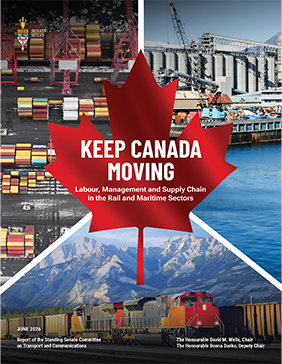
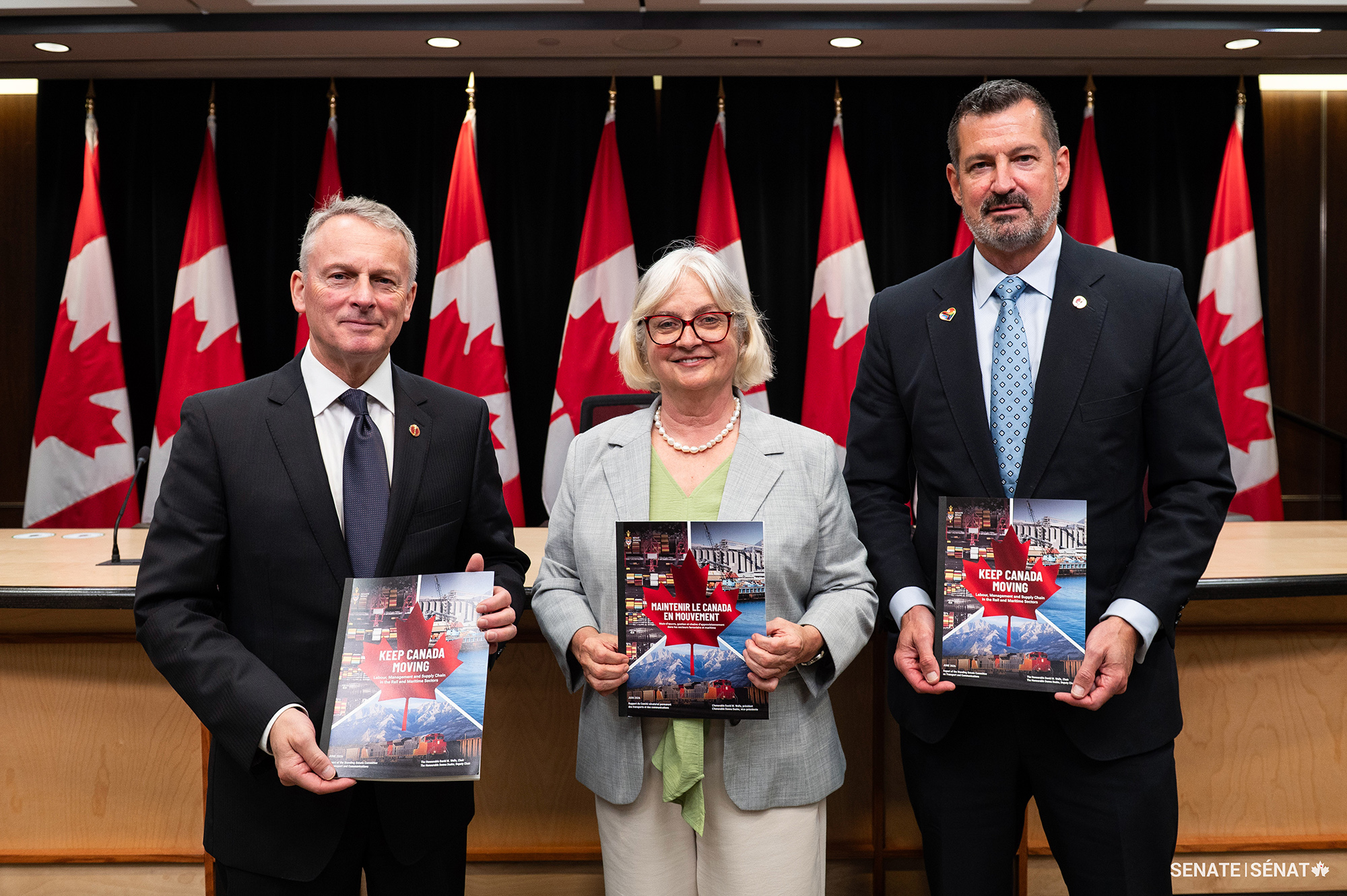
The report, Keep Canada Moving: Labour, Management and Supply Chain in the Rail and Maritime Sectors, focuses on the labour disruptions that have affected Canada’s federally regulated rail and marine sectors in recent years. With more collective agreements set to expire in 2026, the committee is concerned about future labour disputes.
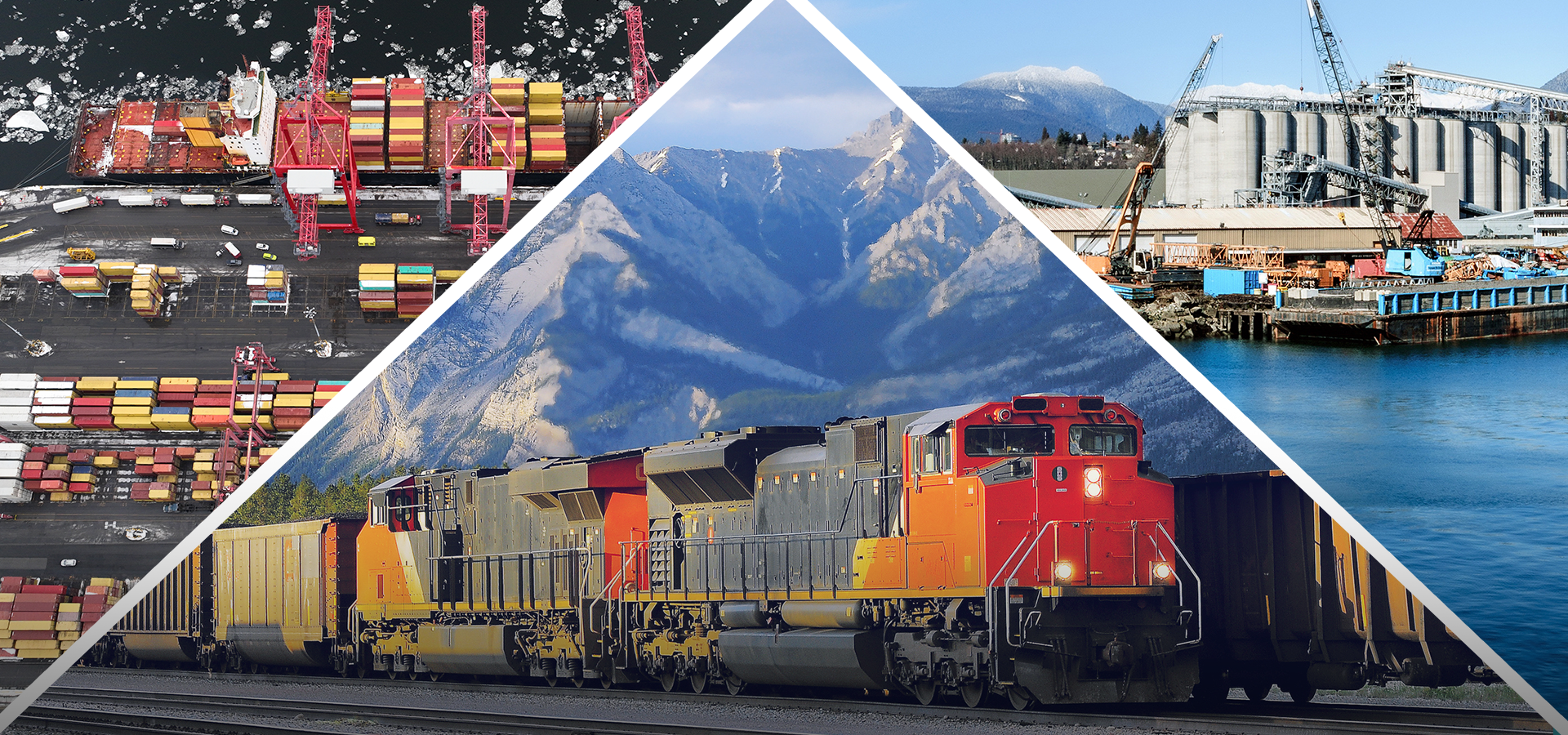
Any labour disruption in Canada’s rail and maritime sectors has a significant impact on the national economy. Witnesses told the committee that the multimodal nature of a supply chain means that when one part of the chain is shut down, it can have a domino effect on the others. Grain, meat, fertilizer and potash producers are among the many industries that struggle to ship their products across the country and abroad. The retail sector is severely affected, with small businesses bearing the brunt of these disruptions. Work stoppages also disrupt food manufacturing, mining, forestry, automotive manufacturing, energy, metal refining and defence sectors, which rely on chemicals and/or plastics that are largely shipped by rail. Witnesses also told the committee that Canada’s global reputation as a reliable trading partner is damaged when its supply chains grind to a halt.
When a strike or lockout occurs, the federal labour minister has certain tools to intervene under section 107 of the Canada Labour Code, which allow the minister to give direction to the Canada Industrial Relations Board to put an end to work stoppages, strikes and/or lockouts. Parliament may also pass back-to-work legislation; it did so six times between 2000 and 2021.
The committee is calling on the federal government to create a Supply Chain Reliability Act or amend the Canada Labour Code to establish an alternative dispute resolution process for the marine and rail sectors that includes mediation and arbitration. The committee also recommends, among other things, that the government define clear criteria governing the use of section 107 and that any amendment to this section be made in consultation with employer and union representatives.
These measures will improve the performance of Canada’s transportation network and strengthen Canada’s reputation as a reliable trading partner.
Quick facts
- In Canada, the right to strike was recognized in 2015 by the Supreme Court of Canada in Saskatchewan Federation of Labour. The Court held that the right to strike is constitutionally protected, but not absolute.
- Several labour disputes have disrupted Canada’s supply chains in recent years: The ports of Vancouver and Montréal experienced intermittent work stoppages in the fall of 2024; a lockout brought Canada’s two largest rail carriers, CN and CPKC, to a standstill for several hours in August 2024; and a strike at B.C.’s ports lasted almost 10 days in August 2023.
- Between 1984 and 2024, section 107 was used “sparingly” by successive labour ministers. However, between June 2024 and August 2025, eight ministerial referrals were made under this section.
Quotes
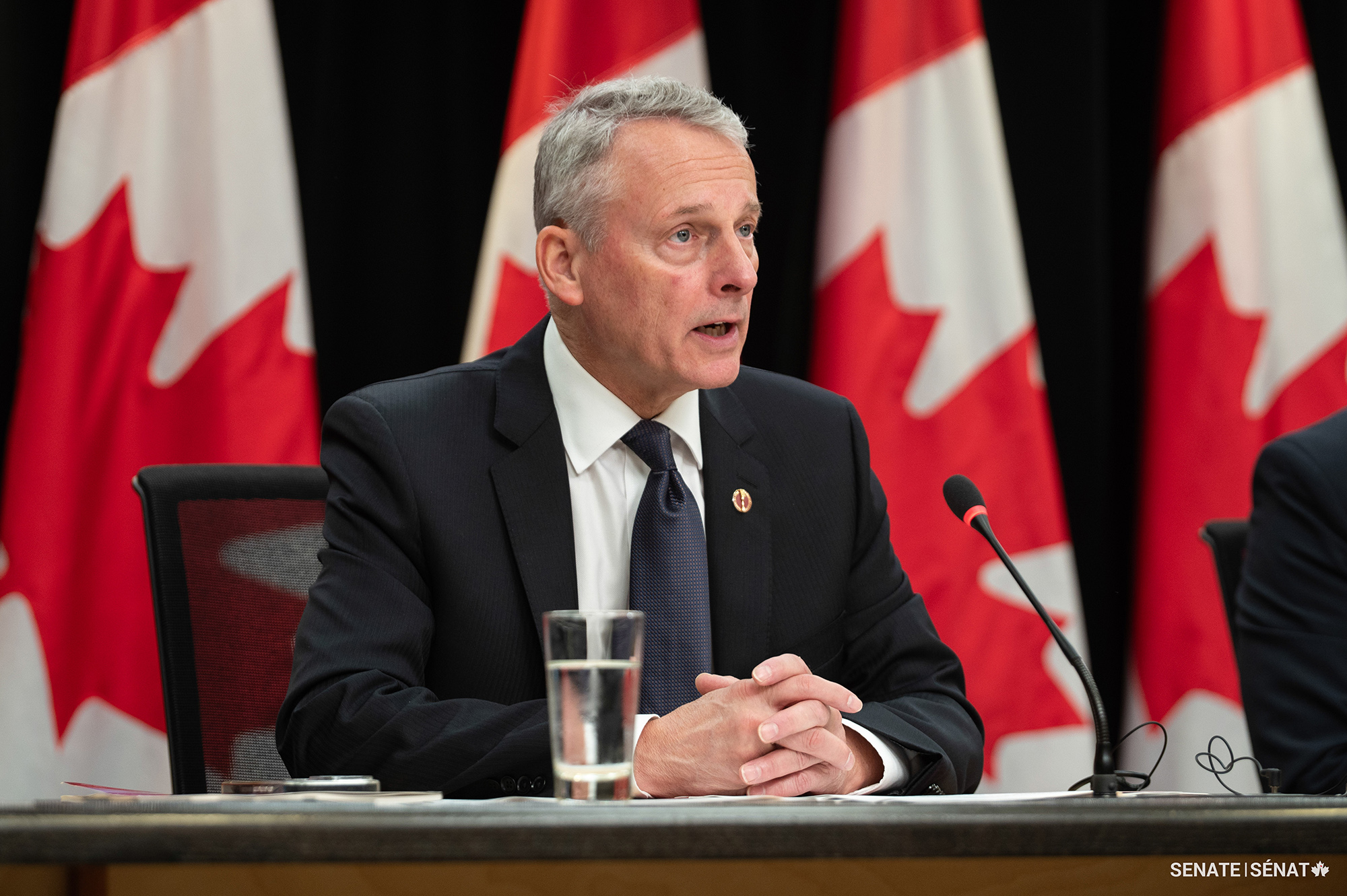
“Tariffs and trade tensions are already straining Canada’s economy — another rail or port strike could be disastrous. It’s clear that the current system for addressing labour disruptions isn’t fit for purpose. We need a new way to resolve work stoppages to keep our railways and ports open for business.”
- Senator David Wells, Chair of the committee
“The increases in labour disruptions show that we need another way of addressing stoppages that respects workers’ right to strike while ensuring our essential goods and services continue to flow.”
- Senator Donna Dasko, Deputy Chair of the committee
“The past two years have been extremely difficult for Canadian farmers and producers who rely on our transportation networks to ship their products across the country and overseas. With the threat of more work stoppages, the federal government must urgently act to stabilize Canada’s supply chains.”
- Senator Todd Lewis, member of the Subcommittee on Agenda and Procedure
“Reliable transportation corridors are critical to Canada’s economic growth. We need to strengthen the supply chain and reassure our global trading partners that Canada can deliver.”
- Senator Duncan Wilson, member of the Subcommittee on Agenda and Procedure
Associated Links
- Read the report: Keep Canada Moving: Labour, Management and Supply Chain in the Rail and Maritime Sectors.
- Follow the committee on social media using the hashtag #TRCM.
- Subscribe to email alerts for Senate committees.
- Sign up for the Senate eNewsletter.
For more information:
Chelsea DeFazio
Communications Officer | Senate of Canada
343-576-1481 | chelsea.defazio@sen.parl.gc.ca
Multimedia
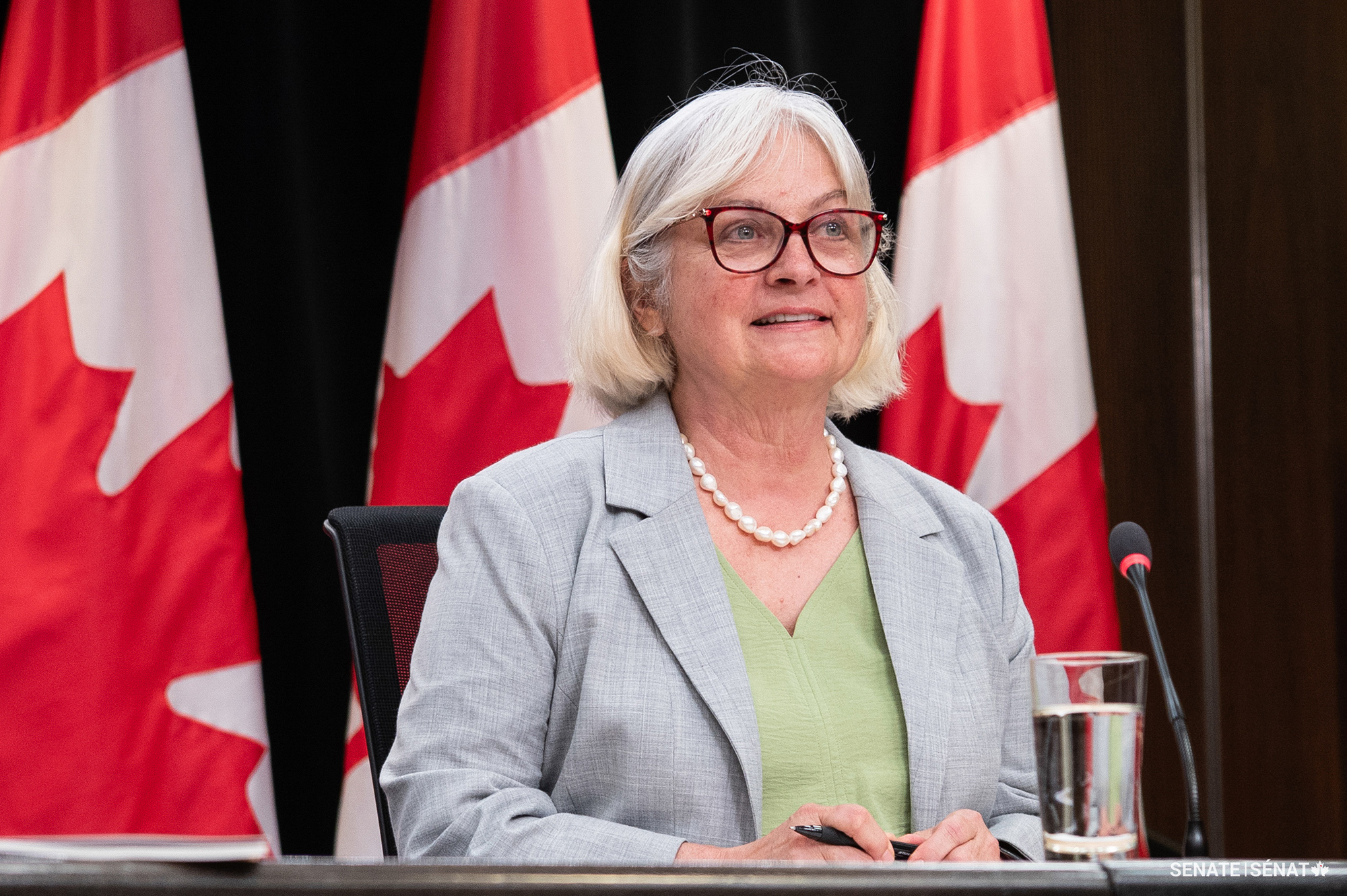
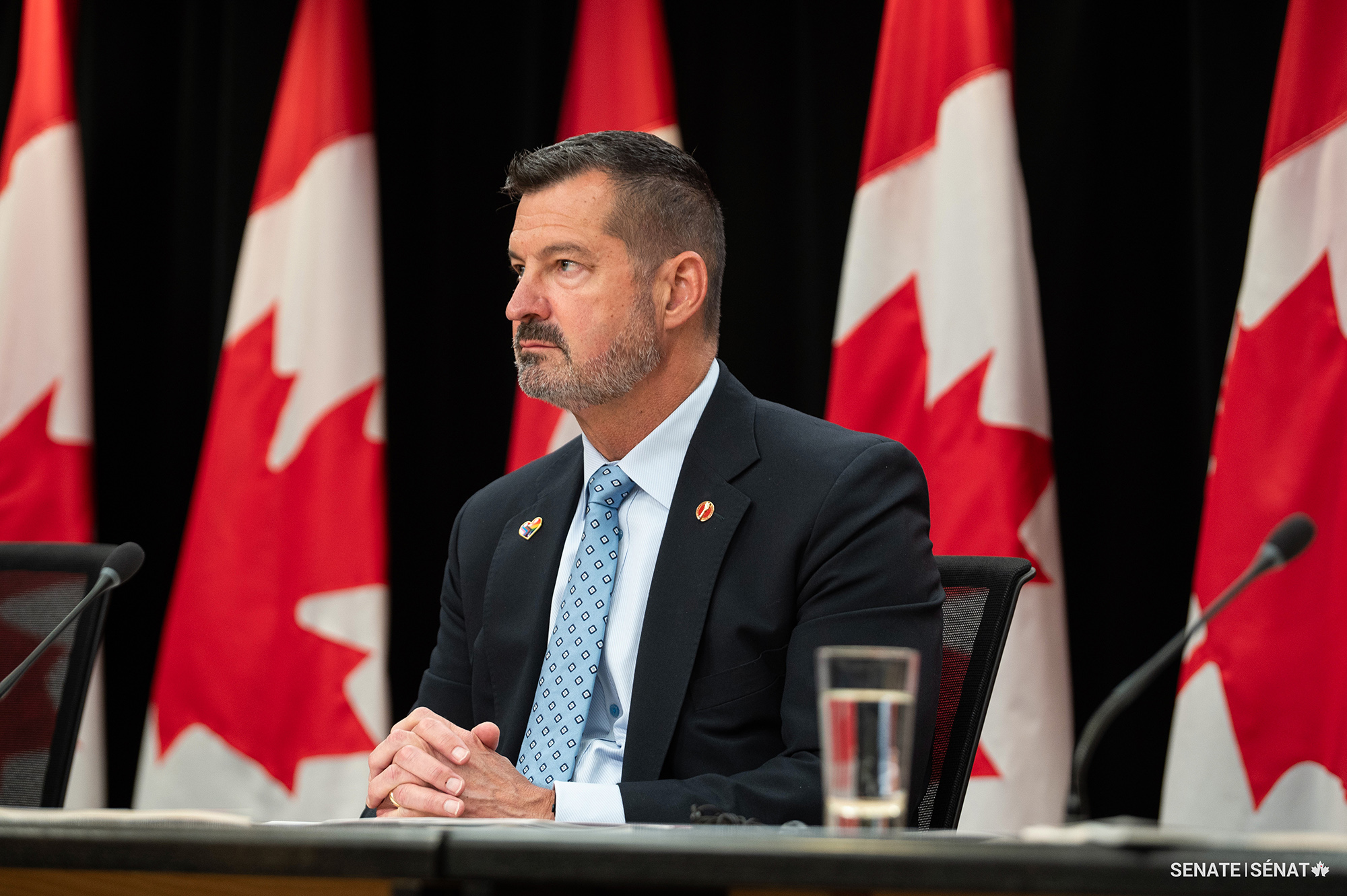
Senators who participated in this study

David M. Wells
C - Newfoundland and Labrador

Donna Dasko
ISG - Ontario

Dawn Arnold
ISG - New Brunswick

Réjean Aucoin
CSG - Nova Scotia

René Cormier
ISG - New Brunswick

Todd Lewis
CSG - Saskatchewan

Fabian Manning
C - Newfoundland and Labrador

Julie Miville-Dechêne
PSG - Quebec (Inkerman)

Farah Mohamed
ISG - Ontario

Jim Quinn
C - New Brunswick

Paula Simons
ISG - Alberta

Duncan Wilson
PSG - British Columbia
Ex officio members of the committee: the Honourable Pierre Moreau, P.C., or the Honourable Patti LaBoucane-Benson, the Honourable Leo Housakos or the Honourable Yonah Martin, the Honourable Raymonde Saint-Germain or the Honourable Bernadette Clement (until January 4, 2026), the Honourable Lucie Moncion or the Honourable Joan Kingston (since January 5, 2026), the Honourable Scott Tannas or the Honourable Rebecca Patterson (since January 4, 2026), the Honourable Flordeliz (Gigi) Osler or the Honourable Robert Black (since January 5, 2026), the Honourable Brian Francis or the Honourable Judy A. White
Other senators who have participated in the study: the Honourable Andrew Cardozo, the Honourable Katherine Hay, the Honourable Tony Loffreda, the Honourable Manuelle Oudar, the Honourable Mary Robinson, the Honourable Larry W. Smith, the Honourable Allister Surette and the Honourable Suze Youance