


‘Deeply appreciative’: Senator Boniface retires from the Red Chamber
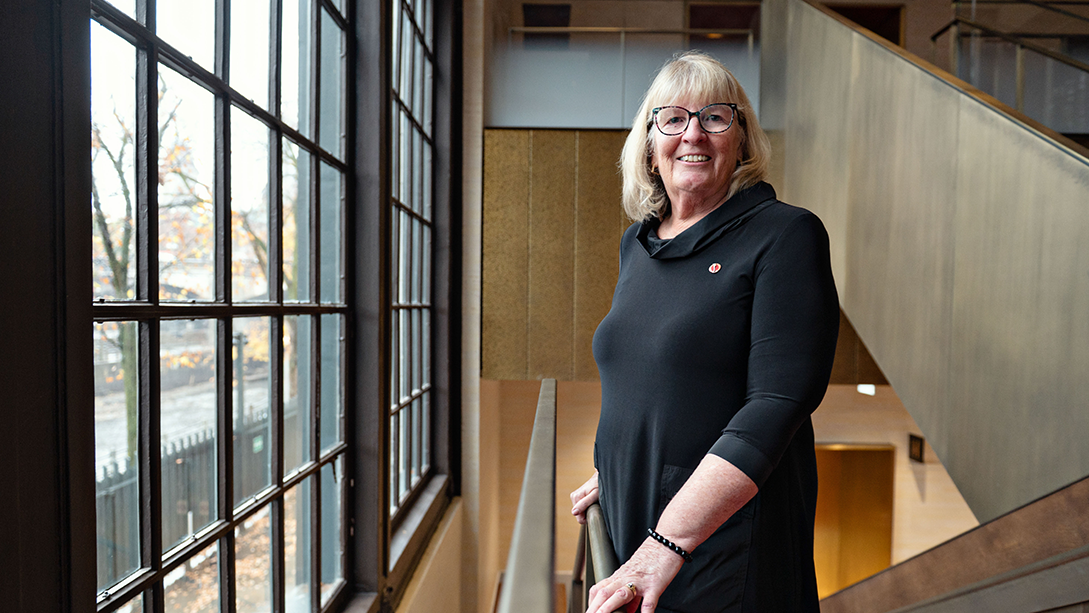
Senator Gwen Boniface’s career has been marked by firsts.
She was the first woman to be named inspector and then commissioner of the Ontario Provincial Police — at only 42 years old — and she was the first female president of the Canadian Association of Chiefs of Police.
Following her 2016 Red Chamber appointment, her list of accomplishments continued to grow. She served as chair of the Senate Committee on National Security, Defence and Veterans Affairs, she sponsored impaired driving legislation, and she co-chaired the committee that examined the government’s first-ever invocation of the Emergencies Act.
Ahead of her retirement on November 15, 2025, Senator Boniface spoke to SenCAplus about her policing career and her memorable Senate moments.
Your mandatory retirement date is not until 2030. Why are you deciding to leave the Senate early?
I’d like to travel, and I want to spend more time making memories with my grandboys, who are seven and 11 years old. I want to be able to wave to them every morning as they head to school, not wave to them once a week as I leave for Ottawa. I’ve also worked for over 50 years; I feel like it’s time to retire.
Before your Senate appointment, you led a long career in policing, both in Canada and abroad. What made you want to become a police officer?
I have always been interested in the law. I also had the opportunity to work with Ontario Provincial Police (OPP) officers in a provincial park as gate staff and park security when I was 17 or 18 years old. I enjoyed the work, so I decided to become a police officer in my early 20s.
When I was 30, I took a leave of absence to complete law school, and I was called to the bar while I was working. I had a three-year-old when I started law school. I look back now, and I don’t know how I juggled it all.
You left the OPP in 2006 to work on reforming Ireland’s national police force, you served with the United Nations Police Division, and you also worked in Afghanistan. What perspective did you gain from these international roles?
My work with Ireland’s Garda Síochána gave me a broad perspective of different policing structures within the European Union. I can’t say enough good things about the Irish justice department, the Garda Síochána and their openness to our recommendations.
As the Transnational Organized Crime Expert at the United Nations, I focused on conflict and post-conflict countries in West Africa. I then served as Deputy Executive Director of the International Association of Chiefs of Police in Washington where I worked with local and national police services from several countries.
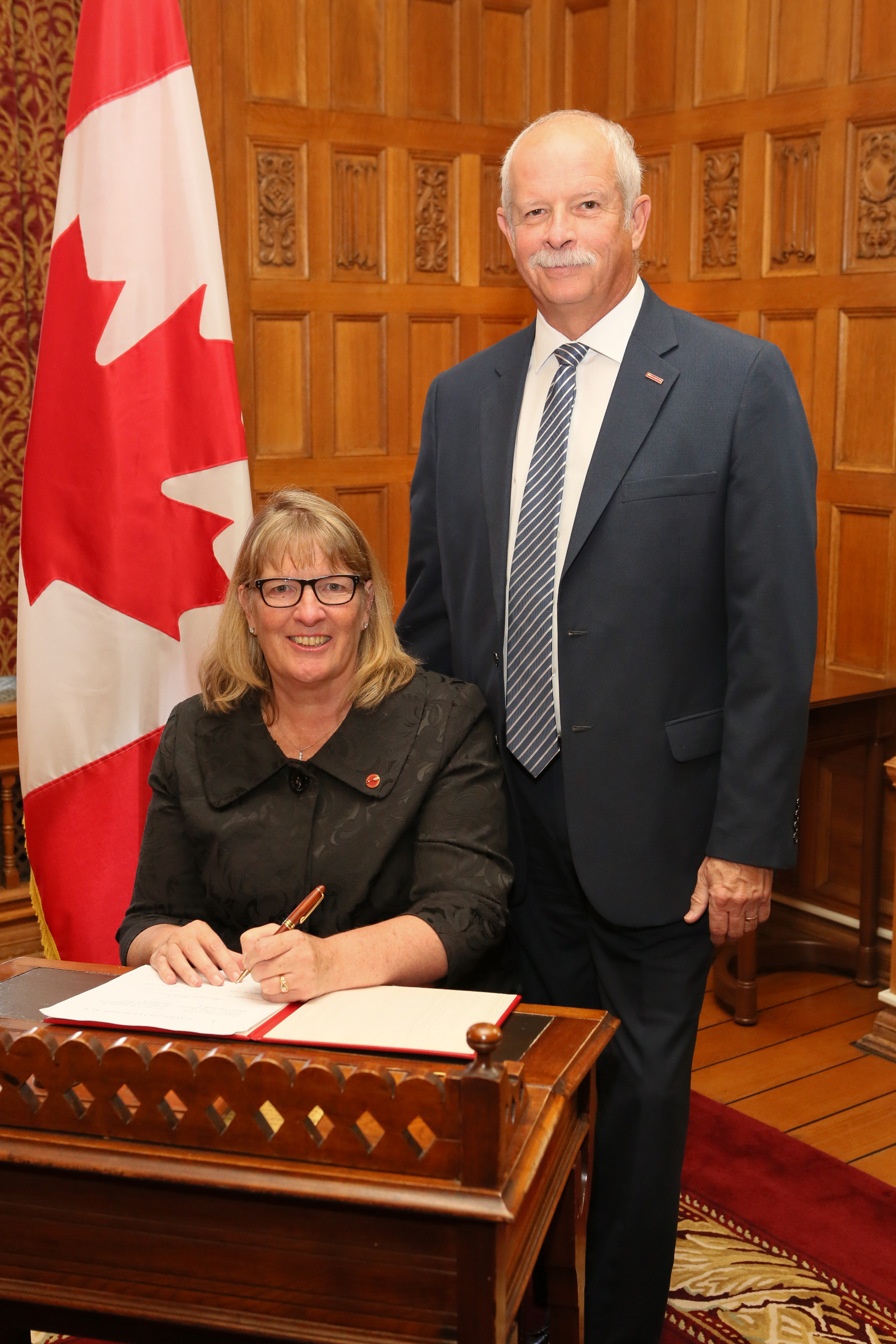 Senator Gwen Boniface, with her husband Garry Boniface, during the senator’s swearing-in ceremony on November 15, 2016.
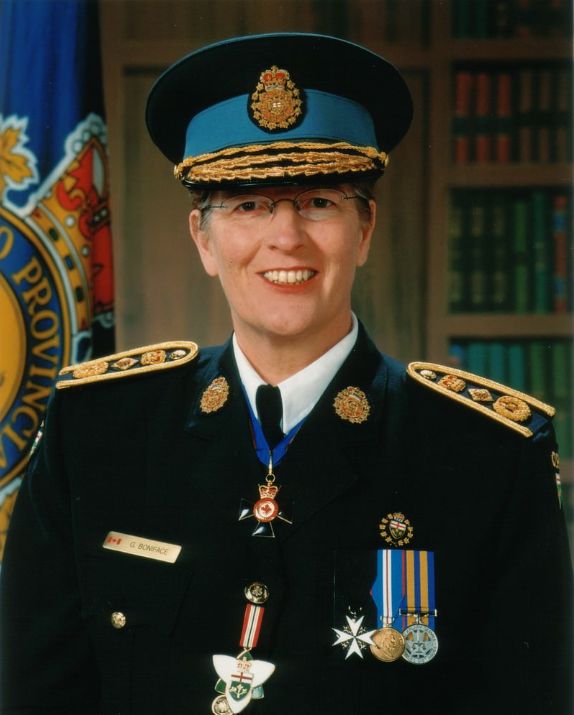 Before her Red Chamber appointment, Senator Gwen Boniface served for eight years as the Ontario Provincial Police’s first female commissioner.
I also spent a month in Afghanistan teaching the senior levels of the Afghan National Police. It was a life-changing opportunity because I gained an understanding of the country’s complex situation.
These opportunities gave me an understanding of the historical contexts of post-conflict countries and how they impact decision-making processes.
As a senator, you have twice put forward a bill that would have created a national strategy to decriminalize the possession of illegal substances in Canada. Why did you see decriminalization as a solution to addiction?
The bill was based on a report by the Canadian Association of Chiefs of Police, and it focused on a health-centered approach to the opioid crisis. There are countries, such as Portugal, that have adopted such an approach to substance abuse problems. This bill was drafted with the notion that we had to create a similar strategy for Canada’s three levels of government. If successful, then decriminalization of small amounts could follow. This would enable police resources to focus on the suppliers who are often associated with organized crime.
I know from my policing experience that we often revert to the criminal justice system to solve health-related problems. But we need to address the multitude of issues that come with addiction issues in this country, such as putting systems in place to support people throughout recovery.
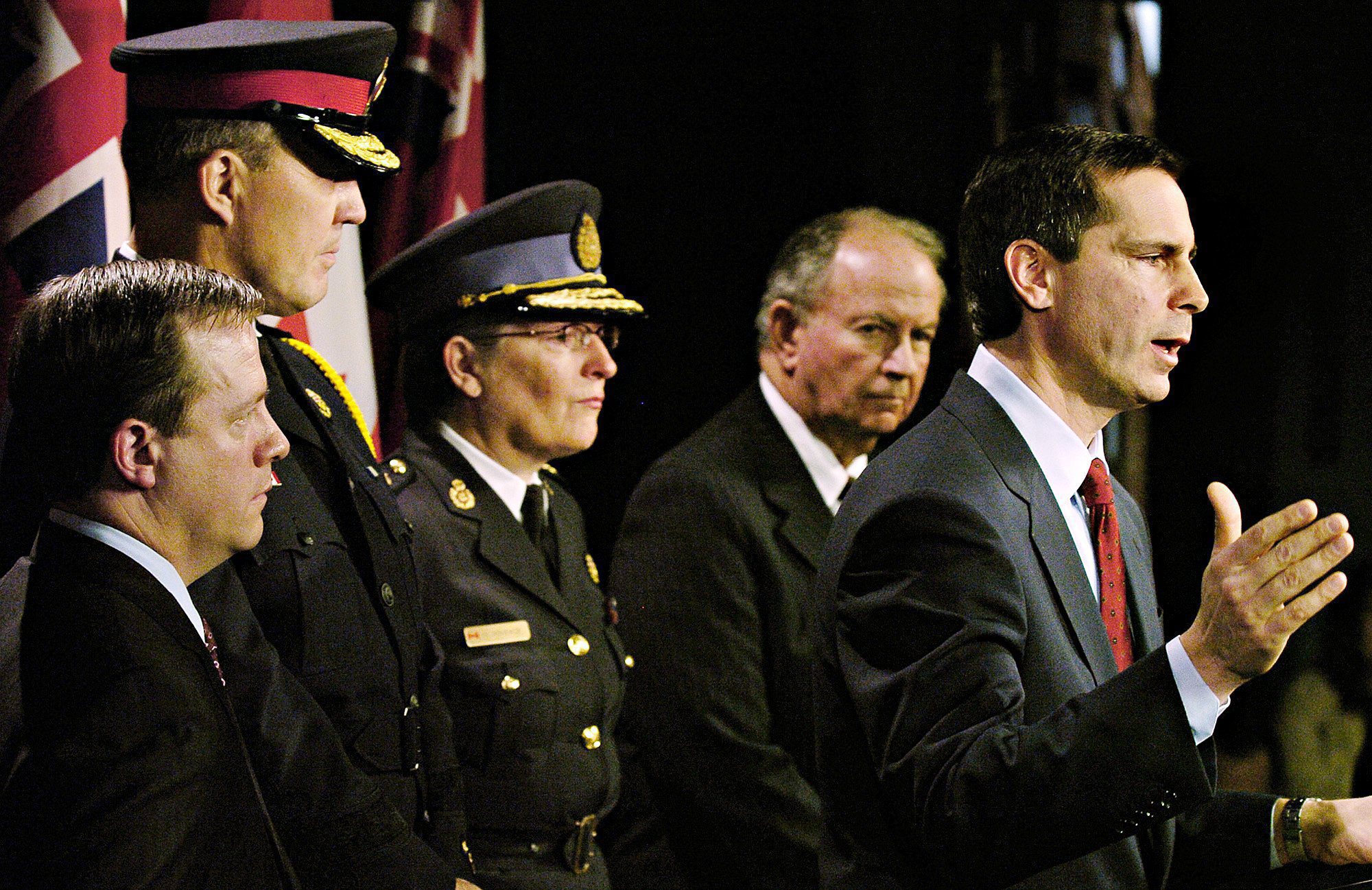 As Commissioner of the Ontario Provincial Police, Gwen Boniface attends a press conference in 2006 with then-premier Dalton McGuinty, right. Also pictured, from left, are Michael Bryant, Ontario’s attorney general at the time; Bill Blair, who served as Toronto’s police chief; and Monte Kwinter, Ontario’s community safety and correctional services minister at the time. (Photo credit: CP/Aaron Harris)
As chair of the Senate Committee on National Security, Defence and Veterans Affairs, you oversaw key studies, including the cannabis legalization bill and sexual misconduct in the military. What stands out to you from your time on this committee?
Our study of the firearms legislation — which enhanced the rules around background checks, among other things — stands out to me. It was a hotly debated issue, as firearms legislation always is. The committee recommended amendments that essentially gutted the bill, but then those amendments were overturned by the Senate as a whole. In my nine years, I have not seen that happen again.
As committee chair, I was also invited to the 100th anniversary of the end of the First World War in Vimy. That had a profound effect on me because my great-grandfather served for the British Army in the First World War. I saw how Canada’s military was so appreciated in Belgium and France.
You also served as joint-chair of the Special Joint Committee on the Declaration of Emergency, which examined the government’s first-ever invocation of the Emergencies Act to deal with “Freedom Convoy” protesters in downtown Ottawa in 2022. How did your background in policing and law influence your work with this committee?
It was fundamental because I understood the process both from a policing and law perspective. I also understood the differences in jurisdictions within the policing environment.
It was a challenging process, but I had two excellent co-chairs. I was also fortunate to have three very experienced senators — Peter Harder, Claude Carignan and Larry W. Smith — on the committee. Although there were some disagreements among committee members, we found common ground.
If you could go back to 2016, what’s one piece of advice you would give yourself as a newly appointed senator?
Take time to really listen and learn. As a new senator, you hit the ground running. When I first came in, I was on three committees, plus a special committee on the side.
I think one of my most significant challenges was as sponsor of Bill C-46, the impaired driving bill that accompanied the cannabis legislation, early in my Senate career. That was an incredibly technical bill, and impaired driving is one of the most contested criminal charges out there. Plus, drug testing was still new.
 Senator Boniface joins fellow senators Sabi Marwah, Nancy J. Hartling and Marc Gold, who have all since retired, during a Rolling Rampage on the Hill event in 2017. (Photo credit: Office of Senator Nancy J. Hartling)
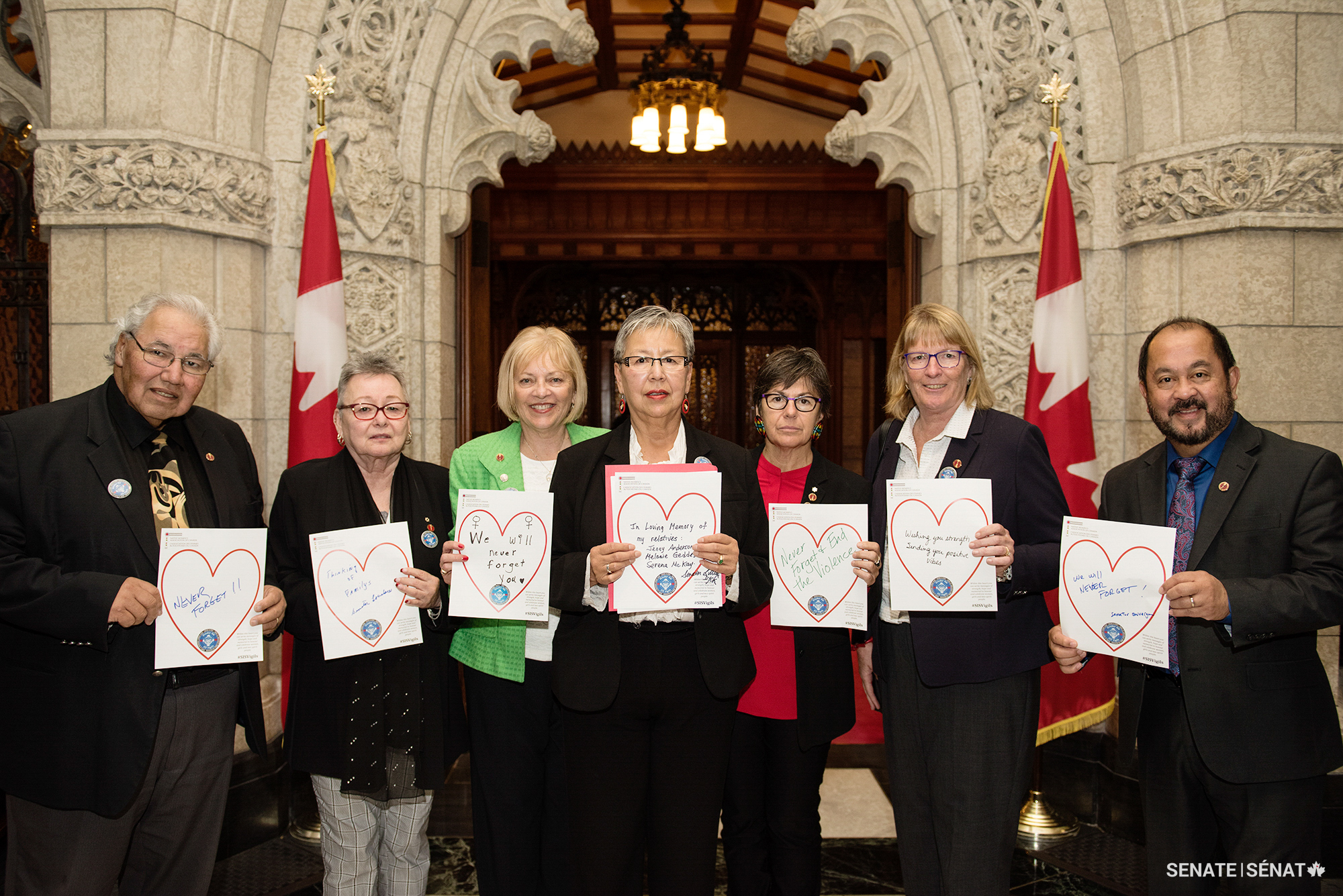 Senator Boniface, second from right, joins her fellow senators in honouring missing and murdered Indigenous women, girls and two-spirit people during the Families of Sisters in Spirit vigil on Parliament Hill in October 2017. Also pictured, from left, former senators Murray Sinclair, Sandra Lovelace Nicholas, Nancy J. Hartling, Lillian Eva Dyck, Senator Kim Pate and former senator Tobias Enverga.
You grew up in a large farming family, and your dad served as a municipal councillor for 23 years. How did your upbringing inform your values and politics?
My dad was all about community and family, so our household was always preoccupied with helping our neighbours. I think policing appealed to me because it was about working in the community and helping others.
When my dad passed away a decade ago, the local newspaper referred to him as the patriarch of our little farming community. He was incredibly humble, principled and respectful of others, no matter what walk of life they came from. I think those values were instilled in us as children.
What has it meant to you to serve in the Senate these nine years?
I’m deeply appreciative to have been able to see Canada at this level, and for all the opportunities that came with this role. For example, before the pandemic hit, I monitored the election in Ukraine with two other senators. This had a profound effect on me, especially with everything that has happened in Ukraine since. The Ukrainian people were hopeful and appreciative of the monitors, the election and Canada’s role.
I would never have imagined that I would experience this privilege as a senator, but I’m so grateful.
Watch the tributes to Senator Gwen Boniface and her farewell speech in the Senate Chamber.
Related articles
Tags
Committee news
‘Deeply appreciative’: Senator Boniface retires from the Red Chamber
Senator Gwen Boniface’s career has been marked by firsts.
She was the first woman to be named inspector and then commissioner of the Ontario Provincial Police — at only 42 years old — and she was the first female president of the Canadian Association of Chiefs of Police.
Following her 2016 Red Chamber appointment, her list of accomplishments continued to grow. She served as chair of the Senate Committee on National Security, Defence and Veterans Affairs, she sponsored impaired driving legislation, and she co-chaired the committee that examined the government’s first-ever invocation of the Emergencies Act.
Ahead of her retirement on November 15, 2025, Senator Boniface spoke to SenCAplus about her policing career and her memorable Senate moments.
Your mandatory retirement date is not until 2030. Why are you deciding to leave the Senate early?
I’d like to travel, and I want to spend more time making memories with my grandboys, who are seven and 11 years old. I want to be able to wave to them every morning as they head to school, not wave to them once a week as I leave for Ottawa. I’ve also worked for over 50 years; I feel like it’s time to retire.
Before your Senate appointment, you led a long career in policing, both in Canada and abroad. What made you want to become a police officer?
I have always been interested in the law. I also had the opportunity to work with Ontario Provincial Police (OPP) officers in a provincial park as gate staff and park security when I was 17 or 18 years old. I enjoyed the work, so I decided to become a police officer in my early 20s.
When I was 30, I took a leave of absence to complete law school, and I was called to the bar while I was working. I had a three-year-old when I started law school. I look back now, and I don’t know how I juggled it all.
You left the OPP in 2006 to work on reforming Ireland’s national police force, you served with the United Nations Police Division, and you also worked in Afghanistan. What perspective did you gain from these international roles?
My work with Ireland’s Garda Síochána gave me a broad perspective of different policing structures within the European Union. I can’t say enough good things about the Irish justice department, the Garda Síochána and their openness to our recommendations.
As the Transnational Organized Crime Expert at the United Nations, I focused on conflict and post-conflict countries in West Africa. I then served as Deputy Executive Director of the International Association of Chiefs of Police in Washington where I worked with local and national police services from several countries.
Senator Gwen Boniface, with her husband Garry Boniface, during the senator’s swearing-in ceremony on November 15, 2016.
Before her Red Chamber appointment, Senator Gwen Boniface served for eight years as the Ontario Provincial Police’s first female commissioner.
I also spent a month in Afghanistan teaching the senior levels of the Afghan National Police. It was a life-changing opportunity because I gained an understanding of the country’s complex situation.
These opportunities gave me an understanding of the historical contexts of post-conflict countries and how they impact decision-making processes.
As a senator, you have twice put forward a bill that would have created a national strategy to decriminalize the possession of illegal substances in Canada. Why did you see decriminalization as a solution to addiction?
The bill was based on a report by the Canadian Association of Chiefs of Police, and it focused on a health-centered approach to the opioid crisis. There are countries, such as Portugal, that have adopted such an approach to substance abuse problems. This bill was drafted with the notion that we had to create a similar strategy for Canada’s three levels of government. If successful, then decriminalization of small amounts could follow. This would enable police resources to focus on the suppliers who are often associated with organized crime.
I know from my policing experience that we often revert to the criminal justice system to solve health-related problems. But we need to address the multitude of issues that come with addiction issues in this country, such as putting systems in place to support people throughout recovery.
As Commissioner of the Ontario Provincial Police, Gwen Boniface attends a press conference in 2006 with then-premier Dalton McGuinty, right. Also pictured, from left, are Michael Bryant, Ontario’s attorney general at the time; Bill Blair, who served as Toronto’s police chief; and Monte Kwinter, Ontario’s community safety and correctional services minister at the time. (Photo credit: CP/Aaron Harris)
As chair of the Senate Committee on National Security, Defence and Veterans Affairs, you oversaw key studies, including the cannabis legalization bill and sexual misconduct in the military. What stands out to you from your time on this committee?
Our study of the firearms legislation — which enhanced the rules around background checks, among other things — stands out to me. It was a hotly debated issue, as firearms legislation always is. The committee recommended amendments that essentially gutted the bill, but then those amendments were overturned by the Senate as a whole. In my nine years, I have not seen that happen again.
As committee chair, I was also invited to the 100th anniversary of the end of the First World War in Vimy. That had a profound effect on me because my great-grandfather served for the British Army in the First World War. I saw how Canada’s military was so appreciated in Belgium and France.
You also served as joint-chair of the Special Joint Committee on the Declaration of Emergency, which examined the government’s first-ever invocation of the Emergencies Act to deal with “Freedom Convoy” protesters in downtown Ottawa in 2022. How did your background in policing and law influence your work with this committee?
It was fundamental because I understood the process both from a policing and law perspective. I also understood the differences in jurisdictions within the policing environment.
It was a challenging process, but I had two excellent co-chairs. I was also fortunate to have three very experienced senators — Peter Harder, Claude Carignan and Larry W. Smith — on the committee. Although there were some disagreements among committee members, we found common ground.
If you could go back to 2016, what’s one piece of advice you would give yourself as a newly appointed senator?
Take time to really listen and learn. As a new senator, you hit the ground running. When I first came in, I was on three committees, plus a special committee on the side.
I think one of my most significant challenges was as sponsor of Bill C-46, the impaired driving bill that accompanied the cannabis legislation, early in my Senate career. That was an incredibly technical bill, and impaired driving is one of the most contested criminal charges out there. Plus, drug testing was still new.
Senator Boniface joins fellow senators Sabi Marwah, Nancy J. Hartling and Marc Gold, who have all since retired, during a Rolling Rampage on the Hill event in 2017. (Photo credit: Office of Senator Nancy J. Hartling)
Senator Boniface, second from right, joins her fellow senators in honouring missing and murdered Indigenous women, girls and two-spirit people during the Families of Sisters in Spirit vigil on Parliament Hill in October 2017. Also pictured, from left, former senators Murray Sinclair, Sandra Lovelace Nicholas, Nancy J. Hartling, Lillian Eva Dyck, Senator Kim Pate and former senator Tobias Enverga.
You grew up in a large farming family, and your dad served as a municipal councillor for 23 years. How did your upbringing inform your values and politics?
My dad was all about community and family, so our household was always preoccupied with helping our neighbours. I think policing appealed to me because it was about working in the community and helping others.
When my dad passed away a decade ago, the local newspaper referred to him as the patriarch of our little farming community. He was incredibly humble, principled and respectful of others, no matter what walk of life they came from. I think those values were instilled in us as children.
What has it meant to you to serve in the Senate these nine years?
I’m deeply appreciative to have been able to see Canada at this level, and for all the opportunities that came with this role. For example, before the pandemic hit, I monitored the election in Ukraine with two other senators. This had a profound effect on me, especially with everything that has happened in Ukraine since. The Ukrainian people were hopeful and appreciative of the monitors, the election and Canada’s role.
I would never have imagined that I would experience this privilege as a senator, but I’m so grateful.
Watch the tributes to Senator Gwen Boniface and her farewell speech in the Senate Chamber.