
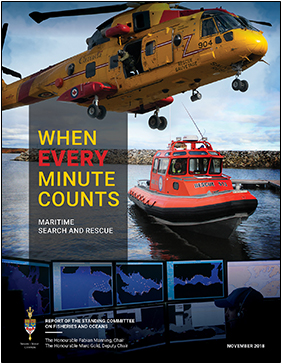
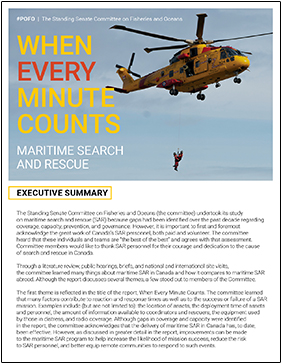
Recommendations
RECOMMENDATION 1:
1a) The committee recommends that the Canadian Coast Guard establish additional primary search and rescue stations in the Canadian Arctic to meet the growing demand in areas where marine activity is forecasted to increase.
1b) The committee also recommends that the final decision on the location of these search and rescue stations be made in consultation with local communities.
RECOMMENDATION 2:
2a) The committee recommends that the Canadian Coast Guard establish the Coastal Nations Search and Rescue Course as a permanent training program at its Rigid Hull Inflatable Operator Training School in Bamfield, British Columbia.
2b) The committee also recommends that the Canadian Coast Guard, in consultation with stakeholders, expand this course to other coastal and Indigenous communities, particularly in the Canadian Arctic.
RECOMMENDATION 3:
3a) The committee recommends that the Canadian Coast Guard, in collaboration with the Canadian Coast Guard College, expand and intensify its human resource recruitment strategy to target a broader audience.
3b) The committee recommends that the strategy have a particular focus on attracting and retaining Indigenous cadets and employees within the Canadian Coast Guard organization.
3c) The committee recommends that Indigenous employees proficient in Inuktitut be recruited by the Canadian Coast Guard in the Canadian Arctic.
RECOMMENDATION 4:
The committee recommends that the Canadian Armed Forces seize the opportunity afforded by the Defence Investment Plan 2018 to increase and diversify its search and rescue workforce to respond to the increased demand for search and rescue.
RECOMMENDATION 4:
The committee recommends that the Canadian Armed Forces seize the opportunity afforded by the Defence Investment Plan 2018 to increase and diversify its search and rescue workforce to respond to the increased demand for search and rescue.
RECOMMENDATION 5:
The committee recommends that, as a pilot project, the Department of National Defence authorize a civilian helicopter operator to provide aeronautical search and rescue coverage in the Canadian Arctic and in Newfoundland and Labrador. The assessment of the pilot project, including its costs and benefits, should be made public.
RECOMMENDATION 6:
The committee recommends that the National Arctic Search and Rescue Roundtable be reinstated as soon as possible and that similar roundtables be created in other search and rescue regions to help address regional and local issues.
RECOMMENDATION 7:
The committee recommends that the Canadian Coast Guard increase the Canadian Coast Guard Auxiliary’s funding in order to, at a minimum, offset higher operational expenses, and to ensure that Auxiliary members maintain training in accordance with the national competency standards.
RECOMMENDATION 8:
The committee recommends that the Canadian Coast Guard establish a Maritime Search and Rescue Fund to support the purchase of equipment and services needed by regional Canadian Coast Guard Auxiliary organizations.
RECOMMENDATION 9:
The committee recommends that the Canadian Coast Guard assist regional Canadian Coast Guard Auxiliary organizations to diversify their funding sources.
RECOMMENDATION 10:
The committee recommends that the Canadian Coast Guard establish additional Canadian Coast Guard Auxiliary units in the Arctic Region, with funding dedicated to recruitment, operations, equipment, training, and where appropriate, vessels.
RECOMMENDATION 11:
The committee recommends that Transport Canada amend its regulations to extend the mandatory use of emergency position-indicating radio beacons (or EPIRBs) to vessels in all fishing fleets. A timeline of two years should be given to the fishing industry to achieve mandatory EPIRB carriage.
RECOMMENDATION 12:
The committee recommends that Transport Canada develop and disseminate user-friendly information regarding vessel stability to reduce unsafe practices in the commercial fishing industry.
RECOMMENDATION 13:
The committee recommends that Fisheries and Oceans Canada ensure that its regulations and practices give priority to fish harvester safety.
RECOMMENDATION 14:
The committee recommends that, through the Canadian Marine Advisory Council, Transport Canada, Fisheries and Oceans Canada, and the Canadian Coast Guard work with fishery safety organizations and fish harvesters to develop a national action plan on safety in the commercial fishing industry. This action plan should be provided to the Committee within three years of the tabling of this report in the Senate of Canada.
RECOMMENDATION 15:
The committee recommends that Transport Canada transfer the responsibility of search and rescue prevention and recreational boating safety back to the Canadian Coast Guard along with the associated funding.
RECOMMENDATION 16:
The committee recommends that the Government of Canada, through the Canadian Coast Guard, and in collaboration with Canadian Coast Guard Auxiliary units, local communities, and other partners, increase radio coverage in Canada’s Arctic and in other remote communities.
RECOMMENDATION 17:
17a) The committee recommends that the Canadian Coast Guard be established as a separate statutory agency reporting to the Minister of Transport.
17b) The committee also recommends that capital planning be extended to 20 years to reflect the need for the fleet’s renewal, upgrade, and modernization.
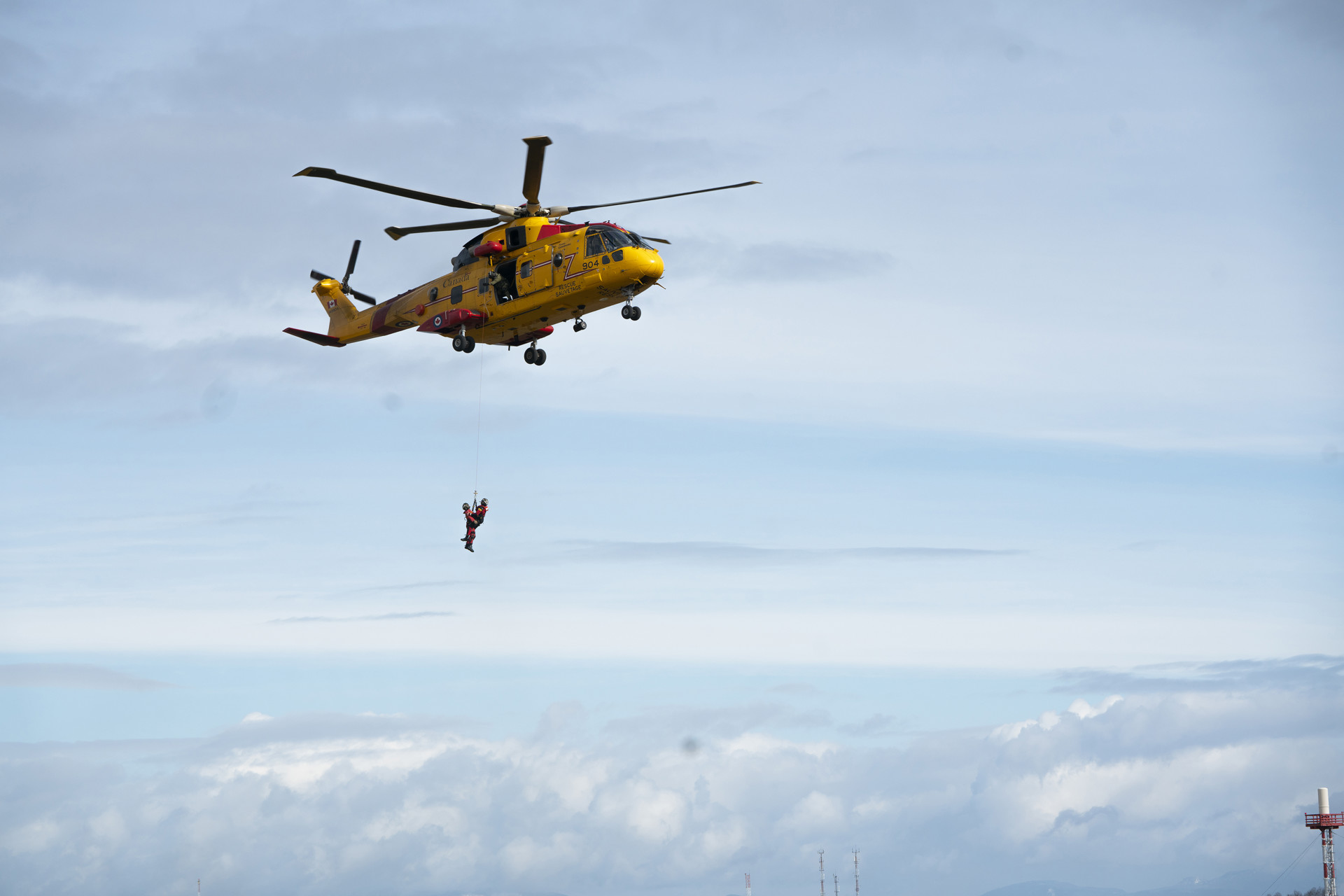
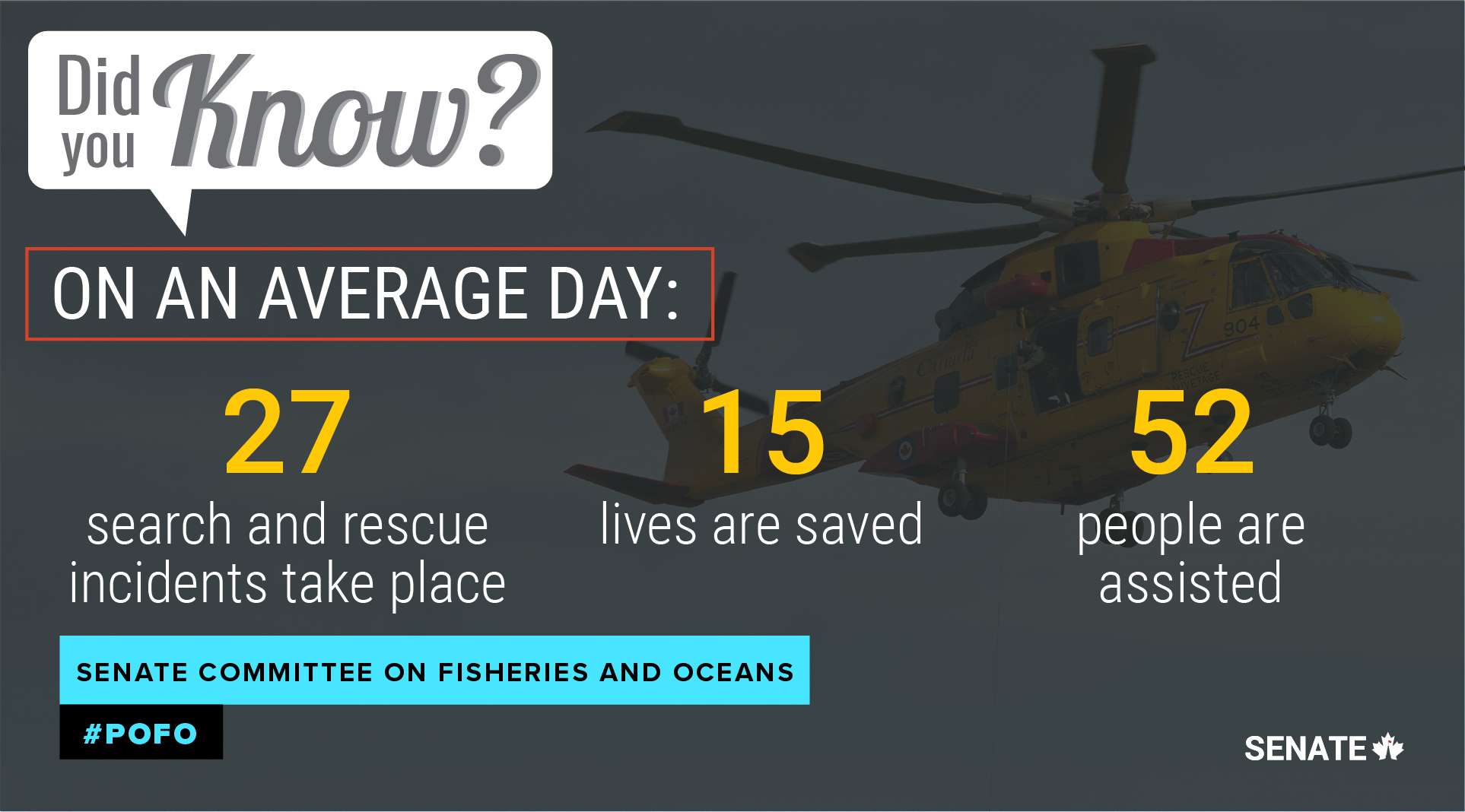
Ottawa – Canada’s maritime search and rescue workers save an average of 15 lives every day and are responsible for monitoring millions of square kilometres of some of the harshest marine conditions in the world.
Yet the Canadian Coast Guard — which leads maritime search and rescue operations — is hampered by its position within Fisheries and Oceans Canada, which leaves it at the mercy of the department for funding and prevents it from receiving long-term sustainable capital funding.
The coast guard must be empowered so it can continue to perform its lifesaving work, the Senate Committee on Fisheries and Oceans said in a report released Thursday. Senators recommend that the coast guard be made a separate statutory agency, reporting to the Minister of Transport. This would give the coast guard greater autonomy and an ability to make longer-term plans.
The report provides a deep and wide-ranging examination of the country’s maritime search and rescue operations. For instance, the committee heard that while the coast guard’s fleet of primary search and rescue vessels — which are specifically designed for the job — is in good shape, other coast guard vessels that can respond in search and rescue situations are aging and urgently need renewal.
When required, the coast guard is supported by the Canadian Armed Forces, which can deploy a variety of aircraft on search and rescue operations. However, Canada’s North has no dedicated search and rescue aircraft based there — help must fly in from bases on the East Coast or southern Ontario. The committee recommends a pilot project that would see private helicopters based out of the North and in Newfoundland and Labrador, which sees a disproportionately high number of search and rescue incidents.
Volunteers provide critical local knowledge and timely support during search and rescue operations. The work of groups like the Canadian Coast Guard Auxiliary and the Civil Air Search and Rescue Association saves lives but co-ordinating their activities when the coast guard and military are involved can cause confusion. The committee recommends that the coast guard, military and volunteer groups meet regularly so they can work better together.
The coast guard should also work more closely with Indigenous peoples, who have intimate knowledge of their territories — knowledge that could mean the difference between life and death during a search and rescue operation. Indigenous people should be full partners in maritime search and rescue.
The committee heard throughout the study that Canada’s search and rescue personnel are the best of the best. Senators wholeheartedly agree. But, given the life and death consequences of search and rescue operations, the committee believes authorities must remain committed to continuous improvement.
Quick Facts
- There were over 6,100 maritime search and rescue incidents in Canada in 2017 — a number that is likely to grow thanks to an increase in pleasure craft traffic and warming temperatures in the North.
- The number of search and rescue cases in Newfoundland and Labrador is twice the national average.
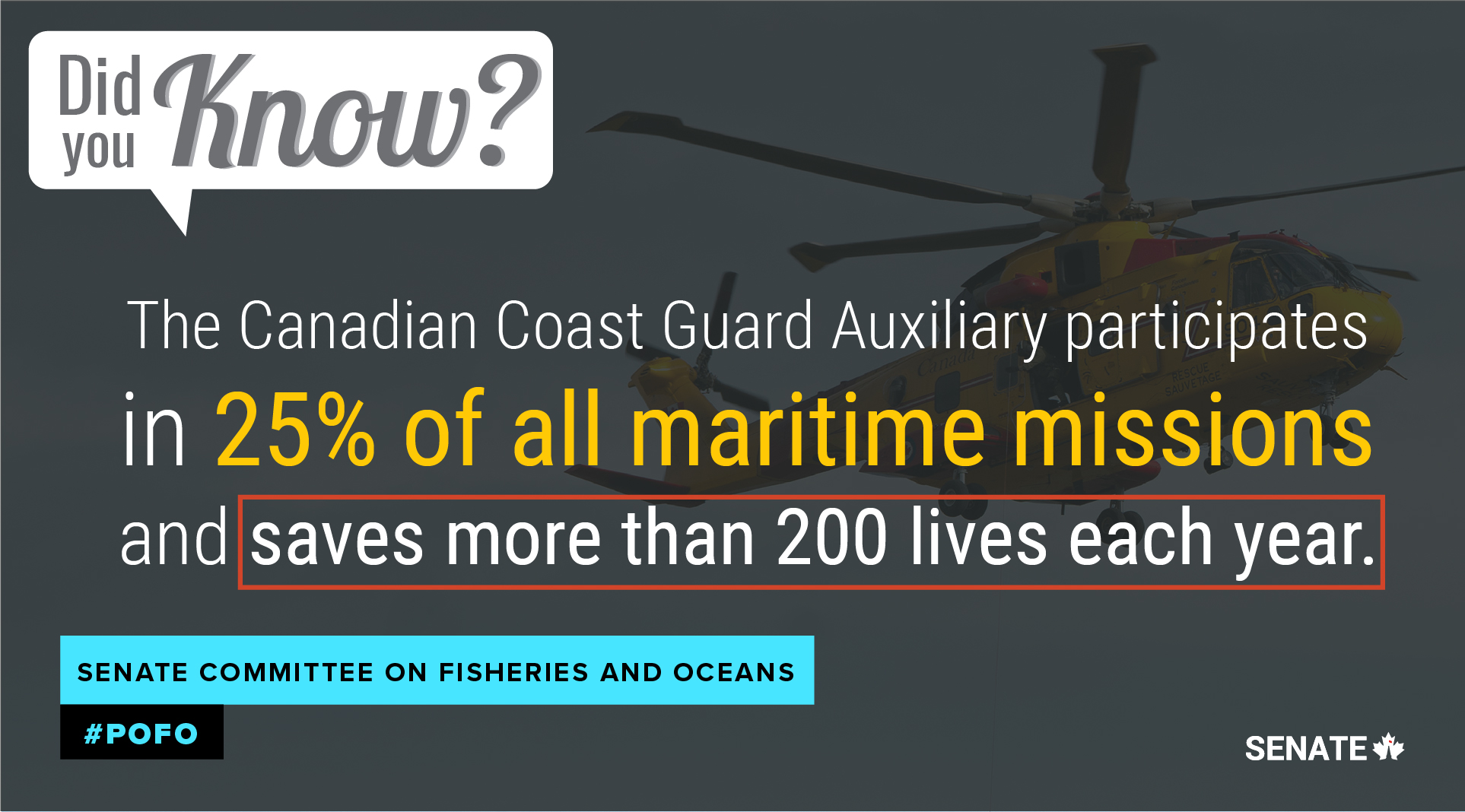
- The Canadian Coast Guard Auxiliary participates in 25% of maritime search and rescue operations each year, saving approximately 200 lives. It is, at times, the sole responder.
Quotes
“We came away from this study thoroughly impressed by the professionalism and dedication of Canada’s search and rescue organizations. Many of the citizens in my province of Newfoundland and Labrador work in the commercial fishing industry, which has the highest fatality rate in Canada — we rely on search and rescue workers to keep our friends and family safe.”
- Senator Fabian Manning, Chair of the committee
“The Canadian Coast Guard needs stable funding and a long-term plan if it is going to continue its excellent, dangerous and life-saving work. Empowering the coast guard by making it a separate statutory agency reporting directly to the federal transport minister would help it plan for the future — particularly with regard to managing its aging but critically important fleet.”
- Senator Marc Gold, Deputy Chair of the committee
Associated Links
- Read the report, When Every Minute Counts: Maritime Search and Rescue.
- Take an in-depth look at committee fact-finding missions to the East Coast, Newfoundland and Labrador and the North.
- Follow the committee on social media using the hashtag #POFO.
- Sign up for the Senate’s eNewsletter.
For more information, please contact:
Sonia Noreau
Public Relations Officer
Senate of Canada
613-614-1180 | sonia.noreau@sen.parl.gc.ca
Multimedia
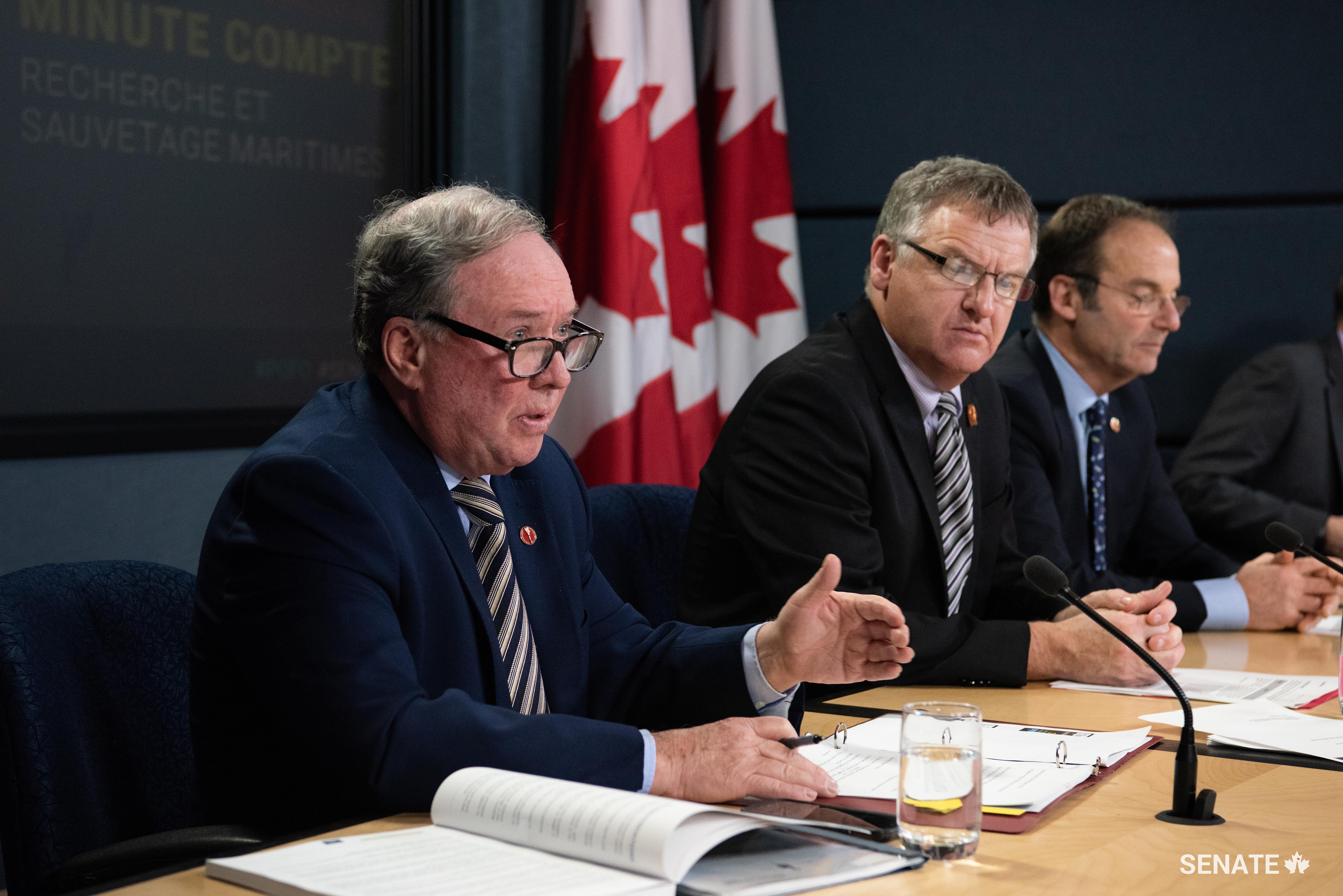
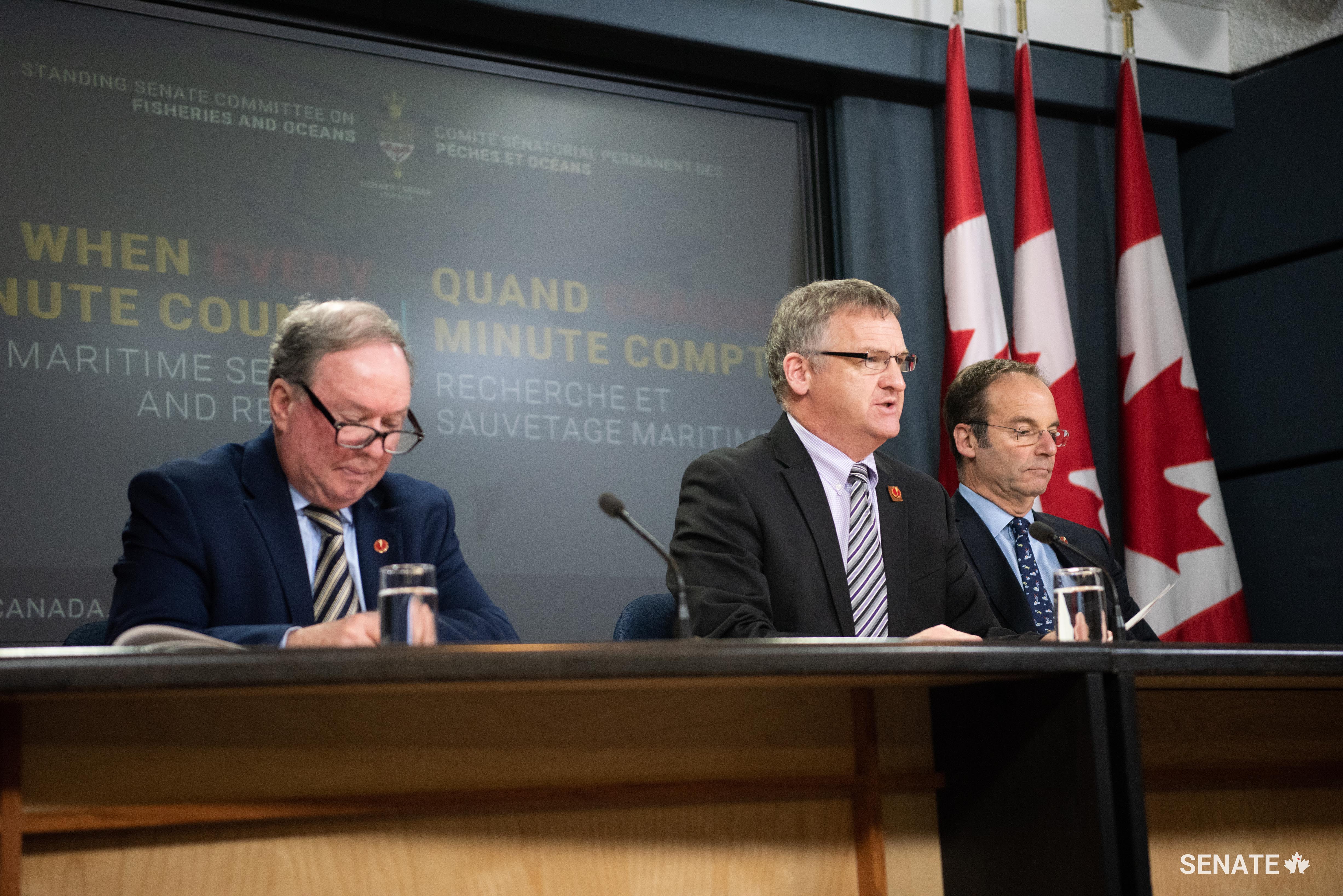
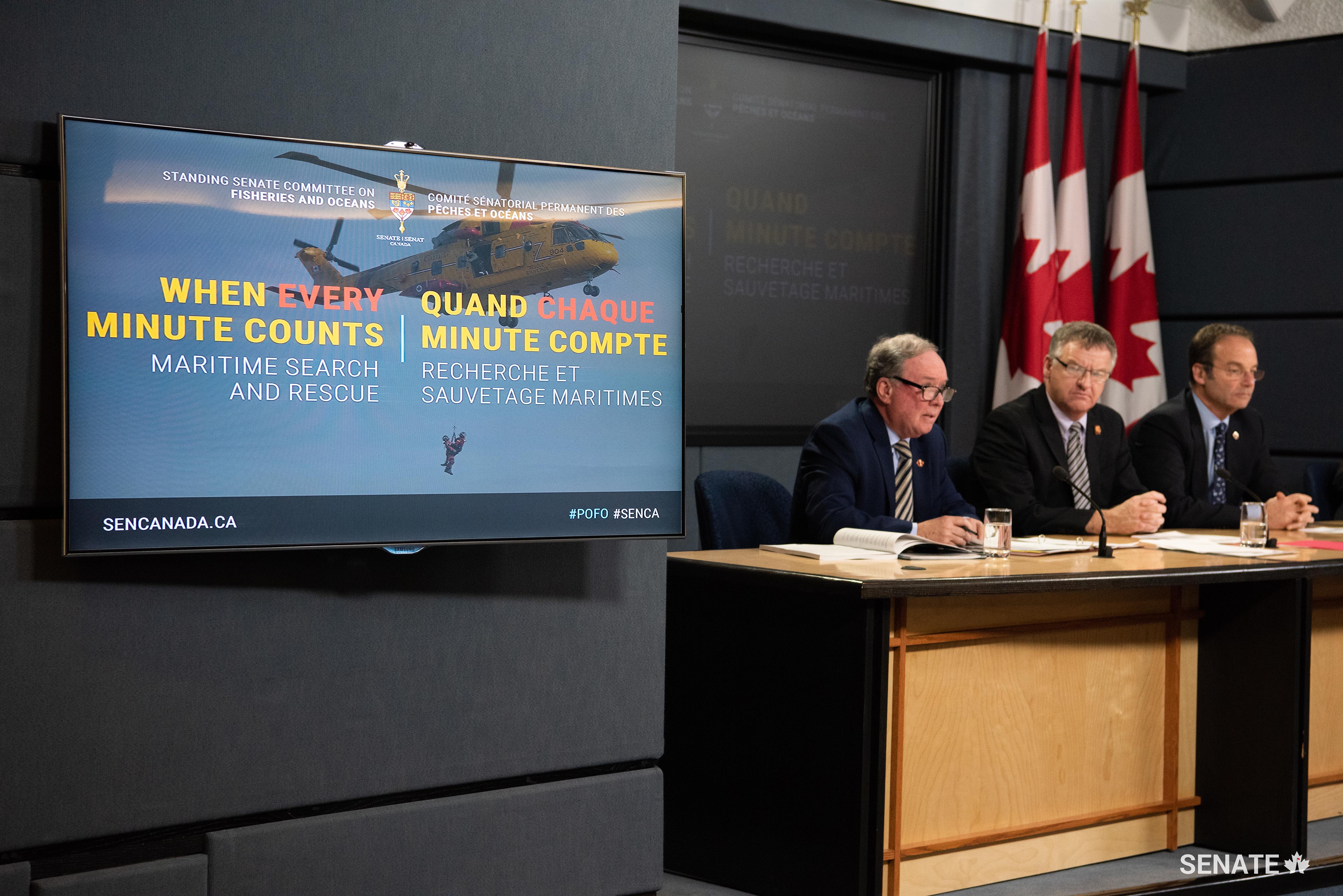
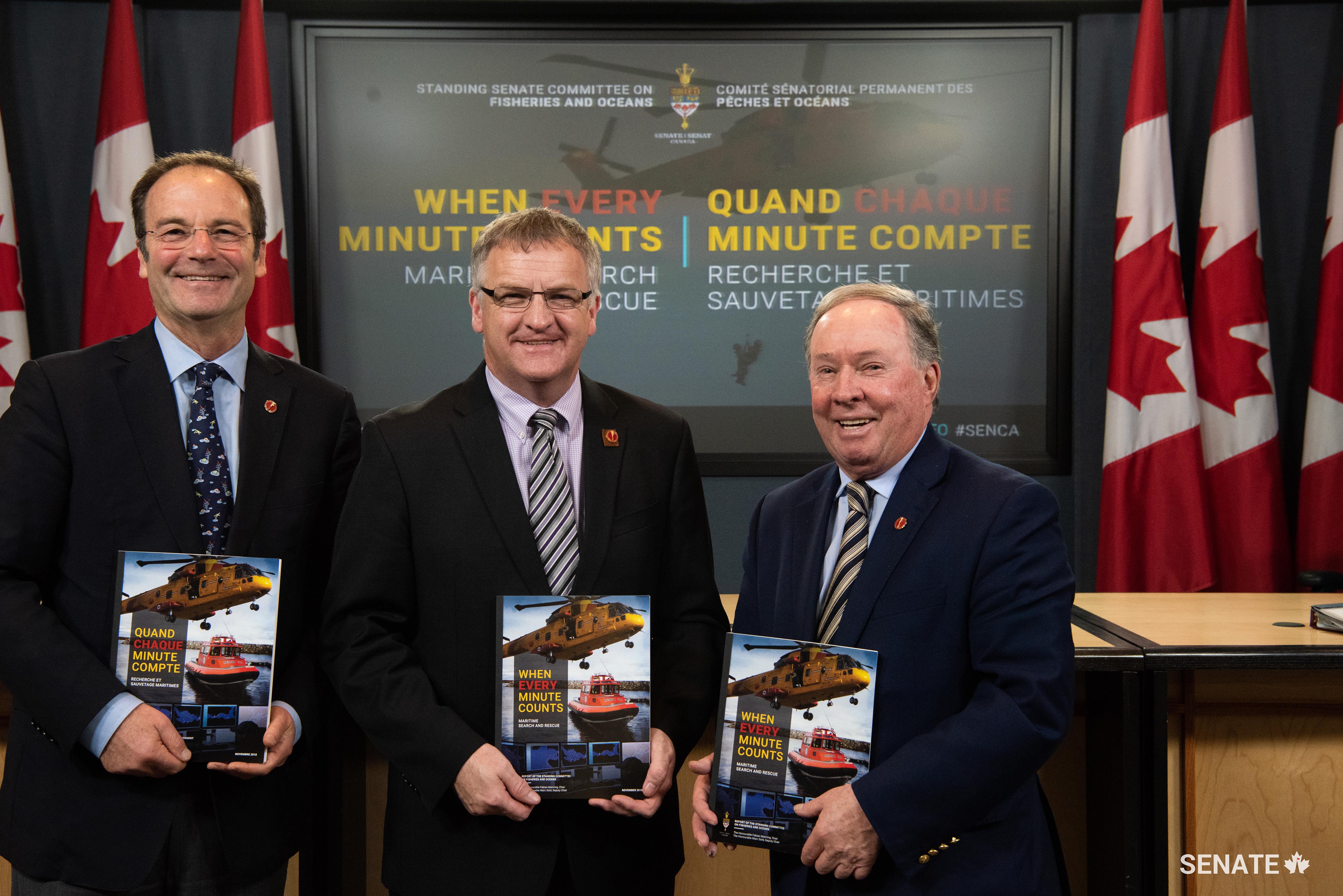
Senators Fabian Manning (committee chair), Marc Gold (committee deputy chair) and Jim Munson (committee member) discuss the findings and recommendations from the Senate Committee on Fisheries and Oceans’ report on maritime search and rescue activities at a press conference in Ottawa on Thursday, November 29.
Senators who participated in this study

Fabian Manning
C - Newfoundland and Labrador

Marc Gold, P.C.
Non-affiliated - Quebec (Stadacona)

Jim Munson
PSG - Ontario (Ottawa / Rideau Canal)

Larry W. Campbell
Non-affiliated - British Columbia

Dan Christmas
ISG - Nova Scotia

Nancy J. Hartling
ISG - New Brunswick

Thomas J. McInnis
C - Nova Scotia

Chantal Petitclerc
ISG - Quebec (Grandville)

Donald Neil Plett
C - Manitoba (Landmark)

Rose-May Poirier
C - New Brunswick (Saint-Louis-de-Kent)
The committee would like to recognize the following senators whose contribution to the study was invaluable: The Honourable Senators: Hubley (retired), Enverga (deceased), Raine (retired) and Watt (retired).
Ex-officio members of the committee: The Honourable Peter Harder, P.C. (or Diane Bellemare), (or Grant Mitchell), the Honourable Larry W. Smith (or Yonah Martin), the Honourable Yuen Pau Woo (or Raymonde Saint-Germain), the Honourable Joseph A. Day (or Terry M. Mercer)
Other senators who have participated in the study: The Honourable Senators: Ataullahjan, Bovey, Busson, Coyle, Deacon, Doyle, Duffy, Dyck, Eaton, Forest, Frum, MacDonald, Marshall, Martin, McIntyre, Pate, Ringuette, Sinclair, Stewart Olsen, Tkachuk, and Wallace (retired).