
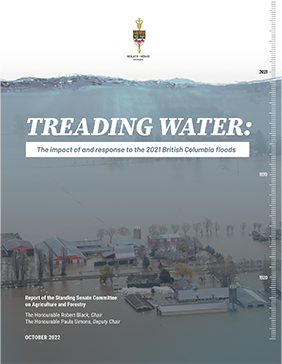
Executive Summary
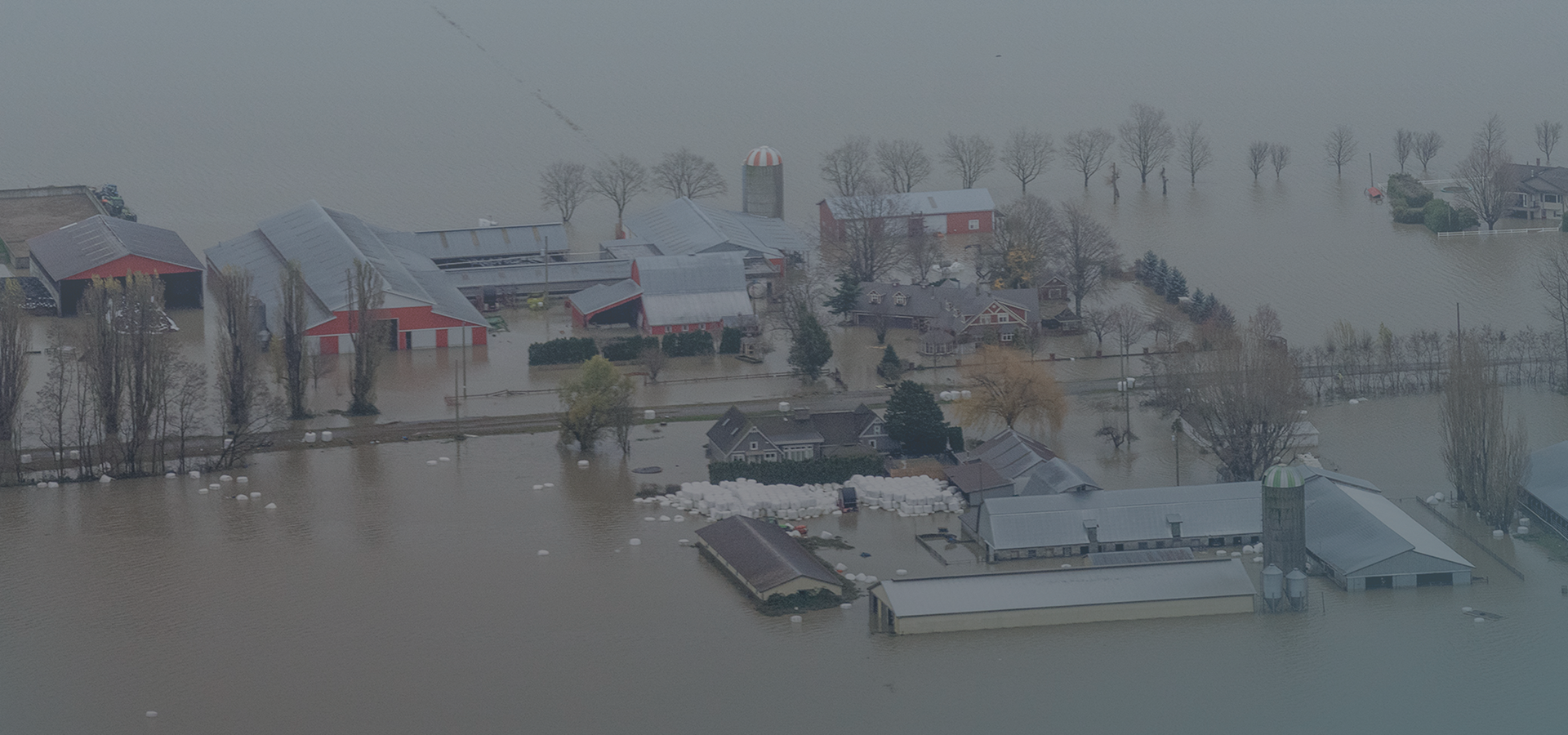
In November 2021, significant rainfalls that produced extreme stream flows from the Nooksack and other rivers caused a series of floods in parts of southwestern British Columbia (the B.C. floods).
This situation prompted the Standing Senate Committee on Agriculture and Forestry (the Committee) to study the B.C. floods and the subsequent recovery efforts.
In commenting on the floods and recovery efforts, the Committee’s 23 witnesses and the three written briefs received highlighted that the floods affected more than 1,000 farms, 15,000 hectares of land, 2.5 million livestock, and British Columbia’s road and railway infrastructure. They underscored that the B.C. government’s estimate of the flood-related damages experienced by farmers was approximately $285 million. One witness – Northwest Hydraulic Consultants Ltd.’s Monica Mannerström – suggested that, if the Fraser River were to overflow its banks in the future, the damages “would be at least tenfold” to those experienced as a result of the recent B.C. floods.
The Committee’s study also identified some of the lessons that can be learned from the federal and provincial governments’ responses to the B.C. floods. From that perspective, areas of focus are flood mitigation infrastructure, emergency preparedness strategies, collaboration between and among governments in Canada, support measures, and co-operation between Canada and the United States regarding the management of transboundary waters.
Recommendations
RECOMMENDATION 1
That the Government of Canada collaborate with the Government of British Columbia, other governments in the province and relevant stakeholders to develop a comprehensive plan for flood control in the Fraser Valley. This plan should include both a timeline for dike upgrades and the establishment of a committee to examine flood mitigation measures, as well as emergency preparedness and response strategies.
RECOMMENDATION 2
That the Government of Canada ensure that Agriculture and Agri-Food Canada and Public Safety Canada, as well as other federal entities, have sufficient financial and human resources to support individuals, firms and communities affected by natural disasters, including floods. In this context, attention should be paid to the AgriRecovery, AgriStability and Disaster Financial Assistance Arrangements programs, among other relevant federal measures. The Government should make certain that, both generally and in situations of a natural disaster, federal support – including financial aid, humanitarian relief and personnel – can be accessed easily and in a timely manner.
RECOMMENDATION 3
That the Government of Canada and the Government of the United States, or – as required – other governments in the two countries, engage in ongoing discussions about the management of transboundary waters, including the Nooksack River.
Ottawa – The federal government should work with the government of British Columbia and local municipalities to develop a comprehensive plan for flood control in the Fraser Valley, the Senate Committee on Agriculture and Forestry said in a report released Thursday, October 27, 2022. The report comes in the wake of major floods that engulfed the intensively farmed region in November 2021.
The report, Treading Water: The impact of and response to the 2021 British Columbia floods, outlines the committee’s findings from its study of the floods’ impact on the Fraser Valley and the subsequent recovery efforts, as well as the lessons learned that the committee identified.
The committee heard testimony from 23 witnesses during its study, including six B.C. agricultural trade associations, Indigenous leaders, hydraulic engineering consultants, academics, and federal and municipal officials.
The evidence shows a comprehensive flood control plan is critical to protecting the vulnerable Fraser Valley region from future — and potentially more devastating — flooding. That plan should include a timeline for dike upgrades and the creation of a committee to examine flood mitigation measures, emergency preparedness and response strategies. It should be developed in consultation with relevant stakeholders, including Indigenous communities, to reflect the unique challenges that different communities face when impacted by flooding.
The committee’s two other recommendations relate to easy and timely access to natural disaster relief and to the management of transboundary waters — including the Nooksack River, as its overflow was a major contributor to the flooding in the Fraser Valley.
Quick Facts
- An intense atmospheric river precipitated the November 2021 floods by producing heavy, record-breaking rainfall in the region; other factors included climate change, snowmelt and overflow from the Nooksack River in Washington State.
- The floods inundated more than 15,000 hectares of land and affected more than 1,000 farms, 2.5 million livestock, and B.C.’s road and railway infrastructure, causing an estimated $285 million in damage.
- The Government of British Columbia declared a state of emergency in response to the floods on November 17, 2021. It lifted the state of emergency on January 18, 2022.
- Large portions of agricultural land in the Fraser Valley’s Sumas Prairie are vulnerable to flooding because they are located on a drained lakebed.
Quotes
“Recent climate reports show Canada is warming twice as fast as the rest of the world. Floods like those in southwest British Columbia in November 2021 will inevitably happen again and the damage they cause could be much worse. To protect Fraser Valley residents, farmers and their livelihoods, the federal government must invest in and help the B.C. government update the province’s outdated flood mitigation infrastructure.”
- Senator Robert Black, chair of the committee
“There’s no time for red tape in the immediate aftermath of catastrophic flooding. The federal government should ensure that its agriculture and disaster relief assistance programs have enough financial and human resources to quickly support people, communities and businesses reeling from natural disasters.”
- Senator Paula Simons, deputy Chair of the committee
“Overflow from the Nooksack River was one of many contributions to the 2021 floods that devastated farmland in British Columbia’s Fraser Valley and upended those communities for months. The Senate agriculture committee remains concerned about the potential for the Nooksack River to overflow yet again and urges governments in Canada and the United States to co-ordinate the management of transboundary waters.”
- Senator Mobina S.B. Jaffer, member of the committee
Associated Links
- Read the report: Treading Water: The impact of and response to the 2021 British Columbia floods
- Learn more about the committee.
- Follow the committee on social media using the hashtag #AGFO
- Sign up for the Senate eNewsletter.
For more information:
Ben Silverman
Communications Officer | Senate of Canada
343-574-4950 | ben.silverman@sen.parl.gc.ca
Multimedia

Senator Robert Black, chair of the Senate Committee on Agriculture and Forestry, and Senator Paula Simons, deputy chair of the committee, present the committee’s report on the 2021 floods in British Columbia during a press conference in Ottawa, Ontario, on Thursday, October 27, 2022.
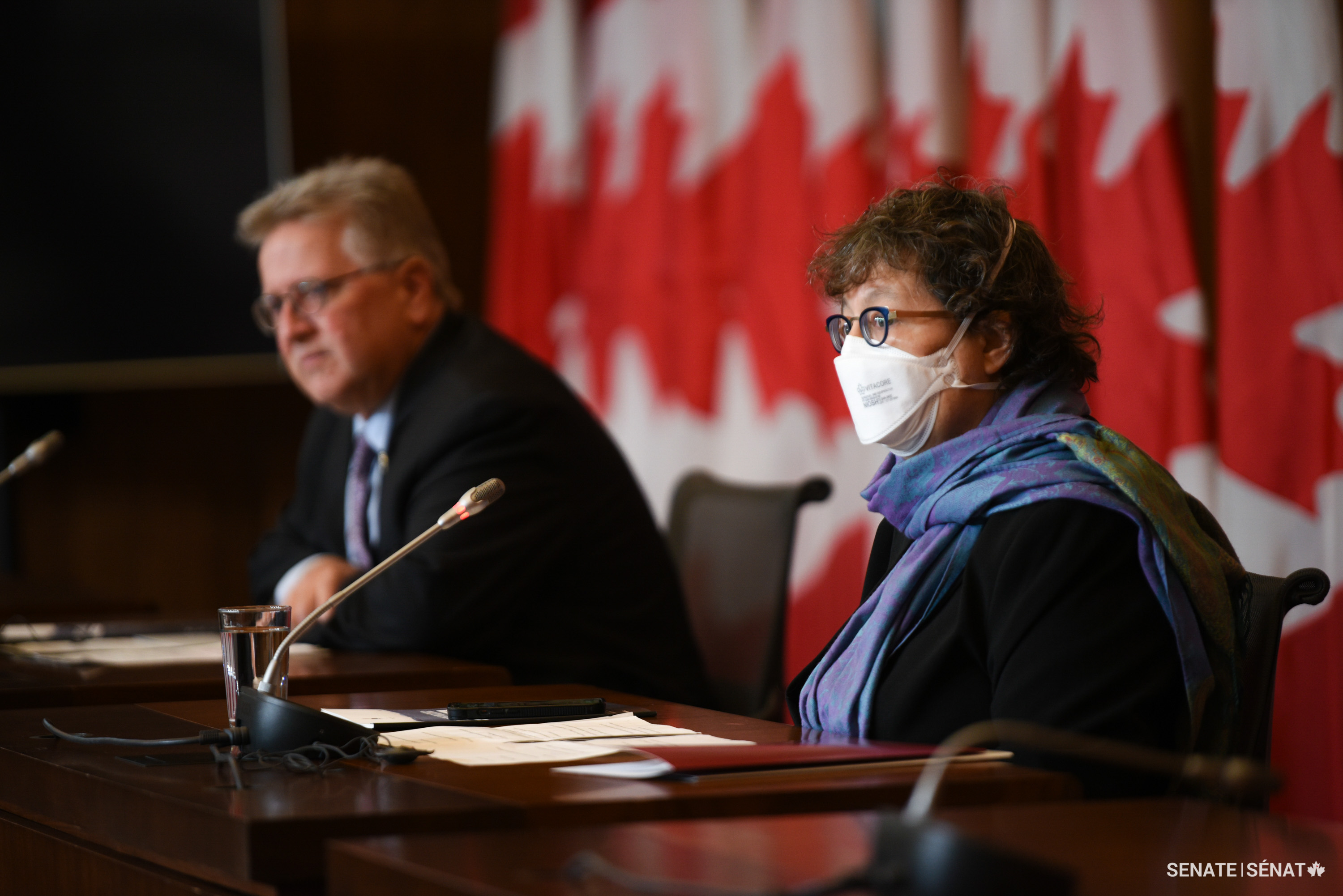
Senators Black and Simons answer journalists’ questions during the Senate Committee on Agriculture and Forestry’s press conference. Le sénateur Black et la sénatrice Simons répondent aux questions des journalistes lors de la conférence de presse du Comité sénatorial de l’agriculture et des forêts.
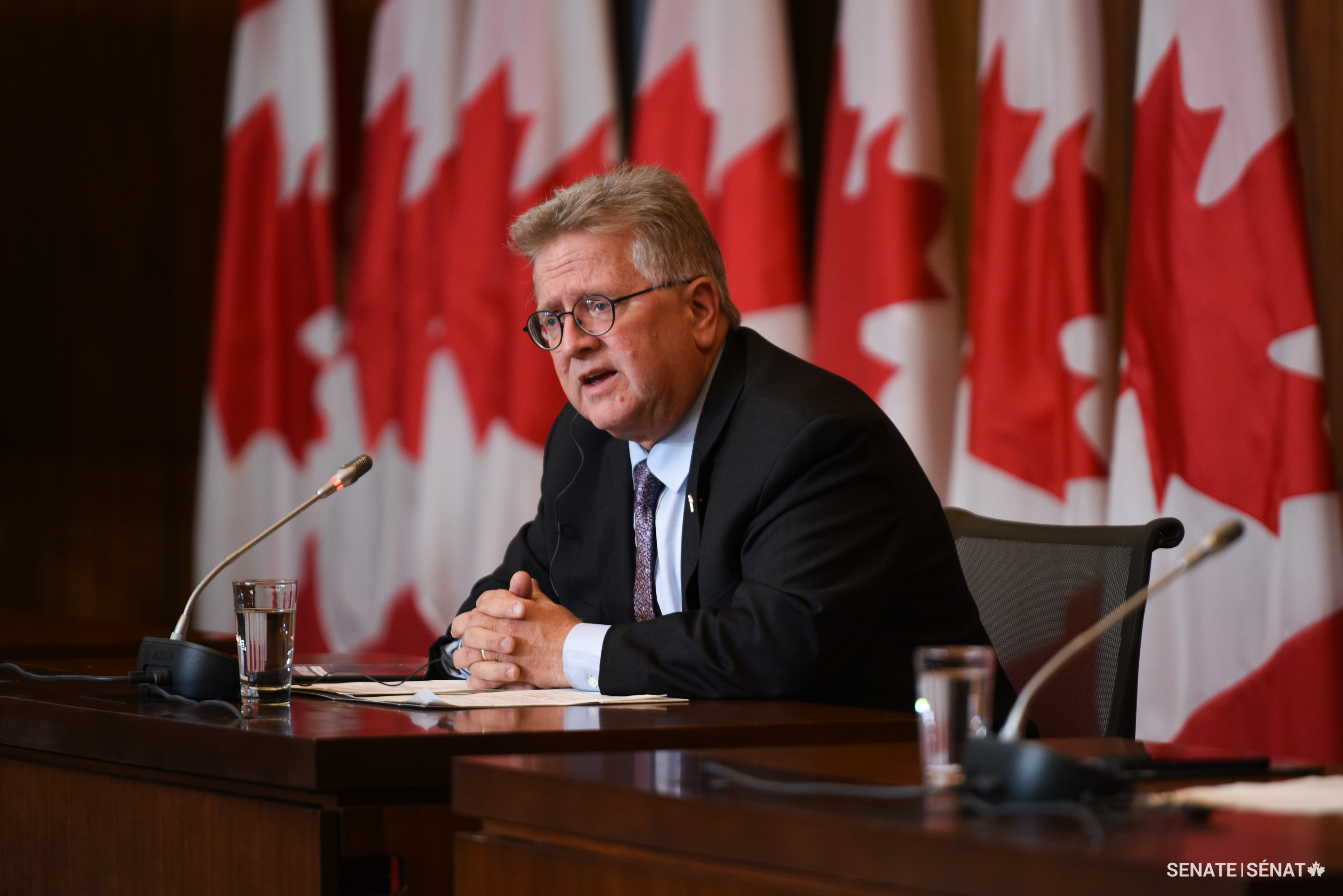
Senator Black discusses the Senate Committee on Agriculture and Forestry’s findings and recommendations from its study into the impact of and response to the 2021 B.C. floods during the committee’s press conference.
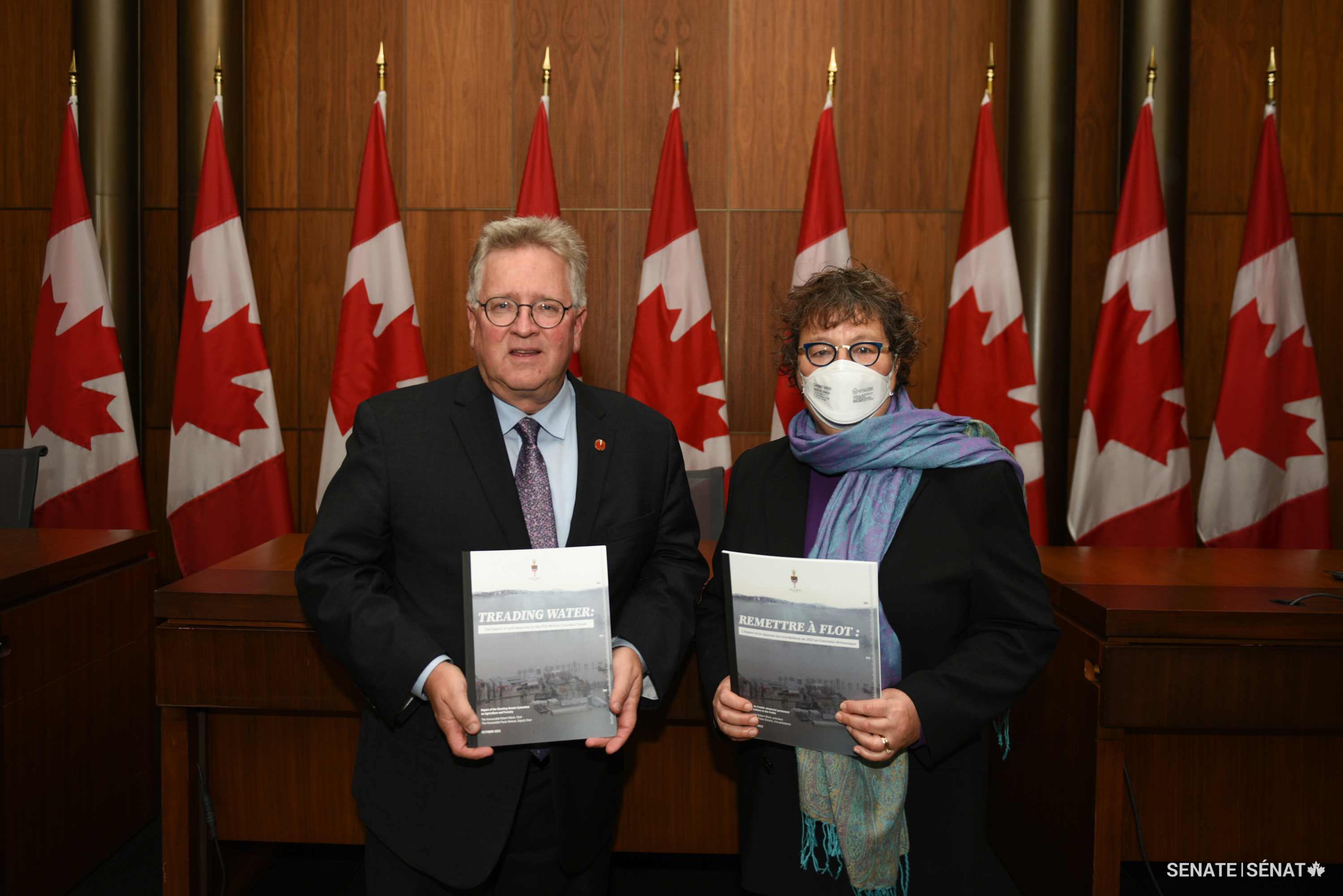
Senators Black and Simons hold a copy of the Senate Committee on Agriculture and Forestry’s report, Treading Water: The impact of and response to the 2021 British Columbia floods, made public on October 27, 2022.
Senators who participated in this study

Robert Black
CSG - Ontario

Paula Simons
ISG - Alberta

Jane Cordy
PSG - Nova Scotia

Brent Cotter
ISG - Saskatchewan

Pat Duncan
GRO - Yukon

Mobina S. B. Jaffer
ISG - British Columbia

Marty Klyne
PSG - Saskatchewan

Sabi Marwah
ISG - Ontario

Victor Oh
C - Ontario (Mississauga)

Chantal Petitclerc
ISG - Quebec (Grandville)

Donald Neil Plett
C - Manitoba (Landmark)
Ex-officio members of the committee: The Honourable Senator Gold and/or Gagné, The Honourable Senator Plett and/or Martin
Other Senators who have participated in the study: The Honourable Senators Deacon, Mercer (retired), Ringuette and Wetston (retired)
Government Reponse