
Report

Executive Summary
Sterilization is a surgical procedure to prevent conception. Forced or coerced sterilization occurs when sterilization is performed without the patient’s free, prior and informed consent.
Canada has a long history of forced and coerced sterilization. For much of the 20th century, laws and government policies explicitly sought to reduce births in First Nations, Métis and Inuit communities, Black communities, and among people with intersecting vulnerabilities relating to poverty, race and disability. Though these explicit eugenic laws and policies have been repealed, the racist and discriminatory attitudes that gave rise to them are still present in Canadian society, and forced and coerced sterilization still occurs.
Beginning in 2019, the Standing Senate Committee on Human Rights (the Committee) undertook a study on the extent and scope of forced and coerced sterilization of persons in Canada, hearing from experts and civil society groups. In 2022, the Committee heard additional testimony on this issue, including from several survivors who courageously shared their stories.
The practice of forced and coerced sterilization is not confined to our distant past, and law and policy changes are needed to prevent this horrific practice from being inflicted on others. This report highlights the experiences and perspectives of survivors and outlines solutions that the Committee believes are urgently needed to bring an end to these unacceptable practices.
Recommendations
RECOMMENDATION 1
That legislation be introduced to add a specific offence to the Criminal Code prohibiting forced and coerced sterilization.
RECOMMENDATION 2
That the Government of Canada work with provincial/territorial governments in adopting a non-adversarial dual jurisdictional approach;
- to study, publish a report on, and include in training the clinical psychological and physical impacts of sterilization generally, and forced and coerced sterilization specifically;
- to mandate medical associations and professional governing and licensing bodies to denounce forced and coerced sterilization and provide a clear consent framework consistent with governing legal principles;
- to ensure that all healthcare practitioners are required to undergo intensive training in the physician/patient fiduciary relationship, bodily autonomy, and medical self-determination and mandate that health practitioners are required to pass such training as a condition of their license; and,
- to support and augment the rigor of College disciplinary processes to achieve the above pressing objectives.
RECOMMENDATION 3
That the Government of Canada, led by survivors, develop a compensation framework that reflects both the direct and indirect harms that forced and coerced sterilization has inflicted.
RECOMMENDATION 4
That the Government of Canada issue a formal apology on behalf of all Canadians to all persons who have been subjected to forced and coerced sterilization in Canada.
RECOMMENDATION 5
That the Government of Canada encourage provincial/territorial governments to implement measures to ensure that professional standards of governing and licensing bodies are adhered to, that mechanisms are in place to investigate and respond to complaints, and that consent policies and practices adequately protect all patients, particularly in moments of vulnerability.
RECOMMENDATION 6
That the Government of Canada take all steps necessary to support the implementation of the Truth and Reconciliation Commission’s Call to Action 24 and ensure that all medical and nursing schools in Canada require all students to take a course dealing with Indigenous health issues, including skills-based training in intercultural competency, conflict resolution, human rights, and anti-racism.
RECOMMENDATION 7
That Health Canada work with applicable partners to launch a public education campaign about patient’s rights and consent procedures, and that the campaign be tailored to the specific needs of Indigenous, Black, racialized, remote and marginalized communities, as well as to those of people with disabilities.
RECOMMENDATION 8
That Indigenous Services Canada increase its investments in community-based midwifery in northern and remote communities, and ensure that the funding is sustainable and adequate to serve the needs of Indigenous and remote communities across Canada.
RECOMMENDATION 9
That the Government of Canada take all steps necessary to support the implementation of the Truth and Reconciliation Commission’s Call to Action 23, with a view to increasing the number of Indigenous healthcare professionals, ensuring that Indigenous healthcare providers are retained in Indigenous communities, and providing cultural competency training for healthcare professionals of all backgrounds.
RECOMMENDATION 10
That Indigenous Services Canada and other relevant departments expand programs such as the Post-Secondary Student Support Program to increase representation of Indigenous, Black and racialized students in healthcare fields.
RECOMMENDATION 11
That the Government of Canada develop a national plan to collect and publish anonymized data on forced and coerced sterilization to help authorities fully understand the scale of the issue and develop adequate responses.
RECOMMENDATION 12
That Parliament remain apprised of Canadian and international developments relating to the issue of forced and coerced sterilization.
RECOMMENDATION 13
That a parliamentary committee conduct further study as needed on the issue of forced and coerced sterilization, including to monitor government efforts to address this issue and to develop further recommendations.

Ottawa – The federal government should compensate and apologize to all people who were subjected to forced and coerced sterilization, the Senate Committee on Human Rights said in a report released Thursday, July 14, 2022.
The report, The scars that we carry: Forced and Coerced Sterilization of Persons in Canada – Part II, outlines the committee’s findings from the second part of its study into this deeply disturbing practice, which persists today and disproportionately affects vulnerable and marginalized groups in Canada, including Indigenous women, Black and racialized women, and people with disabilities.
Survivors described how they were stripped of their ability to conceive without their free, prior and informed consent at moments of extreme vulnerability. Some were as young as 14 and coerced through confinement, manipulation or threats; others were simply not consulted before the procedure. Many survivors attributed their sterilization to racism in Canada’s health-care system.
The report includes 11 other recommendations aimed at ending forced and coerced sterilization in Canada, including a specific Criminal Code prohibition, increased investments in community-based midwifery in northern and remote communities, and a national plan to collect and publish anonymized data on forced and coerced sterilization.
The committee extends its heartfelt gratitude to the survivors who testified. The absence of data on forced and coerced sterilization placed a heavy burden on them to come forward and share their personal stories and lived experiences; their brave decision to do so was integral to the completion of this report.
Quick Facts
- Sterilization is a surgical procedure to prevent conception. Forced or coerced sterilization occurs when the procedure is performed without the patient’s free, prior and informed consent. This often has profound physical and psychological effects on survivors.
- The practice of forced and coerced sterilization of marginalized and vulnerable groups — including Indigenous women, Black women, people with disabilities and intersex children — has a long history in Canada; cases of forced or coerced sterilization have been reported as recently as 2019.
- Reproductive rights are considered part of the right to security of the person guaranteed by section 7 of the Canadian Charter of Rights and Freedoms as well as numerous international law instruments.
- Class action lawsuits have been brought forward in Saskatchewan, Manitoba, Ontario, British Columbia, Quebec, New Brunswick, Nova Scotia and Alberta on behalf of Indigenous women who say they were subjected to forced or coerced sterilizations.
- The Senate Committee on Human Rights conducted a preliminary study of forced and coerced sterilization in Canada between 2019 and 2021. The committee released its first report on the subject in June 2021.
Quotes
“For most Canadians, the idea of being forcibly stripped of your ability to conceive is unthinkable. Survivors of this horrific practice deserve an apology for the harm inflicted upon them. Governments, health-care practitioners, medical associations and professional governing and licensing bodies must each do their part to ensure no other person in Canada is pressured or manipulated into being sterilized.”
- Senator Salma Ataullahjan, Chair of the committee
“Healing from this dark history will require a whole-of-government approach, including a reparations framework developed in concert with survivors. One concrete step that Parliament can take to prevent further cases of forced and coerced sterilization is to make this inhumane practice a specific criminal offence in Canada. Since we cannot afford to wait, I introduced Bill S-250 in the Senate on June 14, 2022, and I call on all my colleagues in the Senate and the House of Commons to support its swift passage.”
- Senator Yvonne Boyer, member of the committee
“Forced and coerced sterilization is unfortunately an inhumane practice rooted in racism and conscious or unconscious biases. It demonstrates, once again, the perception of a superior colonial view according to a preconceived way of life, which continues to devalue the life of Indigenous peoples. I urge the federal government and the medical profession to do everything within their power to increase the number of Indigenous health-care professionals across the country. Medical and nursing schools must mandate courses dealing with historic and contemporary realities and Indigenous health issues, as recommended in the report.”
- Senator Michèle Audette, former member of the committee
Associated Links
- Read the report: The Scars that We Carry: Forced and Coerced Sterilization of Persons in Canada – Part II
- Watch testimony from survivors and expert witnesses
- Follow the committee on social media using the hashtag #RIDR
- Sign up for the Senate eNewsletter
For more information:
Ben Silverman
Communications Officer| Senate of Canada
343-574-4950 | ben.silverman@sen.parl.gc.ca
Witnesses’ testimonials
Nicole Rabbit
Nicole Rabbit at the Standing Senate Committee on Human Rights, May 2, 2022.
Witness A
Witness A at the Standing Senate Committee on Human Rights, May 9, 2022.
Sylvia Tuckanow
Sylvia Tuckanow at the Standing Senate Committee on Human Rights, May 2, 2022.
Louise Delisle
Louise Delisle at the Standing Senate Committee on Human Rights, May 16, 2022.
Witness B
Witness B, Registered Nurse at the Standing Senate Committee on Human Rights, May 2,2022.
Elizabeth Esquega
Elizabeth Esquega at the Standing Senate Committee on Human Rights, May 2, 2022.
Lucy Nickerson
Lucy Nickerson at the Standing Senate Committee on Human Rights, May 16, 2022.
Morningstar Mercredi
Morningstar Mercredi at the Standing Senate Committee on Human Rights, May 2, 2022.
Multimedia
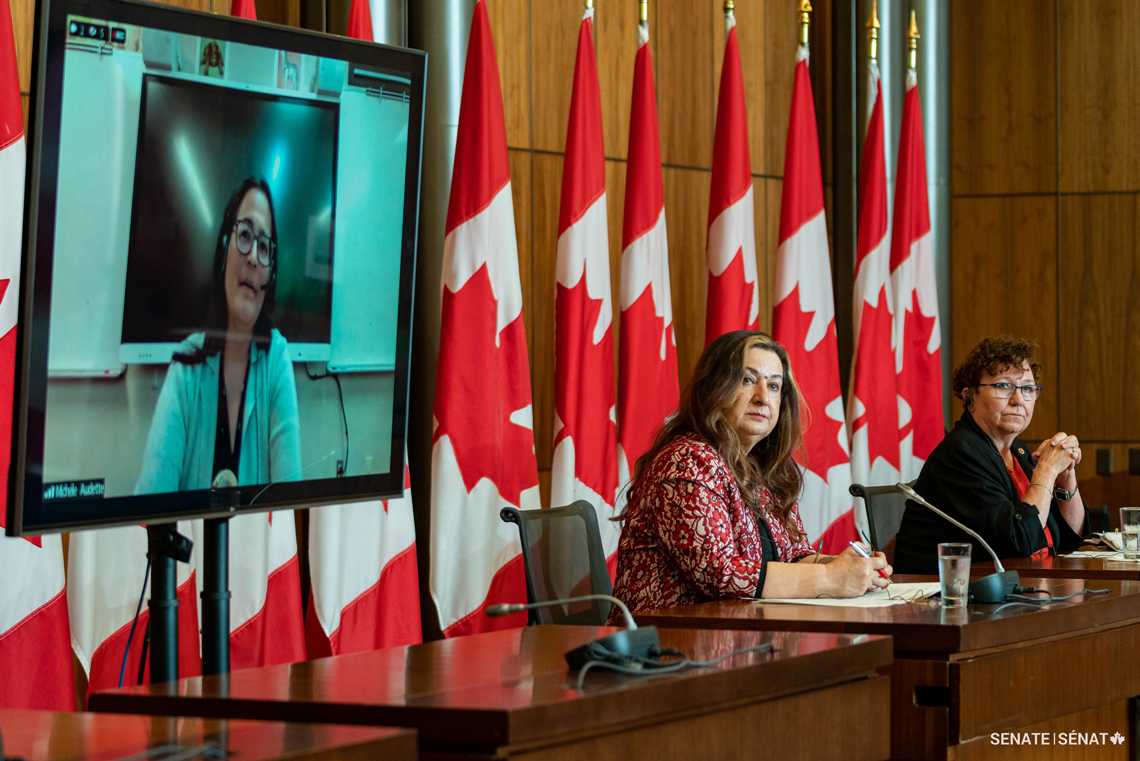
Senators Michèle Audette, Salma Ataullahjan, chair of the committee, and Yvonne Boyer present the Senate Committee on Human Rights’ second report on forced and coerced sterilization during a press conference held at the National Press Theatre in Ottawa.
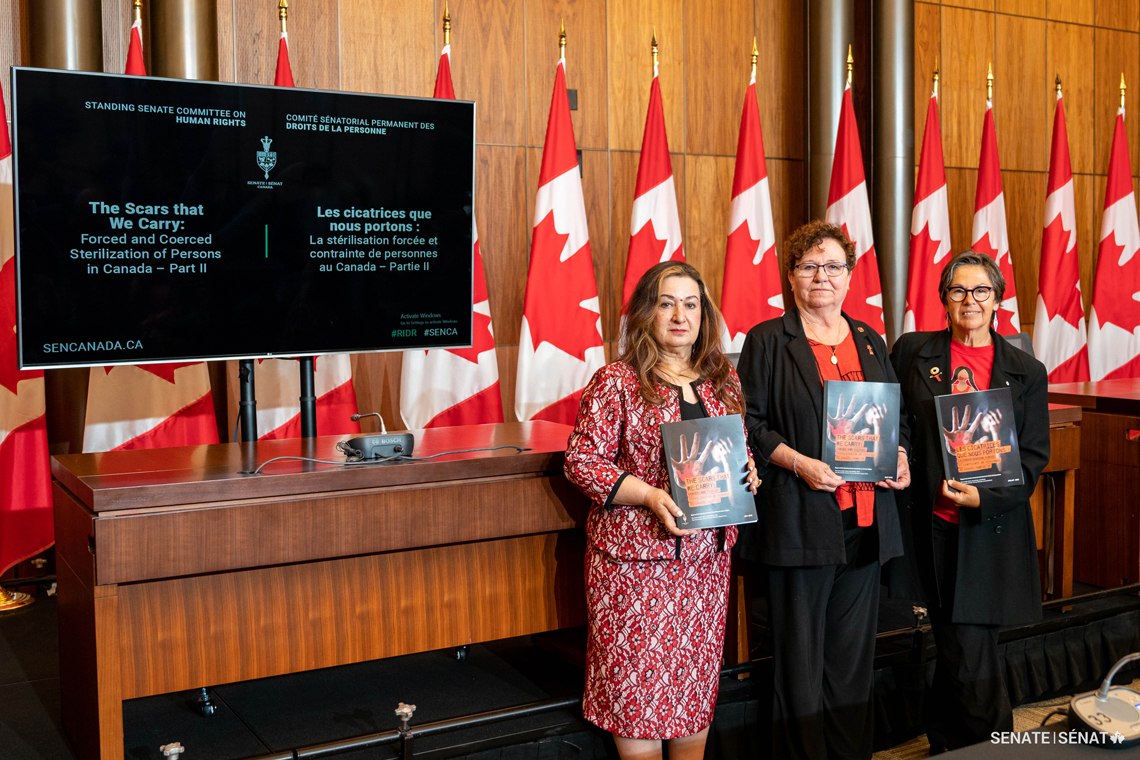
Senators Salma Ataullahjan, chair of the committee, Yvonne Boyer and Kim Pate hold a copy of the Senate Committee on Human Rights’ second report on forced and coerced sterilization made public on July 14, 2022.
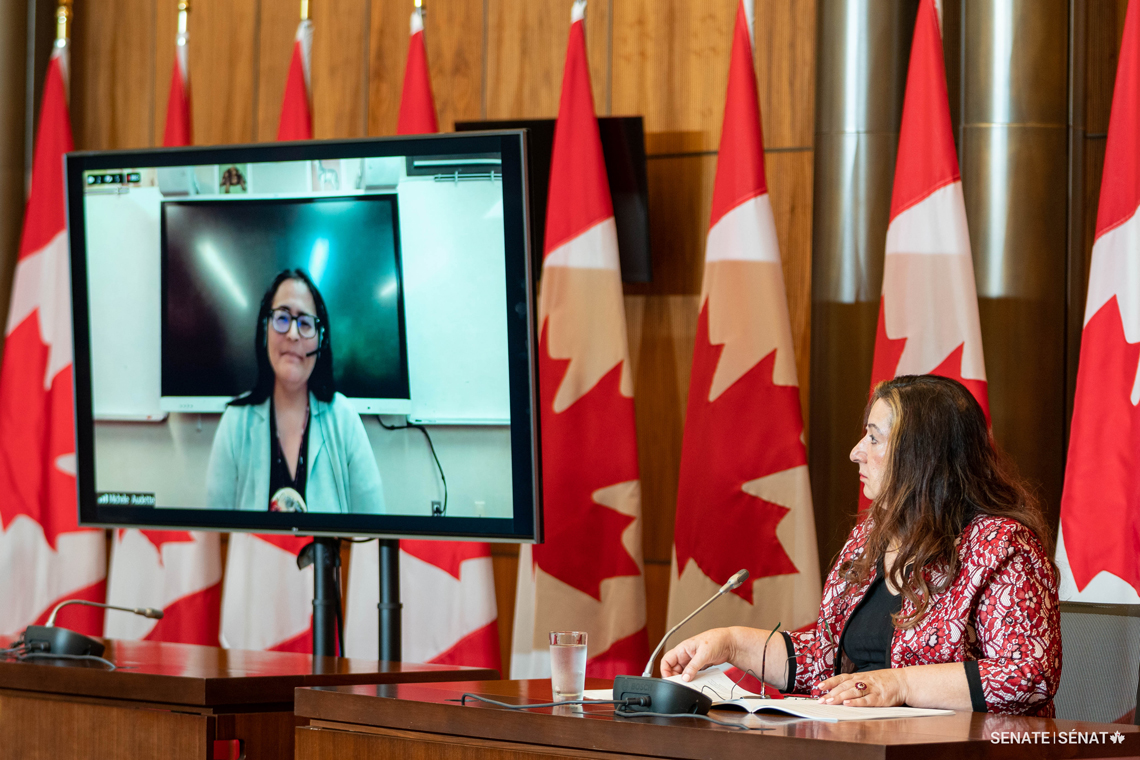
Senators Salma Ataullahjan and Michèle Audette deliver a speech at the Senate Committee on Human Rights’ press conference.
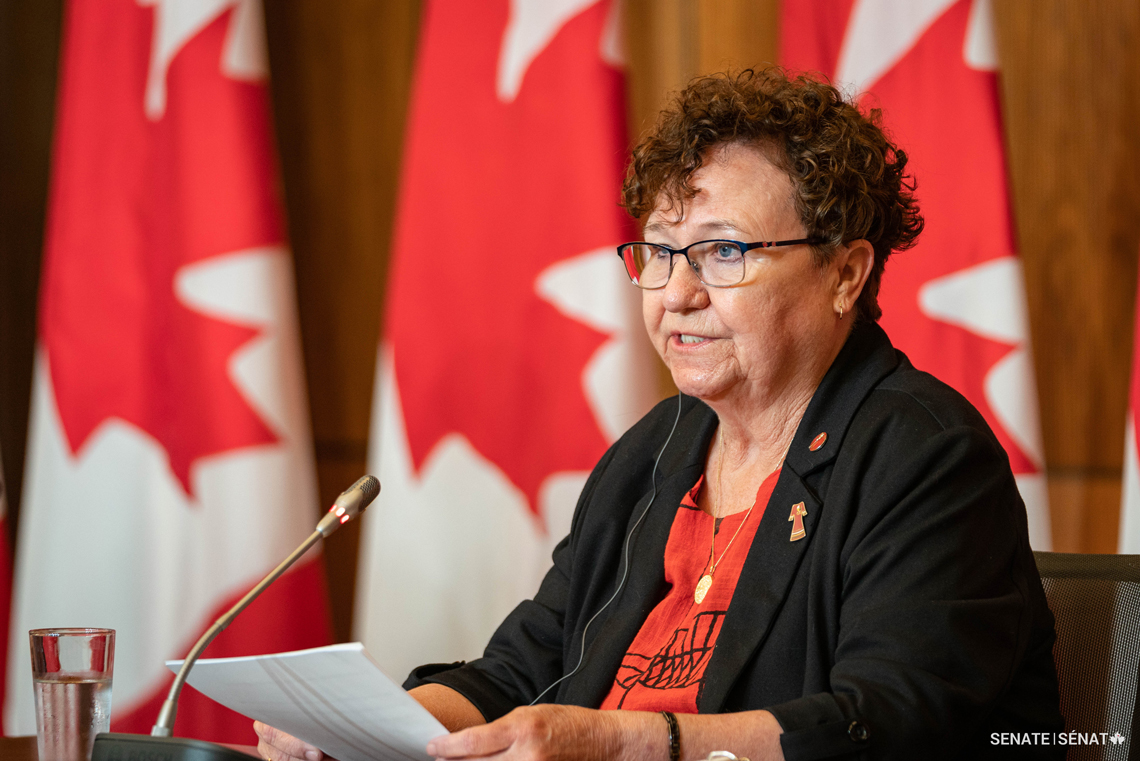
Senator Boyer speaks at the Senate Committee on Human Rights’ press conference at the National Press Theatre in Ottawa.
Senators who participated in this study

Salma Ataullahjan
C - Ontario (Toronto)

Wanda Thomas Bernard
PSG - Nova Scotia (East Preston)

Michèle Audette
PSG - Quebec (De Salaberry)

Yvonne Boyer
ISG - Ontario

Amina Gerba
PSG - Quebec (Rigaud)

Nancy J. Hartling
ISG - New Brunswick

Yonah Martin
C - British Columbia

Ratna Omidvar
ISG - Ontario
Ex-officio members of the committee: The Honourable Senators Gold, P.C. and/or Gagné, the Honourable Senators Plett and/or Martin
Other Senators who have participated in the study: The Honourable Senators Arnot, Francis, Harder P.C., Lankin P.C., Pate, Wells
Government Response