
Report

Summary
In 2024 and 2025, the Standing Senate Committee on Transport and Communications (the committee) examined the local services provided by CBC/Radio-Canada. Over 60 witnesses appeared at the committee’s public hearings.
Witnesses shared their points of view on the current state of local services provided by CBC/Radio-Canada. They drew the committee’s attention to the issues and challenges facing the Corporation, including:
- the challenge of reflecting local realities in a changing media ecosystem;
- the role of CBC/Radio-Canada’s traditional and digital platforms in broadcasting local programming that reflects the communities they serve; and
- financial pressures.
The committee noted that CBC/Radio-Canada’s legislative mandate does not mention that local audiences must be specifically targeted. Given the importance of local programming, and more specifically local news, the committee believes that CBC/Radio-Canada’s mandate should explicitly mention it. Stable, multi-year funding should also be provided to the Corporation to strengthen local programming.
The committee noted that financial data of the local services provided by CBC/Radio-Canada are not publicly disclosed. After finding that the data is lacking in this area, the committee believes that more information is needed to identify where the needs are most urgent.
In addition, representatives from both community and private media outlets expressed their willingness to collaborate more with the national public broadcaster. The committee believes that this is a promising avenue that warrants further exploration.
During the committee’s public hearings, organizations representing official language minority communities (OLMC) sent a clear message about the essential role that CBC/Radio-Canada’s regional and local stations play in the vitality of the communities they represent. Moreover, the committee recommends that the Corporation ensure that its investments in television production for OLMC clearly and equitably respect the principle of substantive equality.[1]
Lastly, the committee recommends that CBC/Radio-Canada’s journalism operations be subject to regular oversight to ensure impartiality and balanced reporting.
[1] According to Treasury Board of Canada Secretariat, substantive equality is achieved when one takes into account, where necessary, the differences in characteristics and circumstances of minority communities and provides services with distinct content or using a different method of delivery to ensure that the minority receives services of the same quality as the majority. This approach is the norm in Canadian law.
Recommendations
Recommendation 1
That the Government of Canada amend the Broadcasting Act to add “the reflection of local communities and audiences” to CBC/Radio-Canada’s mandate.
Recommendation 2
That the Government of Canada provide stable, multi-year funding to CBC/Radio-Canada to enhance local programming and that CBC/Radio-Canada continue to invest to enhance and prioritize local programming.
Recommendation 3
That, at CBC/Radio-Canada's next licence renewal in 2027, the Canadian Radio-television and Telecommunications Commission impose new reporting requirements on local services provided by the CBC/Radio-Canada on both its traditional and its digital platforms. These reports should be public and provide data on local programming and expenditures for these services.
Recommendation 4
That CBC/Radio-Canada implement new initiatives to collaborate at the local level with private and community media in all regions of the country.
Recommendation 5
That CBC/Radio-Canada periodically conduct analysis by outside experts of the news content and current affairs by CBC/Radio-Canada news services in order to assess its fairness and balance.
Recommendation 6
That CBC/Radio-Canada, in accordance with its obligations under the Official Languages Act and in the interest of transparency, ensure that its investments in television production for official language minority communities clearly and equitably respect the principle of substantive equality. [2]
Recommendation 7
That CBC/Radio-Canada examine the role the Corporation can play in emergency situations. In remote and isolated areas with limited alternative broadcasters, that CBC/Radio-Canada be capable of providing full coverage in the event of an emergency.
[2] According to Treasury Board of Canada Secretariat, Substantive equality is achieved when one takes into account, where necessary, the differences in characteristics and circumstances of minority communities and provides services with distinct content or using a different method of delivery to ensure that the minority receives services of the same quality as the majority. This approach is the norm in Canadian law.

Ottawa – As Canada’s news industry faces major transformation, CBC/Radio-Canada has an opportunity to better serve small communities lacking media coverage, according to a report by the Senate Committee on Transport and Communications released today.
During 2024 and 2025, the committee undertook a study on the local services provided by Canada’s national public broadcaster. More than 60 witnesses testified, and many described a media sector in crisis as print newspaper subscriptions decline and advertising revenues shift towards online platforms. This has led to a collapse of the traditional media business model. The changing media landscape has greatly affected access to local news — an important source of information for communities across Canada.
Witnesses stressed the importance of CBC/Radio-Canada strengthening its local and regional presence, especially as many local media outlets have closed or downsized in recent years. The broadcaster also plays an important role in promoting Canada’s arts sector, shaping the local and national identity, and preserving the vitality of official language minority communities across Canada, the committee heard.
The report notes public trust in the media, and specifically in CBC/Radio-Canada, has been declining for years. Some witnesses also stressed that the corporation’s news content could be perceived as having an ideological or partisan bias in its news coverage. The committee recommends that CBC’s journalism be subject to regular analysis by outside experts to assess its fairness and balance.
The committee acknowledges that CBC/Radio-Canada has recently announced the creation of more local bureaus and is encouraged by the broadcaster’s plans to expand regional coverage in the coming years. Among its recommendations, the committee calls for CBC/Radio-Canada’s mandate to specify that local audiences are targeted.
Quick Facts
- According to the Local News Research Project, 521 local news outlets have closed in 347 communities across Canada since 2008. Most of these outlets were community newspapers. These closures have created “news deserts,” which are communities that lack media providing journalistic information on local issues.
- According to a 2025 report by the Canadian Radio-television and Telecommunications Commission, 73% of Canadians are interested in local news.
- The federal government has taken steps to support local, independent and reliable news, including through the Canadian journalism labour tax credit, the digital news subscription tax credit and the Local Journalism Initiative.
Quotes
“With trust in CBC/Radio-Canada dwindling, it’s clear that the broadcaster’s mandate needs to better reflect the different realities of Canada’s small towns and local communities. Robust oversight of CBC’s news and current affairs will help ensure fair and balanced coverage across the country.”
- Senator David M. Wells, Chair of the committee
“The CBC plays an important role in shaping Canada’s identity, but many Canadians don’t see their communities in the national broadcaster’s coverage. This report provides recommendations to help the CBC bring more programming to more communities and better capture who we are as a country.”
- Senator Donna Dasko, Deputy Chair of the committee
Associated Links
- Read the report: Local News Matters: Rethinking CBC/Radio-Canada's Role in a Changing Media Landscape.
- Follow the committee on social media using the hashtag #TRCM.
- Subscribe to email alerts for Senate committees.
- Sign up for the Senate eNewsletter.
For more information:
Chelsea DeFazio
Communications Officer | Senate of Canada
343-576-1481 | chelsea.defazio@sen.parl.gc.ca
Multimedia
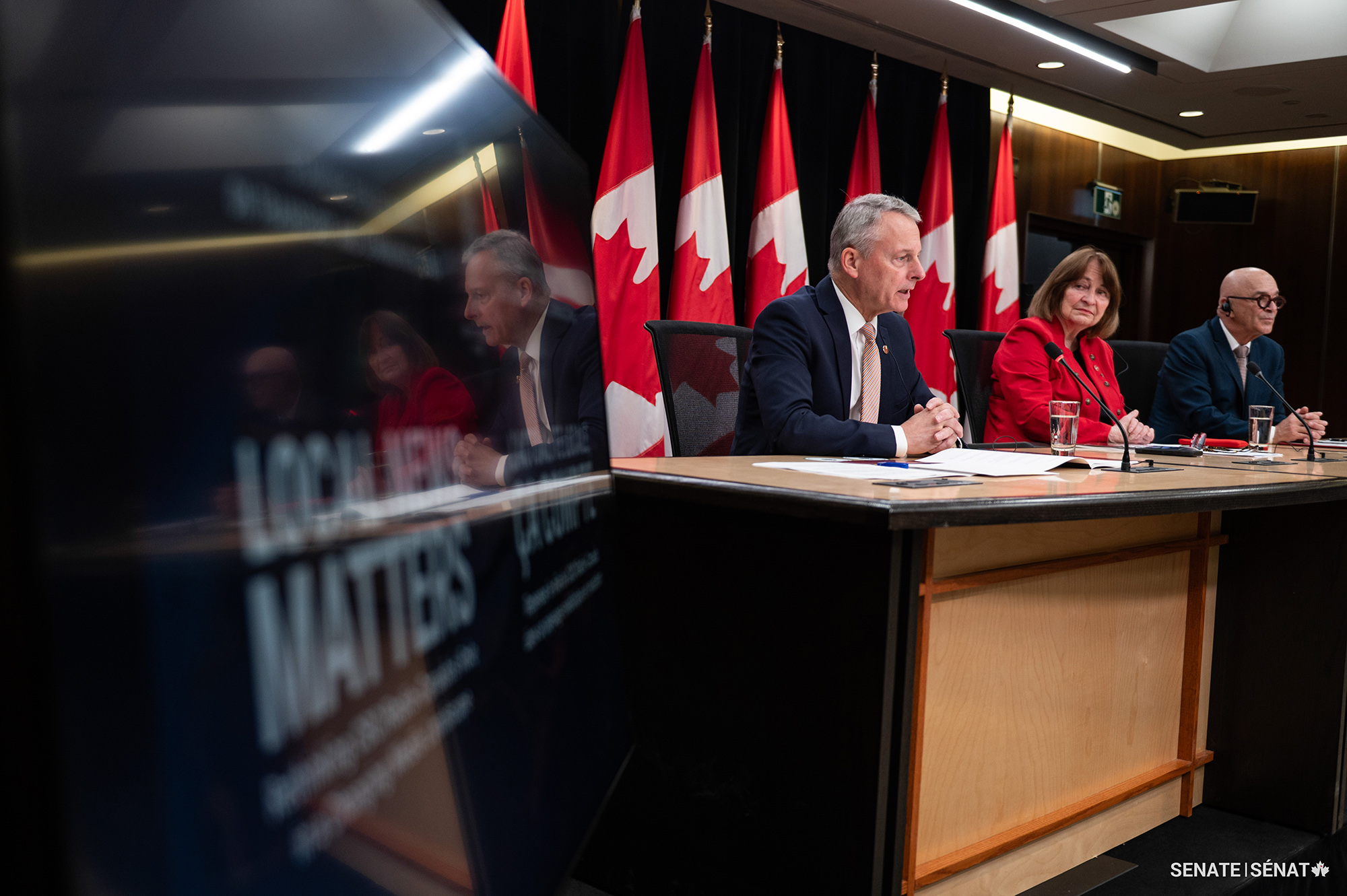
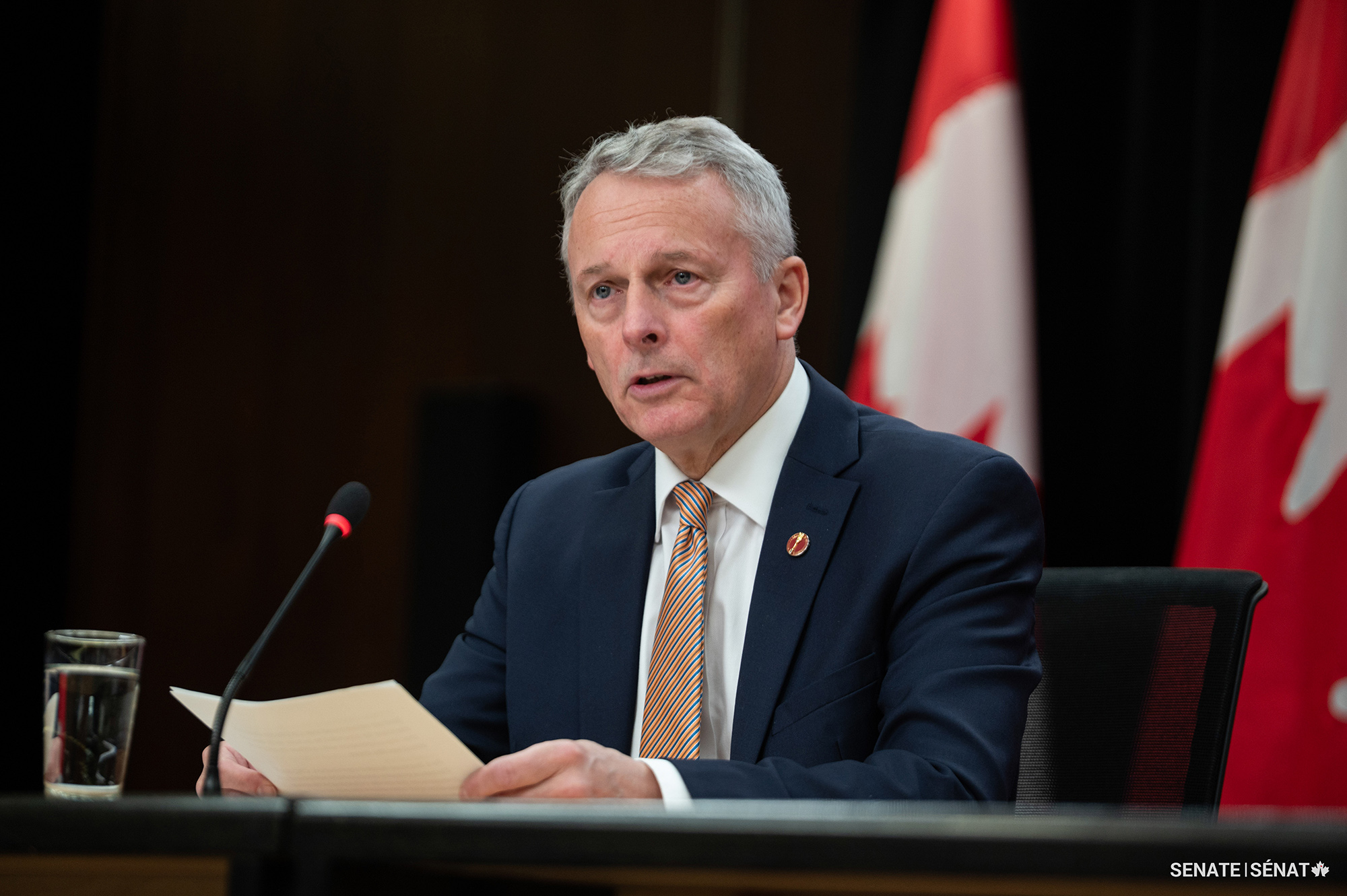


Senators who participated in this study

David M. Wells
C - Newfoundland and Labrador

Donna Dasko
ISG - Ontario

Dawn Arnold
ISG - New Brunswick

Réjean Aucoin
CSG - Nova Scotia

René Cormier
ISG - New Brunswick

Todd Lewis
CSG - Saskatchewan

Fabian Manning
C - Newfoundland and Labrador

Julie Miville-Dechêne
PSG - Quebec (Inkerman)

Farah Mohamed
ISG - Ontario

Jim Quinn
C - New Brunswick

Paula Simons
ISG - Alberta

Duncan Wilson
PSG - British Columbia
Ex officio members of the committee: the Honourable Pierre Moreau, P.C., or the Honourable Patti LaBoucane-Benson, the Honourable Leo Housakos or the Honourable Yonah Martin, the Honourable Raymonde Saint-Germain or the Honourable Bernadette Clement (until December 31, 2025), the Honourable Lucie Moncion or the Honourable Joan Kingston (since January 1, 2026), the Honourable Scott Tannas or the Honourable Rebecca Patterson (until January 4, 2026), the Honourable Flordeliz (Gigi) Osler or the Honourable Robert Black (since January 5, 2026), the Honourable Brian Francis or the Honourable Judy A. White
Other senators who have participated in the study: the Honourable Andrew Cardozo, the Honourable Bernadette Clement, the Honourable Rodger Cuzner, the Honourable Percy E. Downe, the Honourable Daryl S. Fridhandler, the Honourable Clément Gignac, the Honourable Katherine Hay, the Honourable Leo Housakos, the Honourable Tracy Muggli, the Honourable Flordeliz (Gigi) Osler, the Honourable Mary Robinson, the Honourable Larry W. Smith, the Honourable Scott Tannas, the Honourable Suze Youance