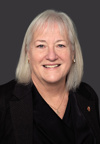
SENATORS’ STATEMENTS — The Late Madeleine Kétéskwew Dion Stout, C.M.
February 4, 2026
Honourable senators, Canadian nurses lost a national leader, Dr. Madeleine Kétéskwew Dion Stout, on December 30, 2025, in Winnipeg, Manitoba.
Madeleine was a nurse, a Cree speaker and a pre-eminent scholar. She was a member of the Kehewin Cree Nation in Alberta and attended the Blue Quills Residential School near St. Paul, Alberta.
As a child in a family of 12, she had her first encounter with a nurse, whom she credits for motivating her to study nursing. She graduated as a registered nurse from the Edmonton General Hospital in 1968 and earned a nursing degree from the University of Lethbridge in 1982.
A more extensive history of her childhood and formative years, as well as the events of her later career, can be found in a tribute published by the Canadian Museum for Human Rights in 2021 entitled “Nursing and Indigenous peoples’ health: reconciliation in practice.”
In 1983, Madeleine became a special adviser to the then Minister of Health and Welfare Canada, Monique Bégin, and in 1985 she was appointed as the inaugural director of the Indian and Inuit Health Careers Program.
Madeleine went on to receive a Master of Arts degree from the Norman Paterson School of International Affairs at Carleton University, where she taught at the School of Canadian Studies. At Carleton, she served as the director of what was then the Centre for Aboriginal Education, Research and Culture. She was appointed by prime minister Jean Chrétien as a member of the National Forum on Health and later as Vice-Chair of the Mental Health Commission of Canada. Madeleine was President of the Aboriginal Nurses Association of Canada, now known as the Canadian Indigenous Nurses Association.
For decades, she worked with Indigenous Peoples, nursing colleagues and Canadian society at large as a nurse, researcher, educator, lecturer, reformer, philosopher and policy leader. In all of these roles, she helped to shift health matters to Indigenous community control.
Increasingly reclaiming her Indigenous name in her later years, Kétéskwew drew on her Cree lens and her kinship ties in all of her life’s work, leaving an indelible mark in shaping health and wellness in Canada.
Madeleine received many honours. She was named one of Canada’s top 100 nurses during the celebration of the Canadian Nurses Association’s centennial anniversary in 2008, and she received several honorary doctoral degrees, including those conferred by the University of Ottawa and Carleton University. In recognition of her national influence on Indigenous health care in Canada as a nurse, researcher and advocate, she was honoured with an Indspire Award in 2010 and was appointed to the Order of Canada in 2015. In 2021, Madeleine became an Honorary Fellow of the Canadian Academy of Nursing.
Madeleine’s wisdom, intellect and lifelong profound commitment to improving the health and well-being of Indigenous Peoples will continue to influence the landscape of nursing and health care for generations to come.
Thank you, hiy hiy.