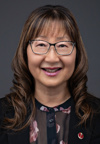
Seventy-fifth Anniversary of the Korean War Years
Inquiry--Debate Continued
November 3, 2026
Honourable senators, I rise today to call the attention of this chamber to a milestone that is not merely a date in a history book, but a living, breathing legacy of service and sacrifice.
On June 25, 2025, we entered the sacred window of the seventy-fifth anniversary of the Korean War. This period of remembrance will carry us through to July 27, 2028, marking three quarters of a century since the guns fell silent with the signing of the armistice.
For the Korean community here in our nation and across the globe, June 25 is a date etched in sorrow. It marks the start of the war in 1950, but it also marks the beginning of a profound national trauma, the division of a people with a shared history of more than 5,000 years and the separation of families — for my father, who had to flee with most of his family, leaving behind his nine-month pregnant older sister about to give birth and his mother, who remained at her side.
My father passed away in 2008, never to see them since that heart-wrenching separation.
To this day, Korea remains a land divided. Families remain separated by a line that they did not draw and a war that technically has never ended.
For the Korean people, the war is not a closed chapter of the past; it is a daily reality.
As we launch this inquiry in our chamber, we acknowledge that while the armistice stopped the bloodshed, the Korean War left a scar across the heart of a nation that has yet to heal.
Honourable colleagues, I stand before you today as a daughter of that divided land, and today I speak it into the permanent record of this chamber with a specific purpose.
I was born in Seoul in 1965. By the standards of history, that is not long after the guns fell silent. My parents were not just witnesses to the bloody war; they were survivors of its most harrowing chapters. They knew the sound of mortar, the smell of charcoal and the sight of cities and villages reduced to rubble.
I have often reflected on the fragile thread of fate. Had 26,791 Canadians not answered the call to protect Korea from communist tyranny, had The Royal Canadian Regiment, Princess Patricia’s Canadian Light Infantry and the Royal 22e Régiment — the Van Doos — not held the line when the world seemed ready to crumble, and had the “Trainbusters” of our navy not patrolled those cold waters, my parents likely would not have survived. They would never have met, obviously, and I certainly would not exist to launch this inquiry.
Every breath I take in this free land is a gift from a Canadian veteran. I do not just represent them as the honorary grand patron in name only; I am the living fruit of their sacrifice. However, for the Korean War veteran, there was a second burden: the title of “The Forgotten War.” Today, I am asking this Senate to ensure that title is buried forever.
Since my appointment in 2009, my greatest honour has been to serve as a bridge between these veterans and the country they defended — the country of my birth and that of my parents and ancestors.
I have sat with them in Korea and across Canada. I have seen their tears fall as they remember their fallen comrades, the beautiful children of Korea for whom they were willing to die.
I am calling upon you, my fellow honourable senators, to join this inquiry during the remaining period of the seventy-fifth anniversary of the Korean War years. This is a call to our collective sense of duty. Let the Hansard of the Senate of Canada be that memorial.
Let us hear from our Indigenous senators about the courageous service and sacrifices of legendary heroes like Tommy Prince, who was the inspiration of a national campaign to have his face on the $5 Canadian bill. I would love to hear from the senators of the Atlantic speaking of the eight destroyers that braved the Korean coast or about the group of friends from Cape Breton, Nova Scotia, who all volunteered to go to Korea and how the fallen among them are laid to rest side by side in the United Nations Memorial Cemetery in Korea to this day.
How I want to hear from the senators of Quebec recounting how the proud Royal 22e Régiment — the Van Doos — held “Little Gibraltar” against a sea of fire. I want to hear from the senators of the West and the Prairies, telling the story of the Patricias at the historic Battle of Kapyong, which earned them a United States Presidential Unit Citation for a stand that saved Seoul and perhaps the fall of Korea to communist rule.
To those who may be wondering what to contribute to this debate, I ask you to look into your own communities.
Find the names of the 516 Canadians who never came home.
Speak of the Royal Canadian Air Force pilots of the 426 Squadron who flew the “Great Airlift” without a single casualty.
Speak of the nurses — the “Angels of the Airlift” — who provided the first touch of home to the broken and the wounded.
Speak about your own personal connection to a veteran or a Korean-Canadian friend or family in your region and tell their stories or anything you wish to add to this important inquiry.
When you speak, you are not just reciting history. You are validating a life. You are telling a 95-year-old veteran in a long-term care home in Burnaby or Charlottetown that his service and the ultimate sacrifices of his comrades changed the world. Indeed, it did change the world.
Today, the Republic of Korea is a beacon of democracy, a global leader in technology, and one of Canada’s closest trading partners and allies. That success was bought and paid for by Canadians who spent their youth in the mud of a foreign land.
Dear colleagues, if your voice cracks like mine when you tell these stories, let it crack. If you are moved to tears by the bravery of a young soldier from your hometown, let those tears fall.
There is a Korean proverb that says, “Even a sheet of paper is lighter when two people lift it.” No one person can lift this legacy alone. We need to carry the weight of this remembrance together.
I will be the one to close this inquiry when it draws to an end. By then, I hope we will have created a mosaic of remembrance that covers every region of our country.
I truly look forward to your stories and interventions over the course of this inquiry.
Honourable senators, let us ensure that when the seventy-fifth anniversary of the armistice arrives on July 27, 2028, the veterans of the Korean War can look toward this chamber and know — without a shadow of a doubt — that Canada has not forgotten, that Canada remembers and that Canada is grateful.
We will remember them. Lest we forget.
Honourable colleagues, some wars are firmly etched into our collective memory through books, monuments and commemorative ceremonies. Others are remembered more quietly, not because they were any less significant, but because they occupy a more modest place in our national narrative.
The Korean War belongs in that category. It’s often referred to as “The Forgotten War.” The name is imperfect, but it aptly captures the gap between the scale of the conflict, the sacrifice of those who served and the limited place it still occupies in our collective memory. It also reflects the silence of many veterans who returned home to little fanfare and, in some cases, without their service ever being fully understood.
I wish to thank Senator Martin for this inquiry. Today, we have the opportunity to honour one of our most fundamental responsibilities as a parliamentary institution: to preserve memory, to deepen understanding and to pass that knowledge on to future generations.
The Korean War began on June 25, 1950, when North Korea invaded South Korea. However, its roots lay in the aftermath of the Second World War, the division of the Korean Peninsula and the ideological confrontation of the Cold War. It began at a moment when the world, barely emerging from catastrophe, was discovering that even a hard-won peace could quickly come under threat.
Canada answered the call of the United Nations. It did so in a tense international context but also in defence of a principle that was then still young and fragile: collective security. Canada understood that an act of aggression does not concern only those directly targeted; it believed that peace rests upon rules, institutions, alliances and the willingness of democracies not to look away when those rules are violated.
More than 26,000 Canadians served in the Korean War. Of those, 516 paid the ultimate sacrifice. Behind every number is a name, a face, a family and letters received too late or never sent at all. All of them were volunteers. Their decision to serve was not an easy one. It was made against the backdrop of the Cold War, anti-Communism and the still-vivid memory of the Second World War. In fact, 45% of the volunteers in 1950 were veterans of World War II.
Women also contributed to Canada’s war effort. More than 5,000 Canadian women were recruited for military service during the Korean War, including 60 military nurses who served in Korea and Japan, caring for wounded and sick soldiers.
Today, I want to say a few words about something that is still too little known: Quebec’s relationship to this war.
The Korean War is probably even more forgotten in Quebec than in other parts of Canada. Yet it occurred at a unique time in our history, before the Quiet Revolution, when Quebec society was still grappling with the aftermath of the debates surrounding during the First and Second World Wars and had a complicated relationship with military remembrance.
Nevertheless, Quebecers served in this war, and Quebec families were affected. Quebec women also took part in this war. I want to pay tribute to the following women.
Marie Guimond trained at the Hôpital de l’Enfant-Jésus nursing school in Quebec City. She was sent to Japan and then on to Seoul, where she cared for injured soldiers.
Jacqueline Robitaille Van Campen was born in Quebec City and was a student at Université Laval in 1953, when she joined the Canadian Red Cross. She served in Japan and Korea, where she provided moral support to soldiers during lulls in the fighting.
Unfortunately, it’s still hard to ascertain the precise extent of Quebec’s participation, but we know that, of the 10,567 men in the initial special force, 3,134, or roughly 30%, were from Quebec. According to historian Pierre Vennat, around a third of the Canadian combatants in Korea were francophone. Many of them wore the uniform of the Royal 22nd Regiment, the only entirely French-speaking regular infantry regiment in Canada, which deployed three battalions to Korea.
One of the most memorable episodes for that regiment remains Hill 355. It has become a place of remembrance, a place where you can appreciate not just the ferocity of the fighting, but also the courage of those who held their ground, risking their own lives, holding a position, patrolling, waiting in the cold, suffering from sleep deprivation, mired in mud and uncertainty.
The veterans’ accounts bring us back to this stark reality. They talk about the comrades who didn’t come back, about the nights spent in bunkers filled with water, with just a blanket to try to keep warm. That speaks volumes about this war of endurance, where courage often meant holding on for just one more day.
Yet, even amid this hardship, there were deeply human moments. There are accounts of French-Canadian soldiers distributing surplus food to hungry Korean civilians. This initiative, known as the “khaki charities,” shows that Canada’s involvement was not limited to holding the front line; it also meant interacting with children, families, devastated villages and, at times, performing a simple act of compassion.
In the summer of 1951, near Seoul, the Royal 22nd Regiment took in a six-year-old Korean orphan, Nong Joo Noh, who was soon nicknamed “Willie Royal.” He was made an honorary member of the regiment. He was given a small uniform, a bunk and little jobs to do in the quartermaster’s office. This story reminds us that, beyond maps and battles, the war was also shaped by acts of protection, human bonds and gestures of humanity toward Korean civilians who had endured so much.
It is this part of history that we must also pass on.
Honouring veterans also means recognizing that, in the great fractures of history, it is always human beings who bear the weight of the decisions made by states.
Behind every conflict lie human stories, worried families, troubled homecomings, lives changed forever, kitchen-table silences, visible wounds and other, unnameable wounds.
The Korean War also taught us that an armistice does not always mean peace. On July 27, 1953, the armistice agreement brought an end to active hostilities, but it did not resolve everything. It did not reunify the peninsula. It did not heal separated families. It did not instantly transform a devastated country into a stable society.
In the years that followed, Canadians contributed to South Korea’s stability, reconstruction efforts and development. Canada is part of the long tradition of rebuilding the conditions for peace when the battles are done.
Peace is never merely the absence of gunfire. It begins when children return to school, when families can go home, when society rebuilds with dignity and normal life resumes.
When we look at South Korea today, we can see how far it has come. The Republic of Korea is a vibrant democracy, a prosperous economy, an innovative society and a strategic partner of Canada. This achievement is the result of the courage, resilience, democratic struggles, hard work and creativity of the Korean people as well as an international environment that made it possible for this society to rebuild and flourish.
In a world where geopolitical tensions are mounting and where the Indo-Pacific has become a central arena for Canada’s security and prosperity, the Korean War is more than a simple memory; it is a warning. It warns us of what happens when delicate balances break down. It also reminds us that peace requires patience, perseverance and diplomatic courage.
For this memory to live on, it must be passed down. Younger generations know little about this war. This is not an accusation but rather an invitation to share the story.
We must make a place for these stories in our collective memory — not a loud place, not a triumphalist place, but a fitting place.
Honourable senators, the “Land of the Morning Calm” has a beautiful name, but those who lived through the war there experienced days that were anything but calm.
By remembering the Korean War, we are telling the veterans, their families and their descendants that their story is part of our history. We are also telling younger generations that peace is never a given. Peace is something that has to be built and protected, and when it is passed down with dignity, remembrance can still serve the cause of peace.
Thank you. Meegwetch.
Honourable senators, I rise today to speak to Senator Martin’s inquiry, calling the attention of the Senate to the seventy-fifth anniversary of the Battle of Kapyong and to the Korean War in general.
Senator Martin, I hope I can add more to the story.
I will provide you with a bit of history and background, and you may even see some of these things repeating themselves today.
Colleagues, when conflict on the Korean Peninsula broke out in June 1950, the ink on the Japanese surrender was barely dry. Japan had surrendered in August 1945, and the treaty of San Francisco, formally bringing an end to the Second World War in the Pacific, had yet to be signed. That would not happen until September 1951.
Yet, once again, there was conflict between great powers in the Pacific.
When North Korean forces invaded South Korea, the new postwar rules-based order was put to the test for the first time. On the same day, the United Nations Security Council adopted Resolution 82, condemning the invasion as “a breach of the peace.”
Two days later, on June 27, 1950, the Security Council passed Resolution 83, calling on the members of the United Nations to:
. . . furnish such assistance to the Republic of Korea as may be necessary to repel the armed attack and to restore international peace and security in the area.
Twenty-two nations responded.
Barely five years after its establishment, the United Nations, which was created to promote dialogue and prevent armed conflict between states, was calling on member states to provide military assistance to another country.
Some may be asking: How did such resolutions pass the Security Council? This was the very early days of the Cold War, and Churchill’s famous Iron Curtain had already begun to descend across Eastern Europe. The North Atlantic Treaty Organization, or NATO, had been formed the previous year as a defensive check against potential Soviet aggression. Surely, the Soviet Union would veto any attempt to condemn North Korea or authorize military assistance?
But the Soviet Union was absent from the debate on both resolutions. It was boycotting the Security Council over the exclusion of the People’s Republic of China. At the time, China’s seat belonged to the Republic of China, whose government had retreated to Taiwan in 1949.
The Communist-led People’s Republic controlled mainland China but was not recognized by the United Nations as China’s official government. In the minds of some, if China could fall, the West could not allow South Korea to fall also. There was a real fear of strategic dominoes starting to fall.
Although the Soviet Union and Communist China were not part of those Security Council deliberations, both would play very important roles in the conflict, and so, too, would Canada.
You have to understand that, despite the passage of this resolution, it took some months before the first American troops arrived in Korea. I also want to acknowledge, while we talk about Canada’s role, that we cannot forget that over 180,000 Korean soldiers lost their lives. They held the line.
Among Canada’s first contributions were the Royal Canadian Navy destroyers HMCS Cayuga, HMCS Athabaskan and HMCS Sioux. The navy was later joined by the Canadian Army Special Force, which was raised specifically for service in Korea.
Established in August 1950, the Special Force included Regular Force members, Second World War veterans and new recruits. Many of them were the children of World War II who had missed their first go-around. It drew on three Regular Force infantry regiments, allowing their other battalions to remain available for the defence of Canada and Europe.
Canadian troops reached the Korean front lines in February 1951. The Royal Canadian Air Force served mainly in a support role, ferrying supplies across the Pacific Ocean from Canada to Korea. However, 22 Canadian aviators serving with Allied air forces took part in combat missions and were credited with destroying 20 enemy jet fighters.
Senators, when we study war and conflict, we often think about what I would call the “pointy-enders” — the soldiers, the sailors and the aviators serving directly in the line of fire. But sustaining a combat effort like the one in Korea requires much more than soldiers, rifles and bullets. It also requires medical care, lawyers and logisticians. It requires people like those serving with the Royal Canadian Army Medical Corps, people like Lieutenant-Colonel Jessie Chenevert, who passed only two years ago in Ottawa.
She was one of 60 nursing sisters who deployed to Korea. Lieutenant-Colonel Chenevert, of Brockville, Ontario, served with No. 25 Canadian Field Dressing Station. That unit eventually developed into a 200-bed field hospital where wounded personnel received care from Canadian medical staff.
People like Jessie and the doctors she worked alongside helped inspire the popular television series “M*A*S*H.” Set during the Korean War, the series aired for longer than the war lasted. It was also part of what inspired me personally to join the Canadian Armed Forces — interestingly enough — as a nurse myself.
Although it was a comedy, “M*A*S*H” showed us the people behind the uniform and why their work matters to the people who were undergoing the worst moments of their lives. In one such episode, dialogue between the characters of Father Mulcahy — who was the chaplain, if you are not familiar — and Dr. “Hawkeye” Pierce, the chief surgeon, highlights this concept. Responding to the classic line, “War is hell,” Hawkeye says:
No, Father. War isn’t hell. War is war, and hell is hell. And of the two, war is a lot worse.
War does not care whether you are a man or a woman or an adult or a child, and it affects every single thing and person that it touches.
Colleagues, during my service at the National Defence Medical Centre in the early 1990s, I tended to Korean War veterans. I remember one Korean War sailor whose legs had been crushed during the conflict in bad weather when depth charges broke free from their racks and just rolled over him. Regardless of how he was injured, his injury was a lifetime commitment to his service in Korea.
I will also note that, at that point, the Korean War was not recognized as a war, and they were fighting for that recognition.
It was very interesting for me because, at that time, I was a young nurse who had recently returned from the Persian Gulf War, where I had served with 1 Canadian Field Hospital, the only land unit during the conflict. What is more notable is that that deployment in the Persian Gulf War in the 1990s marked the first time since Korea that Canada deployed a field hospital, and it was the same field hospital that had served in Korea. I’m very proud of that.
I have to say that, as a young nurse, I could only look at the veterans that we cared for with respect. I have to say “elderly” in air quotes now because, looking back, I realize they were in their fifties and early sixties. Hey, everything is relative.
Senators, Canada is geographically immense, but in many ways, we are a very small country. You would be hard pressed, as has been stated by my colleagues, to find a community or a family without some connection to the Korean War. Those who served at sea, on land or in the air came from every single corner of this wonderful country.
I will give you an example. Trooper Joseph Bell of Toronto enlisted in the Canadian Army in February 1951 at the age of 18. His uncles and parents were all World War II veterans. He was posted with the 12th Manitoba Dragoons and then the Royal Canadian Dragoons, which was an armoured unit with big tanks.
After training in Petawawa, Ontario, he deployed to Korea in April 1953. He died there on June 6, 1953, aged 20, less than 60 days before the Korean War Armistice Agreement took effect on July 27. He is buried in the United Nations Memorial Cemetery in Busan, and his name appears on page 4 of the Book of Remembrance in West Block. He was my husband’s cousin.
This past summer, I had the immense honour of travelling to South Korea in a Korean repatriation program with my husband and was able to lay a wreath at Joseph Bell’s gravesite in Buson. My husband was the first direct family member to have ever visited his grave. It was an immense honour. The care and concern that the Korean people give to that cemetery is something I had not seen before. It was touching, and we were honoured. Korea recognizes the immense sacrifice made by Canada and the other 21 nations that served there.
Without Canadians like Trooper Bell, we might never have had the opportunity to meet and get to know colleagues like Senator Martin. Senator Martin is the first person of Korean descent to serve in the Canadian Senate. She is an immigrant whose parents survived the conflict in Korea. Hers is one of the thousands — if not millions — of lives touched by Canadian sailors, soldiers and aviators who have served in conflicts around the world.
Yet, all too often, when those same sailors, soldiers and aviators return home, their struggles continue. Coming so soon after the Second World War, the Korean War became known as Canada’s “Forgotten War.” Canada did not formally declare war on North Korea, as the military action was conducted under United Nations authority. Korean War veterans did not initially receive the same recognition in public memory as veterans of the two world wars had.
Over time, that began to change. The dates of the Korean War — 1950 to 1953 — were added to the National War Memorial in Ottawa in 1982, and the contributions of Korean War veterans have continued to receive greater recognition.
However, much work remains to ensure that their service and sacrifice are remembered. Having that war listed on the National War Memorial matters more to a veteran than you can ever possibly imagine. As we approach Remembrance Day, this is an especially important lesson. Remembrance must include not only the conflicts that are most familiar to us but also those whose veterans have waited decades for their service to be fully recognized.
In many ways, particularly legally, the Korean War is not over. There is no peace treaty, only an armistice. North Korea continues to threaten South Korea as well as regional security. In fact, I would suggest that it is more than that: It threatens global security. That is why a United Nations command remains in Korea to this day.
My former colleague and the former Chief of the Defence Staff General Wayne Eyre served as the first non-American deputy commander of the United Nations Command in Korea from 2018 to 2019, demonstrating that, even today, both official and personal links remain between Canada and the horrors of the Korean War.
We continue to repatriate the remains of Canadians who went missing to this very day, I wish to add.
That is why studying our history matters: It continues to shape our present and our future.
When General Eyre was commissioned into the Canadian Armed Forces, he joined the 2nd Battalion, Princess Patricia’s Canadian Light Infantry, or PPCLI, the same battalion that fought at the Battle of Kapyong in April 1951. That battle took place from April 22 to 25, 1951, during a major Chinese offensive aimed at pushing United Nations forces southward, threatening Seoul. Approximately 700 members of the 2nd Battalion, PPCLI, defended Hill 677 against a force of roughly 5,000 Communist Chinese troops. The Canadians’ defence helped halt the advance and played an important role in the wider Commonwealth Brigade’s efforts to protect the approaches to Seoul.
One particularly brutal moment of the battle occurred on the night of April 24, 1951, when approximately 400 fighters attacked the Canadian headquarters, which was only 100 personnel strong. Had the Canadians been overwhelmed, the consequences could have extended far beyond their own position, threatening the wider defensive efforts of the Commonwealth Brigade. What did the Canadians do?
With the assistance of New Zealand artillery, the Canadians called down artillery fire on their own position. Despite the danger from enemy fire and the artillery supporting them, they held their ground until they were relieved. Ten Canadians were killed and 23 were wounded at Kapyong. One of the wounded, Private Wayne Mitchell, continued to fight, earning the Distinguished Conduct Medal for his actions.
The 2nd Battalion, PPCLI, was awarded the United States Presidential Unit Citation, making it the first Canadian unit to receive that honour.
Today, the Canadian Korean War Memorial Garden near the battlefield commemorates the Canadians who fought there. Here in Canada, a monument to the Battle of Kapyong stands on Radar Hill on Vancouver Island, within the Pacific Rim National Park Reserve.
Senator, the time for your speech has expired. If you would like to conclude, you will need to request leave for more time.
I would like to request two more minutes in order to conclude my speech, Your Honour.
Is leave granted?
Thank you, Your Honour.
The reserve is twinned with Hallyeohaesang National Park in Korea.
Colleagues, November is a time when Canadians pause to remember those who served and those who never returned home. As we gather for Remembrance Day, I encourage us to remember the Canadians who served in Korea, including those who fought at Kapyong, those who cared for the wounded and those who returned home carrying the lasting effects of war.
Let us also remember that the Korean War was not fought in isolation. It connected Canada to the Korean people, shaped families across generations and continues to influence the security of the Korean Peninsula today.
Please take a moment to reflect on the more than 26,000 Canadians who served in the Korean War, especially the 516 who lost their lives. Their service deserves to be remembered, not only on anniversaries, but every time we reflect on the meaning of duty, sacrifice and peace.
Lest we forget.