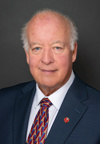
SENATORS’ STATEMENTS — Indigenous Veterans Day
November 6, 2025
Honourable senators, I rise today to mark Indigenous Veterans Day, which is November 8, and pay tribute to an elite military unit of Cree speakers who fought in the Second World War and were known as “code talkers.”
The unit was tasked with developing a coded system based on the Cree language to discreetly communicate military intelligence. Code talkers translated messages containing vital information about Allied plans, including orders for troop movement and the identification of supply lines or aircraft that were to carry out bombing runs from England.
The messages were translated into Cree and then sent to battlefields in Europe, where another code talker translated them back into English and sent them to military commanders. Some examples of disguised words include “iskotew,” meaning “fire,” which was the code word for the Spitfire plane; and “pakwatastim,” meaning “wild horse,” which referred to the Mustang aircraft.
The code was so sophisticated that enemy soldiers were never able to crack it.
To my knowledge, the federal government has never formally recognized the services that the Cree code talkers rendered to Canada. Indeed, many of them remain unidentified. Code talkers were sworn to secrecy during the war, and that’s part of the reason. It was not until 2003 that a code talker named Charles Tomkins was interviewed by the Smithsonian for an exhibit on the well-known Navajo code talkers.
We know the names of a few other Cree code talkers who were in Charles Tomkins’ immediate circle, including his brother Peter Tomkins, his half-brother John Smith and his friends Archie Plante and Walter McDermott. However, many others remain unknown.
It is estimated that around 4,300 First Nations men fought in the Second World War. Signing up was not an easy choice for many to make as they were faced with racist recruitment policies.
The majority were recruited into the Canadian Army but were shut out of the Royal Canadian Air Force, or RCAF, and the Royal Canadian Navy. The RCAF stipulated that enlistment was only for “British subjects of pure European descent” until 1942, and the Navy for those “of pure European descent and of the white race” until 1943.
On top of that, some First Nations men experienced criticism at home from their communities for joining the war effort.
Colleagues, I believe it is time to recognize the sacrifice that these individuals made for the war effort. At a time when history is at risk of being rewritten in countries like the United States, it is incumbent upon us to keep the memory of these soldiers and their efforts alive.
On Indigenous Veterans Day, let us take a moment to remember the sacrifices and service of these brave individuals who fought to defend Canada.
Lest we forget. Thank you.