
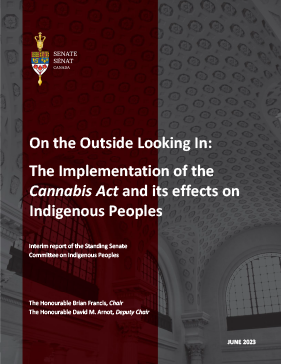
Executive Summary
In 2022, the Standing Senate Committee on Indigenous Peoples (the committee) examined the implementation of the Cannabis Act and how the legalization of cannabis has affected Indigenous peoples. It also wanted to better understand how the Government of Canada addressed recommendations from the committee’s 2018 report on the subject matter of the cannabis bill.
The committee found that many of the pressing problems identified by witnesses before cannabis was legalized have not been addressed. The report contains 13 recommendations to the Government of Canada and the Expert Panel. Recommendations are largely focused on First Nations’ testimony as the committee was unable to hear from many Inuit and Métis witnesses due to the COVID-19 pandemic. The committee recognizes that Inuit and Métis perspectives related to cannabis are critical, and encourages the Expert Panel to hear from these groups.
First Nations need authority under federal law to regulate the possession, sale and distribution of cannabis. First Nations want to be able to enforce cannabis laws on their lands. This requires increased funding and training for First Nations police services.
Also, for cannabis sale and distribution, some First Nations are completely blocked from participating in the cannabis market. First Nations want to be involved in the cannabis market to ensure that cannabis distribution meets the needs of their communities.
An excise tax-sharing framework for First Nations should be developed to share revenues more broadly. Cannabis licensing schemes need to be reviewed to increase the numbers of Indigenous businesses to be licensed as cannabis producers.
Research needs to be conducted to understand the effects of cannabis legalization on the health of Indigenous peoples, including youth and women. This research should be owned and used by Indigenous communities to inform public health education and approaches.
Finally, the committee urges the Expert Panel charged with reviewing the cannabis legislative framework to explore the recommendations set out in this report by engaging with different Indigenous peoples and organizations.
Recommendations
RECOMMENDATION 1
That the Expert Panel engage in substantive consultations and propose solutions to the problems raised by Indigenous peoples related to legal jurisdiction, enforcement, equity and inclusion in the industry, and mental health and substance abuse and that funding be made available to Indigenous peoples during this process.
RECOMMENDATION 2
That the Minister of Health introduce legislation in Parliament to amend the Cannabis Act to permit First Nations to regulate the possession, sale and distribution of cannabis on their lands.
RECOMMENDATION 3
That the Government of Canada convene a meeting with First Nations, federal, provincial and territorial governments in the spirit of cooperation and collaboration to solve jurisdictional challenges to enable First Nations to exercise their rightful place in the cannabis marketplace.
RECOMMENDATION 4
That the Government of Canada, as it develops legislation related to First Nation policing, in collaboration with the provinces and the territories and First Nations governments, establish legislative mechanisms for the enforcement of band by-laws and other laws related to cannabis by all police services and to ensure that related offences can be investigated and prosecuted effectively.
RECOMMENDATION 5
That the Government of Canada furthermore ensure adequate funding is available to Indigenous communities for the policing and enforcement of band by-laws related to cannabis.
RECOMMENDATION 6
That the Royal Canadian Mounted Police provide dedicated space for First Nations police services to undertake Drug Recognition Expert Training and that Public Safety Canada provide additional funding to First Nations policing to support this work.
RECOMMENDATION 7
That Finance Canada work with First Nations to identify options for the development of an excise tax-sharing framework as part of its discussions on the fuel, alcohol, cannabis and tobacco tax.
RECOMMENDATION 8
That Finance Canada and Indigenous Services Canada work with First Nations communities to identify options for the establishment of a First Nation-led agency to support First Nations participation in the cannabis market.
RECOMMENDATION 9
That Health Canada and the Canada Revenue Agency work with Indigenous peoples and communities to undertake a review of their application processes for all cannabis-related licenses and report the findings back to the committee by December 2023.
RECOMMENDATION 10
That Indigenous Services Canada cover cannabis for medical purposes under the Non-Insured Health Benefits Program.
RECOMMENDATION 11
That the Government of Canada work with cannabis producers to ensure the product is available for medical coverage under Indigenous Services Canada’s Non-Insured Health Benefits.
RECOMMENDATION 12
That Health Canada and Indigenous Services Canada work with Indigenous peoples and communities to establish and fund a research strategy on cannabis and its effects on Indigenous peoples and communities.
RECOMMENDATION 13
That Health Canada and Indigenous Services Canada provide funding for the development and update of Indigenous-led public health information on cannabis.

Ottawa – First Nations people have not shared in economic opportunities stemming from the legalization of cannabis after the federal government ignored First Nations’ calls for jurisdiction over its possession, sale and distribution, the Senate Committee on Indigenous Peoples said in a report released on Wednesday, June 14, 2023.
The committee’s report is intended to inform the work of the Expert Panel that is tasked with assessing the implementation of the Cannabis Act. The committee hopes the panel will work with Indigenous peoples, organizations and governments to resolve the problems identified in the report.
The committee found that many of the problems identified by First Nations prior to the legalization of cannabis have not been addressed. For example, the federal government has the exclusive power to regulate matters relating to First Nations and their reserve lands. In 2018, while Parliament debated the Cannabis Act, First Nations representatives argued that recognizing their jurisdiction over the regulation, sale and distribution of cannabis was an essential element of their inherent right to self-government and would ensure their full participation in the economic opportunities that legalization was to provide. Instead, the federal government abandoned them to the whims of the provinces and territories, some of which have not even responded to First Nations’ requests for agreements to produce, sell and distribute cannabis, leaving First Nations shut out of the cannabis market.
As a result, the committee recommends that the Minister of Health introduce legislation to amend the Cannabis Act to permit First Nations to regulate the possession, sale and distribution of cannabis on their lands. The committee also recommends increased funding for policing and enforcement of First Nations cannabis laws and additional funding and training for First Nations police services. These are among the 13 recommendations contained in the report that are intended to correct the oversights that have once more left First Nations people on the outside looking in.
Quick Facts
- Section 151.1 of the Cannabis Act requires a review of the act and its administration, including for its effects on Indigenous people and communities. The Expert Panel is undertaking this work; it will publish its findings and make recommendations to the federal government in a future report.
- Only a small number of First Nations-owned or affiliated businesses have received federal commercial cannabis licences. The committee is concerned that Indigenous businesses face additional barriers and recommends that a review of the federal application process take place.
- The committee heard that there are gaps in health data about First Nations, Inuit and Métis cannabis use since legalization, including its effects on youth and pregnant women. The committee recommends that the federal government work with Indigenous people and communities to establish and fund a research strategy on cannabis and its effects.
Quotes
“It is disappointing to once again be forced to try to correct oversights that could have been prevented had the federal government listened to First Nations people from the beginning. In the spirit of reconciliation, the government must promote, rather than hinder, the full and equal participation of our people and communities in the economy.”
- Senator Brian Francis, Chair of the committee
“We trust that the Expert Panel will take up our recommendations to make up for the inadequacy of the federal consultation process. First Nations people deserve to share in the opportunities available to all Canadians.”
- Senator David M. Arnot, Deputy Chair of the committee
“The health effects of cannabis use in Northern communities remains a concern to me. The federal government has committed to funding construction of the Nunavut Recovery Centre as well as working with partners to fund community supports that will provide culturally appropriate treatment for substance use and trauma. We expect the government to live up to that commitment.”
- Senator Dennis Patterson, member of the Subcommittee on Agenda and Procedure
Associated Links
- Read the report: On the Outside Looking In: The implementation of the Cannabis Act and its effects on Indigenous Peoples.
- Follow the committee on social media using the hashtag #APPA.
- Subscribe to email alerts for Senate committees.
- Sign up for the Senate eNewsletter.
For more information:
Jérémie Spadafora
Communications Officer | Senate of Canada
343-550-6111 | jeremie.spadafora@sen.parl.gc.ca
Multimedia
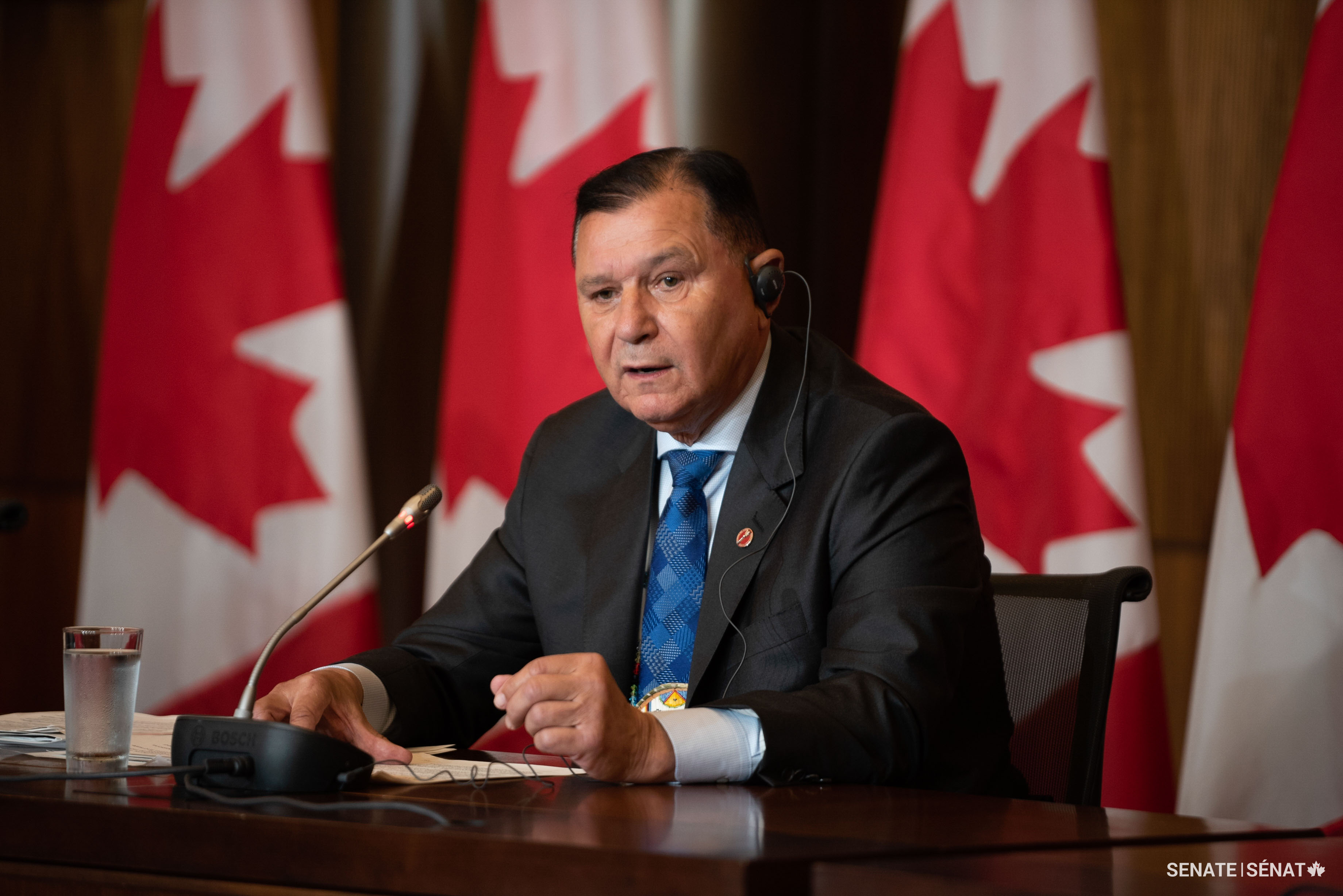
Senator Brian Francis, Chair of the committee, discusses the Senate Committee on Indigenous Peoples’ report on the implementation of the Cannabis Act and its effects on Indigenous peoples during a press conference.
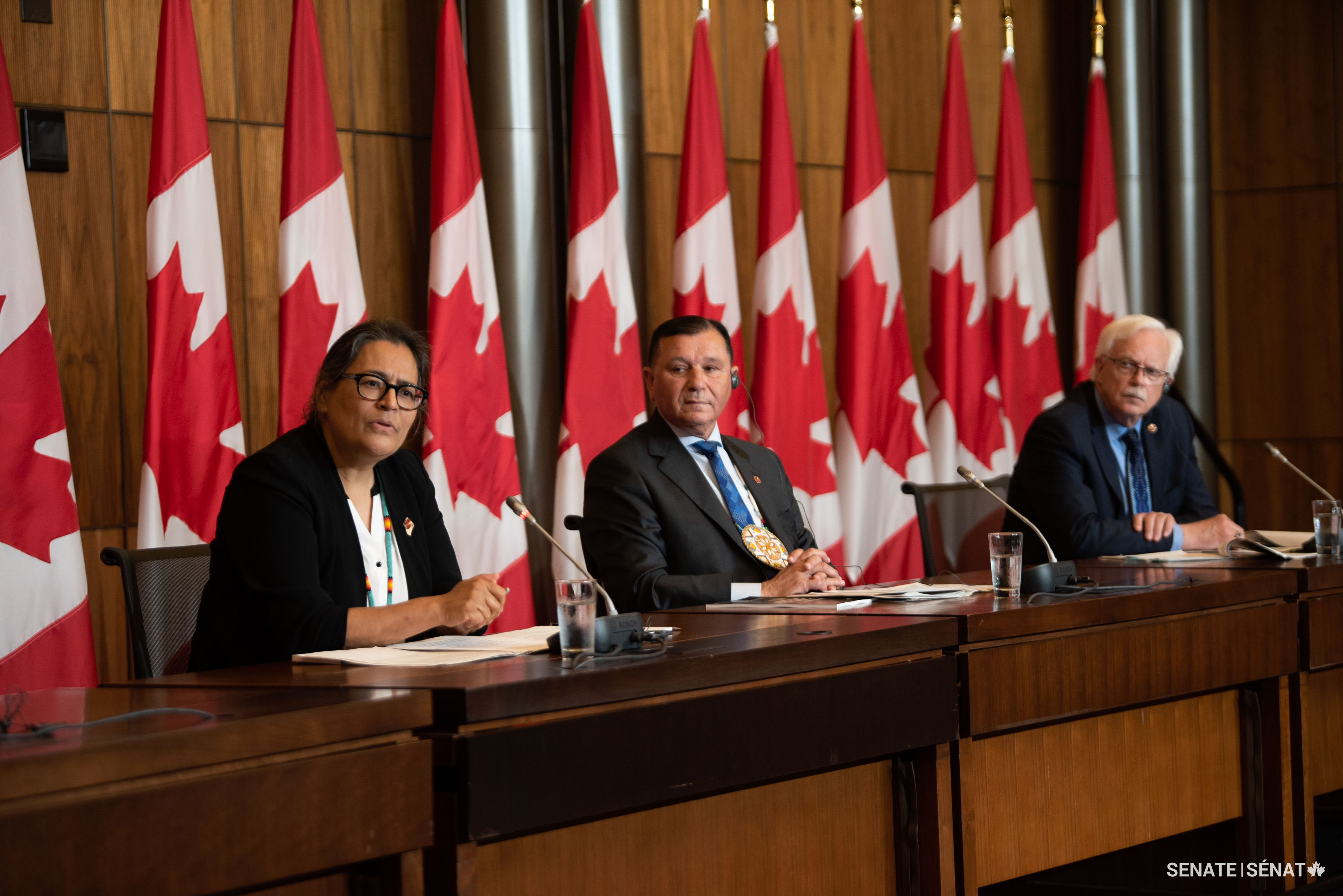
Senators Michèle Audette, Brian Francis, centre, and David M. Arnot talk about the Senate Committee on Indigenous Peoples’ report on the implementation of the Cannabis Act and its effects on Indigenous peoples during a press conference.
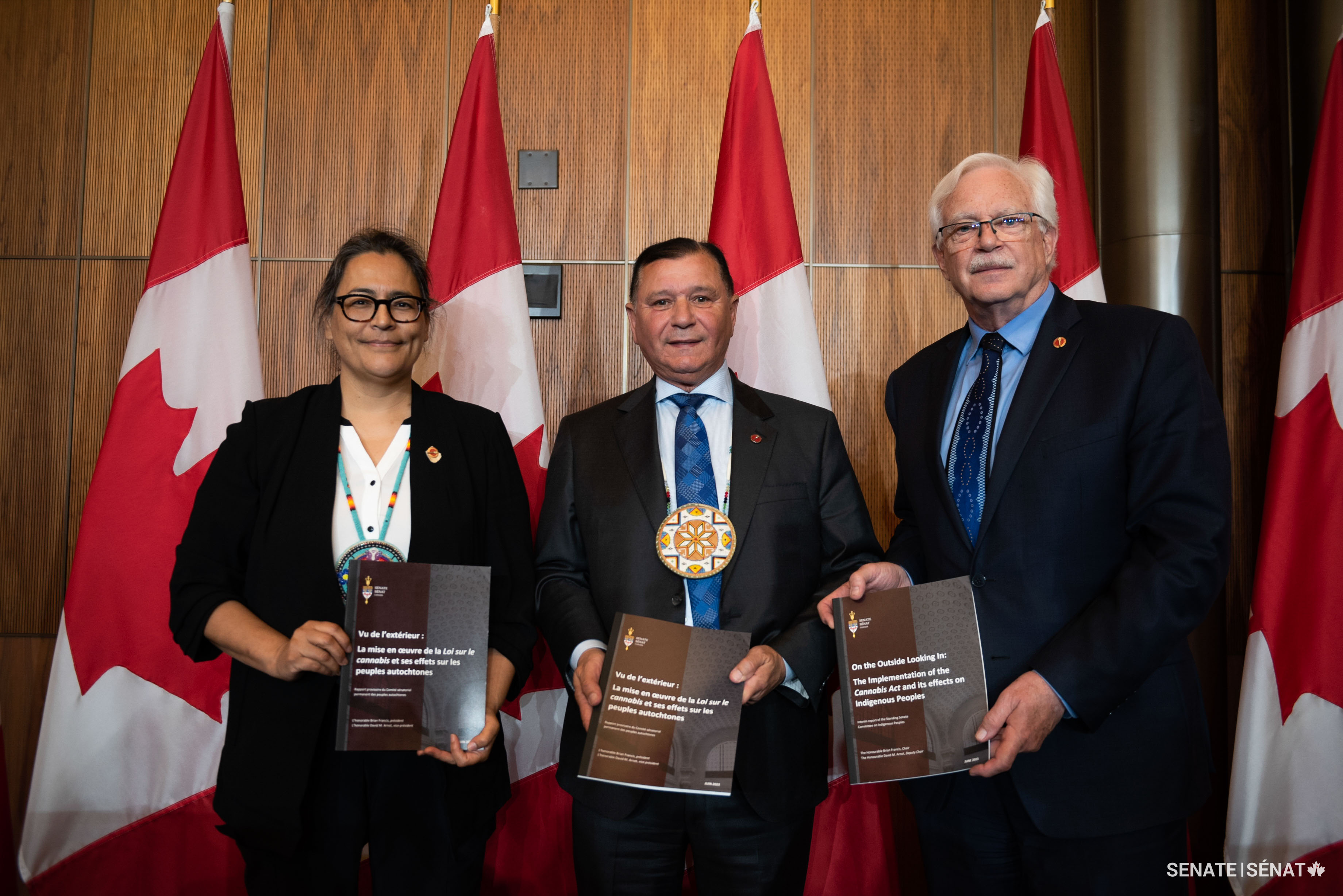
Senators Michèle Audette, Brian Francis, centre, and David M. Arnot show a copy of the Senate Committee on Indigenous Peoples’ report, “On the Outside Looking In: The Implementation of the Cannabis Act and its effects on Indigenous Peoples”, made public on Wednesday, June 14, 2023.
Senators who participated in this study

Brian Francis
PSG - Prince Edward Island

David M. Arnot
ISG - Saskatchewan

Michèle Audette
PSG - Quebec (De Salaberry)

Mary Coyle
ISG - Nova Scotia (Antigonish)

Margo Greenwood
ISG - British Columbia

Nancy J. Hartling
ISG - New Brunswick

Patti LaBoucane-Benson
GRO - Alberta

Yonah Martin
C - British Columbia

Dennis Glen Patterson
CSG - Nunavut

Donald Neil Plett
C - Manitoba (Landmark)

Karen Sorensen
PSG - Alberta

Scott Tannas
CSG - Alberta
Ex-officio members of the committee: The Honourable Marc Gold and/or The Honourable Patti LaBoucane-Benson, The Honourable Donald Neil Plett and/or The Honourable Yonah Martin
Other Senators who have participated in the study: The Honourable Gwen Boniface, The Honourable Bev Busson, The Honourable Daniel Christmas, The Honourable Sandra M. Lovelace Nicholas, The Honourable Ratna Omidvar, The Honourable Kim Pate