

The Peace Tower: Parliament Hill’s soaring sentinel

In February 2019, the Senate moved to the Senate of Canada Building, a former train station built in 1912. The Senate will occupy this temporary location while Parliament’s Centre Block — the Senate’s permanent home — is rehabilitated.
Although Centre Block is shuttered for rehabilitation work, Canadians can still experience its art and architecture through the Senate’s immersive virtual tour.
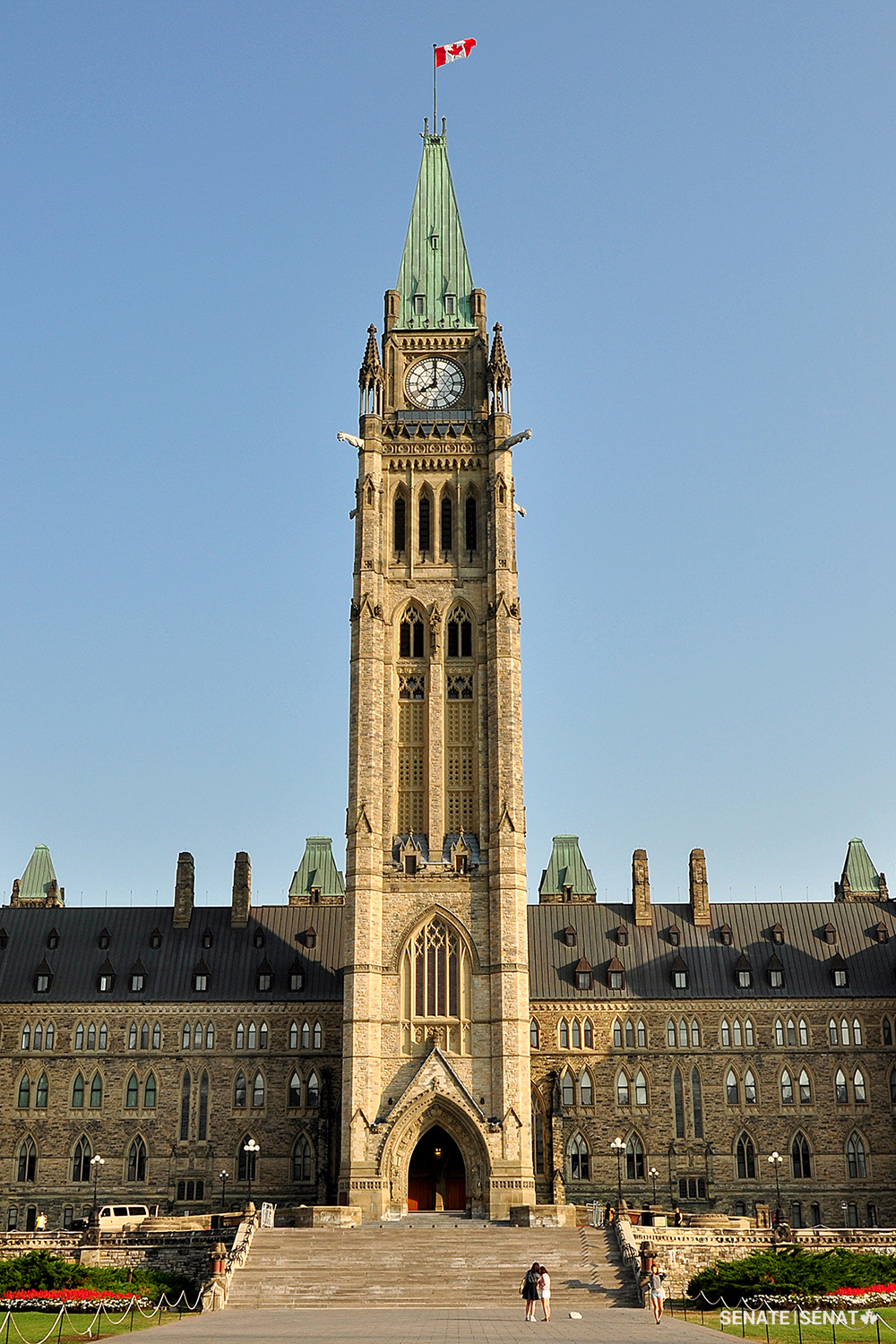
If there is a single structure that symbolizes Canada, it’s the Peace Tower. Soaring over Parliament Hill, it’s a landmark recognized around the world that has been a source of national pride for nearly a century.
“It stands as a real sentinel,” House of Commons Chief Curator Johanna Mizgala said. “People recognize it in photographs and instantly associate it with Ottawa and Parliament.”
The familiar silhouette will soon vanish from public view, at least temporarily. A 92-metre-tall envelope of steel scaffolding will engulf the tower while it undergoes masonry and structural upgrades as part of the Centre Block rehabilitation project.
Rising from the ashes
The Peace Tower was built between 1919 and 1927 to replace the Victoria Tower, destroyed when the original Parliament Building — completed in 1867 — was consumed by fire in February 1916, two years into the First World War.
Nothing of the original building could be salvaged beyond the Library of Parliament. Regardless, reconstruction on a new Parliament building began almost immediately and moved at a determined pace.
Designed by architects John A. Pearson and Joseph-Omer Marchand, its central tower soared to a height of 92.2 metres — 37 metres taller than its predecessor. Sleek and imposing, it was the tallest structure in Canada at the time.
“For decades you weren’t allowed to build anything in Ottawa as tall as the Peace Tower,” Ms. Mizgala pointed out. “It was important to preserve sight lines to the tower.”
A naming contention
The tower’s name remained up in the air for years. The press often referred to it as the Victory Tower, but the chief architect held to a more conciliatory vision. Pearson reminded Prime Minister William Lyon Mackenzie King that, during the 1919 cornerstone-laying ceremony, the Prince of Wales had referred to the structure as the Peace Tower, expressing a desire for lasting peace many shared.
The new Centre Block, with its iconic Peace Tower, opened to the public in 1927, with 60,000 people attending a Canada Day ceremony on Parliament Hill that was broadcast live across the country.
For whom the bells toll
The centrepiece of the tower — its 54-tonne, 53-bell carillon — is an imposing reminder of Canada’s First World War sacrifices. The idea for a bell tower came from George H. Bradbury, a Manitoba senator who had served as a battalion commander on the Western Front. Moved by the peal of church bells ringing across the smouldering battlefields, he proposed the carillon shortly after his appointment to the Senate in 1917, well before the tower’s first stone had been laid.
Memorializing the fallen
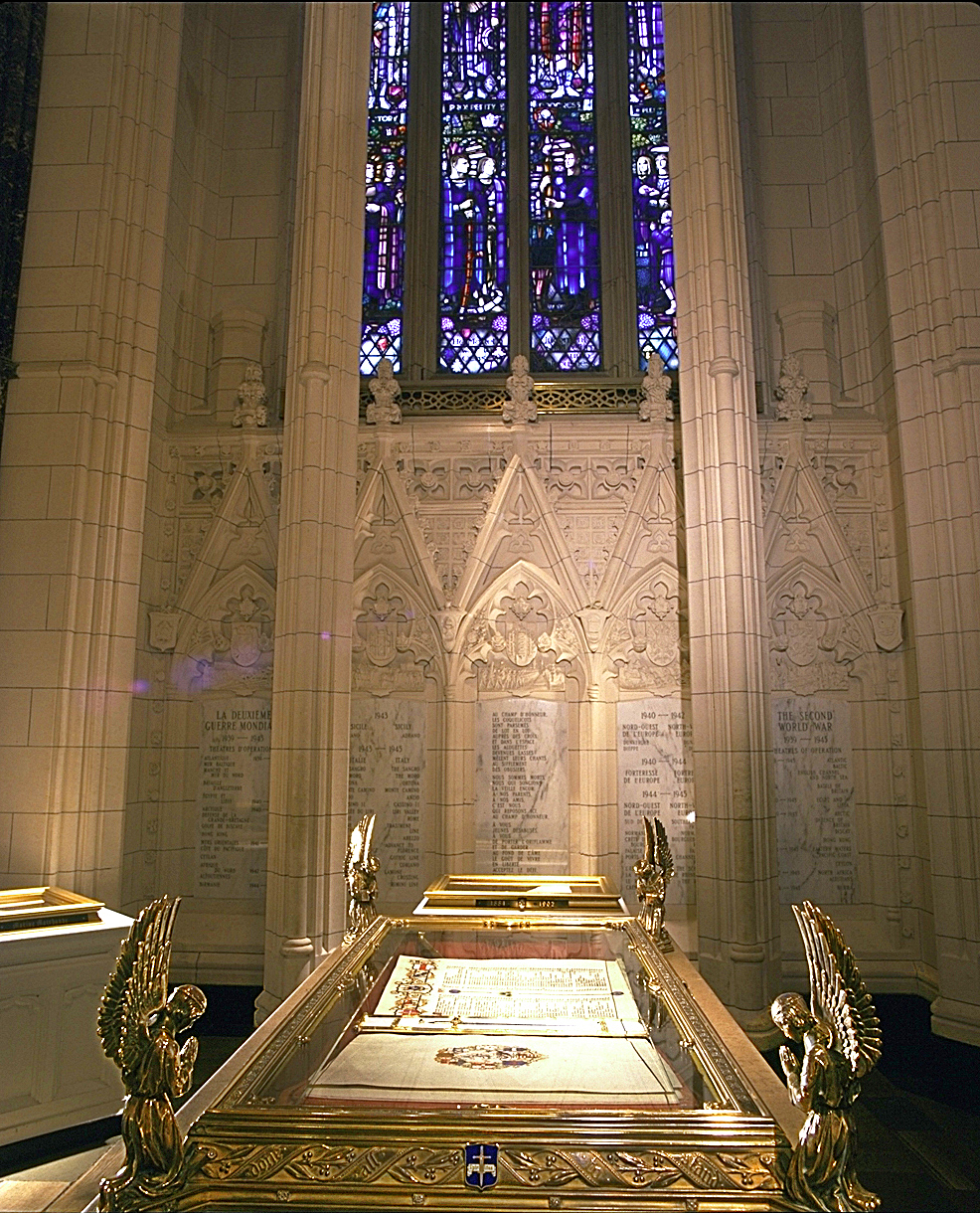
At the heart of the tower lies the Memorial Chamber, one of Canada’s most sacred spaces. The three-storey vaulted chapel honours the nation’s war dead and houses the Books of Remembrance.
“Pearson imagined the Memorial Chamber as a sacred grove,” Ms. Mizgala said. “A space illuminated by dappled light streaming in through stained-glass windows — as if you were seeing it through the branches of trees.”
At its centre stands a limestone altar supporting the First World War Book of Remembrance, which records the names of more than 66,000 Canadians killed in action. Seven additional altars hold similar volumes covering conflicts from the War of 1812 to the 2001–2014 Afghanistan mission.
“One of the lovely hallmarks of the Books of Remembrance is that they’re not in hierarchical order,” Ms. Mizgala noted. “You don’t have generals coming first. Names appear in the order in which they fell in battle.”
Pearson’s attention to symbolic detail bordered on the obsessive. In 1921, he visited the battlefields of France and Belgium at his own expense to source stone for the project. Hopton Wood limestone, donated by the British government, forms the central altar. France contributed Chateau-Gaillard stone for the walls and vault. Belgium donated marble from Flanders Fields for the columns and steps.
“That was at a time where we didn’t bring our war dead home. They were buried where they fell,” Ms. Mizgala explained. “For families who would never see their loved one’s grave, there’s something beautifully poetic about a sacred space that allows them to walk on the same soil as their loved ones.”
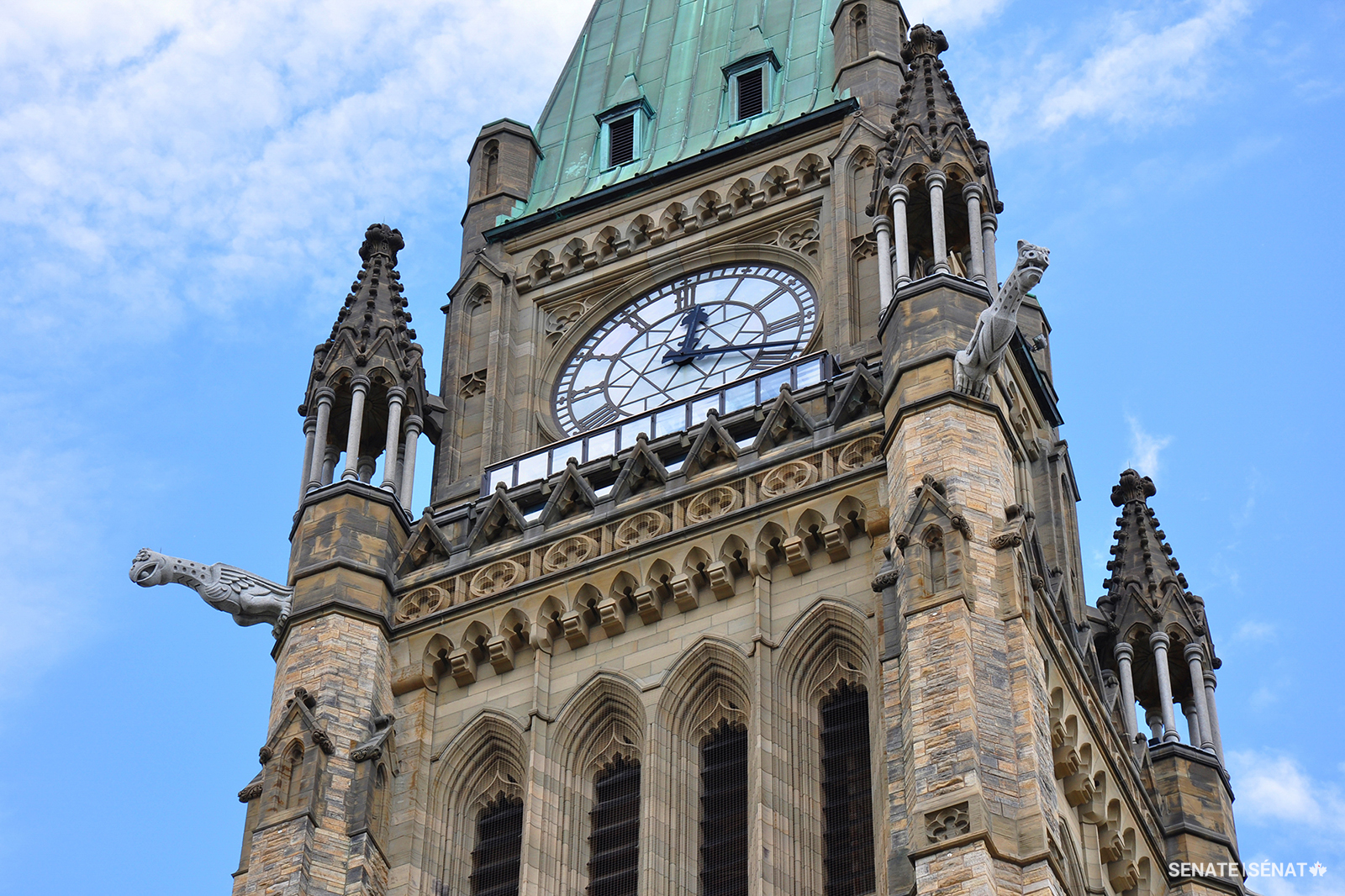 Near the top of the tower, four 2.5-metre-long gargoyles project from the tower’s corners. Just above them sits the observation level at a height of 60 metres and, above it, a nearly 5-metre-wide clock face.
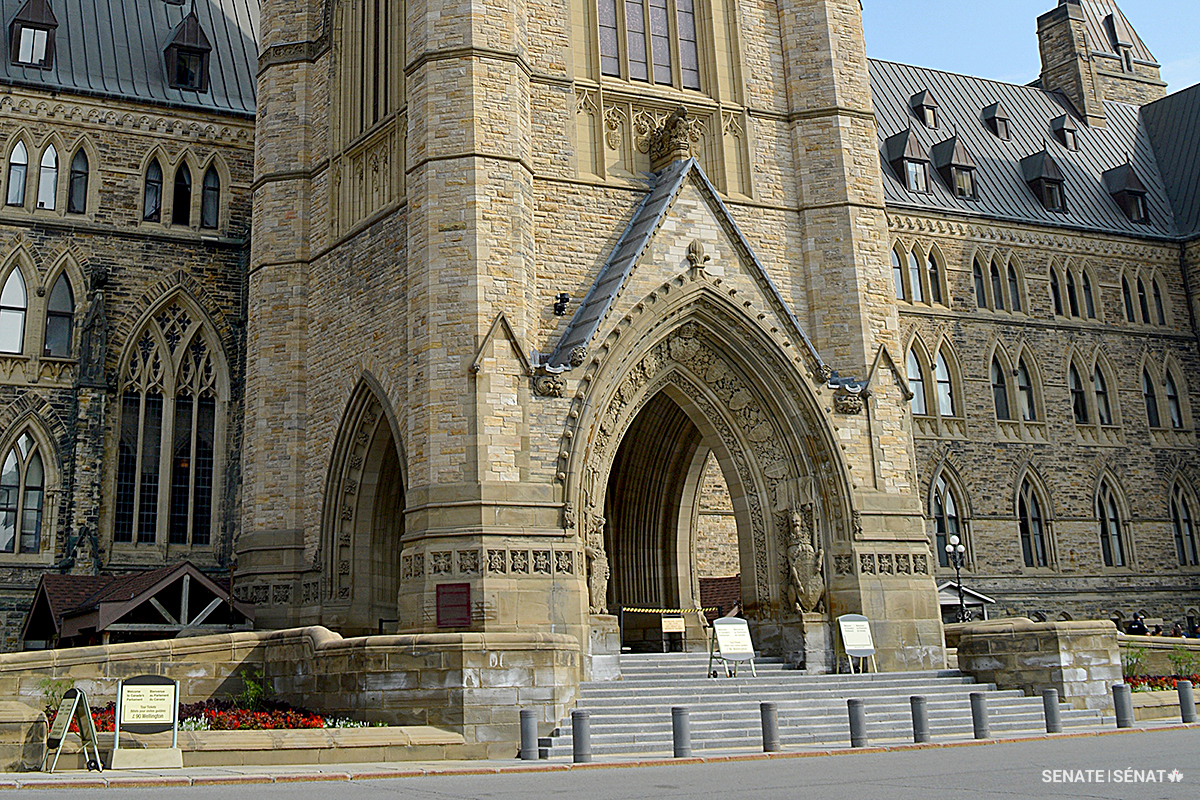 A porte-cochere — a covered entrance over a driveway — forms the base of the Peace Tower. Carvings of regional plants and animals, historical figures, mythical creatures and provincial emblems adorn the entrance.
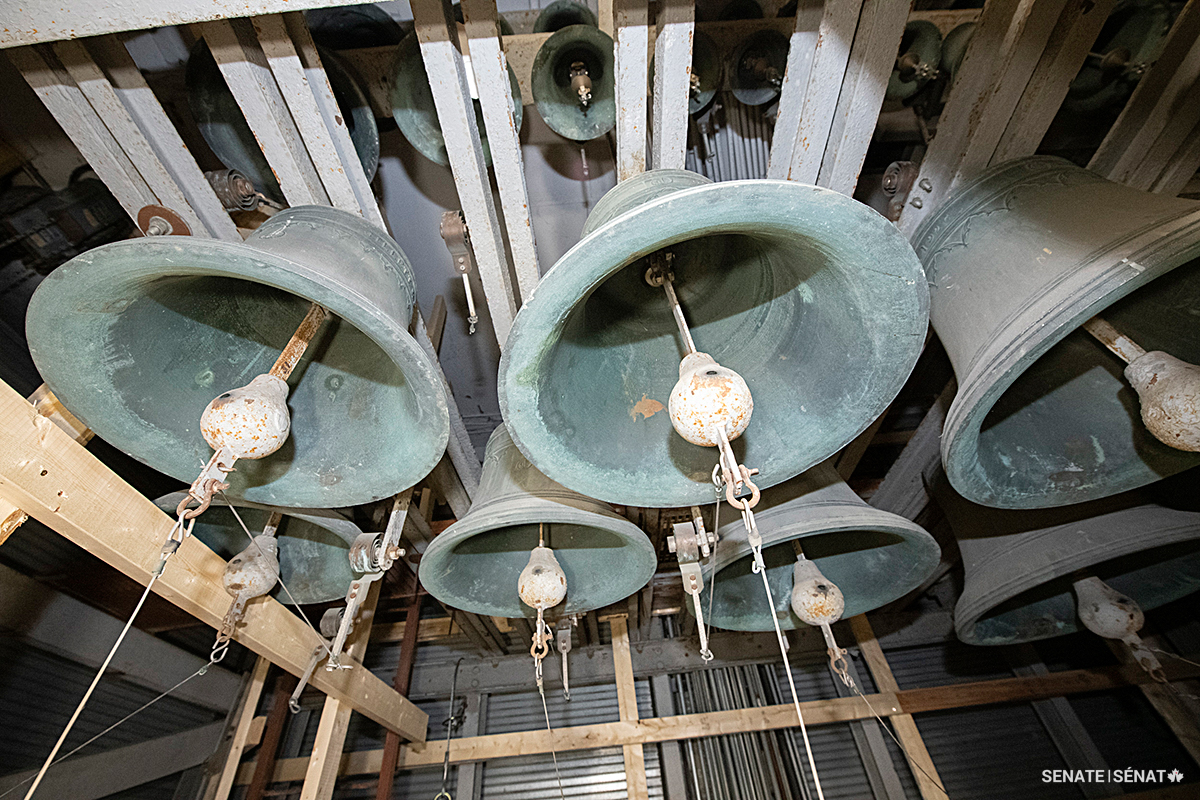 The Peace Tower carillon’s 53 bells range over seven stories. The instrument is played from a keyboard in a tiny room sandwiched between the smaller bells above and the largest bells below. Most of the carillon was disassembled in 2022; the bells and their clappers were shipped to the Royal Eijsbouts bell foundry in the Netherlands for restoration.
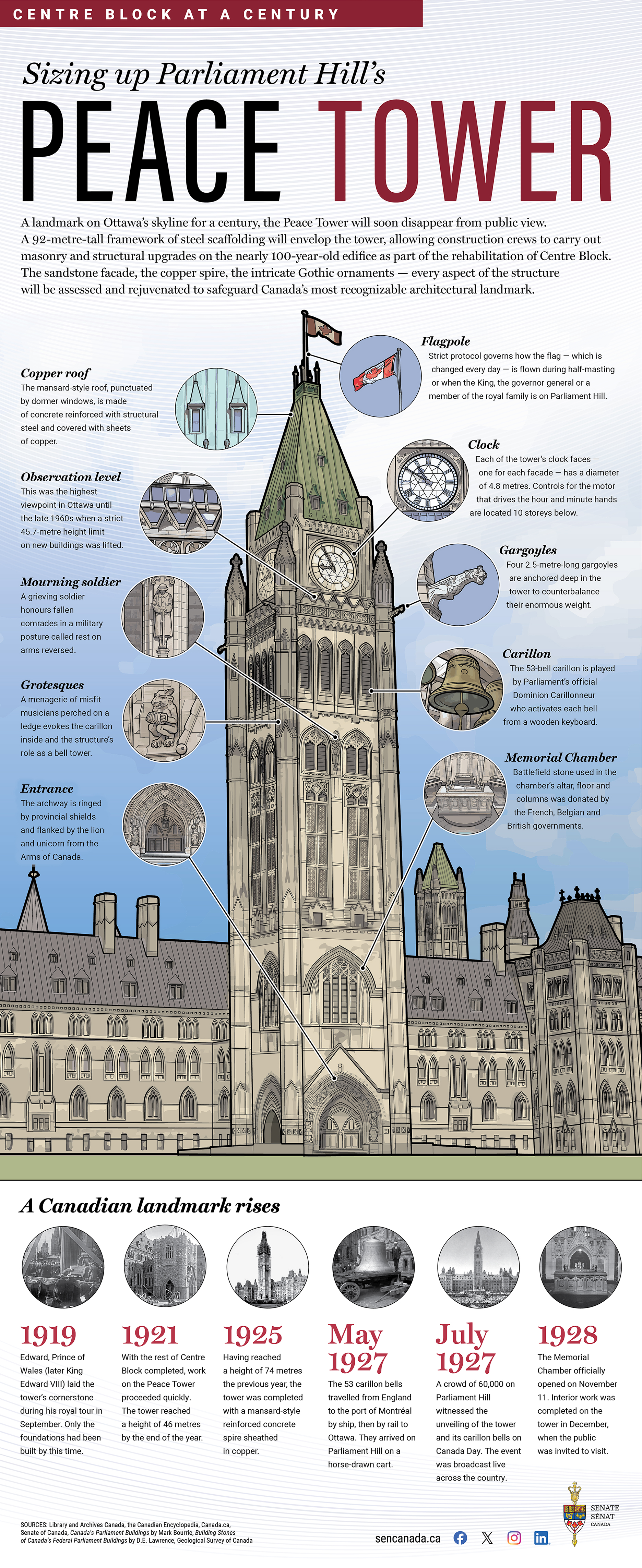
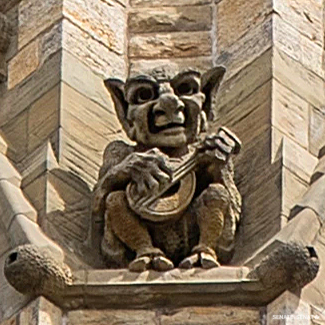
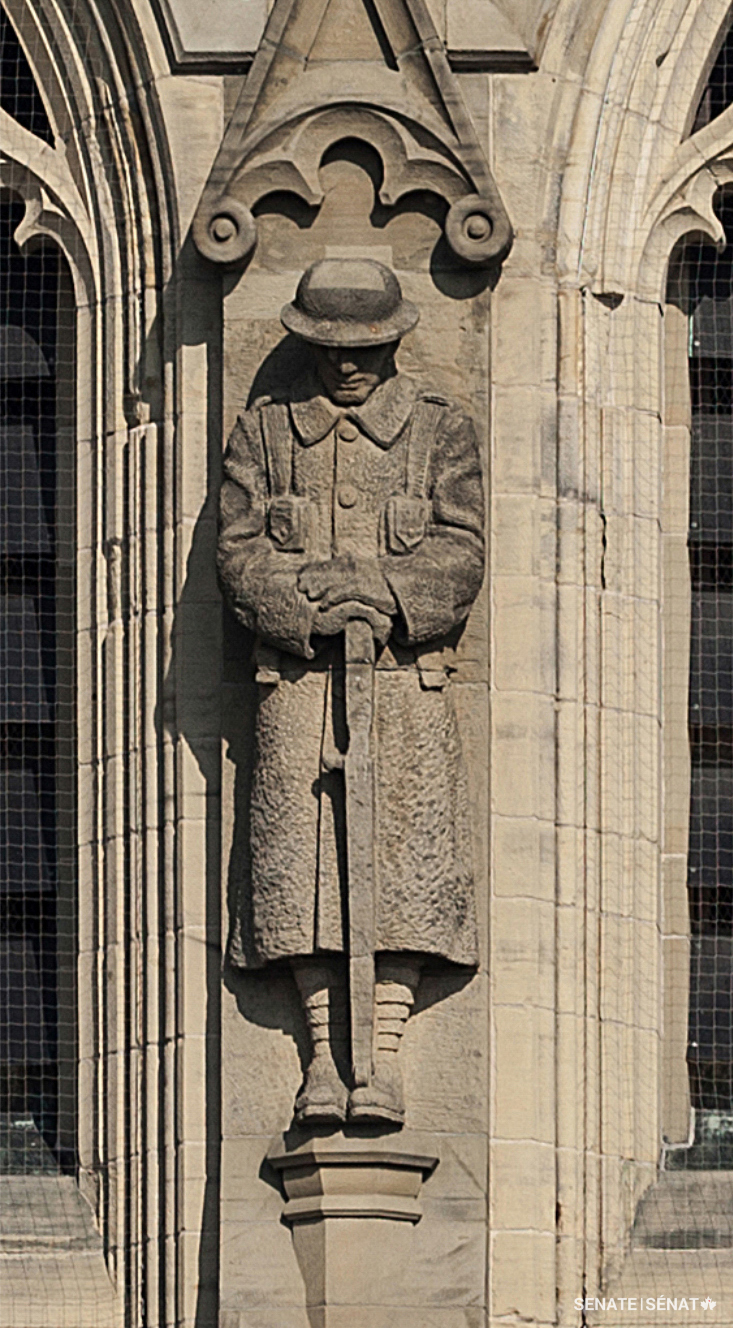
An infographic of the Peace Tower highlights 10 key architectural features as well as milestones in the tower’s construction.Title: Centre Block at a Century: Sizing up Parliament Hill’s Peace TowerIntro: A landmark on Ottawa’s skyline for a century, the Peace Tower will soon disappear from public view. A 92-metre-tall framework of steel scaffolding will envelop the tower, allowing construction crews to carry out masonry and structural upgrades on the nearly 100-year-old edifice as part of the rehabilitation of Centre Block. The sandstone facade, the copper spire, the intricate Gothic ornaments — every aspect of the structure will be assessed and rejuvenated to safeguard Canada’s most recognizable architectural landmark.Flagpole: Strict protocol governs how the flag — which is changed every day — is flown during half-masting or when the King, the governor general or a member of the royal family is on Parliament Hill.Copper roof: The mansard-style roof, punctuated by dormer windows, is made of concrete reinforced with structural steel and covered with sheets of copper.Clock: Each of the tower’s clock faces — one for each facade — has a diameter of 4.8 metres. Controls for the motor that drives the hour and minute hands are located 10 storeys below.Observation level: This was the highest viewpoint in Ottawa until the late 1960s, when a strict 45.7-metre height limit on new buildings was lifted.Gargoyles: Four 2.5-metre-long gargoyles are anchored deep in the tower to counterbalance their enormous weight.Mourning soldier: A grieving soldier honours fallen comrades in a military posture called rest on arms reversed.Carillon: The 53-bell carillon is played by Parliament’s official Dominion Carillonneur who activates each bell from a wooden keyboard.Grotesques: A menagerie of misfit musicians perched on a ledge evokes the carillon inside and the structure’s role as a bell tower.Memorial Chamber: Battlefield stone used in the chamber’s altar, floor and columns was donated by the French, Belgian and British governments.Entrance: The archway is ringed by provincial shields and flanked by the lion and unicorn from the Arms of Canada.Secondary title: A Canadian landmark rises1919: Edward, Prince of Wales (later King Edward VIII), laid the tower’s cornerstone during his royal tour in September. Only the foundations had been built by this time.1921: With the rest of Centre Block completed, work on the Peace Tower proceeded quickly. The tower reached a height of 46 metres by the end of the year.1925: Having reached a height of 74 metres the previous year, the tower was completed with a mansard-style reinforced concrete spire sheathed in copper.May 1927: The 53 carillon bells travelled from England to the port of Montréal by ship, then by rail to Ottawa. They arrived on Parliament Hill on a horse-drawn cart.July 1927: A crowd of 60,000 on Parliament Hill witnessed the unveiling of the tower and its carillon bells on Canada Day. The event was broadcast live across the country.1928: The Memorial Chamber officially opened on November 11. Interior work was completed on the tower in December, when the public was invited to visit.Sources: Library and Archives Canada, the Canadian Encyclopedia, Canada.ca, Senate of Canada, Canada’s Parliament Buildings by Mark Bourrie, Building Stones of Canada’s Federal Parliament Buildings by D.E. Lawrence, Geological Survey of Canada