

Senator McPhedran retires after a decade ‘bringing youth to the Senate and the Senate to youth’
In 1981, long before she took her seat in the Red Chamber, Senator Marilou McPhedran was an activist on Parliament Hill, co-leading more than 1,000 women from across the country in a campaign for equal gender rights.
The grassroots movement — known as the Ad Hoc Committee of Canadian Women on the Constitution — successfully secured equal rights for women in the Canadian Charter of Rights and Freedoms. Senator McPhedran was named to the Order of Canada for her leadership role in the campaign and went on to champion human rights and justice throughout her work in the legal, education and non-profit sectors.
Ahead of her retirement on July 22, 2026, Senator McPhedran reflects on her unwavering advocacy and her decade-long career in the Upper Chamber, where she continued fighting for human rights, youth and justice.
You were the first girl to become president of your high school and the first woman to become student president of the University of Winnipeg. How did these experiences shape your politics and guide your path to the Senate?
Even before high school, I remember being called down to the principal’s office in Grade 2 because we were working on the Christmas pageant and some of the older kids complained that I was being bossy. The principal looked at me and said, “You are a leader, and you could be prime minister someday, but you need to learn how to ask people to work with you.” Eventually I learned to be a little more diplomatic.
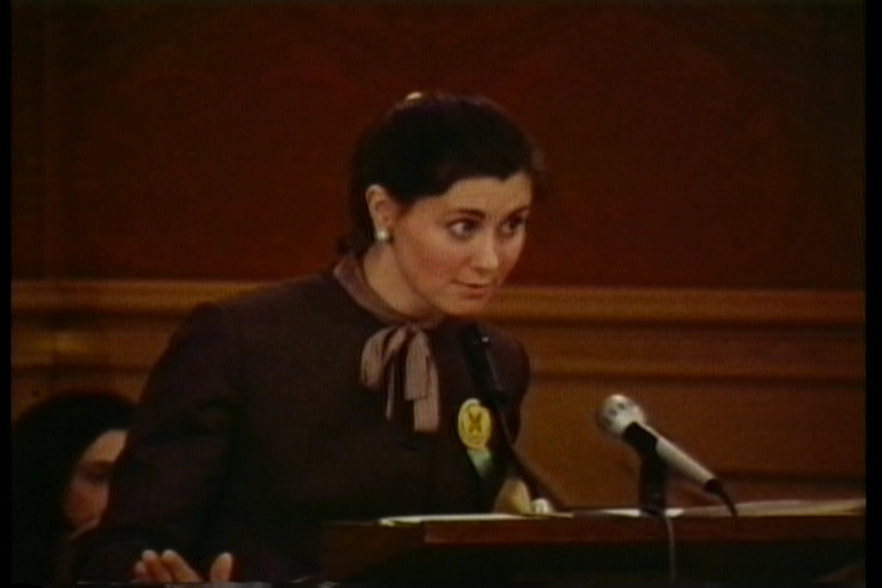 Marilou McPhedran speaks during the Ad Hoc Conference on Women and the Constitution on Parliament Hill in February 1981. (Photo credit: Office of Senator Marilou McPhedran)
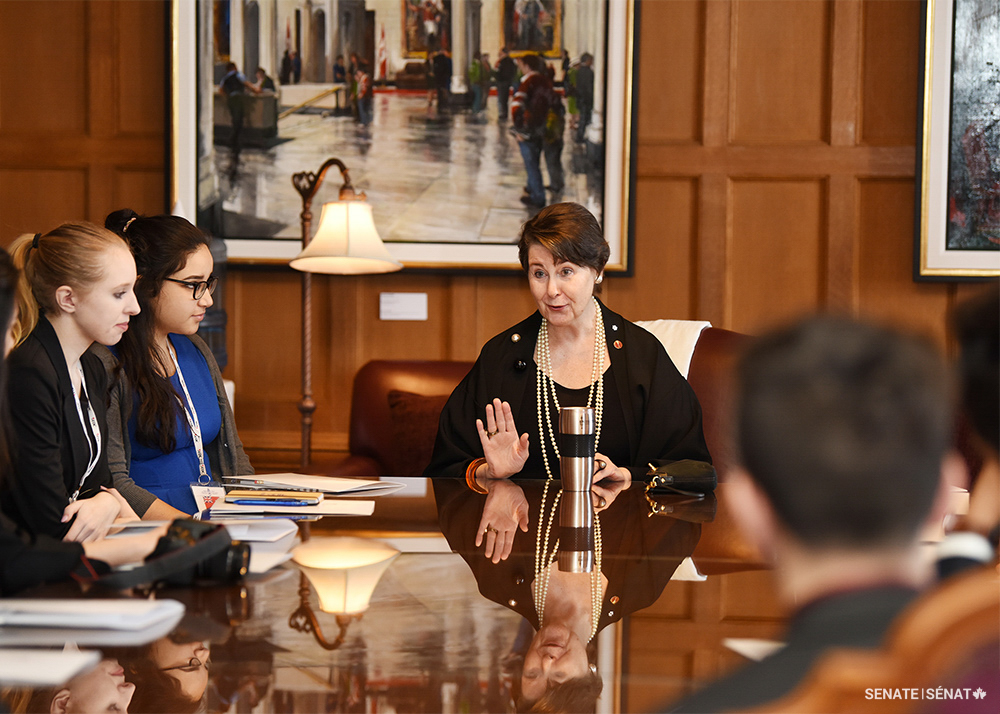 Senator McPhedran meets with participants of the Forum for Young Canadians on Parliament Hill in 2018.
As the first girl president of my high school, I ran the school with a couple of other girlfriends. We were a very entitled small group. Later in life, when I was a lawyer, I encountered a woman from my town who ended up telling me about the abuse she experienced growing up. She gave me a completely different perspective on the reality of my upbringing. I slowly started to realize how much privilege I had.
And then I had a formative experience as the first female student president of the University of Winnipeg. An executive member did something that I felt was wrong, but everyone agreed we needed to defend him on a principle of cabinet solidarity. It tore at me. That was a very powerful learning experience that has informed almost every choice I’ve made throughout my unpredictable career, including my decision to sit as a non-affiliated senator.
It’s probably accurate to say that I’m typically the one who gets into trouble, asks questions or annoys leadership. I think a lot of that goes back to my experience as a 19-year-old student president who made the mistake of not following my own strong intuition.
How did you become passionate about human rights?
As a university student, I was appalled when I found out that I had no right to birth control as a young woman. That was infuriating to me, so I became involved in a pro-choice advocacy group. We didn’t call it a human right, but that’s essentially what it was — the right for women to control their bodies. I had grown up thinking I already had that right. That was the beginning of my understanding that there are systems in place in health, education and law that limited me as a human being.
Then when I started law school, I met a group of students who were working on establishing the first rape crisis centre in Canada. I became deeply involved in that, and it was a pivotal time for me. Again, we didn’t use the term human rights. We framed it as helping women survive what was obviously a deeply sexist, misogynist legal system.
You co-founded the Ad Hoc Committee of Canadian Women on the Constitution — a group of “Ad Hockers” who travelled to Ottawa in 1981 to lobby for equal rights for women in the Canadian Charter of Rights and Freedoms. How did you get involved with this movement?
At the time, American women were also trying to amend their constitution to include equal rights. All you had to do was look south of the border to realize the consequences if we did not get a strong sex equality section in the new Charter of Rights.
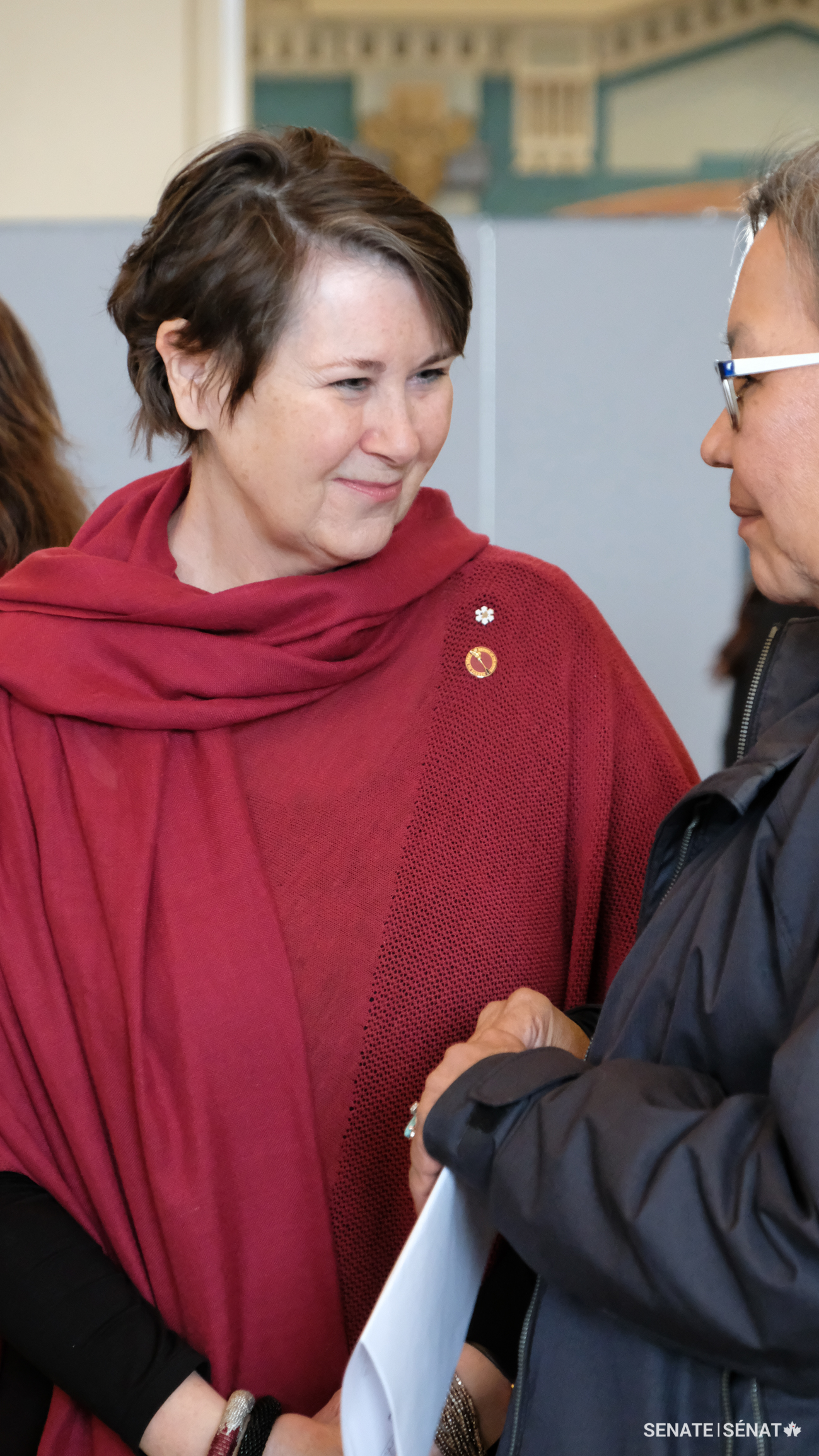 Senator McPhedran meets with a witness during a 2018 fact-finding mission to Winnipeg undertaken by the Senate Committee on Indigenous Peoples for a study on Canada’s relationship with First Nations, Métis and Inuit peoples.
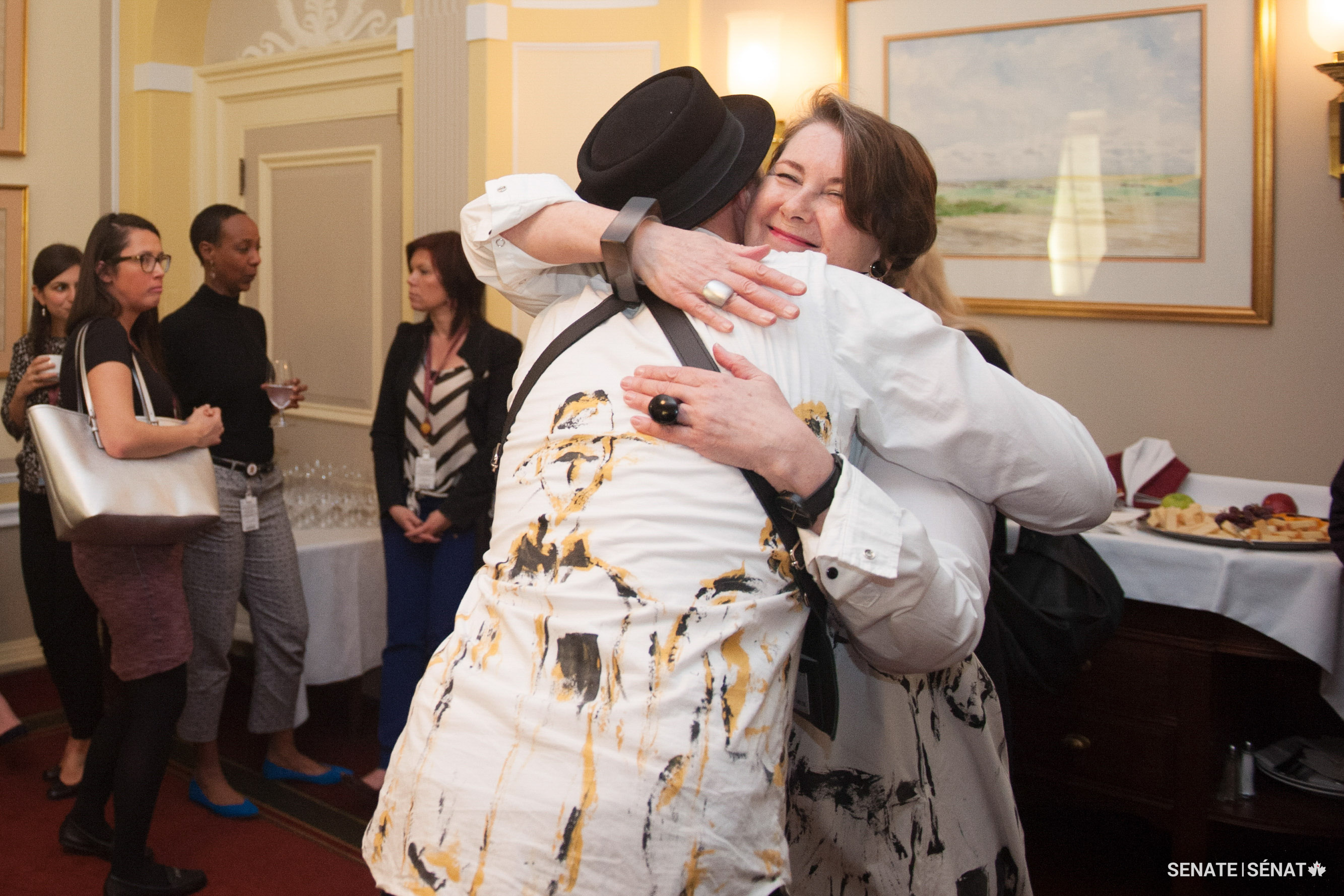 Senator McPhedran embraces Winnipeg designer Lennard Taylor during the Experience Manitoba Art Live event in 2017, which she hosted as part of her campaign to “bring youth to the Senate and the Senate to youth.”
I started attending meetings with different organizations and activists who were all united around this primary goal of strengthening women’s rights in the Charter. What emerged was an ad hoc movement without an executive, a budget or staff, but I became a leader. The government wanted nothing to do with us and kept thinking we’d go away. But thanks to a small group of allied parliamentarians, we were granted access to Parliament Hill.
I’ve written several articles* on the Section 28 sex equality guarantee in the Charter and “constitutional trialogue” that have been published in academic journals because I realized that this massive social mobilization was being written out of mainstream Canadian history, which is typically what happens to women’s accomplishments.
As I said in the Senate Chamber, section 28 is an example of a constitutional trialogue among government, courts and people, proving the Charter was not merely the result of a compromise between politicians. Many key amendments to the Charter originated with civil society advocate citizens, and it is citizens’ trust that ultimately sustains or defeats governments.
*Creating Trialogue: Women’s Constitutional Activism in Canada, Canadian Woman Studies (2006), Vol. 25; A Truer Story: Constitutional Trialogue, Supreme Court Law Review (2007); Trialogue for Lived Rights: Canadian Women’s Constitutional Activism in the Era of Patriation, Constitutional Democracy: The 150th Anniversary Celebration (2017)
When you were appointed to the Senate in 2016, you vowed to “bring youth to the Senate and the Senate to youth.” Why have youth been a priority for you in the Upper House?
As dean of Global College at the University of Winnipeg, I scouted star high school students to come to the college. I ended up with amazing first-year students, whom I’m still very close with. That time as an educator completely cemented, for me, the importance of young people’s engagement in human rights. I kept seeing brilliant, dedicated and accomplished students who did well in the program. It underscored for me how crucial it is for a democracy to have youth engagement.
When I was appointed to the Senate in November 2016, I created a youth advisory council of former students and former research assistants. They created a parliamentary agenda that I have relied on throughout my 10 years at the Senate. That agenda included expanding voting rights to include 16- and 17-year-olds, creating a national youth advisory group and having “parties” at the Senate to bring parliamentarians and civil society together.
Speaking of that first item on your agenda, your Vote16 bill was recently defeated in the Senate. Where does this initiative go from here?
The bill was killed within three votes. We could have won, but we made a mistake in our count, and I take responsibility for that. However, this bill stemmed from a national campaign that goes far beyond my office. In fact, francophone youth were the first to articulate the need to expand voting rights to 16- and 17-year-olds.
I’m heartbroken, but I’m not despondent because this movement will continue. In fact, in my final days in the Red Chamber, senators approved my motion authorizing the Senate Committee on Human Rights to examine democratic inclusion and resilience, including the expansion of the Charter right to vote.
It took 30 years to change two words in Canada’s national anthem, and it would never have happened without a succession of women senators. Someone else is going to pick it up.
You are seeking to ban the use of public funds for non-disclosure agreements with your Can’t Buy Silence Act. What inspired you to bring this bill before the Senate?
I worked with survivors of abuse, harassment and discrimination during my time at a legal aid practice in the 1990s. I’ve also chaired three inquiries into the sexual abuse of patients. When you work on these kinds of cases, you learn very quickly that institutions will do almost anything to protect themselves and their members, including through non-disclosure agreements.
I see my bill as a vehicle to raise awareness of this issue. I strongly believe that bills can be powerful advocacy tools, even if they have little chance of being adopted at that point in time. There’s an intrinsic value in tabling a bill that addresses injustice, particularly when there are people out there, far from Parliament Hill, who have built a coalition around the issue. The bill becomes a beacon for them.
What are you planning to do next?
I have no idea, and I have never been able to successfully predict my career path. But I’m not worried because I’m a feminist and feminists never retire.
Watch the tributes to Senator Marilou McPhedran and her farewell speech in the Senate Chamber.
 Senator McPhedran with her children, Jonathan and David, whom she credits for encouraging her to apply to the Senate. (Photo credit: Office of Senator Marilou McPhedran)
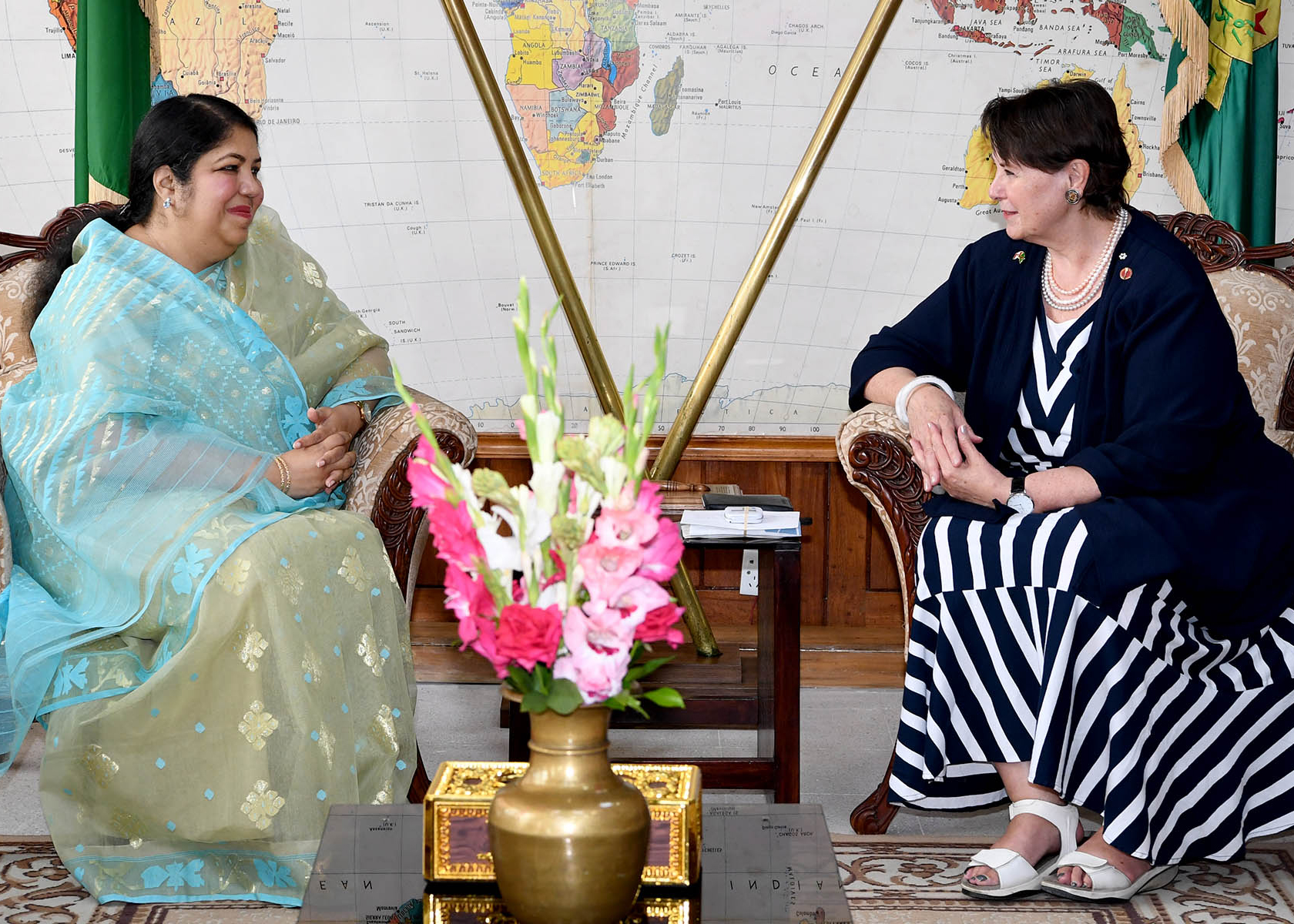 Senator McPhedran meets with the Honourable Shirin Sharmin Chaudhury, Speaker of the Jatiya Sangsad (the Parliament of Bangladesh) in Dhaka, in 2019. (Photo credit: Office of Senator Marilou McPhedran)
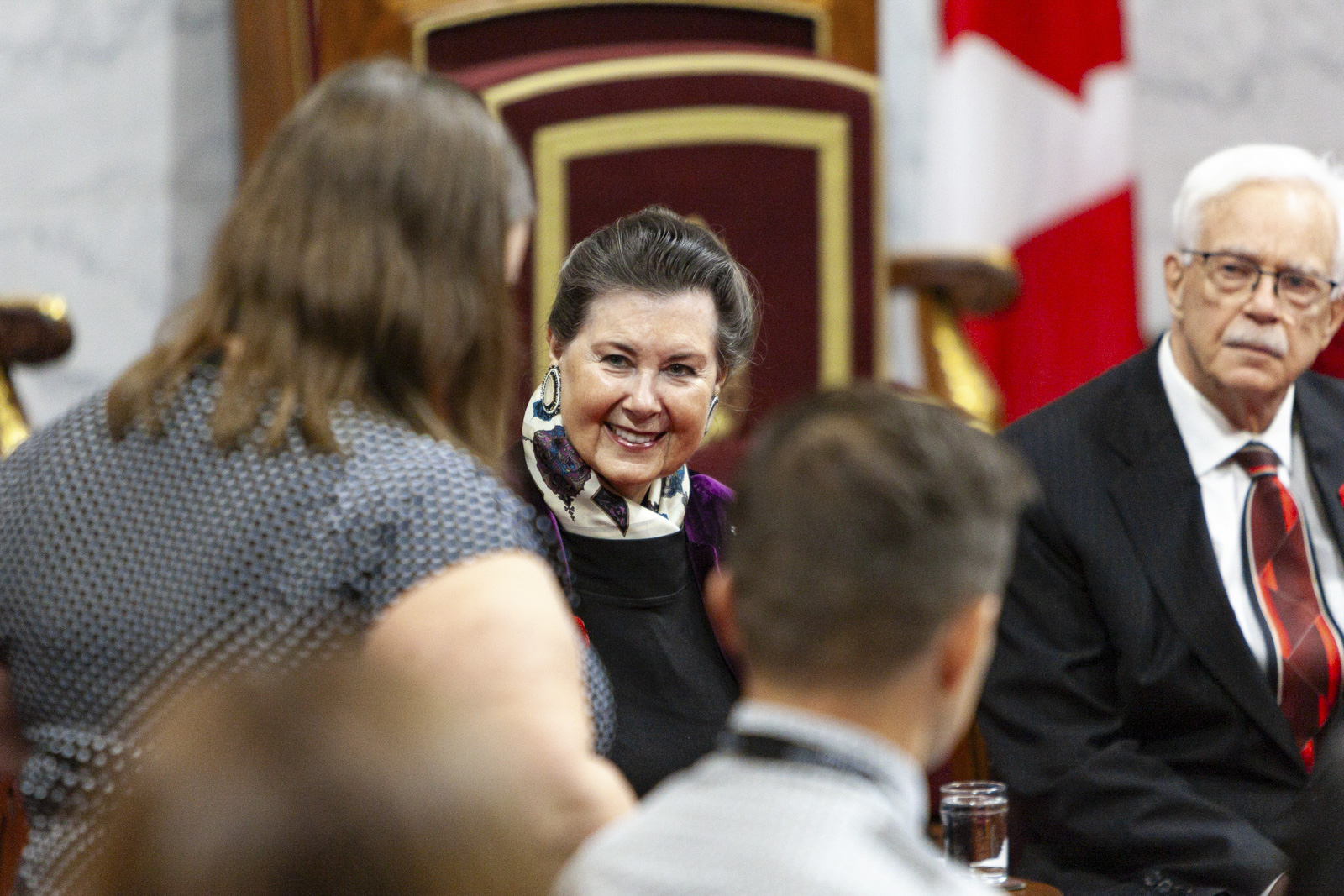 Senator McPhedran moderates the Senators’ Perspectives Panel, featuring her colleague Senator David M. Arnot, at the Teachers Institute on Canadian Parliamentary Democracy in the Senate Chamber in 2024. (Photo credit: Library of Parliament)
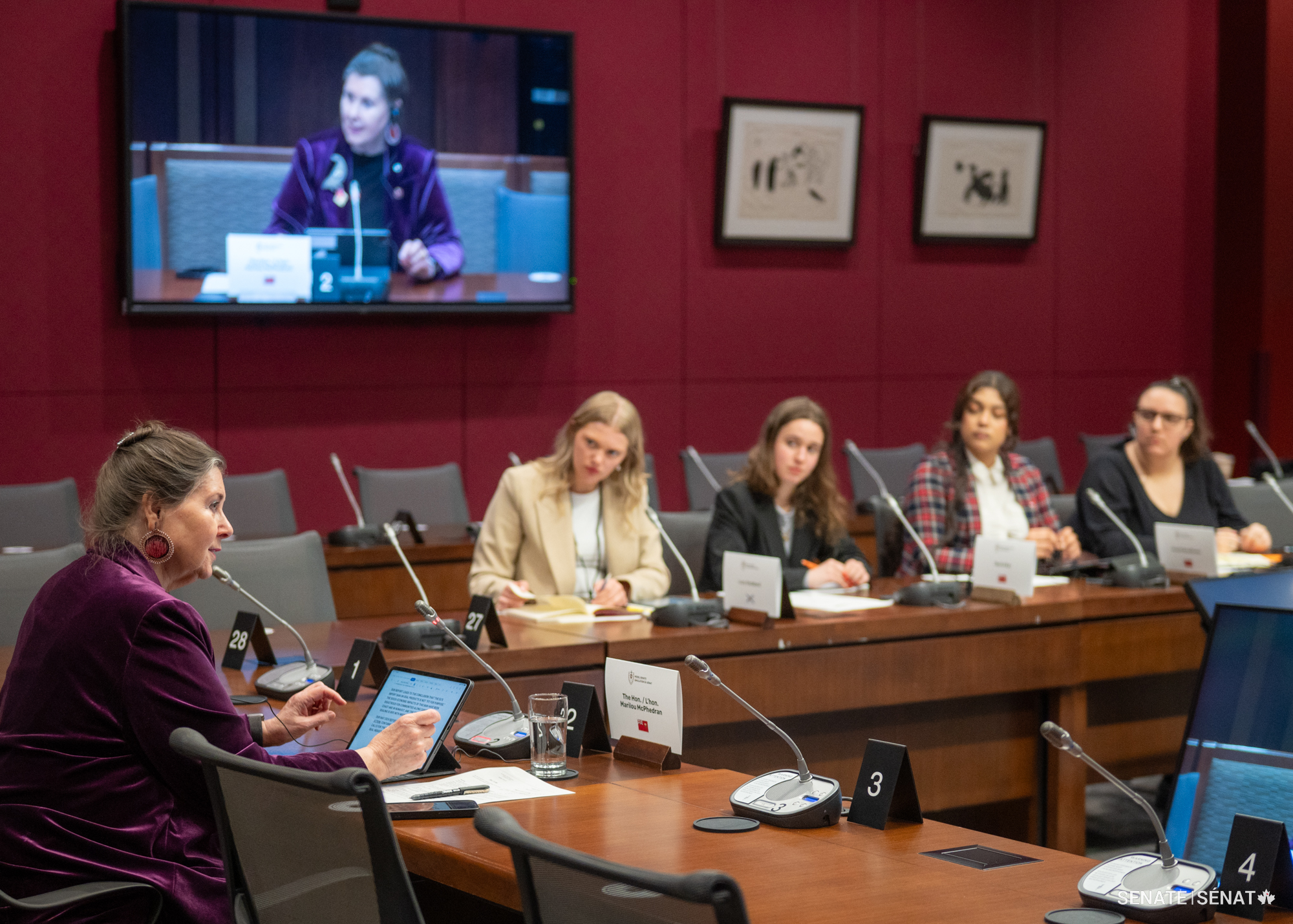 Senator McPhedran participates as an expert witness during a simulated committee meeting at Model Senate in 2025.
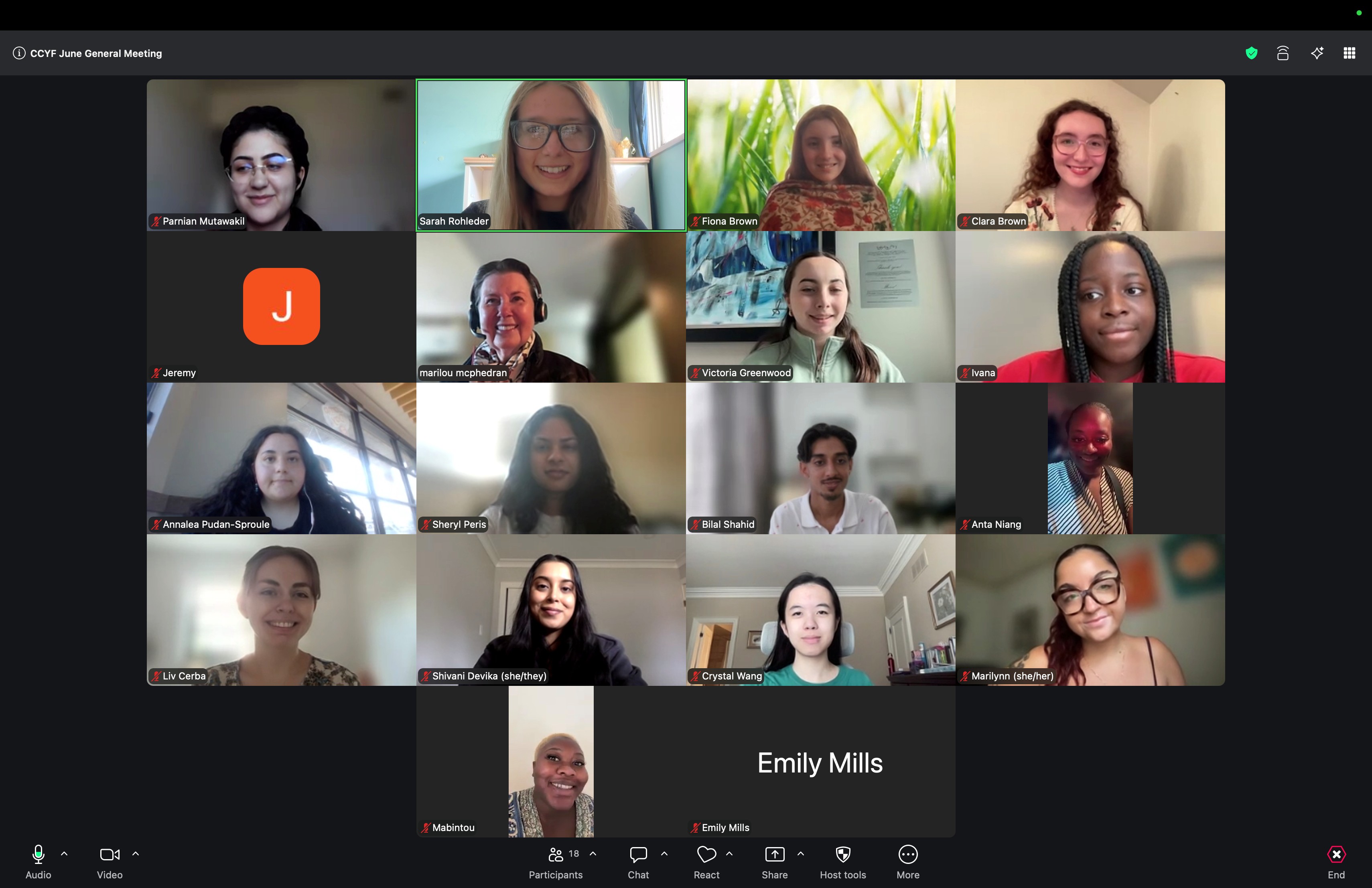
Senator McPhedran meets with the Canadian Council of Young Feminists, her national youth advisors, on July 11, 2026. (Photo credit: Office of Senator Marilou McPhedran)
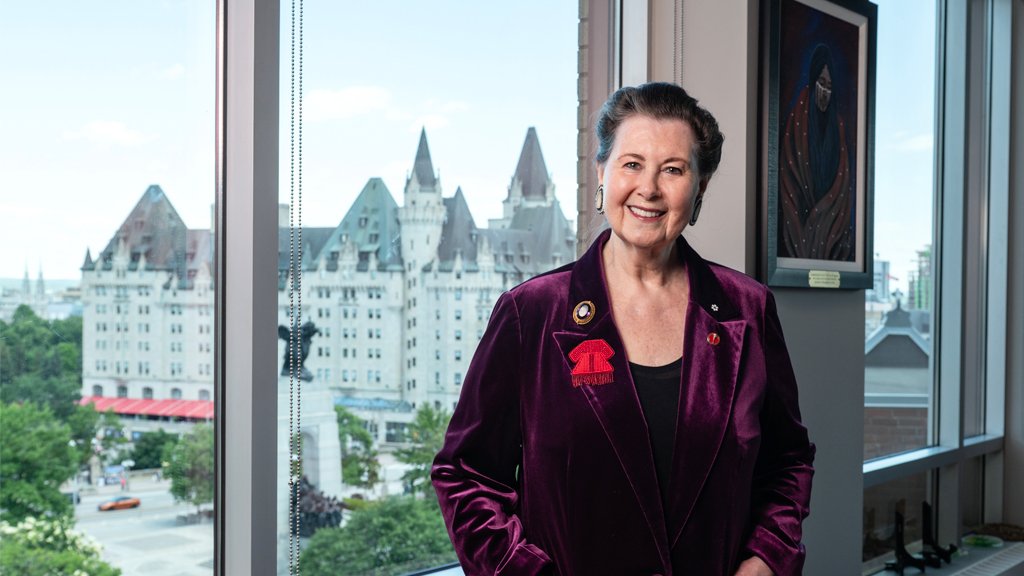
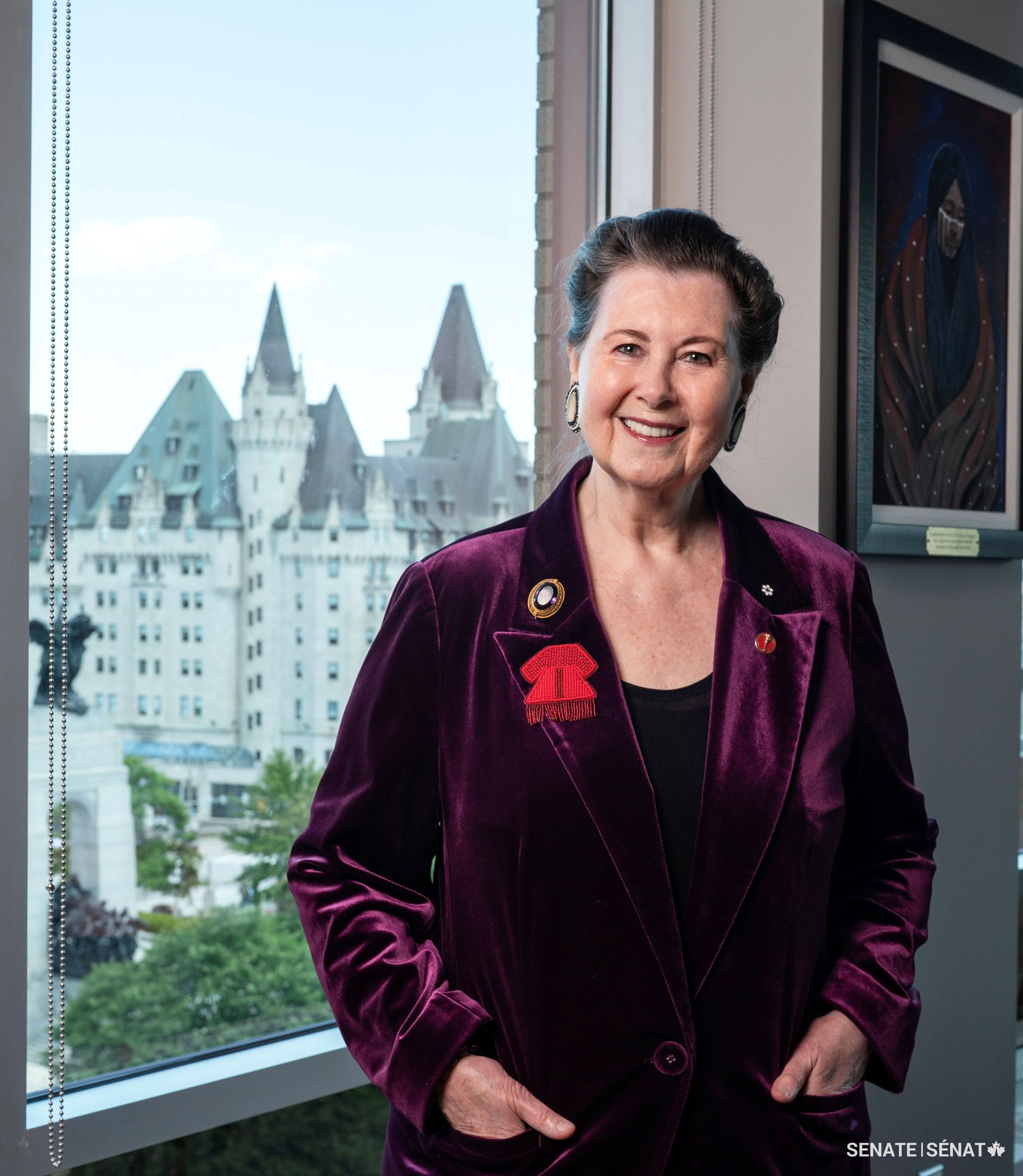 Senator McPhedran stands in her Senate office overlooking the National War Memorial and the Chateau Laurier.
Related articles
Tags
Committee news
Senator McPhedran retires after a decade ‘bringing youth to the Senate and the Senate to youth’
In 1981, long before she took her seat in the Red Chamber, Senator Marilou McPhedran was an activist on Parliament Hill, co-leading more than 1,000 women from across the country in a campaign for equal gender rights.
The grassroots movement — known as the Ad Hoc Committee of Canadian Women on the Constitution — successfully secured equal rights for women in the Canadian Charter of Rights and Freedoms. Senator McPhedran was named to the Order of Canada for her leadership role in the campaign and went on to champion human rights and justice throughout her work in the legal, education and non-profit sectors.
Ahead of her retirement on July 22, 2026, Senator McPhedran reflects on her unwavering advocacy and her decade-long career in the Upper Chamber, where she continued fighting for human rights, youth and justice.
You were the first girl to become president of your high school and the first woman to become student president of the University of Winnipeg. How did these experiences shape your politics and guide your path to the Senate?
Even before high school, I remember being called down to the principal’s office in Grade 2 because we were working on the Christmas pageant and some of the older kids complained that I was being bossy. The principal looked at me and said, “You are a leader, and you could be prime minister someday, but you need to learn how to ask people to work with you.” Eventually I learned to be a little more diplomatic.
Marilou McPhedran speaks during the Ad Hoc Conference on Women and the Constitution on Parliament Hill in February 1981. (Photo credit: Office of Senator Marilou McPhedran)
Senator McPhedran meets with participants of the Forum for Young Canadians on Parliament Hill in 2018.
As the first girl president of my high school, I ran the school with a couple of other girlfriends. We were a very entitled small group. Later in life, when I was a lawyer, I encountered a woman from my town who ended up telling me about the abuse she experienced growing up. She gave me a completely different perspective on the reality of my upbringing. I slowly started to realize how much privilege I had.
And then I had a formative experience as the first female student president of the University of Winnipeg. An executive member did something that I felt was wrong, but everyone agreed we needed to defend him on a principle of cabinet solidarity. It tore at me. That was a very powerful learning experience that has informed almost every choice I’ve made throughout my unpredictable career, including my decision to sit as a non-affiliated senator.
It’s probably accurate to say that I’m typically the one who gets into trouble, asks questions or annoys leadership. I think a lot of that goes back to my experience as a 19-year-old student president who made the mistake of not following my own strong intuition.
How did you become passionate about human rights?
As a university student, I was appalled when I found out that I had no right to birth control as a young woman. That was infuriating to me, so I became involved in a pro-choice advocacy group. We didn’t call it a human right, but that’s essentially what it was — the right for women to control their bodies. I had grown up thinking I already had that right. That was the beginning of my understanding that there are systems in place in health, education and law that limited me as a human being.
Then when I started law school, I met a group of students who were working on establishing the first rape crisis centre in Canada. I became deeply involved in that, and it was a pivotal time for me. Again, we didn’t use the term human rights. We framed it as helping women survive what was obviously a deeply sexist, misogynist legal system.
You co-founded the Ad Hoc Committee of Canadian Women on the Constitution — a group of “Ad Hockers” who travelled to Ottawa in 1981 to lobby for equal rights for women in the Canadian Charter of Rights and Freedoms. How did you get involved with this movement?
At the time, American women were also trying to amend their constitution to include equal rights. All you had to do was look south of the border to realize the consequences if we did not get a strong sex equality section in the new Charter of Rights.
Senator McPhedran meets with a witness during a 2018 fact-finding mission to Winnipeg undertaken by the Senate Committee on Indigenous Peoples for a study on Canada’s relationship with First Nations, Métis and Inuit peoples.
Senator McPhedran embraces Winnipeg designer Lennard Taylor during the Experience Manitoba Art Live event in 2017, which she hosted as part of her campaign to “bring youth to the Senate and the Senate to youth.”
I started attending meetings with different organizations and activists who were all united around this primary goal of strengthening women’s rights in the Charter. What emerged was an ad hoc movement without an executive, a budget or staff, but I became a leader. The government wanted nothing to do with us and kept thinking we’d go away. But thanks to a small group of allied parliamentarians, we were granted access to Parliament Hill.
I’ve written several articles* on the Section 28 sex equality guarantee in the Charter and “constitutional trialogue” that have been published in academic journals because I realized that this massive social mobilization was being written out of mainstream Canadian history, which is typically what happens to women’s accomplishments.
As I said in the Senate Chamber, section 28 is an example of a constitutional trialogue among government, courts and people, proving the Charter was not merely the result of a compromise between politicians. Many key amendments to the Charter originated with civil society advocate citizens, and it is citizens’ trust that ultimately sustains or defeats governments.
*Creating Trialogue: Women’s Constitutional Activism in Canada, Canadian Woman Studies (2006), Vol. 25; A Truer Story: Constitutional Trialogue, Supreme Court Law Review (2007); Trialogue for Lived Rights: Canadian Women’s Constitutional Activism in the Era of Patriation, Constitutional Democracy: The 150th Anniversary Celebration (2017)
When you were appointed to the Senate in 2016, you vowed to “bring youth to the Senate and the Senate to youth.” Why have youth been a priority for you in the Upper House?
As dean of Global College at the University of Winnipeg, I scouted star high school students to come to the college. I ended up with amazing first-year students, whom I’m still very close with. That time as an educator completely cemented, for me, the importance of young people’s engagement in human rights. I kept seeing brilliant, dedicated and accomplished students who did well in the program. It underscored for me how crucial it is for a democracy to have youth engagement.
When I was appointed to the Senate in November 2016, I created a youth advisory council of former students and former research assistants. They created a parliamentary agenda that I have relied on throughout my 10 years at the Senate. That agenda included expanding voting rights to include 16- and 17-year-olds, creating a national youth advisory group and having “parties” at the Senate to bring parliamentarians and civil society together.
Speaking of that first item on your agenda, your Vote16 bill was recently defeated in the Senate. Where does this initiative go from here?
The bill was killed within three votes. We could have won, but we made a mistake in our count, and I take responsibility for that. However, this bill stemmed from a national campaign that goes far beyond my office. In fact, francophone youth were the first to articulate the need to expand voting rights to 16- and 17-year-olds.
I’m heartbroken, but I’m not despondent because this movement will continue. In fact, in my final days in the Red Chamber, senators approved my motion authorizing the Senate Committee on Human Rights to examine democratic inclusion and resilience, including the expansion of the Charter right to vote.
It took 30 years to change two words in Canada’s national anthem, and it would never have happened without a succession of women senators. Someone else is going to pick it up.
You are seeking to ban the use of public funds for non-disclosure agreements with your Can’t Buy Silence Act. What inspired you to bring this bill before the Senate?
I worked with survivors of abuse, harassment and discrimination during my time at a legal aid practice in the 1990s. I’ve also chaired three inquiries into the sexual abuse of patients. When you work on these kinds of cases, you learn very quickly that institutions will do almost anything to protect themselves and their members, including through non-disclosure agreements.
I see my bill as a vehicle to raise awareness of this issue. I strongly believe that bills can be powerful advocacy tools, even if they have little chance of being adopted at that point in time. There’s an intrinsic value in tabling a bill that addresses injustice, particularly when there are people out there, far from Parliament Hill, who have built a coalition around the issue. The bill becomes a beacon for them.
What are you planning to do next?
I have no idea, and I have never been able to successfully predict my career path. But I’m not worried because I’m a feminist and feminists never retire.
Watch the tributes to Senator Marilou McPhedran and her farewell speech in the Senate Chamber.
Senator McPhedran with her children, Jonathan and David, whom she credits for encouraging her to apply to the Senate. (Photo credit: Office of Senator Marilou McPhedran)
Senator McPhedran meets with the Honourable Shirin Sharmin Chaudhury, Speaker of the Jatiya Sangsad (the Parliament of Bangladesh) in Dhaka, in 2019. (Photo credit: Office of Senator Marilou McPhedran)
Senator McPhedran moderates the Senators’ Perspectives Panel, featuring her colleague Senator David M. Arnot, at the Teachers Institute on Canadian Parliamentary Democracy in the Senate Chamber in 2024. (Photo credit: Library of Parliament)
Senator McPhedran participates as an expert witness during a simulated committee meeting at Model Senate in 2025.
Senator McPhedran meets with the Canadian Council of Young Feminists, her national youth advisors, on July 11, 2026. (Photo credit: Office of Senator Marilou McPhedran)
Senator McPhedran stands in her Senate office overlooking the National War Memorial and the Chateau Laurier.