

From New Brunswick to the Senate — a year of change: Senator Boudreau
Tags
Last summer, I was appointed to the Senate of Canada. Little did I know what a transformative year it would be.
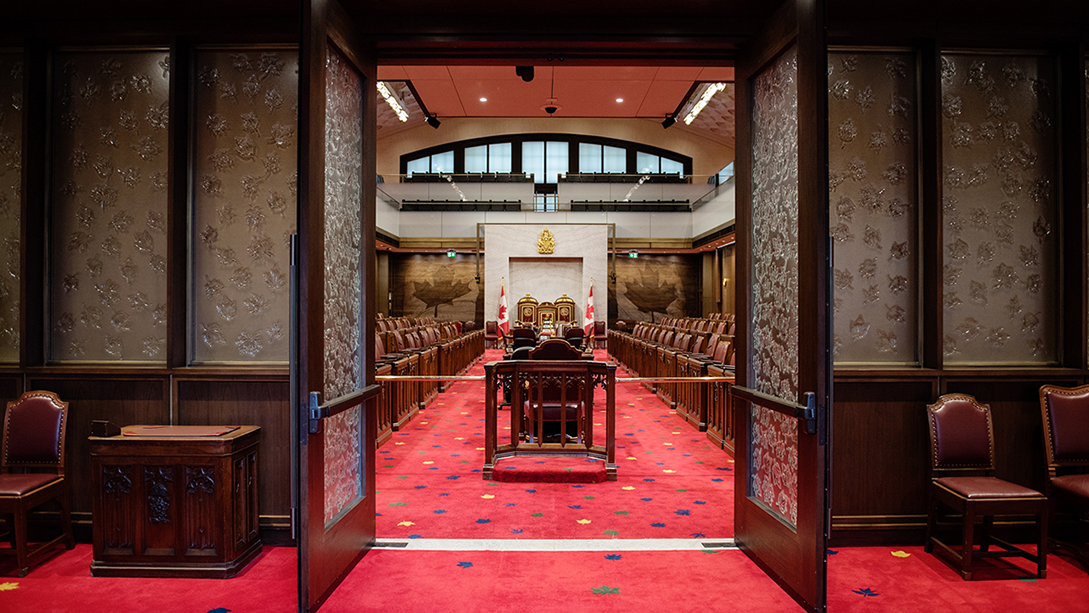
Trade wars and geopolitical chaos aside, what struck me when I first arrived in Ottawa was the Senate itself. Long overshadowed by the elected House of Commons, the new post-partisan Senate that I walked into on September 17, 2024, was barely recognizable.
No longer subject to the old system of blatantly partisan appointments, the new Senate is more diverse than ever. A quick glance through the biographies of my new colleagues was eye-opening. Profile after profile revealed impressive skills and experience across a multitude of sectors, not to mention lifetimes of significant contributions to Canadian life.
Thanks to these changes, the modern Senate is more interventionist than it used to be. Over the past decade, the Senate has made 350 amendments to government bills. It’s a stunning number, especially when you consider that only a single Senate amendment was passed during the 41st Parliament, just before the Upper Chamber’s reform. Maybe more than ever, the Senate is living up to its original promise of lending sober second thought to the work of government.
Since joining this new Senate, I’ve spent a lot of time listening. As I learn about an entirely new set of public policy issues, I’ve been searching for areas where I can contribute in a meaningful way. While the following priority areas are bound to shift over time, here is an initial glimpse at how I plan to focus my attention over the coming years.
As a former minister of health, I learned firsthand about the challenges facing our system. While shortages and wait times are best left to local authorities, federal legislators can play a role in improving access to mental health services, medical assistance in dying, eye care, reproductive health, organ donation and other services. I also saw how much the social determinants of health affect people’s lives and create backlogs in our health systems. With 20 years ahead of me in the Senate, I hope to contribute ideas for how we can address some of these root causes of illness.
We have an amazing country with great wealth and natural resources. Yet many of our fellow Canadians get left behind. How can we bring people together and help those who need a hand? People living with a disability, for example, should be able to work as easily as those without these challenges. People living in intergenerational poverty should be presented with every opportunity to break the cycle. We can work with those who have lived experiences to find solutions to these problems. We can eliminate stigmas and segregation within our lifetimes. We should be bold and innovative in our pursuit of this dream, and this should include a more serious examination of transformative solutions — such as a guaranteed basic income.
As a defender of regional interests, the Senate plays an important role. Several federal issues are of particular importance to New Brunswick.
One of these is immigration. We need to ensure that a proportionate share of immigrants to this region are French-speaking or integrated into French-speaking communities. According to Statistics Canada, in 1991, 34.3% of New Brunswickers identified French as their mother tongue. In 2021, this had dropped to 31.3%. We need to ensure that immigration policies reflect the reality of a strong francophone minority in New Brunswick. We also need to ensure that New Brunswick’s unique labour needs aren’t drowned out in a one-size-fits all approach to immigration. I intend to study this issue and propose tailored solutions that meet our province’s needs.
Speaking of New Brunswick’s unique reality, the province’s historic ties to la Francophonie represent an interesting economic opportunity. Over one billion people live in member countries of la Francophonie. New Brunswick has special access to these countries. We should leverage this access into strong relationships that we can harness for our shared economic benefit.
Finally, I want to ensure that New Brunswick receives its fair share of federal programs and services in areas like housing, infrastructure, healthcare and social services. I also plan to advocate for investments that will boost New Brunswick’s capacity to compete in a global marketplace.
So, there you have it. A roadmap for my next two decades in Ottawa. It’s been an interesting first year, with much more yet to come.
Senator Victor Boudreau represents New Brunswick in the Senate.
A version of this article was published in l’Acadie Nouvelle on July 31, 2025 (in French only).