

‘Representation of change’: Voices of Youth Indigenous Leaders 2026 participants appear before senators
Makayla Mantla has a dream: for Canada to one day have a publicly funded hospital specifically for First Nations patients and run by Indigenous health-care providers.
Through her research and work experience, the recently graduated nursing student from Behchokǫ̀, Northwest Territories, has witnessed Indigenous racism and the mistreatment of Indigenous patients in health-care settings. This, along with her own negative experience with the medical system when she suffered a life-threatening condition, has set her on the path to improve how Indigenous patients and health-care providers are cared for and treated in hospitals and clinics.
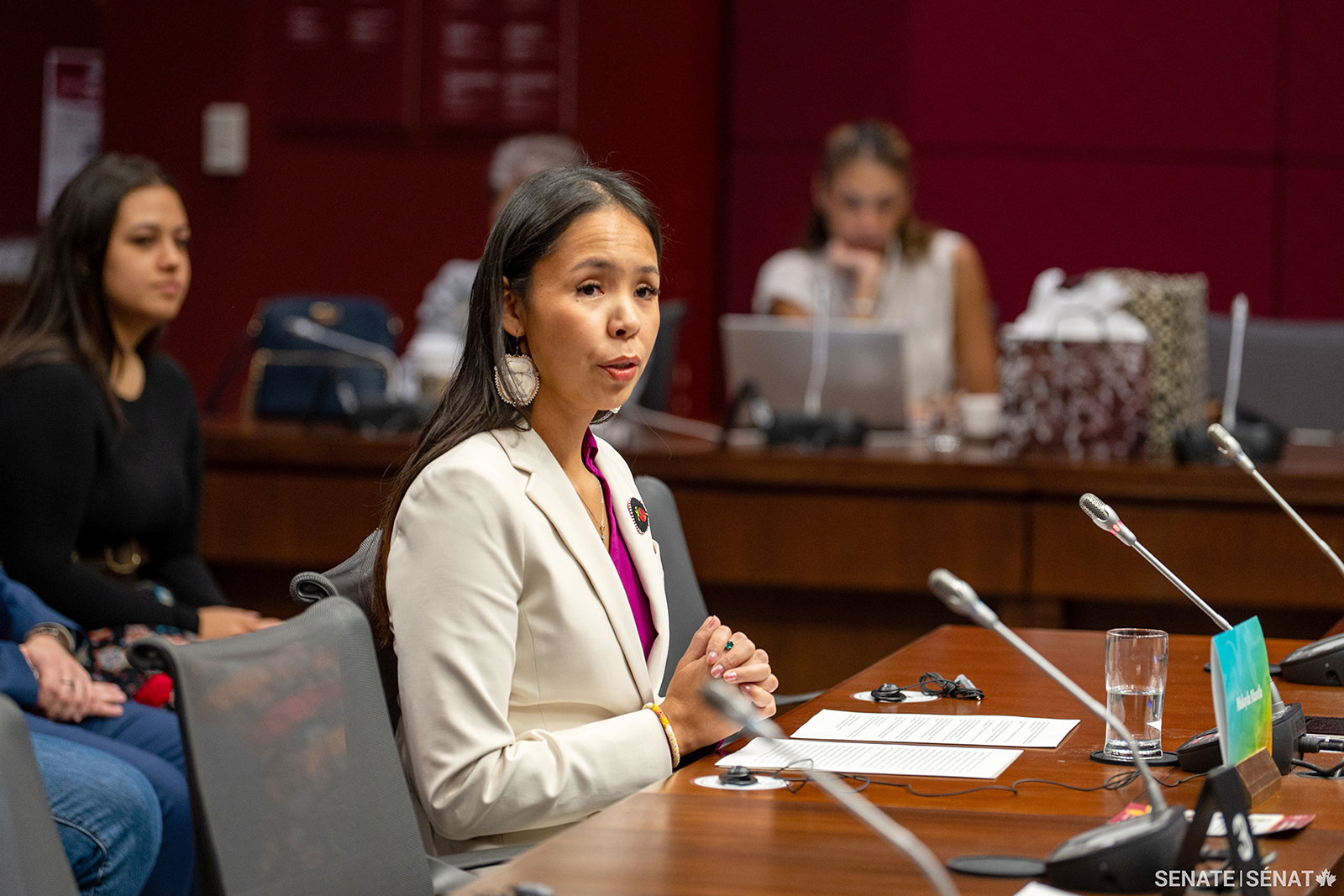
“I wanted to be that representation of change — the representation I never saw as a youth,” the Dene First Nations woman told the Senate Committee on Indigenous Peoples on October 28, 2026.
Ms. Mantla, now based in Alberta and studying to obtain her nursing licence, shared her vision with the committee as one of eight young leaders selected for the 2026 edition of the Voices of Youth Indigenous Leaders program. The event, hosted by the Indigenous Peoples committee, aims to amplify the voices and perspectives of First Nations, Inuit and Métis youth leaders between the ages of 18 and 35 who are driving meaningful change in their communities and beyond.
“It is an important and sacred moment. We have strong people who will do good for us today and for the rest of the children across Turtle Island,” said committee chair Senator Michèle Audette.
“The testimonies shared will help inform the ongoing work of the committee and of the Senate Chamber.”
Over two committee meetings, each youth leader took turns testifying, drawing on their own personal and professional experiences to deliver their hopes, ideas and calls to action for Indigenous youth and the next generations.
“It is inspiring,” Senator Paul Prosper said of the participants’ stories and recommendations. “It allows us to dream of what can be because we see it through your eyes and we hear it through your voices.”
The young leaders covered a wide range of policy issues affecting their lives, including legislative barriers, economic development, housing, youth engagement and residential school denialism. A through-line in their testimonies was education — how their respective educations have changed their lives, but also the challenges they’ve observed related to access, inadequate financial aid, finding role models and feeling a sense of belonging.
Keep scrolling to see photos from Voices of Youth Indigenous Leaders 2026 and read about each participant’s presentation.
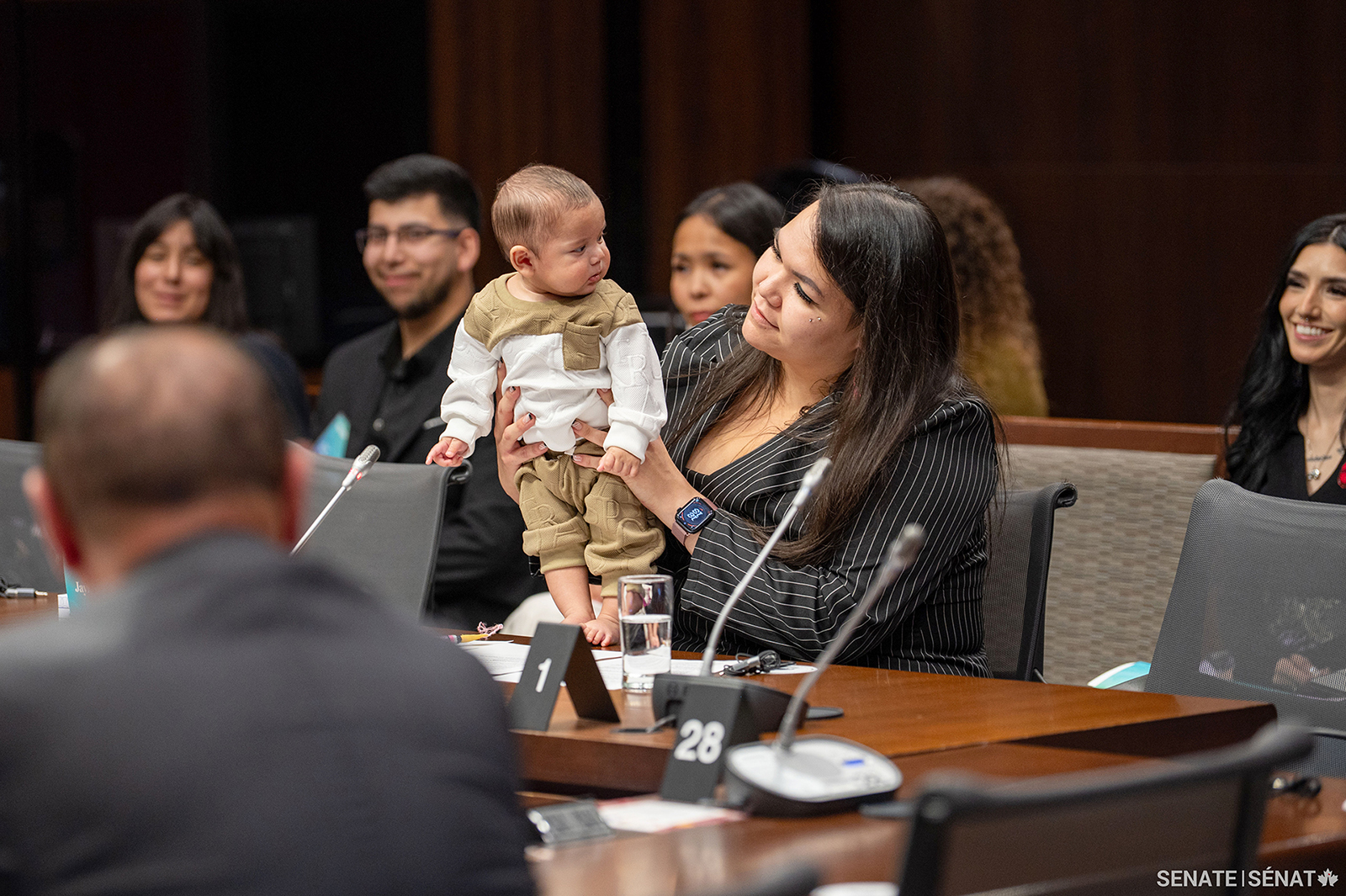
Jaylene Neisa Delorme travelled to Ottawa from Hay River, Northwest Territories, where she founded Dënegóth Nají, a grassroots initiative dedicated to helping individuals and families navigate various public services. A member of the Yellowknives Dene First Nation and a mother of four, Ms. Delorme said she has been personally affected by the second-generation cutoff in the Indian Act, which has prevented her children from being registered with Indian status.
Meaningful change for the next generation of Indigenous children, she testified, should begin with addressing legislation that creates barriers to the recognition of their identities, culture and ancestry. As she held one of her baby twins on her lap, she emphasized she doesn’t want her children to spend their lives fighting the same battles.
“No young person should have to fight to prove who they are or where they belong,” she said. “I want them to grow up in a country where Indigenous youth are not simply expected to be resilient, but given the support, the opportunities and the power to lead. This is what generational healing means to me.”
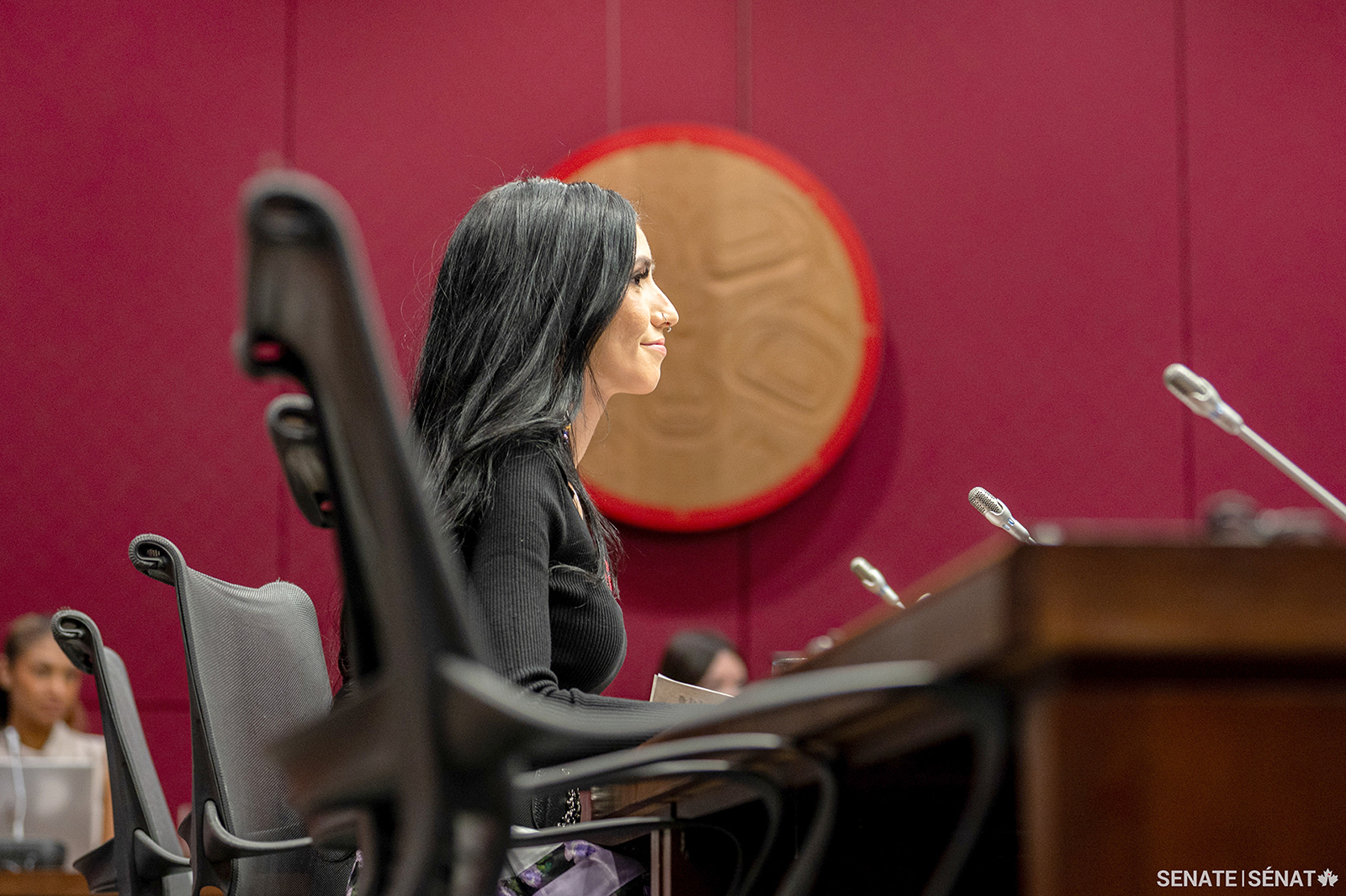
Chantal Kyplain, a Métis poet and mother living in Saskatoon, appealed for improved support for dependent family members after an individual attempts suicide or dies while in custody. She testified about her personal challenges and the lack of support she received in caring for her two young children after their father’s incarceration, release, return to custody, hospitalization and death.
“The data leaves children like mine difficult to see,” she told senators. “The system’s responsibility cannot end when a person dies; it must reach the children who go home grieving.”
Now a first-generation university student majoring in education, Ms. Kyplain hopes to inspire other Indigenous youth to find and follow their passions.
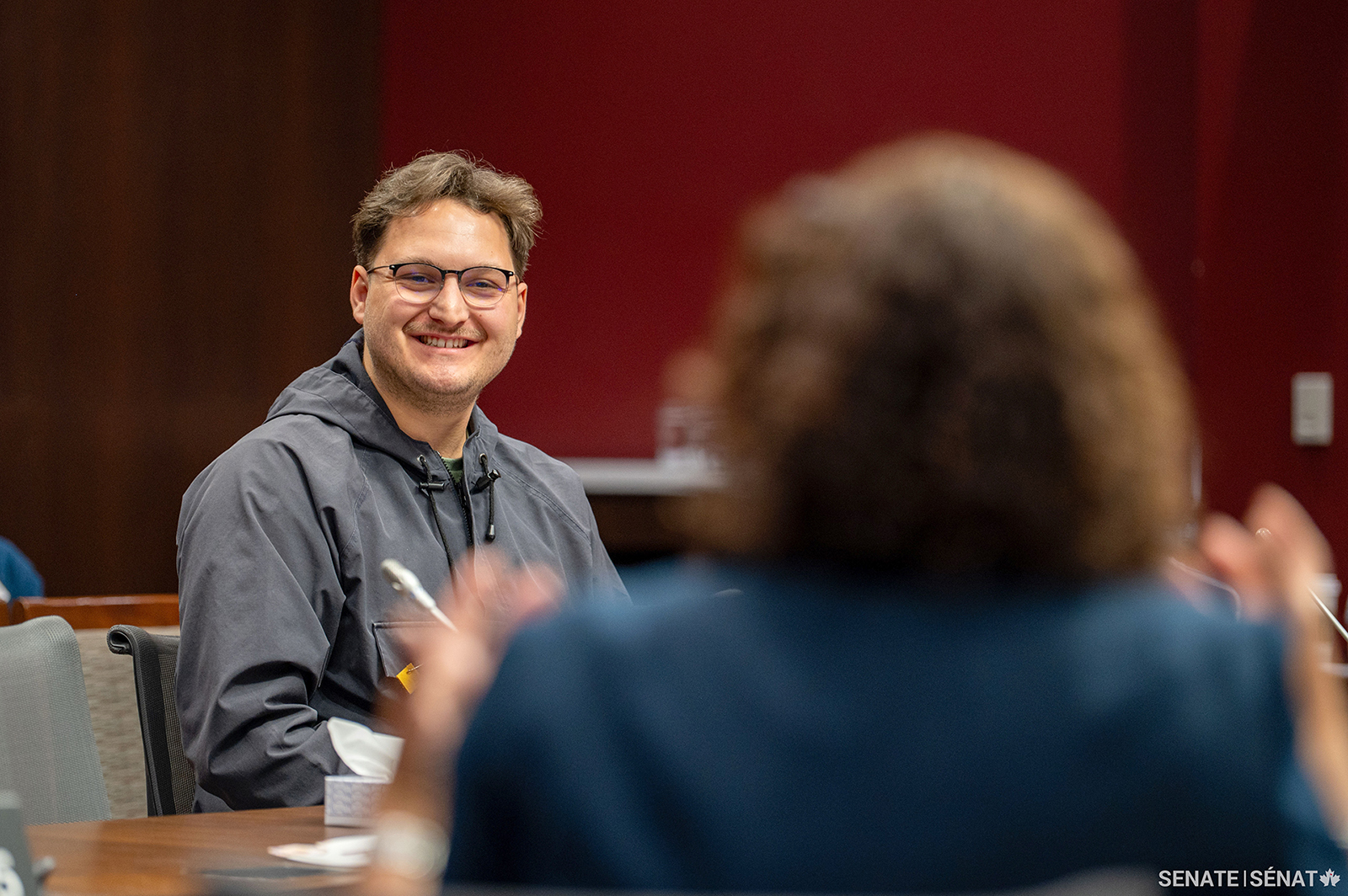
Noah Pépin-Papigatuk, a young Inuk leader from the small community of Salluit in northern Quebec, spoke candidly of the housing conditions in Nunavik and told senators the issue has “reached a critical point.” The availability of existing housing and the construction of new homes have not kept pace with population growth, he emphasized. Wait times for units are lengthy and anywhere from two to four generations of a family may live together in a single house.
The young mining worker and youth day camp organizer described the structural and public health consequences of overcrowded households on communities — including homes that wear out prematurely, the increased risk of spreading infectious diseases, and rising cases of depression and anxiety disorders. He admitted there’s no “magical solution,” but called for more funding to be directed to the local housing corporation.
“They build houses and they build them efficiently,” Mr. Pépin-Papigatuk told the committee. “Oil the machine that’s already well oiled.”
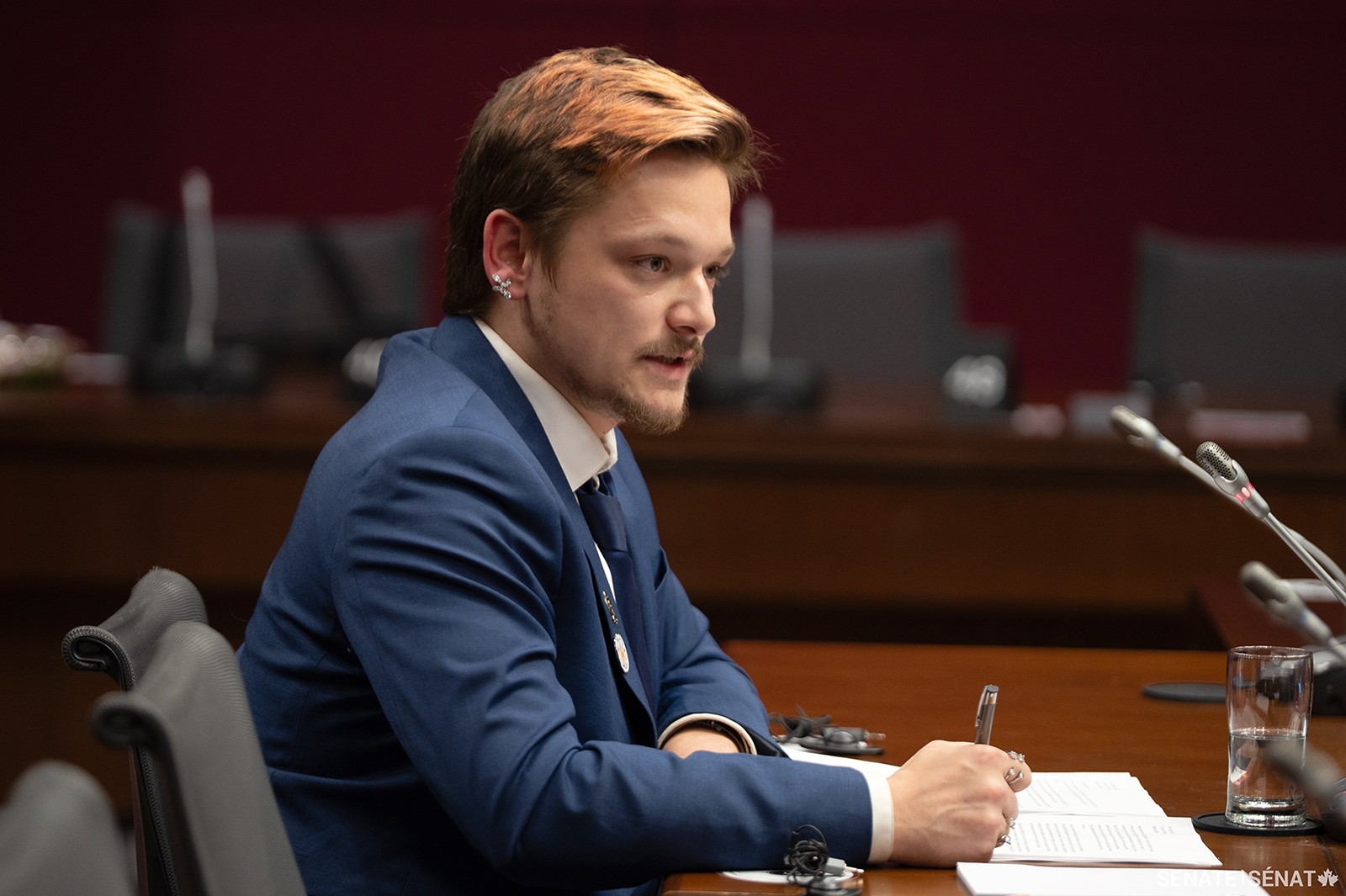
In his capacity as the first Indigenous student president at his university and as president of T’Sou-ke First Nation’s economic development corporation, Dreyden George came to the committee with two recommendations: increase investment in the Post-Secondary Student Support Program for First Nations students and build more opportunities for Indigenous-led economic development to improve conditions on reserves and encourage long-term business ownership.
The young leader from British Columbia spoke about limited access to capital for nations and a lack of resources for Indigenous peoples who want to explore entrepreneurial ventures within and for their community. He called for the expansion of Indigenous equity financing programs — beyond loan guarantees — and for the creation of a permanent, Indigenous sovereign wealth fund to support community ownership of major projects.
“Indigenous communities should have the ability and opportunity to develop their own economic prosperity within their lands that shouldn’t require giving up their land rights or forgoing values toward land stewardship,” Mr. George testified.
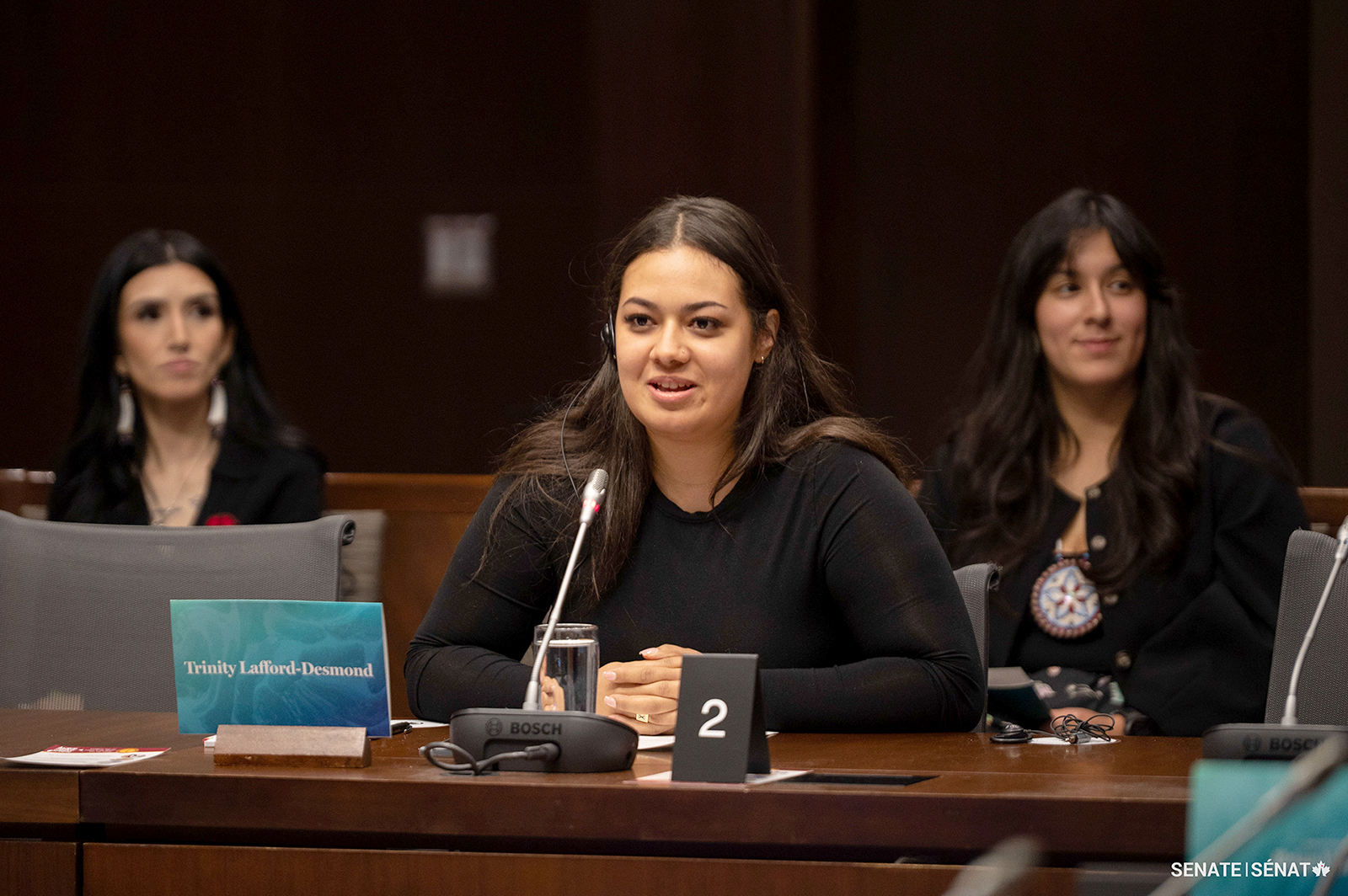
Trinity Lafford-Desmond from Paqtnkek Mi’kmaw Nation testified about the need for safe, respectful learning and work environments for Indigenous youth, as well as the importance of early mentorship. The electrical engineering student, who is Mi’kmaw and African Nova Scotian, decided to leave her first engineering program after experiencing racism and sexism at school and during her work terms.
Afterwards, she worked in solar installation and design, a job in which she contributed to renewable energy projects in Indigenous communities across Nova Scotia. These projects gave her a “renewed sense of purpose” and encouraged her to return to school so she could further give back to her communities, she told senators.
“This experience showed me how important it is for young people to see people like themselves in these fields,” Ms. Lafford-Desmond said.
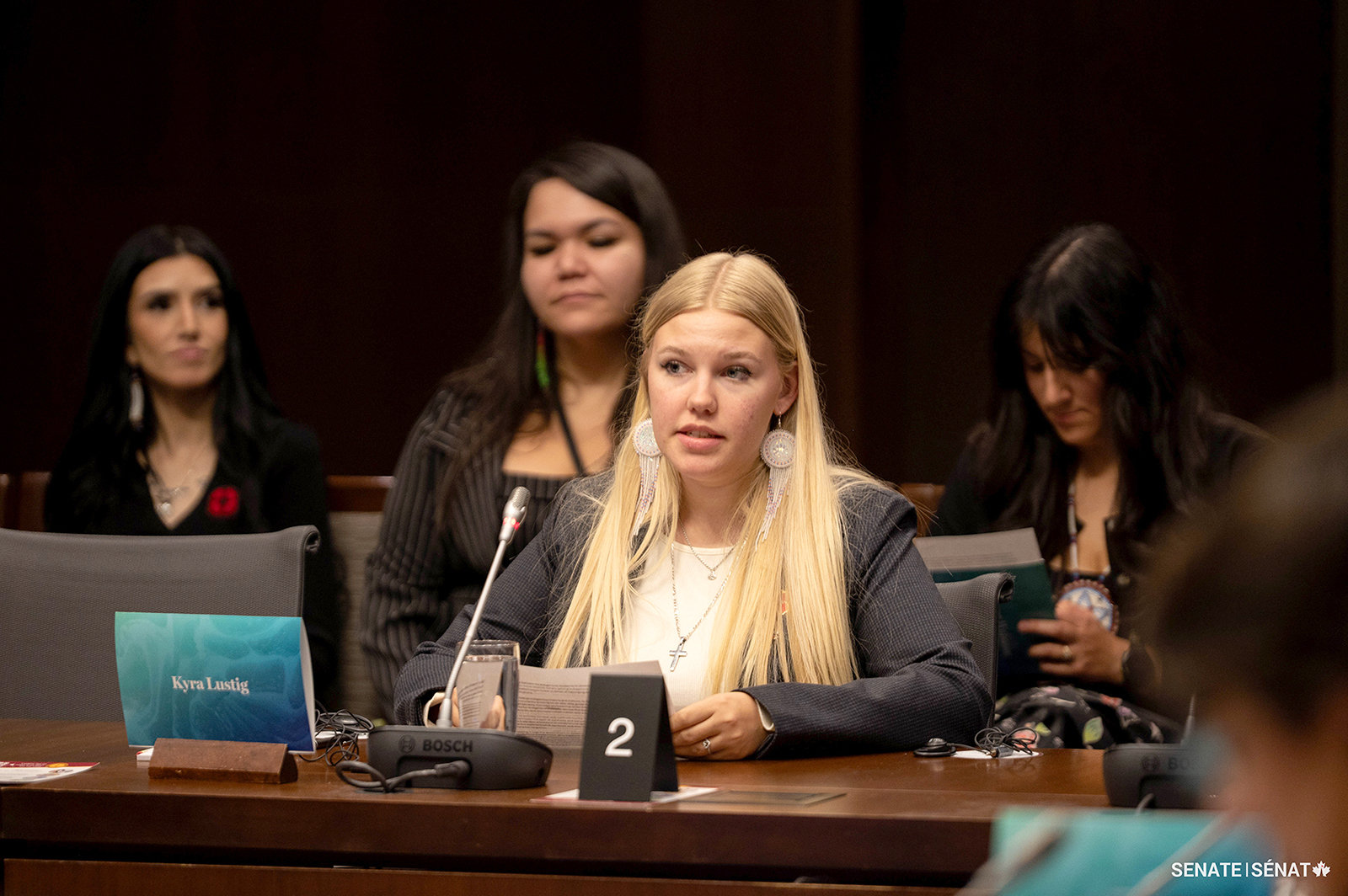
Red River Métis student leader Kyra Lustig used her time in the witness seat to call on the federal government to dismantle systemic barriers to Indigenous students’ access to education and to support their success in school by building inclusive spaces that “recognize and affirm the identities of all Indigenous students.” She told senators that, as a White-presenting Indigenous woman, she has often felt excluded from conversations about Indigenous identity and resources and been accused of being a pretendian by Indigenous peers. Her work with student unions and associations has shown her that Indigenous youth across the country face similar experiences, she said.
Ms. Lustig also testified about the harmful effects of residential school denialism. Tackling these issues, she emphasized, comes down to improving education for all Canadians.
“This means investing in programs that foster cultural education, provide mental health resources and ensure equitable access to academic support,” she said. “It also means ensuring that the true history and ongoing impacts of colonialism are taught and acknowledged within our education systems.”
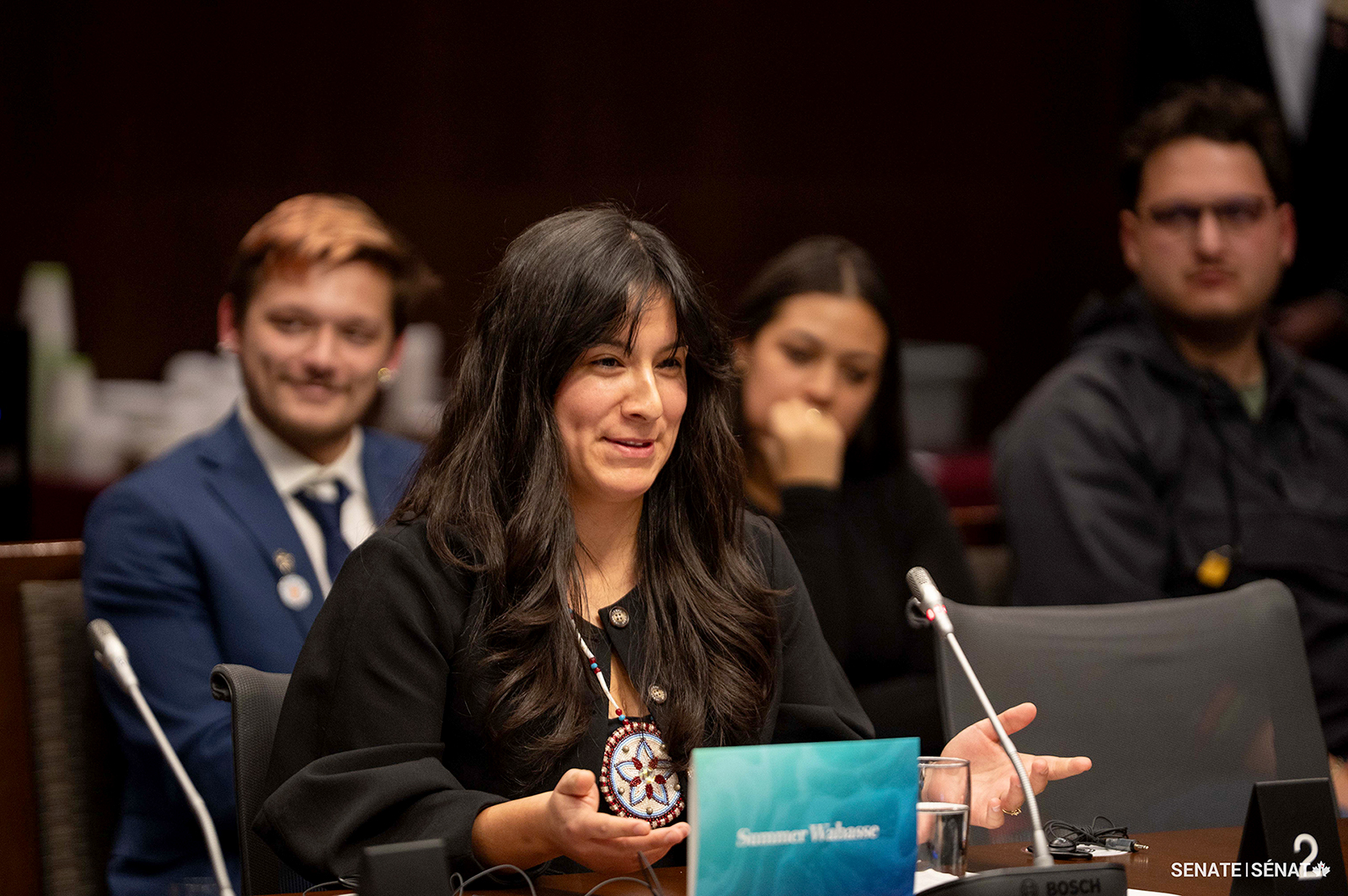
Summer Wabasse, an Oji-Cree woman from Webequie First Nation in northern Ontario, stressed that civic engagement should be accessible for all Indigenous youth across the country. Recounting times she felt like a “token” instead of a “core partner” at the table, she called on legislators to meaningfully consult youth and regularly invite them as witnesses to parliamentary meetings.
She also called on parliamentarians to do more to confront the rise of residential school denialism by criminalizing it, to close gaps in funding for Indigenous post-secondary students and to establish stable, multi-year funding for Indigenous youth councils and programming.
“I came into my own doing this sort of work,” she said. “I truly believe that self-esteem comes from a belief that you have a purpose and that you are working towards that and contributing your gifts to the world.”
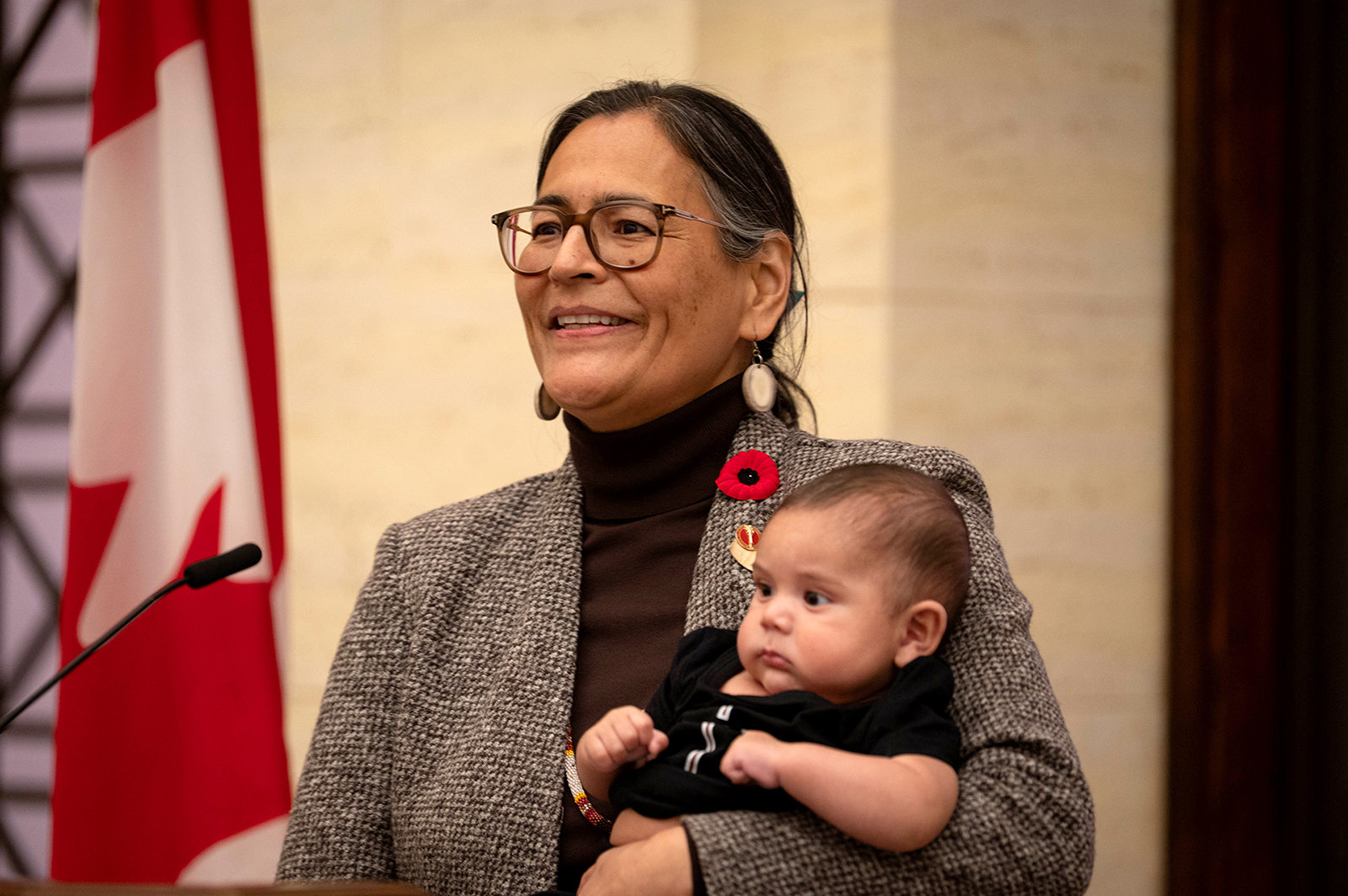 Senator Michèle Audette, chair of the Senate Committee on Indigenous Peoples, holds the twin son of Voices of Youth Indigenous Leaders participant Jaylene Neisa Delorme as she welcomes the program’s 2026 cohort to the Senate on October 27, 2026.
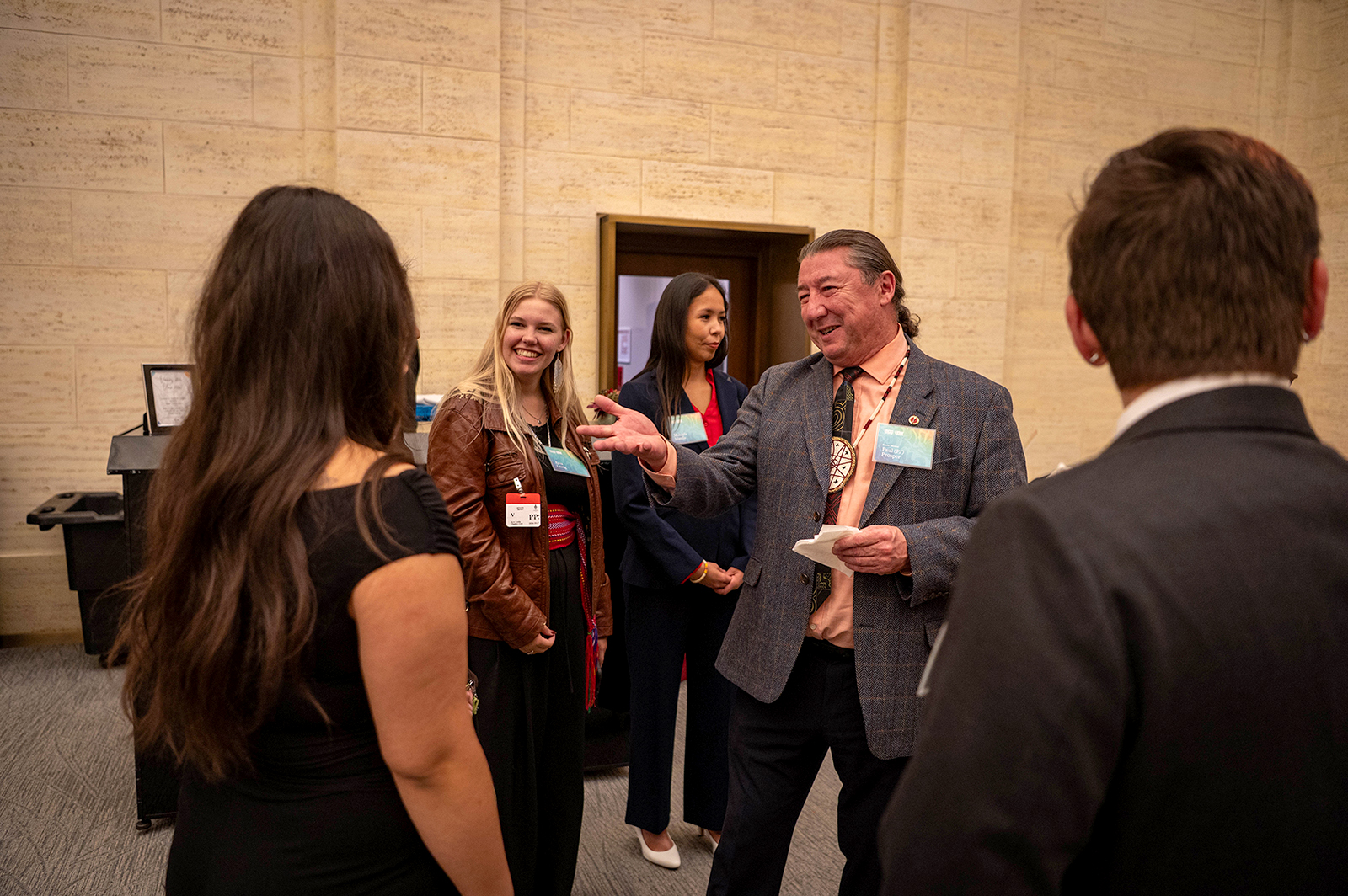 Senator Paul Prosper smiles as he meets the participants of Voices of Youth Indigenous Leaders 2026 during a welcome reception in the Senate of Canada Building on October 27, 2026.
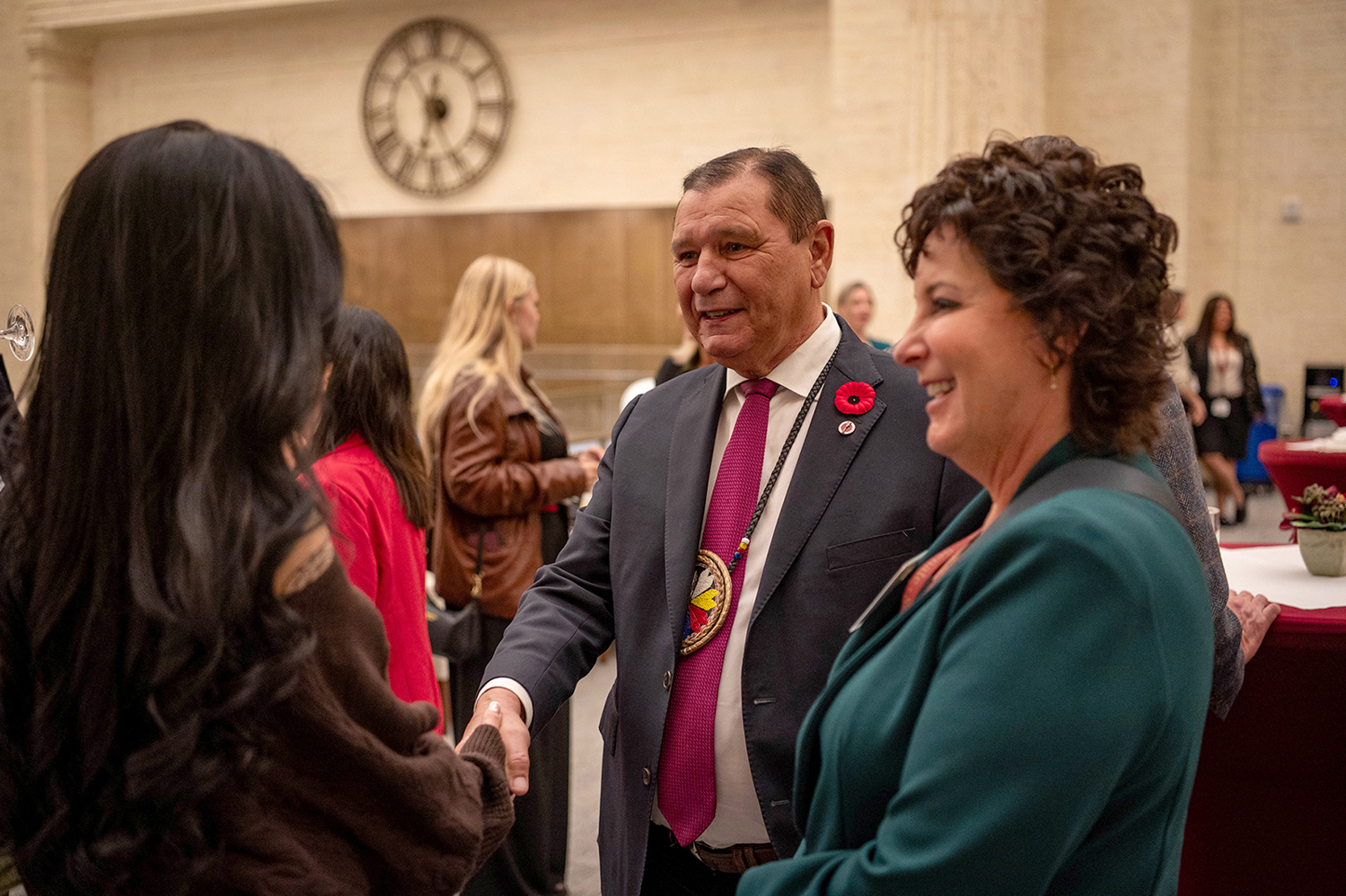 Senator Brian Francis and Senator Tracy Muggli greet Chantal Kyplain, one of the eight participants in Voices of Youth Indigenous Leaders 2026.
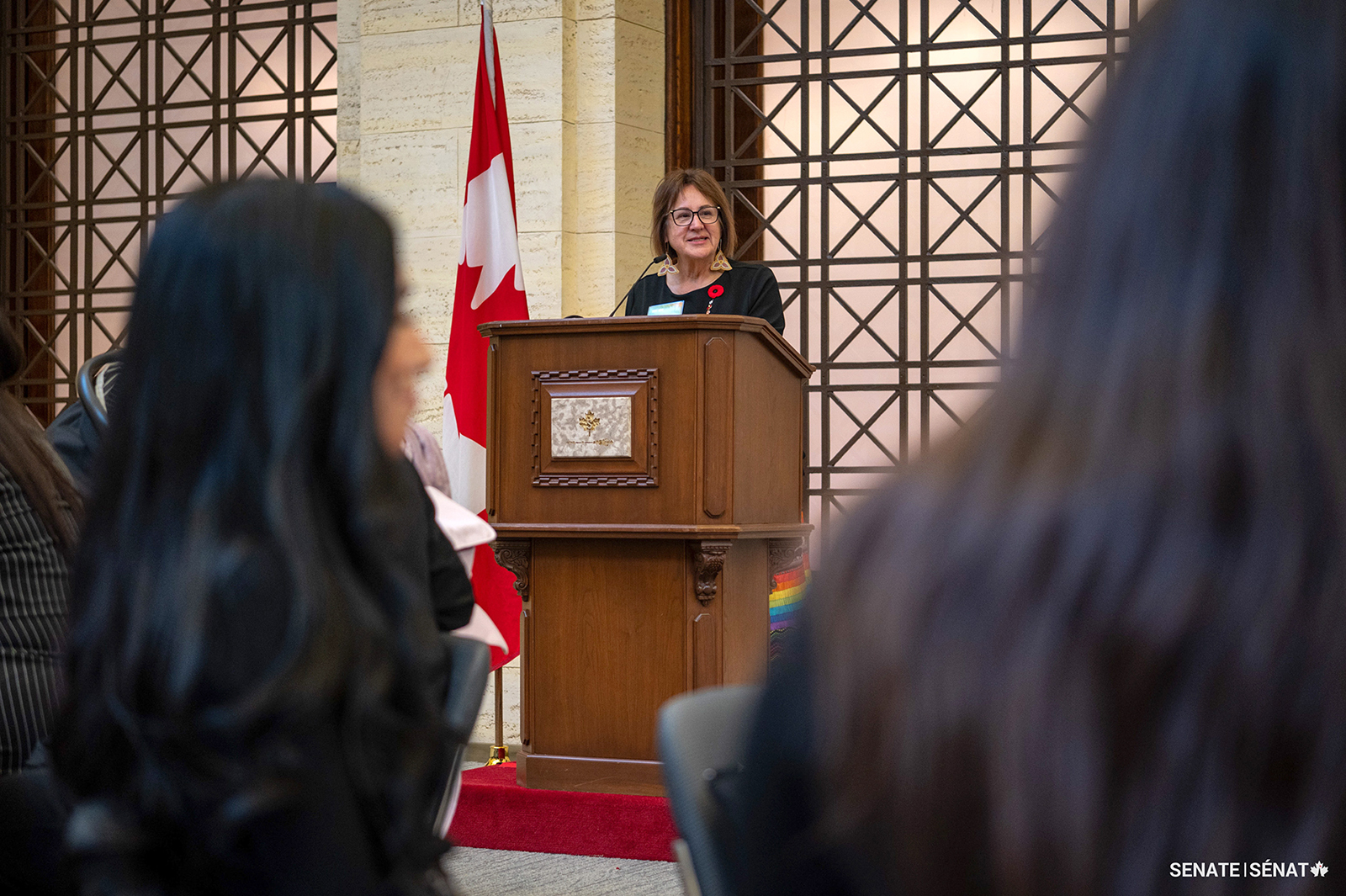 Senator Margo Greenwood, deputy chair of the committee, delivers opening remarks for Voices of Youth Indigenous Leaders 2026 at the Senate of Canada Building on October 28.
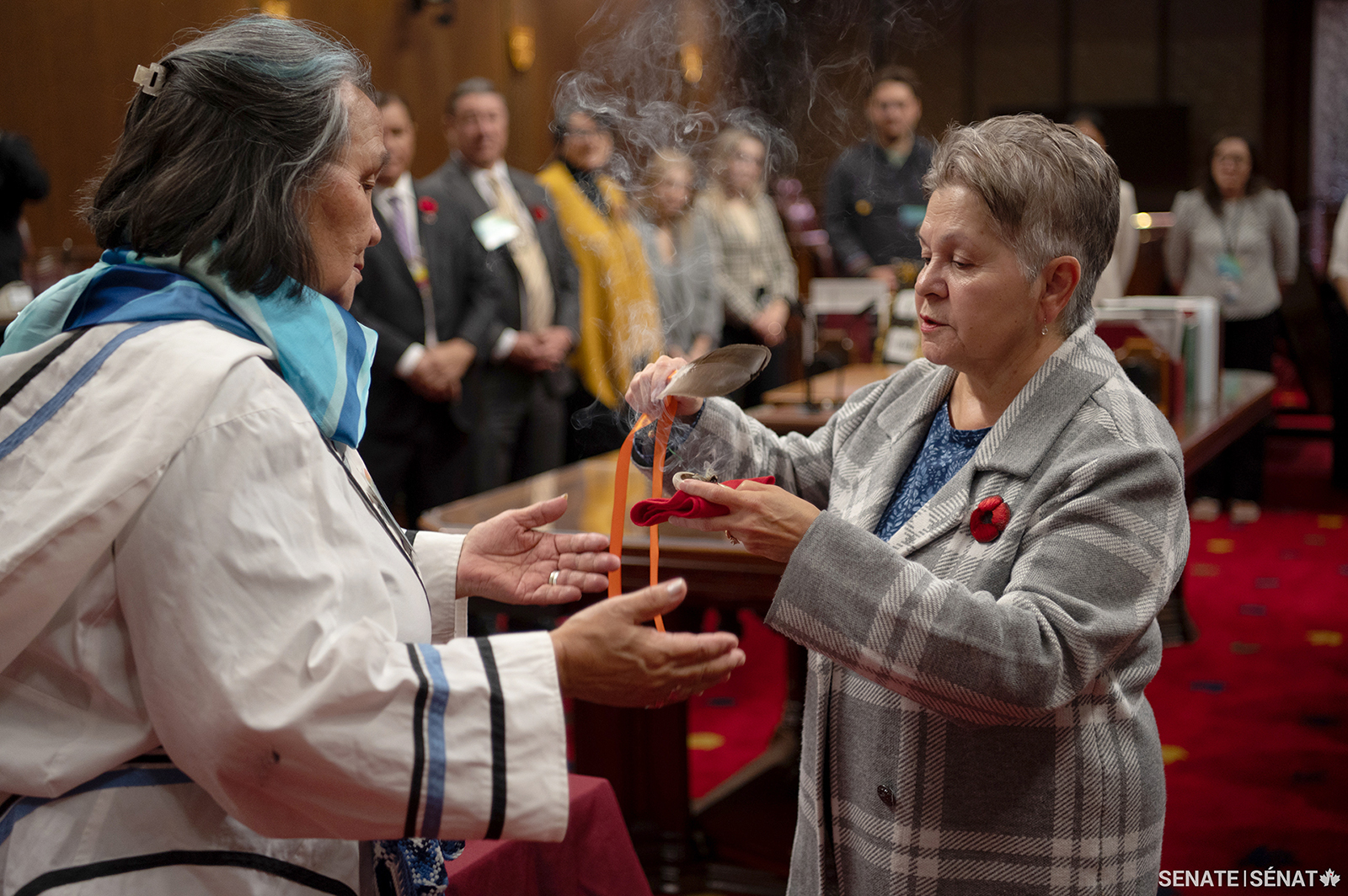 From left, Elder Meeka Kakudluk and Elder Claudette Commanda led an opening ceremony in the Red Chamber for senators and youth participating in Voices of Youth Indigenous Leaders 2026.
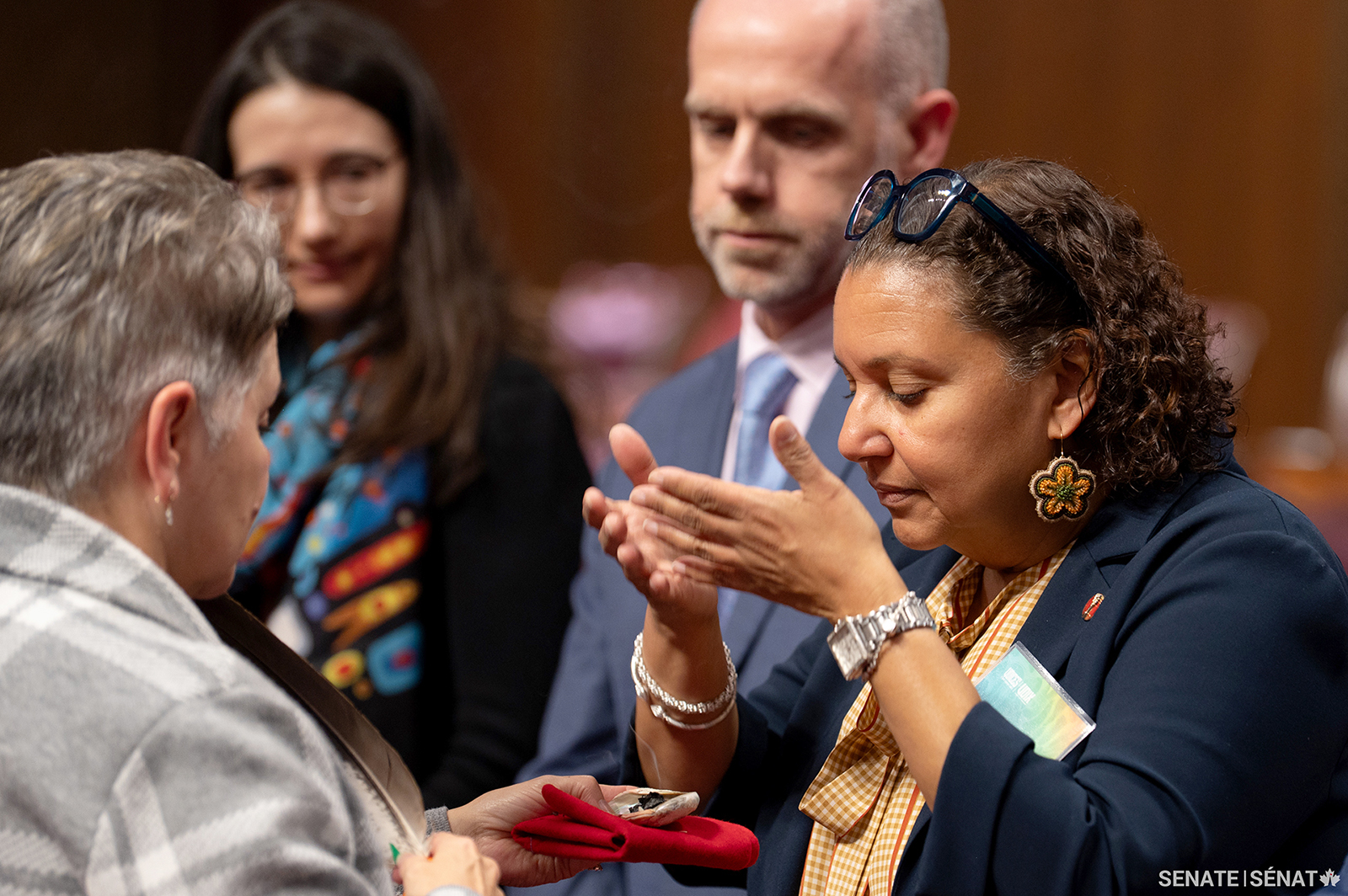 Senator Bernadette Clement participates in a smudging ceremony in the Senate Chamber.
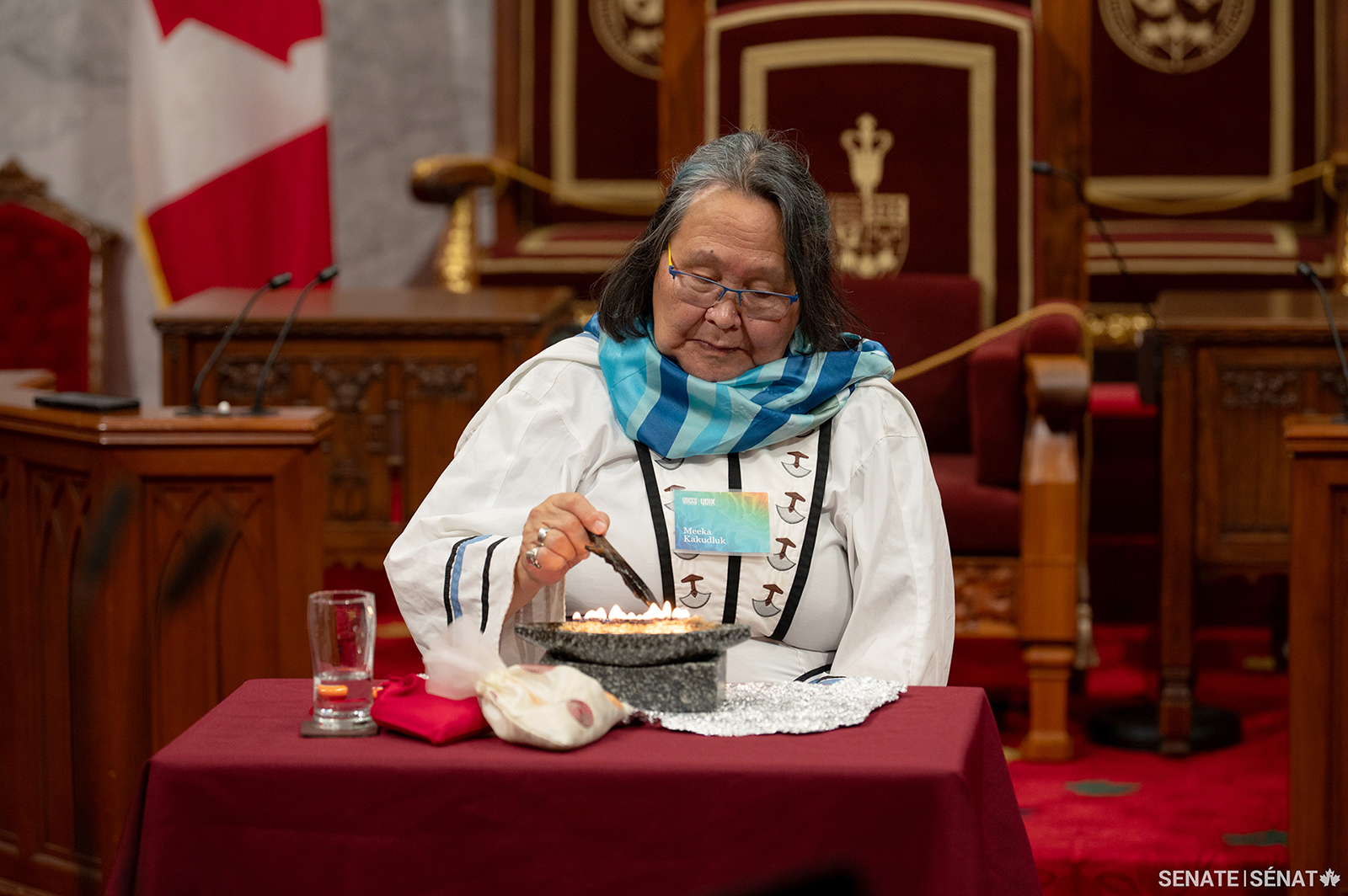 Inuk Elder Meeka Kakudluk lights the qulliq, a traditional Inuit oil lamp carved from soapstone, in the Senate Chamber.
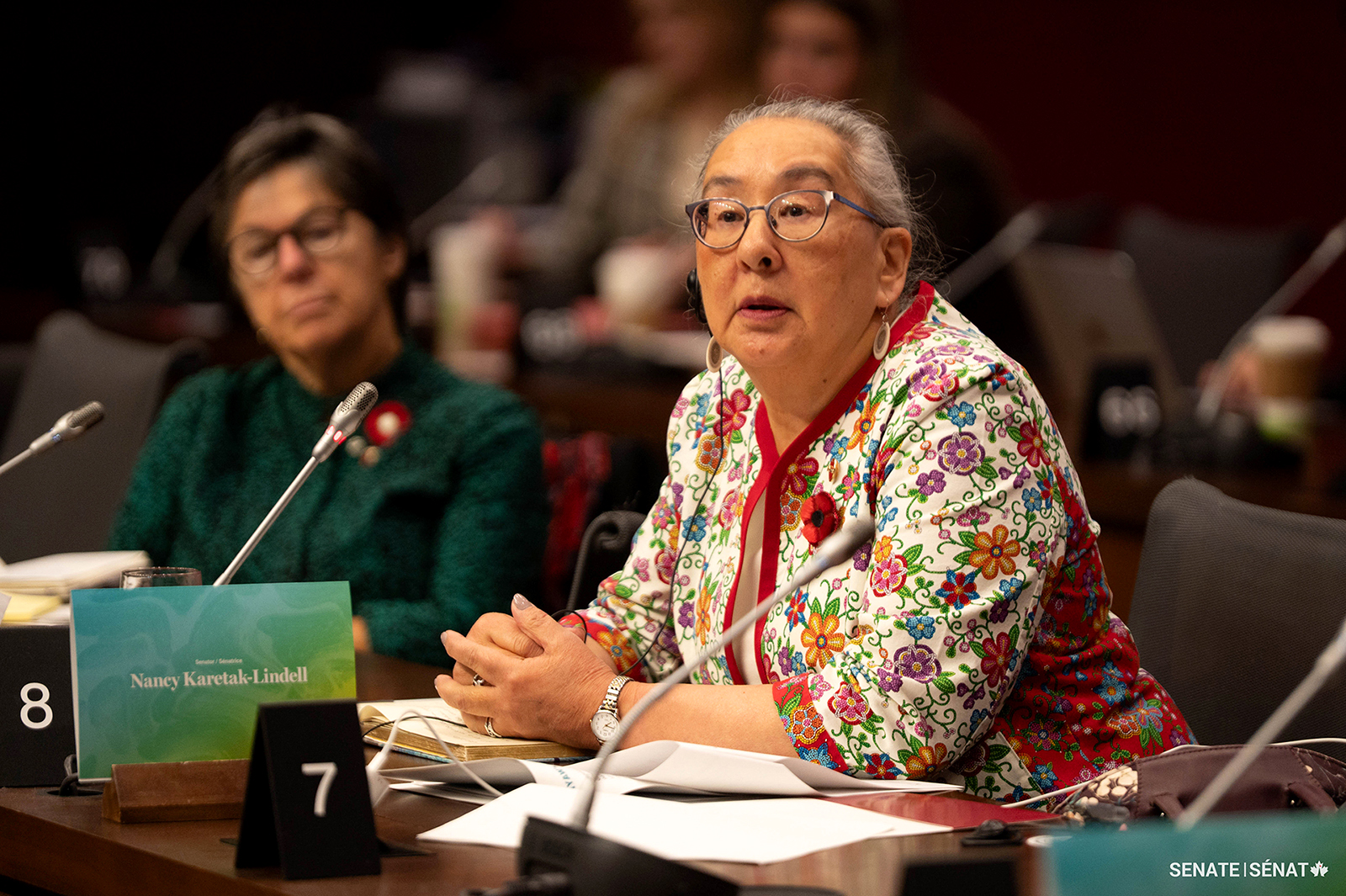 Senator Nancy Karetak-Lindell asks a question after listening to witness testimony during Voices of Youth Indigenous Leaders 2026.
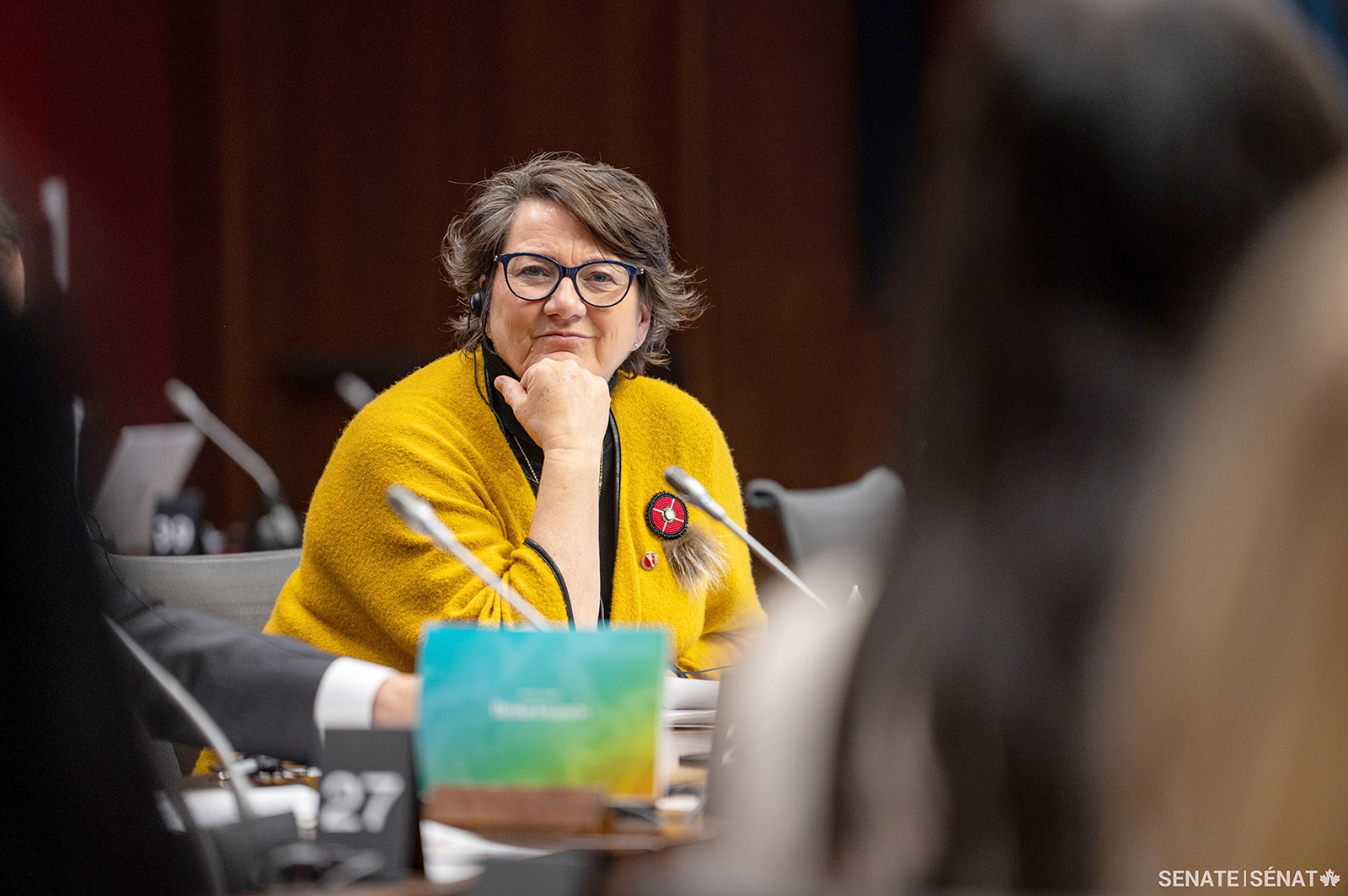 Senator Karen Sorenson listens to witness testimony on October 28, 2026.
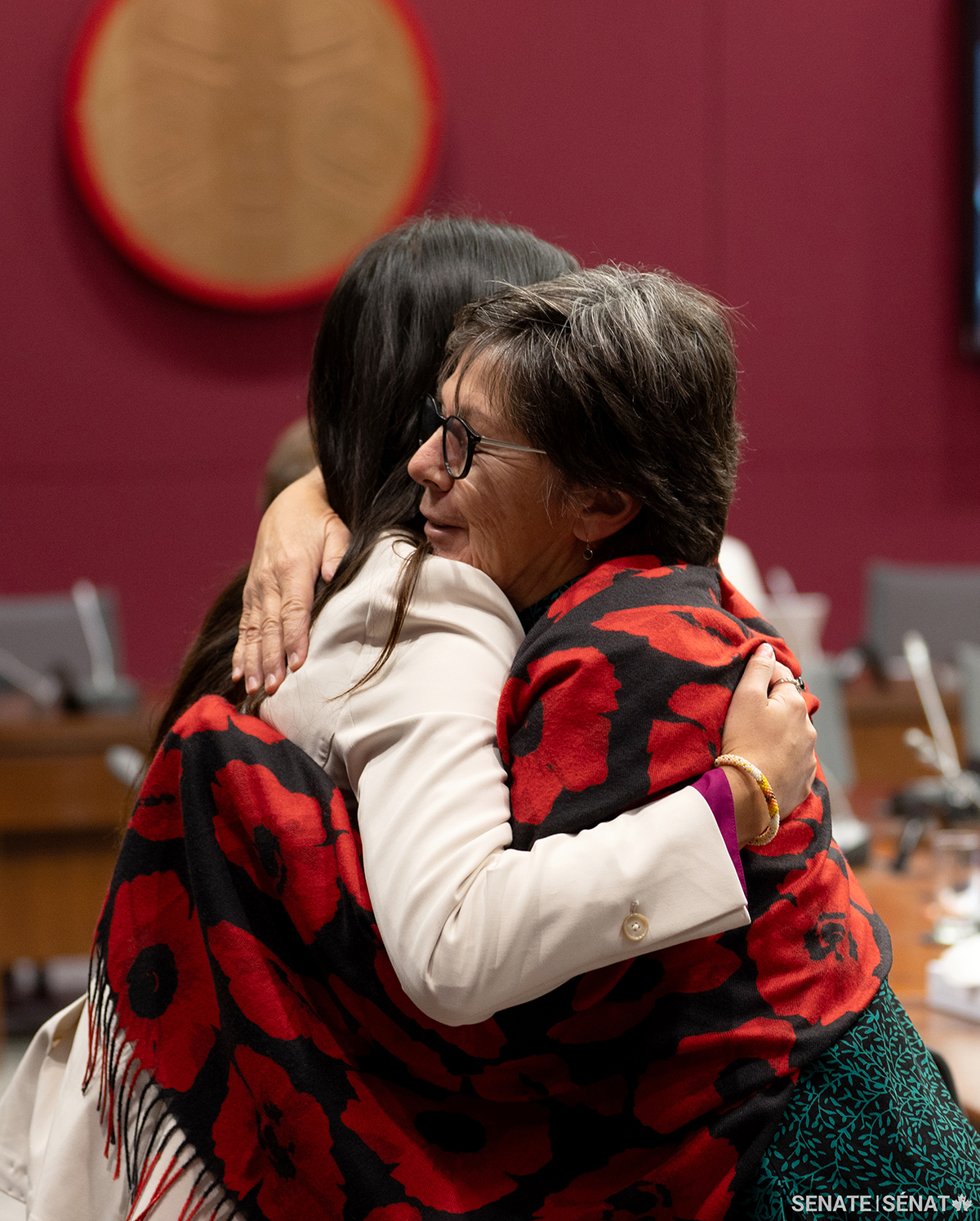 Senator Kim Pate hugs Makayla Mantla, who testified before the committee as part of Voices of Youth Indigenous Leaders 2026.
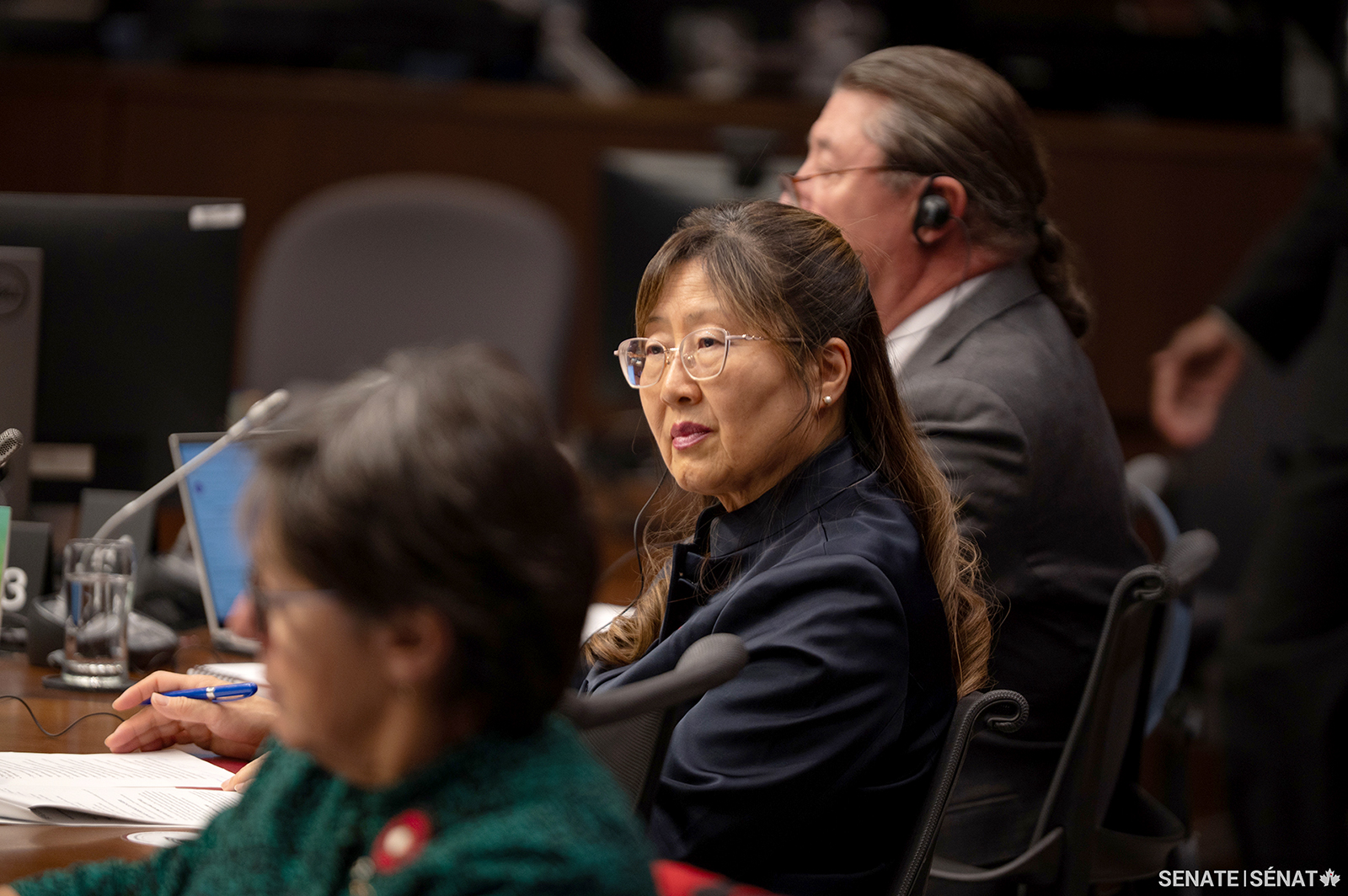 Senator Yonah Martin listens to witness testimony.
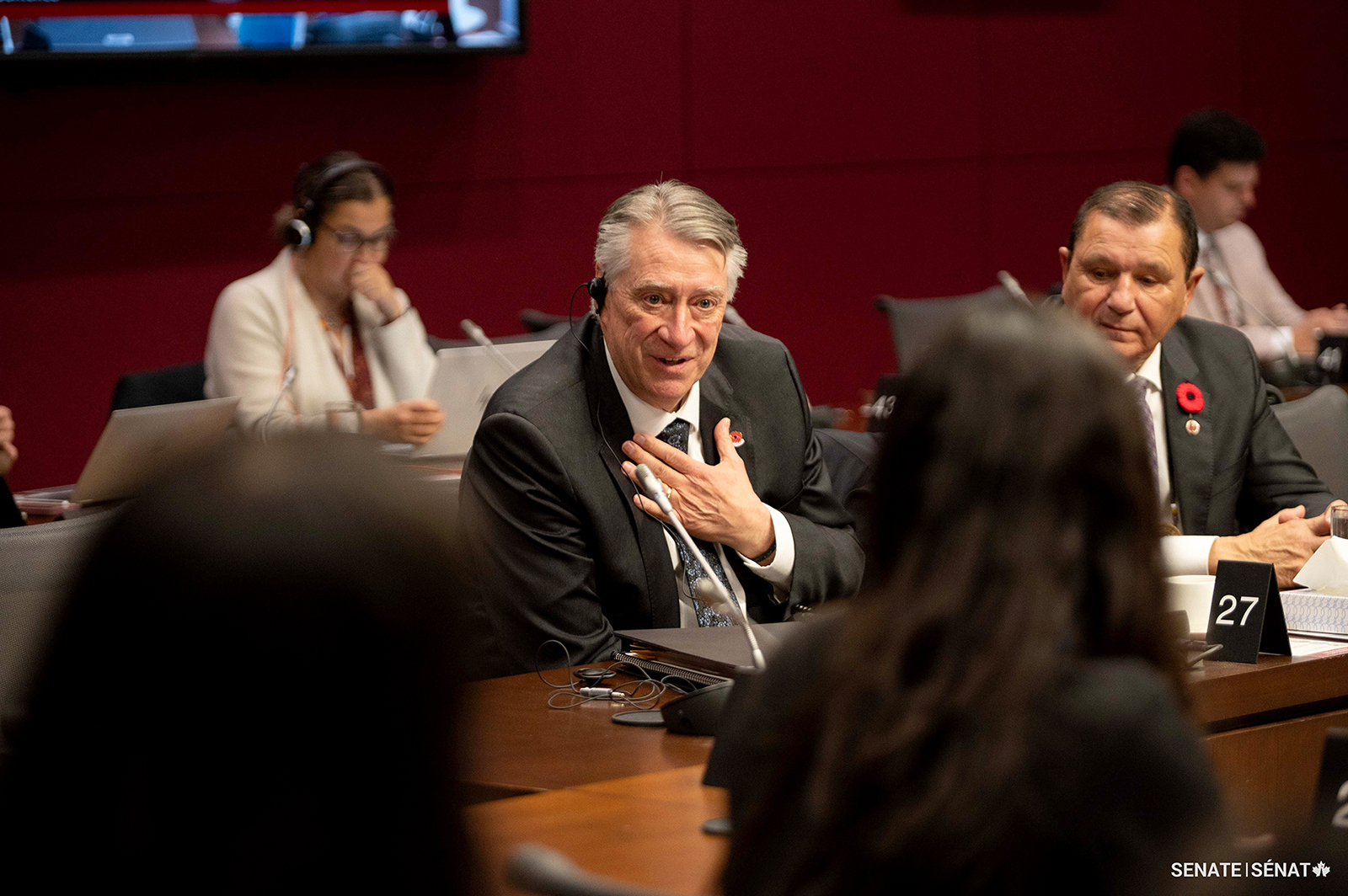 Senator Scott Tannas reacts to witness testimony provided by young Indigenous leaders on October 28, 2026.
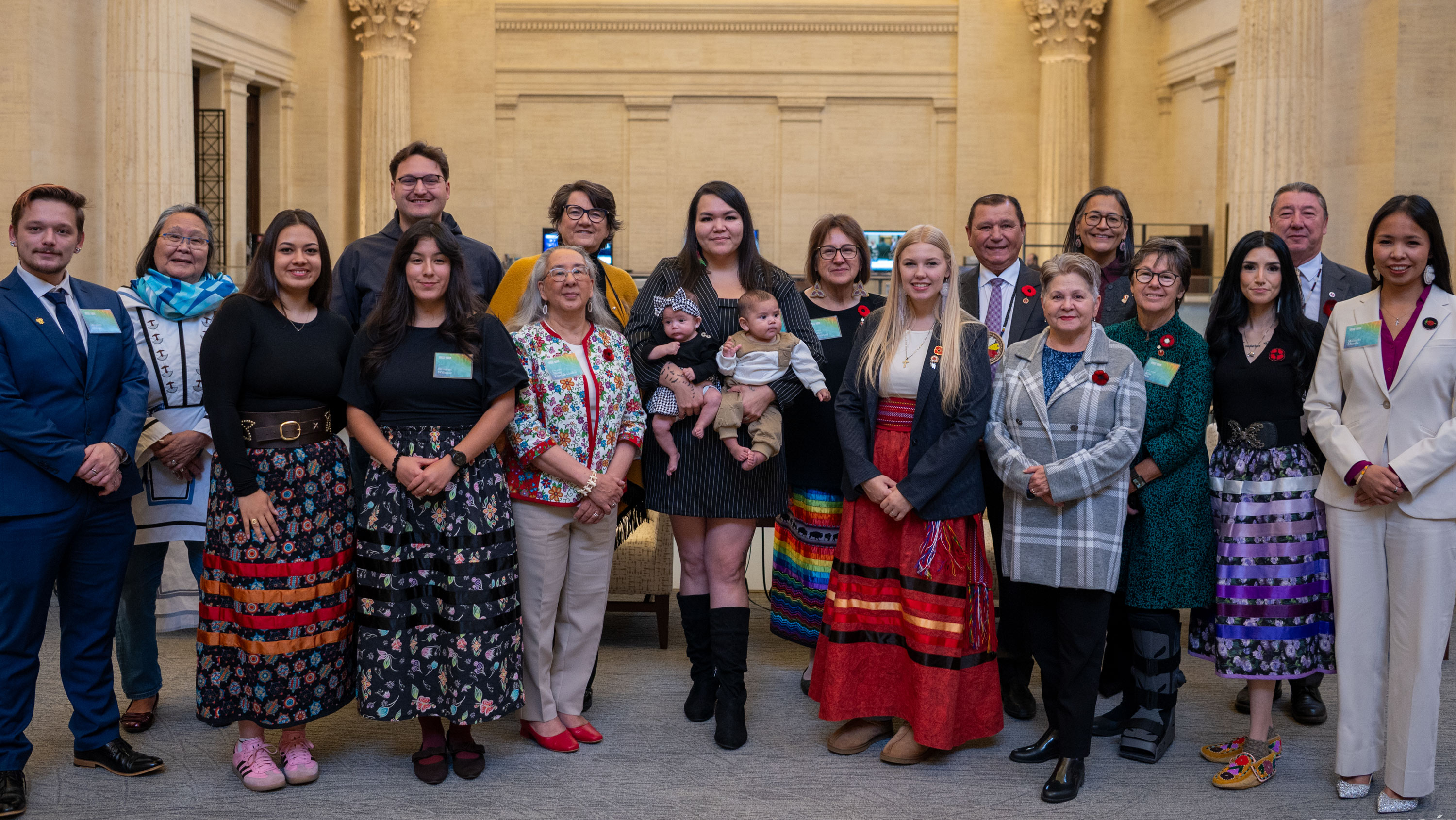
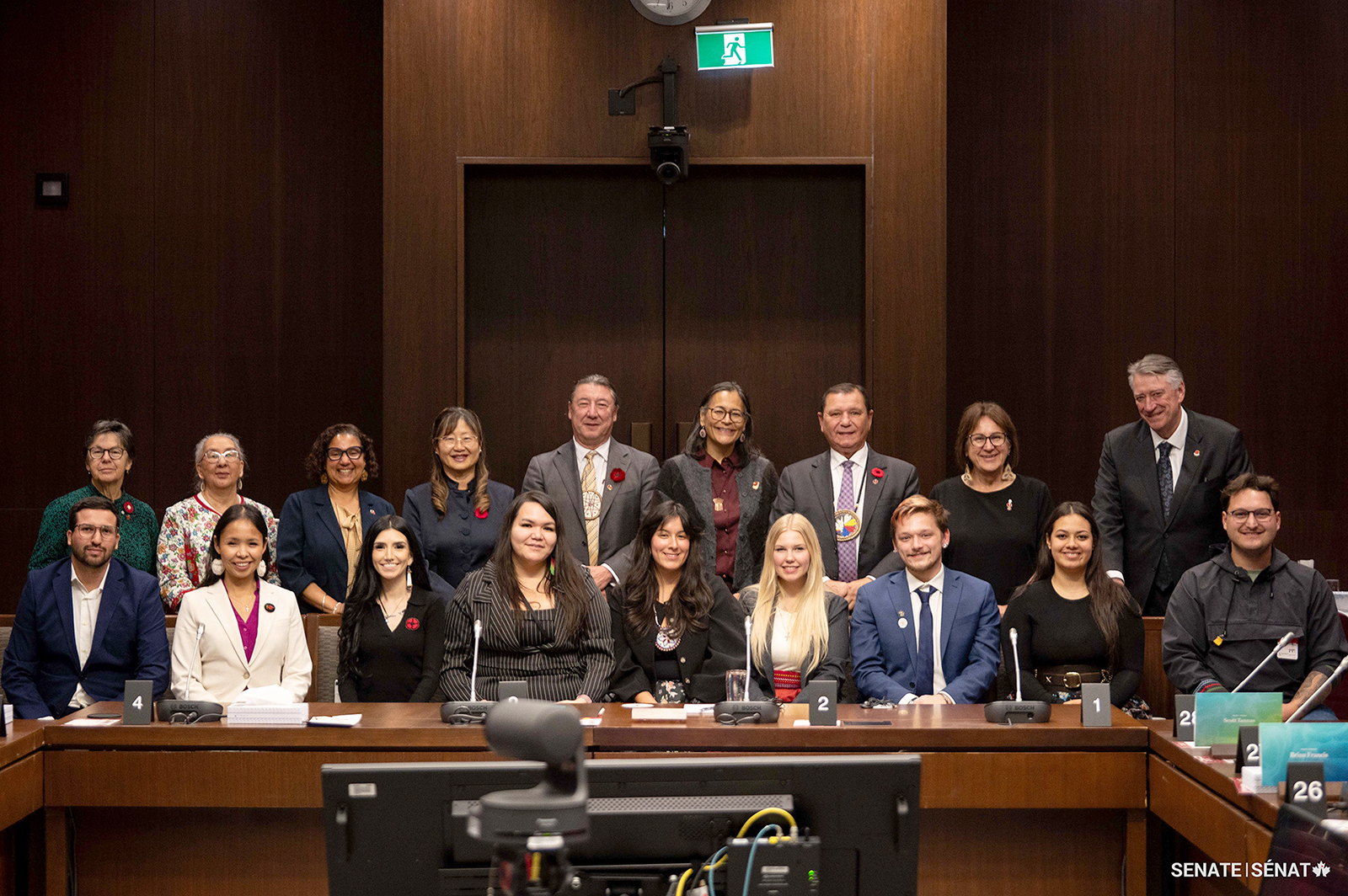 The eight participants of Voices of Youth Indigenous Leaders 2026, front row from second left, pose with senators from the Senate Committee on Indigenous Peoples, back row, on October 28, 2026.
Related articles
Tags
Committee news
‘Representation of change’: Voices of Youth Indigenous Leaders 2026 participants appear before senators
Makayla Mantla has a dream: for Canada to one day have a publicly funded hospital specifically for First Nations patients and run by Indigenous health-care providers.
Through her research and work experience, the recently graduated nursing student from Behchokǫ̀, Northwest Territories, has witnessed Indigenous racism and the mistreatment of Indigenous patients in health-care settings. This, along with her own negative experience with the medical system when she suffered a life-threatening condition, has set her on the path to improve how Indigenous patients and health-care providers are cared for and treated in hospitals and clinics.
“I wanted to be that representation of change — the representation I never saw as a youth,” the Dene First Nations woman told the Senate Committee on Indigenous Peoples on October 28, 2026.
Ms. Mantla, now based in Alberta and studying to obtain her nursing licence, shared her vision with the committee as one of eight young leaders selected for the 2026 edition of the Voices of Youth Indigenous Leaders program. The event, hosted by the Indigenous Peoples committee, aims to amplify the voices and perspectives of First Nations, Inuit and Métis youth leaders between the ages of 18 and 35 who are driving meaningful change in their communities and beyond.
“It is an important and sacred moment. We have strong people who will do good for us today and for the rest of the children across Turtle Island,” said committee chair Senator Michèle Audette.
“The testimonies shared will help inform the ongoing work of the committee and of the Senate Chamber.”
Over two committee meetings, each youth leader took turns testifying, drawing on their own personal and professional experiences to deliver their hopes, ideas and calls to action for Indigenous youth and the next generations.
“It is inspiring,” Senator Paul Prosper said of the participants’ stories and recommendations. “It allows us to dream of what can be because we see it through your eyes and we hear it through your voices.”
The young leaders covered a wide range of policy issues affecting their lives, including legislative barriers, economic development, housing, youth engagement and residential school denialism. A through-line in their testimonies was education — how their respective educations have changed their lives, but also the challenges they’ve observed related to access, inadequate financial aid, finding role models and feeling a sense of belonging.
Keep scrolling to see photos from Voices of Youth Indigenous Leaders 2026 and read about each participant’s presentation.
Jaylene Neisa Delorme travelled to Ottawa from Hay River, Northwest Territories, where she founded Dënegóth Nají, a grassroots initiative dedicated to helping individuals and families navigate various public services. A member of the Yellowknives Dene First Nation and a mother of four, Ms. Delorme said she has been personally affected by the second-generation cutoff in the Indian Act, which has prevented her children from being registered with Indian status.
Meaningful change for the next generation of Indigenous children, she testified, should begin with addressing legislation that creates barriers to the recognition of their identities, culture and ancestry. As she held one of her baby twins on her lap, she emphasized she doesn’t want her children to spend their lives fighting the same battles.
“No young person should have to fight to prove who they are or where they belong,” she said. “I want them to grow up in a country where Indigenous youth are not simply expected to be resilient, but given the support, the opportunities and the power to lead. This is what generational healing means to me.”
Chantal Kyplain, a Métis poet and mother living in Saskatoon, appealed for improved support for dependent family members after an individual attempts suicide or dies while in custody. She testified about her personal challenges and the lack of support she received in caring for her two young children after their father’s incarceration, release, return to custody, hospitalization and death.
“The data leaves children like mine difficult to see,” she told senators. “The system’s responsibility cannot end when a person dies; it must reach the children who go home grieving.”
Now a first-generation university student majoring in education, Ms. Kyplain hopes to inspire other Indigenous youth to find and follow their passions.
Noah Pépin-Papigatuk, a young Inuk leader from the small community of Salluit in northern Quebec, spoke candidly of the housing conditions in Nunavik and told senators the issue has “reached a critical point.” The availability of existing housing and the construction of new homes have not kept pace with population growth, he emphasized. Wait times for units are lengthy and anywhere from two to four generations of a family may live together in a single house.
The young mining worker and youth day camp organizer described the structural and public health consequences of overcrowded households on communities — including homes that wear out prematurely, the increased risk of spreading infectious diseases, and rising cases of depression and anxiety disorders. He admitted there’s no “magical solution,” but called for more funding to be directed to the local housing corporation.
“They build houses and they build them efficiently,” Mr. Pépin-Papigatuk told the committee. “Oil the machine that’s already well oiled.”
In his capacity as the first Indigenous student president at his university and as president of T’Sou-ke First Nation’s economic development corporation, Dreyden George came to the committee with two recommendations: increase investment in the Post-Secondary Student Support Program for First Nations students and build more opportunities for Indigenous-led economic development to improve conditions on reserves and encourage long-term business ownership.
The young leader from British Columbia spoke about limited access to capital for nations and a lack of resources for Indigenous peoples who want to explore entrepreneurial ventures within and for their community. He called for the expansion of Indigenous equity financing programs — beyond loan guarantees — and for the creation of a permanent, Indigenous sovereign wealth fund to support community ownership of major projects.
“Indigenous communities should have the ability and opportunity to develop their own economic prosperity within their lands that shouldn’t require giving up their land rights or forgoing values toward land stewardship,” Mr. George testified.
Trinity Lafford-Desmond from Paqtnkek Mi’kmaw Nation testified about the need for safe, respectful learning and work environments for Indigenous youth, as well as the importance of early mentorship. The electrical engineering student, who is Mi’kmaw and African Nova Scotian, decided to leave her first engineering program after experiencing racism and sexism at school and during her work terms.
Afterwards, she worked in solar installation and design, a job in which she contributed to renewable energy projects in Indigenous communities across Nova Scotia. These projects gave her a “renewed sense of purpose” and encouraged her to return to school so she could further give back to her communities, she told senators.
“This experience showed me how important it is for young people to see people like themselves in these fields,” Ms. Lafford-Desmond said.
Red River Métis student leader Kyra Lustig used her time in the witness seat to call on the federal government to dismantle systemic barriers to Indigenous students’ access to education and to support their success in school by building inclusive spaces that “recognize and affirm the identities of all Indigenous students.” She told senators that, as a White-presenting Indigenous woman, she has often felt excluded from conversations about Indigenous identity and resources and been accused of being a pretendian by Indigenous peers. Her work with student unions and associations has shown her that Indigenous youth across the country face similar experiences, she said.
Ms. Lustig also testified about the harmful effects of residential school denialism. Tackling these issues, she emphasized, comes down to improving education for all Canadians.
“This means investing in programs that foster cultural education, provide mental health resources and ensure equitable access to academic support,” she said. “It also means ensuring that the true history and ongoing impacts of colonialism are taught and acknowledged within our education systems.”
Summer Wabasse, an Oji-Cree woman from Webequie First Nation in northern Ontario, stressed that civic engagement should be accessible for all Indigenous youth across the country. Recounting times she felt like a “token” instead of a “core partner” at the table, she called on legislators to meaningfully consult youth and regularly invite them as witnesses to parliamentary meetings.
She also called on parliamentarians to do more to confront the rise of residential school denialism by criminalizing it, to close gaps in funding for Indigenous post-secondary students and to establish stable, multi-year funding for Indigenous youth councils and programming.
“I came into my own doing this sort of work,” she said. “I truly believe that self-esteem comes from a belief that you have a purpose and that you are working towards that and contributing your gifts to the world.”
Senator Michèle Audette, chair of the Senate Committee on Indigenous Peoples, holds the twin son of Voices of Youth Indigenous Leaders participant Jaylene Neisa Delorme as she welcomes the program’s 2026 cohort to the Senate on October 27, 2026.
Senator Paul Prosper smiles as he meets the participants of Voices of Youth Indigenous Leaders 2026 during a welcome reception in the Senate of Canada Building on October 27, 2026.
Senator Brian Francis and Senator Tracy Muggli greet Chantal Kyplain, one of the eight participants in Voices of Youth Indigenous Leaders 2026.
Senator Margo Greenwood, deputy chair of the committee, delivers opening remarks for Voices of Youth Indigenous Leaders 2026 at the Senate of Canada Building on October 28.
From left, Elder Meeka Kakudluk and Elder Claudette Commanda led an opening ceremony in the Red Chamber for senators and youth participating in Voices of Youth Indigenous Leaders 2026.
Senator Bernadette Clement participates in a smudging ceremony in the Senate Chamber.
Inuk Elder Meeka Kakudluk lights the qulliq, a traditional Inuit oil lamp carved from soapstone, in the Senate Chamber.
Senator Nancy Karetak-Lindell asks a question after listening to witness testimony during Voices of Youth Indigenous Leaders 2026.
Senator Karen Sorenson listens to witness testimony on October 28, 2026.
Senator Kim Pate hugs Makayla Mantla, who testified before the committee as part of Voices of Youth Indigenous Leaders 2026.
Senator Yonah Martin listens to witness testimony.
Senator Scott Tannas reacts to witness testimony provided by young Indigenous leaders on October 28, 2026.
The eight participants of Voices of Youth Indigenous Leaders 2026, front row from second left, pose with senators from the Senate Committee on Indigenous Peoples, back row, on October 28, 2026.