

Meet Senate Speaker Raymonde Gagné
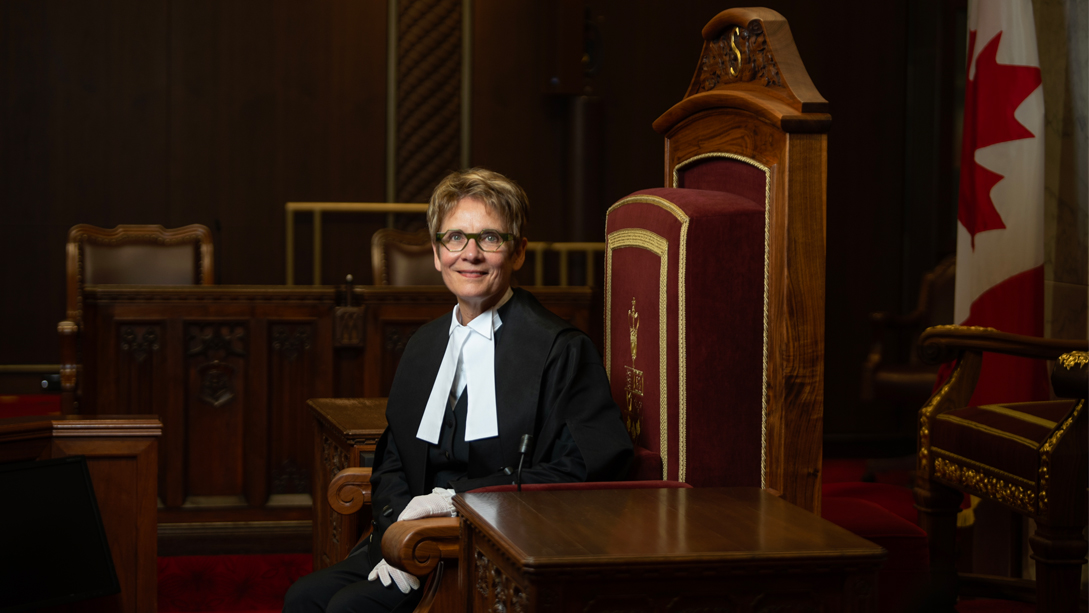
More than a year after being appointed Speaker of the Senate, one of the most important positions in Parliament, Speaker Raymonde Gagné says she is still pinching herself.
Described by her colleagues as “a woman with heart,” she is the first female president of Winnipeg’s Université de Saint-Boniface, the first Speaker to be a member of the Order of Canada during her tenure and she even has skills as a butcher; a legacy of her rural Manitoba upbringing.
Find out more about the life of this proud Franco-Manitoban, her career in education and her role as Speaker of the Senate.
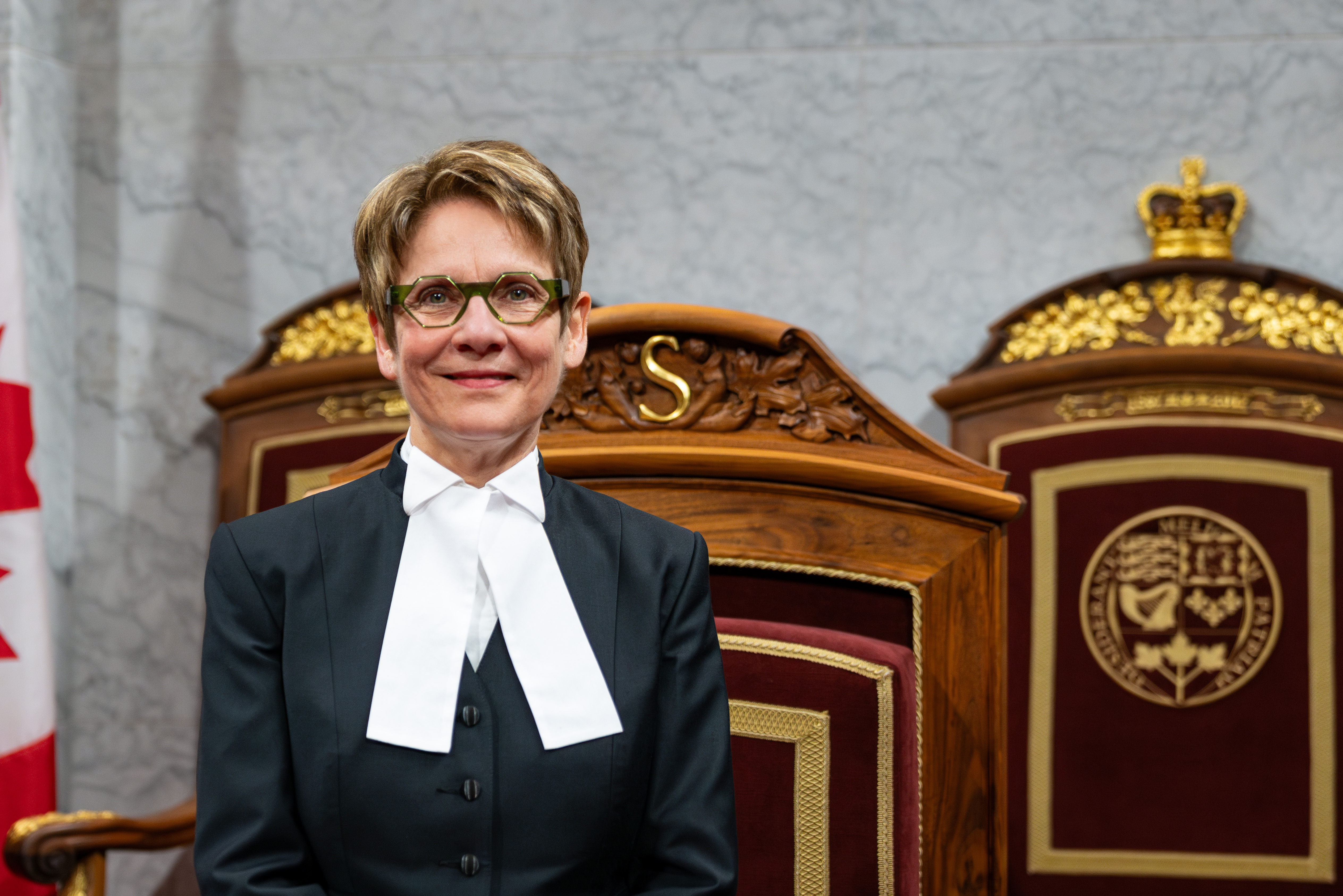 The Honourable Raymonde Gagné is only the third woman to become Speaker of the Senate and the first since 1979.
More than a year has passed since your appointment as Speaker of the Senate on May 12, 2023. What are some highlights you can share from your time in this role so far?
I’m someone who always likes to take on new challenges. But representing Canada abroad is an entirely new field for me. To be able to discover this new role and to explore my abilities while interacting with all these heads of state really amazes me.
Also, I had to make a ruling on a question of privilege. The discussions surrounding this decision prompted me to think deeply about my role as Speaker in order to be able to make a balanced decision. However, the real value of this institution lies in the people around me who help me in making decisions.
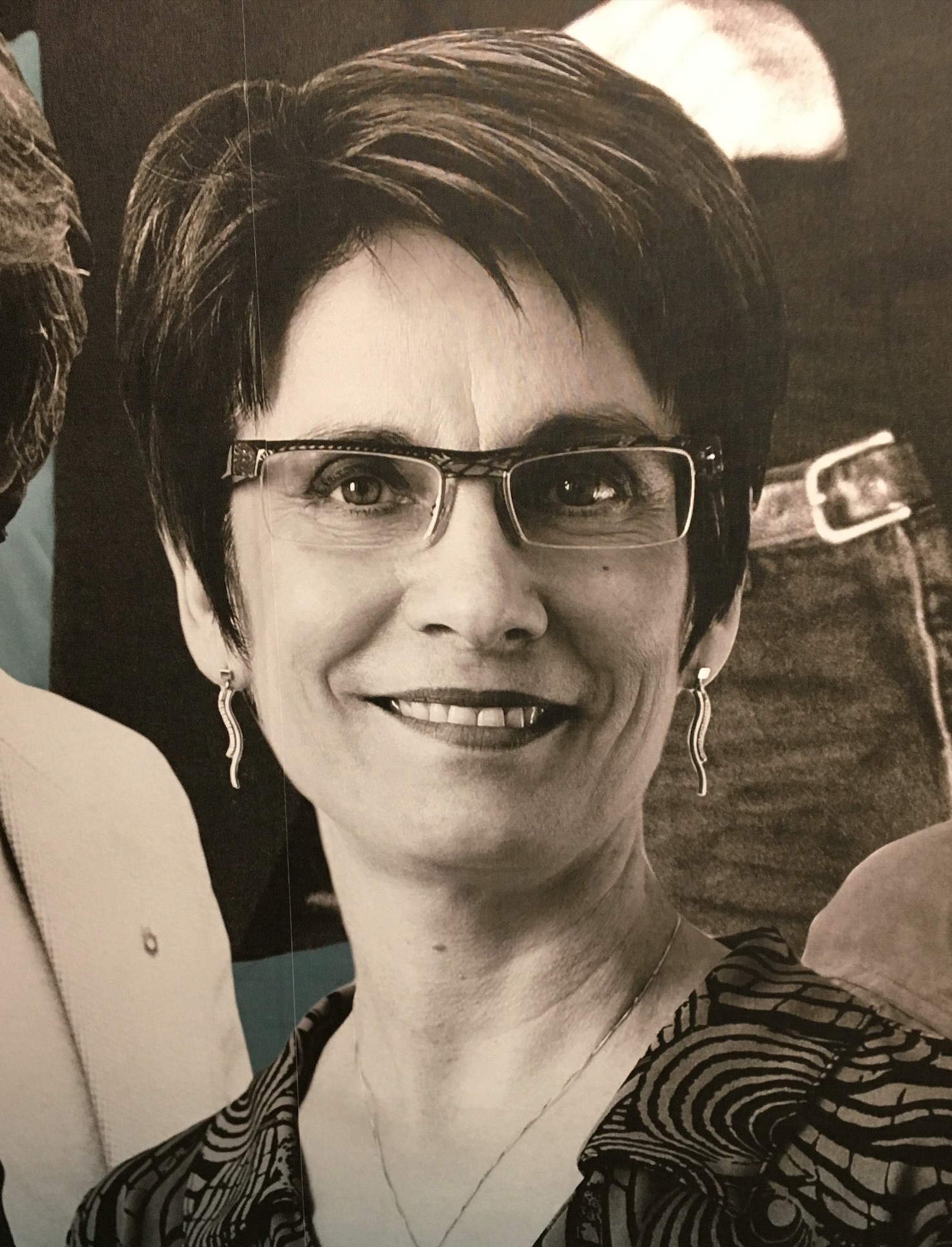 Senator Gagné at the Université de Saint-Boniface’s 200th anniversary celebrations honouring its alumni in 2018. As president, she played a critical role in the institution’s transition from college to university. She also led a major fundraising campaign for the construction of a new health sciences building. (Photo credit: Office of the Speaker Raymonde Gagné)
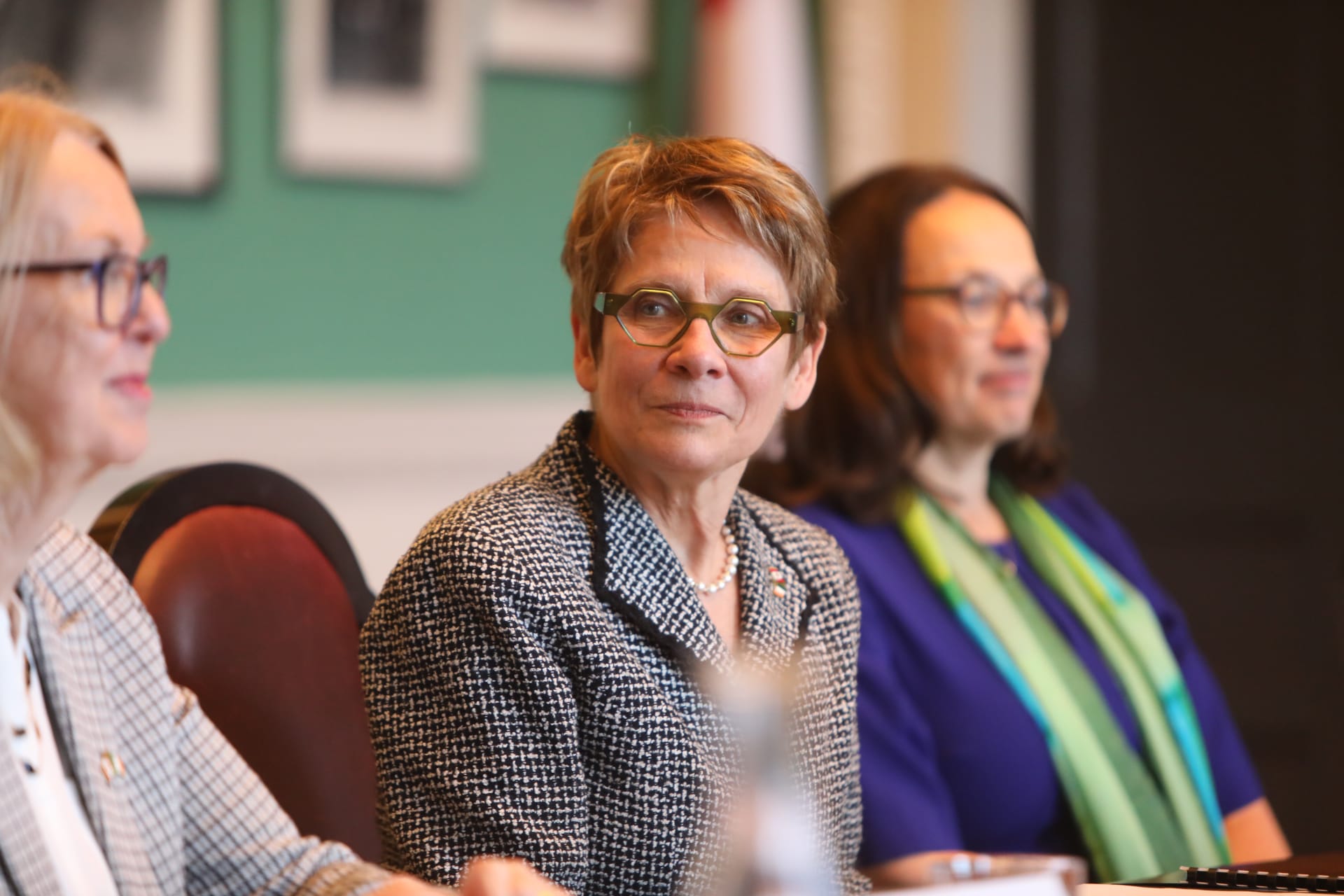 During a diplomatic mission to Ireland in February 2024, Speaker Gagné met with parliamentary representatives along with her Senate colleagues. The Speaker plays a key diplomatic role, whether welcoming heads of state to Canada or leading delegations abroad. (Photo credit: Office of the Speaker Raymonde Gagné)
What are your goals as Speaker of the Senate?
I intend to exercise leadership based on respect for the values of our esteemed institution, in remaining true to myself and in demonstrating sensitivity towards others.
On a personal level, my goals may evolve over time, especially as the length of my tenure is still uncertain. However, I have set goals related to the Francophonie, including promoting the Canadian and international Francophonie.
I am also committed to taking into account the challenges posed by climate change and technological advances, particularly in the field of artificial intelligence. It is important to better understand their political and geopolitical implications.
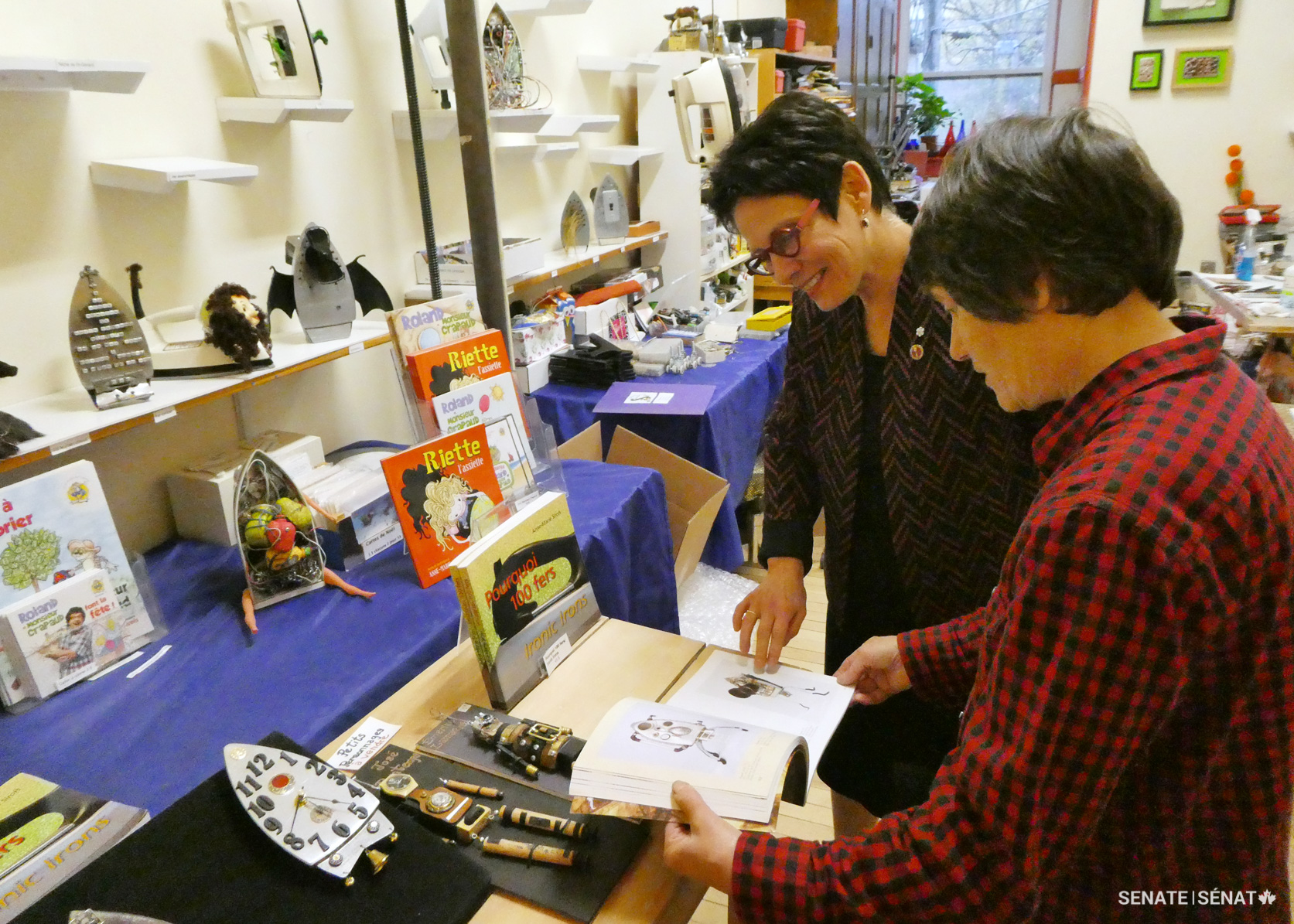 Senator Gagné speaks with New Brunswick artist Anne-Marie Sirois at an event organized by the Senate Committee on Official Languages in Moncton in 2018.
You are only the third-ever female Speaker of the Senate, and the first since 1979. How significant is this for you?
I think this is extremely important because it is a question of equity. Having a woman at the head of an institution encourages other women to join the organization, especially young women looking to launch their careers.
Women add value. They can foster innovation, generate diverse ideas and enrich conversations around gender, race, ethnicity and sexual orientation. I think diversity adds tremendous value to our institution.
Has anything surprised you about your new role?
The level of security. I had to adjust my daily routine, which was hard to accept because I was used to casually bumping into people in my community; sometimes my constituents would stop me in the grocery store to talk. I was comfortable with that. But I realize that the climate is very different today, and I have to adapt.
The pace of work, especially in diplomatic work, is obviously much faster. I take the time I need to thoroughly prepare myself for this job, perhaps to compensate for the lack of experience I had in this area. It’s a challenge, but an interesting one.
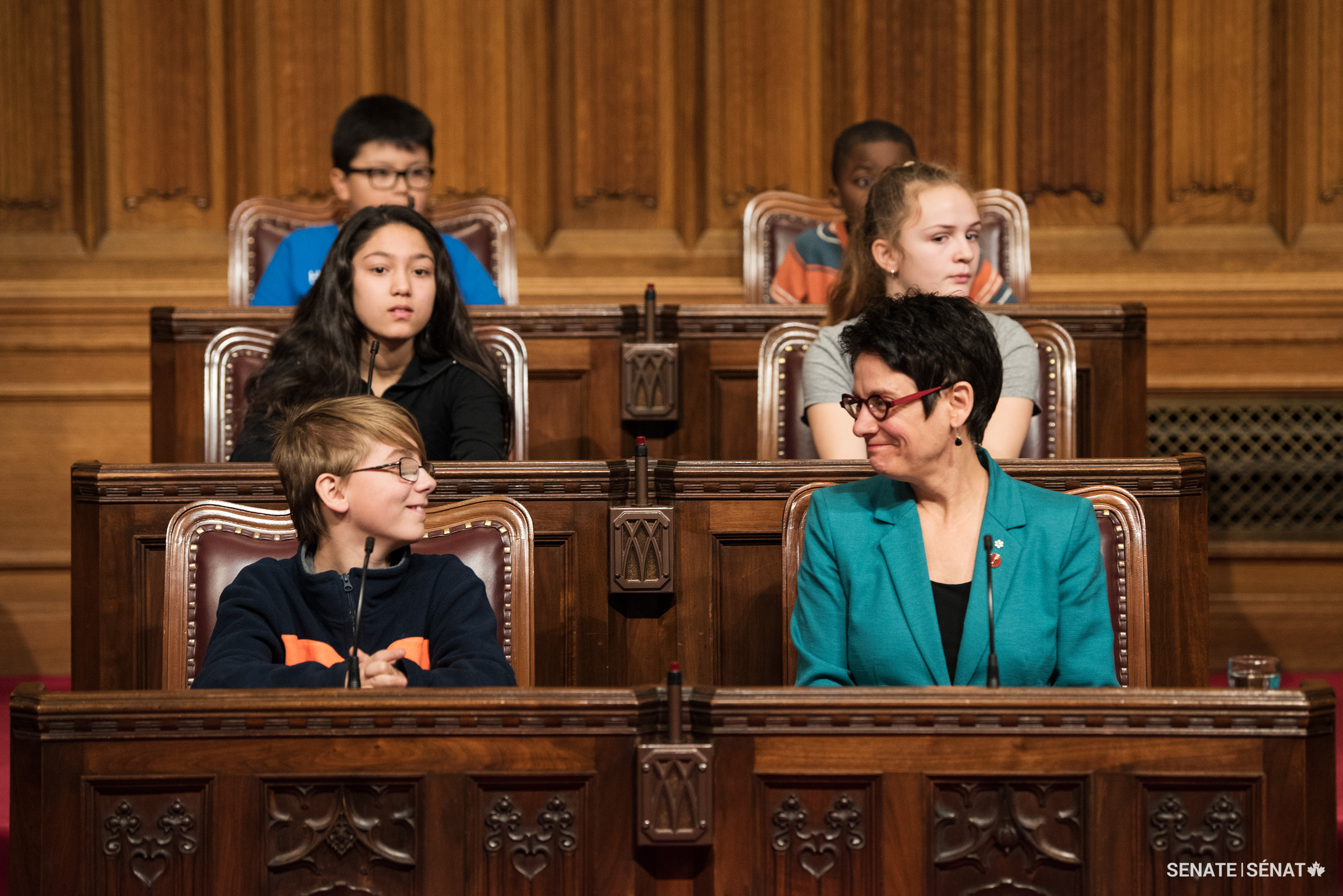 A former teacher, Senator Gagné shares a moment with a student at a National Child Day celebration in the Senate in November 2017.
You rank fourth in the Table of Precedence for Canada after the Governor General, the Prime Minister and the Chief Justice of the Supreme Court. Can you explain what this means for you?
First, it is a privilege to serve, but also a source of pride that I can’t really quantify. This privilege is at the heart of my daily activities as Speaker. Even today, I still pinch myself when I realize that I am sitting in the Red Chamber and chairing the proceedings.
This is a tremendous responsibility; the weight is palpable. I am aware of the importance of serving with integrity and impartiality. This involves practising active listening and actively engaging in collaboration. Effective collaboration requires respect for everyone’s opinion.
As Speaker, you have a diplomatic role that includes leading parliamentary delegations abroad and welcoming foreign leaders to Canada. What is the value of parliamentary diplomacy and how can you contribute as Speaker of the Senate?
When we step back and look at world events, particularly in countries on the brink of losing their sovereignty or nations at war, we realize the effect of these situations on Canada. In this context, it is crucial to nurture interparliamentary diplomacy. It’s essential that we promote dialogue and do what we can to prevent conflict. As a nation, we must support efforts to find solutions and foster collaboration.
We face many political challenges. Interparliamentary diplomacy encourages collaboration and improves mutual understanding. As Speaker of the Senate, I have the opportunity to bring together parliamentarians from different countries, exchange perspectives and share Canada’s parliamentary experience. These relationships can create channels of dialogue that remain open even — perhaps especially — when governments face disagreements.
Parliamentary diplomacy is also an opportunity to showcase Canada’s democratic institutions and the important role that the Senate plays in our parliamentary system. By welcoming foreign leaders and delegations to Canada, and by leading diverse Canadian parliamentary delegations abroad, I can help build lasting relationships between institutions and people.
Ultimately, diplomacy is about building bridges. It is about listening, understanding different perspectives and finding common ground. At a time of growing uncertainty around the world, maintaining these relationships and keeping dialogue alive is more important than ever.
You served in Centre Block before it closed for rehabilitation in 2019. Tell us about one of your fond memories in this building.
I really appreciated being close to the House of Commons. Both chambers have lost this opportunity to meet in person to discuss matters that are important to Canadians. In my opinion, this is one of the significant losses attributable to our relocation. But I know it’s temporary.
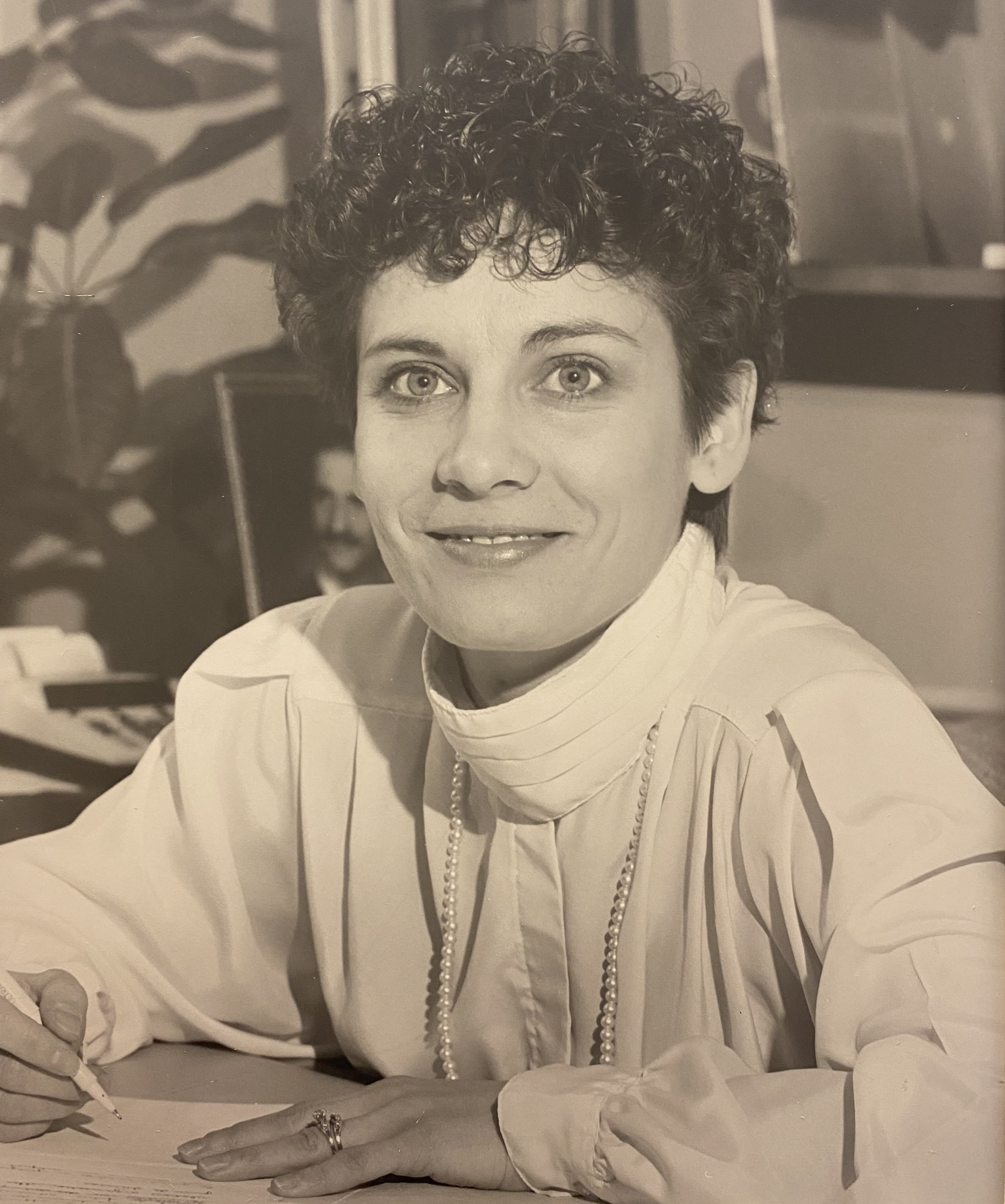 Raymonde Gagné when she was principal of the Community College of Saint-Boniface in the mid-1980s. (Photo credit: Office of the Speaker Raymonde Gagné)
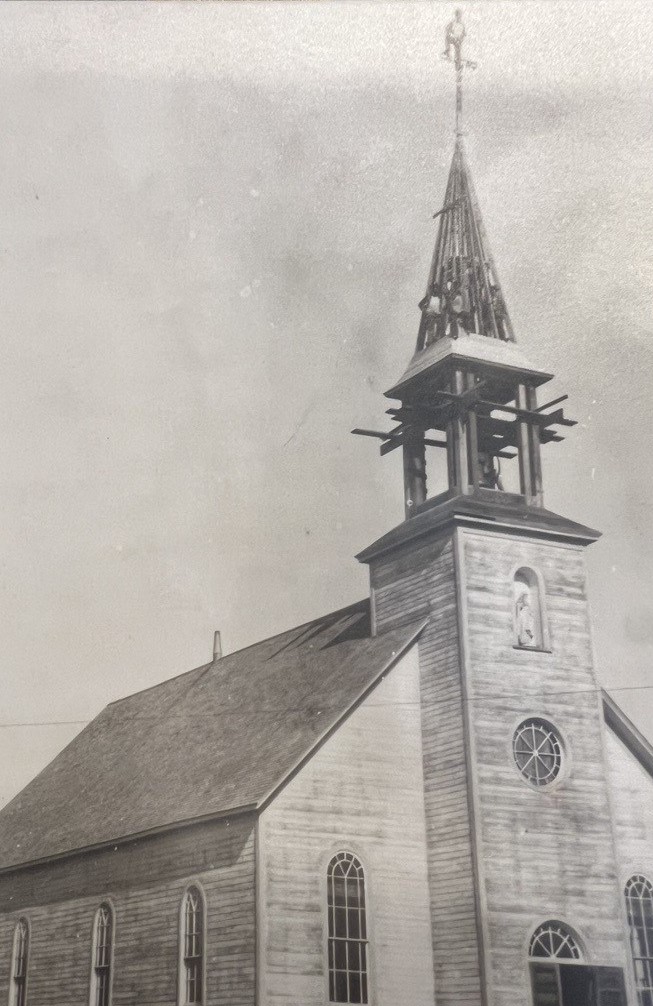 Speaker Gagné’s grandfather was a tradesman who made weathervanes featuring a rooster, the symbol of the village of St-Pierre-Jolys, Manitoba. He installed these weathervanes himself on churches and, as a result, became known in St-Pierre-Jolys and all the surrounding communities as a community steeple climber. His dedication to the Catholic Church earned him a blessing from the Pope. He is seen here at the top of Sainte-Élisabeth Church. (Photo credit: Office of the Speaker Raymonde Gagné)
Another thing I miss is the echo of the building. When I entered the Chamber in Centre Block, I could hear people walking and voices around us. This echo is symbolic in many ways. It reminds us that we are not alone, that we work in a community for the common good.
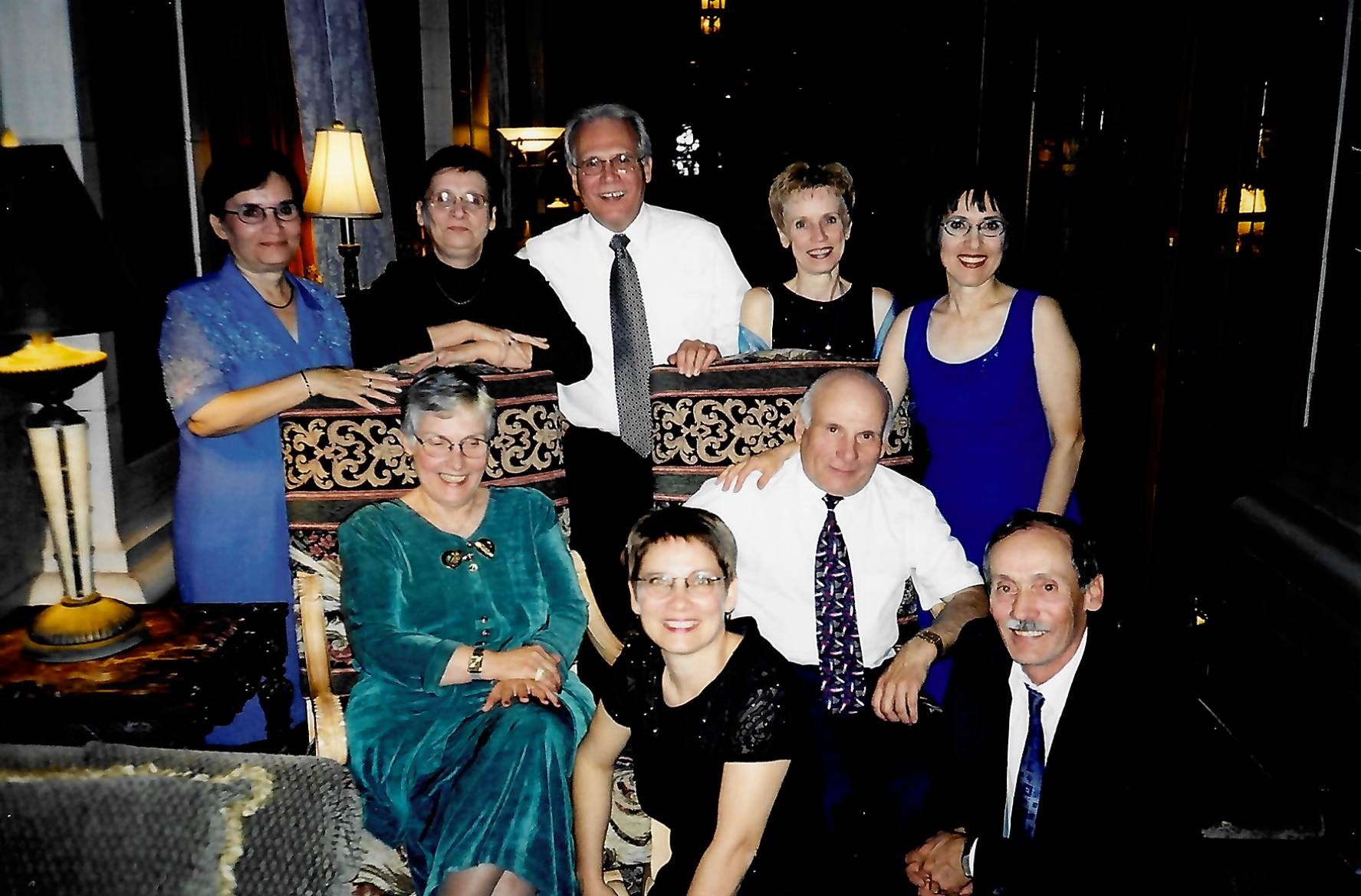 The nine brothers and sisters in the Gagné family. (Photo credit: Office of the Speaker Raymonde Gagné)
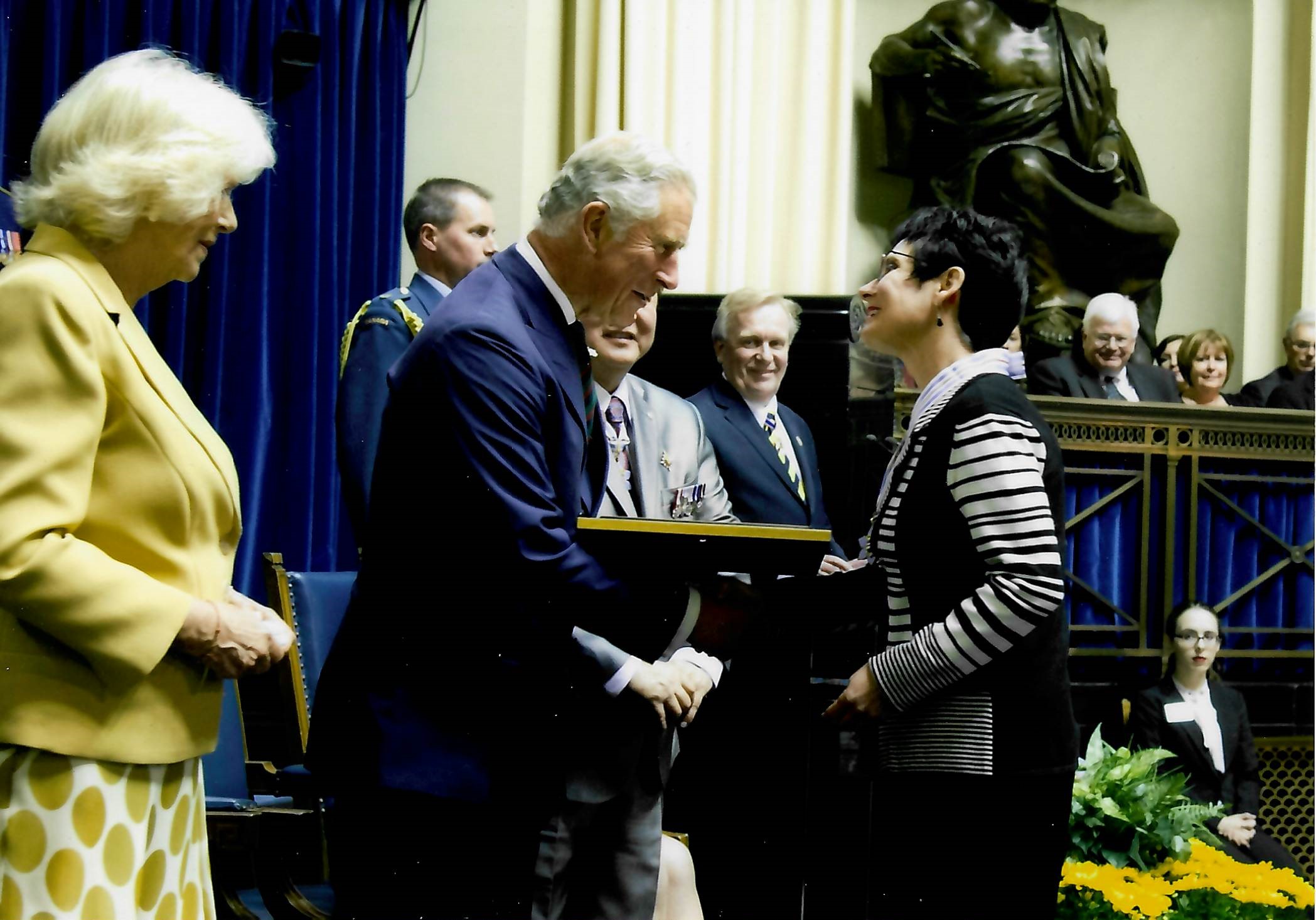 King Charles III of Canada, then the Prince of Wales, awarded the Order of Manitoba to Raymonde Gagné in 2014, two years before she became a senator. (Photo credit: Office of the Speaker Raymonde Gagné)
You are a proud Franco-Manitoban with a passion for Canada’s minority francophone communities. How do you celebrate your francophone identity?
I have always been committed to developing my community through joining boards of directors or participating in various initiatives. For me, it’s important to be involved rather than just observe.
It’s also important for members of our Francophonie to gather and celebrate our culture. I strongly believe that we must do what we can to promote Manitoba’s Francophonie, the Francophonie of Western Canada and the Canadian Francophonie.

You grew up on a farm in rural Manitoba as the youngest of nine children. How did your upbringing shape who you are?
When you live on a farm, the whole family participates in the work, whether it’s milking the cows, feeding the chickens and pigs, or tending to the gardens and fields. I even helped with butchering. I’m not faint-hearted. These experiences taught me the importance of being engaged in the work and being organized.
I really like working outdoors. I have always loved working and being outside. Being outdoors has always been really important to me because it’s where I can recharge my batteries. My husband and I used to enjoy heading out in a canoe, with our backpacks filled with provisions, to explore the regions of Manitoba and Western Ontario.
I am deeply proud of my roots in St-Pierre-Jolys and Saint-Joseph, Manitoba, where my ancestors, the Gagné-Hirbour, Joubert, Delorme and Fontaine families, settled in the 19th century. My family and I compiled their stories in a book called Une histoire de cœur (A story of the heart).
This historical, family and personal experience continues to guide me in the Senate.
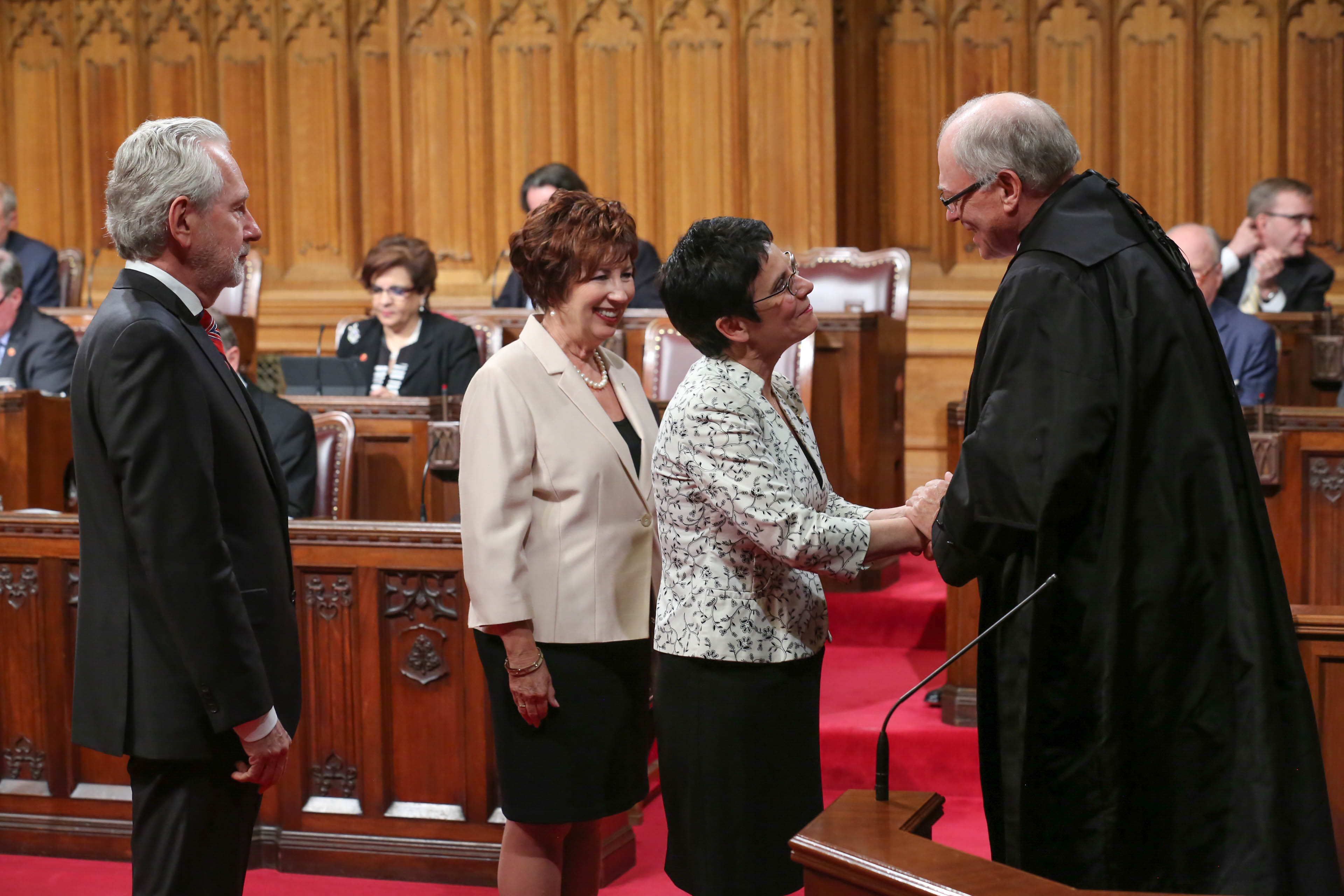 Former Senate Speaker George J. Furey shakes hands with Senator Raymonde Gagné during her swearing-in ceremony in the Red Chamber, in 2016. She is joined by Senator V. Peter Harder and former senator Claudette Tardif.
Learn more about Senate Speaker Raymonde Gagné in this article on SenCAplus.
Related articles
Tags
Committee news
Meet Senate Speaker Raymonde Gagné
More than a year after being appointed Speaker of the Senate, one of the most important positions in Parliament, Speaker Raymonde Gagné says she is still pinching herself.
Described by her colleagues as “a woman with heart,” she is the first female president of Winnipeg’s Université de Saint-Boniface, the first Speaker to be a member of the Order of Canada during her tenure and she even has skills as a butcher; a legacy of her rural Manitoba upbringing.
Find out more about the life of this proud Franco-Manitoban, her career in education and her role as Speaker of the Senate.
The Honourable Raymonde Gagné is only the third woman to become Speaker of the Senate and the first since 1979.
More than a year has passed since your appointment as Speaker of the Senate on May 12, 2023. What are some highlights you can share from your time in this role so far?
I’m someone who always likes to take on new challenges. But representing Canada abroad is an entirely new field for me. To be able to discover this new role and to explore my abilities while interacting with all these heads of state really amazes me.
Also, I had to make a ruling on a question of privilege. The discussions surrounding this decision prompted me to think deeply about my role as Speaker in order to be able to make a balanced decision. However, the real value of this institution lies in the people around me who help me in making decisions.
Senator Gagné at the Université de Saint-Boniface’s 200th anniversary celebrations honouring its alumni in 2018. As president, she played a critical role in the institution’s transition from college to university. She also led a major fundraising campaign for the construction of a new health sciences building. (Photo credit: Office of the Speaker Raymonde Gagné)
During a diplomatic mission to Ireland in February 2024, Speaker Gagné met with parliamentary representatives along with her Senate colleagues. The Speaker plays a key diplomatic role, whether welcoming heads of state to Canada or leading delegations abroad. (Photo credit: Office of the Speaker Raymonde Gagné)
What are your goals as Speaker of the Senate?
I intend to exercise leadership based on respect for the values of our esteemed institution, in remaining true to myself and in demonstrating sensitivity towards others.
On a personal level, my goals may evolve over time, especially as the length of my tenure is still uncertain. However, I have set goals related to the Francophonie, including promoting the Canadian and international Francophonie.
I am also committed to taking into account the challenges posed by climate change and technological advances, particularly in the field of artificial intelligence. It is important to better understand their political and geopolitical implications.
Senator Gagné speaks with New Brunswick artist Anne-Marie Sirois at an event organized by the Senate Committee on Official Languages in Moncton in 2018.
You are only the third-ever female Speaker of the Senate, and the first since 1979. How significant is this for you?
I think this is extremely important because it is a question of equity. Having a woman at the head of an institution encourages other women to join the organization, especially young women looking to launch their careers.
Women add value. They can foster innovation, generate diverse ideas and enrich conversations around gender, race, ethnicity and sexual orientation. I think diversity adds tremendous value to our institution.
Has anything surprised you about your new role?
The level of security. I had to adjust my daily routine, which was hard to accept because I was used to casually bumping into people in my community; sometimes my constituents would stop me in the grocery store to talk. I was comfortable with that. But I realize that the climate is very different today, and I have to adapt.
The pace of work, especially in diplomatic work, is obviously much faster. I take the time I need to thoroughly prepare myself for this job, perhaps to compensate for the lack of experience I had in this area. It’s a challenge, but an interesting one.
A former teacher, Senator Gagné shares a moment with a student at a National Child Day celebration in the Senate in November 2017.
You rank fourth in the Table of Precedence for Canada after the Governor General, the Prime Minister and the Chief Justice of the Supreme Court. Can you explain what this means for you?
First, it is a privilege to serve, but also a source of pride that I can’t really quantify. This privilege is at the heart of my daily activities as Speaker. Even today, I still pinch myself when I realize that I am sitting in the Red Chamber and chairing the proceedings.
This is a tremendous responsibility; the weight is palpable. I am aware of the importance of serving with integrity and impartiality. This involves practising active listening and actively engaging in collaboration. Effective collaboration requires respect for everyone’s opinion.
As Speaker, you have a diplomatic role that includes leading parliamentary delegations abroad and welcoming foreign leaders to Canada. What is the value of parliamentary diplomacy and how can you contribute as Speaker of the Senate?
When we step back and look at world events, particularly in countries on the brink of losing their sovereignty or nations at war, we realize the effect of these situations on Canada. In this context, it is crucial to nurture interparliamentary diplomacy. It’s essential that we promote dialogue and do what we can to prevent conflict. As a nation, we must support efforts to find solutions and foster collaboration.
We face many political challenges. Interparliamentary diplomacy encourages collaboration and improves mutual understanding. As Speaker of the Senate, I have the opportunity to bring together parliamentarians from different countries, exchange perspectives and share Canada’s parliamentary experience. These relationships can create channels of dialogue that remain open even — perhaps especially — when governments face disagreements.
Parliamentary diplomacy is also an opportunity to showcase Canada’s democratic institutions and the important role that the Senate plays in our parliamentary system. By welcoming foreign leaders and delegations to Canada, and by leading diverse Canadian parliamentary delegations abroad, I can help build lasting relationships between institutions and people.
Ultimately, diplomacy is about building bridges. It is about listening, understanding different perspectives and finding common ground. At a time of growing uncertainty around the world, maintaining these relationships and keeping dialogue alive is more important than ever.
You served in Centre Block before it closed for rehabilitation in 2019. Tell us about one of your fond memories in this building.
I really appreciated being close to the House of Commons. Both chambers have lost this opportunity to meet in person to discuss matters that are important to Canadians. In my opinion, this is one of the significant losses attributable to our relocation. But I know it’s temporary.
Raymonde Gagné when she was principal of the Community College of Saint-Boniface in the mid-1980s. (Photo credit: Office of the Speaker Raymonde Gagné)
Speaker Gagné’s grandfather was a tradesman who made weathervanes featuring a rooster, the symbol of the village of St-Pierre-Jolys, Manitoba. He installed these weathervanes himself on churches and, as a result, became known in St-Pierre-Jolys and all the surrounding communities as a community steeple climber. His dedication to the Catholic Church earned him a blessing from the Pope. He is seen here at the top of Sainte-Élisabeth Church. (Photo credit: Office of the Speaker Raymonde Gagné)
Another thing I miss is the echo of the building. When I entered the Chamber in Centre Block, I could hear people walking and voices around us. This echo is symbolic in many ways. It reminds us that we are not alone, that we work in a community for the common good.
The nine brothers and sisters in the Gagné family. (Photo credit: Office of the Speaker Raymonde Gagné)
King Charles III of Canada, then the Prince of Wales, awarded the Order of Manitoba to Raymonde Gagné in 2014, two years before she became a senator. (Photo credit: Office of the Speaker Raymonde Gagné)
You are a proud Franco-Manitoban with a passion for Canada’s minority francophone communities. How do you celebrate your francophone identity?
I have always been committed to developing my community through joining boards of directors or participating in various initiatives. For me, it’s important to be involved rather than just observe.
It’s also important for members of our Francophonie to gather and celebrate our culture. I strongly believe that we must do what we can to promote Manitoba’s Francophonie, the Francophonie of Western Canada and the Canadian Francophonie.
You grew up on a farm in rural Manitoba as the youngest of nine children. How did your upbringing shape who you are?
When you live on a farm, the whole family participates in the work, whether it’s milking the cows, feeding the chickens and pigs, or tending to the gardens and fields. I even helped with butchering. I’m not faint-hearted. These experiences taught me the importance of being engaged in the work and being organized.
I really like working outdoors. I have always loved working and being outside. Being outdoors has always been really important to me because it’s where I can recharge my batteries. My husband and I used to enjoy heading out in a canoe, with our backpacks filled with provisions, to explore the regions of Manitoba and Western Ontario.
I am deeply proud of my roots in St-Pierre-Jolys and Saint-Joseph, Manitoba, where my ancestors, the Gagné-Hirbour, Joubert, Delorme and Fontaine families, settled in the 19th century. My family and I compiled their stories in a book called Une histoire de cœur (A story of the heart).
This historical, family and personal experience continues to guide me in the Senate.
Former Senate Speaker George J. Furey shakes hands with Senator Raymonde Gagné during her swearing-in ceremony in the Red Chamber, in 2016. She is joined by Senator V. Peter Harder and former senator Claudette Tardif.
Learn more about Senate Speaker Raymonde Gagné in this article on SenCAplus.