

Meet Senator Amina Gerba
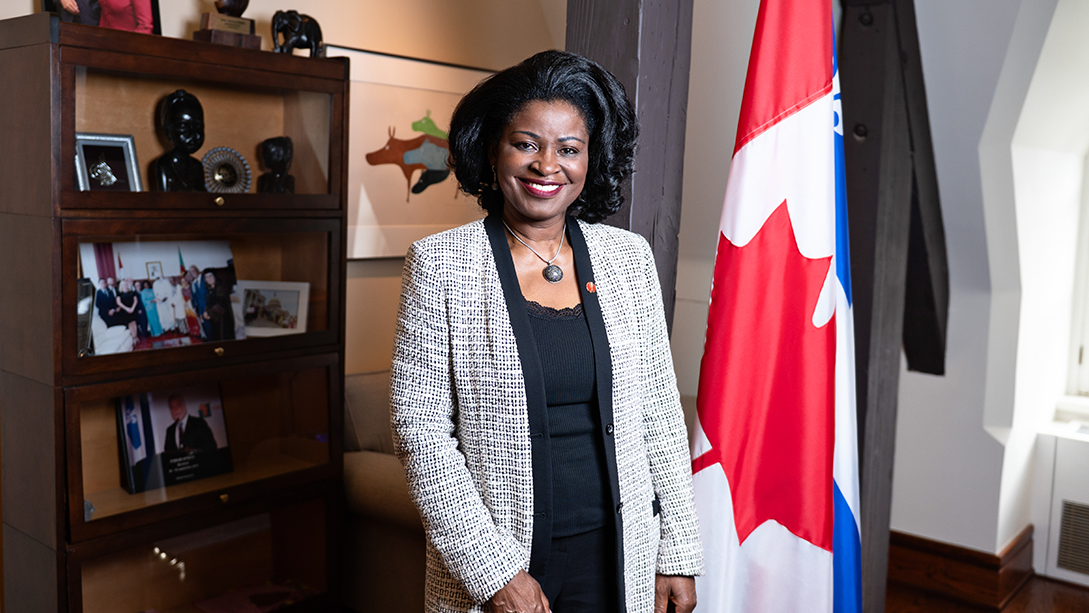
Despite leaving Cameroon almost 40 years ago, Senator Amina Gerba has always kept her country of origin, and Africa as a whole, at the core of her work as an entrepreneur and a senator.
Before she was appointed to the Red Chamber, Senator Gerba founded several businesses, including a factory that produces cosmetics made from African shea butter. She also established her own consulting firm and a non-profit organization to help set up partnerships between North American and African companies. Considered a pioneer in Quebec’s body and hair care industry and an economic bridge between Canada and Africa, she has received several awards for her work at home and abroad.
Senator Gerba spoke with SenCAplus about her Cameroonian roots and the importance she places on relations between Canada and Africa.
You grew up in Cameroon in a family of 19 children, and you’re the only girl in your family to have gone to school. How did your childhood shape the person you have become?
I was born in Bafia, a small village in Cameroon, into a large, religious family of 19 children, only six of whom were girls. My parents were farmers. My father had coffee and cocoa plantations, and my mother sold crops from her field, like peanuts and corn. I’d go to the market with her every Friday to sell them. My childhood instilled in me a sense of sharing and solidarity.
My father didn’t believe in education for girls, and he expected me to get married young. But when I was six years old, my cousin took me under her wing and let me go to school. That one act changed my life. I left an environment where we had no running water, no electricity — no anything — to go to school. It taught me resilience, the value of education and the importance of fighting for your rights.
These lessons still guide me today in my role as a senator, where I champion access to education and women’s empowerment.
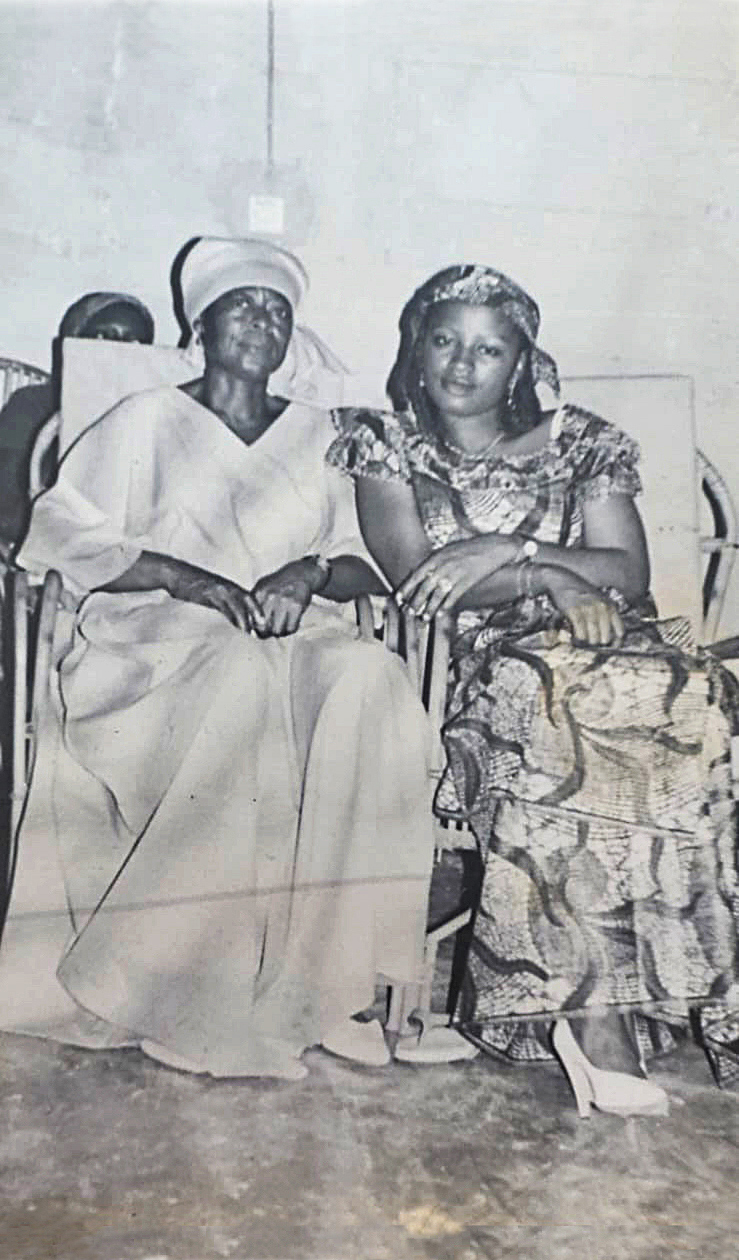
Originally from Cameroon, Senator Amina Gerba was the only girl in her family to attend school. Today, she is grateful to her cousin, who was like a second mother to her, for giving her the opportunity to receive a formal education. The two women are shown here on the senator’s wedding day. (Photo credit: Office of Senator Amina Gerba)
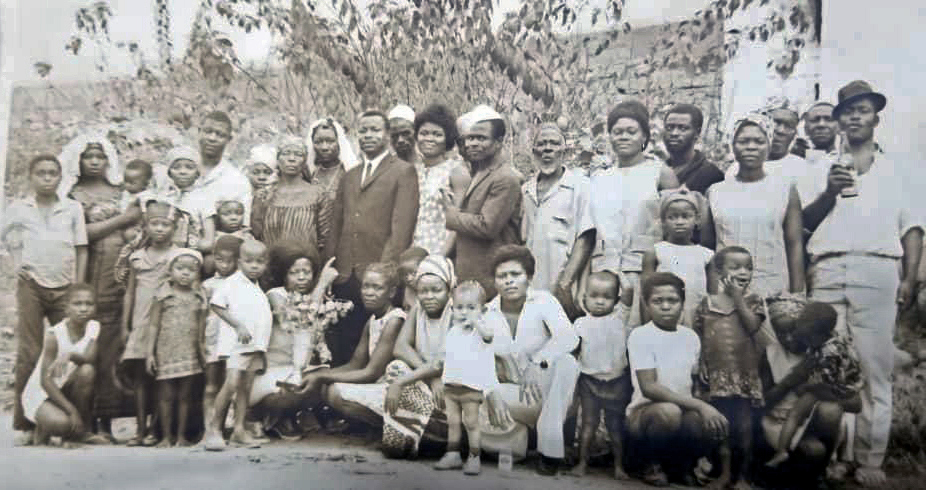 Senator Gerba (the little girl toward the right who is standing and wearing a hat) in Cameroon with her extended family. (Photo credit: Office of Senator Amina Gerba)
What led you to immigrate to Canada in 1986, and what has kept you here for nearly 40 years?
I came to Canada with my husband, who had received a scholarship from the Canadian International Development Agency to study in Montréal. He encouraged me to go back to school at a CEGEP to continue my own studies, which I had stepped back from after the birth of our first child. Going back to school at that time, surrounded by young people, pushed me out of my comfort zone.
After our other three children were born, we decided to stay in Canada to offer them more opportunities. Canada has given me opportunities but also challenges. It is where I built my businesses and got involved in the community, and where I now serve in the Senate. Who would have believed it!
You were appointed to the Senate in 2021. How does your experience as an entrepreneur influence your work in the Senate?
In the Senate, I am strongly committed to files related to inclusion, economic prosperity and support for small and medium-sized businesses. I am also dedicated to shining a light on the contributions of entrepreneurs from diverse backgrounds.
Throughout my 25 years of entrepreneurship, I had the privilege of meeting many remarkable entrepreneurs, both here and in Africa. I founded several companies and launched the Forum Africa in 2003, which became the Forum Afrique Expansion in 2017, with a simple but essential idea: to remind people that Africa is not a country, but a continent made up of 54 nations.
Canada should be taking advantage of these trade opportunities because we can see the threat posed by our main trade partner, the United States. However, today Africa still represents only a small share of Canadian trade.
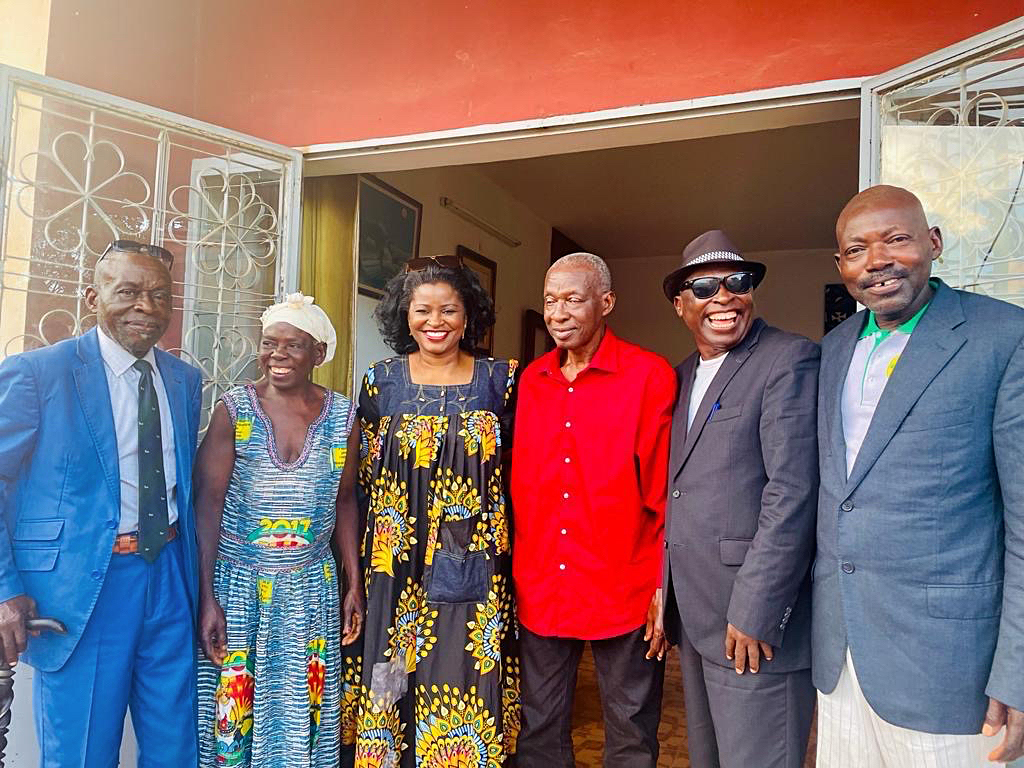 Senator Gerba grew up in a family of 19 children. She is shown here with five of her siblings. (Photo credit: Office of Senator Amina Gerba)
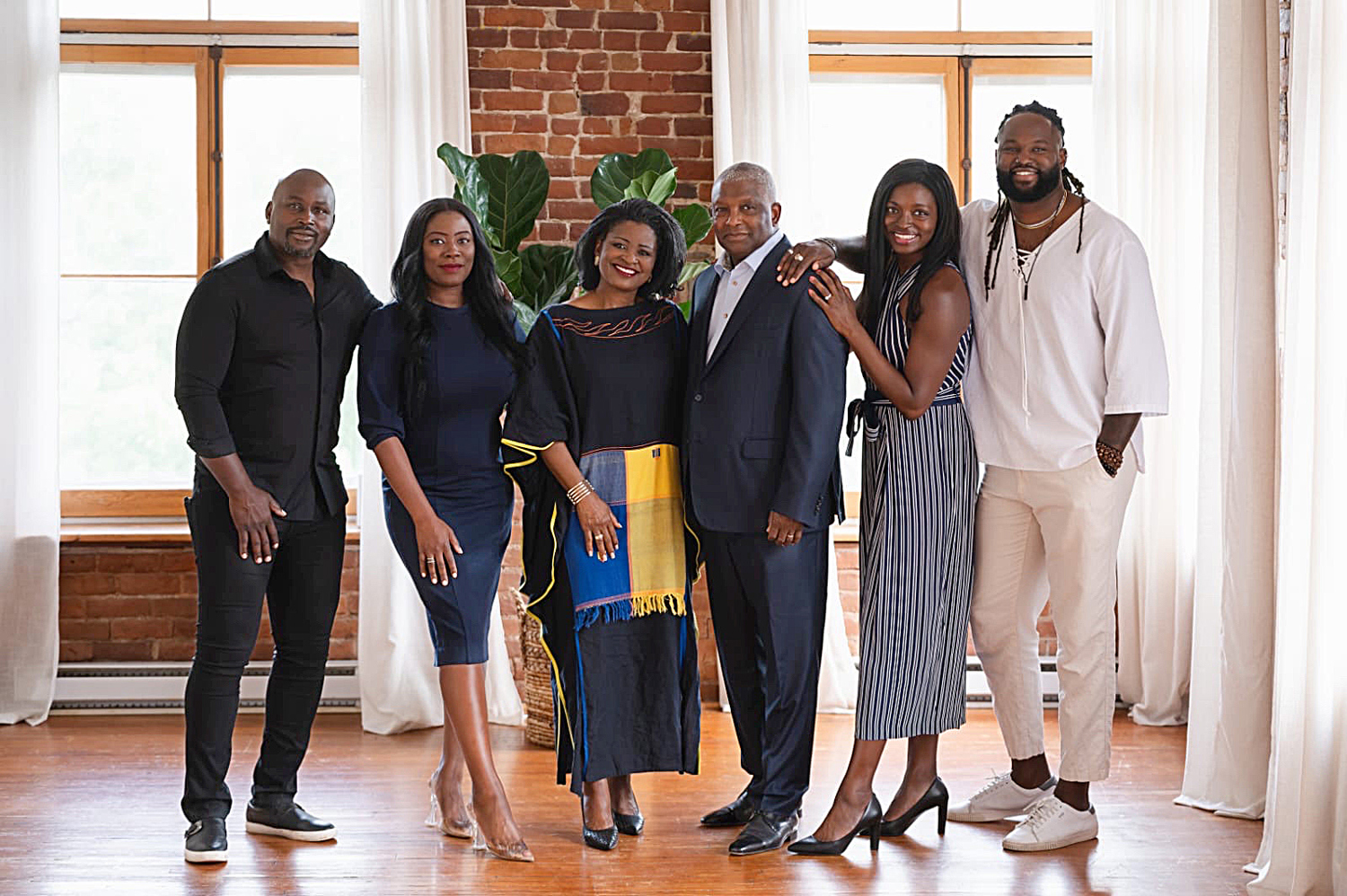 Senator Gerba with her husband, Malam Gerba, and their children, Ali, Aïcha, Habi and Kiari. (Photo credit: Office of Senator Amina Gerba)
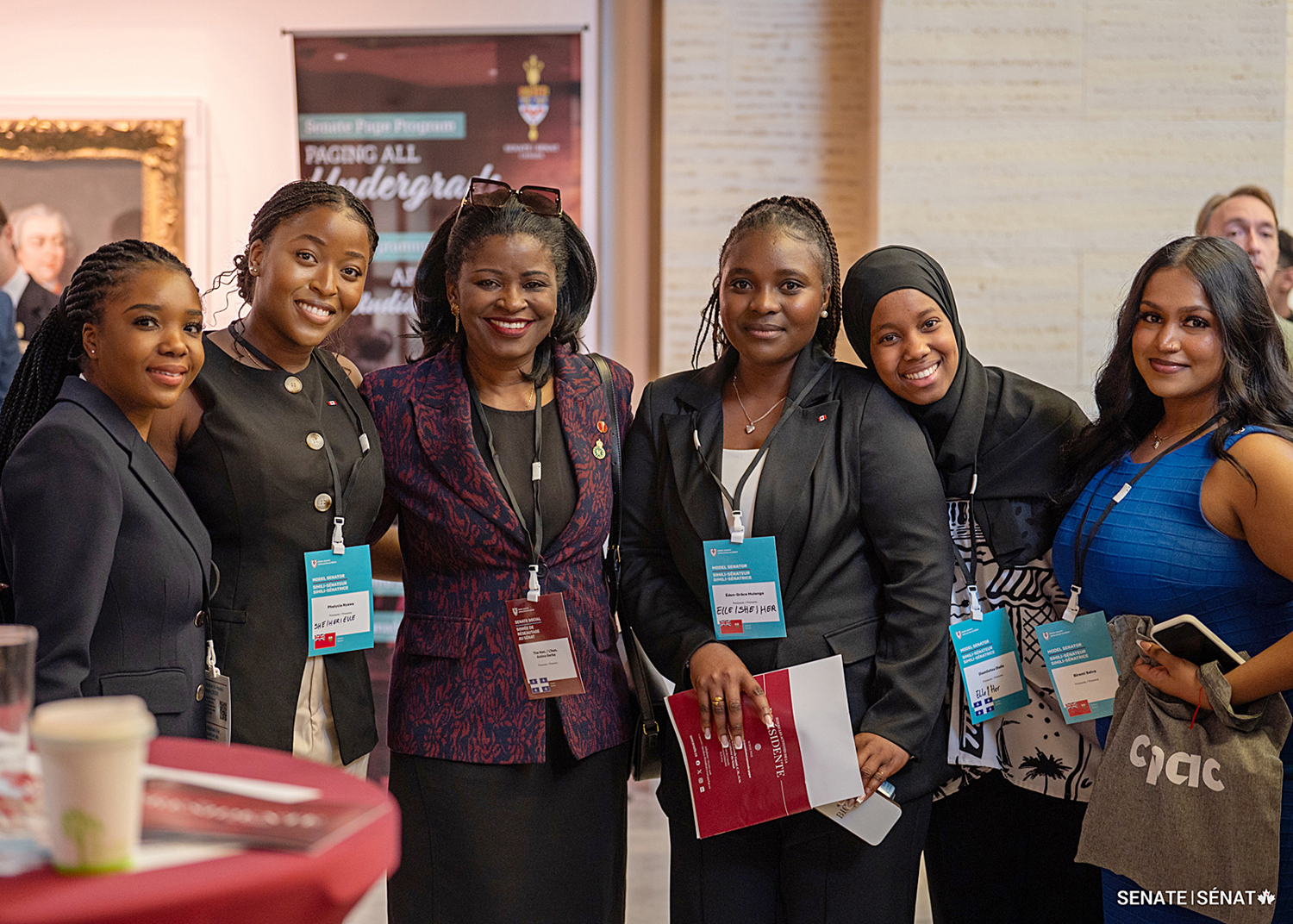 Senator Gerba talks with Model Senate participants during an evening networking event at the Senate of Canada Building on May 8, 2025.
As a senator, how can you encourage stronger partnerships between Canada and Africa?
As I highlighted in my first speech, Africa is a young, dynamic continent that is rich in natural, human and cultural resources. Its population exceeds 1.5 billion people, which includes an emerging middle class of over 330 million — all potential consumers and economic partners. Canada has an excellent reputation in Africa. Africans deeply appreciate our country, notably because Canada has never been a colonial power on the continent. Added to this are significant advantages, such as our bilingualism, which facilitates exchanges with many African countries.
As a senator, I advocate for Canada to diversify its economic relations, particularly through initiatives such as a Canada-Africa business council. I hope that our public policies can fully recognize Africa’s potential. I’m committed to defending this vision in the Senate and among decision makers.
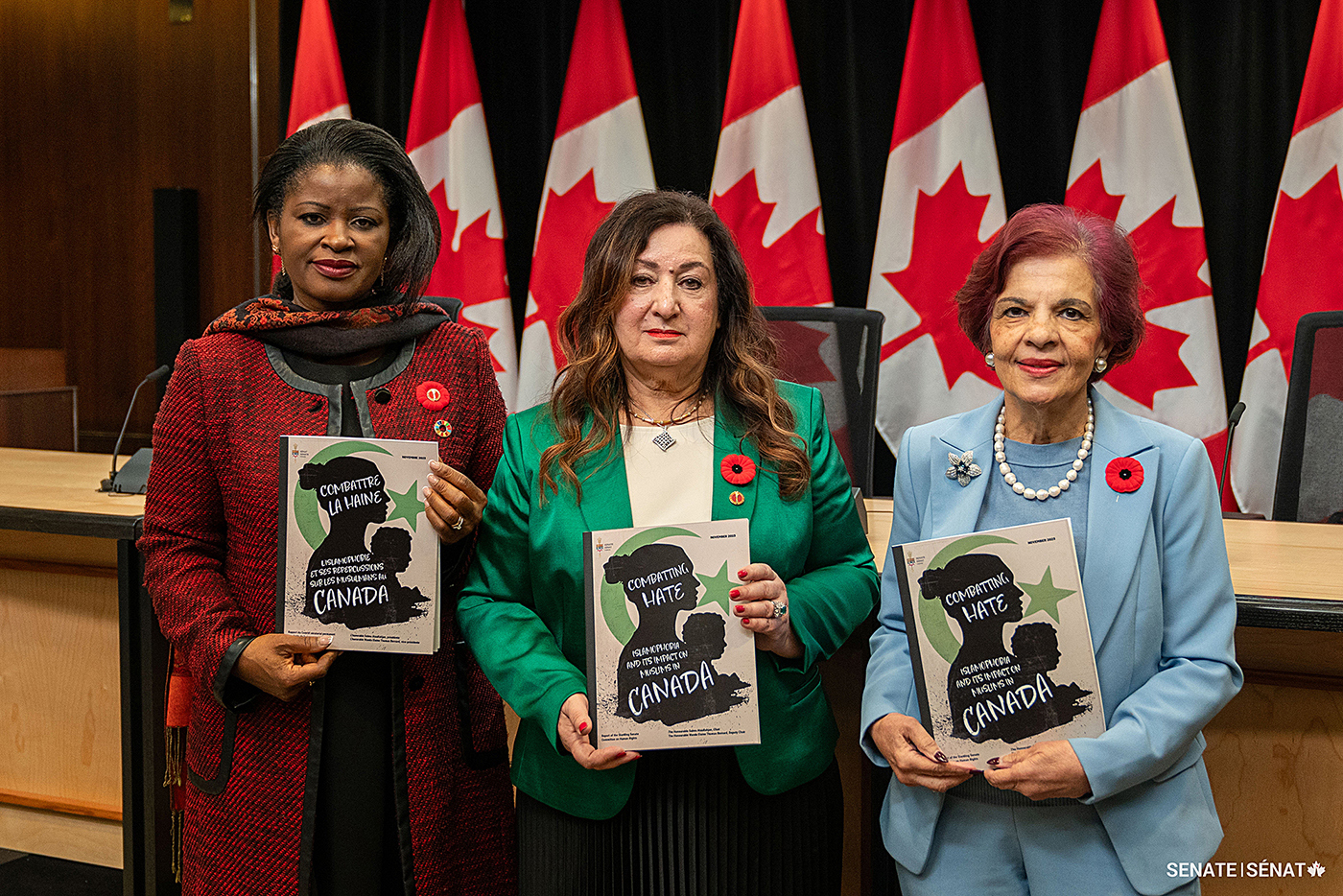 With Senator Salma Ataullahjan, centre, and former senator Mobina S.B. Jaffer, right, Senator Gerba holds a copy of the Senate Committee on Human Rights report on Islamophobia in Canada, published in 2023.
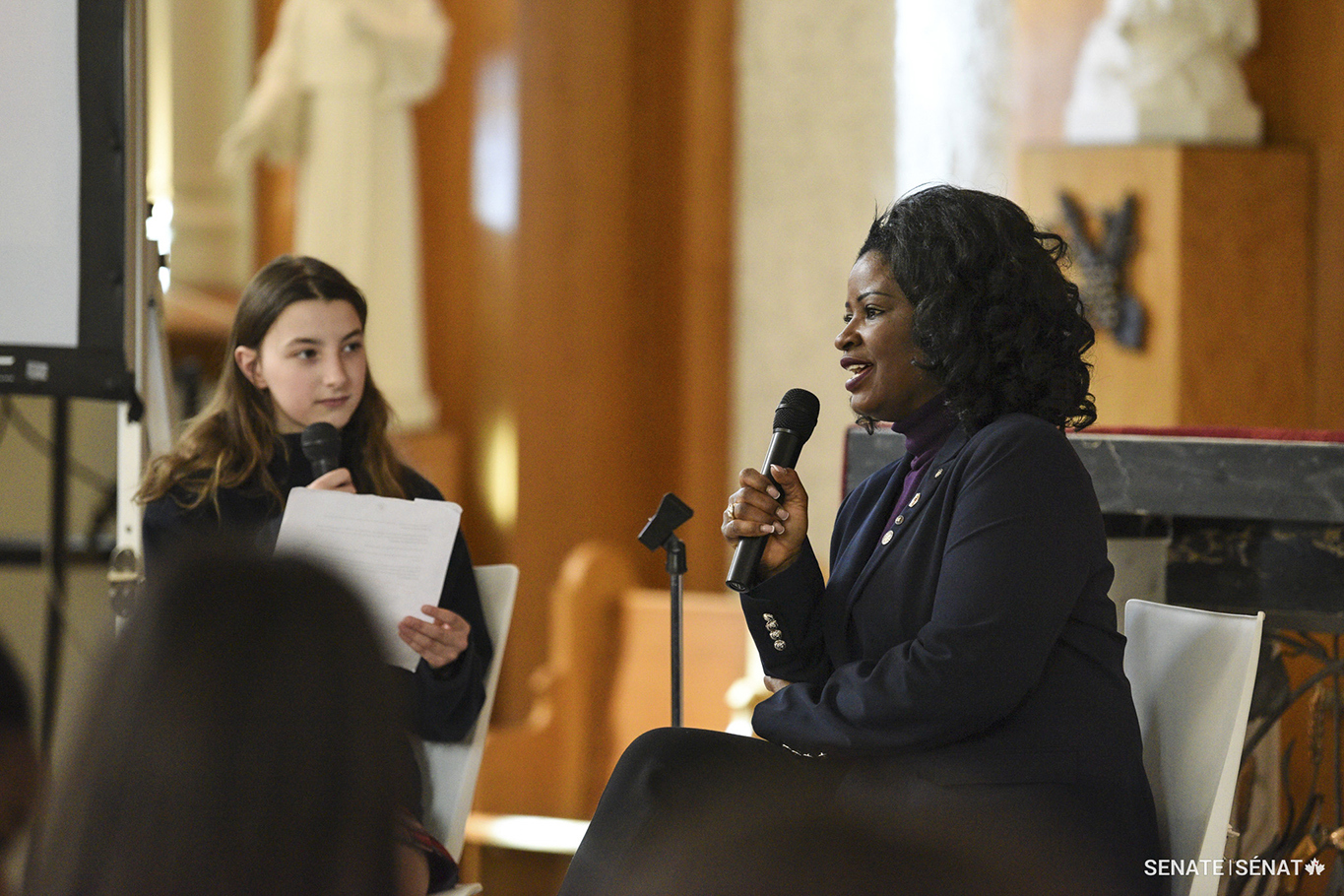 Senator Gerba participates in a discussion with an aspiring journalist from the Collège Saint-Joseph de Hull in Gatineau, Quebec, in 2023.
Who inspired you to participate in public life?
My mother, a merchant at the market in Bafia, taught me from an early age that hard work is the key to independence.
My cousin, a self-taught feminist before her time, passed on an equally essential conviction, which is that education is the most powerful tool for building a future.
These role models shaped me. My community and entrepreneurial involvement naturally led me to public life.
Today, in the Senate, I am pursuing the same mission as in my “previous life” — supporting, opening doors, creating opportunities — but with a broader impact and national reach.
You have four adult children who are entrepreneurs. What did you teach them about entrepreneurship when they were growing up?
My children grew up seeing firsthand what it’s like to be an entrepreneur, including the sacrifices, the sleepless nights and the financial challenges, but also the victories, both big and small.
They always saw me working, so they aren’t afraid of hard work. They also know that being a Black or racialized person in this country means working twice as hard. It’s the only way to succeed.
I’ve always encouraged them to believe in their dreams, follow their passion, learn from their failures and build with resilience.
Since they were young, we would always say to them, “why not?” Anything is possible, but you have to be bold.
As a member of the Senate Committee on Human Rights, you studied Islamophobia and its impact on Muslim communities in Canada. What’s the most important thing you took away from that report?
This report revealed the extent of the invisible impacts of Islamophobia, such as anxiety, exclusion, barriers to employment and feelings of insecurity.
It also highlighted the ongoing systemic discrimination and the urgency of addressing these issues through inclusive and bold public policies.
This study really resonated with me. It gave me a better understanding of intersectionality, particularly the realities experienced by Muslim women — and even more so for Black Muslim women and Muslims from 2SLGBTQI+ communities — and it strengthened my commitment to fighting all forms of discrimination.
As a senator, my role is to represent minorities, amplifying their voices and raising awareness among my colleagues about the issues that affect our communities.
It’s a role that allows me to propose tangible solutions for building a more just society.
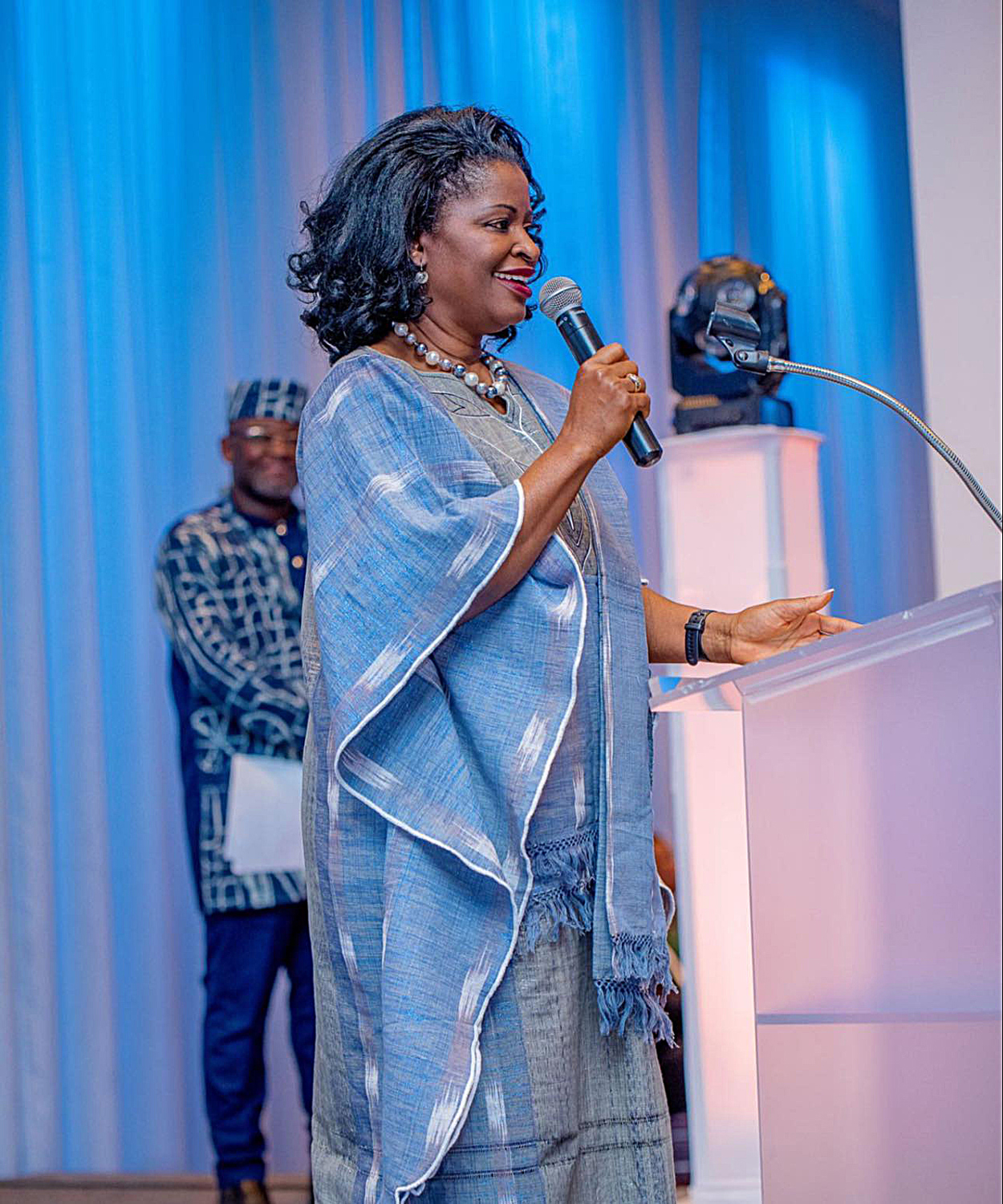 Senator Gerba speaks during a gala for the Cameroonian Engineers Network of Canada on October 19, 2024. (Photo credit: Office of Senator Amina Gerba)
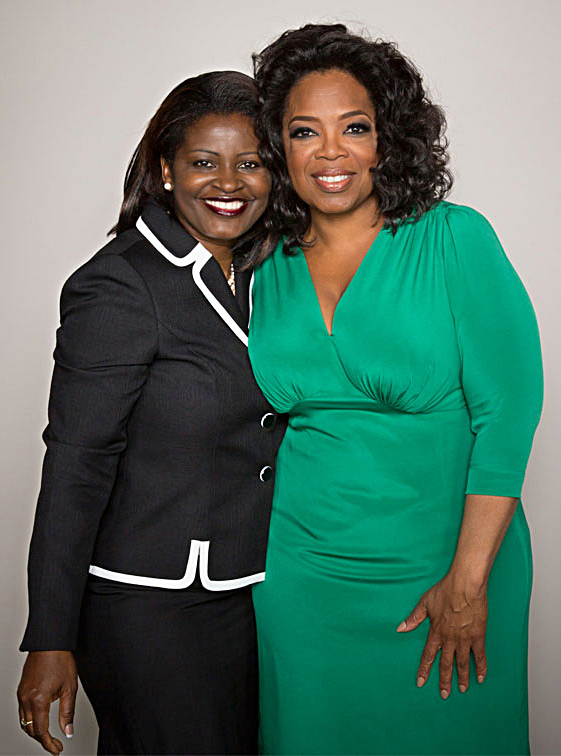 Senator Gerba meets Oprah Winfrey during an event at the Bell Centre in Montréal in April 2013. (Photo credit: Office of Senator Amina Gerba)
You’ve also served on the Senate Committee on Foreign Affairs and International Trade and the Senate Committee on Official Languages, to name a few. What other committees or legislative initiatives are important to you?
The study on the global crisis of forced displacement carried out by the Senate Committee on Human Rights really stood out to me. If Canada doesn’t put in place policies to mitigate these movements at their source, it will directly affect us. If we want to have an impact in the world, we need to find solutions to these challenges.
I am very proud to sit on the Foreign Affairs committee, which completed a landmark study on Canada’s engagement in Africa and has just released a report proposing 21 ambitious recommendations to strengthen our economic, diplomatic and strategic presence on the continent.
I’m also a member of the Fisheries and Oceans committee, the Canada-Africa Group of Senators and the Parliamentary Black Caucus, and I was previously a member of the National Finance committee.
These forums have given me the opportunity to champion issues that are important to me: economic inclusion, minority entrepreneurship, fighting discrimination, bringing people together and recognizing that immigration is a driver of prosperity.
You are actively involved in SENgage, the Senate’s youth outreach program. What advice would you give to young people who want to get involved in politics?
Be bold! Step outside your comfort zone. Keep learning, get informed and surround yourself with supportive people. Your voice matters. Your uniqueness is a strength. Never let imposter syndrome hold you back. There is a place for you, and you have the right to dream big.
Politics can change lives, but people entering politics need to have conviction, resilience and integrity. Canada needs your energy, your ideas and your involvement.
What else do you hope to accomplish as a senator?
I have three priorities in the Senate. My first priority is strengthening Canada-Africa relations so that Canada actively engages with and invests in Africa.
My second priority is my bill S-215, which would designate November as National Immigration Month to recognize and celebrate immigrants and their contributions.
My third priority is access to government procurement for Black entrepreneurs.
Overall, I hope that Canada will become a global model of innovation, solidarity and social justice. I also wish that our country finalizes a structured and mutually beneficial partnership with the African Continental Free Trade Area, which is set to become the world’s largest market.
Related articles
Tags
Committee news
Meet Senator Amina Gerba
Despite leaving Cameroon almost 40 years ago, Senator Amina Gerba has always kept her country of origin, and Africa as a whole, at the core of her work as an entrepreneur and a senator.
Before she was appointed to the Red Chamber, Senator Gerba founded several businesses, including a factory that produces cosmetics made from African shea butter. She also established her own consulting firm and a non-profit organization to help set up partnerships between North American and African companies. Considered a pioneer in Quebec’s body and hair care industry and an economic bridge between Canada and Africa, she has received several awards for her work at home and abroad.
Senator Gerba spoke with SenCAplus about her Cameroonian roots and the importance she places on relations between Canada and Africa.
You grew up in Cameroon in a family of 19 children, and you’re the only girl in your family to have gone to school. How did your childhood shape the person you have become?
I was born in Bafia, a small village in Cameroon, into a large, religious family of 19 children, only six of whom were girls. My parents were farmers. My father had coffee and cocoa plantations, and my mother sold crops from her field, like peanuts and corn. I’d go to the market with her every Friday to sell them. My childhood instilled in me a sense of sharing and solidarity.
My father didn’t believe in education for girls, and he expected me to get married young. But when I was six years old, my cousin took me under her wing and let me go to school. That one act changed my life. I left an environment where we had no running water, no electricity — no anything — to go to school. It taught me resilience, the value of education and the importance of fighting for your rights.
These lessons still guide me today in my role as a senator, where I champion access to education and women’s empowerment.
Originally from Cameroon, Senator Amina Gerba was the only girl in her family to attend school. Today, she is grateful to her cousin, who was like a second mother to her, for giving her the opportunity to receive a formal education. The two women are shown here on the senator’s wedding day. (Photo credit: Office of Senator Amina Gerba)
Senator Gerba (the little girl toward the right who is standing and wearing a hat) in Cameroon with her extended family. (Photo credit: Office of Senator Amina Gerba)
What led you to immigrate to Canada in 1986, and what has kept you here for nearly 40 years?
I came to Canada with my husband, who had received a scholarship from the Canadian International Development Agency to study in Montréal. He encouraged me to go back to school at a CEGEP to continue my own studies, which I had stepped back from after the birth of our first child. Going back to school at that time, surrounded by young people, pushed me out of my comfort zone.
After our other three children were born, we decided to stay in Canada to offer them more opportunities. Canada has given me opportunities but also challenges. It is where I built my businesses and got involved in the community, and where I now serve in the Senate. Who would have believed it!
You were appointed to the Senate in 2021. How does your experience as an entrepreneur influence your work in the Senate?
In the Senate, I am strongly committed to files related to inclusion, economic prosperity and support for small and medium-sized businesses. I am also dedicated to shining a light on the contributions of entrepreneurs from diverse backgrounds.
Throughout my 25 years of entrepreneurship, I had the privilege of meeting many remarkable entrepreneurs, both here and in Africa. I founded several companies and launched the Forum Africa in 2003, which became the Forum Afrique Expansion in 2017, with a simple but essential idea: to remind people that Africa is not a country, but a continent made up of 54 nations.
Canada should be taking advantage of these trade opportunities because we can see the threat posed by our main trade partner, the United States. However, today Africa still represents only a small share of Canadian trade.
Senator Gerba grew up in a family of 19 children. She is shown here with five of her siblings. (Photo credit: Office of Senator Amina Gerba)
Senator Gerba with her husband, Malam Gerba, and their children, Ali, Aïcha, Habi and Kiari. (Photo credit: Office of Senator Amina Gerba)
Senator Gerba talks with Model Senate participants during an evening networking event at the Senate of Canada Building on May 8, 2025.
As a senator, how can you encourage stronger partnerships between Canada and Africa?
As I highlighted in my first speech, Africa is a young, dynamic continent that is rich in natural, human and cultural resources. Its population exceeds 1.5 billion people, which includes an emerging middle class of over 330 million — all potential consumers and economic partners. Canada has an excellent reputation in Africa. Africans deeply appreciate our country, notably because Canada has never been a colonial power on the continent. Added to this are significant advantages, such as our bilingualism, which facilitates exchanges with many African countries.
As a senator, I advocate for Canada to diversify its economic relations, particularly through initiatives such as a Canada-Africa business council. I hope that our public policies can fully recognize Africa’s potential. I’m committed to defending this vision in the Senate and among decision makers.
With Senator Salma Ataullahjan, centre, and former senator Mobina S.B. Jaffer, right, Senator Gerba holds a copy of the Senate Committee on Human Rights report on Islamophobia in Canada, published in 2023.
Senator Gerba participates in a discussion with an aspiring journalist from the Collège Saint-Joseph de Hull in Gatineau, Quebec, in 2023.
Who inspired you to participate in public life?
My mother, a merchant at the market in Bafia, taught me from an early age that hard work is the key to independence.
My cousin, a self-taught feminist before her time, passed on an equally essential conviction, which is that education is the most powerful tool for building a future.
These role models shaped me. My community and entrepreneurial involvement naturally led me to public life.
Today, in the Senate, I am pursuing the same mission as in my “previous life” — supporting, opening doors, creating opportunities — but with a broader impact and national reach.
You have four adult children who are entrepreneurs. What did you teach them about entrepreneurship when they were growing up?
My children grew up seeing firsthand what it’s like to be an entrepreneur, including the sacrifices, the sleepless nights and the financial challenges, but also the victories, both big and small.
They always saw me working, so they aren’t afraid of hard work. They also know that being a Black or racialized person in this country means working twice as hard. It’s the only way to succeed.
I’ve always encouraged them to believe in their dreams, follow their passion, learn from their failures and build with resilience.
Since they were young, we would always say to them, “why not?” Anything is possible, but you have to be bold.
As a member of the Senate Committee on Human Rights, you studied Islamophobia and its impact on Muslim communities in Canada. What’s the most important thing you took away from that report?
This report revealed the extent of the invisible impacts of Islamophobia, such as anxiety, exclusion, barriers to employment and feelings of insecurity.
It also highlighted the ongoing systemic discrimination and the urgency of addressing these issues through inclusive and bold public policies.
This study really resonated with me. It gave me a better understanding of intersectionality, particularly the realities experienced by Muslim women — and even more so for Black Muslim women and Muslims from 2SLGBTQI+ communities — and it strengthened my commitment to fighting all forms of discrimination.
As a senator, my role is to represent minorities, amplifying their voices and raising awareness among my colleagues about the issues that affect our communities.
It’s a role that allows me to propose tangible solutions for building a more just society.
Senator Gerba speaks during a gala for the Cameroonian Engineers Network of Canada on October 19, 2024. (Photo credit: Office of Senator Amina Gerba)
Senator Gerba meets Oprah Winfrey during an event at the Bell Centre in Montréal in April 2013. (Photo credit: Office of Senator Amina Gerba)
You’ve also served on the Senate Committee on Foreign Affairs and International Trade and the Senate Committee on Official Languages, to name a few. What other committees or legislative initiatives are important to you?
The study on the global crisis of forced displacement carried out by the Senate Committee on Human Rights really stood out to me. If Canada doesn’t put in place policies to mitigate these movements at their source, it will directly affect us. If we want to have an impact in the world, we need to find solutions to these challenges.
I am very proud to sit on the Foreign Affairs committee, which completed a landmark study on Canada’s engagement in Africa and has just released a report proposing 21 ambitious recommendations to strengthen our economic, diplomatic and strategic presence on the continent.
I’m also a member of the Fisheries and Oceans committee, the Canada-Africa Group of Senators and the Parliamentary Black Caucus, and I was previously a member of the National Finance committee.
These forums have given me the opportunity to champion issues that are important to me: economic inclusion, minority entrepreneurship, fighting discrimination, bringing people together and recognizing that immigration is a driver of prosperity.
You are actively involved in SENgage, the Senate’s youth outreach program. What advice would you give to young people who want to get involved in politics?
Be bold! Step outside your comfort zone. Keep learning, get informed and surround yourself with supportive people. Your voice matters. Your uniqueness is a strength. Never let imposter syndrome hold you back. There is a place for you, and you have the right to dream big.
Politics can change lives, but people entering politics need to have conviction, resilience and integrity. Canada needs your energy, your ideas and your involvement.
What else do you hope to accomplish as a senator?
I have three priorities in the Senate. My first priority is strengthening Canada-Africa relations so that Canada actively engages with and invests in Africa.
My second priority is my bill S-215, which would designate November as National Immigration Month to recognize and celebrate immigrants and their contributions.
My third priority is access to government procurement for Black entrepreneurs.
Overall, I hope that Canada will become a global model of innovation, solidarity and social justice. I also wish that our country finalizes a structured and mutually beneficial partnership with the African Continental Free Trade Area, which is set to become the world’s largest market.