

A taste of food security challenges and solutions
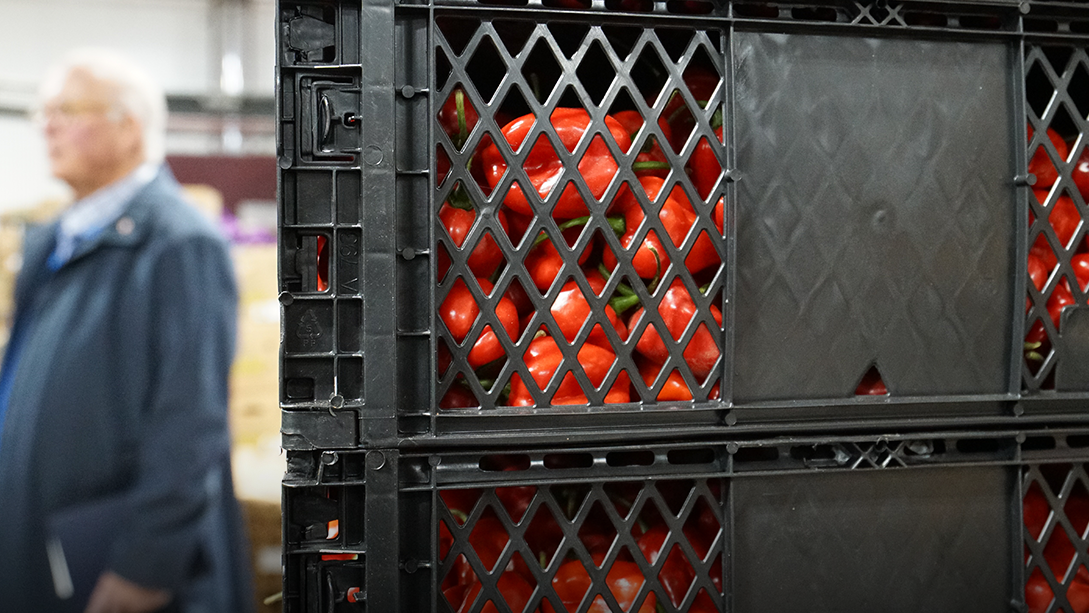
Members of the Senate’s agriculture committee got a taste of the opportunities, complexities and challenges of ensuring consistent access to healthy food for all Canadians and protecting the domestic food system over the long term during a fact-finding mission to Toronto and Southwestern Ontario in March.
As part of a study launched in fall 2025, the Senate Committee on Agriculture and Forestry is seeking to better understand the state of food security — and insecurity — in Canada. Committee members are examining barriers to food access in Canadian communities, how environment and agriculture affect food security, and how federal policies and programs can be strengthened to support a secure and sustainable food supply.
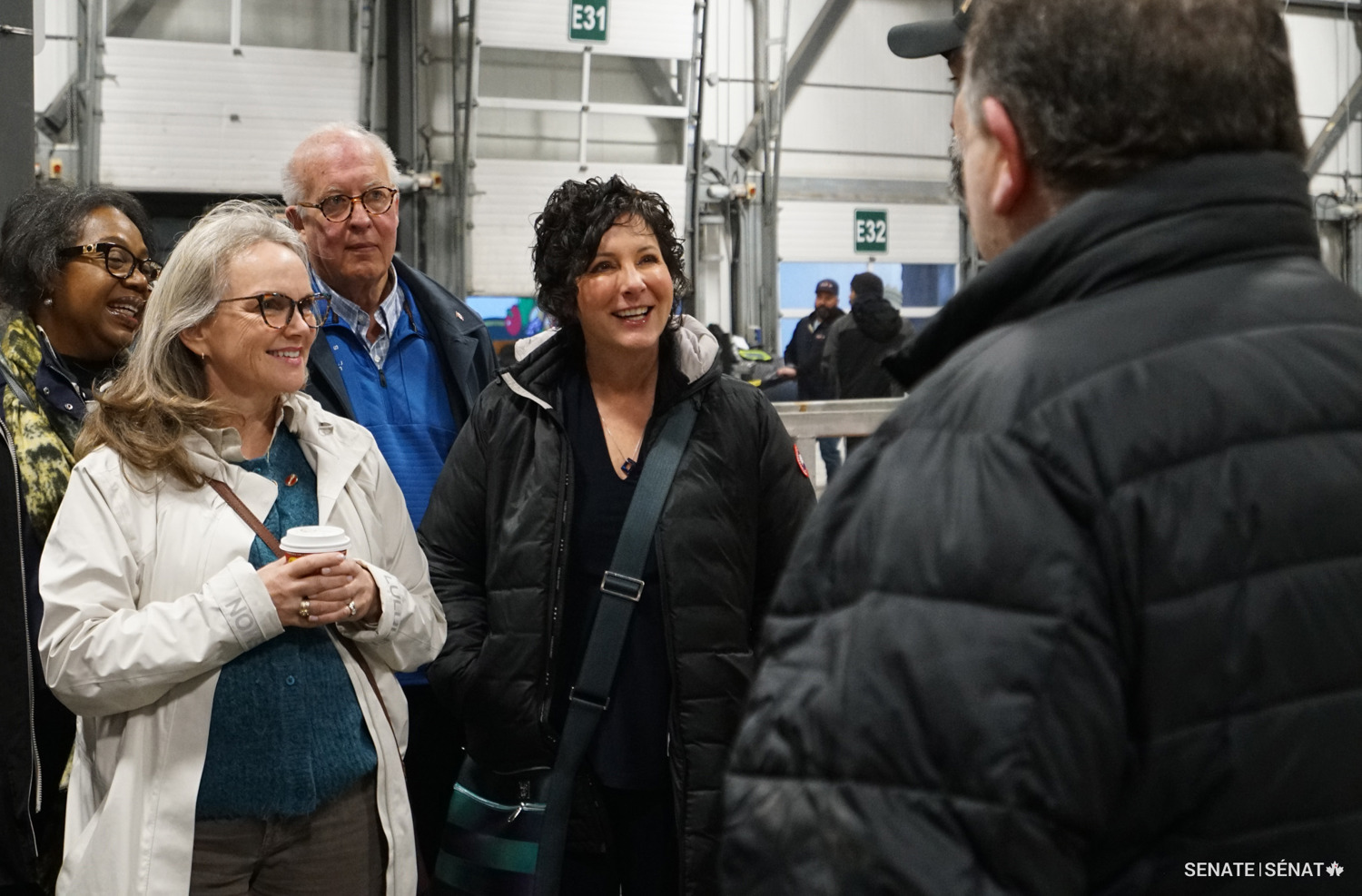 From left, senators Sharon Burey, Mary Robinson, John M. McNair and Tracy Muggli tour the Ontario Food Terminal, Canada’s largest wholesale fruit and produce distribution centre, on March 5, 2026.
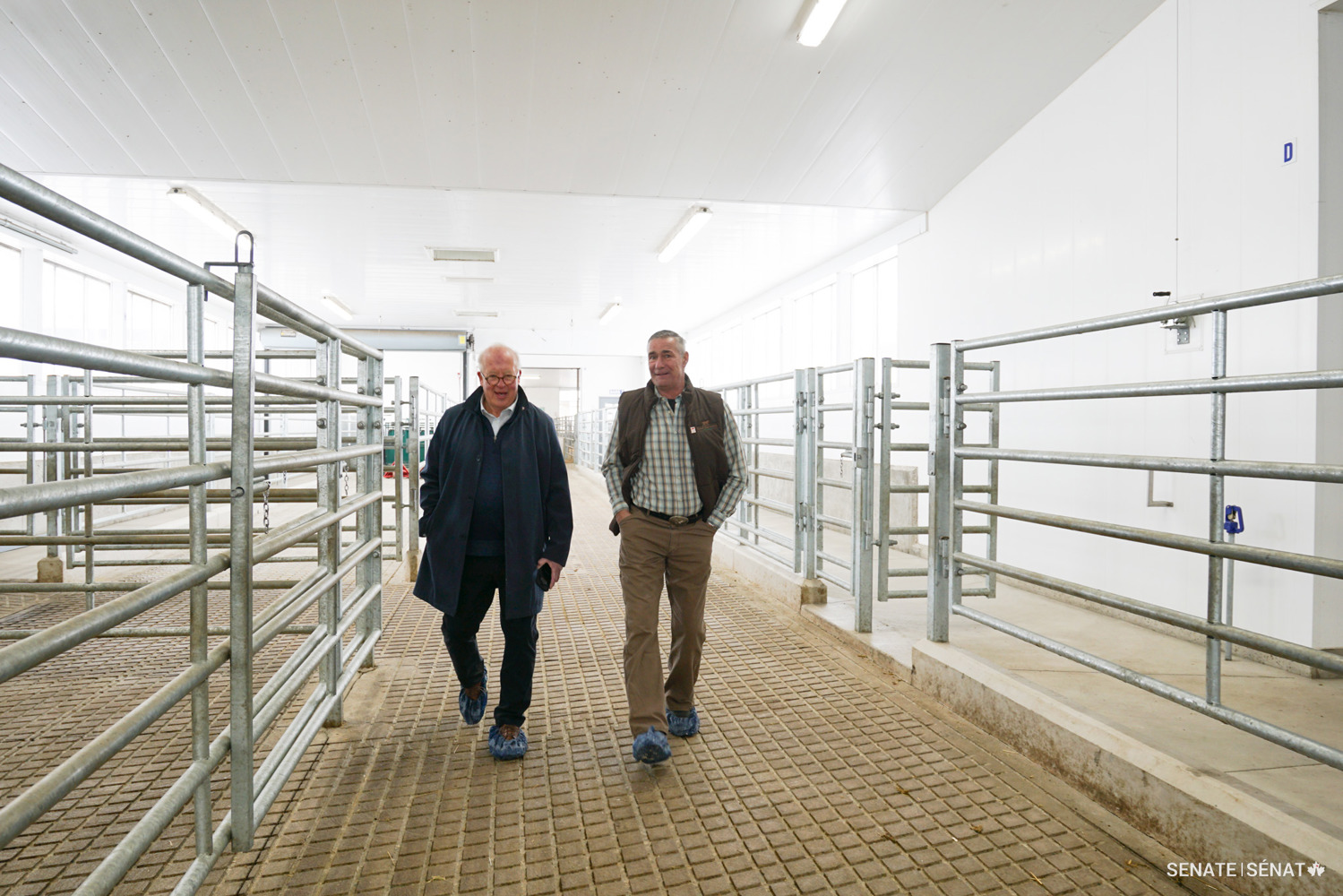 Senator John M. McNair, left, speaks with Joost van der Heiden, background director at the Ontario Beef Research Centre, during a tour of the facility on March 6, 2026.
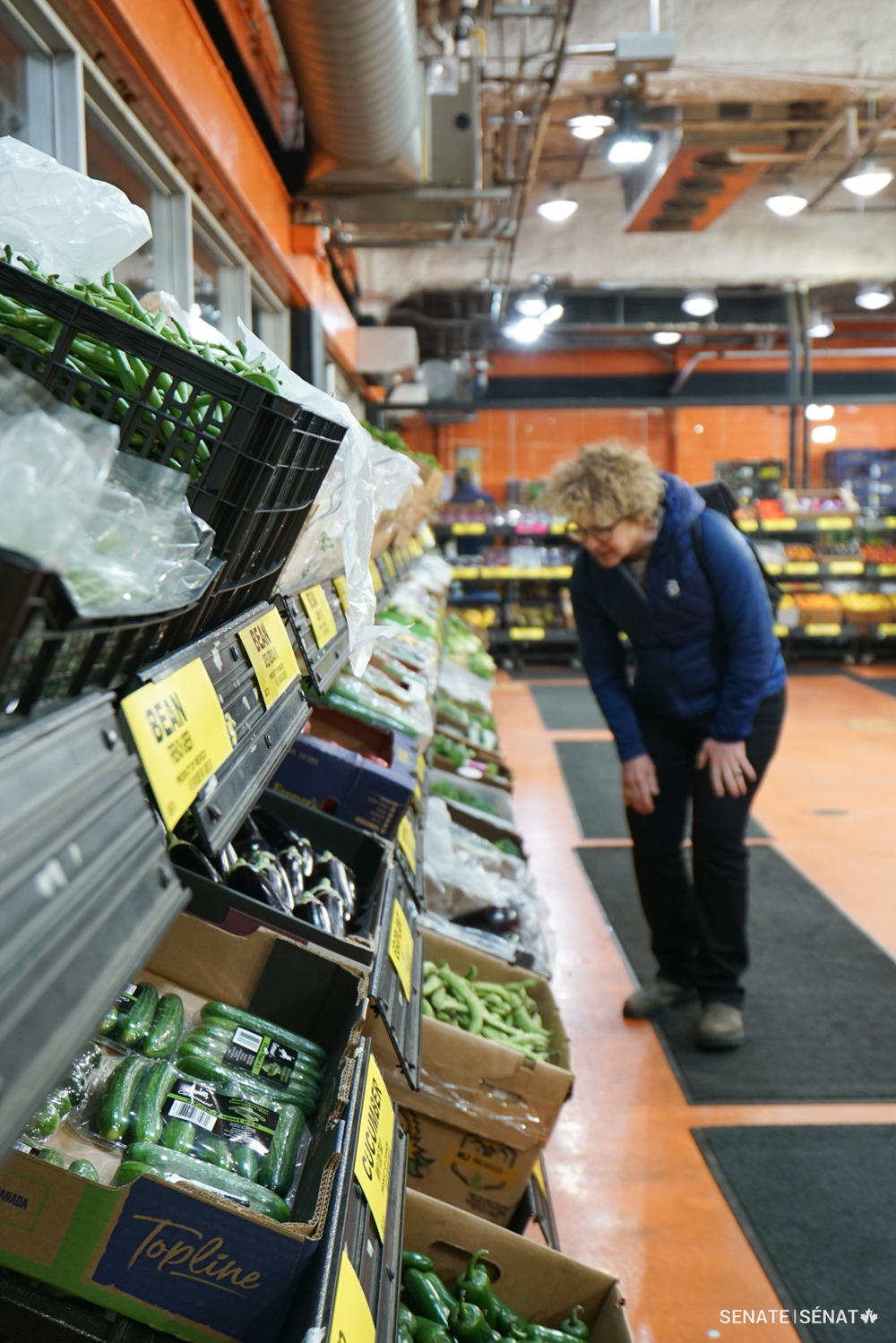 At the Ontario Food Terminal, Senator Marnie McBean inspects boxes and crates of vegetables — which represent just a fraction of the 5.6 million pounds of fresh products the facility distributes every day.
“I hope that through our work, we can help drive informed policy and legislation that will help Canada capture this massive, unpolished agriculture gem that exists in our natural resources, people, and agriculture and food savviness,” said Senator Mary Robinson, chair of the committee and member of a sixth-generation family farm in Prince Edward Island.
“Food systems are complex. I feel this fact-finding mission reinforced that there is no silver bullet here. The opportunity our committee members have had to see everything we did in action, in real time, is invaluable. Being able to speak with producers, researchers, deans, community outreach people and so many more increases our level of understanding in ways that would have been difficult to do otherwise.”
According to the Food and Agriculture Organization of the United Nations, food security exists “when all people, at all times, have physical, social and economic access to sufficient, safe and nutritious food that meets their dietary needs and food preferences for an active and healthy life.”
In 2023, approximately 25.5% of the population in Canada’s 10 provinces — or about 10 million people — lived in households that reported experiencing some form of food insecurity, according to Statistics Canada. In the territories, that figure rose to 37.4% of the population.
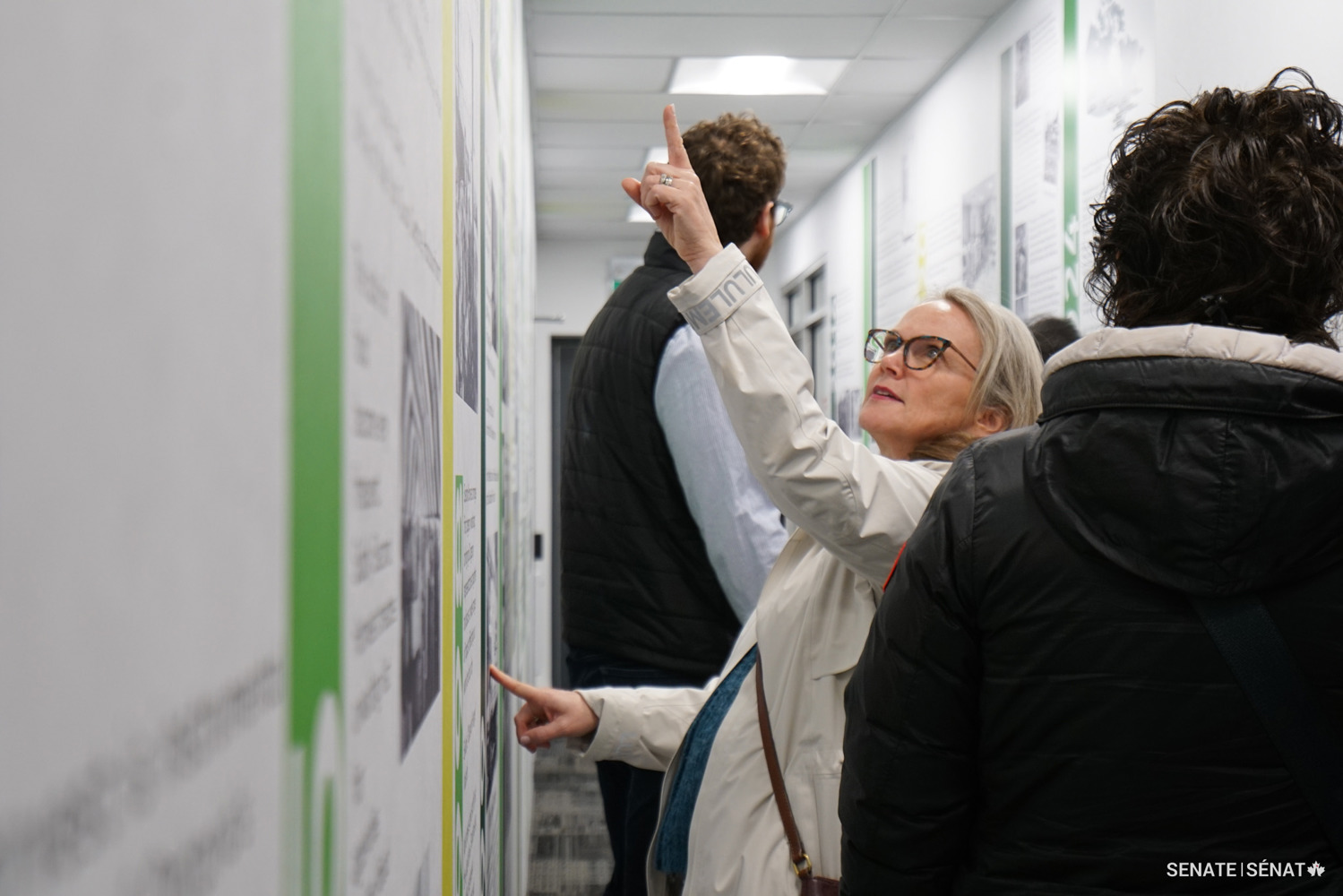 Senator Mary Robinson explores an interactive exhibit at the Toronto headquarters of Second Harvest, Canada’s largest food rescue organization.
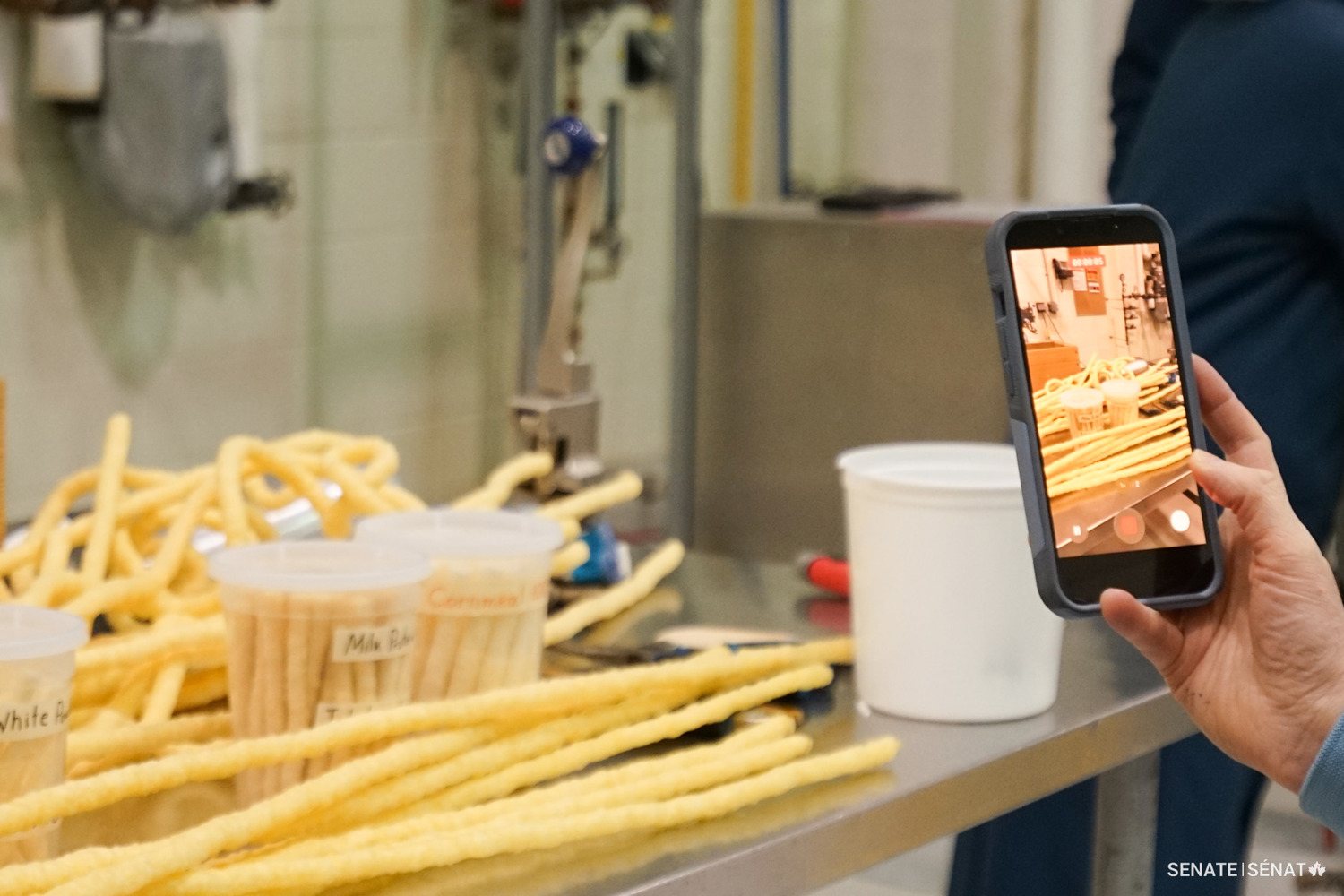 At the Guelph Food Innovation Centre, committee members learned how food science and technology is helping Canadian producers develop and process safe, quality foods domestically, rather than overseas.
Over their two-day fact-finding mission, committee members met with stakeholders across the food supply chain — from new calves through to food technology research, processing, distribution and waste reduction. They also met with agriculture and agri-food researchers and innovators to explore how scientific advancements in the sector could improve domestic food security and address opportunities, vulnerabilities and fragilities in the food supply system.
Committee members began at the Ontario Food Terminal — a centrally located, 40-acre site that distributes about 5.6 million pounds of fresh products daily and is the country’s largest wholesale fruit and produce distribution centre.
There, committee members gained a better sense of how international, domestic and local fresh produce arrives at the food terminal, as well as some of the challenges getting it to Canadian grocery stores. More than 80% of the fresh and frozen produce that is imported into Canada comes from or through the United States, using American ports and shared road infrastructure.
Ensuring food gets from the store shelves into people’s stomachs is another problem. Committee members next went to three local and national charitable organizations that rescue surplus food and redirect it to low-income and vulnerable people: Second Harvest, Scott Mission and FoodShare Toronto. There, committee members were told that food insecurity is soaring in the country’s largest cities and the communities they serve because rising food prices, unlivable wages, unstable employment and surging housing costs are squeezing household budgets.
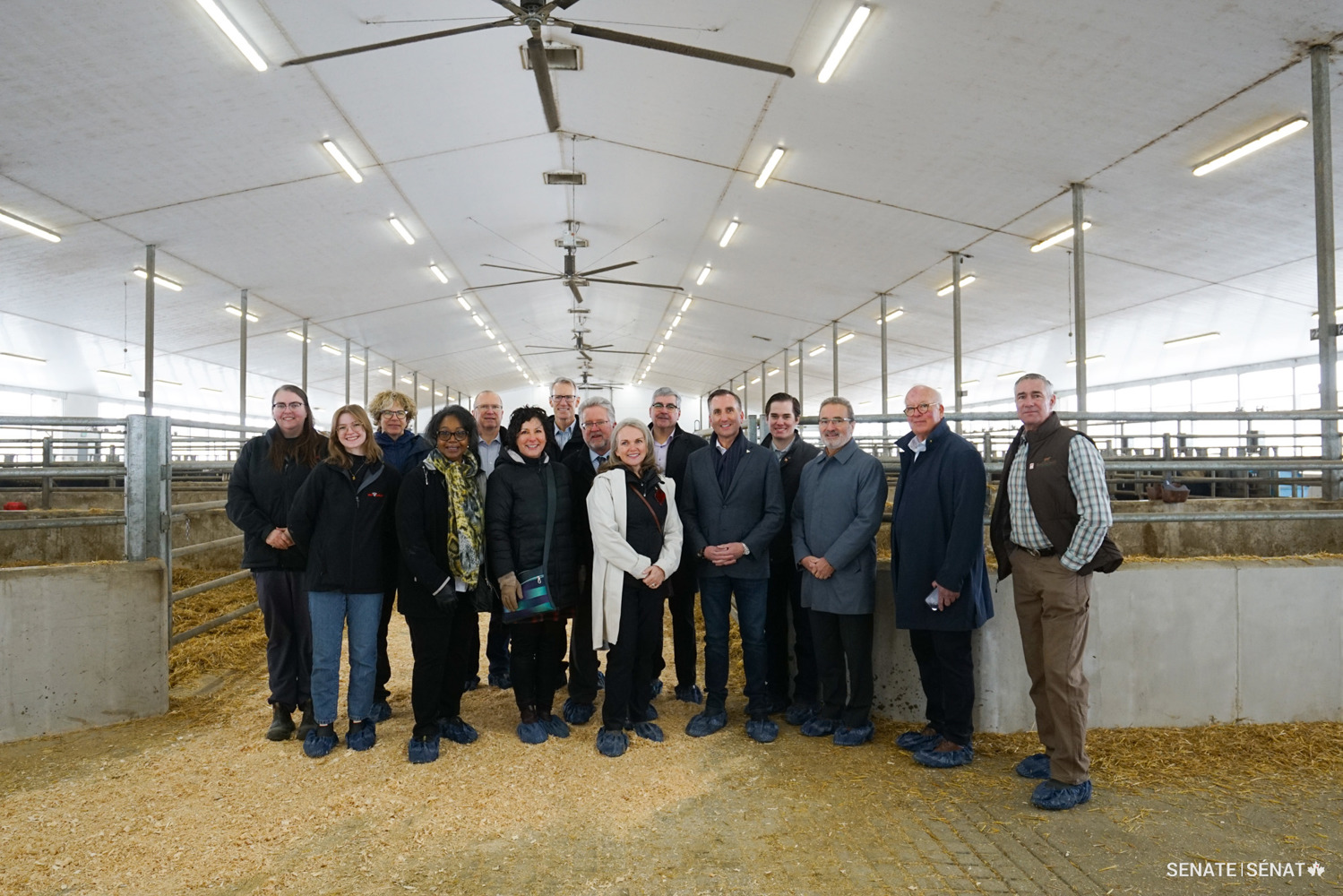 Committee members visit the Elora site of the Ontario Beef Research Centre, which seeks to optimize beef production practices that improve food safety, reduce environmental impacts and enhance sustainability.
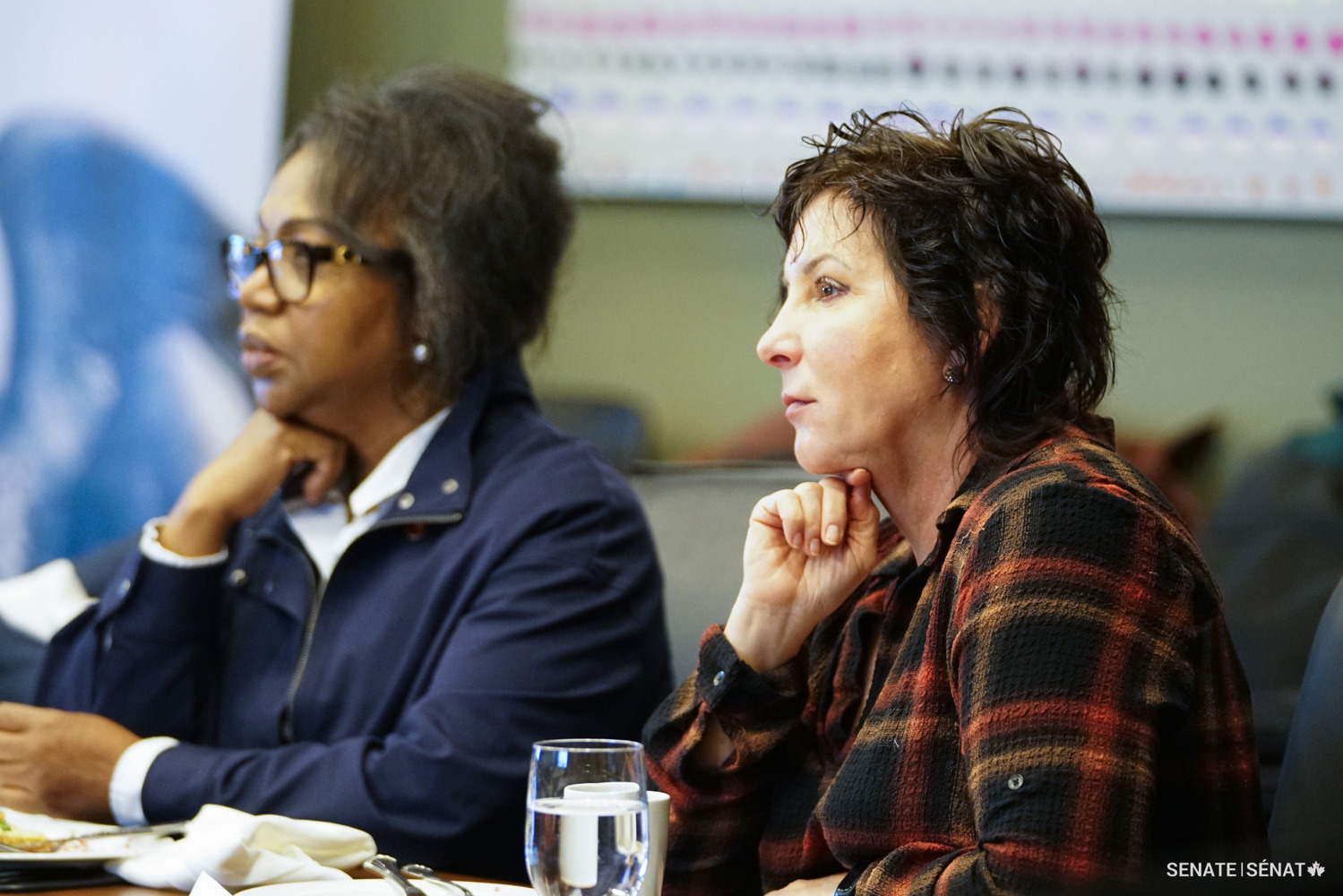 From left, senators Sharon Burey and Tracy Muggli participate in a roundtable discussion with experts in food security, food science, food safety, soil science and plant genetics at the University of Guelph.
At the same time, Canada wastes an extraordinary amount of food every year. Avoidable food waste — or food that is still fit for human consumption at the time of its disposal — accounts for 41.7% of all food waste and amounts to $58 billion a year in lost value, according to Second Harvest, the country’s largest food rescue organization. Committee members were encouraged to incorporate a food waste strategy as part of a larger food security strategy for Canada.
The second day, committee members travelled to the Ontario Beef Research Centre, and the University of Guelph’s Food Innovation Centre and Controlled Environment Systems Research Facility. Through facility tours and roundtables with subject-matter experts, committee members learned firsthand how innovative food production methods and technologies can protect and secure Canada’s long-term food supply in the face of dwindling farmland, climate change and changing geopolitical dynamics.
The beef research centre demonstrated how optimized beef production practices can improve food safety, reduce environmental impacts and enhance sustainability. The committee members’ tour of the Guelph Food Innovation Centre showcased how evolving food science and technology is increasing the development of innovative, safe and quality Canadian-made food products.
Research into how plants and food can be grown in space-constrained and climate-controlled environments was on display at the university’s Controlled Environment Systems Research Facility. These methods, committee members were told, offer potential solutions for year-round food production for northern and remote communities with high levels of food insecurity and extreme climates not typically conducive to food production.
“A key takeaway for me was the suggestion that we reframe the issue of food security and insecurity as one of food independence and dependence — and that our goal for Canada is to have food independence, which is equivalent to food sovereignty,” said Senator John M. McNair, the committee’s deputy chair.
“In this geopolitical climate, that’s probably more critical than ever.”
The committee will continue its study over the coming months. To read witness testimony from the committee’s meetings on this study, visit the committee’s webpage.
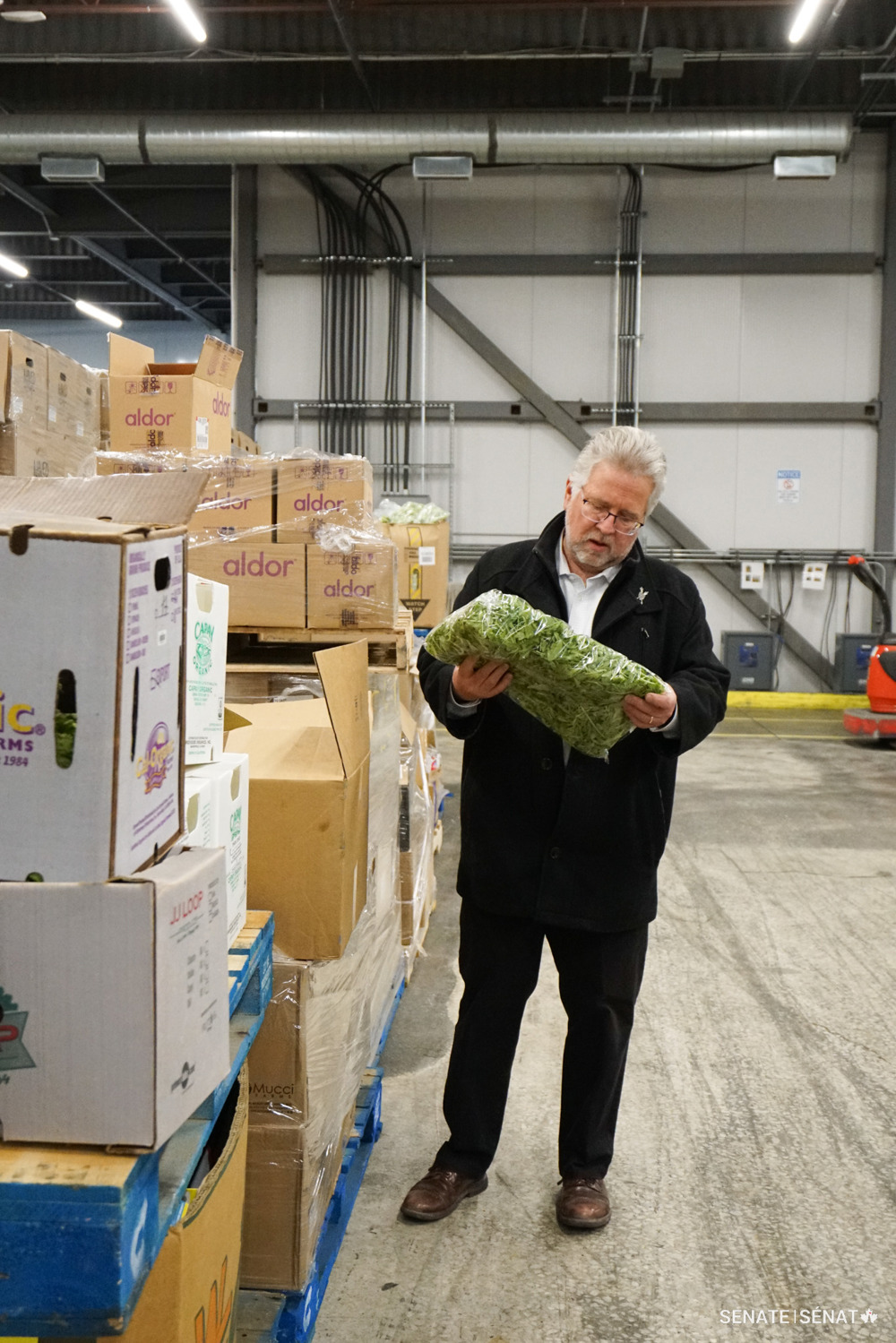 Senator Rob Black examines some of the fresh, surplus produce that food rescue organization Second Harvest redistributes to people in need across Canada.
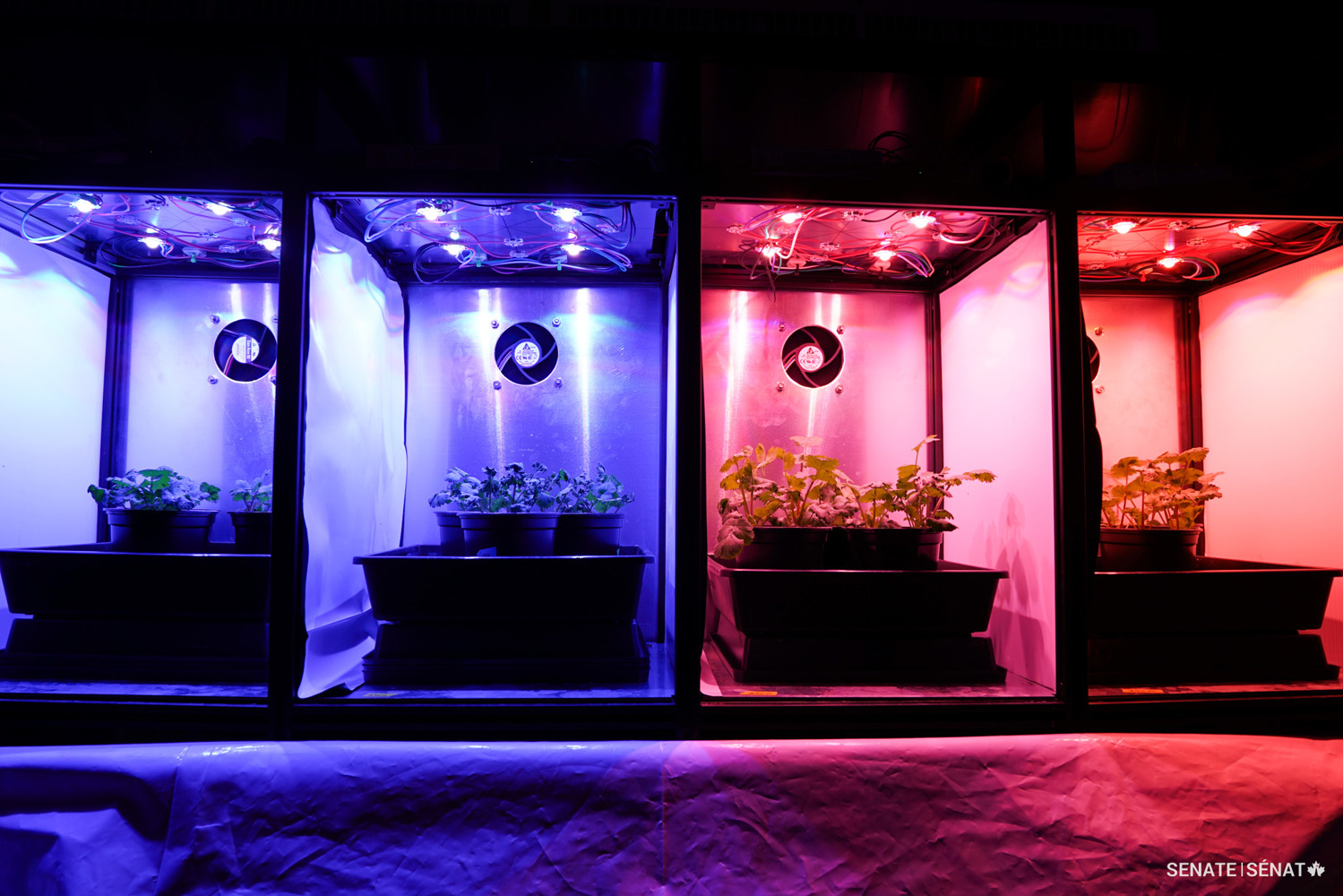 At the University of Guelph’s Controlled Environment Systems Research Facility, scientists are studying how to grow plants and food in space-constrained and climate-controlled environments. Their projects experiment with lighting and nutrient management to improve food quality and increase crop yields.
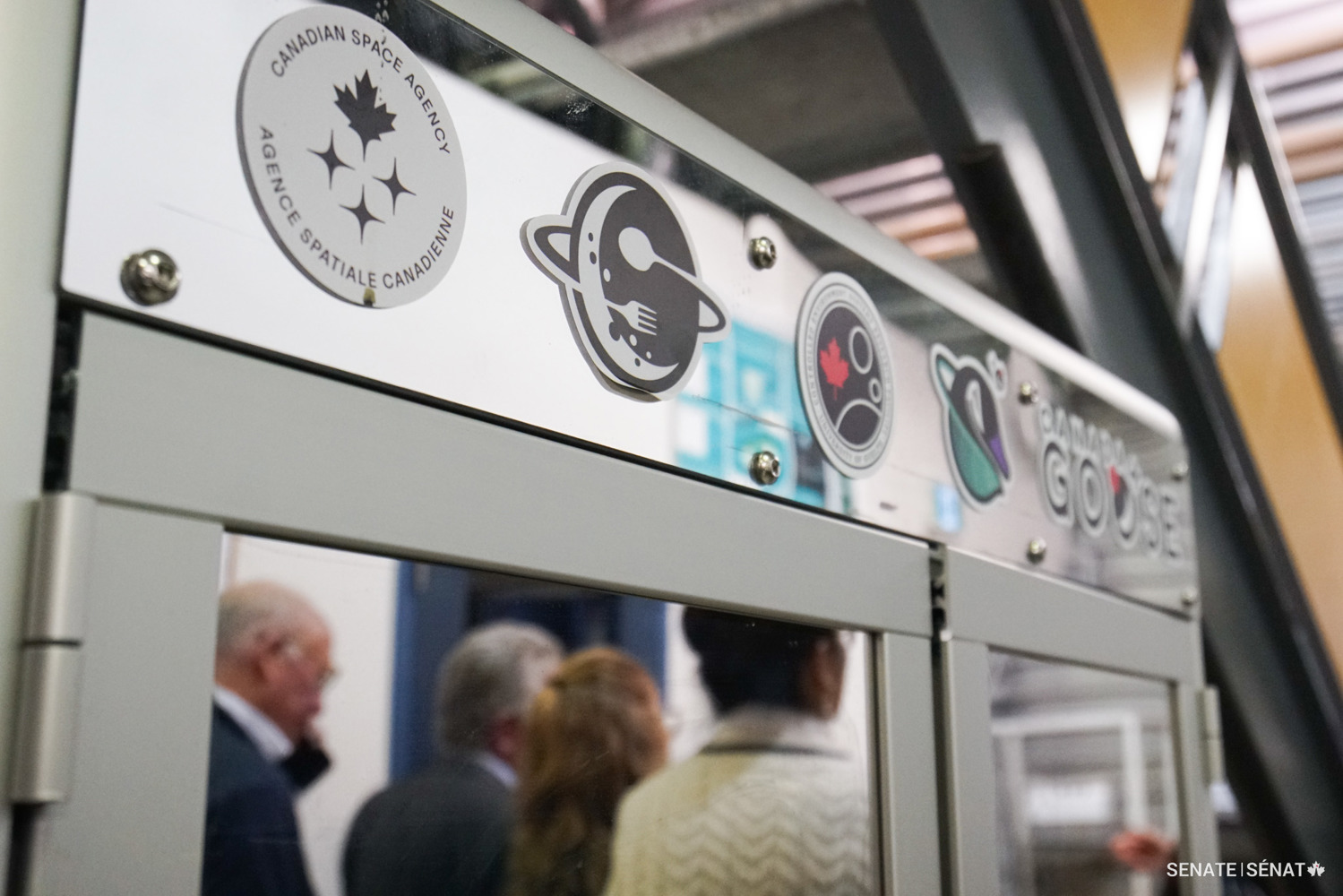 The Controlled Environment Systems Research Facility also partners with space agencies internationally to grow and process food for long space exploration missions and survival in extreme environments.
Related articles
Tags
Committee news
A taste of food security challenges and solutions
Members of the Senate’s agriculture committee got a taste of the opportunities, complexities and challenges of ensuring consistent access to healthy food for all Canadians and protecting the domestic food system over the long term during a fact-finding mission to Toronto and Southwestern Ontario in March.
As part of a study launched in fall 2025, the Senate Committee on Agriculture and Forestry is seeking to better understand the state of food security — and insecurity — in Canada. Committee members are examining barriers to food access in Canadian communities, how environment and agriculture affect food security, and how federal policies and programs can be strengthened to support a secure and sustainable food supply.
From left, senators Sharon Burey, Mary Robinson, John M. McNair and Tracy Muggli tour the Ontario Food Terminal, Canada’s largest wholesale fruit and produce distribution centre, on March 5, 2026.
Senator John M. McNair, left, speaks with Joost van der Heiden, background director at the Ontario Beef Research Centre, during a tour of the facility on March 6, 2026.
At the Ontario Food Terminal, Senator Marnie McBean inspects boxes and crates of vegetables — which represent just a fraction of the 5.6 million pounds of fresh products the facility distributes every day.
“I hope that through our work, we can help drive informed policy and legislation that will help Canada capture this massive, unpolished agriculture gem that exists in our natural resources, people, and agriculture and food savviness,” said Senator Mary Robinson, chair of the committee and member of a sixth-generation family farm in Prince Edward Island.
“Food systems are complex. I feel this fact-finding mission reinforced that there is no silver bullet here. The opportunity our committee members have had to see everything we did in action, in real time, is invaluable. Being able to speak with producers, researchers, deans, community outreach people and so many more increases our level of understanding in ways that would have been difficult to do otherwise.”
According to the Food and Agriculture Organization of the United Nations, food security exists “when all people, at all times, have physical, social and economic access to sufficient, safe and nutritious food that meets their dietary needs and food preferences for an active and healthy life.”
In 2023, approximately 25.5% of the population in Canada’s 10 provinces — or about 10 million people — lived in households that reported experiencing some form of food insecurity, according to Statistics Canada. In the territories, that figure rose to 37.4% of the population.
Senator Mary Robinson explores an interactive exhibit at the Toronto headquarters of Second Harvest, Canada’s largest food rescue organization.
At the Guelph Food Innovation Centre, committee members learned how food science and technology is helping Canadian producers develop and process safe, quality foods domestically, rather than overseas.
Over their two-day fact-finding mission, committee members met with stakeholders across the food supply chain — from new calves through to food technology research, processing, distribution and waste reduction. They also met with agriculture and agri-food researchers and innovators to explore how scientific advancements in the sector could improve domestic food security and address opportunities, vulnerabilities and fragilities in the food supply system.
Committee members began at the Ontario Food Terminal — a centrally located, 40-acre site that distributes about 5.6 million pounds of fresh products daily and is the country’s largest wholesale fruit and produce distribution centre.
There, committee members gained a better sense of how international, domestic and local fresh produce arrives at the food terminal, as well as some of the challenges getting it to Canadian grocery stores. More than 80% of the fresh and frozen produce that is imported into Canada comes from or through the United States, using American ports and shared road infrastructure.
Ensuring food gets from the store shelves into people’s stomachs is another problem. Committee members next went to three local and national charitable organizations that rescue surplus food and redirect it to low-income and vulnerable people: Second Harvest, Scott Mission and FoodShare Toronto. There, committee members were told that food insecurity is soaring in the country’s largest cities and the communities they serve because rising food prices, unlivable wages, unstable employment and surging housing costs are squeezing household budgets.
Committee members visit the Elora site of the Ontario Beef Research Centre, which seeks to optimize beef production practices that improve food safety, reduce environmental impacts and enhance sustainability.
From left, senators Sharon Burey and Tracy Muggli participate in a roundtable discussion with experts in food security, food science, food safety, soil science and plant genetics at the University of Guelph.
At the same time, Canada wastes an extraordinary amount of food every year. Avoidable food waste — or food that is still fit for human consumption at the time of its disposal — accounts for 41.7% of all food waste and amounts to $58 billion a year in lost value, according to Second Harvest, the country’s largest food rescue organization. Committee members were encouraged to incorporate a food waste strategy as part of a larger food security strategy for Canada.
The second day, committee members travelled to the Ontario Beef Research Centre, and the University of Guelph’s Food Innovation Centre and Controlled Environment Systems Research Facility. Through facility tours and roundtables with subject-matter experts, committee members learned firsthand how innovative food production methods and technologies can protect and secure Canada’s long-term food supply in the face of dwindling farmland, climate change and changing geopolitical dynamics.
The beef research centre demonstrated how optimized beef production practices can improve food safety, reduce environmental impacts and enhance sustainability. The committee members’ tour of the Guelph Food Innovation Centre showcased how evolving food science and technology is increasing the development of innovative, safe and quality Canadian-made food products.
Research into how plants and food can be grown in space-constrained and climate-controlled environments was on display at the university’s Controlled Environment Systems Research Facility. These methods, committee members were told, offer potential solutions for year-round food production for northern and remote communities with high levels of food insecurity and extreme climates not typically conducive to food production.
“A key takeaway for me was the suggestion that we reframe the issue of food security and insecurity as one of food independence and dependence — and that our goal for Canada is to have food independence, which is equivalent to food sovereignty,” said Senator John M. McNair, the committee’s deputy chair.
“In this geopolitical climate, that’s probably more critical than ever.”
The committee will continue its study over the coming months. To read witness testimony from the committee’s meetings on this study, visit the committee’s webpage.
Senator Rob Black examines some of the fresh, surplus produce that food rescue organization Second Harvest redistributes to people in need across Canada.
At the University of Guelph’s Controlled Environment Systems Research Facility, scientists are studying how to grow plants and food in space-constrained and climate-controlled environments. Their projects experiment with lighting and nutrient management to improve food quality and increase crop yields.
The Controlled Environment Systems Research Facility also partners with space agencies internationally to grow and process food for long space exploration missions and survival in extreme environments.