

‘Building bridges, not walls’: Senator Al Zaibak reflects on a career in Parliament and entrepreneurship
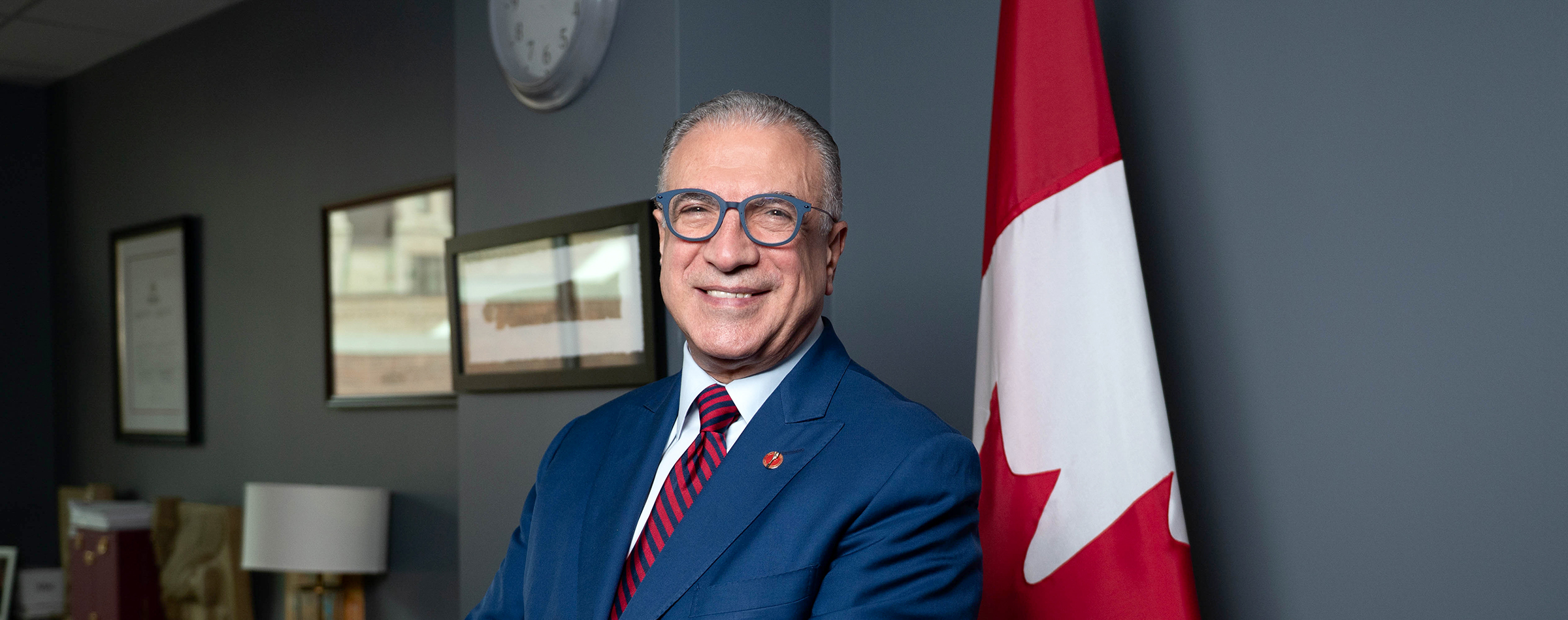
An engineer, entrepreneur and parliamentarian, Senator Mohammad Al Zaibak has come to understand bridge-building in different ways.
Ahead of his retirement on August 9, 2026, the Ontario senator spoke to SenCAplus about a career that has spanned oceans and communities alike.
You were born and raised in Syria. What was your upbringing like?
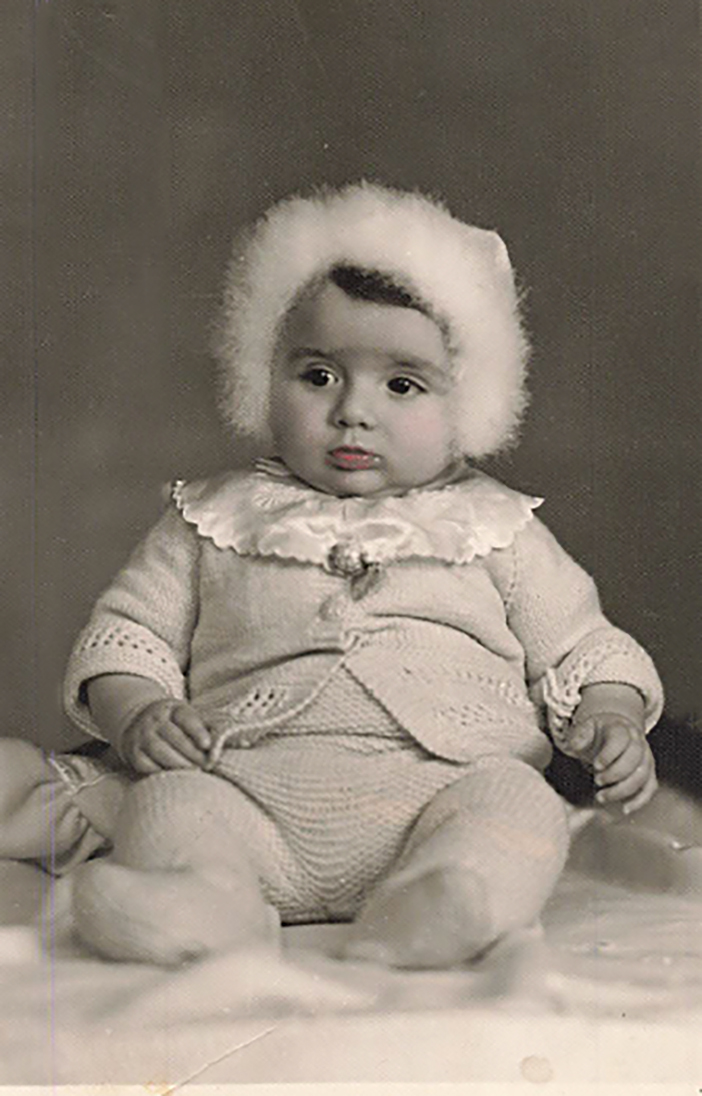
I feel fortunate that I grew up in Damascus, which is considered the oldest continuously inhabited city in the world. I was born and raised in the heart of the old city not far from the biblical Street Called Straight. Although the fear of political instability and war was always there, I had a very happy childhood. The social fabric was amazing; the neighbourhoods were like big families where everyone cared about each other. Almost every home had a jasmine tree, and the scent of jasmine followed you everywhere.
My parents raised us to love and respect others, and they gave me a credo I have carried my whole life: do good and cast it into the sea. Do good without condition or expectation of return and trust that the rewards come in their own way.
You and your family moved to Toronto more than three decades ago. What made you decide to resettle in Canada?
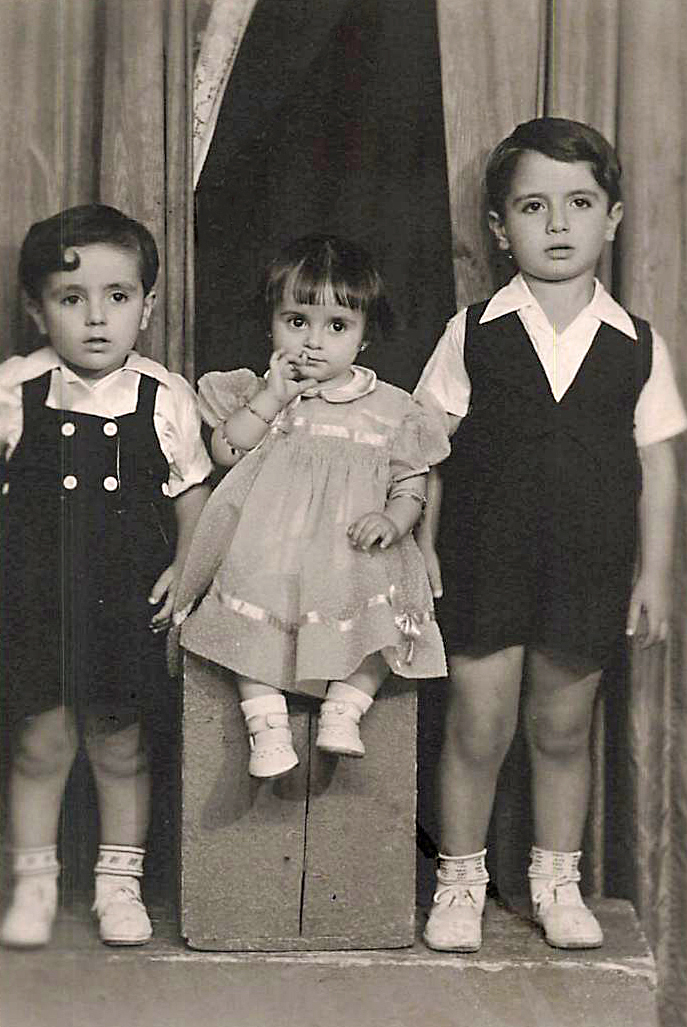
I had completed my degree in telecommunications engineering at Alexandria University in Egypt and then moved to Saudi Arabia, where I worked for a major international telecommunications company, and then established my own business with Saudi partners. In addition to implementing major power generation and transmission projects, I also structured the international joint venture that built the King Fahd Causeway linking Bahrain to Saudi Arabia. I then went to Harvard Business School to complete executive business studies and during that time I had the opportunity to visit Canada.
As my children grew up, I began looking for the best place to raise them: a country that was multicultural and open, where they would have opportunity. At 37 years old, I uprooted my young family, and we planted new roots in Canada because I believed this country offered my children the most promising future. They are all grateful. I was right.
Within a few years of moving to Toronto, you founded Teranet, which now manages and operates Ontario’s Electronic Land Registration Information System. How were you able to find your footing as a newcomer and build a successful company?
When I arrived in Canada in 1987, my instinct was to do here what I had done in Saudi Arabia: to build something.
The Ontario government had the vision to computerize and modernize its land registry information system in partnership with the private sector, so I was invited to join a group of technologists, scientists and experts to structure a business model and lead the group. The government decided to take the initiative into a public bidding process. It was a very fierce competition. We were a small startup competing against a formidable group of major companies for the project. After three years of intense bidding and negotiations, we concluded one of Ontario’s earliest public-private partnerships. Our creativity and our equitable risk-and-rewards sharing business model, coupled with trust in our government system, gave us the winning advantage.
The hard part was never the technology; it was bridging a consortium of competing companies and aligning their interests with those of the government and public stakeholders. We turned Ontario’s land registry into one of the most sophisticated systems of its kind in the world and created thousands of skilled jobs.
Looking back, it was bridge-building before I knew that would become the theme of my life.
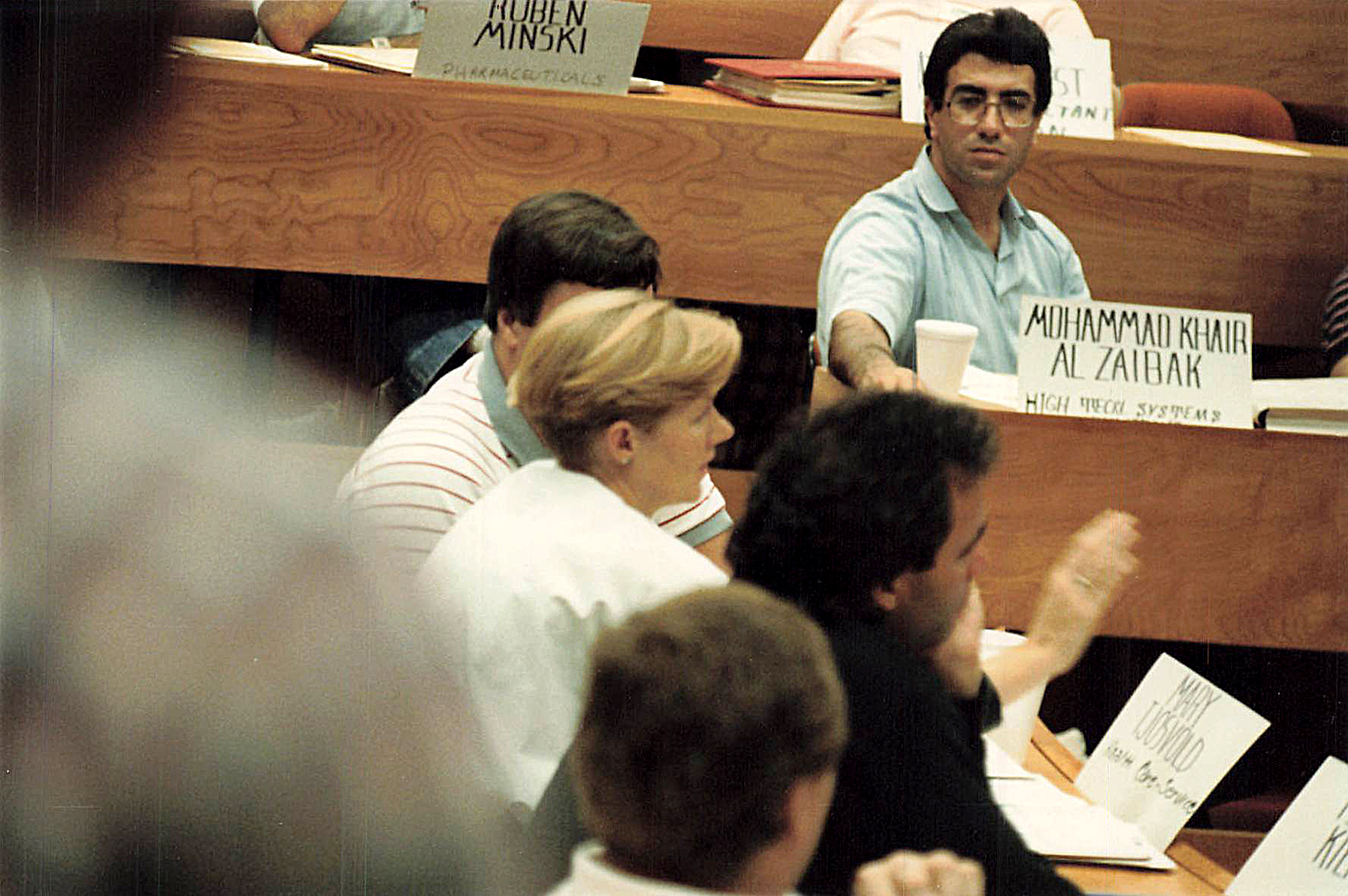 Mohammad Al Zaibak as a student at Harvard Business School in 1985. (Photo credit: Office of Senator Mohammad Al Zaibak)
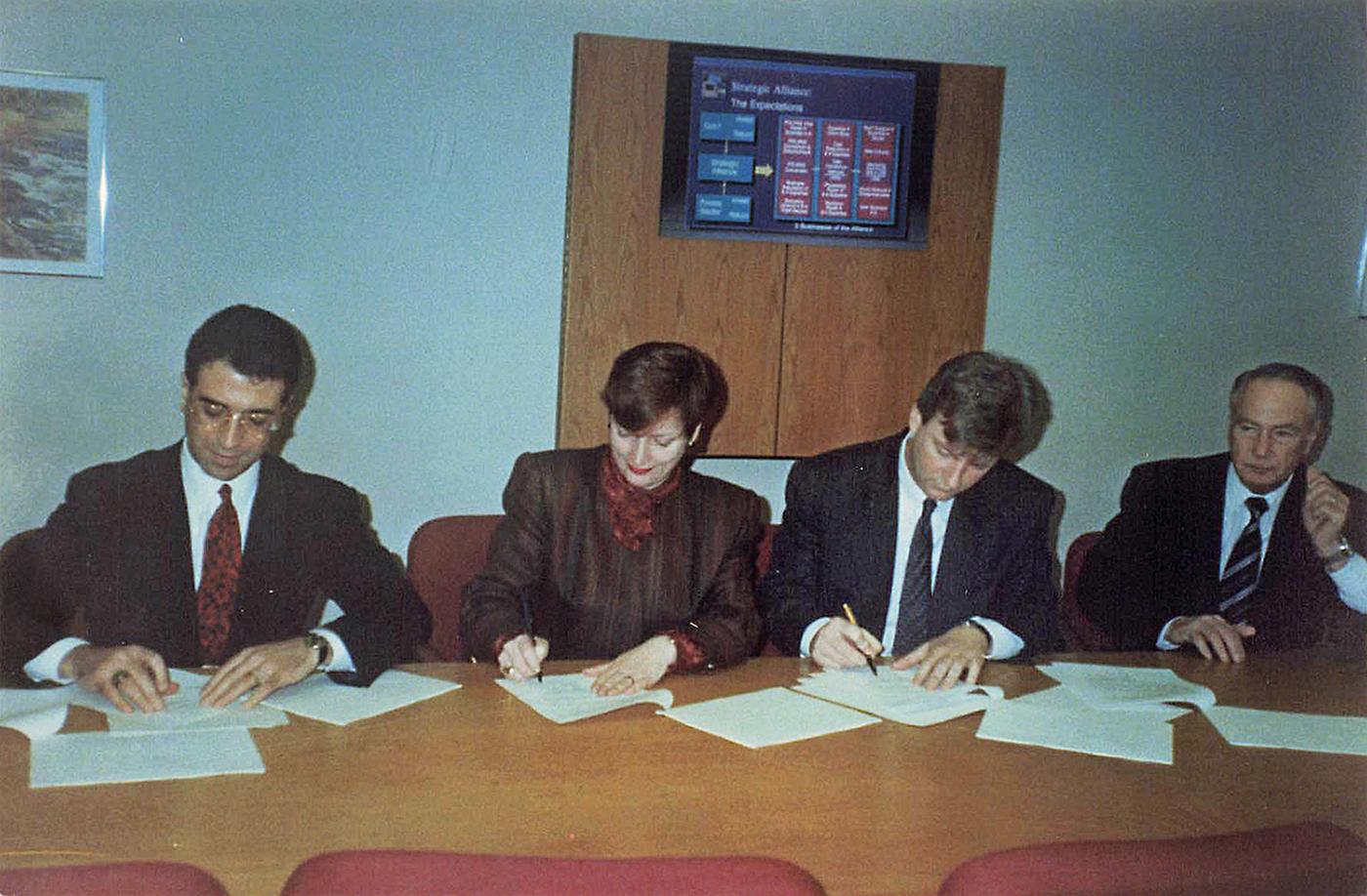 In just a few short years after landing in Canada, Mohammad Al Zaibak, left, founded Teranet, which became Ontario’s electronic land registry information system operator. He’s pictured here signing the agreement with Ontario government officials. (Photo credit: Office of Senator Mohammad Al Zaibak)
You co-founded Lifeline Syria in the wake of the Syrian refugee crisis in 2015. Tell us more about your work with this organization.
When Canada opened its doors to the private sponsorship of Syrian refugees in 2015, a group of us — including former senator Ratna Omidvar — founded Lifeline Syria to mobilize Canadians to this cause. Our goal was to settle 1,000 refugees in two years. Canadian generosity surpassed it: 1,200 Syrians were sponsored within 15 months. It has become a proud nation-building chapter in our recent history — nearly 100,000 Syrians have made Canada home since 2015 and most of them are now Canadian citizens.
One memory stands out to me. Just before midnight on December 10, 2015, a Canadian Armed Forces aircraft landed at Pearson carrying 163 Syrians. Then-prime minister Justin Trudeau was waiting to greet them, alongside then-premier Kathleen Wynne and then-Toronto mayor John Tory. He told them, “You’re safe at home now” — they had arrived as refugees and would walk out of the terminal as permanent residents. Those words left footprints on my heart. I will always be grateful to Canada.
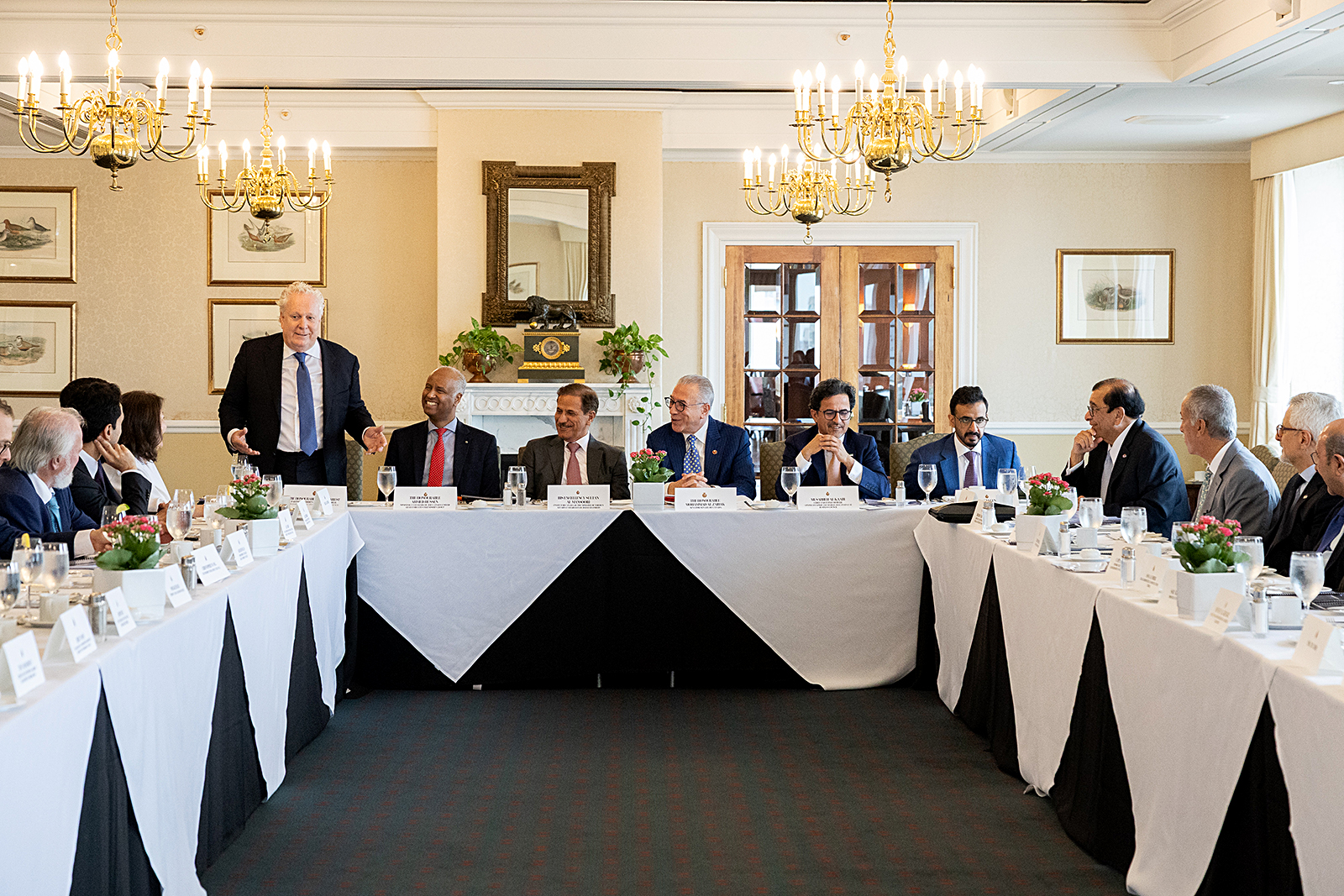
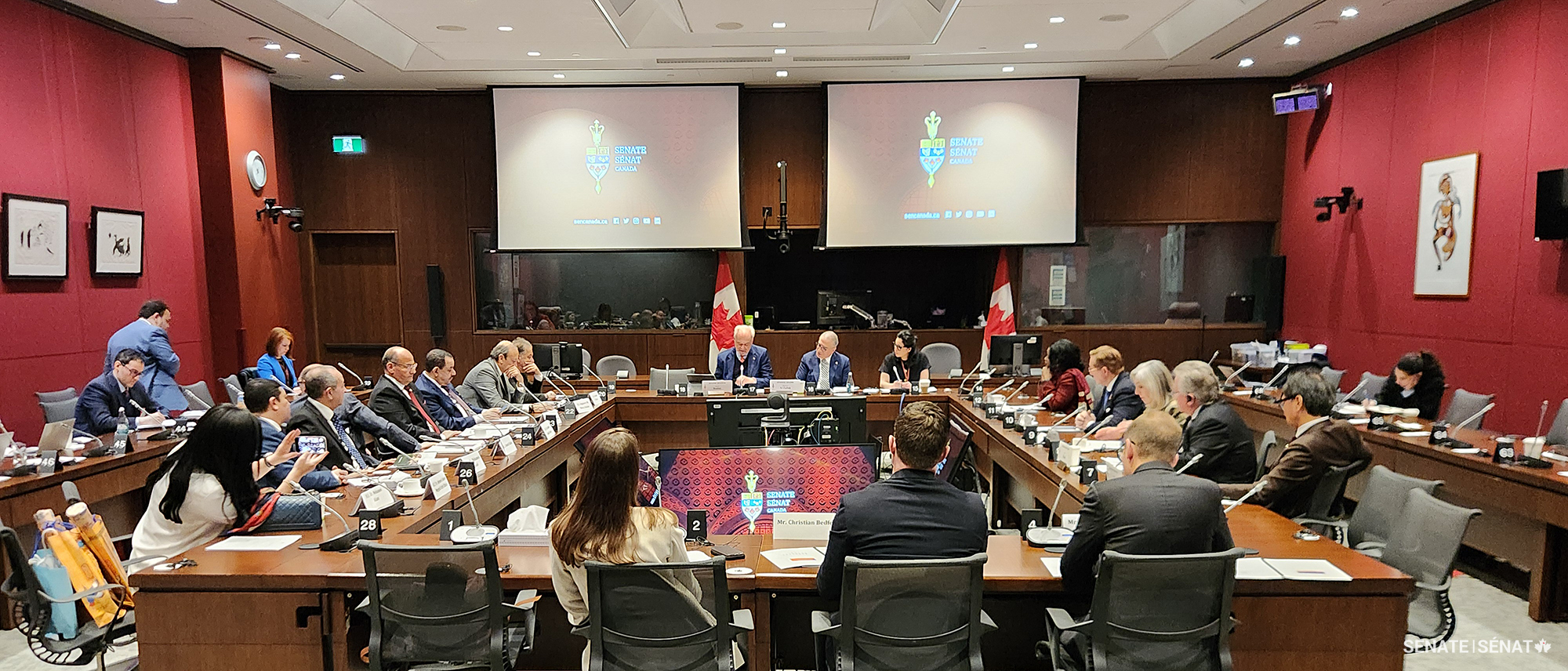 As a member of the Senate Committee on Foreign Affairs and International Trade, Senator Al Zaibak hosts and co-chairs a meeting with a visiting delegation from Egypt, including Ahmed Abdallah Ibrahim Hafez, Ambassador of the Arab Republic of Egypt, and Dr. Sameh Aboul-Enein, Assistant Foreign Minister for US, Canada and the Americas, on April 5, 2025.
You were appointed to the Red Chamber in 2024. What made you want to be a senator?
I wanted to pay back Canada for the opportunities provided to me and my family. As the first senator of Syrian-Arab heritage, my Senate appointment enabled me to be a catalyst for promoting mutual respect and understanding, and for others to follow. I have always been interested in engaging the Canadian Arab and the Canadian Muslim communities in all aspects of our society — business, cultural, social and political. I hope I have made a difference representing those communities and acting in the best interest of my province and my country.
What are your proudest Senate accomplishments?
I had a very ambitious legislative agenda, but the Arab Heritage Month Act is one of my proudest achievements. This bill recognizes the Canadian Arab community’s contributions to Canada over the past 140-plus years. Today, there are more than one million Arab Canadians living in this country.
I have also worked to cultivate Canada’s trade and investment partnership with the Arab world, an economic block of 500 million people across 22 countries. This represents more than 6% of the world population and 4.5% of the global economy, yet Canada’s trading volume with the Arab world is less than 1% of our international trade.
I hope we are on the right track now with our government diversifying and growing our international trade.
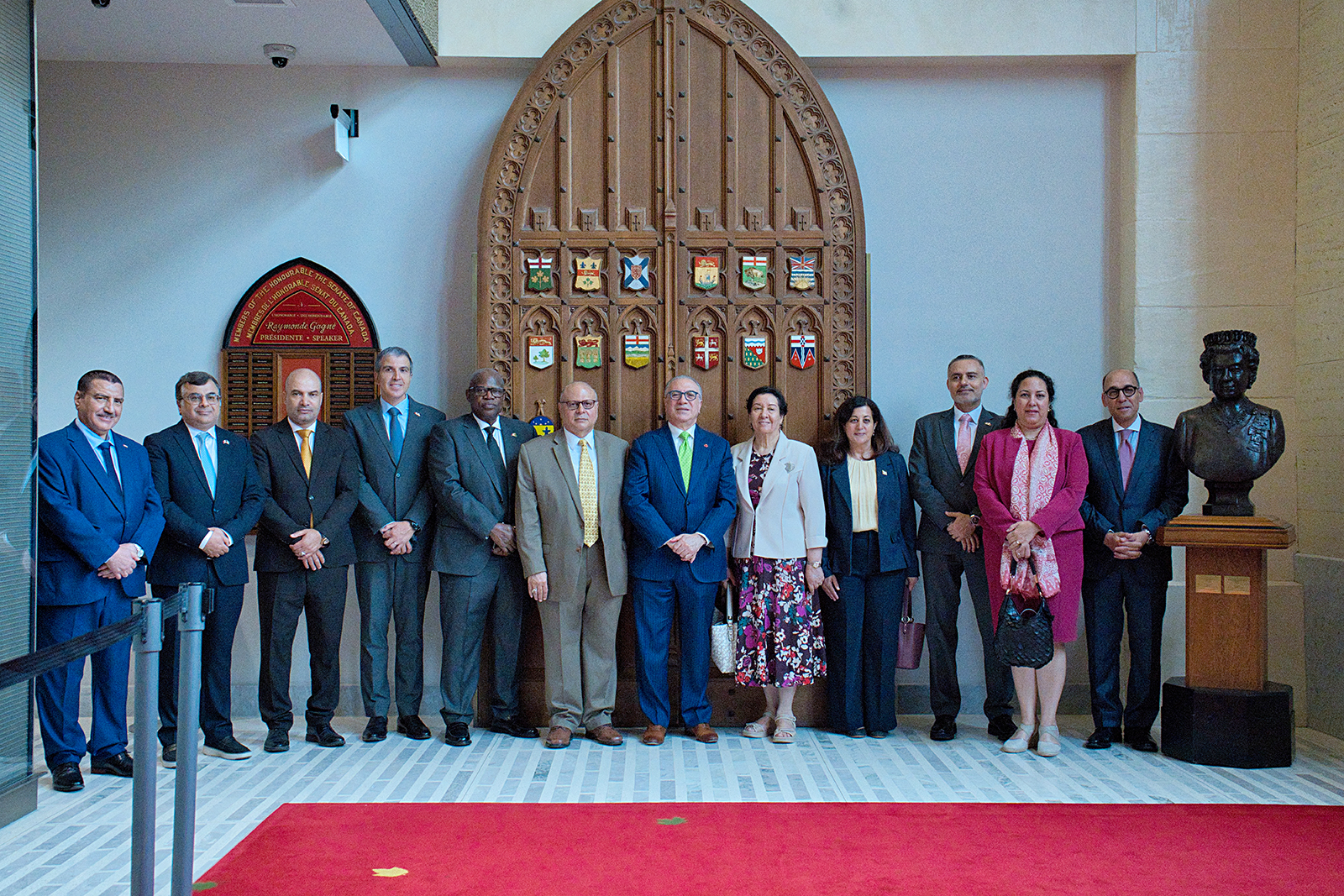 Senator Al Zaibak, centre, hosts Arab ambassadors for a visit to the Senate on June 30, 2026. Pictured, from left, are the ambassadors for Iraq, Kuwait, Libya, Lebanon, Mauritania, Yemen, Morocco, Palestine, Qatar, Jordan and Egypt. (Photo credit: Office of Senator Mohammad Al Zaibak)
You have served as deputy chair of the Senate Committee on National Security, Defence and Veterans Affairs (SECD) and on the Senate Committee on Foreign Affairs and International Trade (AEFA). What committee work are you most proud of?
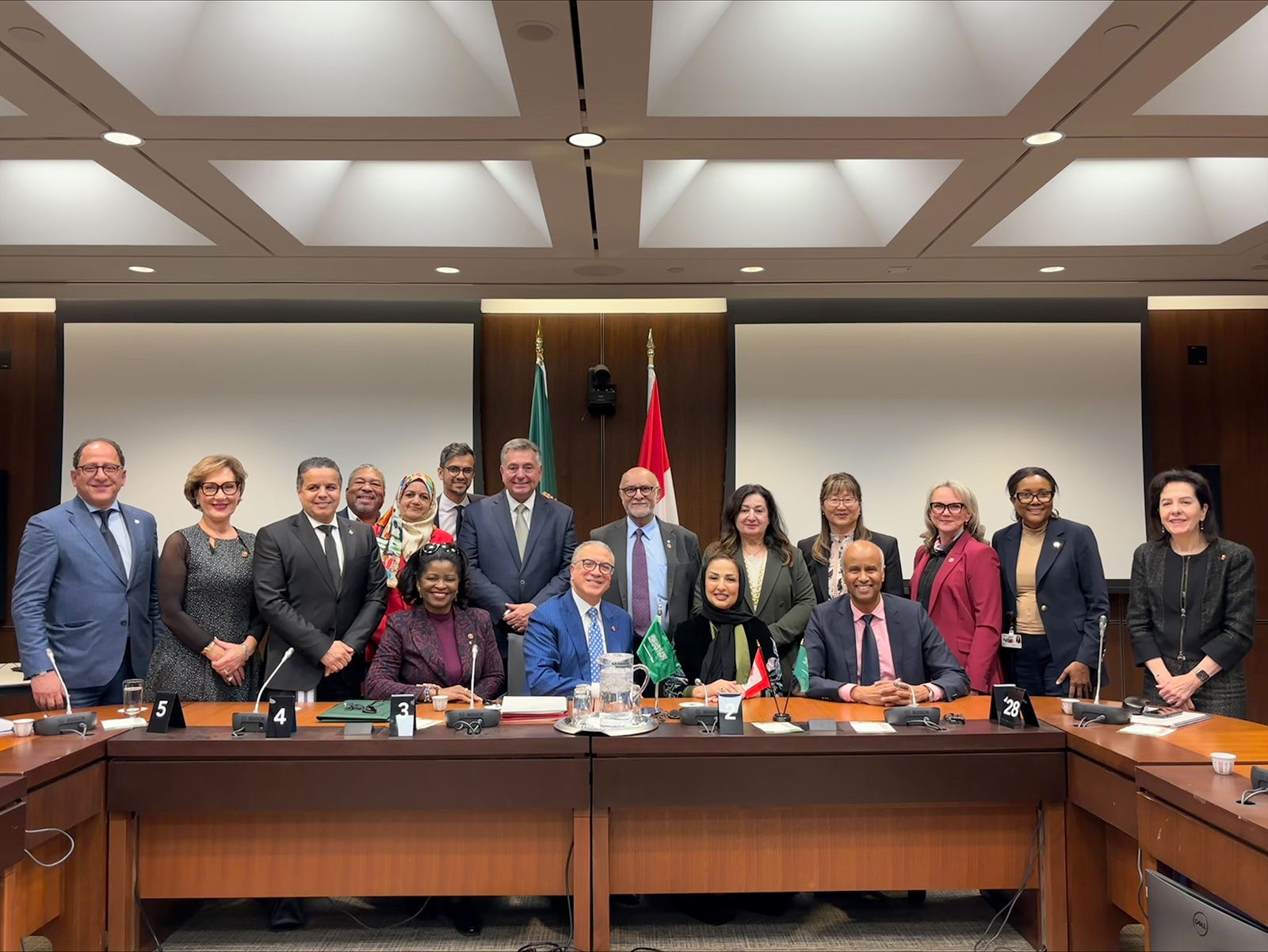
I will treasure my committees’ work and colleagues — above almost everything. At Foreign Affairs we debated the great questions of our time: the war in Ukraine, the tragedy in Gaza, conflicts in other regions, Canada’s place in a turbulent world, and how we grow and diversify our trade.
At National Security and Defence, I came to understand that the security of this country is never a partisan question; it is a national responsibility. It was rewarding to sit at those tables and engage with witnesses and senators from every group. As my term draws to a close, I am leaving a set of policy briefs and studies related to my SECD and AEFA works in the capable hands of my colleagues to carry them forward.
You served with the Canada-Qatar Parliamentary Friendship Group, founded and co-chaired the Canada-Saudi Arabia Interparliamentary Group, and began establishing a Canada-Syria Parliamentary Friendship Group. What did you learn about parliamentary diplomacy?
Parliamentary diplomacy rests on a simple belief: dialogue between peoples is never wasted. Through my work with these groups, I tried to build bridges that lasted beyond any single meeting.
I learned that trust is built in person. Co-chairing an informal Foreign Affairs committee meeting with visiting parliamentarians and government officials from Egypt; welcoming Arab ambassadors to the Senate; hosting a UAE business delegation here in Ottawa — those conversations open doors that formal channels alone cannot.
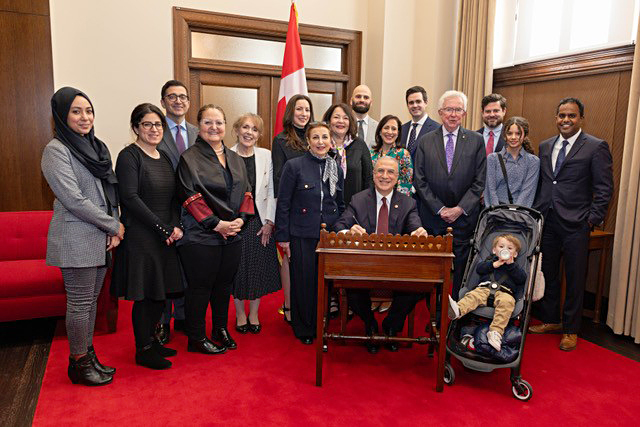
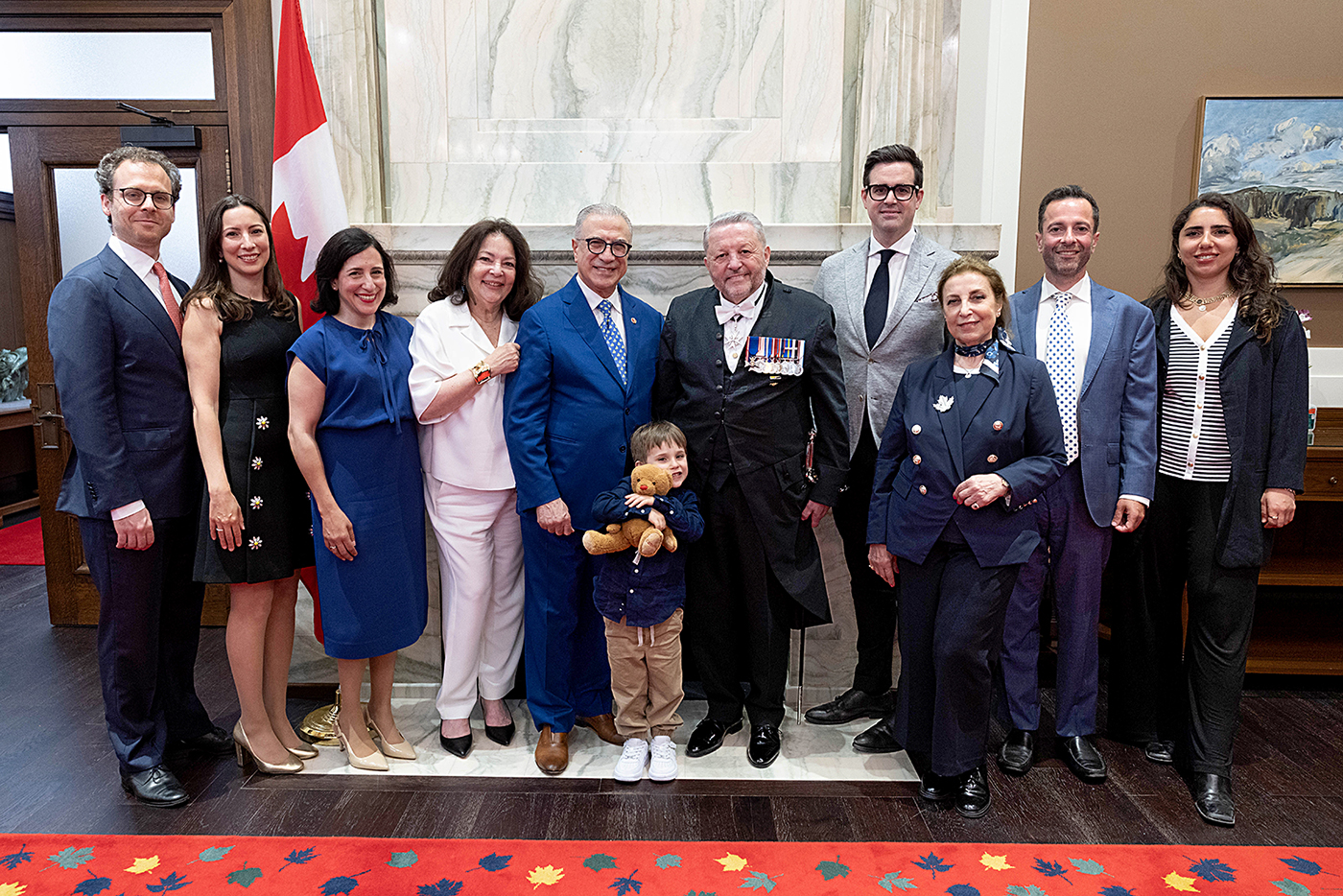 Senator Al Zaibak, his family and Usher of the Black Rod J. Greg Peters attend the senator’s pre-retirement reception at the Senate of Canada Building on June 11, 2026. From left, Khaled Malas, Jana Al Zaibak, Leen Al Zaibak, Najla Al Zaibak, Senator Al Zaibak, Dean Henry, Mr. Peters, Michael Henry, Mona Al Zaibak, Omar Al Zaibak and Lara Barazi. (Photo credit: Office of Senator Mohammad Al Zaibak)
And has anything surprised you about the Senate?
The friendships and the collegiality between senators of all political stripes. Canadians tend to see the Senate through the lens of debate and disagreement. What they do not see is the intellectual depth of those debates or the legislative and administrative acumen that keeps Parliament running. I think there should be more public awareness of Senate work.
What are you planning to do next?
Well, I don’t think of the end of my Senate term as retiring so much as changing seats. I will keep doing what I have always done — building bridges, not walls — now only from outside the Chamber.
I’ll keep making the case that Canada should pursue strategic trade and investment opportunities with the Arab world. And I’ll keep faith with the credo my parents gave me: do good and cast it into the sea.
Mostly, though, I look forward to time with my wife, my children and grandchildren — the people who make it all genuinely meaningful.
Watch the tributes to Senator Mohammad Al Zaibak and his farewell speech in the Senate Chamber.
Related articles
Tags
Committee news
‘Building bridges, not walls’: Senator Al Zaibak reflects on a career in Parliament and entrepreneurship
An engineer, entrepreneur and parliamentarian, Senator Mohammad Al Zaibak has come to understand bridge-building in different ways.
Ahead of his retirement on August 9, 2026, the Ontario senator spoke to SenCAplus about a career that has spanned oceans and communities alike.
You were born and raised in Syria. What was your upbringing like?
I feel fortunate that I grew up in Damascus, which is considered the oldest continuously inhabited city in the world. I was born and raised in the heart of the old city not far from the biblical Street Called Straight. Although the fear of political instability and war was always there, I had a very happy childhood. The social fabric was amazing; the neighbourhoods were like big families where everyone cared about each other. Almost every home had a jasmine tree, and the scent of jasmine followed you everywhere.
My parents raised us to love and respect others, and they gave me a credo I have carried my whole life: do good and cast it into the sea. Do good without condition or expectation of return and trust that the rewards come in their own way.
You and your family moved to Toronto more than three decades ago. What made you decide to resettle in Canada?
I had completed my degree in telecommunications engineering at Alexandria University in Egypt and then moved to Saudi Arabia, where I worked for a major international telecommunications company, and then established my own business with Saudi partners. In addition to implementing major power generation and transmission projects, I also structured the international joint venture that built the King Fahd Causeway linking Bahrain to Saudi Arabia. I then went to Harvard Business School to complete executive business studies and during that time I had the opportunity to visit Canada.
As my children grew up, I began looking for the best place to raise them: a country that was multicultural and open, where they would have opportunity. At 37 years old, I uprooted my young family, and we planted new roots in Canada because I believed this country offered my children the most promising future. They are all grateful. I was right.
Within a few years of moving to Toronto, you founded Teranet, which now manages and operates Ontario’s Electronic Land Registration Information System. How were you able to find your footing as a newcomer and build a successful company?
When I arrived in Canada in 1987, my instinct was to do here what I had done in Saudi Arabia: to build something.
The Ontario government had the vision to computerize and modernize its land registry information system in partnership with the private sector, so I was invited to join a group of technologists, scientists and experts to structure a business model and lead the group. The government decided to take the initiative into a public bidding process. It was a very fierce competition. We were a small startup competing against a formidable group of major companies for the project. After three years of intense bidding and negotiations, we concluded one of Ontario’s earliest public-private partnerships. Our creativity and our equitable risk-and-rewards sharing business model, coupled with trust in our government system, gave us the winning advantage.
The hard part was never the technology; it was bridging a consortium of competing companies and aligning their interests with those of the government and public stakeholders. We turned Ontario’s land registry into one of the most sophisticated systems of its kind in the world and created thousands of skilled jobs.
Looking back, it was bridge-building before I knew that would become the theme of my life.
Mohammad Al Zaibak as a student at Harvard Business School in 1985. (Photo credit: Office of Senator Mohammad Al Zaibak)
In just a few short years after landing in Canada, Mohammad Al Zaibak, left, founded Teranet, which became Ontario’s electronic land registry information system operator. He’s pictured here signing the agreement with Ontario government officials. (Photo credit: Office of Senator Mohammad Al Zaibak)
You co-founded Lifeline Syria in the wake of the Syrian refugee crisis in 2015. Tell us more about your work with this organization.
When Canada opened its doors to the private sponsorship of Syrian refugees in 2015, a group of us — including former senator Ratna Omidvar — founded Lifeline Syria to mobilize Canadians to this cause. Our goal was to settle 1,000 refugees in two years. Canadian generosity surpassed it: 1,200 Syrians were sponsored within 15 months. It has become a proud nation-building chapter in our recent history — nearly 100,000 Syrians have made Canada home since 2015 and most of them are now Canadian citizens.
One memory stands out to me. Just before midnight on December 10, 2015, a Canadian Armed Forces aircraft landed at Pearson carrying 163 Syrians. Then-prime minister Justin Trudeau was waiting to greet them, alongside then-premier Kathleen Wynne and then-Toronto mayor John Tory. He told them, “You’re safe at home now” — they had arrived as refugees and would walk out of the terminal as permanent residents. Those words left footprints on my heart. I will always be grateful to Canada.
As a member of the Senate Committee on Foreign Affairs and International Trade, Senator Al Zaibak hosts and co-chairs a meeting with a visiting delegation from Egypt, including Ahmed Abdallah Ibrahim Hafez, Ambassador of the Arab Republic of Egypt, and Dr. Sameh Aboul-Enein, Assistant Foreign Minister for US, Canada and the Americas, on April 5, 2025.
You were appointed to the Red Chamber in 2024. What made you want to be a senator?
I wanted to pay back Canada for the opportunities provided to me and my family. As the first senator of Syrian-Arab heritage, my Senate appointment enabled me to be a catalyst for promoting mutual respect and understanding, and for others to follow. I have always been interested in engaging the Canadian Arab and the Canadian Muslim communities in all aspects of our society — business, cultural, social and political. I hope I have made a difference representing those communities and acting in the best interest of my province and my country.
What are your proudest Senate accomplishments?
I had a very ambitious legislative agenda, but the Arab Heritage Month Act is one of my proudest achievements. This bill recognizes the Canadian Arab community’s contributions to Canada over the past 140-plus years. Today, there are more than one million Arab Canadians living in this country.
I have also worked to cultivate Canada’s trade and investment partnership with the Arab world, an economic block of 500 million people across 22 countries. This represents more than 6% of the world population and 4.5% of the global economy, yet Canada’s trading volume with the Arab world is less than 1% of our international trade.
I hope we are on the right track now with our government diversifying and growing our international trade.
Senator Al Zaibak, centre, hosts Arab ambassadors for a visit to the Senate on June 30, 2026. Pictured, from left, are the ambassadors for Iraq, Kuwait, Libya, Lebanon, Mauritania, Yemen, Morocco, Palestine, Qatar, Jordan and Egypt. (Photo credit: Office of Senator Mohammad Al Zaibak)
You have served as deputy chair of the Senate Committee on National Security, Defence and Veterans Affairs (SECD) and on the Senate Committee on Foreign Affairs and International Trade (AEFA). What committee work are you most proud of?
I will treasure my committees’ work and colleagues — above almost everything. At Foreign Affairs we debated the great questions of our time: the war in Ukraine, the tragedy in Gaza, conflicts in other regions, Canada’s place in a turbulent world, and how we grow and diversify our trade.
At National Security and Defence, I came to understand that the security of this country is never a partisan question; it is a national responsibility. It was rewarding to sit at those tables and engage with witnesses and senators from every group. As my term draws to a close, I am leaving a set of policy briefs and studies related to my SECD and AEFA works in the capable hands of my colleagues to carry them forward.
You served with the Canada-Qatar Parliamentary Friendship Group, founded and co-chaired the Canada-Saudi Arabia Interparliamentary Group, and began establishing a Canada-Syria Parliamentary Friendship Group. What did you learn about parliamentary diplomacy?
Parliamentary diplomacy rests on a simple belief: dialogue between peoples is never wasted. Through my work with these groups, I tried to build bridges that lasted beyond any single meeting.
I learned that trust is built in person. Co-chairing an informal Foreign Affairs committee meeting with visiting parliamentarians and government officials from Egypt; welcoming Arab ambassadors to the Senate; hosting a UAE business delegation here in Ottawa — those conversations open doors that formal channels alone cannot.
Senator Al Zaibak, his family and Usher of the Black Rod J. Greg Peters attend the senator’s pre-retirement reception at the Senate of Canada Building on June 11, 2026. From left, Khaled Malas, Jana Al Zaibak, Leen Al Zaibak, Najla Al Zaibak, Senator Al Zaibak, Dean Henry, Mr. Peters, Michael Henry, Mona Al Zaibak, Omar Al Zaibak and Lara Barazi. (Photo credit: Office of Senator Mohammad Al Zaibak)
And has anything surprised you about the Senate?
The friendships and the collegiality between senators of all political stripes. Canadians tend to see the Senate through the lens of debate and disagreement. What they do not see is the intellectual depth of those debates or the legislative and administrative acumen that keeps Parliament running. I think there should be more public awareness of Senate work.
What are you planning to do next?
Well, I don’t think of the end of my Senate term as retiring so much as changing seats. I will keep doing what I have always done — building bridges, not walls — now only from outside the Chamber.
I’ll keep making the case that Canada should pursue strategic trade and investment opportunities with the Arab world. And I’ll keep faith with the credo my parents gave me: do good and cast it into the sea.
Mostly, though, I look forward to time with my wife, my children and grandchildren — the people who make it all genuinely meaningful.
Watch the tributes to Senator Mohammad Al Zaibak and his farewell speech in the Senate Chamber.