

Meet Senator Rebecca Patterson

A retired rear-admiral with 34 years of military experience, in 2022 Senator Rebecca Patterson became the first woman to be both a Canadian Armed Forces veteran and a senator.
The Ontario senator sat down with SenCAplus to talk about her different roles within the Canadian Armed Forces — including tackling sexual misconduct and leading the military’s health service during the COVID-19 pandemic — and how she’s continuing to work for veterans in the Red Chamber.
You are the first woman to be a Canadian Armed Forces veteran and a senator. How significant is this for you?
I think it shows how far the Canadian Armed Forces has come since 1989, which is when I joined. I am not part of the first wave of significant women in the Canadian Armed Forces, but I have benefited from the work that those women did. It allowed me to be in a position to be considered for the Senate.
I am proud of all those women who created space for people like me to now be in a leadership role at the parliamentary level.
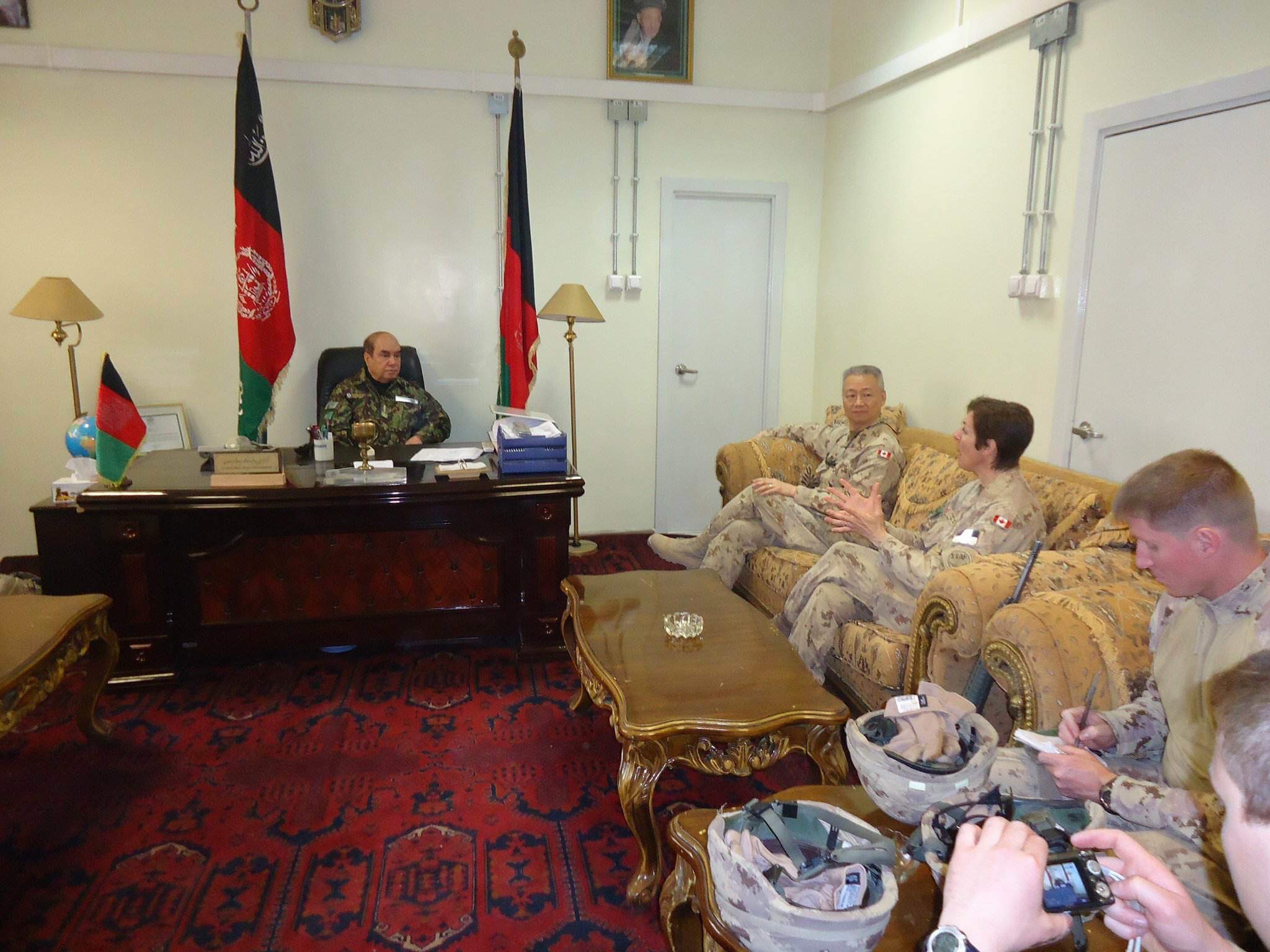 Before her Red Chamber appointment, Senator Rebecca Patterson served as a nursing officer in the Canadian Armed Forces. She’s pictured here facilitating a visit between the Canadian Armed Forces Surgeon General and the head of the Afghanistan Armed Forces Academy of Medical Sciences during Operation ATTENTION in 2012. (Photo credit: Office of Senator Rebecca Patterson)
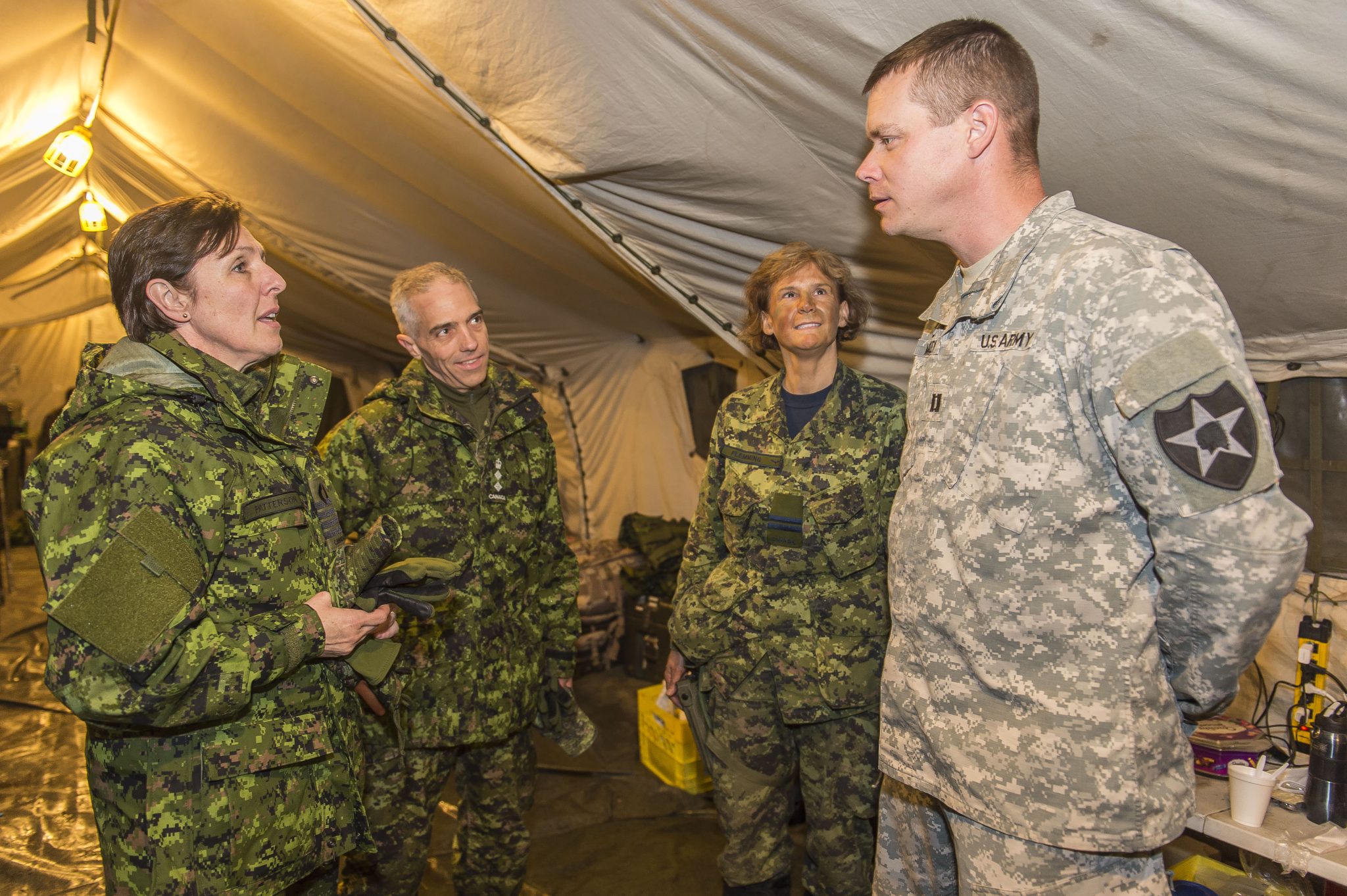 Captain (Navy) Patterson speaks with United States Army chaplain Captain Chris McCarley, right, Colonel Marc Bilodeau and Captain Deborah Flemming at the Role 1 Plus medical support unit in Wainwright, Alberta in 2016. (Photo credit: Master Corporal Jonathan Barrette, image courtesy of CF Combat Camera)
What made you want to enrol in the Canadian Armed Forces, and why the Royal Canadian Navy?
I come from a military family. My dad was a submariner in the Royal Canadian Navy, and during the Cold War he was working in the U.K. when he fell ill and had to be hospitalized in the Royal Navy Hospital. That’s where he met my mom, who was a Royal Navy nursing sister. My sister and I were born in the U.K., my brother in Canada and, although my dad left the Royal Canadian Navy in 1968, the concept of service has always been ingrained in our family.
We eventually moved to Manitoba and then to Thunder Bay, Ontario. My dad wanted to rejoin through the Naval Reserves, and he told me I could join the Navy League of Canada. I could not get in there fast enough. I spent my tween and teenage years as a sea cadet and because we continued to move, I got to meet new people through cadets. It instilled in me a desire to serve in some sort of capacity. Also, I used to watch MASH and I was fascinated by it!
After high school, I went to the recruiting centre and said I wanted to join the Royal Canadian Navy. Back then, the occupations for women in the military were limited, and the most common path was through nursing. So, I obtained my nursing diploma from Niagara College, I started working in critical care and then I returned to the recruiting centre. I joined the military in the first month that every occupation in the Canadian Armed Forces, except for those in submarines, was open to women. That was January 1989. It ended up marking the rest of my career and I believe it’s what truly brought me to the Senate.
Why did you want to become a senator?
One day, I realized 32 years had passed since I joined the military. I never thought I would stay this long in a career. I joined the Canadian Armed Forces just as the Cold War was ending and everything about the institution fit my personality. Of course, there were barriers, but I did so many incredible things, including taking over Operation HONOUR to tackle sexual misconduct within the Canadian Armed Forces, stepping into the role of Commander of Health Services during the COVID-19 pandemic and working for culture change in the military as the Defence Champion for Women. I also travelled extensively, including deployments to the Persian Gulf, Somalia and Afghanistan. I received a lifelong education, and I became bilingual because of the military.
 Commodore Patterson, then-director general of Operation Honour, inspects the Sea Cadets of HMCS Ontario in 2019 at their annual inspection. (Photo credit: Office of Senator Rebecca Patterson)
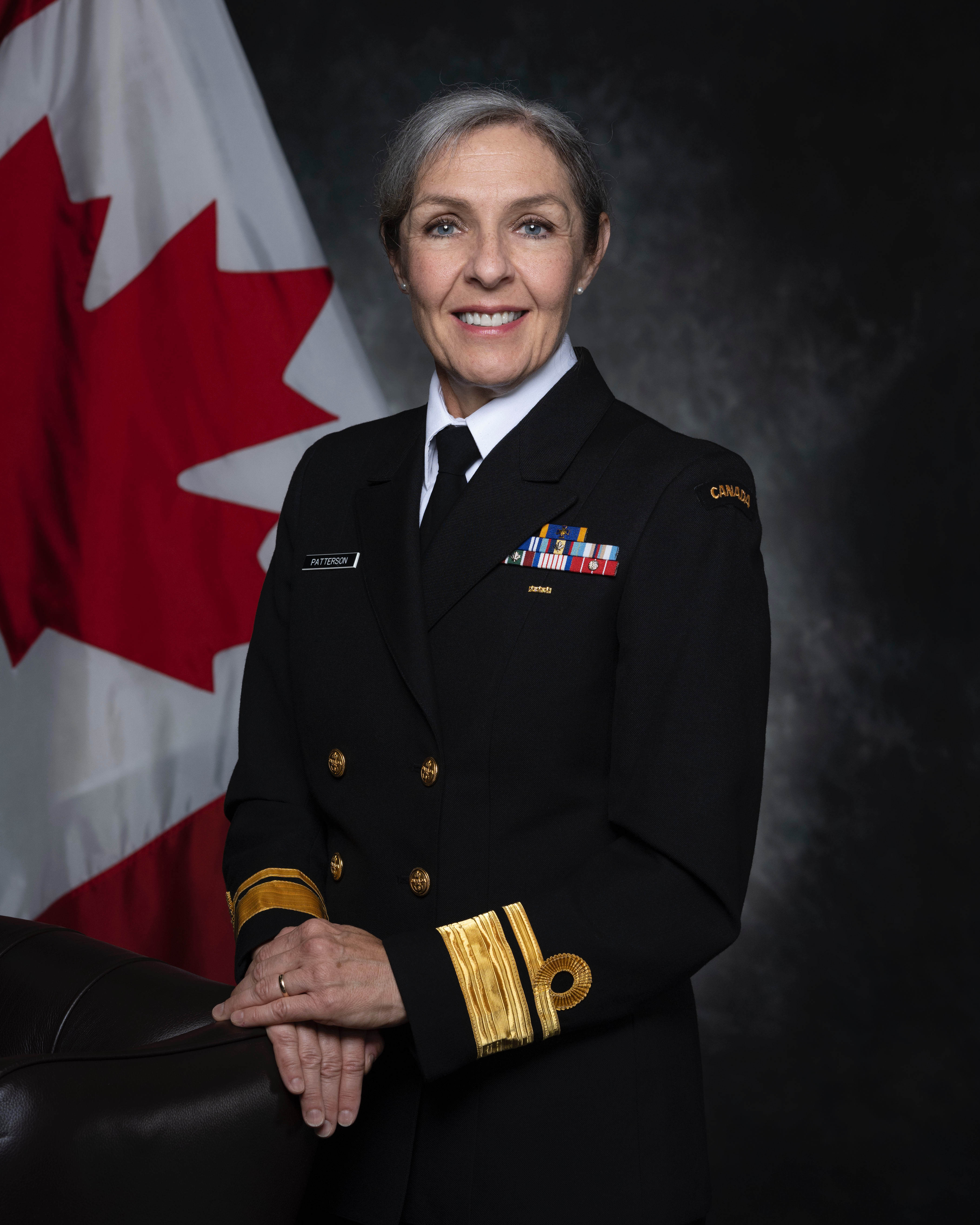 Rear-Admiral Patterson’s official photo on appointment as Chief of Staff, Chief Professional Conduct and Culture in 2021. (Photo credit: Office of Senator Rebecca Patterson)
I had appeared multiple times in front of committees at the House of Commons and the Senate, and I admired the calibre of questions from the senators. The Senate seemed like a great way to continue serving the public.
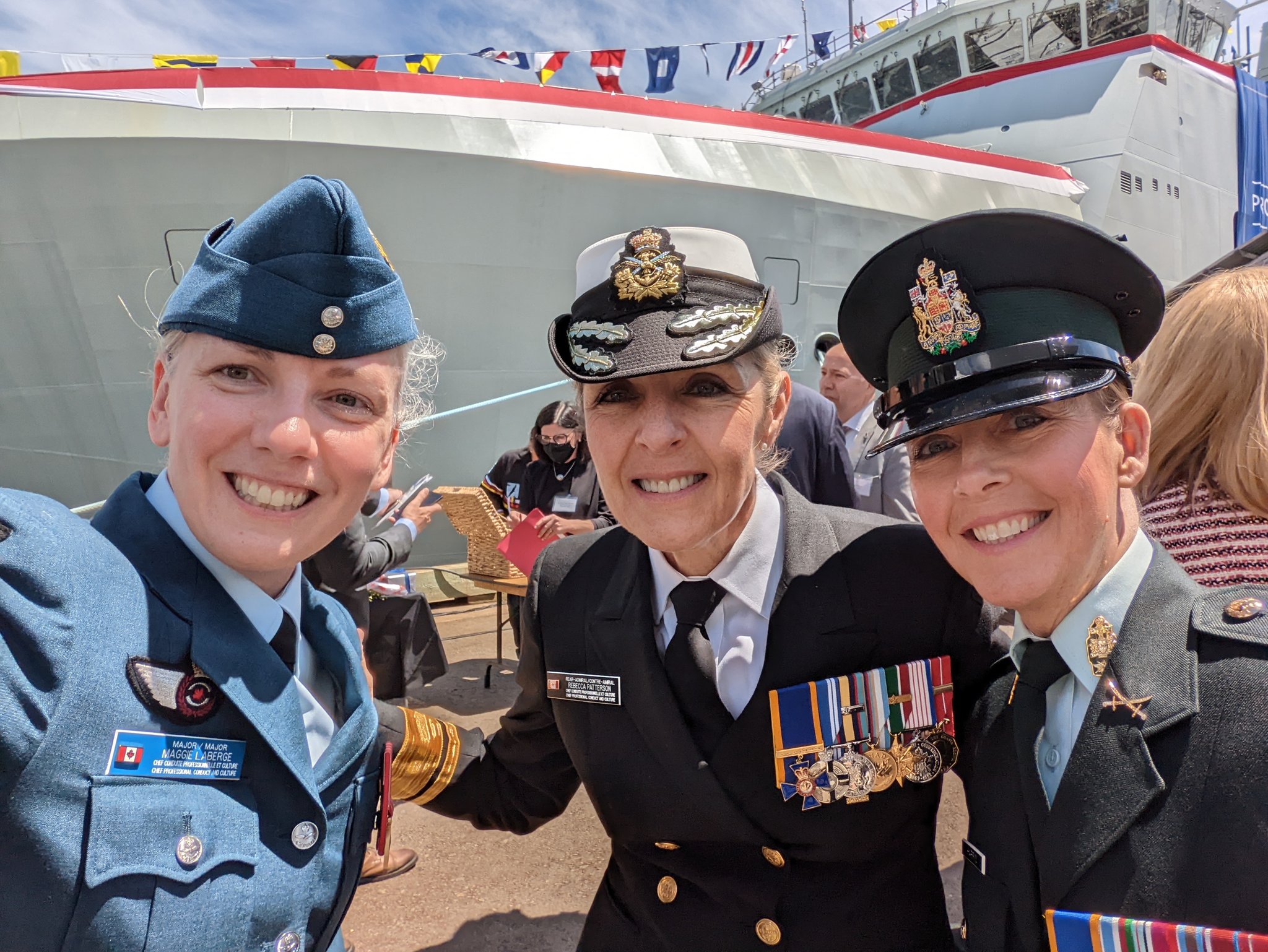 From left, Major Maggie Laberge, Rear-Admiral Rebecca Patterson, and CWO Crystal Harris at the Royal Canadian Navy’s naming ceremony for HMCS Margaret Brooke and HMCS Max Bernays on May 29, 2022. (Photo credit: Office of Senator Rebecca Patterson)
How does your 34 years of military experience inform your Senate work?
First, I have lived in or visited all provinces, except for one territory, and I have heard a variety of perspectives. Second, members of the Canadian Armed Forces do not have much of a voice in Parliament because they do not have the ability to lobby the government. There are good reasons for that, namely civilian control of the military.
As a Canadian who has served this country through the Canadian Armed Forces, I come to the Senate with a different lens. I provide a unique perspective on the defence and security of Canada, and I am here to serve veterans and their families through a women, peace and security, and a health security lens. I bring this voice to the table. I also feel I owe a great debt to our veterans and serving members and their families.
Before prorogation, you served as chair of the Subcommittee on Veterans Affairs. What were you hoping to accomplish in this role?
We were studying veterans’ homelessness, which was an opportunity for the Senate to help lead the discussion on the state of being a veteran in this country, both the challenges and the positive aspects.
Also, because of my background I understand the groups of people who need to have their voices brought to the table. With this particular study on veterans’ homelessness, we were exploring the initiatives that have been put in place over the last several years to address this issue. This study was not focused on the root causes of veterans’ homelessness; previous parliamentary studies have already addressed that issue. We wanted to examine the actual impact of these initiatives on people who are living rough, housing insecure or completely homeless, and we were looking at it through an intersectional lens as well. That included men, women, people of all genders, Indigenous peoples, 2SLGBTQ+ communities, et cetera.
The committee has dissolved with prorogation, but it is my hope that the Senate will continue dedicating time to this important issue when Parliament reconvenes.
When not at work, you are an antique hunter. What is your most treasured vintage find and why?
I have two favourite items that I have thrifted, and one came from a Value Village on Merivale Road. It’s a solid silver teaspoon, and I discovered that it came from a wedding silver set dating back to 1792. It has the initials of the couple that would have had this silver made in London.
The second item is a fabulous find from the Salvation Army in Bells Corners. It’s a teacup from about 1800 to 1810. It has a tiny crack with a tea stain. I love to try and figure out the provenance of antiques.
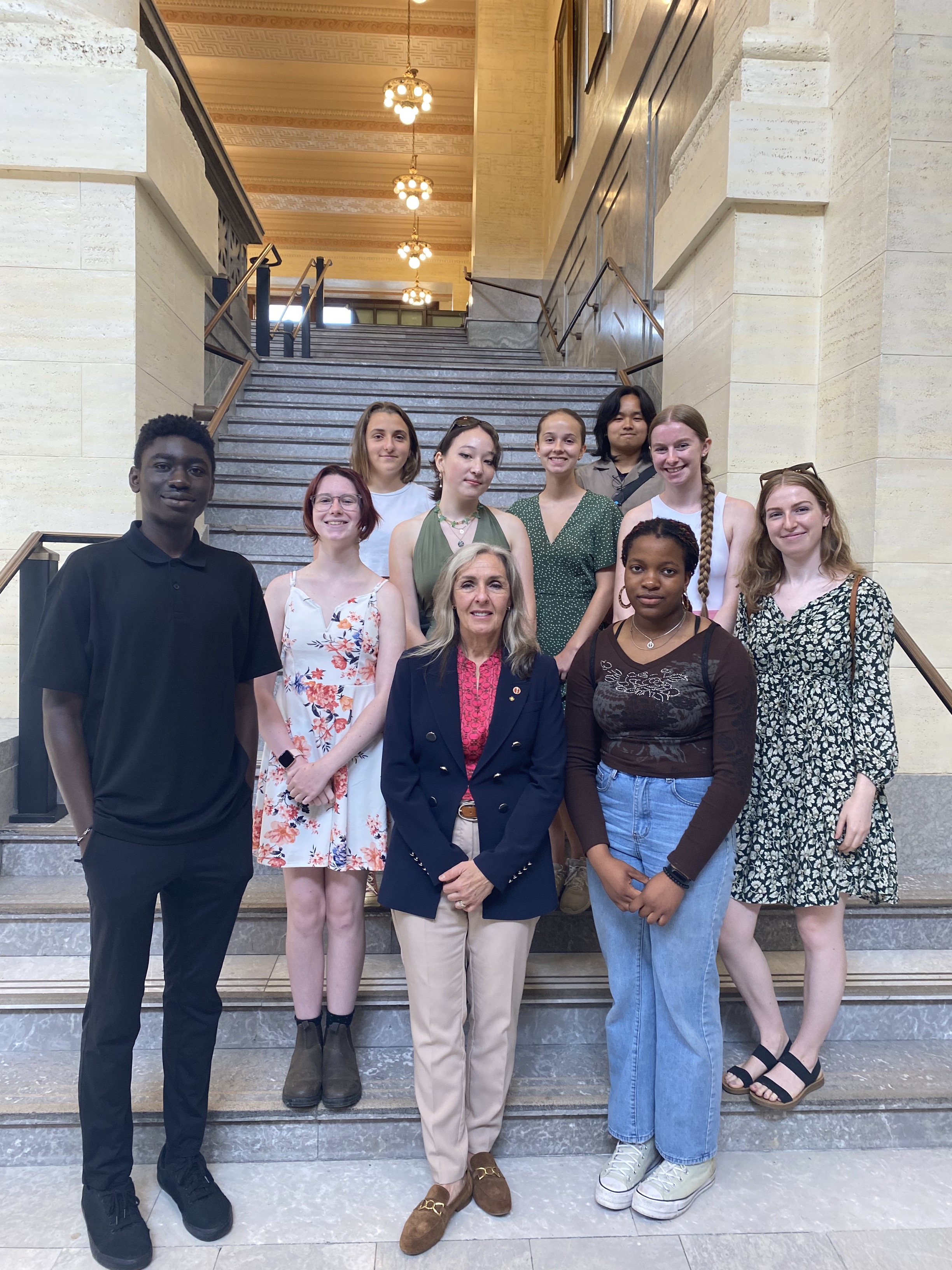 Senator Patterson meets with students from the YMCA’s Summer Work Student Exchange Program during an event organized by SENgage at the Senate of Canada Building in 2023. (Photo credit: Office of Senator Rebecca Patterson)
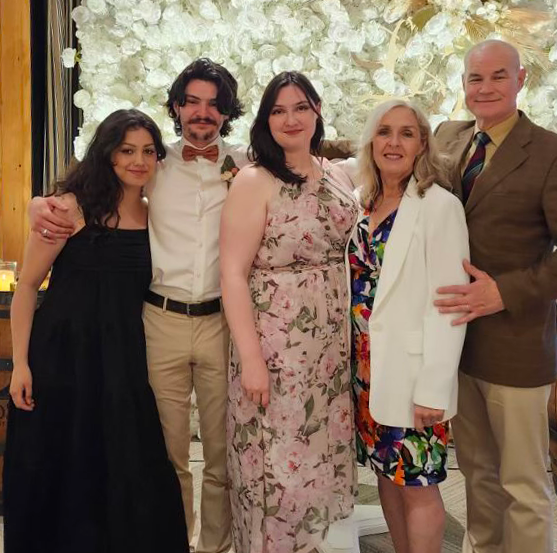 Senator Patterson with her family in 2024. (Photo credit: Office of Senator Rebecca Patterson)
What’s something most Canadians don’t know about you?
That I come from humble beginnings. And I say that while recognizing that I have privileges that come with certain identifying factors, such as being white and anglophone. My parents did everything they could to give us opportunities, even when they didn’t have two cents to rub together. They taught us to believe in ourselves and be independent.
Has anything about the Senate surprised you?
There’s a sense of togetherness, regardless of your political persuasion, how you may vote, or your background. It’s a warm, respectful environment.
Canadians don’t know enough about the Senate, and in this particularly acrimonious world, that is unfortunate. More people should know that senators are drafting and amending legislation that impacts their lives. We strive to collaborate and find compromise because we are ultimately here to provide a voice for people who don’t have one.
Related articles
Tags
Committee news
Meet Senator Rebecca Patterson
A retired rear-admiral with 34 years of military experience, in 2022 Senator Rebecca Patterson became the first woman to be both a Canadian Armed Forces veteran and a senator.
The Ontario senator sat down with SenCAplus to talk about her different roles within the Canadian Armed Forces — including tackling sexual misconduct and leading the military’s health service during the COVID-19 pandemic — and how she’s continuing to work for veterans in the Red Chamber.
You are the first woman to be a Canadian Armed Forces veteran and a senator. How significant is this for you?
I think it shows how far the Canadian Armed Forces has come since 1989, which is when I joined. I am not part of the first wave of significant women in the Canadian Armed Forces, but I have benefited from the work that those women did. It allowed me to be in a position to be considered for the Senate.
I am proud of all those women who created space for people like me to now be in a leadership role at the parliamentary level.
Before her Red Chamber appointment, Senator Rebecca Patterson served as a nursing officer in the Canadian Armed Forces. She’s pictured here facilitating a visit between the Canadian Armed Forces Surgeon General and the head of the Afghanistan Armed Forces Academy of Medical Sciences during Operation ATTENTION in 2012. (Photo credit: Office of Senator Rebecca Patterson)
Captain (Navy) Patterson speaks with United States Army chaplain Captain Chris McCarley, right, Colonel Marc Bilodeau and Captain Deborah Flemming at the Role 1 Plus medical support unit in Wainwright, Alberta in 2016. (Photo credit: Master Corporal Jonathan Barrette, image courtesy of CF Combat Camera)
What made you want to enrol in the Canadian Armed Forces, and why the Royal Canadian Navy?
I come from a military family. My dad was a submariner in the Royal Canadian Navy, and during the Cold War he was working in the U.K. when he fell ill and had to be hospitalized in the Royal Navy Hospital. That’s where he met my mom, who was a Royal Navy nursing sister. My sister and I were born in the U.K., my brother in Canada and, although my dad left the Royal Canadian Navy in 1968, the concept of service has always been ingrained in our family.
We eventually moved to Manitoba and then to Thunder Bay, Ontario. My dad wanted to rejoin through the Naval Reserves, and he told me I could join the Navy League of Canada. I could not get in there fast enough. I spent my tween and teenage years as a sea cadet and because we continued to move, I got to meet new people through cadets. It instilled in me a desire to serve in some sort of capacity. Also, I used to watch MASH and I was fascinated by it!
After high school, I went to the recruiting centre and said I wanted to join the Royal Canadian Navy. Back then, the occupations for women in the military were limited, and the most common path was through nursing. So, I obtained my nursing diploma from Niagara College, I started working in critical care and then I returned to the recruiting centre. I joined the military in the first month that every occupation in the Canadian Armed Forces, except for those in submarines, was open to women. That was January 1989. It ended up marking the rest of my career and I believe it’s what truly brought me to the Senate.
Why did you want to become a senator?
One day, I realized 32 years had passed since I joined the military. I never thought I would stay this long in a career. I joined the Canadian Armed Forces just as the Cold War was ending and everything about the institution fit my personality. Of course, there were barriers, but I did so many incredible things, including taking over Operation HONOUR to tackle sexual misconduct within the Canadian Armed Forces, stepping into the role of Commander of Health Services during the COVID-19 pandemic and working for culture change in the military as the Defence Champion for Women. I also travelled extensively, including deployments to the Persian Gulf, Somalia and Afghanistan. I received a lifelong education, and I became bilingual because of the military.
Commodore Patterson, then-director general of Operation Honour, inspects the Sea Cadets of HMCS Ontario in 2019 at their annual inspection. (Photo credit: Office of Senator Rebecca Patterson)
Rear-Admiral Patterson’s official photo on appointment as Chief of Staff, Chief Professional Conduct and Culture in 2021. (Photo credit: Office of Senator Rebecca Patterson)
I had appeared multiple times in front of committees at the House of Commons and the Senate, and I admired the calibre of questions from the senators. The Senate seemed like a great way to continue serving the public.
From left, Major Maggie Laberge, Rear-Admiral Rebecca Patterson, and CWO Crystal Harris at the Royal Canadian Navy’s naming ceremony for HMCS Margaret Brooke and HMCS Max Bernays on May 29, 2022. (Photo credit: Office of Senator Rebecca Patterson)
How does your 34 years of military experience inform your Senate work?
First, I have lived in or visited all provinces, except for one territory, and I have heard a variety of perspectives. Second, members of the Canadian Armed Forces do not have much of a voice in Parliament because they do not have the ability to lobby the government. There are good reasons for that, namely civilian control of the military.
As a Canadian who has served this country through the Canadian Armed Forces, I come to the Senate with a different lens. I provide a unique perspective on the defence and security of Canada, and I am here to serve veterans and their families through a women, peace and security, and a health security lens. I bring this voice to the table. I also feel I owe a great debt to our veterans and serving members and their families.
Before prorogation, you served as chair of the Subcommittee on Veterans Affairs. What were you hoping to accomplish in this role?
We were studying veterans’ homelessness, which was an opportunity for the Senate to help lead the discussion on the state of being a veteran in this country, both the challenges and the positive aspects.
Also, because of my background I understand the groups of people who need to have their voices brought to the table. With this particular study on veterans’ homelessness, we were exploring the initiatives that have been put in place over the last several years to address this issue. This study was not focused on the root causes of veterans’ homelessness; previous parliamentary studies have already addressed that issue. We wanted to examine the actual impact of these initiatives on people who are living rough, housing insecure or completely homeless, and we were looking at it through an intersectional lens as well. That included men, women, people of all genders, Indigenous peoples, 2SLGBTQ+ communities, et cetera.
The committee has dissolved with prorogation, but it is my hope that the Senate will continue dedicating time to this important issue when Parliament reconvenes.
When not at work, you are an antique hunter. What is your most treasured vintage find and why?
I have two favourite items that I have thrifted, and one came from a Value Village on Merivale Road. It’s a solid silver teaspoon, and I discovered that it came from a wedding silver set dating back to 1792. It has the initials of the couple that would have had this silver made in London.
The second item is a fabulous find from the Salvation Army in Bells Corners. It’s a teacup from about 1800 to 1810. It has a tiny crack with a tea stain. I love to try and figure out the provenance of antiques.
Senator Patterson meets with students from the YMCA’s Summer Work Student Exchange Program during an event organized by SENgage at the Senate of Canada Building in 2023. (Photo credit: Office of Senator Rebecca Patterson)
Senator Patterson with her family in 2024. (Photo credit: Office of Senator Rebecca Patterson)
What’s something most Canadians don’t know about you?
That I come from humble beginnings. And I say that while recognizing that I have privileges that come with certain identifying factors, such as being white and anglophone. My parents did everything they could to give us opportunities, even when they didn’t have two cents to rub together. They taught us to believe in ourselves and be independent.
Has anything about the Senate surprised you?
There’s a sense of togetherness, regardless of your political persuasion, how you may vote, or your background. It’s a warm, respectful environment.
Canadians don’t know enough about the Senate, and in this particularly acrimonious world, that is unfortunate. More people should know that senators are drafting and amending legislation that impacts their lives. We strive to collaborate and find compromise because we are ultimately here to provide a voice for people who don’t have one.