

Newfoundland and Labrador’s thriving offshore energy sector
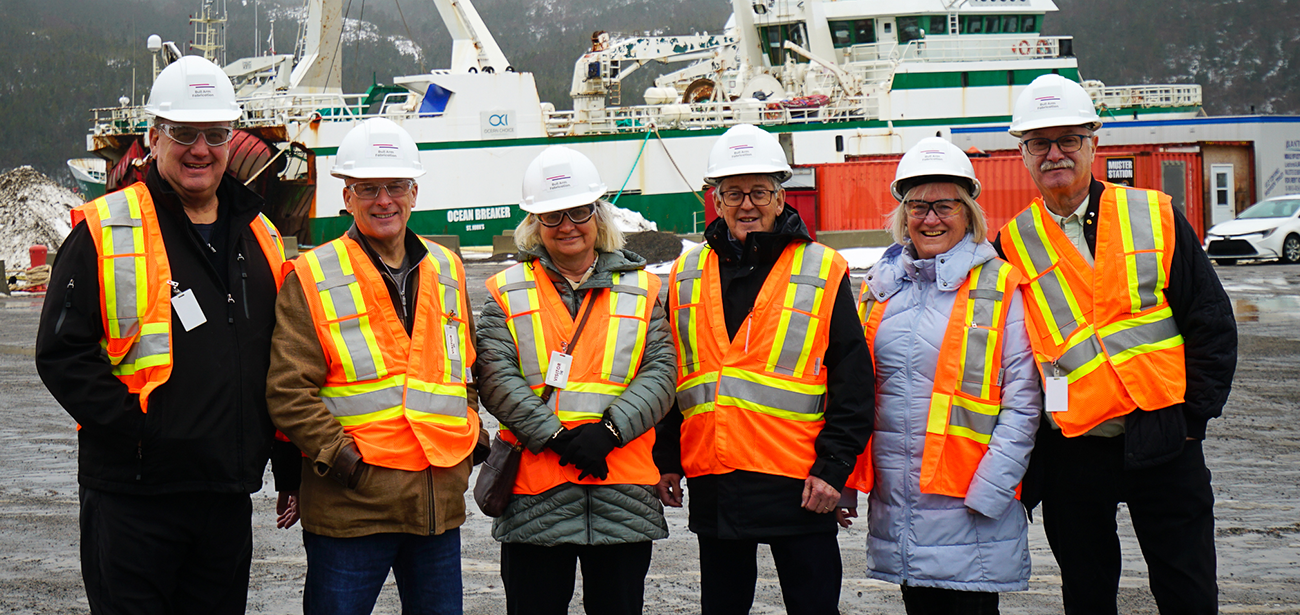
ST. JOHN’S, N.L. — Tourists might kiss the cod on Water Street, but St. John’s is an energy town.
Where fish once ruled the local economy, the capital city of Newfoundland and Labrador is now home to an offshore energy sector that pours money, jobs and opportunity into the entire province. Offshore oil accounted for 14% of the province’s real GDP in 2023 and the proposed new Bay du Nord project could send production into the stratosphere.
With at least three decades of offshore oil production still beneath the ocean floor, the Senate Committee on Energy, the Environment and Natural Resources undertook a fact-finding mission to the Rock in March 2026 to learn more about the industry and its contributions to the province’s and Canada’s financial health and energy security.
“I wanted my colleagues to see firsthand that Newfoundland and Labrador has a top-flight, best-in-class oil sector,” said Senator David Wells, a committee member who represents the province in the Red Chamber and who has served as deputy CEO and board member of Canada’s offshore petroleum industry regulator.
“It’s different in Newfoundland and Labrador.”
Newfoundland and Labrador’s offshore petroleum comes from four sites about 300 kilometres east of St. John’s. The first major oil discoveries took place in 1979, but federal-provincial disputes over ownership and governance delayed production. The Canada-Newfoundland Atlantic Accord was finally struck in 1985 to settle these differences and finally, in 1997, the Hibernia project began to produce crude oil.
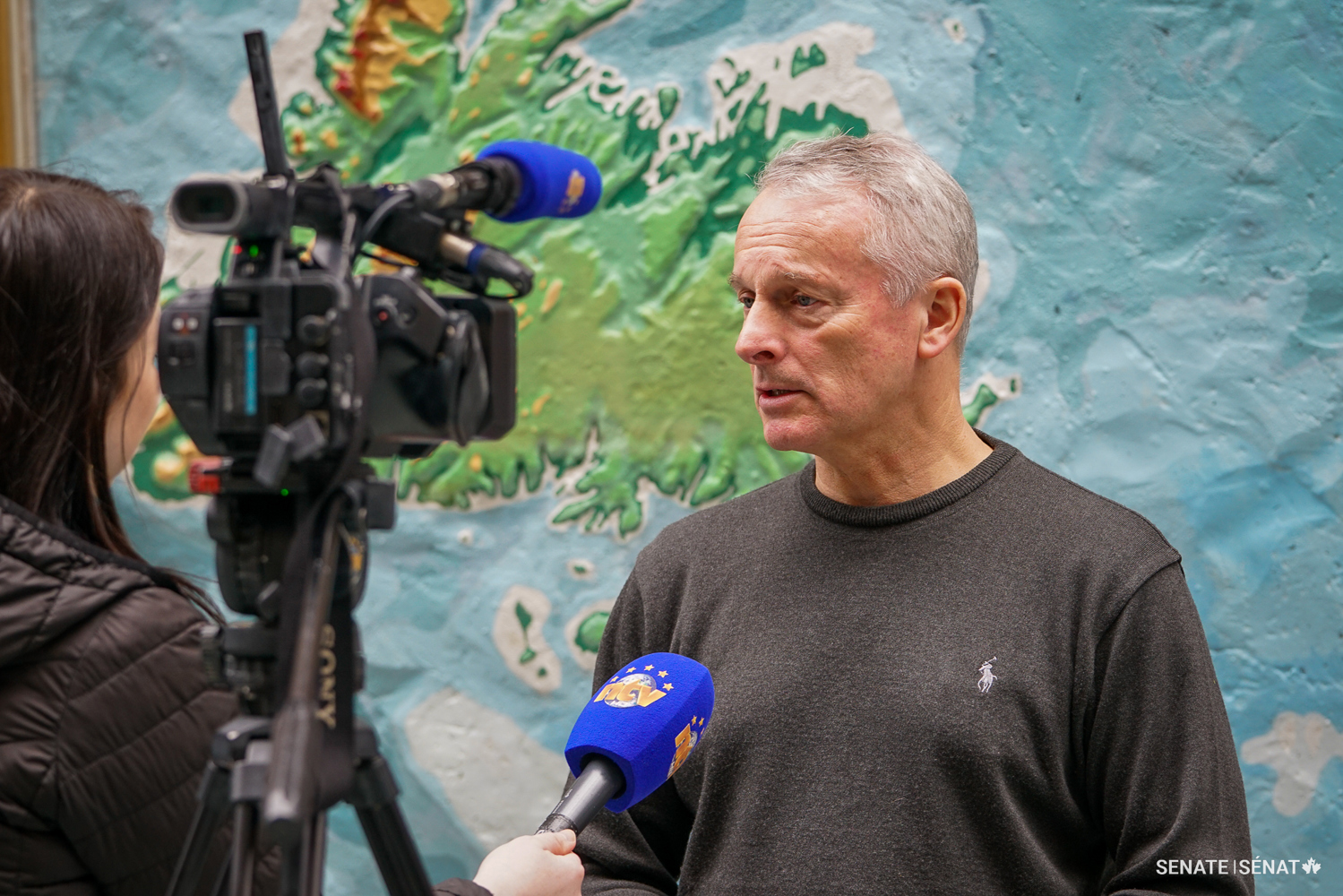 Senator David Wells takes a break from fact-finding to be interviewed by an NTV reporter.
Since then, exploration has continued. Oil companies drill into the seabed to collect a core sample, hoping for what’s known as a “show” of oil. Some of these core samples end up at the Core Storage and Research Centre in St. John’s, where the air hangs thick with the heady aroma of a mechanic’s garage and where senators had the opportunity to examine samples in their hands and under a microscope.
Once a commercial area has been identified, fixed or floating production facilities are moved offshore to drill into the ocean floor, using pressure that forces the oil from porous rocks and pumps it into oil tankers.
The scale of the operation is hard to fathom, which is why the committee took a 1 1/2-hour bus ride to the Bull Arm Fabrication Site, where some of the colossal fixed platforms were built. Senators were dwarfed by towering infrastructure, which must be built to withstand ocean swells, survive roaring gales and even to fend off icebergs.
Newdock, a St. John’s dockyard that services everything from offshore equipment and fishing vessels to Coast Guard and naval ships, is also a marvel of size and engineering — particularly considering its drydock is made of wood and dates from the late 19th century. Senators heard the facility, part-owned by two First Nations, is proposing to double its ship servicing capacity.
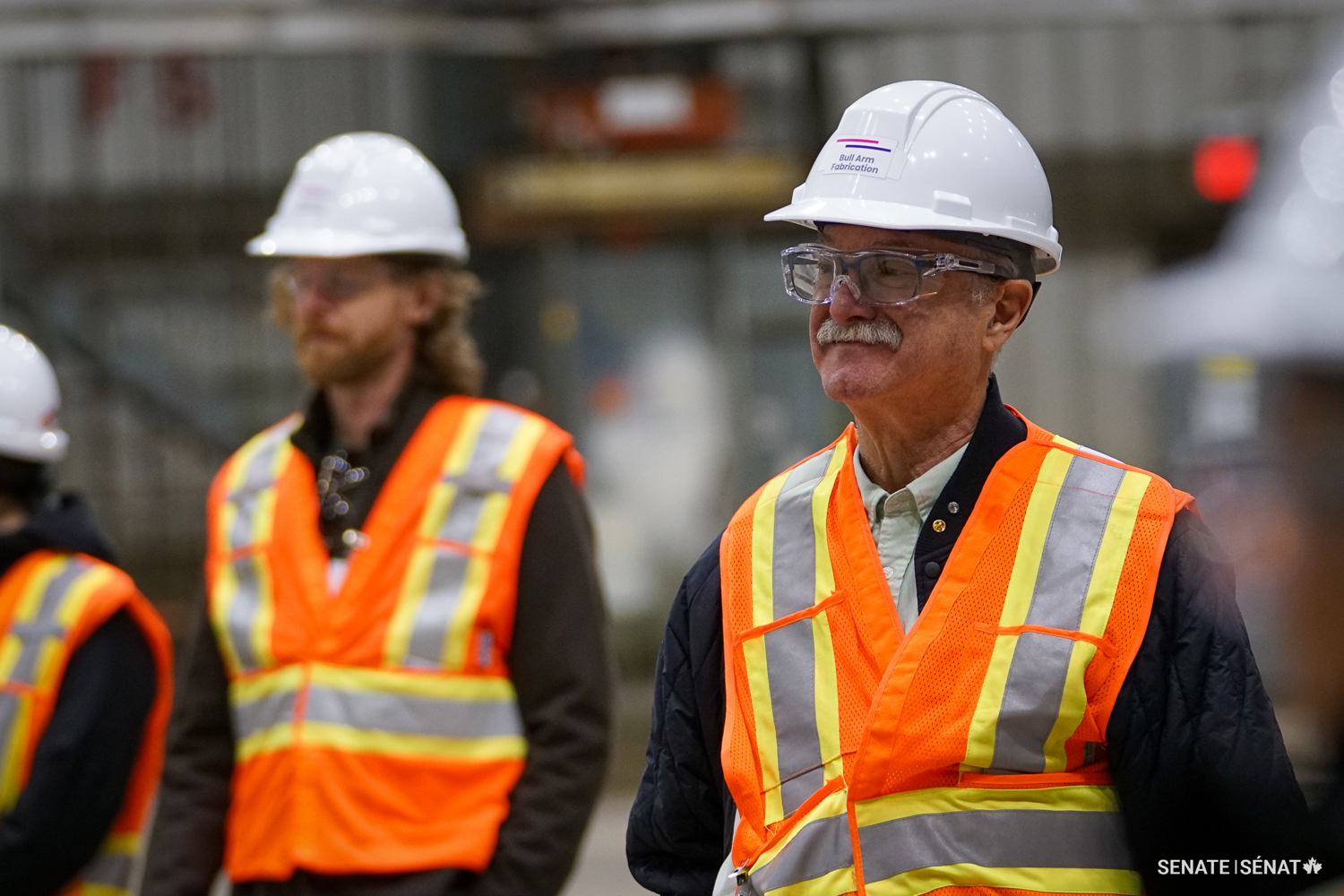 Senator Daryl S. Fridhandler surveys the Bull Arm Fabrication Site, where the Hibernia Gravity Base Structure was built. He said seeing Bull Arm in person felt “like a homecoming”; he was engaged in the Hibernia project as an energy industry lawyer.
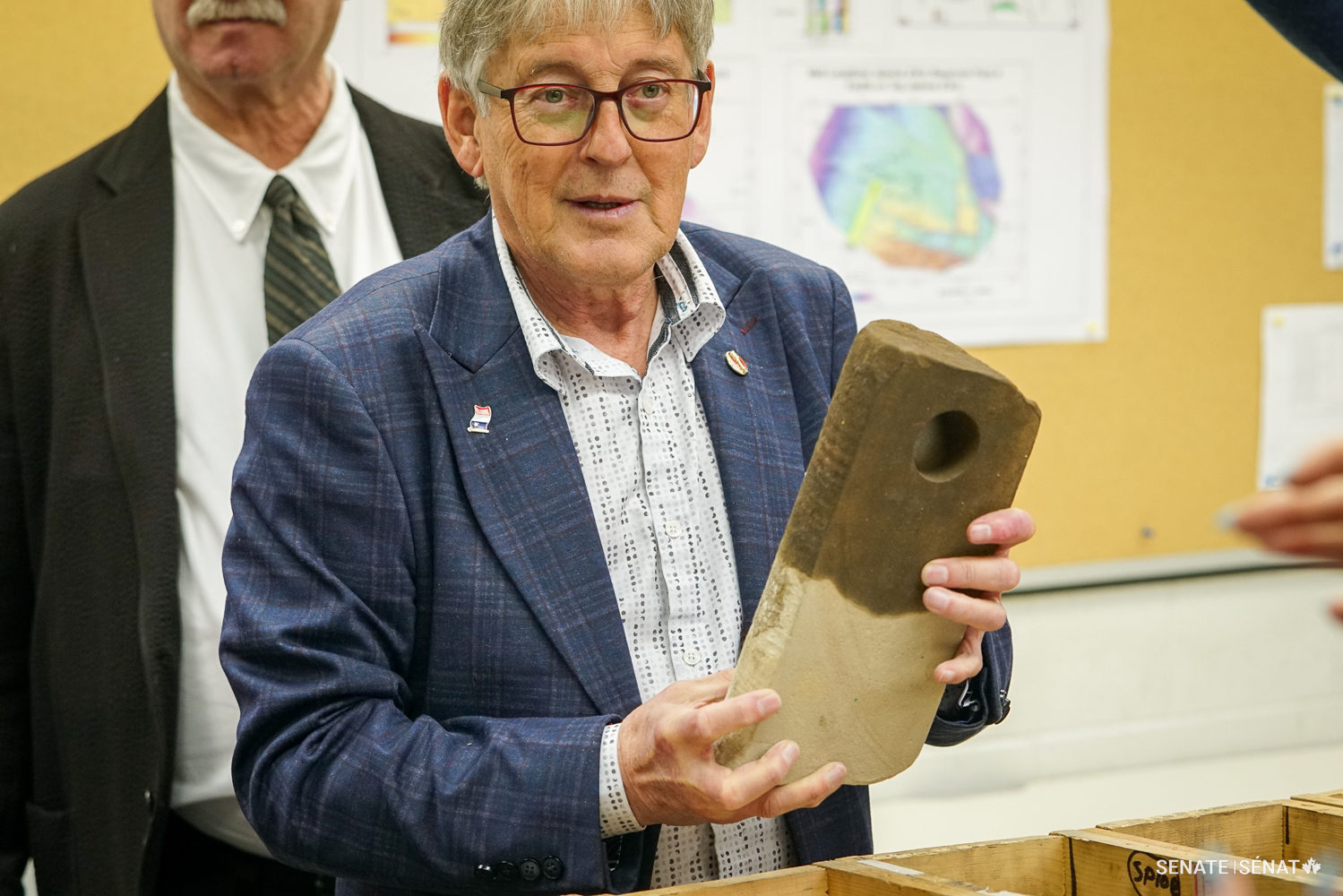 Senator Réjean Aucoin holds an oil-stained core sample at the Core Storage and Research Centre.
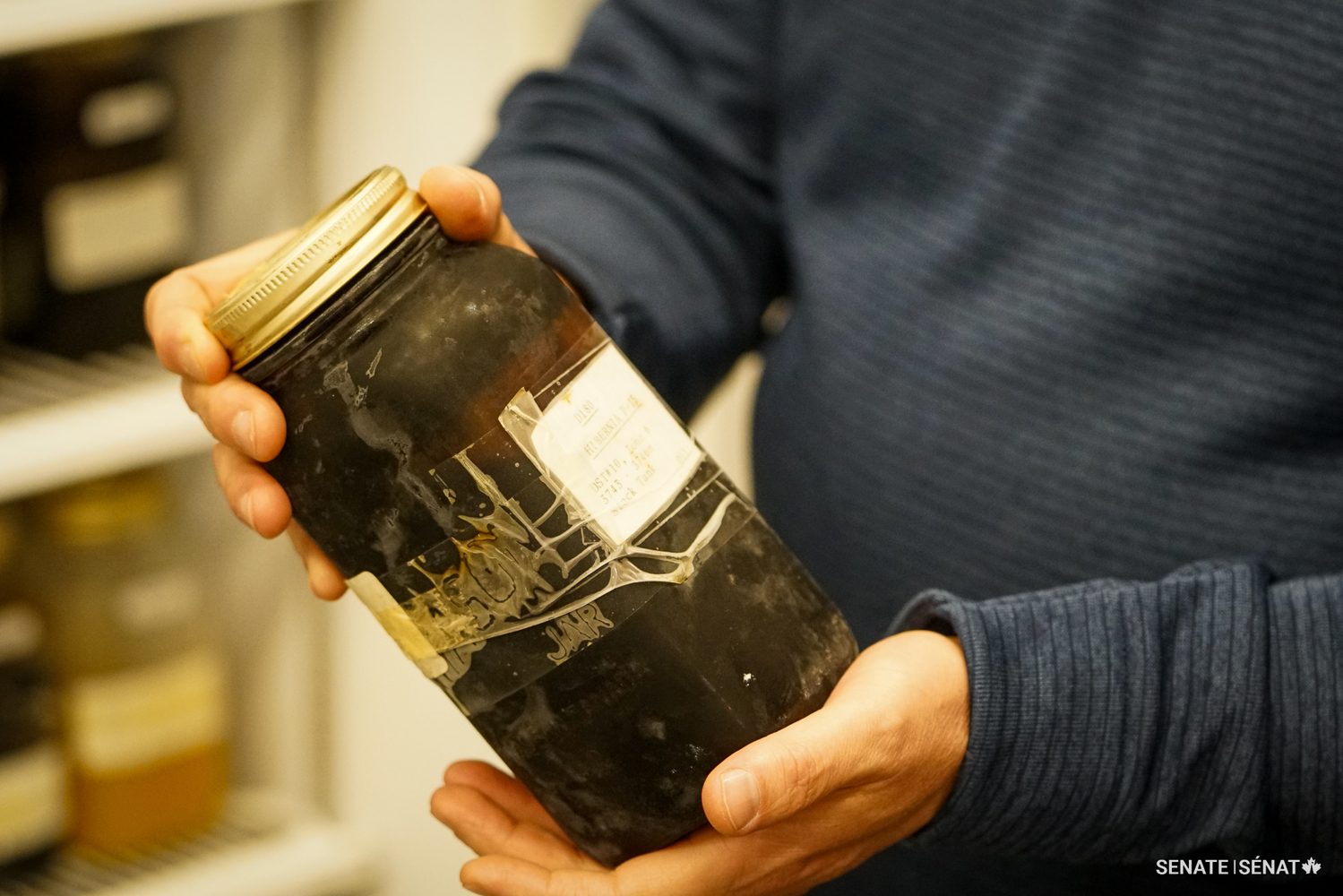 Samples of oil — like this one, from the Hibernia oil field — are stored in mason jars and labelled.
Newdock’s expansion plans are linked to the Bay du Nord project — the development of a site about 500 kilometres offshore and 600 to 1,200 metres below the surface that could bring in billions of dollars of revenue and thousands of jobs along with 1 billion barrels of oil. Norwegian energy giant Equinor is still deciding whether to go ahead with the project; a final decision is expected in 2027. Should the project proceed, the first oil could begin flowing in 2031.
Local excitement about Bay du Nord was palpable in view of the potential benefits, and nearly universal. Current events have underscored the fragility of the energy market, and while much of Newfoundland and Labrador’s oil finds eager buyers in Europe and the United States, Canada could soon come to appreciate access to a vast supply of domestic oil — if the infrastructure is in place to use it.
The extracted oil — a light crude considered “sweet” for its low-sulphur content — is generally sent to a refinery in the north of France (owned, paradoxically, by a Newfoundland and Labrador company); some of that product is refined and then shipped back to Canada. Could Bay du Nord spark a renewed interest in reviving Canada’s domestic refining capacity? The question is already being asked.
 Senator Julie Miville-Dechêne shares a smile with Senator David Wells during a briefing at the Port of Argentia, an industrial seaport that hopes to benefit if the Bay du Nord project goes ahead.
 Senator Todd Lewis considers a point during a meeting with the mayor of St. John’s.
Committee members also got a close look at some of Newfoundland and Labrador’s world-class training and safety facilities — the results, in part, of lessons learned the hard way.
The Ocean Ranger, a self-propelled offshore rig with 84 people aboard, was caught in a vicious winter storm on February 14, 1982. Waves more than 10 metres high pummelled the structure and by 1 a.m. the next morning, the rig was listing and the workers headed for the lifeboats.
Although two ships were able to get near the site of the Ocean Ranger, the storm made rescue impossible. No one survived.
It was with this in mind that senators visited RelyOn in Mount Pearl, which provides offshore safety and survivor training to a global clientele. Senators took in a simulation of a helicopter crashing into water that brought home the terror of a marine disaster.
 Senator Joan Kingston, chair of the committee, commands a vessel at the Marine Institute’s simulator.
The committee also took a turn in command of an oil rig at the Marine Institute’s Centre for Marine Simulation, a facility that is so detailed in its recreation of the ocean environment that some senators felt a twinge of seasickness as the simulator appeared to pitch and roll.
Though the work will always be challenging, these training facilities are keeping new generations of workers safer, all over the world.
 RelyOn boasts a training simulator designed to help passengers escape a helicopter that had to ditch in the ocean. It is required training for a person to work at an offshore site.
 Crews and supplies are taken to oil rigs on Cougar Helicopters’ fleet of Sikorsky S92 aircraft. Senators heard some of the venerable aircraft have been refitted so many times that none of the original components remain — a good thing!
Whether Bay du Nord proceeds or not, St. John’s will continue to be an energy town. Plenty of oil awaits retrieval at Hibernia, Terra Nova, White Rose, West White Rose and Hebron, and it commands the higher Brent crude price than the lower-priced Western Canadian Select that oil sands product earns.
Not that there isn’t some lingering skepticism. Researchers from Memorial University of Newfoundland and environmentalists aired their green concerns during a meeting with senators, and one committee member confessed to a degree of surprise at the close alignment between the province’s environment and energy ministers. But the oil is there and needed, and the general attitude toward the industry remains positive.
Committee members will review what they have learned from the fact-finding mission and from other witnesses invited to give evidence in Ottawa. The committee will then begin the process of drafting a report on Newfoundland and Labrador’s offshore energy sector.
Related articles
Tags
Committee news
Newfoundland and Labrador’s thriving offshore energy sector
ST. JOHN’S, N.L. — Tourists might kiss the cod on Water Street, but St. John’s is an energy town.
Where fish once ruled the local economy, the capital city of Newfoundland and Labrador is now home to an offshore energy sector that pours money, jobs and opportunity into the entire province. Offshore oil accounted for 14% of the province’s real GDP in 2023 and the proposed new Bay du Nord project could send production into the stratosphere.
With at least three decades of offshore oil production still beneath the ocean floor, the Senate Committee on Energy, the Environment and Natural Resources undertook a fact-finding mission to the Rock in March 2026 to learn more about the industry and its contributions to the province’s and Canada’s financial health and energy security.
“I wanted my colleagues to see firsthand that Newfoundland and Labrador has a top-flight, best-in-class oil sector,” said Senator David Wells, a committee member who represents the province in the Red Chamber and who has served as deputy CEO and board member of Canada’s offshore petroleum industry regulator.
“It’s different in Newfoundland and Labrador.”
Newfoundland and Labrador’s offshore petroleum comes from four sites about 300 kilometres east of St. John’s. The first major oil discoveries took place in 1979, but federal-provincial disputes over ownership and governance delayed production. The Canada-Newfoundland Atlantic Accord was finally struck in 1985 to settle these differences and finally, in 1997, the Hibernia project began to produce crude oil.
Senator David Wells takes a break from fact-finding to be interviewed by an NTV reporter.
Since then, exploration has continued. Oil companies drill into the seabed to collect a core sample, hoping for what’s known as a “show” of oil. Some of these core samples end up at the Core Storage and Research Centre in St. John’s, where the air hangs thick with the heady aroma of a mechanic’s garage and where senators had the opportunity to examine samples in their hands and under a microscope.
Once a commercial area has been identified, fixed or floating production facilities are moved offshore to drill into the ocean floor, using pressure that forces the oil from porous rocks and pumps it into oil tankers.
The scale of the operation is hard to fathom, which is why the committee took a 1 1/2-hour bus ride to the Bull Arm Fabrication Site, where some of the colossal fixed platforms were built. Senators were dwarfed by towering infrastructure, which must be built to withstand ocean swells, survive roaring gales and even to fend off icebergs.
Newdock, a St. John’s dockyard that services everything from offshore equipment and fishing vessels to Coast Guard and naval ships, is also a marvel of size and engineering — particularly considering its drydock is made of wood and dates from the late 19th century. Senators heard the facility, part-owned by two First Nations, is proposing to double its ship servicing capacity.
Senator Daryl S. Fridhandler surveys the Bull Arm Fabrication Site, where the Hibernia Gravity Base Structure was built. He said seeing Bull Arm in person felt “like a homecoming”; he was engaged in the Hibernia project as an energy industry lawyer.
Senator Réjean Aucoin holds an oil-stained core sample at the Core Storage and Research Centre.
Samples of oil — like this one, from the Hibernia oil field — are stored in mason jars and labelled.
Newdock’s expansion plans are linked to the Bay du Nord project — the development of a site about 500 kilometres offshore and 600 to 1,200 metres below the surface that could bring in billions of dollars of revenue and thousands of jobs along with 1 billion barrels of oil. Norwegian energy giant Equinor is still deciding whether to go ahead with the project; a final decision is expected in 2027. Should the project proceed, the first oil could begin flowing in 2031.
Local excitement about Bay du Nord was palpable in view of the potential benefits, and nearly universal. Current events have underscored the fragility of the energy market, and while much of Newfoundland and Labrador’s oil finds eager buyers in Europe and the United States, Canada could soon come to appreciate access to a vast supply of domestic oil — if the infrastructure is in place to use it.
The extracted oil — a light crude considered “sweet” for its low-sulphur content — is generally sent to a refinery in the north of France (owned, paradoxically, by a Newfoundland and Labrador company); some of that product is refined and then shipped back to Canada. Could Bay du Nord spark a renewed interest in reviving Canada’s domestic refining capacity? The question is already being asked.
Senator Julie Miville-Dechêne shares a smile with Senator David Wells during a briefing at the Port of Argentia, an industrial seaport that hopes to benefit if the Bay du Nord project goes ahead.
Senator Todd Lewis considers a point during a meeting with the mayor of St. John’s.
Committee members also got a close look at some of Newfoundland and Labrador’s world-class training and safety facilities — the results, in part, of lessons learned the hard way.
The Ocean Ranger, a self-propelled offshore rig with 84 people aboard, was caught in a vicious winter storm on February 14, 1982. Waves more than 10 metres high pummelled the structure and by 1 a.m. the next morning, the rig was listing and the workers headed for the lifeboats.
Although two ships were able to get near the site of the Ocean Ranger, the storm made rescue impossible. No one survived.
It was with this in mind that senators visited RelyOn in Mount Pearl, which provides offshore safety and survivor training to a global clientele. Senators took in a simulation of a helicopter crashing into water that brought home the terror of a marine disaster.
Senator Joan Kingston, chair of the committee, commands a vessel at the Marine Institute’s simulator.
The committee also took a turn in command of an oil rig at the Marine Institute’s Centre for Marine Simulation, a facility that is so detailed in its recreation of the ocean environment that some senators felt a twinge of seasickness as the simulator appeared to pitch and roll.
Though the work will always be challenging, these training facilities are keeping new generations of workers safer, all over the world.
RelyOn boasts a training simulator designed to help passengers escape a helicopter that had to ditch in the ocean. It is required training for a person to work at an offshore site.
Crews and supplies are taken to oil rigs on Cougar Helicopters’ fleet of Sikorsky S92 aircraft. Senators heard some of the venerable aircraft have been refitted so many times that none of the original components remain — a good thing!
Whether Bay du Nord proceeds or not, St. John’s will continue to be an energy town. Plenty of oil awaits retrieval at Hibernia, Terra Nova, White Rose, West White Rose and Hebron, and it commands the higher Brent crude price than the lower-priced Western Canadian Select that oil sands product earns.
Not that there isn’t some lingering skepticism. Researchers from Memorial University of Newfoundland and environmentalists aired their green concerns during a meeting with senators, and one committee member confessed to a degree of surprise at the close alignment between the province’s environment and energy ministers. But the oil is there and needed, and the general attitude toward the industry remains positive.
Committee members will review what they have learned from the fact-finding mission and from other witnesses invited to give evidence in Ottawa. The committee will then begin the process of drafting a report on Newfoundland and Labrador’s offshore energy sector.