

‘Treat everybody with respect’: Senator Busson, an RCMP trailblazer, retires from the Senate
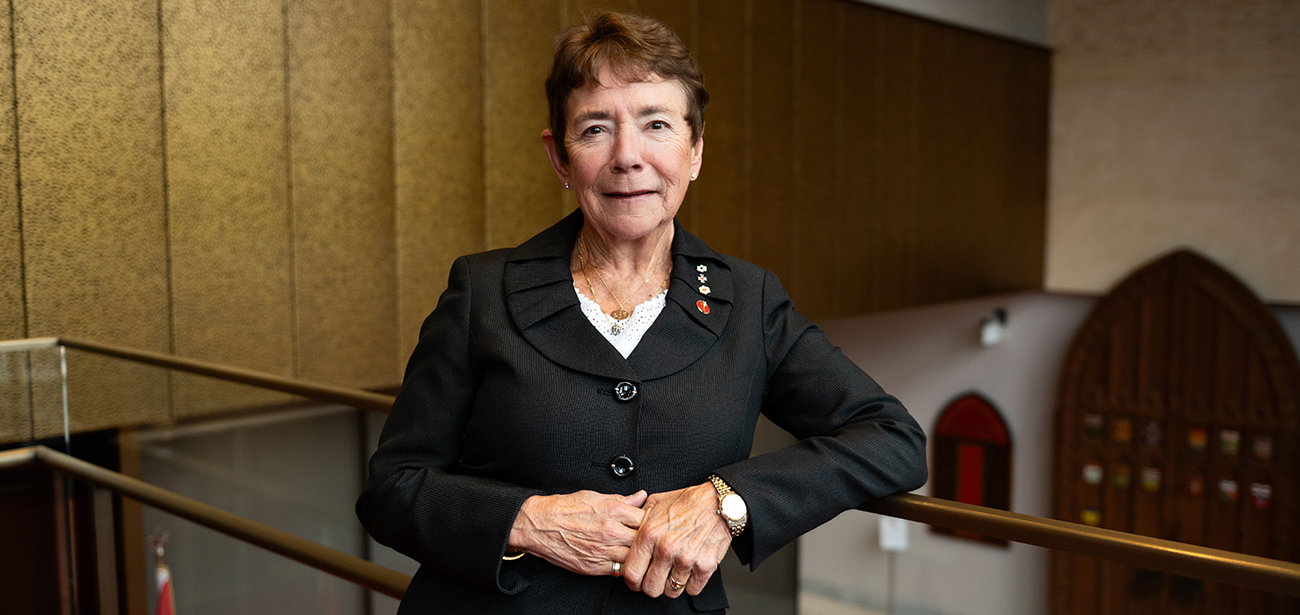
Senator Bev Busson blazed a trail from the lower ranks of the RCMP all the way up to the top.
In 1974, she was among the 32 women who joined Troop 17, the Mounties’ first group of female officers. She continued paving the way for women over a three-decade policing career — becoming the first female criminal operations officer, the first female commanding officer of a province and the first female deputy commissioner of a region — before taking the reins as head of the entire police force in 2006.
Her police work and leadership as RCMP Commissioner earned her a Senate seat in 2018. In the eight years since, she has served on the Senate Committee on Fisheries and Oceans and the Senate Committee on Ethics and Conflict of Interest for Senators, while also sponsoring government legislation related to sexual assault survivors.
As she prepares for retirement, Senator Busson reflects on a fulfilling career that took her from a red uniform to the Red Chamber.
You were a teacher in Nova Scotia when you decided to switch careers and join the RCMP. What made you decide to pursue policing?
In the 1970s, women didn’t have as many career paths available to them as they do now. It makes me sound old, but it’s true. Teaching and nursing were common careers for women, so I just accepted that I was going to be a teacher.
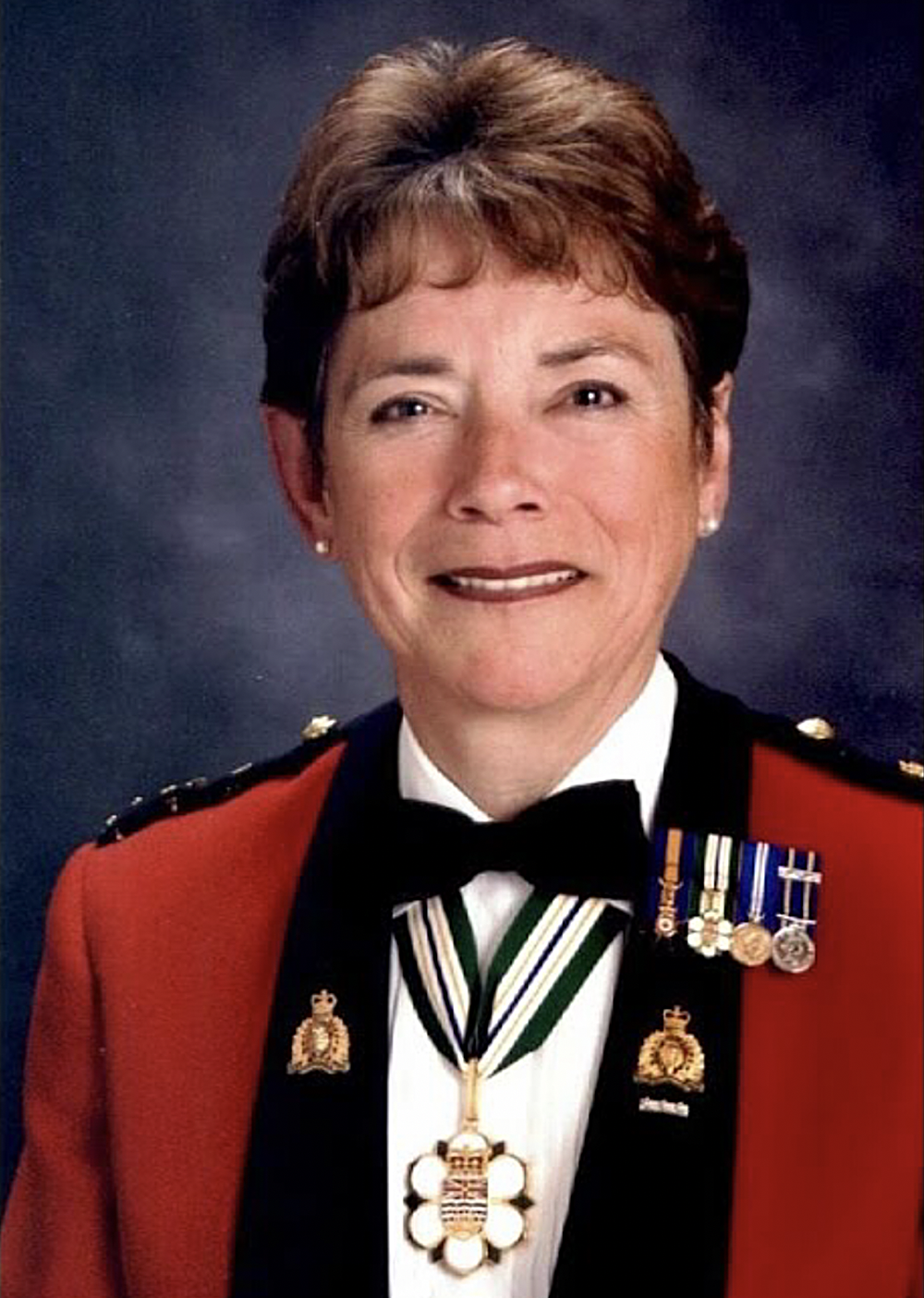 Bev Busson in RCMP uniform in E Division (British Columbia) in 1979. (Photo credit: RCMP Photo Archives)
The year I graduated from teachers’ college, I was driving to work when a flash bulletin came on the radio announcing that the RCMP was accepting women as regular members of the force. I was literally driving past the Dartmouth RCMP detachment, and I decided to pick up an application form. I’ve always had an adventurous spirit, and this was calling my name.
I submitted the application and I wrote the test the following week. I was on an airplane to Regina almost four months later — and the rest is history.
What does it mean to you to be considered a trailblazer for women in policing?
I don’t think any of us in that first female troop realized that this was such a huge paradigm shift. To me, I was just on this amazing adventure, and I had such respect for the RCMP. I couldn’t believe they picked me and I wanted to be the best police officer I could possibly be. It felt like destiny.
I never thought about trailblazing until we arrived in Regina and there were journalists everywhere, including at our phys-ed and firearms training. We didn’t want to be treated any differently, but our uniforms were working against us. We had to wear a skirt, a jacket and a pillbox hat. We looked more like flight attendants than police officers. And we carried our guns in a purse, if you can imagine. Thankfully, they changed that part of the uniform before we got out on the street.
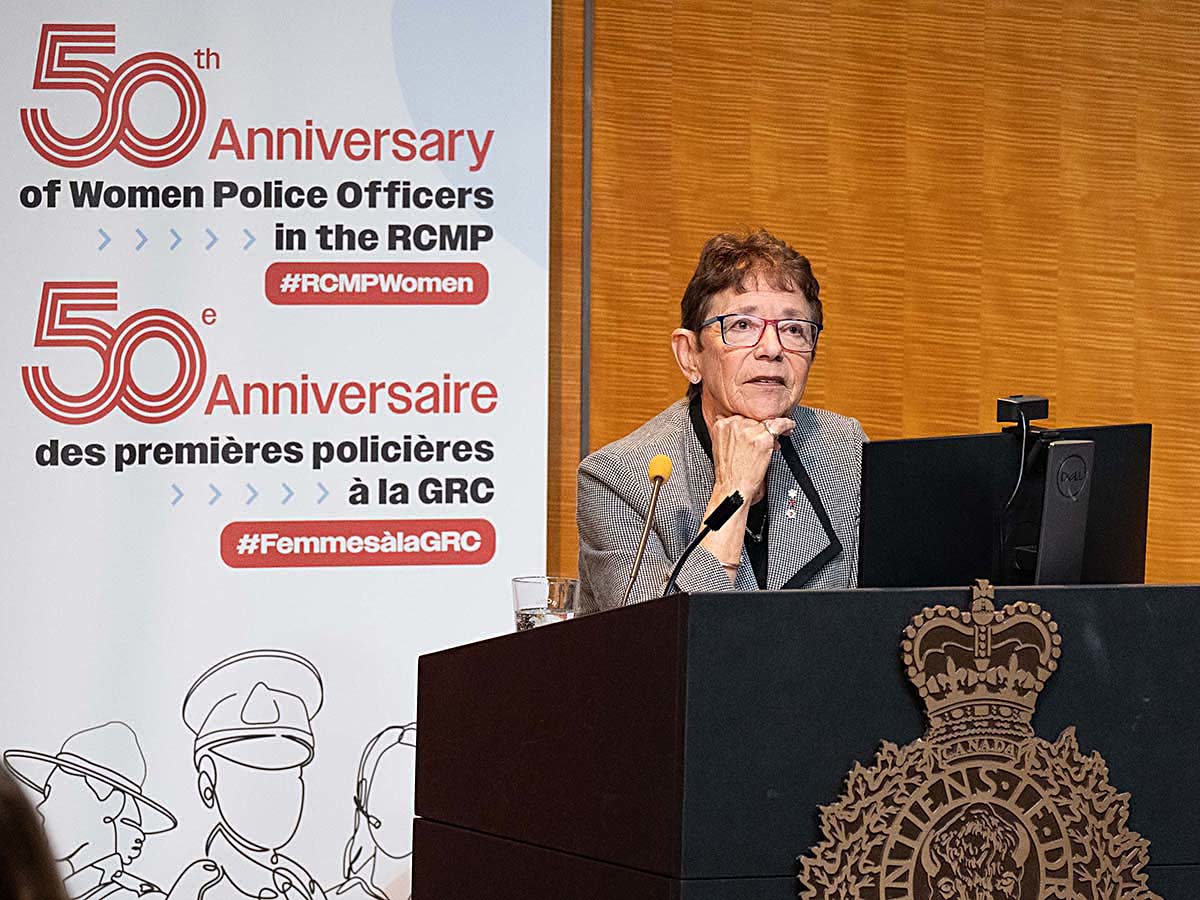 Senator Busson gives a speech in Ottawa to RCMP members from across the country to mark the 50th anniversary of women officers in the national police service. (Photo credit: Office of Senator Bev Busson)
That was my experience in the beginning, but I never looked back on my decision to join the RCMP. Even when it was tough, I persevered.
How have your policing, law and leadership experiences carried over to your work in the Senate?
As a police officer, you must treat everybody with respect, whether you’re dealing with a murderer or a victim. You must also be a good listener and exercise good judgment. You must be able to remove your personal perspective because if you prejudge an investigation, you could end up going in the wrong direction, so you need to keep an open mind.
Similarly, as a senator, you must be able to set aside what you think you know and believe to truly hear other people, especially in Chamber debates and in committees. I have found myself changing my mind on certain issues after listening to other perspectives. I think the key to success in the Senate is being able to respect everyone’s opinion, whether you agree or not.
You have served on several Senate committees. What committee work stands out to you?
I was very honoured to serve as deputy chair of the ethics committee. The Senate’s brand rests on the behaviour of the people within it. If a senator does something untoward, unprincipled or unethical, then it reflects on everybody. I saw myself as a guardian for senators and for the integrity of the institution.
I also appreciated my time on the fisheries and oceans committee. Canada’s fisheries are a national treasure, and I think our committee has done some amazing studies demonstrating this.
We worked to bring important issues to the attention of the federal government, such as the increasing population of seals around our coastlines and the potential for ocean carbon sequestration to achieve carbon neutrality targets.
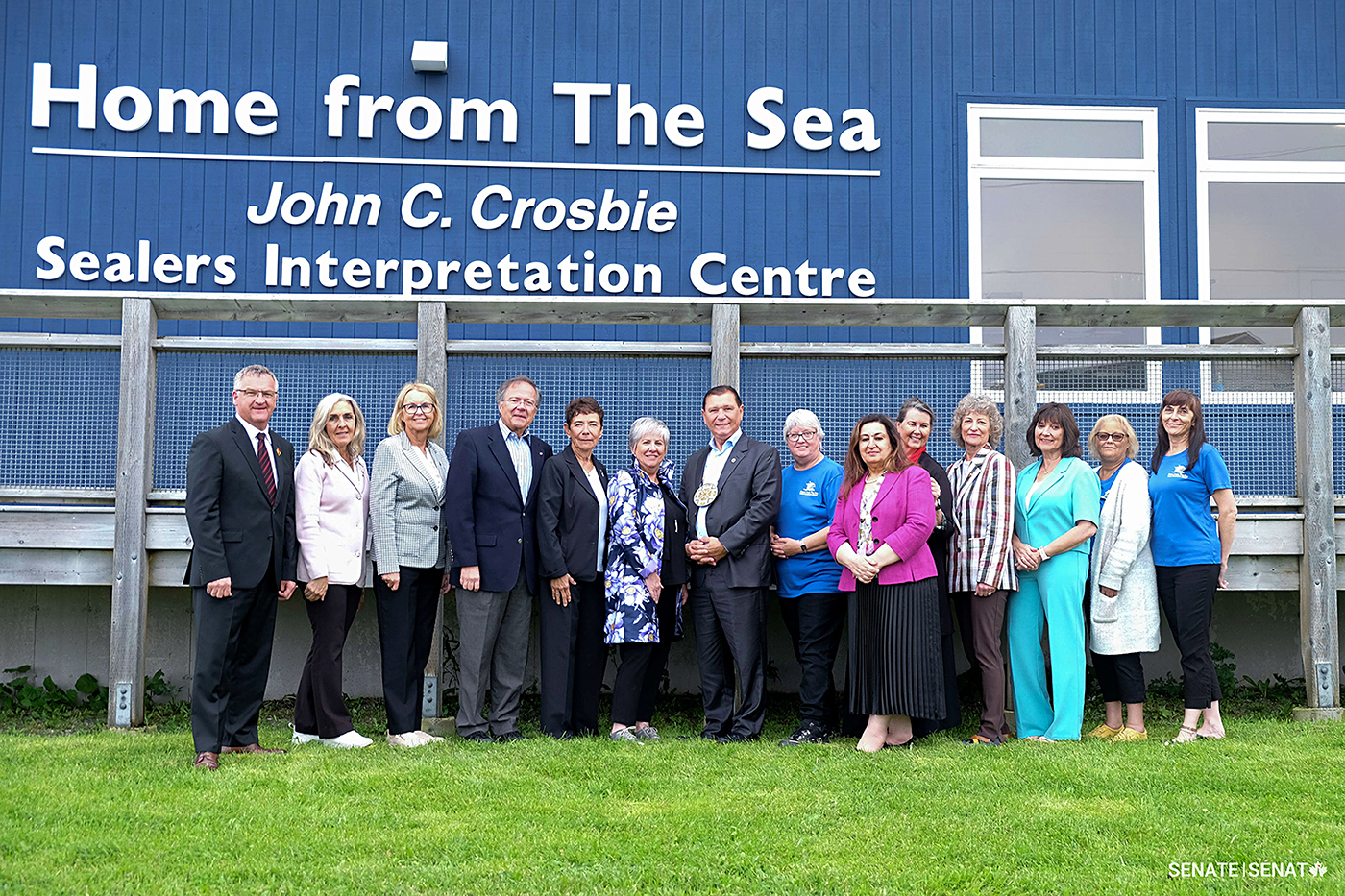 As deputy chair of the Senate Committee on Fisheries and Oceans, Senator Busson participates in a 2023 fact-finding mission to Newfoundland and Labrador for the committee’s study on Canada’s sealing industry.
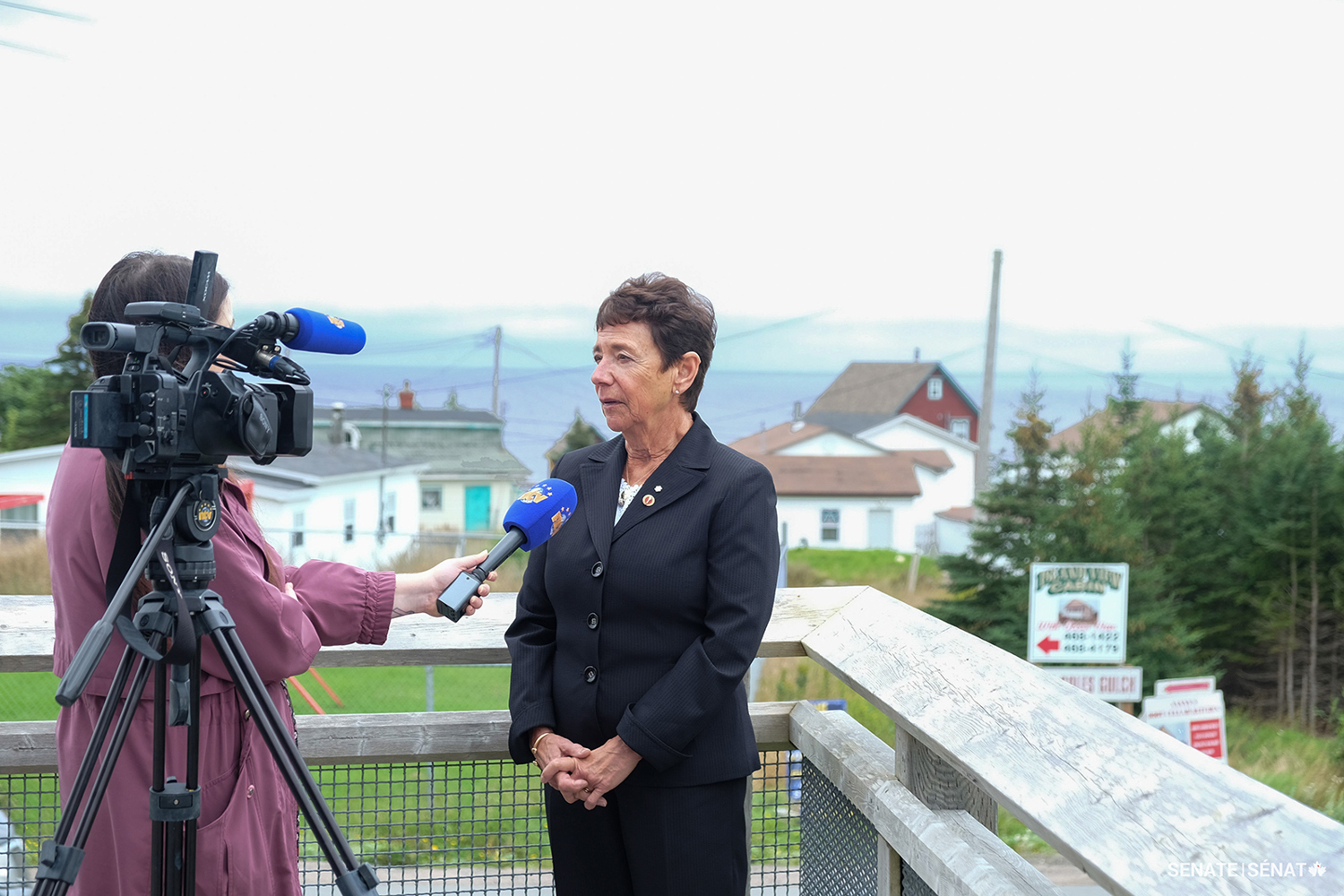 A reporter interviews Senator Busson about a Senate study on Canada’s sealing industry in Elliston, Newfoundland and Labrador in 2023.
What is your proudest moment as a senator?
I’m proud to have sponsored key legislation, including Bill S-12, which gives sexual assault survivors permission to have their names made public if they choose to do so. Many women wanted their names out there because they had nothing to be ashamed of; they had done nothing wrong.
I worked with many sexual assault survivors on this bill. Again, this goes back to my police training because I was already trauma informed. It was a privilege to work with the groups that wanted this to happen and to make sure that we got it right.
I’m also proud to have been able to bring my experience to the Senate, where I feel like I have added value to committees, bill studies and debates.
In your first speech in the Senate Chamber, you spoke about your mom’s role in the Canadian Women’s Army Corps. How did she influence your upbringing and your career path?
My mom grew up at a time when most women did what was expected of them, which was learn how to read and write, manage a bank account and raise children. She wanted me to have more choices. She never discouraged me from getting married, but she encouraged me to leave the path open for other decisions.
She always supported me throughout my career and encouraged me to be the best I could be in the RCMP. She told me it was important for leaders to interact with everyone and make sure they weren’t treated like a regimental number, but like they mattered. She kept me grounded.
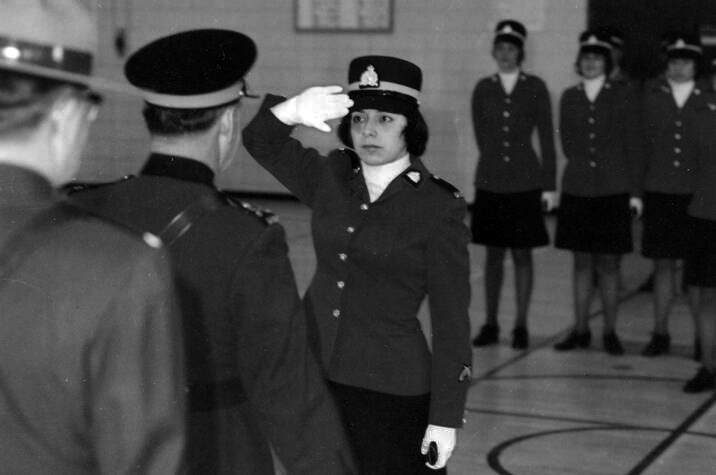 In Bev Busson’s early days with the RCMP, women were required to wear skirts as part of their uniform. Not pictured is the gun-toting purse, which was scrapped before the young female recruits started patrolling. (Photo credit : RCMP Gazette)
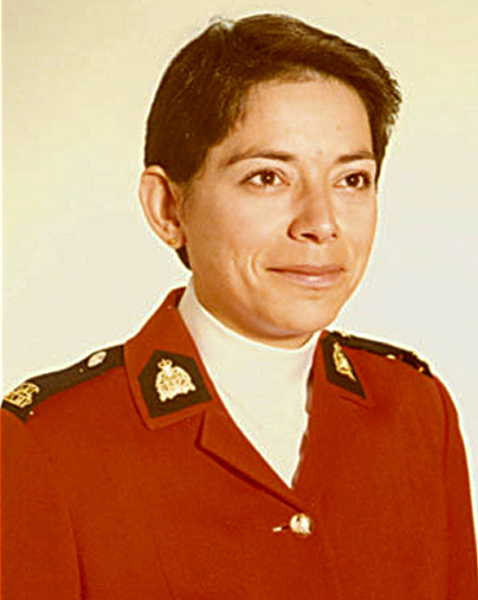 Bev Busson in RCMP uniform in E Division (British Columbia) in 1979. (Photo credit: RCMP Photo Archives)
You’re from Nova Scotia and your work with the RCMP has taken you across the country. What made you and your husband decide to finally settle in British Columbia?
My first RCMP posting was in Salmon Arm, a little mountain town in the middle of British Columbia about halfway between Vancouver and Calgary. This town treated me so well when I first arrived. People would ask to take my picture when I was writing them a ticket because they’d never seen a woman in a police car. I always said I wanted to retire in B.C.
I moved from Salmon Arm to Kelowna, where I transitioned from uniform policing to detective work. I would typically take on any investigation related to child abuse or sexual assault, partly because many girls and women would be traumatized at the thought of having to tell their story to a man. I earned a reputation as a good investigator, and then the RCMP offered me the opportunity to go to law school.
I studied law at the University of British Columbia and then transferred to Ottawa before moving back to B.C. From there, all my big career moves happened in the West. It’s also where my life and my friendships grew.
What are you planning to do next?
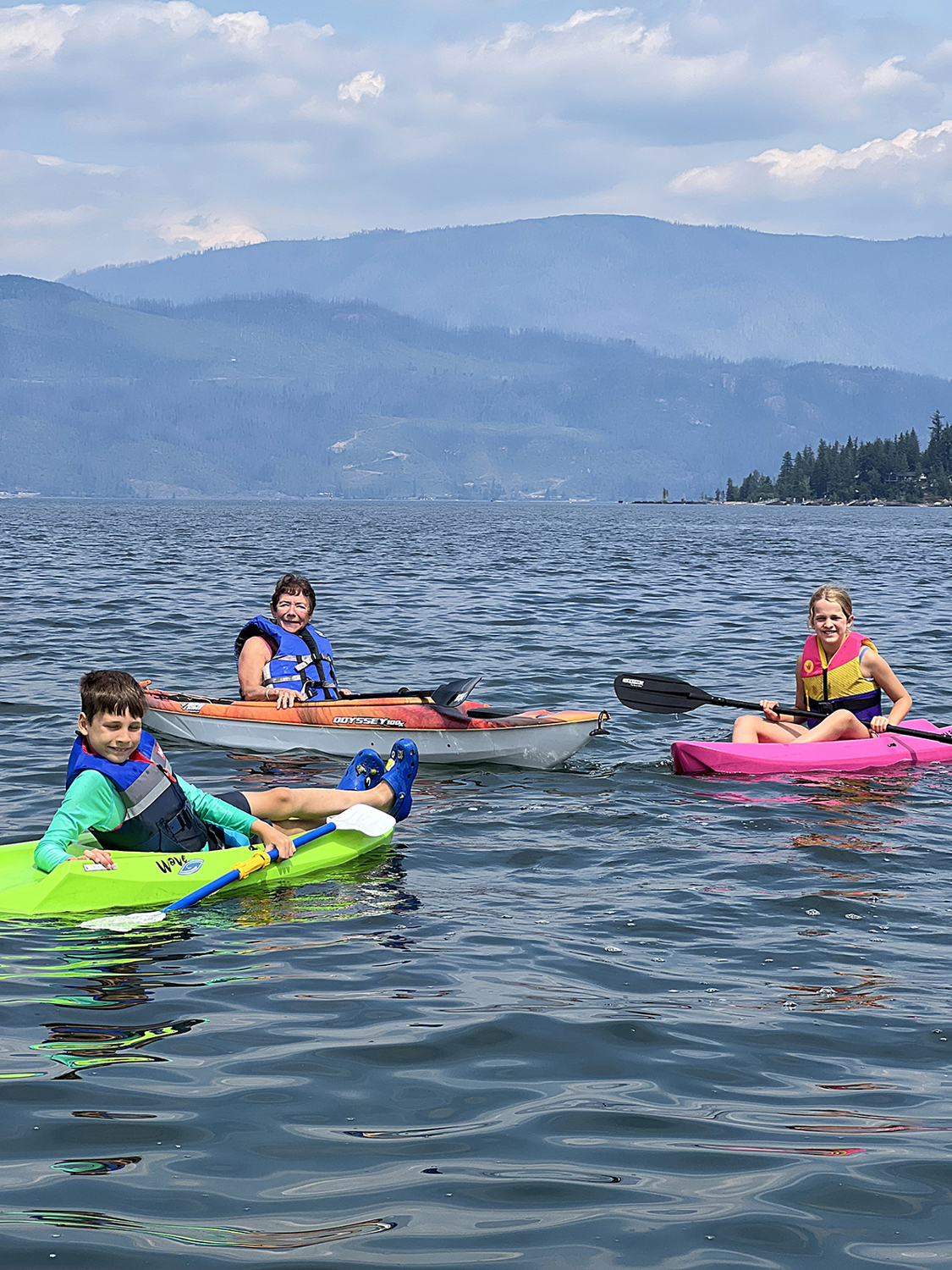 Senator Busson spends a summer day on Shuswap Lake with her grandchildren Jordynn and Ethan in 2026. (Photo credit: Office of Senator Bev Busson)
I’m looking for volunteer opportunities in the community. My dad was blind and I’m looking at getting involved with a local group that reads to the visually impaired. I also want to work with people in assisted living facilities and to continue volunteering with kids in school.
I am looking forward to spending more time with my husband, who is also a retired RCMP officer, and my family. I have four little grandchildren and they’re all in B.C. They think their grandmother is pretty cool.
Watch the tributes to Senator Bev Busson and her farewell speech in the Senate Chamber.
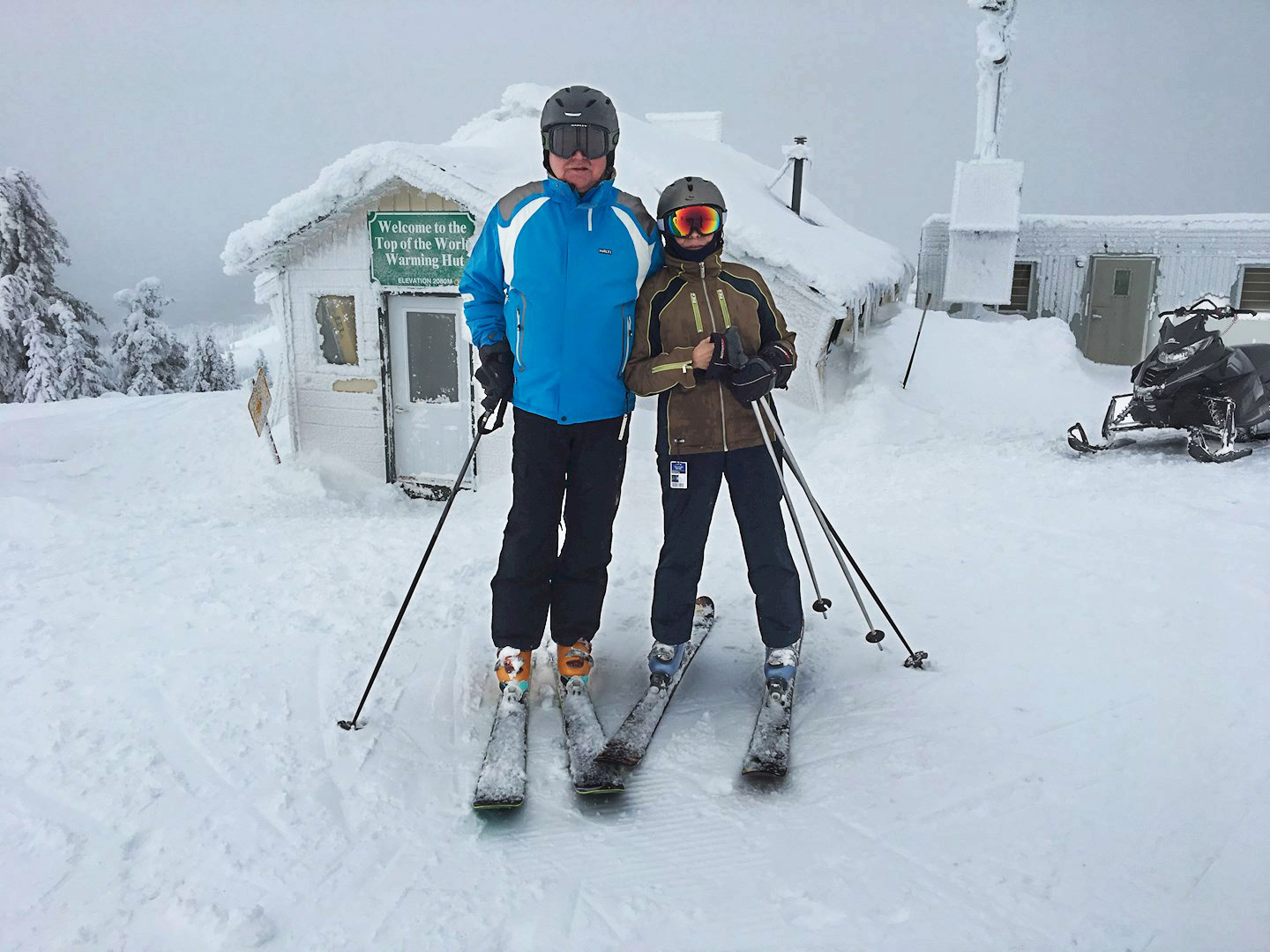 Skiing is one of Senator Busson’s favourite pastimes. She’s pictured here enjoying a day at Sun Peaks Resort in British Columbia with her husband Philip in 2021. (Photo credit: Office of Senator Bev Busson)
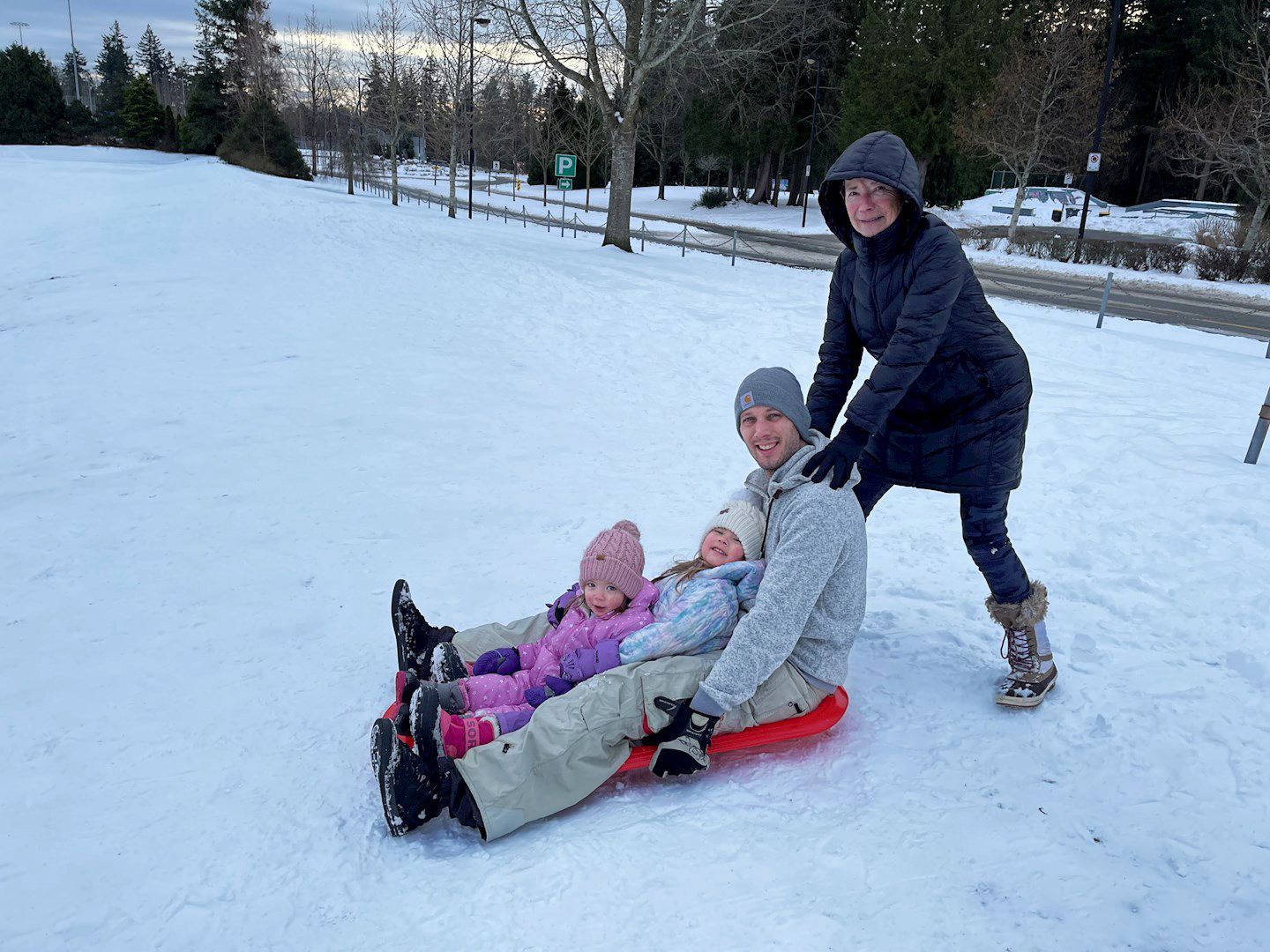 Senator Busson enjoys a snow day with her son Brent and granddaughters Brooklyn and Madison in 2022. (Photo credit: Office of Senator Bev Busson)
Related articles
Tags
Committee news
‘Treat everybody with respect’: Senator Busson, an RCMP trailblazer, retires from the Senate
Senator Bev Busson blazed a trail from the lower ranks of the RCMP all the way up to the top.
In 1974, she was among the 32 women who joined Troop 17, the Mounties’ first group of female officers. She continued paving the way for women over a three-decade policing career — becoming the first female criminal operations officer, the first female commanding officer of a province and the first female deputy commissioner of a region — before taking the reins as head of the entire police force in 2006.
Her police work and leadership as RCMP Commissioner earned her a Senate seat in 2018. In the eight years since, she has served on the Senate Committee on Fisheries and Oceans and the Senate Committee on Ethics and Conflict of Interest for Senators, while also sponsoring government legislation related to sexual assault survivors.
As she prepares for retirement, Senator Busson reflects on a fulfilling career that took her from a red uniform to the Red Chamber.
You were a teacher in Nova Scotia when you decided to switch careers and join the RCMP. What made you decide to pursue policing?
In the 1970s, women didn’t have as many career paths available to them as they do now. It makes me sound old, but it’s true. Teaching and nursing were common careers for women, so I just accepted that I was going to be a teacher.
Bev Busson in RCMP uniform in E Division (British Columbia) in 1979. (Photo credit: RCMP Photo Archives)
The year I graduated from teachers’ college, I was driving to work when a flash bulletin came on the radio announcing that the RCMP was accepting women as regular members of the force. I was literally driving past the Dartmouth RCMP detachment, and I decided to pick up an application form. I’ve always had an adventurous spirit, and this was calling my name.
I submitted the application and I wrote the test the following week. I was on an airplane to Regina almost four months later — and the rest is history.
What does it mean to you to be considered a trailblazer for women in policing?
I don’t think any of us in that first female troop realized that this was such a huge paradigm shift. To me, I was just on this amazing adventure, and I had such respect for the RCMP. I couldn’t believe they picked me and I wanted to be the best police officer I could possibly be. It felt like destiny.
I never thought about trailblazing until we arrived in Regina and there were journalists everywhere, including at our phys-ed and firearms training. We didn’t want to be treated any differently, but our uniforms were working against us. We had to wear a skirt, a jacket and a pillbox hat. We looked more like flight attendants than police officers. And we carried our guns in a purse, if you can imagine. Thankfully, they changed that part of the uniform before we got out on the street.
Senator Busson gives a speech in Ottawa to RCMP members from across the country to mark the 50th anniversary of women officers in the national police service. (Photo credit: Office of Senator Bev Busson)
That was my experience in the beginning, but I never looked back on my decision to join the RCMP. Even when it was tough, I persevered.
How have your policing, law and leadership experiences carried over to your work in the Senate?
As a police officer, you must treat everybody with respect, whether you’re dealing with a murderer or a victim. You must also be a good listener and exercise good judgment. You must be able to remove your personal perspective because if you prejudge an investigation, you could end up going in the wrong direction, so you need to keep an open mind.
Similarly, as a senator, you must be able to set aside what you think you know and believe to truly hear other people, especially in Chamber debates and in committees. I have found myself changing my mind on certain issues after listening to other perspectives. I think the key to success in the Senate is being able to respect everyone’s opinion, whether you agree or not.
You have served on several Senate committees. What committee work stands out to you?
I was very honoured to serve as deputy chair of the ethics committee. The Senate’s brand rests on the behaviour of the people within it. If a senator does something untoward, unprincipled or unethical, then it reflects on everybody. I saw myself as a guardian for senators and for the integrity of the institution.
I also appreciated my time on the fisheries and oceans committee. Canada’s fisheries are a national treasure, and I think our committee has done some amazing studies demonstrating this.
We worked to bring important issues to the attention of the federal government, such as the increasing population of seals around our coastlines and the potential for ocean carbon sequestration to achieve carbon neutrality targets.
As deputy chair of the Senate Committee on Fisheries and Oceans, Senator Busson participates in a 2023 fact-finding mission to Newfoundland and Labrador for the committee’s study on Canada’s sealing industry.
A reporter interviews Senator Busson about a Senate study on Canada’s sealing industry in Elliston, Newfoundland and Labrador in 2023.
What is your proudest moment as a senator?
I’m proud to have sponsored key legislation, including Bill S-12, which gives sexual assault survivors permission to have their names made public if they choose to do so. Many women wanted their names out there because they had nothing to be ashamed of; they had done nothing wrong.
I worked with many sexual assault survivors on this bill. Again, this goes back to my police training because I was already trauma informed. It was a privilege to work with the groups that wanted this to happen and to make sure that we got it right.
I’m also proud to have been able to bring my experience to the Senate, where I feel like I have added value to committees, bill studies and debates.
In your first speech in the Senate Chamber, you spoke about your mom’s role in the Canadian Women’s Army Corps. How did she influence your upbringing and your career path?
My mom grew up at a time when most women did what was expected of them, which was learn how to read and write, manage a bank account and raise children. She wanted me to have more choices. She never discouraged me from getting married, but she encouraged me to leave the path open for other decisions.
She always supported me throughout my career and encouraged me to be the best I could be in the RCMP. She told me it was important for leaders to interact with everyone and make sure they weren’t treated like a regimental number, but like they mattered. She kept me grounded.
In Bev Busson’s early days with the RCMP, women were required to wear skirts as part of their uniform. Not pictured is the gun-toting purse, which was scrapped before the young female recruits started patrolling. (Photo credit : RCMP Gazette)
Bev Busson in RCMP uniform in E Division (British Columbia) in 1979. (Photo credit: RCMP Photo Archives)
You’re from Nova Scotia and your work with the RCMP has taken you across the country. What made you and your husband decide to finally settle in British Columbia?
My first RCMP posting was in Salmon Arm, a little mountain town in the middle of British Columbia about halfway between Vancouver and Calgary. This town treated me so well when I first arrived. People would ask to take my picture when I was writing them a ticket because they’d never seen a woman in a police car. I always said I wanted to retire in B.C.
I moved from Salmon Arm to Kelowna, where I transitioned from uniform policing to detective work. I would typically take on any investigation related to child abuse or sexual assault, partly because many girls and women would be traumatized at the thought of having to tell their story to a man. I earned a reputation as a good investigator, and then the RCMP offered me the opportunity to go to law school.
I studied law at the University of British Columbia and then transferred to Ottawa before moving back to B.C. From there, all my big career moves happened in the West. It’s also where my life and my friendships grew.
What are you planning to do next?
Senator Busson spends a summer day on Shuswap Lake with her grandchildren Jordynn and Ethan in 2026. (Photo credit: Office of Senator Bev Busson)
I’m looking for volunteer opportunities in the community. My dad was blind and I’m looking at getting involved with a local group that reads to the visually impaired. I also want to work with people in assisted living facilities and to continue volunteering with kids in school.
I am looking forward to spending more time with my husband, who is also a retired RCMP officer, and my family. I have four little grandchildren and they’re all in B.C. They think their grandmother is pretty cool.
Watch the tributes to Senator Bev Busson and her farewell speech in the Senate Chamber.
Skiing is one of Senator Busson’s favourite pastimes. She’s pictured here enjoying a day at Sun Peaks Resort in British Columbia with her husband Philip in 2021. (Photo credit: Office of Senator Bev Busson)
Senator Busson enjoys a snow day with her son Brent and granddaughters Brooklyn and Madison in 2022. (Photo credit: Office of Senator Bev Busson)