

‘My love of country’: Senator Kutcher reflects on a career in public service and mental health work
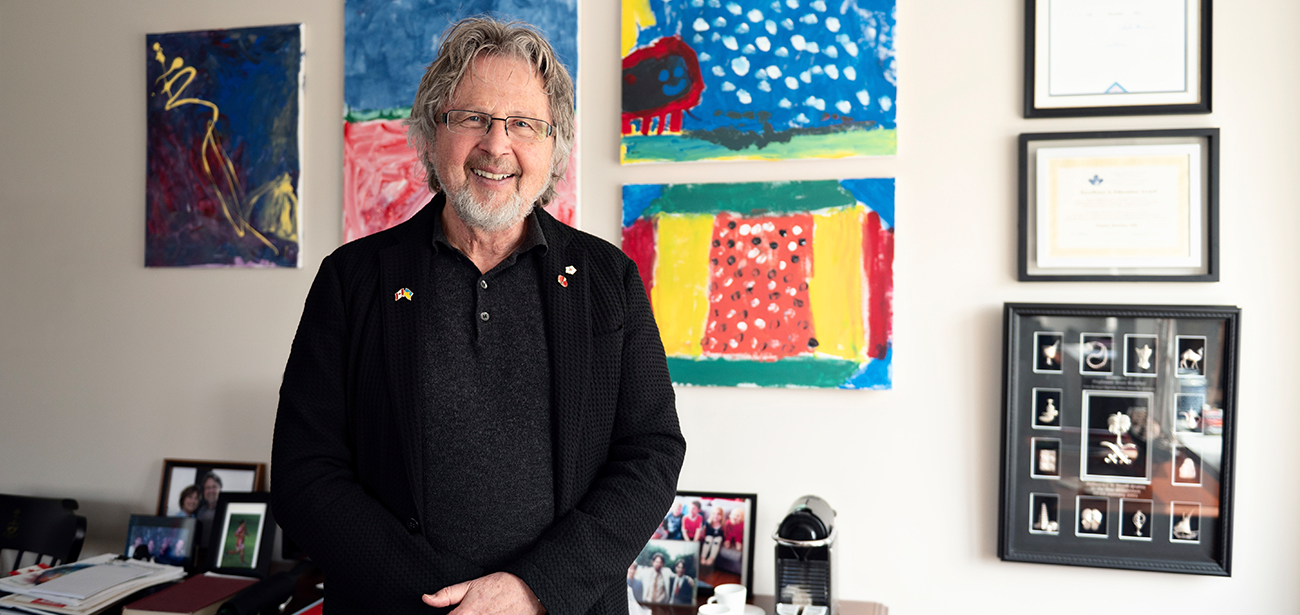
A leading youth mental health expert and vocal advocate for Ukrainians, Senator Stan Kutcher spent his final days as a parliamentarian observing firsthand how Ukraine is dealing with the Russian invasion.
The Nova Scotia senator spent almost two weeks travelling between Kyiv and Lviv to better understand the country’s ongoing challenges and to help build an educational program for youth-facing mental health professionals.
Ahead of his retirement on May 24, 2026, Senator Kutcher reflected on his time in Ukraine, his work fighting disinformation and his family’s dedication to public service.
What more can you share about your experience in Ukraine?
The resilience of the Ukrainian people is unbelievable. I got used to regular alerts warning people to take cover from drones or missiles. Thank God none of them hit my locations, but it’s a normal part of the day there. People walk down the street and suddenly their alarms go off. They look at their apps to determine where the drones are going and then they either take cover, or they go about their business.
I visited an organization that rescues and treats soldiers wounded in battle. I sat with a fellow who spent a half hour trying to move a Jenga block with a prosthetic arm until he finally succeeded. It was amazing. I also visited a Ukrainian centre that deals with disinformation. The Senate Committee on National Security, Defence and Veterans Affairs was completing a study on Russian disinformation, so I was able to gain a better understanding of how Ukraine tackles this issue.
I was honoured to receive Ukraine’s Order of Merit, Third Degree, and I met members of my own Ukrainian family, which was lovely. I not only met senior government officials and mental health professionals, but I had the opportunity to interact with everyday people, including cab drivers, shop workers and people on the streets. I think this experience overall gave me a deeper understanding of the issues facing Ukraine, which I can use to help inform the government.
Your Bill S-210 would designate the month of September as Ukrainian Heritage Month. Why would you like to see Canada’s Ukrainian population honoured in this way?
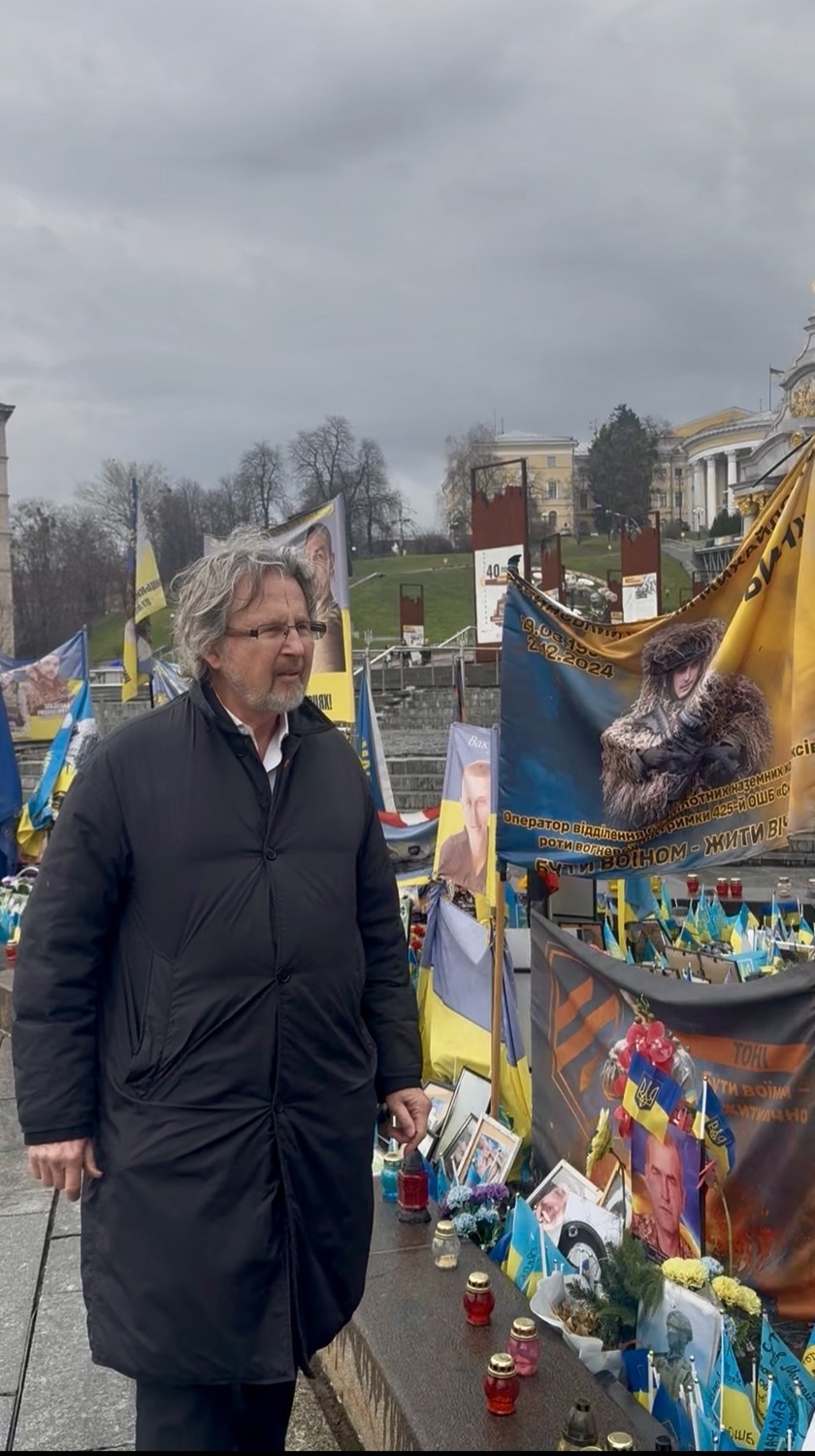 Senator Stan Kutcher tours a memorial for Ukrainian soldiers at the Maidan Nezalezhnosti in Kyiv during a visit to Ukraine from March 30 to April 7, 2026. (Photo credit: Office of Senator Stan Kutcher)
Canada is home to 1.5 million Ukrainian Canadians and even though they’ve been instrumental in developing this country, there’s no formal recognition of their contribution.
We have several of these designations for different cultures and I think they help raise awareness that Canada is a multicultural country. We are at our best when we respect and honour everyone’s culture.
You mentioned the recent report on Russian disinformation. What was your key takeaway from this study?
If all we’re doing is playing defence against disinformation, then we’re never going to win. We must also play offence. We must figure out how to stop, shut down or diminish the flow of disinformation from Russia to Canada. We know that disinformation is spread through Russian bot farms that monitor social media. We also know that Russia pays people to spread propaganda and that many people see their identities in Russian disinformation, such as those who align with the anti-vaccine movement. The rise of this movement is what motivated me to launch ScienceUpFirst with academic Tim Caulfield to counter misinformation in science and health.
It takes a lot of work to combat Russian disinformation, but hopefully the Senate committee’s report findings will help Canada create a strategy.
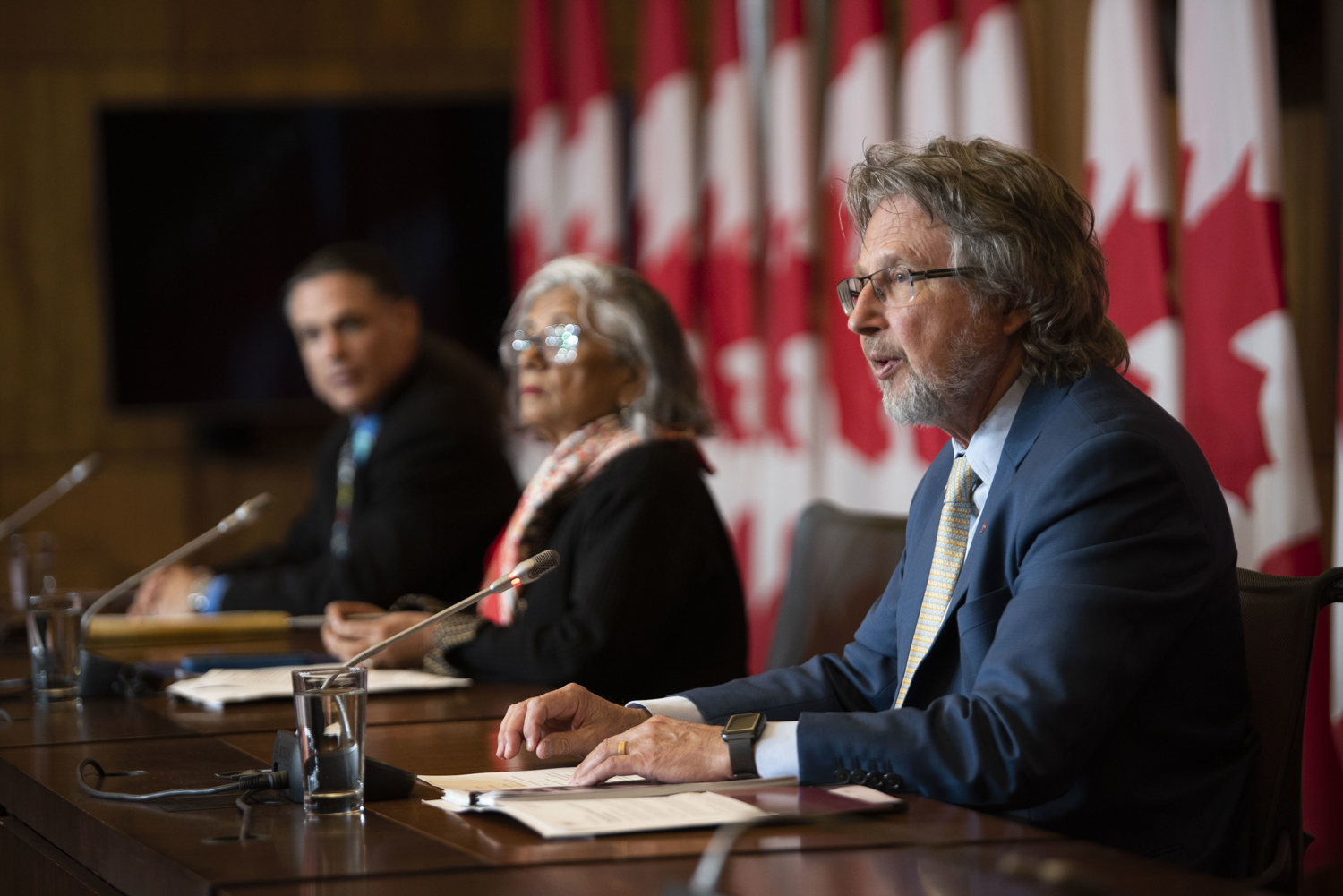 Senator Kutcher, right, speaks to reporters during a press conference to launch the Senate Committee on Social Affairs, Science and Technology’s report on suicide prevention alongside former senator Ratna Omidvar and Senator Patrick Brazeau.
 Alongside Senator Kim Pate, centre, Senator Kutcher speaks about his experience as a mental health leader at the Conference Board of Canada’s Mental Health in the Capital 2019 event in Ottawa.
You have advocated for Canada to do more to attract and retain talent in science, medicine and research. What should the federal government do to achieve this?
For many years now, I’ve been asking for a “double-double” — you can’t get any more Canadian than a double-double — which is to double funding for Canada’s research funding agencies and double scholarships for doctoral and postdoc researchers.
I think governments should do more to support discovery-based research, which doesn’t always lead to the development of new products, but it leads to greater understanding. For example, if we learn how neurons communicate with each other, that may or may not have a commercial value down the road; it may lead to the development of a new medicine or a new therapeutic intervention, but it may not. Instead, it may just teach us how the brain works, which is still useful knowledge.
You were behind the Senate Committee on Social Affairs, Science and Technology’s report on suicide prevention. What inspired this study?
I was aghast at Canada’s Suicide Prevention Framework because it was not evidence-based, and it was full of feel-good messaging. It was not preventing suicide in the country, as evidenced by the stagnant suicide rates.
I had been trying to get the Public Health Agency of Canada to move towards an evidence-based approach, but I was unsuccessful. I decided to bring a motion before the Senate to initiate a study on Canada’s suicide prevention framework. The social affairs committee did a thorough study and brought in the best experts to answer questions on the issue. As a result, the federal government created a suicide prevention action plan, which was a significant improvement.
You have also called for the federal government to expand medical assistance in dying eligibility for people suffering solely from mental illness. Why do you think this is important?
Medical assistance in dying legislation resulted from the Carter v. Canada Supreme Court decision. This decision did not exclude people with mental illness; it was the government that excluded people with mental illness through Bill C-7. I feel that this bill re-stigmatizes people with mental illness and infringes on the Charter of Rights and Freedoms.
This issue has polarized Canadians, and the way that the government has approached this through the Special Joint Committee on Medical Assistance in Dying has only increased polarization. Those most affected by this legislation have not been listened to. Instead, people with strong opinions are fighting each other. I’m afraid this issue will not be resolved politically and will need to go back to the Supreme Court.
Public service clearly runs in your family, given that your son, Dan Kutcher, is the mayor of Summerside, P.E.I. What has it meant to you to see him step into public life?
I’m very proud of what he’s done. He’s working to solve the housing problem and champion clean energy in the city. He has a higher profile because he’s in the public eye, but all three of my kids have chosen public service in their own way. Our daughter Leah is a lawyer who serves as legal counsel for the Nova Scotia Teachers Union. Our other son Matt is both a lawyer and a doctor who practises medicine on Prince Edward Island. I’m very pleased that all our kids chose professions that improve the public good.
Is this something you deliberately tried to teach them growing up?
I think they learned it by osmosis. My wife was a social worker and a teacher who spent time working with NGOs and immigrants.
My parents are both refugees from Ukraine who lived through horrors before coming here and finding refuge. They loved Canada with every breath. This country gave them opportunity after they lost everything. I got my love of country from them.
You’ve said you’re retiring early for health reasons. How did you come to the decision that it was the right time?
I was struggling with health issues, which resulted in neuropathic pain that made it difficult to do my job properly. It was a very difficult decision because I loved serving in the Senate. I loved the challenges and going down rabbit holes on different topics. I never learned so much about lobster, oysters or ocean currents until I sat on the Senate Committee on Fisheries and Oceans.
The Senate is going through a necessary evolution. I don’t know how it’s going to end up, and I wish I could be part of it. I ultimately see the Senate’s main role as defending the Charter of Rights and Freedoms and ensuring that the tyranny of the majority does not deter us from protecting the rights of minorities.
Watch the tributes to Senator Stan Kutcher and his farewell speech in the Senate Chamber.
Learn more about Senator Kutcher in this article.
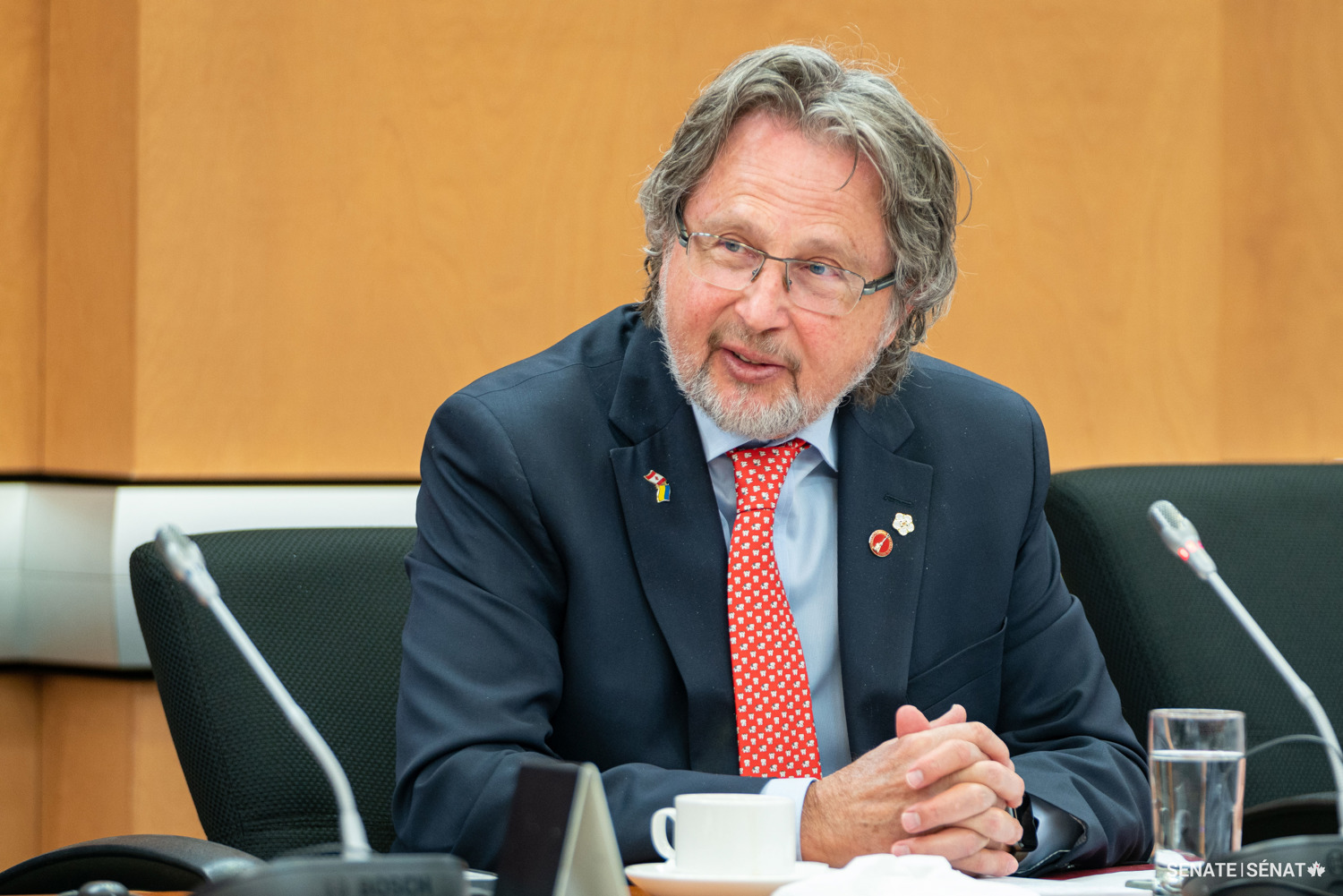 Senator Kutcher speaks during a Senate Committee on Fisheries and Oceans meeting in 2023.
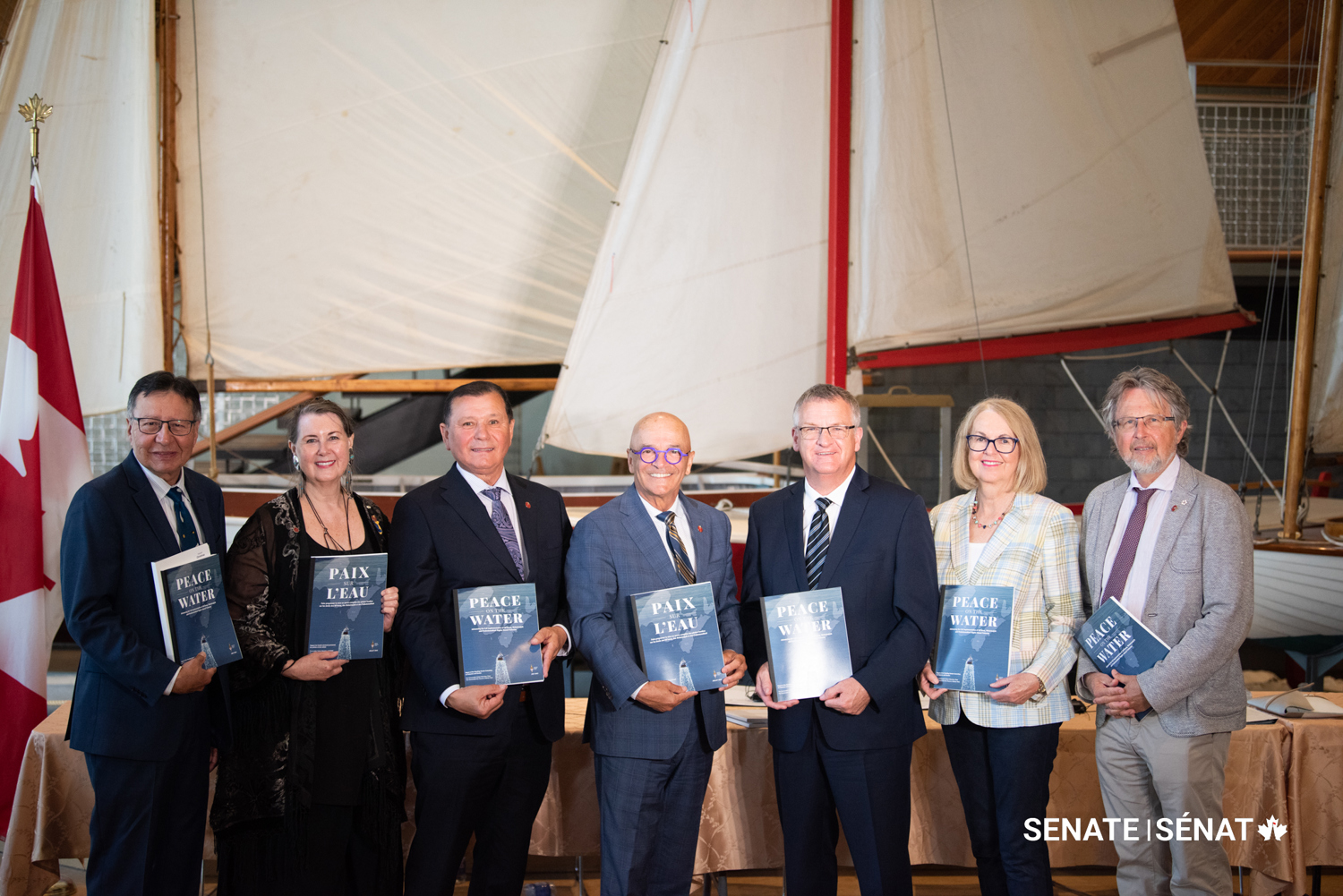 Senator Kutcher joins, from left, then-senator Dan Christmas, senators Marilou McPhedran, Brian Francis, René Cormier, Fabian Manning and then-senator Jane Cordy at a press conference at the Maritime Museum of the Atlantic in Halifax to launch the Senate Committee on Fisheries and Oceans’ report on Indigenous rights-based fisheries in 2022.
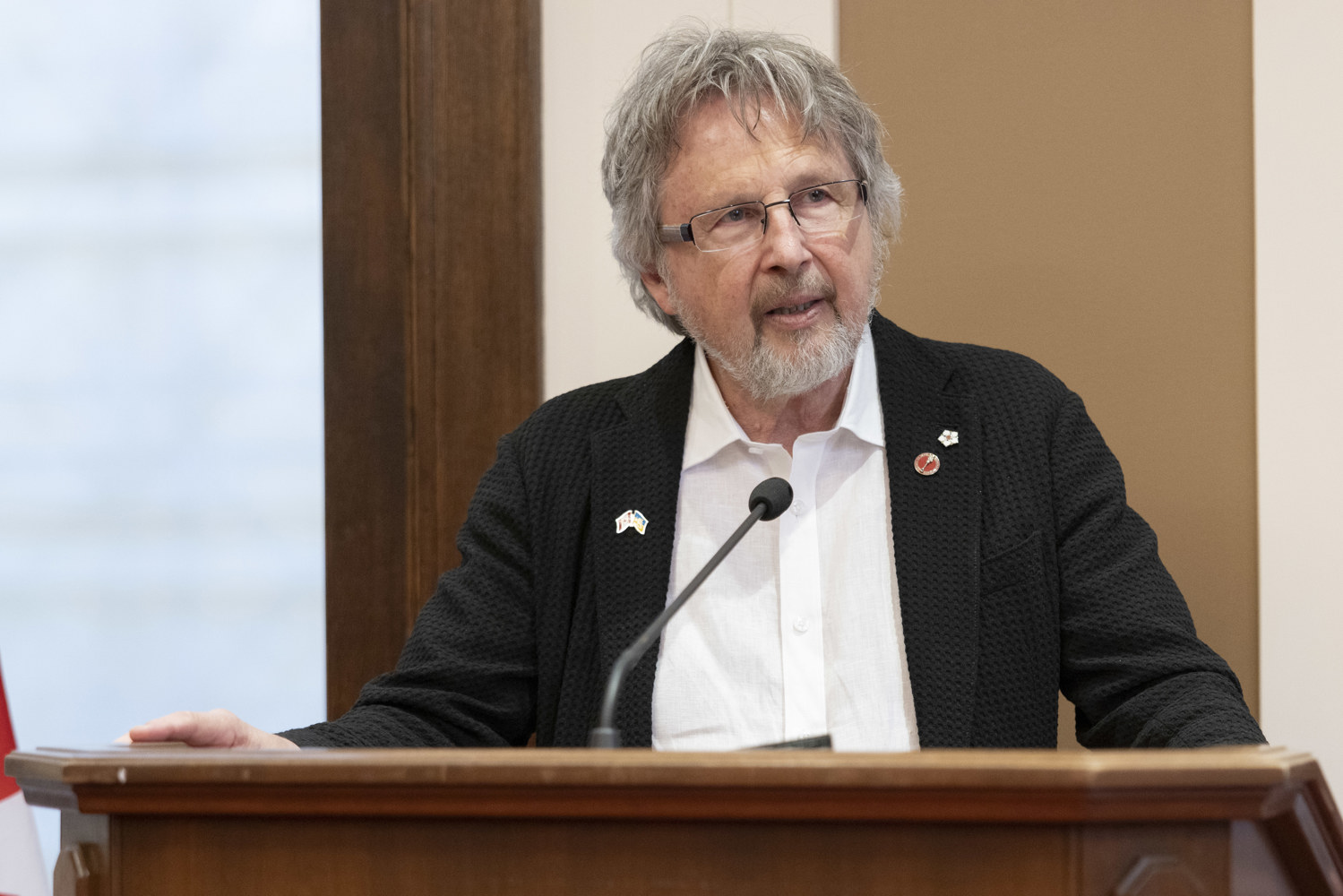 Senator Kutcher speaks during a retirement reception, hosted by the Speaker of the Senate, on his last day on Parliament Hill on May 7, 2026. (Photo credit: Office of Senator Stan Kutcher)
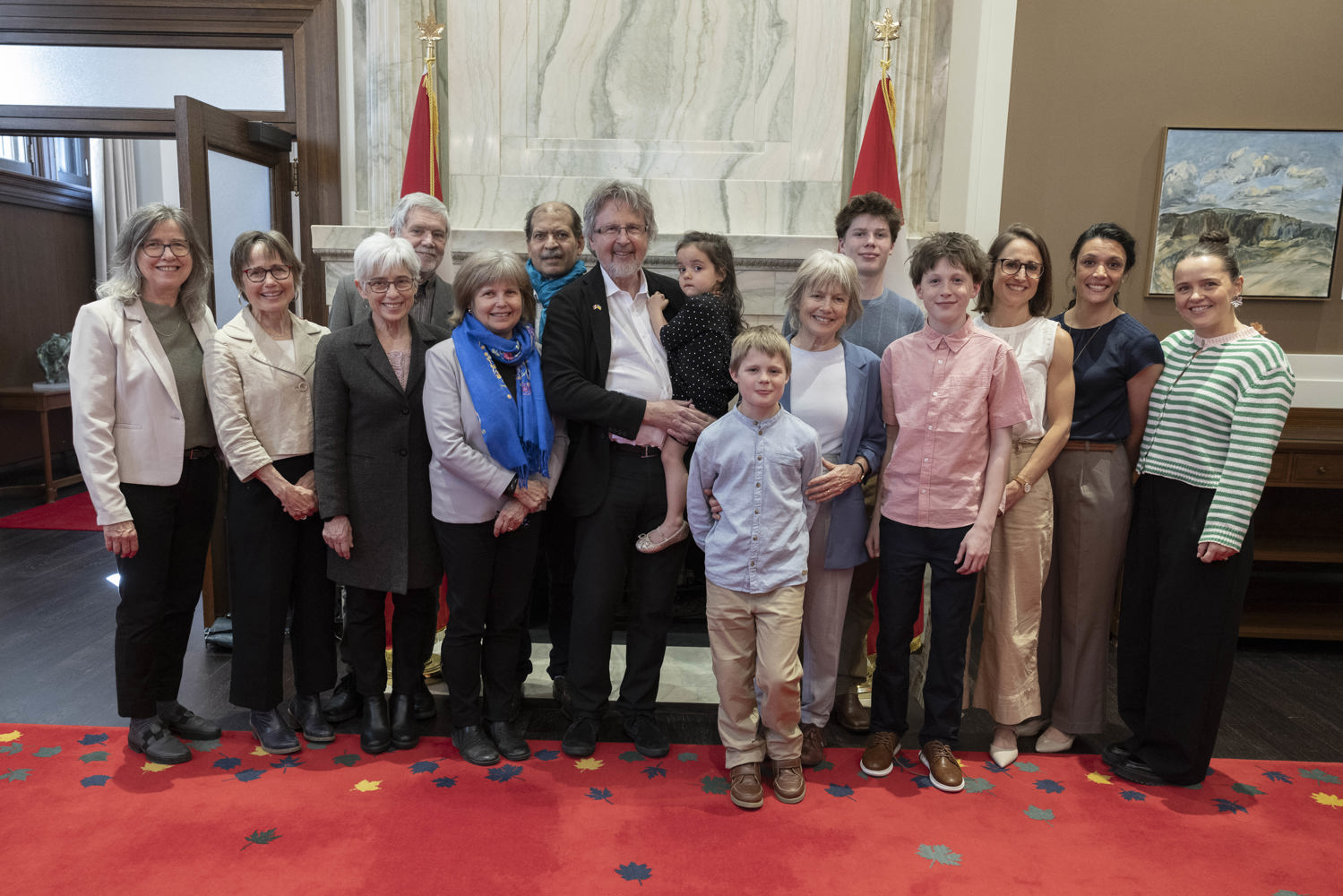 Senator Kutcher with members of his family, including his wife Jan Sheppard Kutcher, fifth from right, his daughter Leah, third from right, her spouse Nadia, second from right and four of his grandchildren.
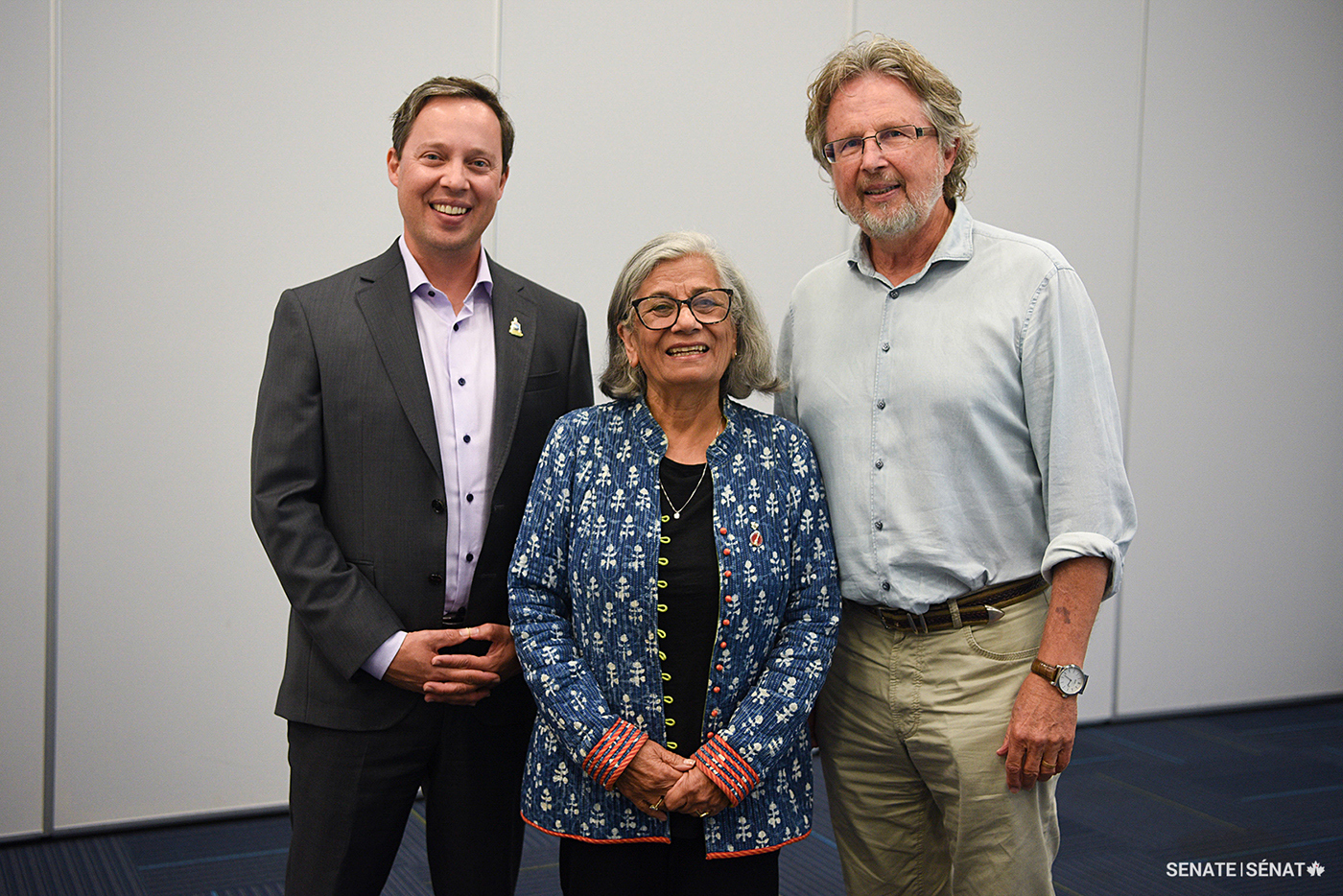 During the Senate Committee on Social Affairs, Science and Technology’s fact-finding mission to Prince Edward Island for a report on Canada’s migrant labour system in 2023, Senator Kutcher met with his son, Summerside Mayor Dan Kutcher. Also pictured is then-senator Omidvar, who was the committee chair.
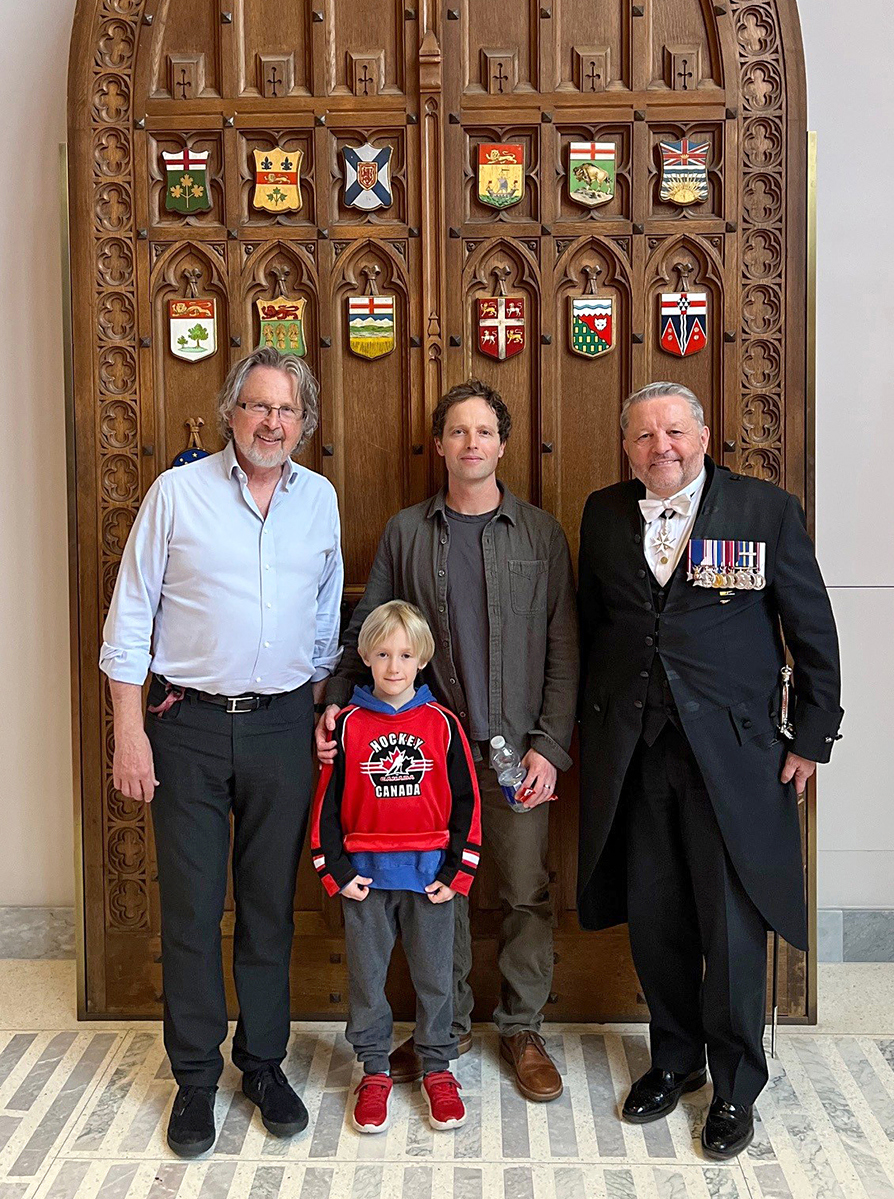 Senator Kutcher joins son Matt, grandson Sebastian and Usher of the Black Rod J. Greg Peters for a photo in front of the original Senate antechamber doors in the Senate of Canada Building. (Photo credit: Office of Senator Stan Kutcher)
Related articles
Tags
Committee news
‘My love of country’: Senator Kutcher reflects on a career in public service and mental health work
A leading youth mental health expert and vocal advocate for Ukrainians, Senator Stan Kutcher spent his final days as a parliamentarian observing firsthand how Ukraine is dealing with the Russian invasion.
The Nova Scotia senator spent almost two weeks travelling between Kyiv and Lviv to better understand the country’s ongoing challenges and to help build an educational program for youth-facing mental health professionals.
Ahead of his retirement on May 24, 2026, Senator Kutcher reflected on his time in Ukraine, his work fighting disinformation and his family’s dedication to public service.
What more can you share about your experience in Ukraine?
The resilience of the Ukrainian people is unbelievable. I got used to regular alerts warning people to take cover from drones or missiles. Thank God none of them hit my locations, but it’s a normal part of the day there. People walk down the street and suddenly their alarms go off. They look at their apps to determine where the drones are going and then they either take cover, or they go about their business.
I visited an organization that rescues and treats soldiers wounded in battle. I sat with a fellow who spent a half hour trying to move a Jenga block with a prosthetic arm until he finally succeeded. It was amazing. I also visited a Ukrainian centre that deals with disinformation. The Senate Committee on National Security, Defence and Veterans Affairs was completing a study on Russian disinformation, so I was able to gain a better understanding of how Ukraine tackles this issue.
I was honoured to receive Ukraine’s Order of Merit, Third Degree, and I met members of my own Ukrainian family, which was lovely. I not only met senior government officials and mental health professionals, but I had the opportunity to interact with everyday people, including cab drivers, shop workers and people on the streets. I think this experience overall gave me a deeper understanding of the issues facing Ukraine, which I can use to help inform the government.
Your Bill S-210 would designate the month of September as Ukrainian Heritage Month. Why would you like to see Canada’s Ukrainian population honoured in this way?
Senator Stan Kutcher tours a memorial for Ukrainian soldiers at the Maidan Nezalezhnosti in Kyiv during a visit to Ukraine from March 30 to April 7, 2026. (Photo credit: Office of Senator Stan Kutcher)
Canada is home to 1.5 million Ukrainian Canadians and even though they’ve been instrumental in developing this country, there’s no formal recognition of their contribution.
We have several of these designations for different cultures and I think they help raise awareness that Canada is a multicultural country. We are at our best when we respect and honour everyone’s culture.
You mentioned the recent report on Russian disinformation. What was your key takeaway from this study?
If all we’re doing is playing defence against disinformation, then we’re never going to win. We must also play offence. We must figure out how to stop, shut down or diminish the flow of disinformation from Russia to Canada. We know that disinformation is spread through Russian bot farms that monitor social media. We also know that Russia pays people to spread propaganda and that many people see their identities in Russian disinformation, such as those who align with the anti-vaccine movement. The rise of this movement is what motivated me to launch ScienceUpFirst with academic Tim Caulfield to counter misinformation in science and health.
It takes a lot of work to combat Russian disinformation, but hopefully the Senate committee’s report findings will help Canada create a strategy.
Senator Kutcher, right, speaks to reporters during a press conference to launch the Senate Committee on Social Affairs, Science and Technology’s report on suicide prevention alongside former senator Ratna Omidvar and Senator Patrick Brazeau.
Alongside Senator Kim Pate, centre, Senator Kutcher speaks about his experience as a mental health leader at the Conference Board of Canada’s Mental Health in the Capital 2019 event in Ottawa.
You have advocated for Canada to do more to attract and retain talent in science, medicine and research. What should the federal government do to achieve this?
For many years now, I’ve been asking for a “double-double” — you can’t get any more Canadian than a double-double — which is to double funding for Canada’s research funding agencies and double scholarships for doctoral and postdoc researchers.
I think governments should do more to support discovery-based research, which doesn’t always lead to the development of new products, but it leads to greater understanding. For example, if we learn how neurons communicate with each other, that may or may not have a commercial value down the road; it may lead to the development of a new medicine or a new therapeutic intervention, but it may not. Instead, it may just teach us how the brain works, which is still useful knowledge.
You were behind the Senate Committee on Social Affairs, Science and Technology’s report on suicide prevention. What inspired this study?
I was aghast at Canada’s Suicide Prevention Framework because it was not evidence-based, and it was full of feel-good messaging. It was not preventing suicide in the country, as evidenced by the stagnant suicide rates.
I had been trying to get the Public Health Agency of Canada to move towards an evidence-based approach, but I was unsuccessful. I decided to bring a motion before the Senate to initiate a study on Canada’s suicide prevention framework. The social affairs committee did a thorough study and brought in the best experts to answer questions on the issue. As a result, the federal government created a suicide prevention action plan, which was a significant improvement.
You have also called for the federal government to expand medical assistance in dying eligibility for people suffering solely from mental illness. Why do you think this is important?
Medical assistance in dying legislation resulted from the Carter v. Canada Supreme Court decision. This decision did not exclude people with mental illness; it was the government that excluded people with mental illness through Bill C-7. I feel that this bill re-stigmatizes people with mental illness and infringes on the Charter of Rights and Freedoms.
This issue has polarized Canadians, and the way that the government has approached this through the Special Joint Committee on Medical Assistance in Dying has only increased polarization. Those most affected by this legislation have not been listened to. Instead, people with strong opinions are fighting each other. I’m afraid this issue will not be resolved politically and will need to go back to the Supreme Court.
Public service clearly runs in your family, given that your son, Dan Kutcher, is the mayor of Summerside, P.E.I. What has it meant to you to see him step into public life?
I’m very proud of what he’s done. He’s working to solve the housing problem and champion clean energy in the city. He has a higher profile because he’s in the public eye, but all three of my kids have chosen public service in their own way. Our daughter Leah is a lawyer who serves as legal counsel for the Nova Scotia Teachers Union. Our other son Matt is both a lawyer and a doctor who practises medicine on Prince Edward Island. I’m very pleased that all our kids chose professions that improve the public good.
Is this something you deliberately tried to teach them growing up?
I think they learned it by osmosis. My wife was a social worker and a teacher who spent time working with NGOs and immigrants.
My parents are both refugees from Ukraine who lived through horrors before coming here and finding refuge. They loved Canada with every breath. This country gave them opportunity after they lost everything. I got my love of country from them.
You’ve said you’re retiring early for health reasons. How did you come to the decision that it was the right time?
I was struggling with health issues, which resulted in neuropathic pain that made it difficult to do my job properly. It was a very difficult decision because I loved serving in the Senate. I loved the challenges and going down rabbit holes on different topics. I never learned so much about lobster, oysters or ocean currents until I sat on the Senate Committee on Fisheries and Oceans.
The Senate is going through a necessary evolution. I don’t know how it’s going to end up, and I wish I could be part of it. I ultimately see the Senate’s main role as defending the Charter of Rights and Freedoms and ensuring that the tyranny of the majority does not deter us from protecting the rights of minorities.
Watch the tributes to Senator Stan Kutcher and his farewell speech in the Senate Chamber.
Learn more about Senator Kutcher in this article.
Senator Kutcher speaks during a Senate Committee on Fisheries and Oceans meeting in 2023.
Senator Kutcher joins, from left, then-senator Dan Christmas, senators Marilou McPhedran, Brian Francis, René Cormier, Fabian Manning and then-senator Jane Cordy at a press conference at the Maritime Museum of the Atlantic in Halifax to launch the Senate Committee on Fisheries and Oceans’ report on Indigenous rights-based fisheries in 2022.
Senator Kutcher speaks during a retirement reception, hosted by the Speaker of the Senate, on his last day on Parliament Hill on May 7, 2026. (Photo credit: Office of Senator Stan Kutcher)
Senator Kutcher with members of his family, including his wife Jan Sheppard Kutcher, fifth from right, his daughter Leah, third from right, her spouse Nadia, second from right and four of his grandchildren.
During the Senate Committee on Social Affairs, Science and Technology’s fact-finding mission to Prince Edward Island for a report on Canada’s migrant labour system in 2023, Senator Kutcher met with his son, Summerside Mayor Dan Kutcher. Also pictured is then-senator Omidvar, who was the committee chair.
Senator Kutcher joins son Matt, grandson Sebastian and Usher of the Black Rod J. Greg Peters for a photo in front of the original Senate antechamber doors in the Senate of Canada Building. (Photo credit: Office of Senator Stan Kutcher)