

‘The Senate feels more inclusive’: Senator Dasko reflects on her work in Parliament and public polling
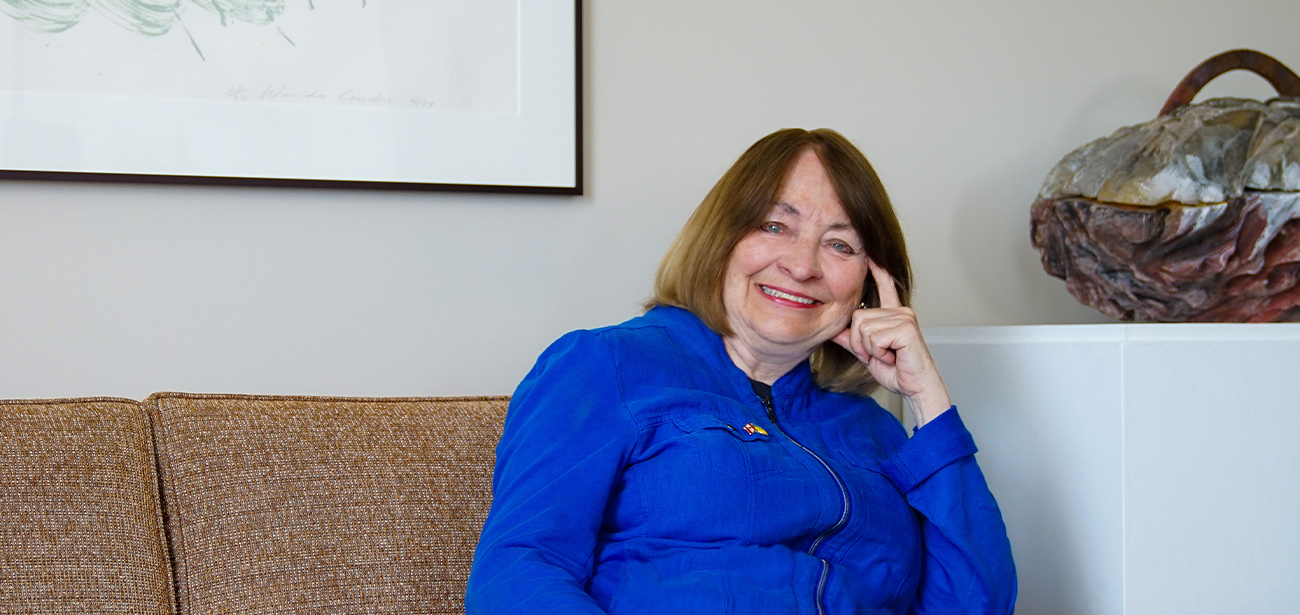
A pollster-turned-parliamentarian, Senator Donna Dasko has always been concerned with what Canadians think.
The Ontario senator served as senior vice-president of Environics and co-founder of Equal Voice before joining the Senate in 2018, where she employed her analytical skills in committee work and on the floor of the Red Chamber.
Ahead of her retirement on August 19, 2026, Senator Dasko spoke to SenCAplus about a career dedicated to polling, policy and gender parity.
Before the Senate, you were known as an advocate for greater representation of women in politics at all levels of government. What inspired this work?
Early in my public polling career, I started looking at the data and seeing the differences between men and women in their views on various issues, from war and peace to social programs.
This was eventually labelled as the “gender gap.” I became interested in whether women’s opinions were being reflected in the public realm.
Then around the 1988 election, I was asked to join the Committee for ‘94, which aimed to have women take up half the seats in the House of Commons by 1994. As we approached our deadline, we were still light years away from reaching that goal. We eventually disbanded.
Fast forward to 2001, about 10 years later, when I hosted a group of women at my home in Toronto to discuss how we could get more women elected. This turned into the founding meeting of Equal Voice. Frances Lankin, Ratna Omidvar and Marilou McPhedran — who also became senators — were there along with several other high-profile women such as current Toronto Mayor Olivia Chow and Janet Ecker, who later became the first woman to deliver Ontario’s budget as finance minister. We were a very multi-partisan group.
Today, Equal Voice is Canada’s only NGO that promotes more women in elected politics across the country. The organization just surpassed its 25th anniversary on May 6, 2026. Unfortunately, progress has been extremely slow.
The Senate reached gender parity for the first time in 2020. What did that milestone mean to you?
It was thrilling. You can see how the culture of a legislature or a parliament changes with more women in seats, and even how the issues evolve.
I wasn’t at the Senate in the old days, but I have a sense of what it was like because I’ve always been a political junkie.
I know what the culture of the old boys’ club looks like. The Senate feels more inclusive and more welcoming today.
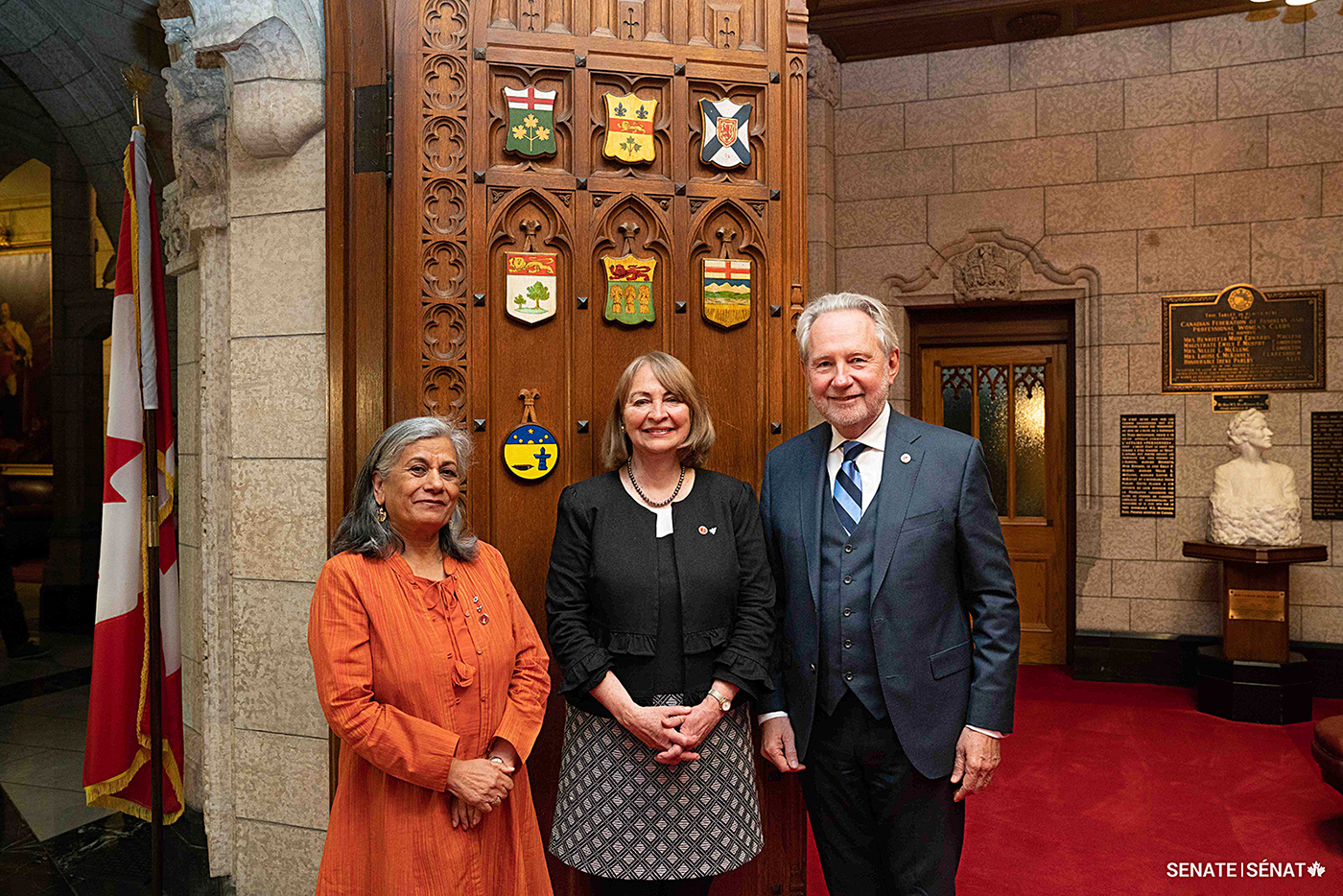 Senator Donna Dasko celebrates her swearing-in ceremony in the permanent Senate Chamber in Centre Block, with then-senator Ratna Omidvar, her close friend and sponsor, and Senator Peter Harder.
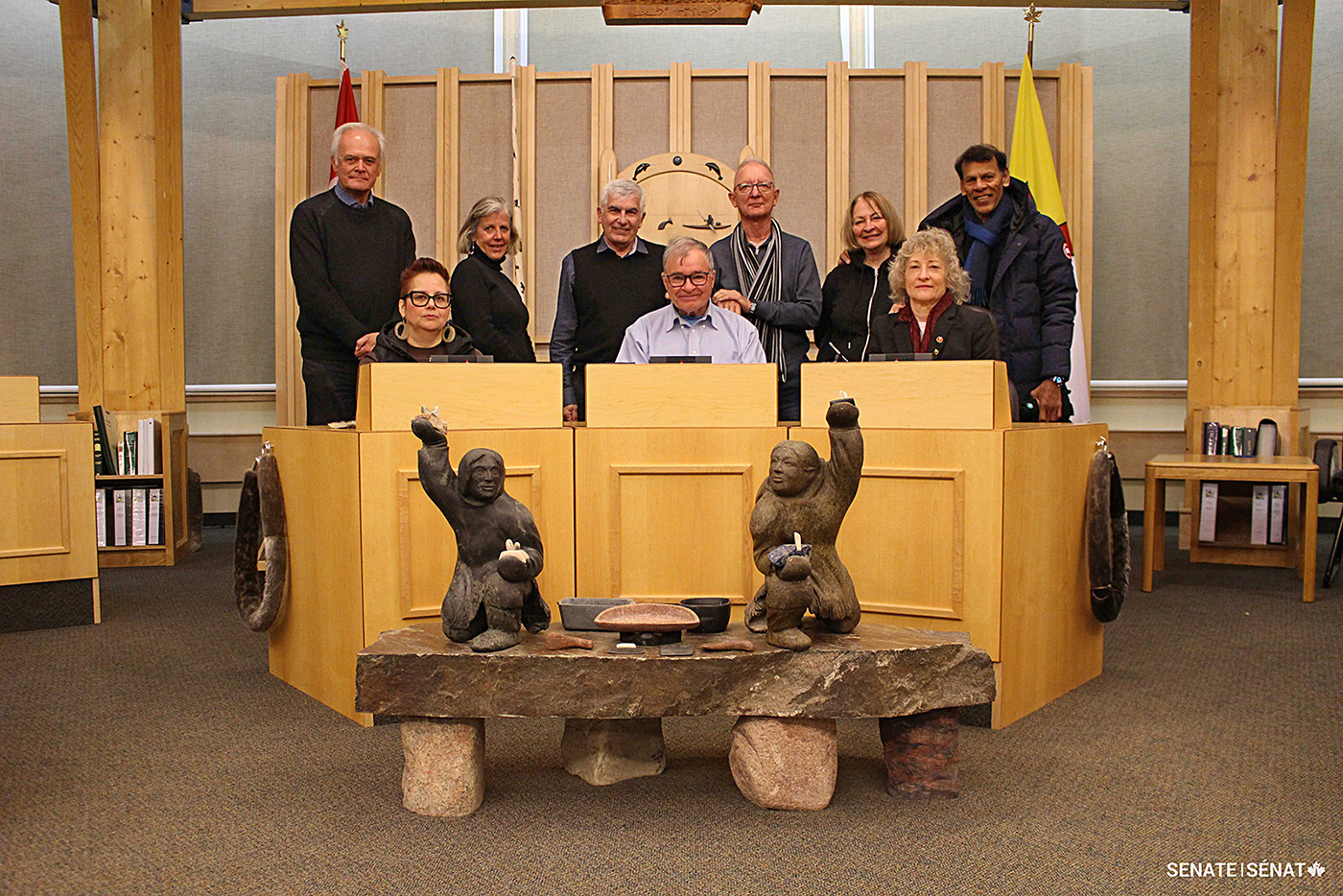 Senator Dasko, second right in the back row, visits the Nunavut legislature with members of the Senate Committee on National Security, Defence and Veterans Affairs during a fact-finding mission to the North in 2022.
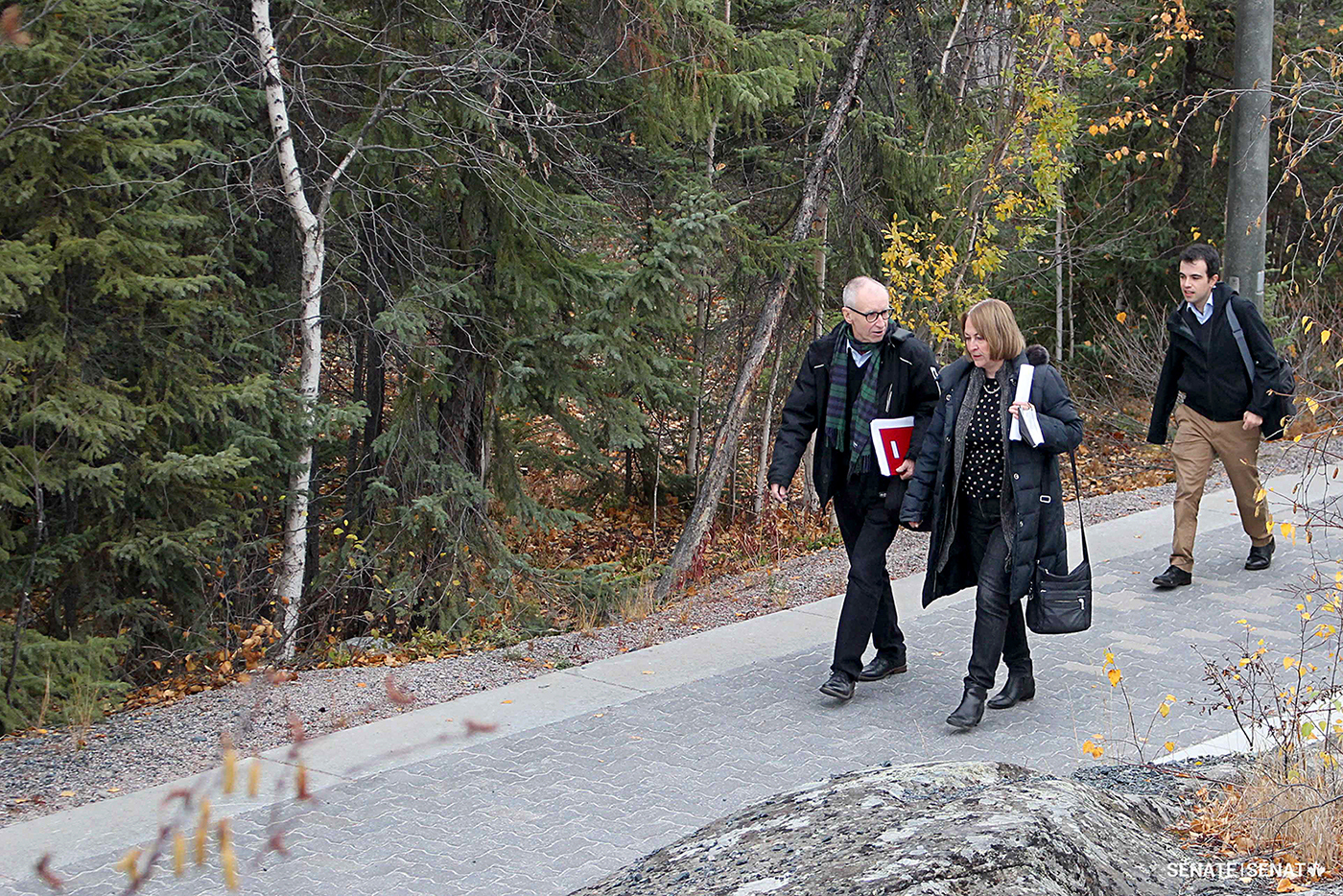 During the 2022 fact-finding mission to the North, Senator Dasko confers with Senator Tony Dean after leaving Joint Task Force (North) Headquarters in Yellowknife, Northwest Territories.
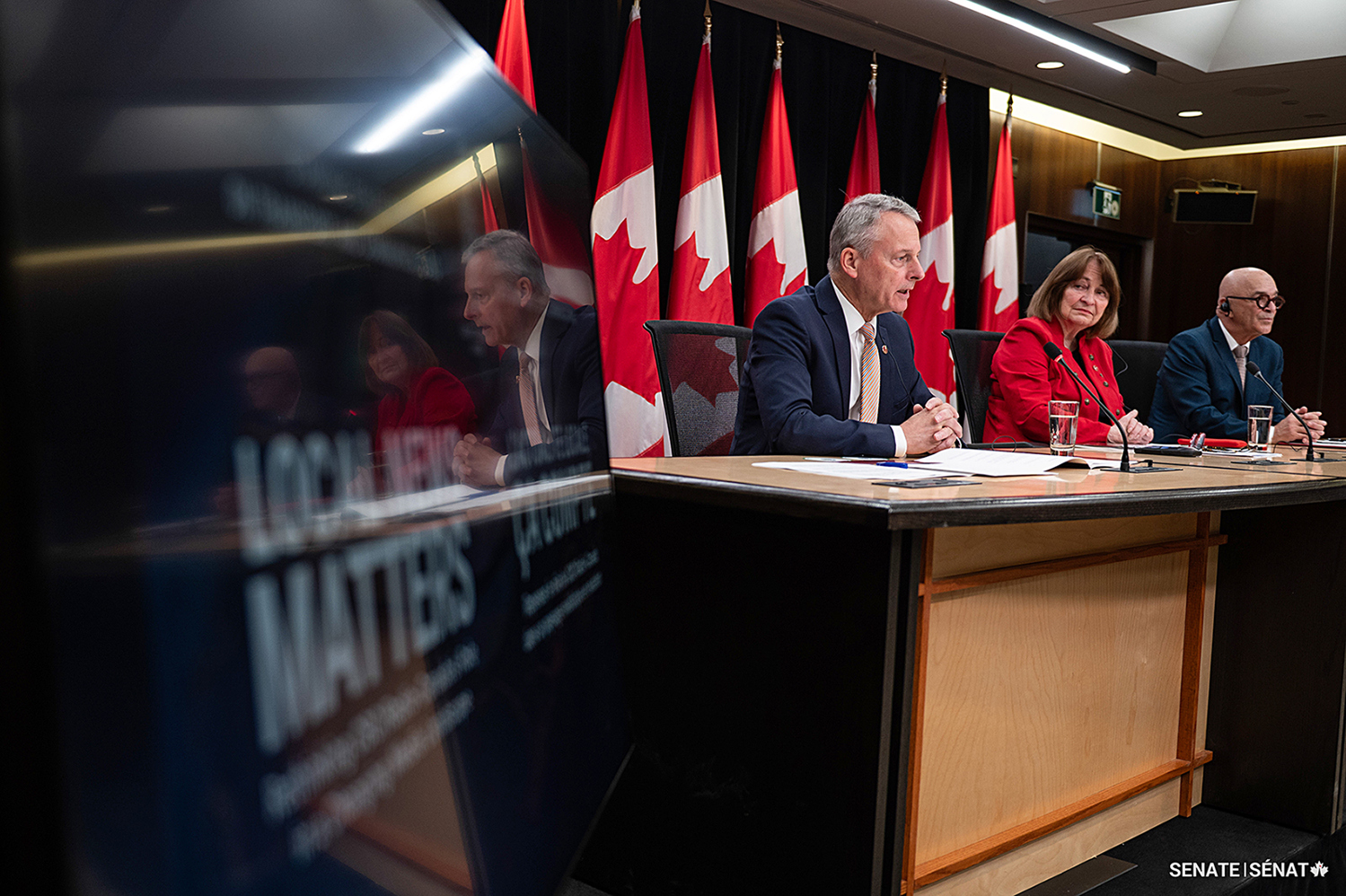 As deputy chair of the Senate Committee on Transport and Communications, Senator Dasko hosts a press conference to launch the committee’s report, Local News Matters: Rethinking CBC/Radio-Canada's Role in a Changing Media Landscape. Also pictured is Senator David M. Wells, left, and Senator René Cormier.
You served at the helm of several non-profit organizations throughout your career, including as chair of St. Stephen’s Community House, and director of the United Way of Greater Toronto and the Canadian Youth Foundation. What drew you to the non-profit sector?
One of my clients at the public opinion research firm was the chair of St. Stephen’s Community House, and she invited me to join the organization’s board as a volunteer. I didn’t even know what a board did, but I was intrigued so I accepted.
I quickly learned about the value of grassroots community organizations. For me, serving on non-profit boards and working at the community level in my private time was the perfect antidote to corporate life.
How has your experience in polling influenced your approach to Senate work?
It’s been fundamental. Through my work at Environics, I came to appreciate the views of Canadians. To me, public polling is a form of democracy.
I also learned a lot about government because I had many clients in the government sector who were doing extremely valuable work. For example, I worked with Health Canada to test different photos for the warning labels on tobacco packages. Canada ended up becoming the first country in the world to require graphic imagery on cigarette packages; it was revolutionary.
I also worked on the constitutional reform initiatives that took place over those years, including polling on referendums for Quebec and the Charlottetown Accord.
By the end of my polling career, every department in the federal sector, and most of the provincial governments, had been my client at one point. I think this served as a good foundation for the Senate.
You have a long friendship with former senator Ratna Omidvar that dates to the early 1980s, when you helped her land her first job as a newcomer to Canada. Fast forward to 2018 and she’s the sponsor for your Senate swearing-in ceremony. Describe that moment.
Ratna and I became friends at St. Stephen’s, when she had her two daughters in our child daycare centre. We eventually hired her and then she went on to lead a phenomenal career.
She was appointed to the Senate in 2016, and then I got the call two years later. I only had one day to prepare before my swearing-in ceremony, which was very tight, but the day was unforgettable.
Ratna is a calming influence and she’s very organized, so she took charge. She gave me great advice.
After the swearing-in ceremony, the Cannabis Act went to a third reading vote in the Senate. The galleries were packed, which is rare. I voted for the bill and we got booed, which was a real introduction!
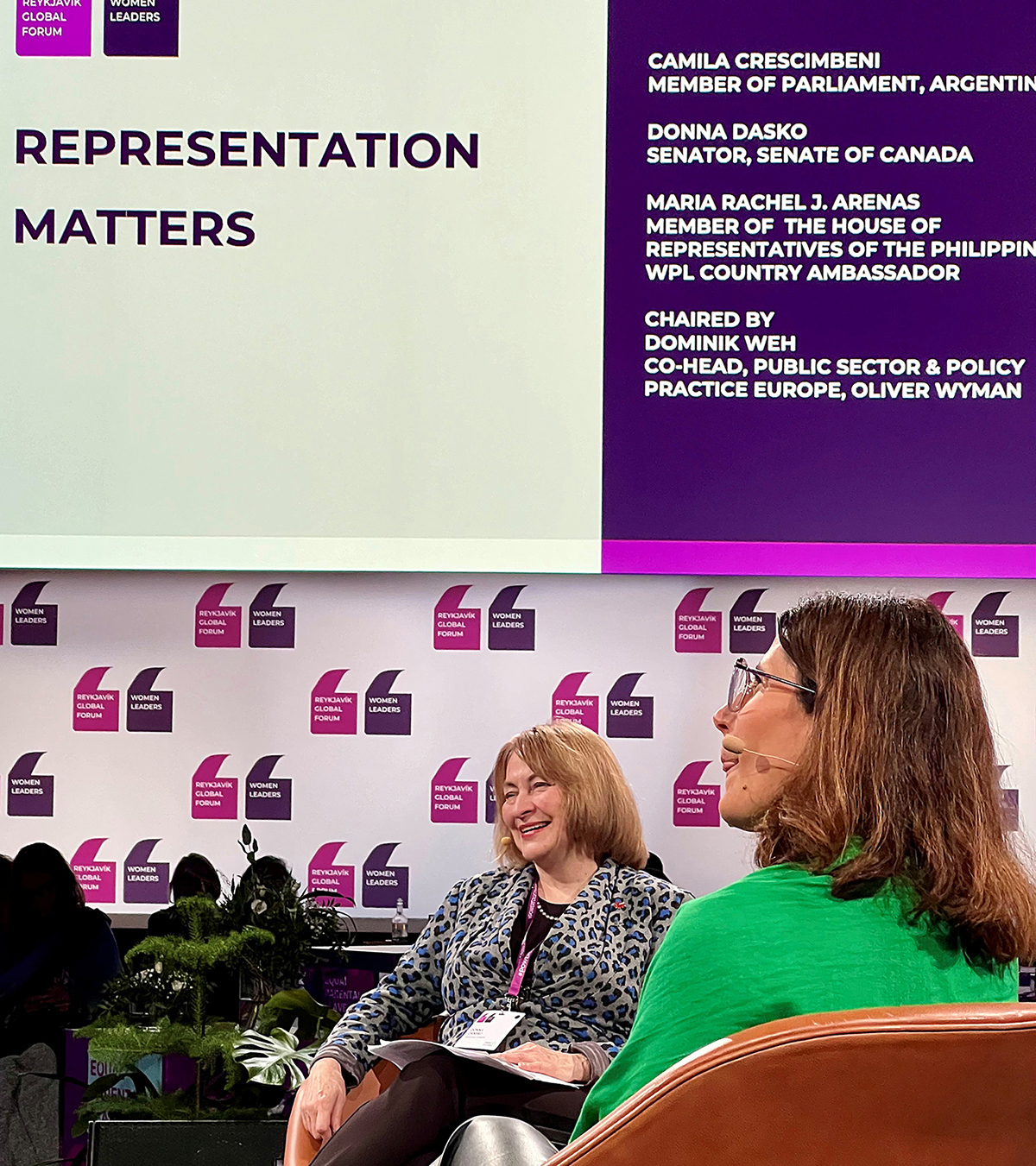 Senator Dasko as guest panelist at the Reykjavik Global Forum hosted by Women Political Leaders in November 2023. (Photo credit: Office of Senator Donna Dasko)
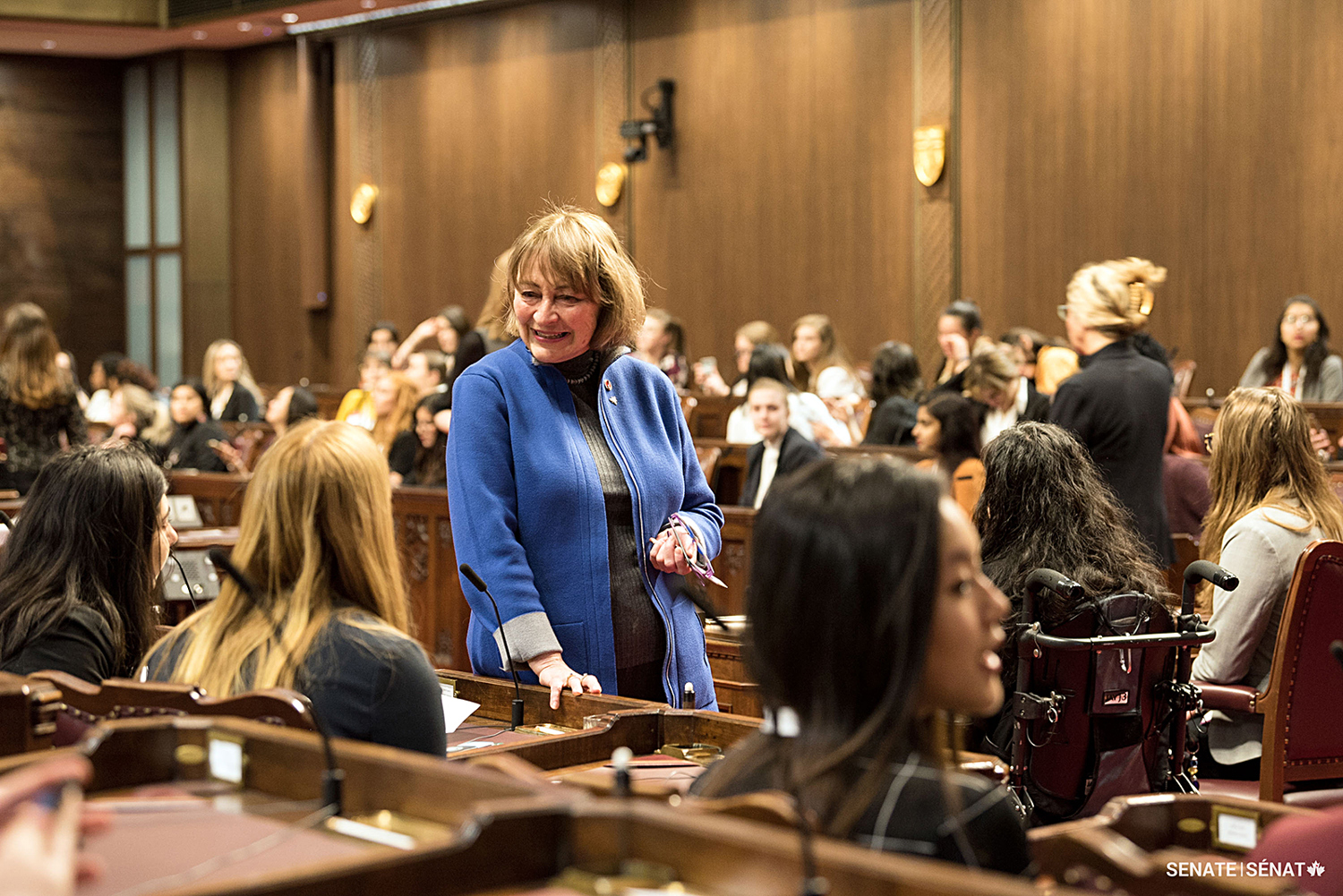 Senator Dasko welcomes delegates to the Senate Chamber in 2019 for Daughters of the Vote, a program that invited one young woman from each federal riding to Ottawa to participate in debates in the Senate and House of Commons.
After the Hon. Ratna Omidvar retired, you took up her Bill S-214, which would allow Canada to dispose of foreign state assets, including billions of dollars in frozen Russian assets. Why did you want to continue working on this bill?
Before Russia invaded Ukraine, Ratna had a similar bill before the Senate that aimed to seize the foreign assets of those who perpetrate international crimes. Then Russia invaded Ukraine, and the government decided to incorporate her bill into a budget implementation act. But they left out an important implementation piece of that bill, so Ratna stepped up and created Bill S-214 to fix the problem.
My reason for taking over this bill has to do with Ukraine and my Ukrainian heritage. My paternal grandparents immigrated from Ukraine to Winnipeg, which is where I was born and raised. Growing up, I didn’t speak Ukrainian and my family didn’t do much to celebrate our heritage. This part of my identity grew over the years, but when Russia invaded Ukraine, that was a turning point for me. I wanted to do whatever I could to help. The bill passed third reading in the Senate in May.
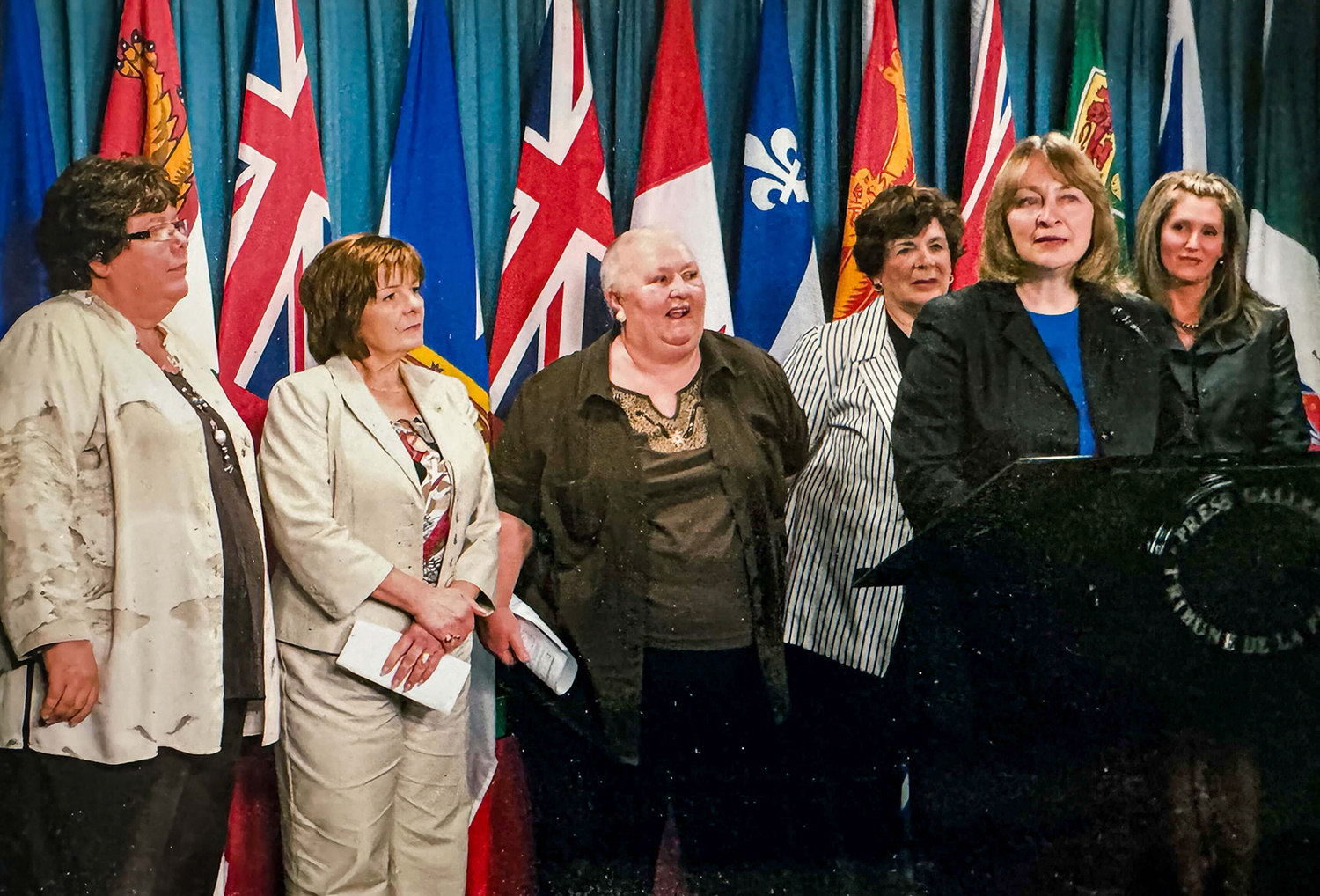 As National Chair of Equal Voice, Donna Dasko leads a press conference in June 2009 to announce the commitment of all political parties to improving the representation of women in the next election. Also pictured, from left, are NDP MPs Libby Davies and Irene Mathyssen, Bloc Quebecois MP Nicole Demers, Liberal MP Anita Neville, and Conservative MP Helena Guergis, who was the minister of state for the status of women at the time. (Photo credit: Office of Senator Donna Dasko)
As a member of the Senate Committee on National Security, Defence and Veterans Affairs, you went on a fact-finding mission to the North in 2022 to study Arctic security. What do you remember most from that experience?
It was a phenomenal experience. We traveled from Iqaluit all the way to Yellowknife. What struck me is the absolute vastness of the North and how hard it is to secure the entire region, given the size of this country. Canada must be very strategic.
I served on the executive of the Canadian NATO Parliamentary Association where I met parliamentarians from Norway and Finland. They have many fortifications in the North, but we have different challenges than they do. The geopolitical situation has changed so much, and climate change has made it easier to travel up North, so Arctic security has become an important part of Canada’s defence goals.
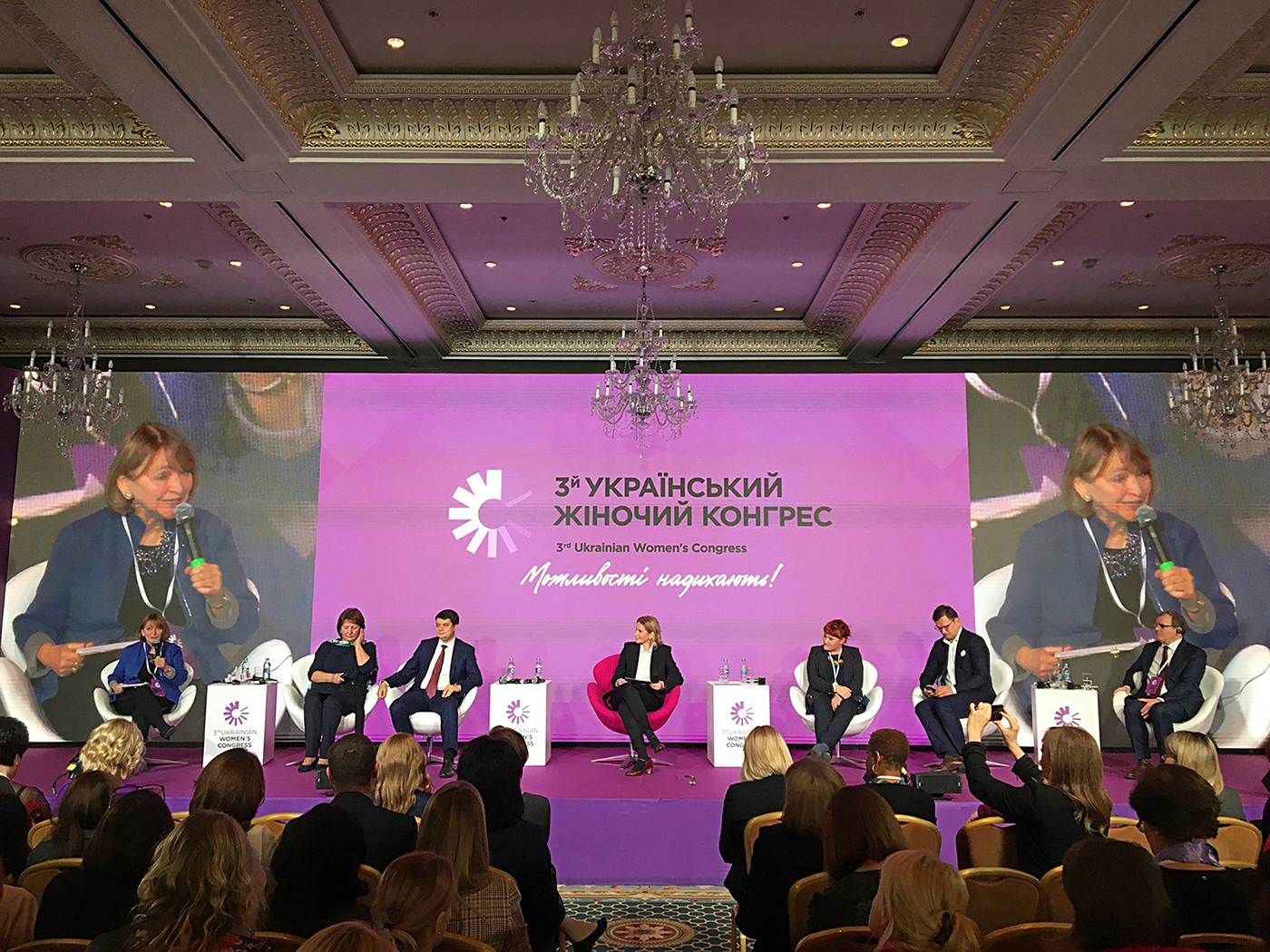 Senator Dasko speaks to the Ukrainian Women’s Congress, which shapes the gender policy agenda in Ukraine, on the topic of “The Status of Women in Society and Politics” in Kyiv, December 2019. (Photo credit: Office of Senator Donna Dasko)
You have served on several other Senate committees. What committee work stands out to you?
I served on the transport and communications committee for almost eight years, including as deputy chair. I appreciated working on Bill C-11, the Online Streaming Act, which brings online streamers under the Broadcasting Act’s regulatory framework for broadcasting. I was able to introduce amendments that were accepted, including one that specified the importance of audiences. There is still a lot to work out, but I supported the bill because I felt it was time to move forward before we lose the ability to create Canadian content for Canadian audiences.
I also appreciated working on Bill C-18, which supports Canadian news media by requiring Google and Facebook to pay for the news they share. Again, there are issues with the bill’s implementation because Facebook has pulled news from its platforms for Canadian users — and Google has been fighting it too.
What are you planning to do next?
I’m working on plans. I felt I had to step down from boards when I became a senator, so I would like to get involved with boards again.
Watch the tributes to Senator Donna Dasko and her farewell speech in the Senate Chamber.
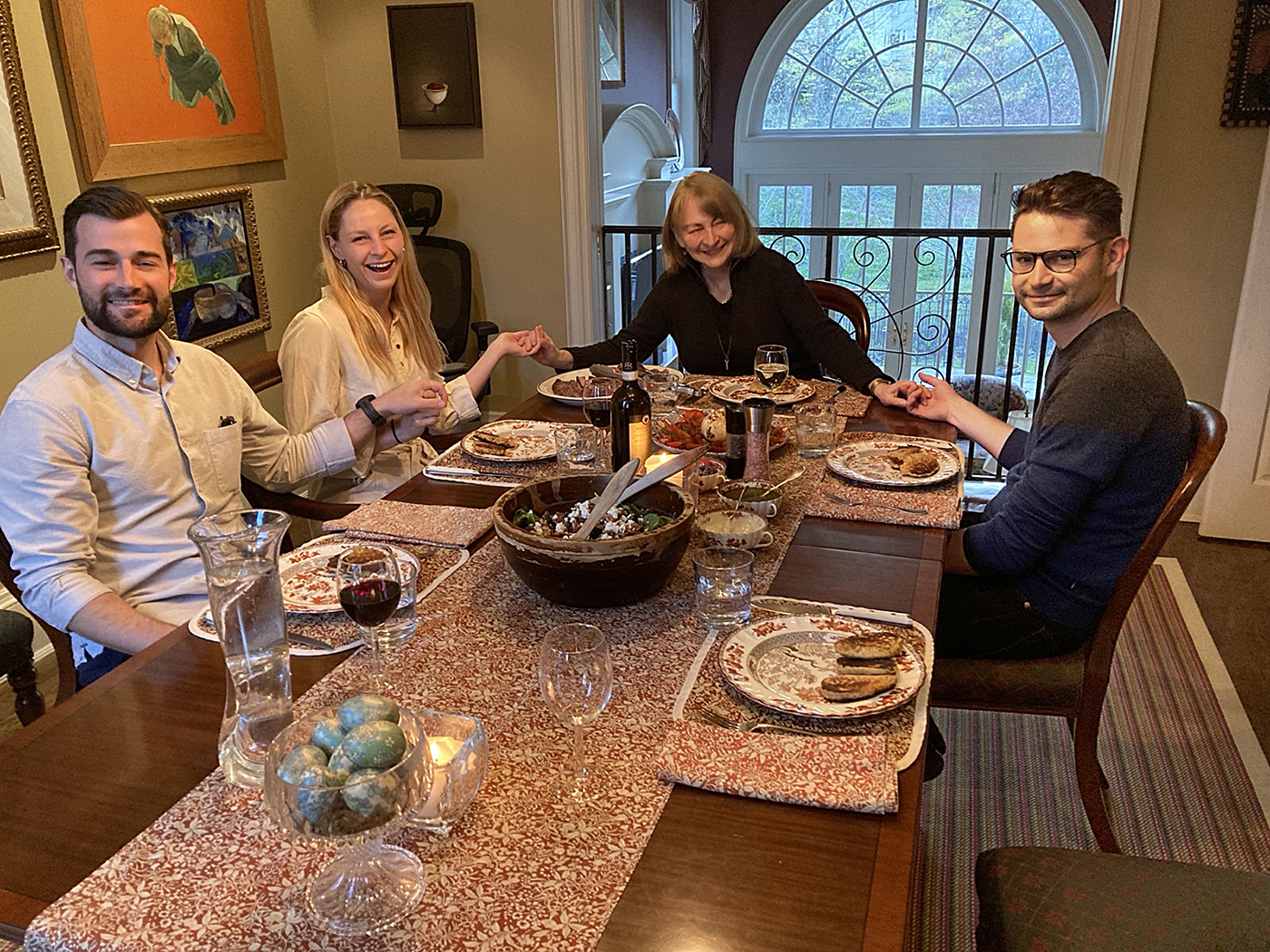 Senator Dasko with her daughter Marion Dasko Adams, son William Dasko Adams and Marion’s partner Nicolas Métayer. The senator says her family was “totally supportive and always curious” about her life in Ottawa. (Photo credit: Office of Senator Donna Dasko)
Related articles
Tags
Committee news
‘The Senate feels more inclusive’: Senator Dasko reflects on her work in Parliament and public polling
A pollster-turned-parliamentarian, Senator Donna Dasko has always been concerned with what Canadians think.
The Ontario senator served as senior vice-president of Environics and co-founder of Equal Voice before joining the Senate in 2018, where she employed her analytical skills in committee work and on the floor of the Red Chamber.
Ahead of her retirement on August 19, 2026, Senator Dasko spoke to SenCAplus about a career dedicated to polling, policy and gender parity.
Before the Senate, you were known as an advocate for greater representation of women in politics at all levels of government. What inspired this work?
Early in my public polling career, I started looking at the data and seeing the differences between men and women in their views on various issues, from war and peace to social programs.
This was eventually labelled as the “gender gap.” I became interested in whether women’s opinions were being reflected in the public realm.
Then around the 1988 election, I was asked to join the Committee for ‘94, which aimed to have women take up half the seats in the House of Commons by 1994. As we approached our deadline, we were still light years away from reaching that goal. We eventually disbanded.
Fast forward to 2001, about 10 years later, when I hosted a group of women at my home in Toronto to discuss how we could get more women elected. This turned into the founding meeting of Equal Voice. Frances Lankin, Ratna Omidvar and Marilou McPhedran — who also became senators — were there along with several other high-profile women such as current Toronto Mayor Olivia Chow and Janet Ecker, who later became the first woman to deliver Ontario’s budget as finance minister. We were a very multi-partisan group.
Today, Equal Voice is Canada’s only NGO that promotes more women in elected politics across the country. The organization just surpassed its 25th anniversary on May 6, 2026. Unfortunately, progress has been extremely slow.
The Senate reached gender parity for the first time in 2020. What did that milestone mean to you?
It was thrilling. You can see how the culture of a legislature or a parliament changes with more women in seats, and even how the issues evolve.
I wasn’t at the Senate in the old days, but I have a sense of what it was like because I’ve always been a political junkie.
I know what the culture of the old boys’ club looks like. The Senate feels more inclusive and more welcoming today.
Senator Donna Dasko celebrates her swearing-in ceremony in the permanent Senate Chamber in Centre Block, with then-senator Ratna Omidvar, her close friend and sponsor, and Senator Peter Harder.
Senator Dasko, second right in the back row, visits the Nunavut legislature with members of the Senate Committee on National Security, Defence and Veterans Affairs during a fact-finding mission to the North in 2022.
During the 2022 fact-finding mission to the North, Senator Dasko confers with Senator Tony Dean after leaving Joint Task Force (North) Headquarters in Yellowknife, Northwest Territories.
As deputy chair of the Senate Committee on Transport and Communications, Senator Dasko hosts a press conference to launch the committee’s report, Local News Matters: Rethinking CBC/Radio-Canada's Role in a Changing Media Landscape. Also pictured is Senator David M. Wells, left, and Senator René Cormier.
You served at the helm of several non-profit organizations throughout your career, including as chair of St. Stephen’s Community House, and director of the United Way of Greater Toronto and the Canadian Youth Foundation. What drew you to the non-profit sector?
One of my clients at the public opinion research firm was the chair of St. Stephen’s Community House, and she invited me to join the organization’s board as a volunteer. I didn’t even know what a board did, but I was intrigued so I accepted.
I quickly learned about the value of grassroots community organizations. For me, serving on non-profit boards and working at the community level in my private time was the perfect antidote to corporate life.
How has your experience in polling influenced your approach to Senate work?
It’s been fundamental. Through my work at Environics, I came to appreciate the views of Canadians. To me, public polling is a form of democracy.
I also learned a lot about government because I had many clients in the government sector who were doing extremely valuable work. For example, I worked with Health Canada to test different photos for the warning labels on tobacco packages. Canada ended up becoming the first country in the world to require graphic imagery on cigarette packages; it was revolutionary.
I also worked on the constitutional reform initiatives that took place over those years, including polling on referendums for Quebec and the Charlottetown Accord.
By the end of my polling career, every department in the federal sector, and most of the provincial governments, had been my client at one point. I think this served as a good foundation for the Senate.
You have a long friendship with former senator Ratna Omidvar that dates to the early 1980s, when you helped her land her first job as a newcomer to Canada. Fast forward to 2018 and she’s the sponsor for your Senate swearing-in ceremony. Describe that moment.
Ratna and I became friends at St. Stephen’s, when she had her two daughters in our child daycare centre. We eventually hired her and then she went on to lead a phenomenal career.
She was appointed to the Senate in 2016, and then I got the call two years later. I only had one day to prepare before my swearing-in ceremony, which was very tight, but the day was unforgettable.
Ratna is a calming influence and she’s very organized, so she took charge. She gave me great advice.
After the swearing-in ceremony, the Cannabis Act went to a third reading vote in the Senate. The galleries were packed, which is rare. I voted for the bill and we got booed, which was a real introduction!
Senator Dasko as guest panelist at the Reykjavik Global Forum hosted by Women Political Leaders in November 2023. (Photo credit: Office of Senator Donna Dasko)
Senator Dasko welcomes delegates to the Senate Chamber in 2019 for Daughters of the Vote, a program that invited one young woman from each federal riding to Ottawa to participate in debates in the Senate and House of Commons.
After the Hon. Ratna Omidvar retired, you took up her Bill S-214, which would allow Canada to dispose of foreign state assets, including billions of dollars in frozen Russian assets. Why did you want to continue working on this bill?
Before Russia invaded Ukraine, Ratna had a similar bill before the Senate that aimed to seize the foreign assets of those who perpetrate international crimes. Then Russia invaded Ukraine, and the government decided to incorporate her bill into a budget implementation act. But they left out an important implementation piece of that bill, so Ratna stepped up and created Bill S-214 to fix the problem.
My reason for taking over this bill has to do with Ukraine and my Ukrainian heritage. My paternal grandparents immigrated from Ukraine to Winnipeg, which is where I was born and raised. Growing up, I didn’t speak Ukrainian and my family didn’t do much to celebrate our heritage. This part of my identity grew over the years, but when Russia invaded Ukraine, that was a turning point for me. I wanted to do whatever I could to help. The bill passed third reading in the Senate in May.
As National Chair of Equal Voice, Donna Dasko leads a press conference in June 2009 to announce the commitment of all political parties to improving the representation of women in the next election. Also pictured, from left, are NDP MPs Libby Davies and Irene Mathyssen, Bloc Quebecois MP Nicole Demers, Liberal MP Anita Neville, and Conservative MP Helena Guergis, who was the minister of state for the status of women at the time. (Photo credit: Office of Senator Donna Dasko)
As a member of the Senate Committee on National Security, Defence and Veterans Affairs, you went on a fact-finding mission to the North in 2022 to study Arctic security. What do you remember most from that experience?
It was a phenomenal experience. We traveled from Iqaluit all the way to Yellowknife. What struck me is the absolute vastness of the North and how hard it is to secure the entire region, given the size of this country. Canada must be very strategic.
I served on the executive of the Canadian NATO Parliamentary Association where I met parliamentarians from Norway and Finland. They have many fortifications in the North, but we have different challenges than they do. The geopolitical situation has changed so much, and climate change has made it easier to travel up North, so Arctic security has become an important part of Canada’s defence goals.
Senator Dasko speaks to the Ukrainian Women’s Congress, which shapes the gender policy agenda in Ukraine, on the topic of “The Status of Women in Society and Politics” in Kyiv, December 2019. (Photo credit: Office of Senator Donna Dasko)
You have served on several other Senate committees. What committee work stands out to you?
I served on the transport and communications committee for almost eight years, including as deputy chair. I appreciated working on Bill C-11, the Online Streaming Act, which brings online streamers under the Broadcasting Act’s regulatory framework for broadcasting. I was able to introduce amendments that were accepted, including one that specified the importance of audiences. There is still a lot to work out, but I supported the bill because I felt it was time to move forward before we lose the ability to create Canadian content for Canadian audiences.
I also appreciated working on Bill C-18, which supports Canadian news media by requiring Google and Facebook to pay for the news they share. Again, there are issues with the bill’s implementation because Facebook has pulled news from its platforms for Canadian users — and Google has been fighting it too.
What are you planning to do next?
I’m working on plans. I felt I had to step down from boards when I became a senator, so I would like to get involved with boards again.
Watch the tributes to Senator Donna Dasko and her farewell speech in the Senate Chamber.
Senator Dasko with her daughter Marion Dasko Adams, son William Dasko Adams and Marion’s partner Nicolas Métayer. The senator says her family was “totally supportive and always curious” about her life in Ottawa. (Photo credit: Office of Senator Donna Dasko)